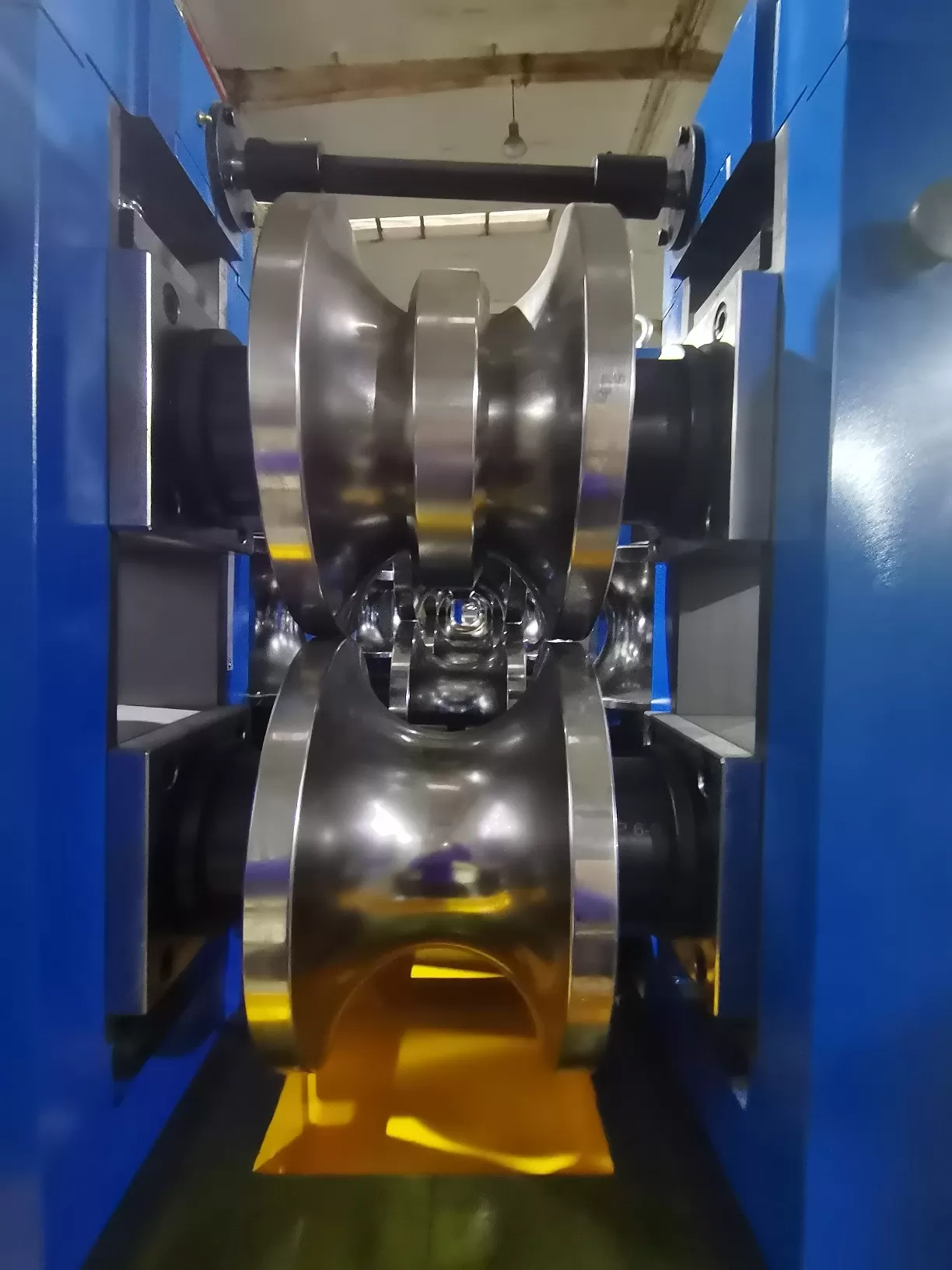
In heavy-gauge pipe and tube manufacturing, operational continuity begins at
the very entry point of the production line. The raw material, typically
hot-rolled or cold-rolled strip steel, arrives in heavy coils that must be
uncoiled, flattened, and fed into the forming mill with high precision. A
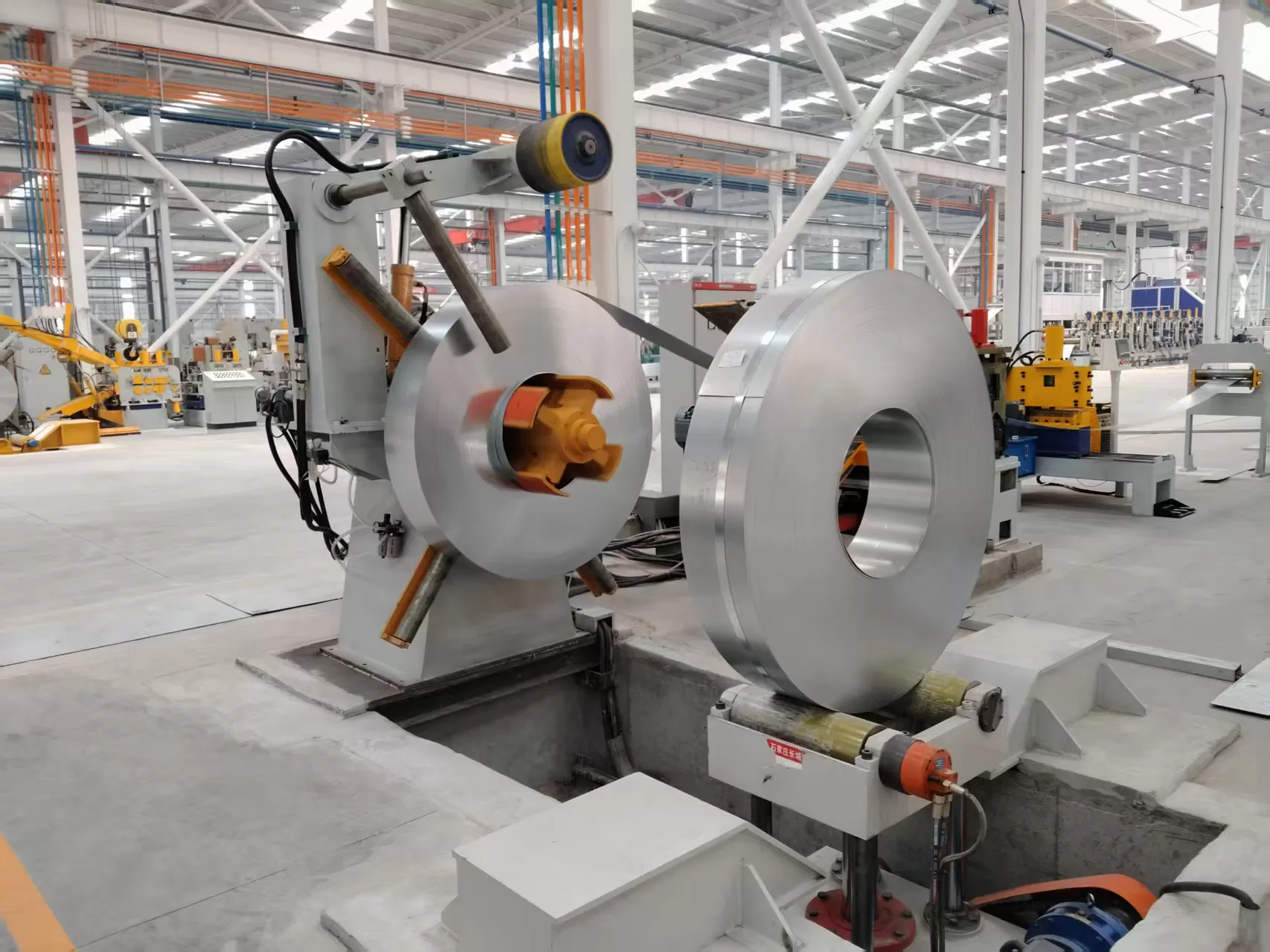
decoiler machine serves as the starting point of this process. SANSO designs
these systems to handle high-tonnage loads while maintaining a stable feed rate
to downstream machinery, ensuring that the entire line operates without
unnecessary interruption.
Managing heavy coils requires a deep understanding of mechanical forces,
material properties, and automation interfaces. This article analyzes the
engineering principles of modern decoiling systems, examines the operational
challenges faced by manufacturers, and outlines how selecting the appropriate
machinery configuration directly influences production throughput and line
longevity.
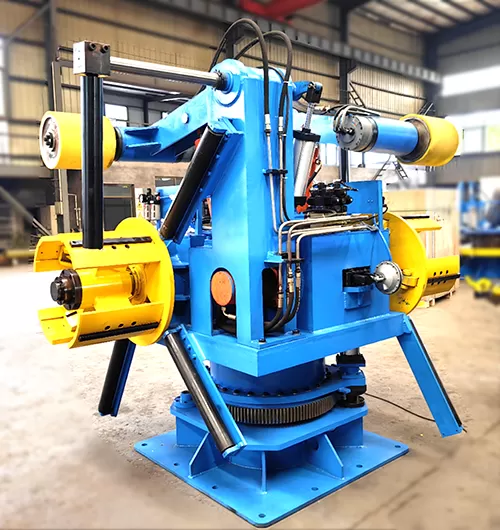
The Mechanical Architecture of Modern Decoiling Systems
At its core, a decoiler machine must support the weight of a steel coil,
expand to grip the inner diameter securely, and rotate to pay out the steel
strip at a controlled speed. Achieving this without damaging the material or
stressing the mechanical components requires robust construction and precise
engineering controls.
The Mandrel and Expansion System
The central shaft, or mandrel, is the primary load-bearing component of the
machine. It must withstand significant cantilevered loads, particularly in
single-sided designs. Mandrel expansion secures the coil from the inside,
preventing slippage during acceleration and deceleration.
Manual Expansion: Typically used for lighter coils, often
under 3 metric tons. It utilizes a mechanical crank or screw jack mechanism to
expand the mandrel segments. While cost-effective, it requires manual labor and
increases changeover times.
Hydraulic Expansion: Necessary for heavier coils ranging
from 5 to 25 metric tons. A hydraulic cylinder pushes a wedge-shaped drawbar
along the shaft, forcing the outer segments outward with high pressure. This
provides a consistent grip across the entire inner width of the coil, reducing
the risk of internal coil deformation.
Braking and Tension Control Mechanisms
Uncontrolled rotation leads to material overrun, where the coil continues to
unravel after the downstream line has stopped. To prevent this, integrated
braking systems are applied. Depending on the line speed and coil weight, these
systems utilize pneumatic disc brakes, hydraulic brakes, or regenerative AC
drive motors. The drive motor option allows for active tension control, paying
out the material under a programmed resistance to keep the strip flat and
straight as it enters the leveling or forming stage.
Addressing Key Operational Challenges in Steel Strip Feeding
In a high-capacity tube mill, any deviation in strip alignment or feeding
tension can result in defects in the welded pipe, premature roll wear, or
catastrophic line jams. Implementing a well-engineered decoiler machine resolves
several common production bottlenecks.
Preventing Coil Telescoping
Telescoping occurs when individual wraps of the steel coil slip sideways
during uncoiling, resulting in a conical shape. This is particularly common with
narrow, thin strips or poorly wound coils. To mitigate this issue, heavy-duty
machines incorporate side guide rollers or snubber arms. A hydraulic snubber arm
presses down on the outside diameter of the coil, maintaining pressure on the
outer wraps and preventing them from shifting or clock-springing when the
strapping bands are cut.
Handling Heavy Coil Changeovers Efficiently
Minimizing downtime during coil changeover is a primary goal for high-volume
manufacturers. Relying solely on overhead factory cranes to position and load
heavy coils is time-consuming and introduces safety hazards. Integrating a
dedicated coil loading car solves this issue. The coil car lifts the next coil
from a storage saddle, moves it horizontally, aligns it with the mandrel
centerline, and slides it onto the expanded mandrel. This secondary system
allows operators to stage the next coil while the current one is still running,
reducing changeover times from twenty minutes down to under three minutes.
Engineering Parameters for Heavy-Duty Applications
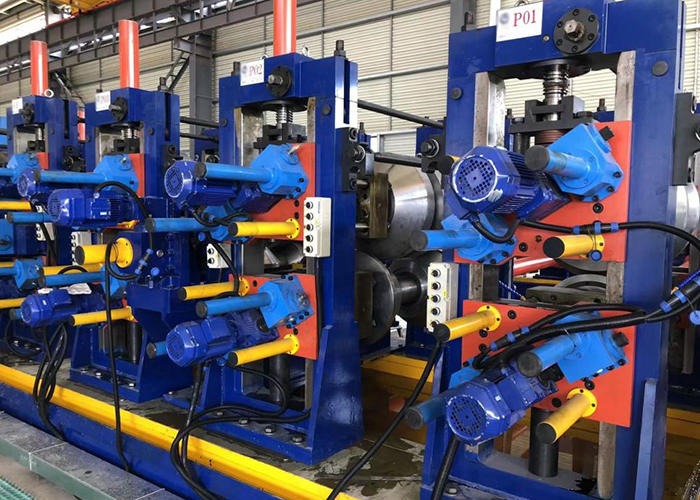
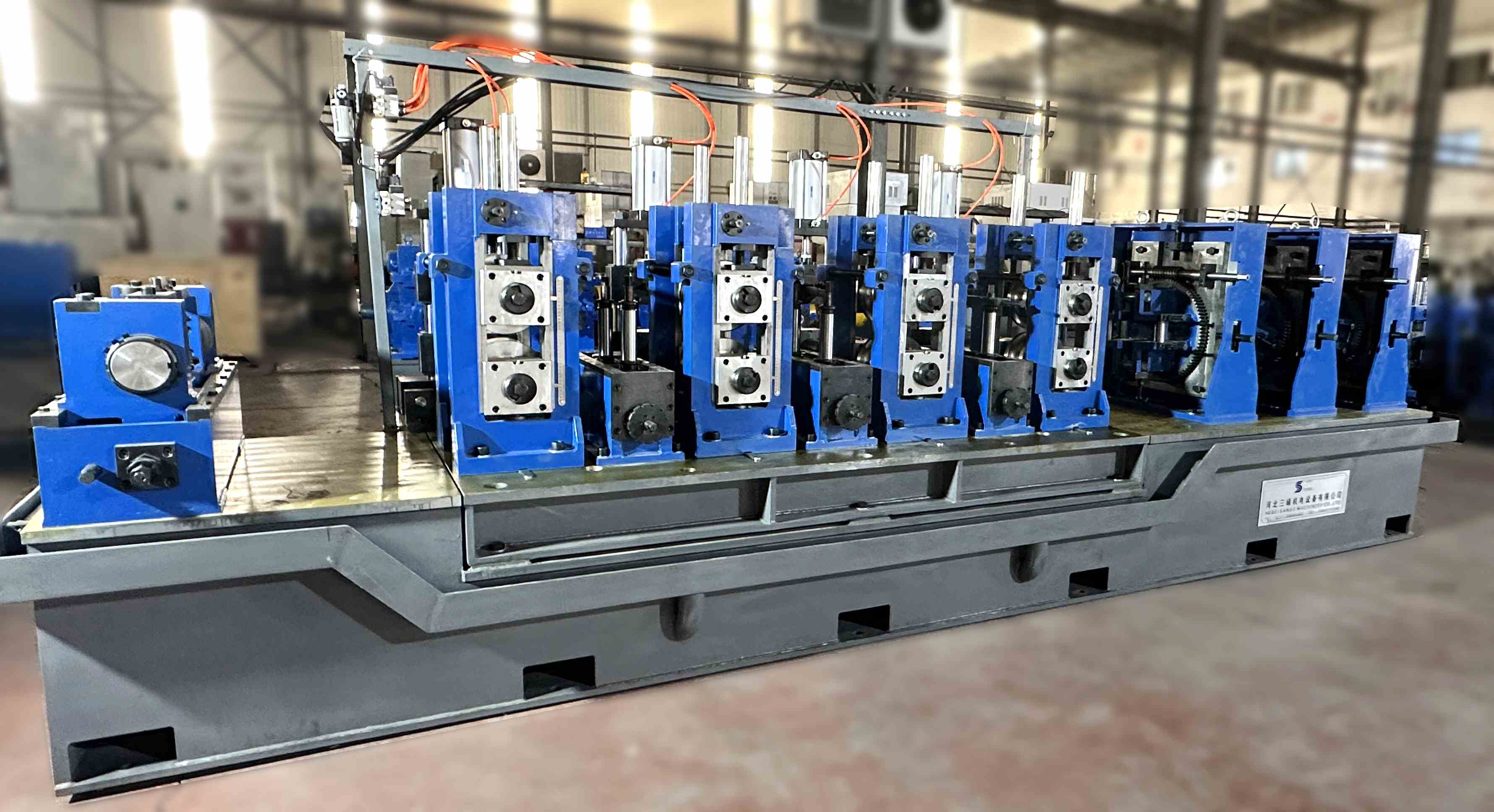
When selecting machinery for a welded tube mill or a high-speed slitting
line, several structural and operational specifications must be matched to the
production requirements. Below is an overview of the primary engineering
parameters that define high-performance systems.
| Parameter | Light-Duty Range | Heavy-Duty Range | Industrial Production Standards |
|---|
| Coil Weight Capacity | 1,000 - 3,000 kg | 5,000 - 25,000 kg | Determines structural frame thickness and mandrel shaft diameter. |
| Coil Width Range | 100 - 600 mm | 600 - 2,000 mm | Dictates the length of the mandrel segments and support frame. |
| Expansion Range | 450 - 520 mm | 508 - 610 mm | Must match the standard inner diameters of supplier steel coils. |
| Operating Speed | Up to 30 m/min | Up to 120 m/min | Requires variable frequency drive synchronization with downstream
mills. |
Integration with Downstream Processing Machinery
A decoiler machine does not operate in isolation. Its performance is directly
tied to how well it communicates and synchronizes with downstream equipment,
such as shear welders, strip accumulators, levelers, and forming mills.
Loop Control Systems
To prevent the strip from pulling tightly against the forming rolls or
sagging onto the shop floor, a loop control mechanism is positioned immediately
after the uncoiler. This loop acts as a buffer. Ultrasonic sensors,
photoelectric eyes, or mechanical dancer arms continuously monitor the depth of
the loop. If the loop becomes too shallow, the sensor signals the variable
frequency drive of the uncoiler to speed up. If the loop becomes too deep, the
drive slows the rotation. This closed-loop feedback loop prevents material
stretching and ensures smooth, continuous feeding.
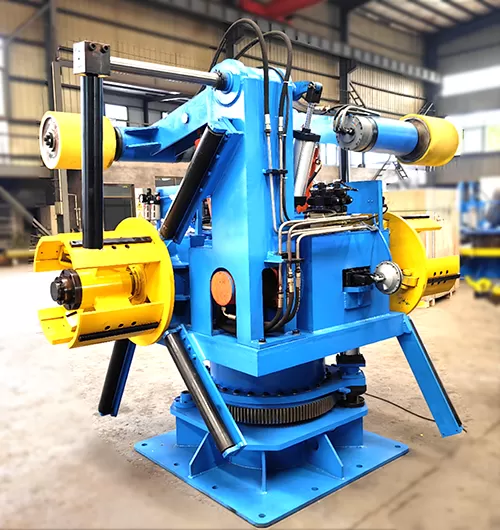
Double-Mandrel Configurations
For high-speed tube mills that utilize horizontal strip accumulators, a
double-mandrel decoiler is highly beneficial. This design features two
independent mandrels mounted on a central rotating pedestal. While one mandrel
is actively feeding the production line, the operator can safely load and prep
the next coil on the opposite mandrel. Once the active coil is depleted, the
operator rotates the pedestal 180 degrees, aligns the new strip with the shear
welder, and resumes production immediately, maximizing the utilization of the
accumulator system.
Structural Integrity and Manufacturing Standards
Under the continuous stress of holding and rotating multi-ton steel loads,
structural deflection can lead to premature bearing failure and uneven strip
feeding. SANSO emphasizes robust structural design in the manufacturing process
to guarantee long-term alignment.
Stress-Relieved Frame Construction: The main frame of the
machine is fabricated from thick Q355B structural steel plates. After welding,
the entire frame undergoes thermal stress relief to eliminate residual welding
stresses, preventing structural deformation over years of heavy use.
Precision-Ground Shafts and High-Load Bearings: The main
spindle shaft is forged from high-strength alloy steel (such as 40Cr),
heat-treated, and precision-ground. It is supported by heavy-duty spherical
roller bearings capable of handling both radial loads from coil weight and axial
thrust forces during operation.
Hydraulic Power Unit Reliability: Hydraulic systems are
configured with high-quality valves and proportional control systems to ensure
smooth, shock-free expansion of the mandrel and movement of the coil
car.
Selecting the Right Configuration for Your Production Line
Every manufacturing facility has unique space constraints, budget
considerations, and production targets. Selecting the proper decoiling
configuration requires balancing these factors.
For operations focused on thick-walled pipes, a non-motorized, pull-off style
decoiler equipped with a heavy-duty pneumatic disc brake may be sufficient, as
the forming mill pulls the strip through with high traction. However, for
thin-walled tubing or surface-sensitive materials like stainless steel or
pre-painted coils, a motorized, variable-speed system is necessary. The
motorized drive actively unwinds the material, preventing the tension from
scuffing or stretching the delicate strip surface.
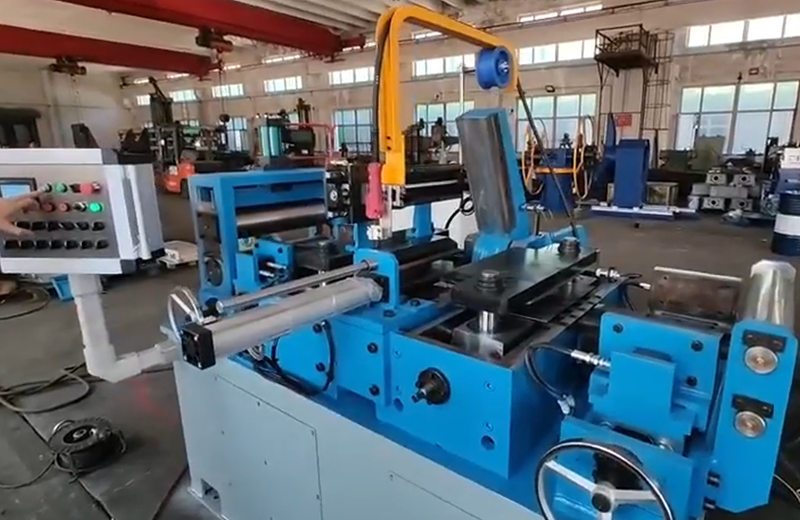
Furthermore, plants with limited floor space may benefit from integrated
decoiler-straightener combination units. These compact machines combine the
uncoiler and the precision leveler onto a single space-saving frame, reducing
the overall footprint of the entry line by up to forty percent while ensuring
the material is perfectly flat before roll forming.
Inquiry and Consultation
Choosing the correct entry equipment is a fundamental step in ensuring the
overall performance, speed, and reliability of your welded pipe or roll forming
production line. SANSO specializes in designing and manufacturing
high-durability coil handling equipment tailored to specific manufacturing
scales and material requirements.
If you are looking to upgrade your existing feeding system, reduce coil
changeover downtime, or configure a complete high-speed tube mill production
line, our engineering team is available to assist. Please contact us with your
coil weight requirements, strip dimensions, and production speed targets to
receive a detailed system proposal and technical quotation.
Frequently Asked Questions
Q1: What is the main difference between manual and hydraulic expansion in a
decoiler machine?
A1: Manual expansion relies on mechanical screw jacks or levers operated by
hand to expand the mandrel segments. It is suitable for lighter coils, generally
under 3 tons. Hydraulic expansion uses integrated hydraulic cylinders to expand
the mandrel under high pressure, providing a more secure grip and automated
operation for heavier coils up to 25 tons.
Q2: How does a loop control system regulate the feeding speed of the steel
strip?
A2: A loop control system monitors the slack (or loop) of the steel strip
between the uncoiler and the downstream machine. Using ultrasonic sensors,
photoelectric sensors, or physical dancer arms, it continuously measures loop
depth and sends speed adjustments to the motorized drive of the uncoiler,
maintaining constant, tension-free feeding.
Q3: What safety features should be included in a heavy-duty decoiler
machine?
A3: Essential safety features include a hydraulic snubber arm to prevent coil
clock-springing during strap cutting, automatic emergency braking systems to
prevent mandrel overrun, physical safety barriers around the rotation path, and
hydraulic check valves that maintain mandrel pressure even in the event of a
sudden power loss.
Q4: Can a single machine handle different inner diameters of steel
coils?
A4: Yes, within a specified range. The mandrel has a standard expansion range
(for example, 480 mm to 520 mm). For coils with significantly larger inner
diameters, operators can bolt on auxiliary expansion shoes or segment adapters
to the mandrel to increase its minimum and maximum holding diameter.
Q5: Under what circumstances is a double-mandrel design preferred over a
single-mandrel design?
A5: A double-mandrel design is preferred in high-speed, continuous production
lines that utilize a strip accumulator. It allows the operator to load and
prepare a second coil on the inactive spindle while the first coil is still
feeding. This setup reduces coil changeover time to almost zero, ensuring the
downstream tube mill never stops running.