In the field of welded pipe manufacturing, the continuity and stability of
material feeding dictate the quality of the final product. The manufacturing
sequence begins at the entry section of the tube mill line, where steel strip
coils must be unwound smoothly and consistently. The primary equipment
responsible for this process is the uncoiler machine. By holding, centering, and
feeding heavy metal coils, this machinery sets the baseline structural accuracy
for all subsequent forming, welding, and sizing operations.
SANSO manufactures structural feed systems designed to handle the high
torsional loads and structural demands of modern tube milling. Selecting the
correct machinery configuration requires an engineering-focused understanding of
strip width, coil weight, material yield strength, and processing speeds. This
analysis examines the engineering design, key sub-assemblies, operational
challenges, and integration methodologies of modern decoiling systems.
Structural Configurations of Modern Decoiling Systems
Industrial manufacturers must evaluate different structural configurations of
the uncoiler machine based on production volume, coil handling logistics, and
available floor space. The choice of configuration directly influences overall
cycle times and the frequency of line stops.
Single-Mandrel Cantilevered Designs
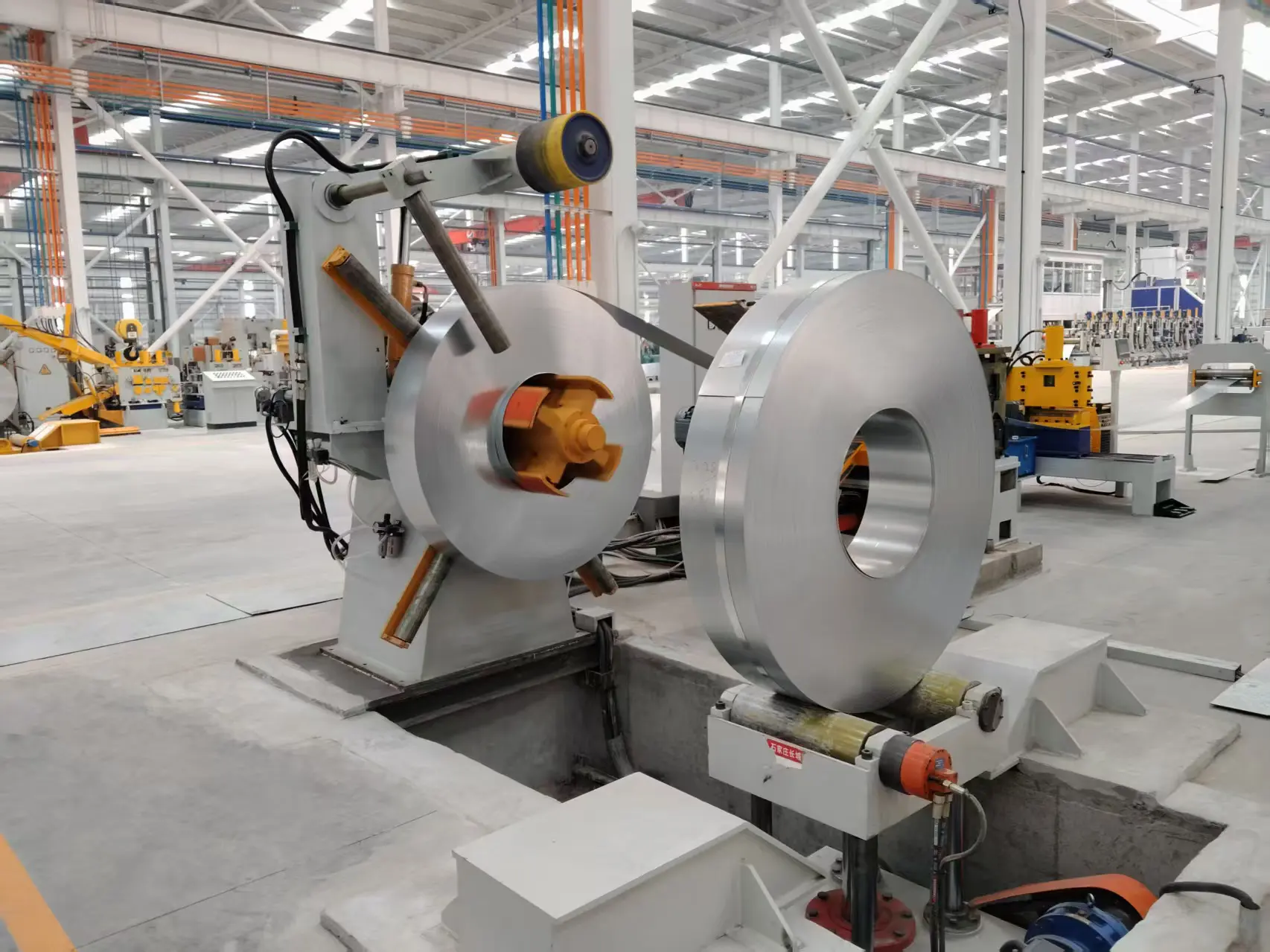
The single-mandrel configuration is widely used for light to medium-duty
applications. In this setup, a single cantilevered shaft supports the weight of
the coil. While offering a compact footprint and straightforward mechanical
design, this system requires the tube mill line to halt during every coil
changeover. For production facilities operating with moderate output targets,
this structural arrangement is highly cost-effective, though it presents a
bottleneck for high-volume, continuous manufacturing plants.
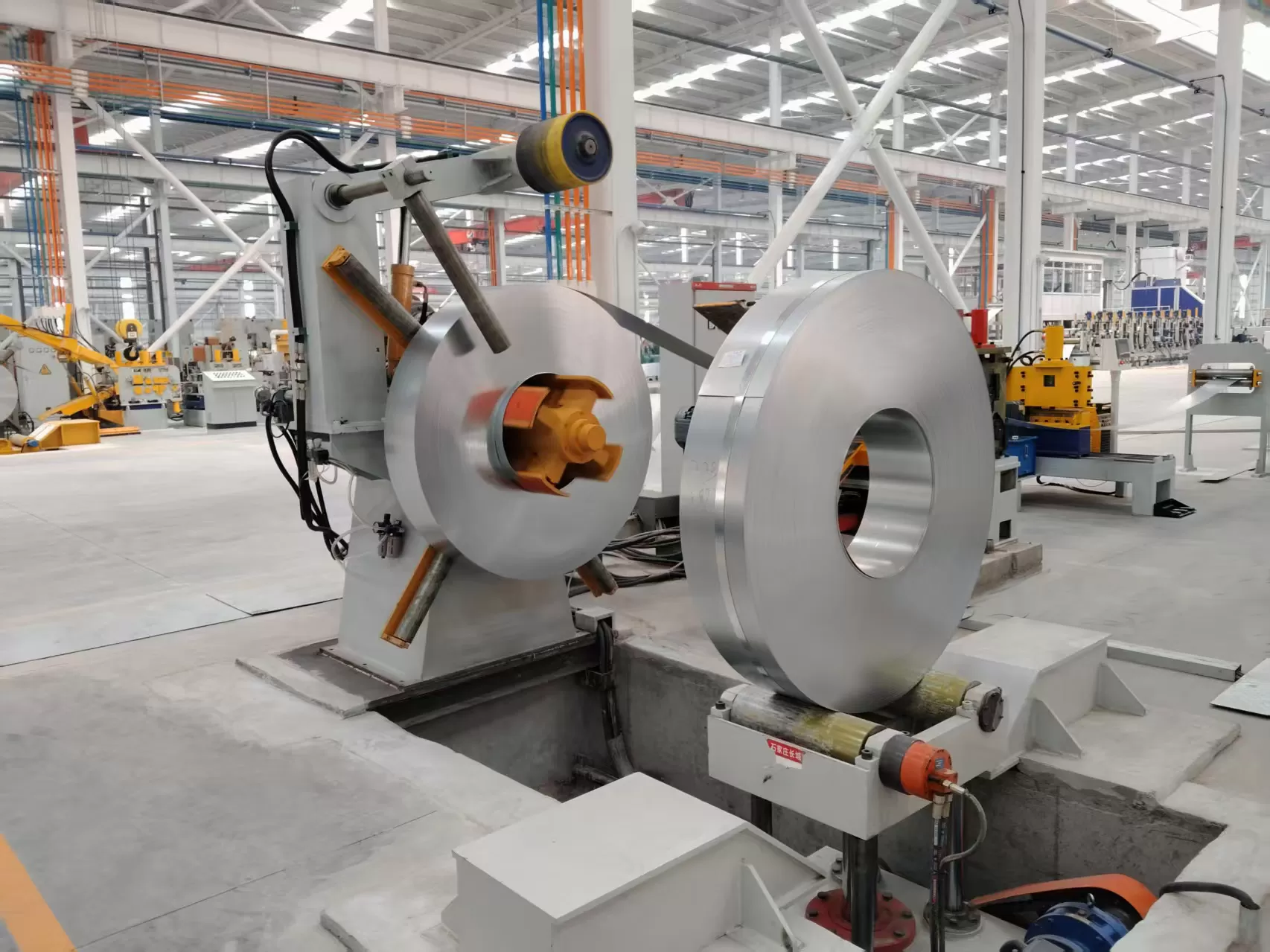
Double-Mandrel Rotary Designs
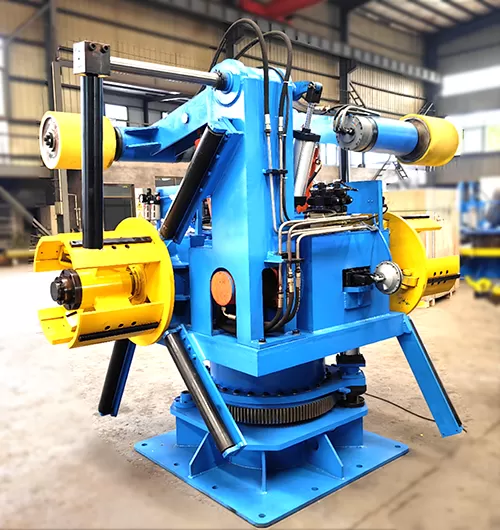
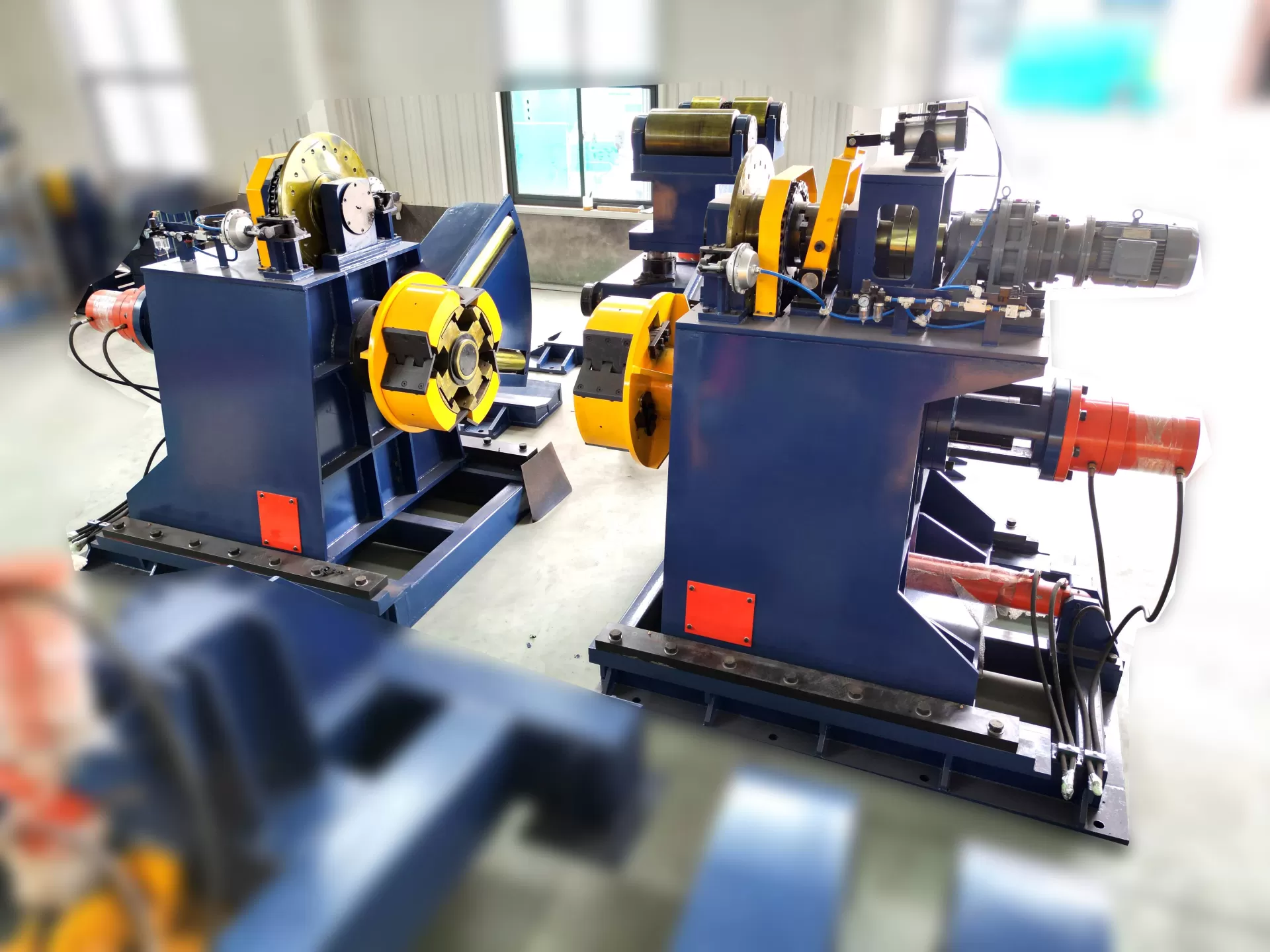
To mitigate downtime during coil changes, high-capacity tube mills implement
a double-sided rotary uncoiler machine. This system incorporates two independent
mandrels mounted on a heavy-duty rotating base. While one mandrel actively feeds
the steel strip into the production line, the operator can safely position and
secure the next coil on the opposite mandrel using a coil car. Once the active
coil is fully depleted, the base rotates 180 degrees, allowing the new strip to
be threaded into the downstream line within minutes. When integrated with an
accumulator system, this design enables uninterrupted tube manufacturing.
Hydraulic versus Manual Expansion Systems
Gripping the inner diameter of the steel coil is necessary to prevent slip
during acceleration and braking. Manual expansion mechanisms rely on mechanical
linkages adjusted via a hand crank. This design is typically limited to lighter
coils, generally under 2 tons, where physical labor does not cause excessive
delays or safety concerns. For industrial operations involving heavier coils,
hydraulic mandrel expansion is required. Hydraulic cylinders apply uniform
radial pressure through wedge expanders, securing the coil firmly and
maintaining centering accuracy throughout the entire decoiling cycle.
Core Mechanical Components and Engineering Features
A robust uncoiler machine comprises several integrated mechanical systems
designed to manage high rotational inertia and ensure stable material
tracking.
Mandrel and Segment Assembly: The mandrel is typically
engineered with three or four expandable segments. A four-segment configuration
is preferred for heavy coils because it provides a more uniform radial expansion
force, preserving the roundness of the inner steel wraps and reducing inner-wrap
deformation. SANSO utilizes high-tensile forged alloy steel shafts to withstand
high bending moments under maximum load capacity.
Braking and Tension Control Systems: Constant back-tension
is required to prevent the steel strip from sagging or over-paying. Excessive
slack can lead to strip tracking errors or structural damage to the leveler
guide plates. Conversely, excessive tension can stretch thin-walled material or
strain the forming mill drive motors. Passive tensioning is managed using
pneumatic disc brakes that adjust pressure as the coil diameter decreases.
Active tensioning systems utilize AC variable frequency drives to control
deceleration and feed energy back into the power system.
Snubber Rolls and Hold-Down Arms: High-strength steel coils
possess significant elastic memory, causing them to spring outward once the
packaging straps are cut. To manage this behavior, modern decoiling stations
feature a hydraulically operated hold-down arm equipped with a motorized snubber
roll. This roll applies constant downward force on the outer diameter of the
coil, guiding the leading edge of the strip safely into the leveling
unit.
Addressing Operational Challenges in Strip Processing
During continuous operation, several material-related variables can
compromise strip feeding accuracy. Mitigating these issues requires specific
mechanical designs and automated controls.
Strip Edge Alignment and Tracking Control
If the steel strip does not enter the forming mill perfectly centered, it
rubs against the side guides, resulting in edge deformation or burrs. This edge
wear compromises the high-frequency induction welding stage, leading to weld
seam defects. To resolve this, the uncoiler machine can be mounted on a
hydraulic shifting base. Ultrasonic or photoelectric sensors detect the position
of the strip edge as it leaves the coil. If misalignment is detected, a
hydraulic cylinder shifts the entire uncoiler frame laterally on linear
guideways to correct the alignment in real-time.
Managing High-Strength Alloys and Spring-Back
Advanced high-strength steels require higher tension and heavier containment
structures due to their elevated yield strength. Standard uncoiling systems can
suffer from mandrel deflection or frame twisting under these conditions.
Structural frames must be stress-relieved after welding to prevent structural
fatigue. Additionally, heavy-duty breaker rolls are placed immediately after the
mandrel to help flatten the curvature of the outer wraps, reducing the load on
the downstream leveler.
Preventing Coil Slippage and Mandrel Wear
Rapid deceleration of the mill line creates immense rotational momentum. If
the mandrel clamping force is insufficient, the coil will slip, causing abrasive
wear on both the inner wraps of the steel and the mandrel segments. To prevent
this, segments can be fitted with replaceable polyurethane sleeves or knurled
steel inserts. These materials increase the coefficient of friction, ensuring a
positive grip without causing surface damage to sensitive strip materials.
Downstream Integration and Line Synchronization
The uncoiler machine does not operate in isolation; its speed and tension
must be coordinated with adjacent equipment to maintain structural balance
across the entire manufacturing plant.
A loop control system is typically positioned between the uncoiler and the
strip accumulator or leveler. This setup utilizes ultrasonic sensors or
photoelectric cells to monitor the depth of the strip loop. As the downstream
equipment pulls material, the loop depth changes. The loop sensor communicates
directly with the uncoiler drive controller, adjusting the rotational speed of
the mandrel to match the consumption rate of the mill. This closed-loop control
prevents sudden tension spikes that could deform the strip or damage mechanical
components.
During coil changeovers, the trailing end of the finished coil must be joined
to the leading end of the new coil. The uncoiler must support high-precision
jogging functionality, allowing the operator to slowly advance or reverse the
mandrel. This precise positioning facilitates rapid clamping and welding within
the shear and end welder, minimizing changeover duration and maximizing overall
equipment effectiveness.
Engineering Maintenance Protocols for Long-Term Reliability
Maintaining structural alignment and operational consistency requires
systematic preventative maintenance of all hydraulic and mechanical
sub-systems.
The sliding wedges of the expansion mandrel operate under high pressures and
are subject to wear. Weekly application of extreme-pressure grease to the
sliding surfaces is necessary to prevent galling. Concurrently, hydraulic fluid
analysis must be performed regularly to detect particulate contamination, which
can cause valve sticking and irregular expansion pressures.
The alignment of the main mandrel shaft relative to the entry centerline of
the forming mill must be checked periodically using laser alignment tools.
Foundation settling or structural stress can lead to minor angular
misalignments, which manifest as persistent strip tracking issues and uneven
wear on the mandrel bearings. Routine verification keeps the machinery operating
within strict structural tolerances.
Frequently Asked Questions
Q1: What is the primary function of an uncoiler machine in a tube mill
line?
A1: The primary function is to support, center, and smoothly uncoil steel
strips, feeding them into the leveling and forming sections of the tube mill
line at a controlled speed and tension, preventing material damage and
operational delays.
Q2: How is the correct mandrel expansion range determined for different
coils?
A2: The expansion range must match the inner diameter of the steel coils,
which typically conform to industry standards such as 508mm or 610mm. Mandrels
are designed with expandable segments, and bolt-on adapter shoes can be
installed to accommodate larger inner diameters without replacing the entire
shaft assembly.
Q3: What is the operational difference between active and passive
decoiling?
A3: Active decoiling uses a motorized drive to rotate the mandrel and feed
the strip, which is highly recommended for thin, delicate, or high-speed
applications. Passive decoiling relies on the downstream leveling or forming
equipment to pull the strip, while the uncoiler uses a braking system to
maintain back-tension.
Q4: How does a coil car improve the safety and speed of the loading
sequence?
A4: A coil car automates the transport, lifting, and alignment of heavy coils
onto the collapsed mandrel. This eliminates the need for overhead cranes during
the sensitive alignment phase, reduces the labor required, and shortens the coil
changeover cycle.
Q5: What measures prevent high-strength steel from uncoiling
prematurely?
A5: High-strength steel coils are managed using a hydraulic hold-down arm
equipped with a motorized snubber roll. This assembly applies downward pressure
on the outer diameter of the coil, securing the wraps while the packaging straps
are cut and the leading edge is guided into the entry leveler.
B2B Inquiry and Consultation
Selecting the appropriate uncoiler machine configuration requires careful
matching of machine specifications with your production parameters. SANSO
designs and manufactures robust decoiling systems tailored to specific strip
dimensions, coil weights, and mill line speeds.
To assist our engineering team in developing a customized system
configuration for your facility, please prepare the following parameters for
your inquiry:
Maximum and minimum coil weights
Coil inner diameter (ID) and outer diameter (OD) ranges
Minimum and maximum strip width and thickness
Material yield strength and tensile strength specifications
Target line speed of your forming and welding mill
Please contact our sales engineering department directly to submit your
specifications, request structural drawings, or discuss your line integration
requirements.