Planning capital expenditure for a new tube manufacturing line requires
reliable numbers early in the process. In 2026, a complete industrial welded
tube mill machine price ranges from $50,000 for basic light-gauge systems to
over $1,500,000 for heavy-duty, automated API-standard lines.
Most commercial buyers invest between $150,000 and $450,000 for standard
carbon steel ERW production lines. Premium manufacturers like SANSO supply
high-precision configurations that balance throughput with long-term mechanical
reliability. This guide analyzes every cost component so you can budget
accurately and evaluate supplier quotes effectively.
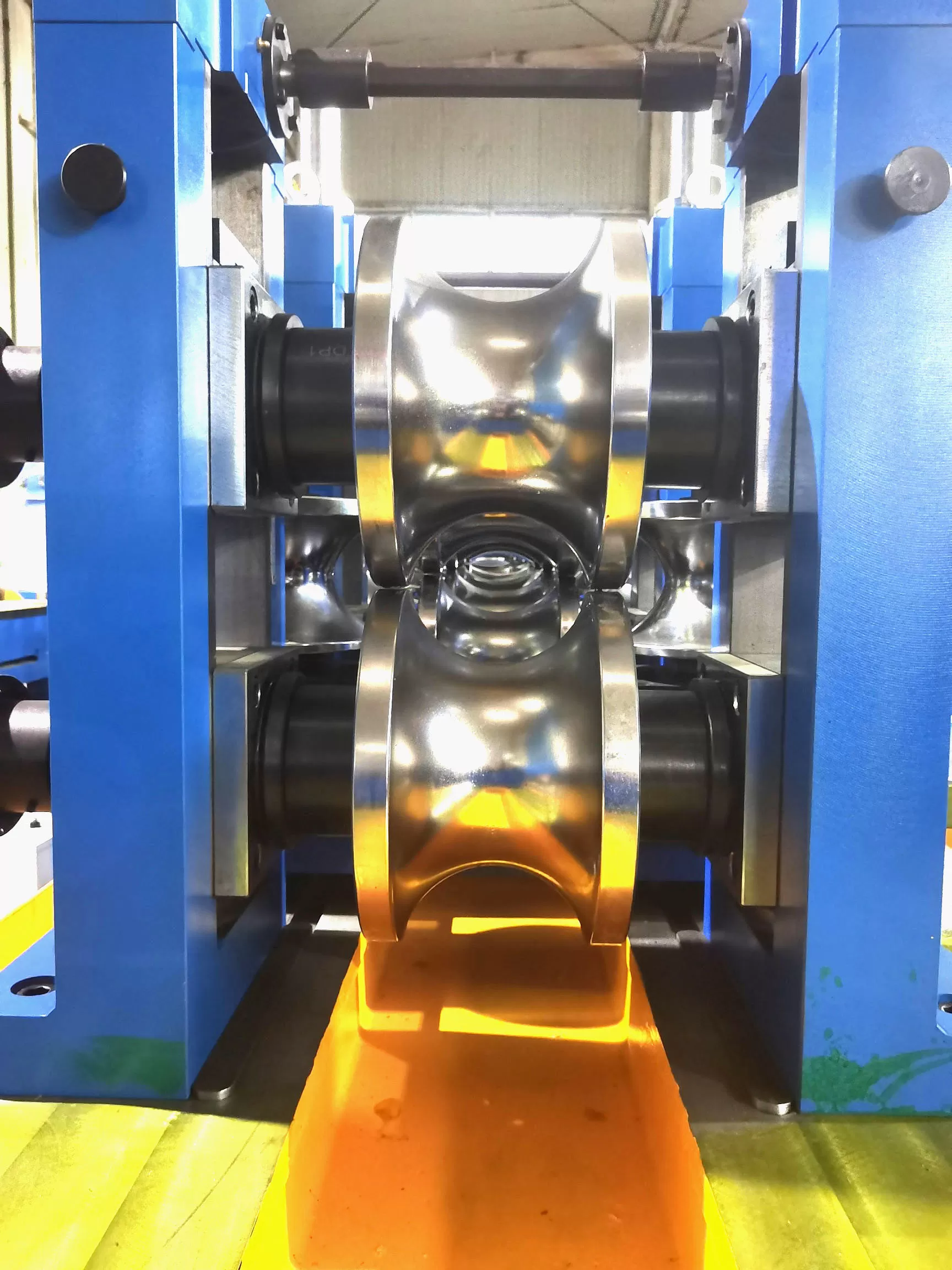
Macro Market Forces Impacting 2026 Tube Mill Pricing
The tube and pipe manufacturing sector faces distinct economic pressures
heading into 2026. Equipment builders have altered their manufacturing designs
to address raw material volatility, energy costs, and labor shortages.
Modern lines incorporate silicon carbide (SiC) solid-state high-frequency
welders instead of traditional MOSFET or vacuum tube technologies. SiC systems
reduce grid consumption by 15% to 25%, but add $10,000 to $30,000 to the initial
line cost. Buyers accept this premium because energy savings quickly offset the
initial machine price.
Automation has shifted from an optional upgrade to a baseline requirement.
Automated coil handling, strip accumulators, and closed-loop cold flying saws
now appear on standard specifications. These components raise line prices
upfront, but they decrease scrap rates and reduce labor requirements on the
factory floor.
Two tube mills with similar footprint footprints can have dramatically
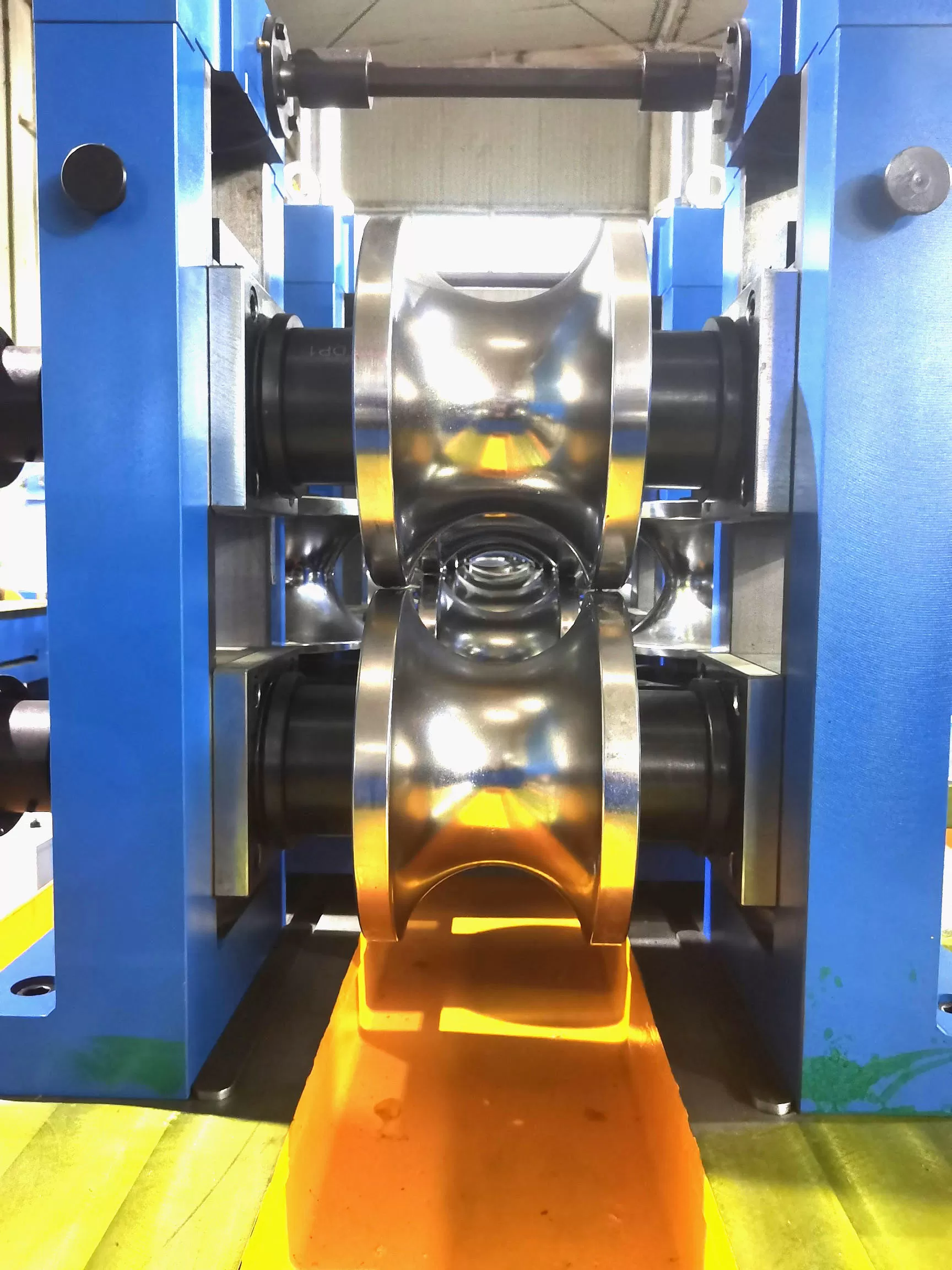
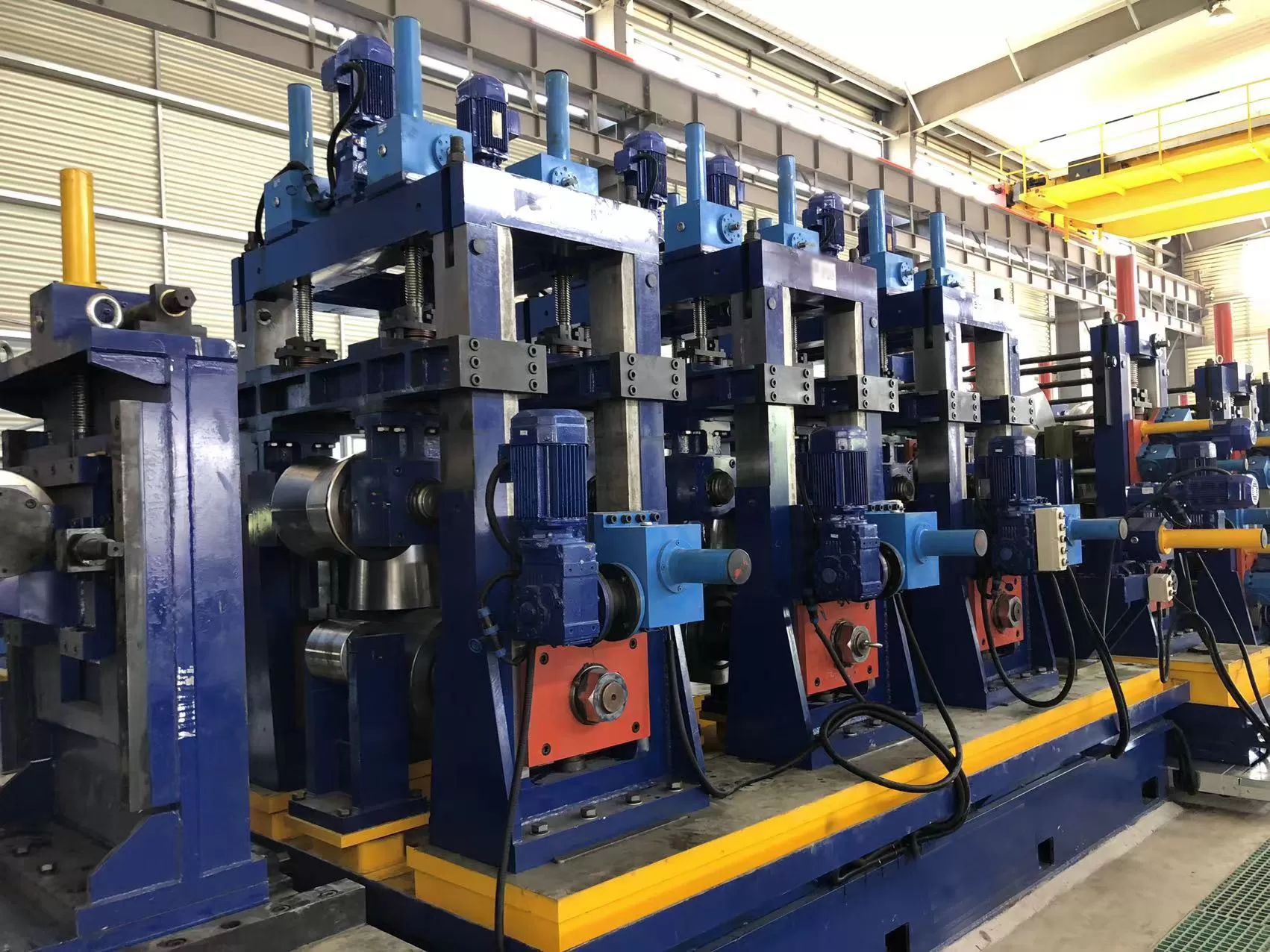
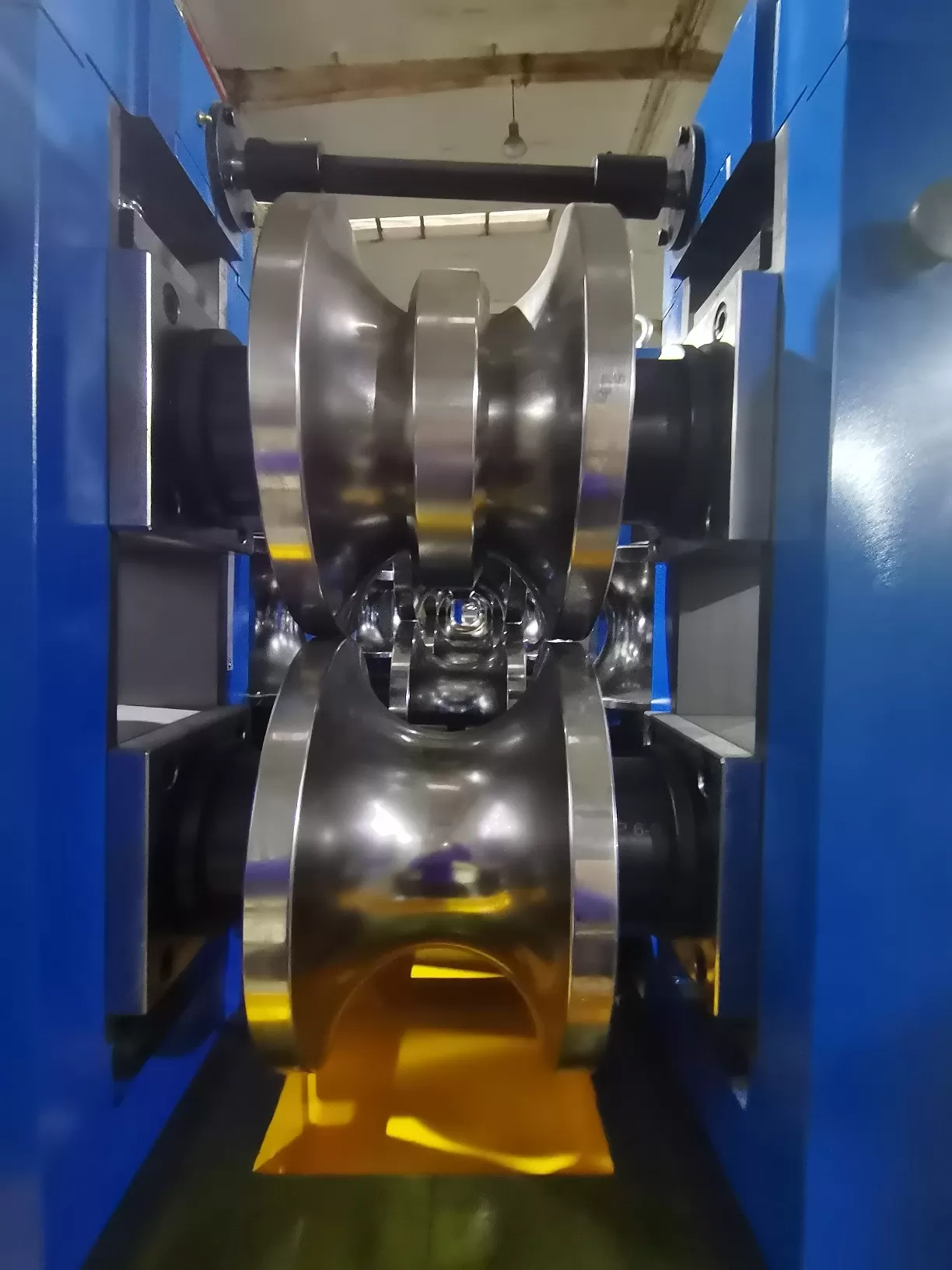
different price tags. The variance comes down to mechanical rigidity, forming
technology, welding methods, and component brands.
1. Pipe Diameter (OD) and Wall Thickness Range
Machine size scales non-linearly with tube dimensions. A mill built for light
furniture tubing (OD 25mm, wall thickness 0.8mm) uses compact stands, lighter
gearboxes, and low-power drives. Total machinery weight might sit under 20
metric tons.
Conversely, producing OD 114mm structural pipe with a 6.0mm wall thickness
demands heavy steel plate housings, heavy-duty universal joint drives, and
massive gear reducers. The forming section requires higher torque and larger
roll shaft diameters to deform high-strength strip steel without chassis
deflection.
Light-gauge lines (≤ OD 50mm, ≤ 2.0mm wall): Require lower
motor power (55 kW to 90 kW main drives) and smaller roll shafts (40mm to 55mm),
lowering steel fabrication costs.
Medium structural lines (OD 50mm to 114mm, up to 4.5mm
wall): Require dual or multi-motor drive setups, reinforced breakdown
stands, and heavy intermediate gear trains.
Heavy-wall lines (≥ OD 114mm, ≥ 6.0mm wall): Demand forged
alloy shafts (80mm to 130mm+), oil-submerged gearboxes, and automated stand
adjustment systems that significantly increase machinery cost.
2. Material Compatibility: Carbon Steel vs. Stainless Steel
The incoming strip material dictates both forming strategy and welding
selection.
Carbon steel ERW lines utilize high-frequency induction (H.F.) welding at
speeds between 40 and 120 meters per minute. The forming process moves quickly,
demanding high-speed horizontal breakdown passes and vertical fin-pass clusters
to manage edge presentation before the squeeze rolls.
Stainless steel tube lines run slower (typically 2 to 15 meters per minute)
using TIG, plasma, or fiber laser welding. While the forming stands run slower,
the machine frame must offer exceptional rigidity to prevent material
work-hardening or surface scratching. These lines require precision
mirror-polished stands, non-marking roll tooling, internal bead rolling systems,
and continuous inert shielding gas manifolds. Consequently, a high-spec
stainless steel tube mill cost often matches or exceeds a carbon steel mill
running at five times its speed.
3. High-Frequency Welding Technology and Electrical Controls
The welding unit represents roughly 20% to 35% of the total welded tube mill
cost. Selecting older vacuum-tube technology is no longer viable for modern
plants due to poor power efficiency and obsolete spare parts.
Current production standards rely on solid-state H.F. welders ranging from
100 kW to 800 kW, priced from $18,000 to over $120,000. In 2026, buyers
increasingly specify SiC transistor-based units. These reduce the welder's
physical footprint and deliver thermal efficiencies above 90%.
Electrical component selection also drives price variance. Tier-1 automation
packages (Siemens S7-1500 PLCs, Siemens Sinamics drives, or Yaskawa servo packs)
add a $15,000 to $45,000 premium over regional Chinese brands like Inovance. For
global operations, specifying international brands ensures local parts
availability and straightforward code modifications.
4. Cut-Off Technologies: Friction Hot Saw vs. CNC Cold Flying Saw
Your cutting system directly affects downstream labor, edge quality, and line
speed.
Friction Hot Flying Saw ($8,000 - $18,000): Uses a
high-speed toothed disc to melt through the pipe. It is inexpensive to buy and
simple to maintain, but it leaves heavy burrs, throws sparks, generates loud
noise, and creates thermal stress on the pipe end. Secondary de-burring
operations become necessary.
CNC Cold Flying Saw ($25,000 - $75,000+): Uses
carbide-tipped or HSS circular blades rotating at lower speeds with orbital or
dual-blade mechanical feeds. The cut leaves a clean, flat, virtually burr-free
edge ready for threading or fabrication. Blade life tracking and servo
synchronization add mechanical cost, but eliminate separate trimming
stations.
2026 Tube Mill Machine Price Breakdown by Category
The table below provides typical turnkey factory prices for new tube mills in
2026. These figures include the uncoiler, shear and end welder, accumulator,
forming-welding-sizing unit, cut-off unit, run-out table, and standard
electrics.
| Machinery Tier | Typical Pipe Specifications | Welding Technology | Line Speed Range | Estimated 2026 Price (USD) |
|---|
| Entry-Level / Light Industrial | OD 10 - 38mm; Wall: 0.5 - 1.5mm (Furniture, Conduit) | Solid-State H.F. (100-150 kW) | 30 - 70 m/min | $50,000 - $110,000 |
| Medium Standard ERW | OD 25 - 76mm; Wall: 1.0 - 3.5mm (Water, Scaffolding) | Solid-State H.F. (200-300 kW) | 40 - 100 m/min | $140,000 - $320,000 |
| Heavy Structural Line | OD 50 - 168mm; Wall: 2.0 - 6.0mm (Construction hollow sections) | Solid-State H.F. / SiC (400-600 kW) | 30 - 80 m/min | $330,000 - $650,000 |
| Precision Automotive / Boiler | OD 16 - 60mm; Wall: 1.2 - 4.0mm (DOM base, shock absorbers) | High-Spec H.F. or Fiber Laser | 50 - 120 m/min | $450,000 - $850,000 |
| API Heavy Casing / Line Pipe | OD 114 - 325mm+; Wall: 4.0 - 12.7mm (Oil, Gas, Heavy structural) | Solid-State H.F. (600-1200 kW) | 15 - 45 m/min | $850,000 - $2,200,000+ |
Global Sourcing Comparison: Europe vs. China vs. Regional Hubs
Where you purchase your machinery determines its capital cost, operational
longevity, and delivery timeframe. Suppliers from different regions design
equipment around distinct commercial priorities.
European and North American Manufacturers
Producers such as Oto Mills, Fives Group, and Abbey Machine build heavy lines
designed for decades of multi-shift operation. Their machines incorporate
automated roll positioning, quick tool change systems, and strict CE safety
standards. However, European tube mill pricing runs three to five times higher
than Asian equivalents. These lines fit established tube producers upgrading
high-speed automotive or line pipe mills where minimal downtime justifies high
capital expenditures.
Chinese Tier-1 Manufacturers
Modern Chinese manufacturers have captured significant global market share by
delivering robust mechanical engineering alongside modern automation components.
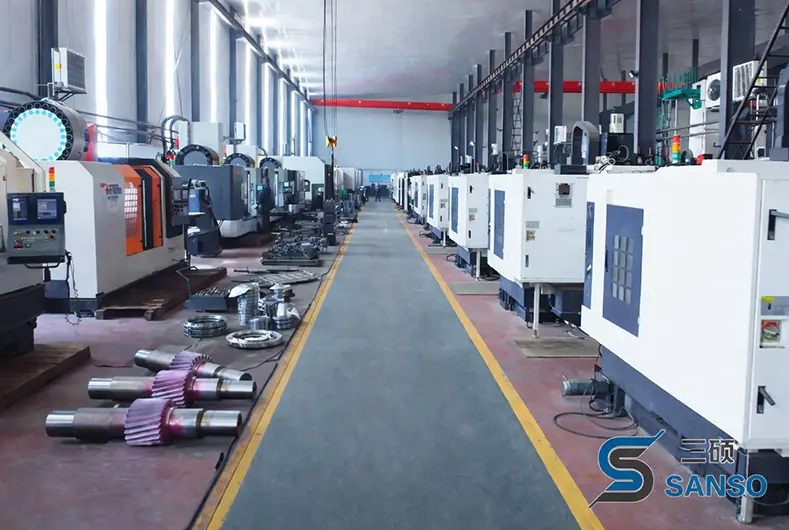
High-precision machine builders, such as SANSO, utilize Japanese boring centers
and German grinding technology to manufacture housings and roll stands that
deliver precise spindle concentricity and alignment.
A high-frequency pipe welding line price from an established Chinese builder
typically delivers a complete return on investment (ROI) within 12 to 18 months.
The critical task for overseas buyers is filtering out export trading agents and
unvetted regional workshops to partner directly with dedicated machine
builders.
India and Turkey
Turkish manufacturers hold a distinct position in the Mediterranean and
European markets. They deliver mid-to-high level mechanical builds at prices
roughly 25% to 40% below Western European suppliers. Indian machine builders
offer economical ERW lines, with engineering geared toward domestic steel grades
and regional market configurations.
Hidden Costs in Setting Up a Tube Manufacturing Plant
The machine purchase order rarely represents the complete investment. Plant
operators must budget for several downstream and commissioning expenses that
impact overall project costs.
1. Roll Tooling Sets (Rollers)
Unless clearly specified in your commercial contract, a base tube mill price
often includes only one standard round profile tooling set, or excludes tooling
altogether. Producing square hollow sections (SHS), rectangular tubing (RHS),
and multiple round diameters requires dedicated roll tooling.
Cr12MoV / SKD11 Tooling: Industry workhorse steel. Costs
range from $6,000 to $18,000 per set depending on tube diameter.
D2 Deep Cryogenic Heat-Treated Tooling: Resists abrasive
wear when running galvanized or high-tensile strip. Adds a 25% to 35% premium
over Cr12MoV.
Tungsten Carbide Insert Tooling: Used on high-wear sizing
and fin-pass sections. Costs upwards of $30,000 per set, but extends tool life
by factor of five.
2. Civil Engineering, Foundation, and Utilities
A heavy tube mill cannot sit directly on an unreinforced concrete slab.
Forming and sizing stands produce continuous dynamic vibration during high-speed
rolling. A proper isolated foundation pit, accumulator reservoir, and drainage
channels can cost between $15,000 and $60,000 in civil works.
Ensure your factory floor has sufficient utility connections:
Closed-circuit cooling water towers (15 to 40 m³/h capacity) to cool
welders, roll tooling, and hydraulic reservoirs.
Industrial air compressors (0.6 to 0.8 MPa) for pneumatic brake systems,
strip accumulators, and packaging ejectors.
Step-down transformer capacity capable of absorbing instantaneous
high-frequency electrical load swings.
3. Ocean Freight, Rigging, and Tariffs in 2026
A complete structural tube mill line requires four to eight 40-foot HQ
containers plus open-top or flat-rack containers for heavy breakdown drive
assemblies. Factor in marine insurance, destination port fees, heavy forklift
rentals, and rigging crews. Depending on your import market, customs duties and
trade compliance measures can add 3% to 25% on imported capital goods.
4. Installation, Commissioning, and Operator Training
Budget for two to three technical engineers on site for 15 to 30 days. Buyers
typically cover round-trip flights, local lodging, food, translation services,
and a standard commissioning fee ($150 to $300 per engineer per day). Several
builders now offer mixed AR remote commissioning options to lower travel
overhead.
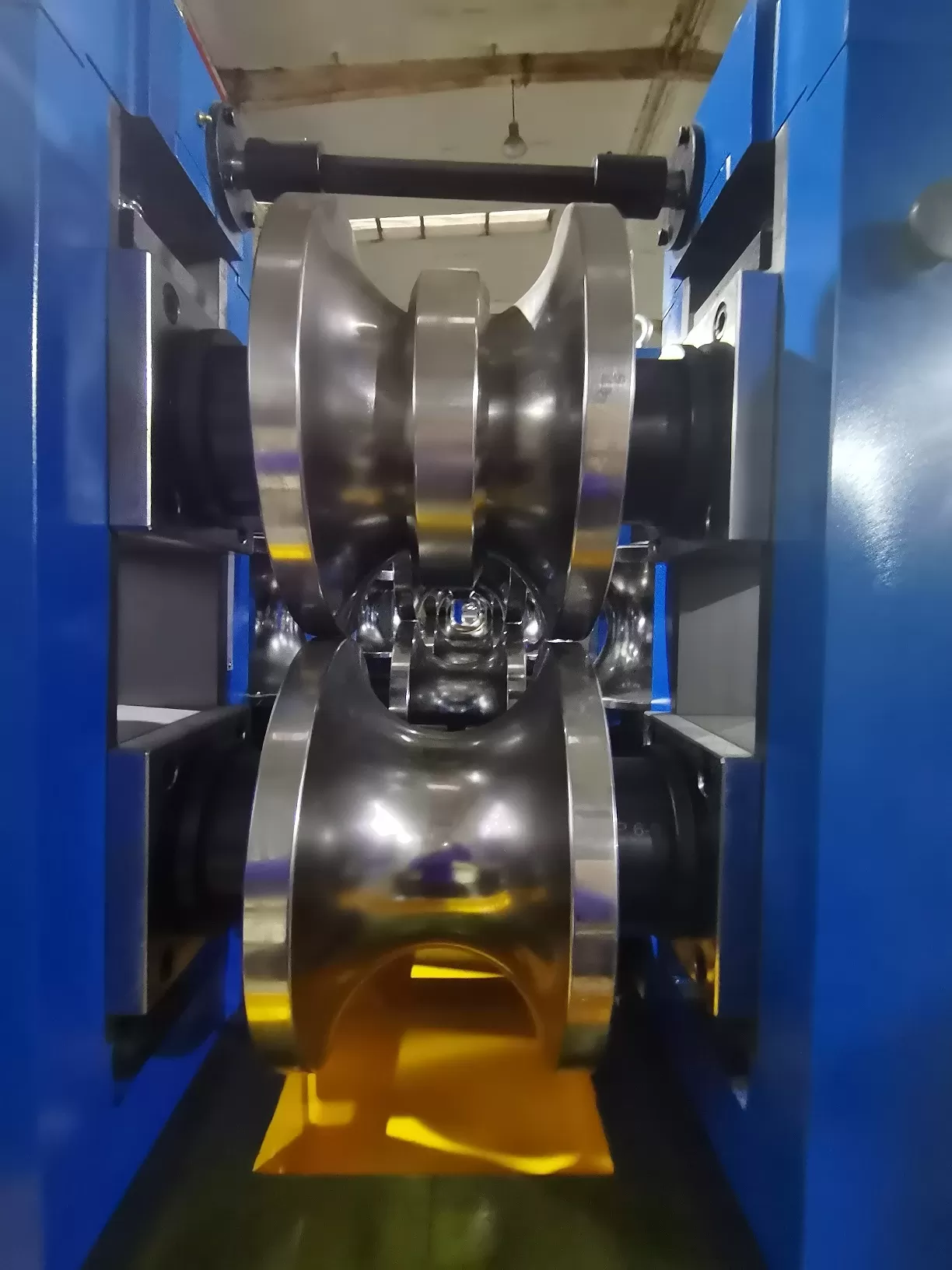
Procurement Strategy: RFQ Checklist and Supplier Vetting
When requesting quotes for welded tube mills, vague inquiries yield vague
numbers. Sending a precise Request for Quotation (RFQ) forces suppliers to
submit firm, transparent proposals that can be compared side-by-side.
Include the following operational criteria in your technical inquiry:
Input Strip Properties: Minimum and maximum yield strength
(e.g., Q195, Q235, Q355B, SS304), strip width, and thickness tolerances.
Finished Product Specifications: Round pipe ODs,
square/rectangular profiles, wall thicknesses, and strict cut-length
tolerances.
Production Scope and Target Speed: Expected monthly
capacity in metric tons and preferred running speeds per diameter.
Electrical Specification Constraints: Local grid voltage,
frequency (50Hz vs 60Hz), and preferred automation brands (Siemens, Mitsubishi,
Schneider).
Factory Footprint Limits: Available workshop length, bay
clearance, crane tonnage, and preferred material flow direction (left-to-right
vs. right-to-left).
To verify that a prospective supplier is an actual engineering manufacturer
rather than an intermediary, arrange an unannounced live video walkthrough of
their heavy machining bay. Verify that they own CNC horizontal boring machines,
precision bed planers, and dynamic balancing equipment. Legitimate builders
maintain tight quality control over spindle runs and chassis stress-relieving
processes.
Experienced production managers look beyond the initial purchase price. The
most economical equipment choice is the machine that delivers the lowest
operational cost per ton of finished tube over its working life.
Frequently Asked Questions
Q1: What is the realistic delivery timeline for a custom welded tube
mill line in 2026?
A1: Standard production lines for light to medium
tubes typically ship in 90 to 120 days from deposit confirmation and drawing
approval. Heavy API lines, lines requiring custom quick-change cassette tooling,
or configurations with specialized CNC cold saws require 150 to 210 days to
manufacture and factory-test.
Q2: Can a single high-frequency tube mill produce both round and
square pipes?
A2: Yes. The breakdown and fin-pass sections form
round pipe first. Sizing stands then reshape the round tube into square or
rectangular hollow sections using dedicated profile rolls. Alternatively,
direct-forming square technology shapes square tube straight from flat strip,
reducing tooling changeover times for structural mills.
Q3: How much scrap steel does a modern ERW tube mill generate during
normal operation?
A3: A well-tuned mill equipped with an automatic
shear welder, vertical spiral accumulator, and CNC cold flying saw keeps strip
scrap below 1.5% to 2.5%. Older lines running friction hot saws and manual strip
joiners often generate 4% to 7% process scrap, cutting into operating
margins.
Q4: Is it better to buy roll tooling directly from the machine
builder or from a third-party tooling shop?
A4: Purchasing the
initial two or three sets from your machine builder ensures accountability
during line commissioning. The machinery builder assumes responsibility for
flower pattern design, strip edge clearances, and roll shaft alignment. Once the
line hits standard output targets, certified third-party tooling specialists can
supply replacement rolls.
Q5: What power capacity is needed for a medium ERW tube mill
installation?
A5: A standard mill producing up to OD 76mm structural
pipe requires an installed transformer capacity between 450 kVA and 630 kVA.
This accommodates the solid-state HF welder (200-300 kW), main DC/AC forming and
sizing motors (combined 110-160 kW), hydraulic power units, cut-off drives, and
auxiliary cooling pumps.
Request a Customized Tube Mill Engineering Proposal
Every tube manufacturing plant works with unique site footprints, raw
materials, and production goals. SANSO engineers custom-built tube mills,
high-efficiency HF welding setups, and precision cold cutting equipment designed
to lower operational costs per ton.
Contact our engineering sales team today with your target tube ODs, wall
thickness range, and expected annual tonnage. We will deliver a detailed
technical layout, line velocity simulation, and itemized commercial proposal
within two business days.