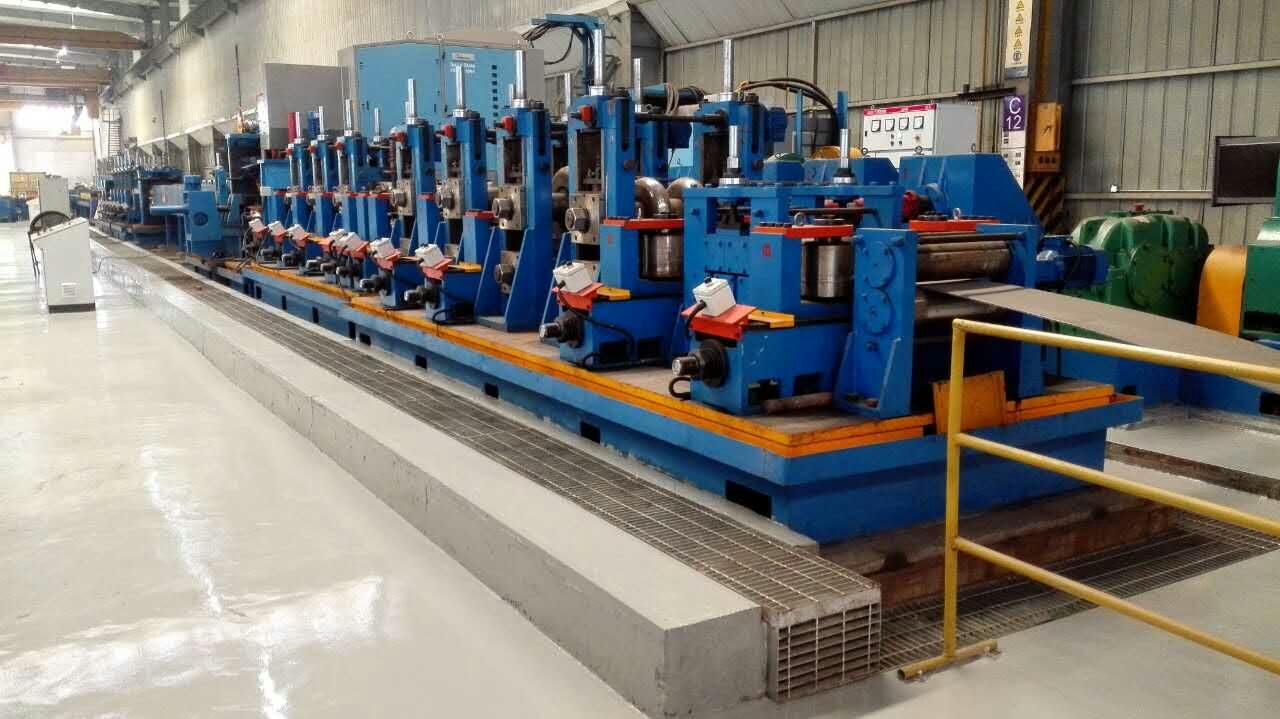
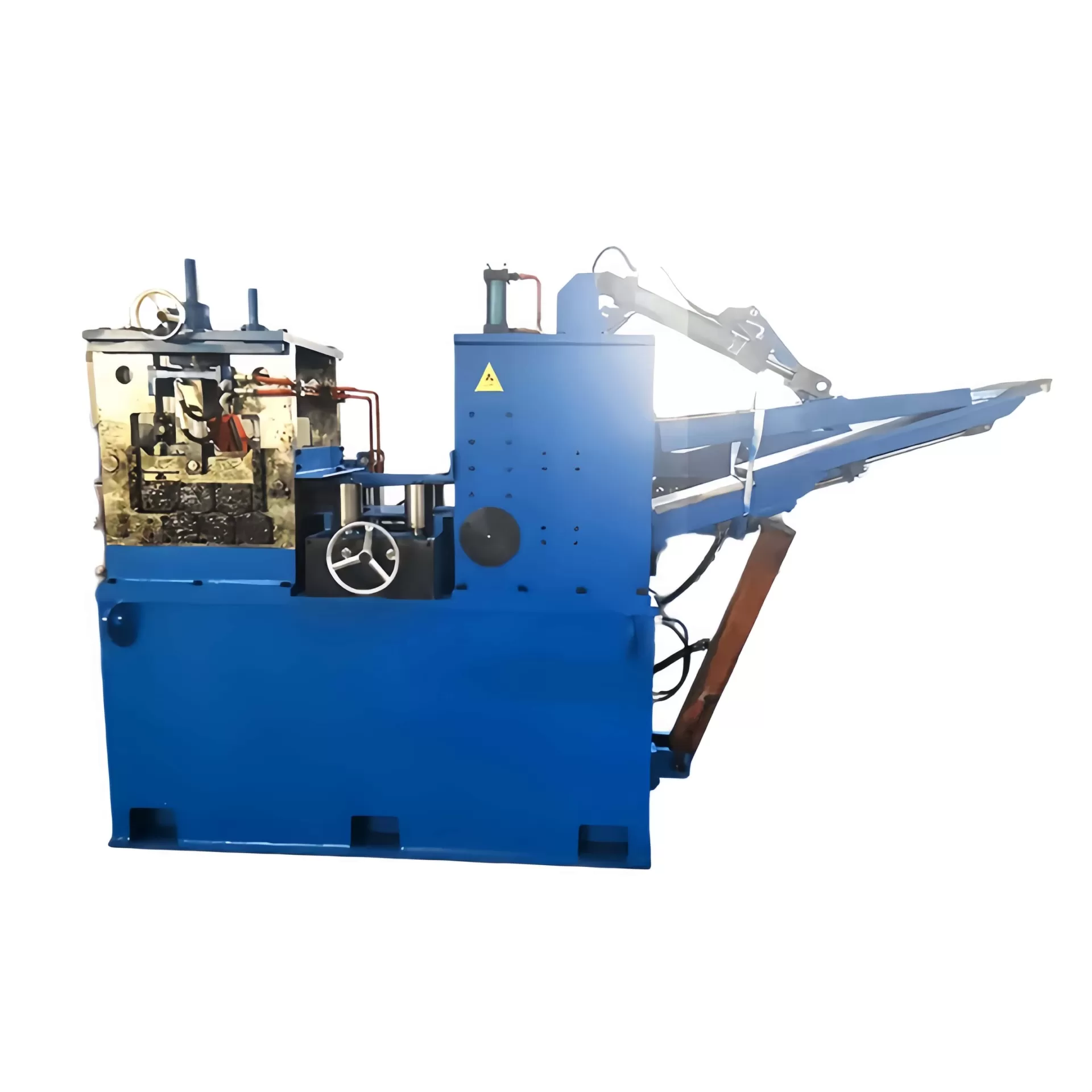
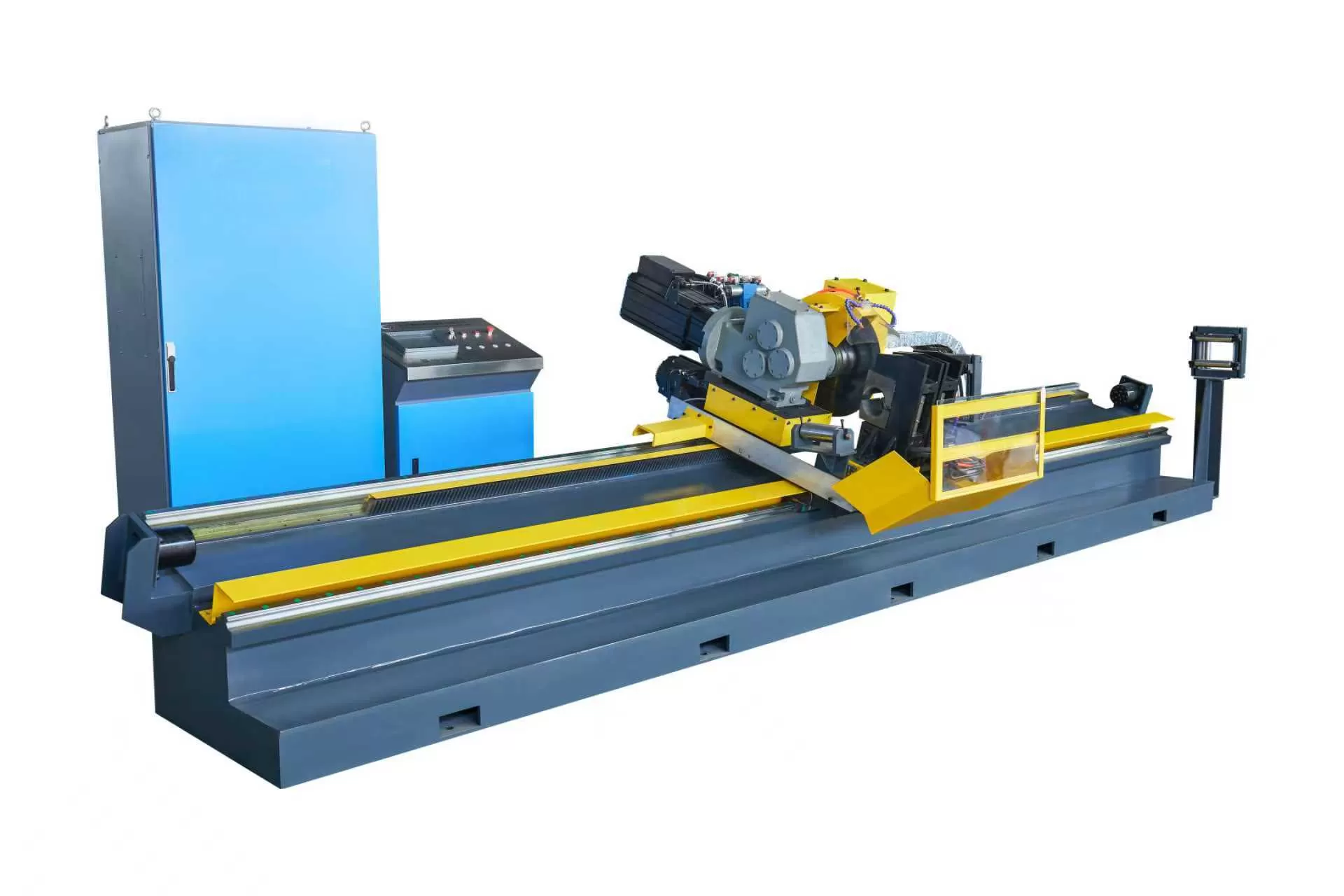
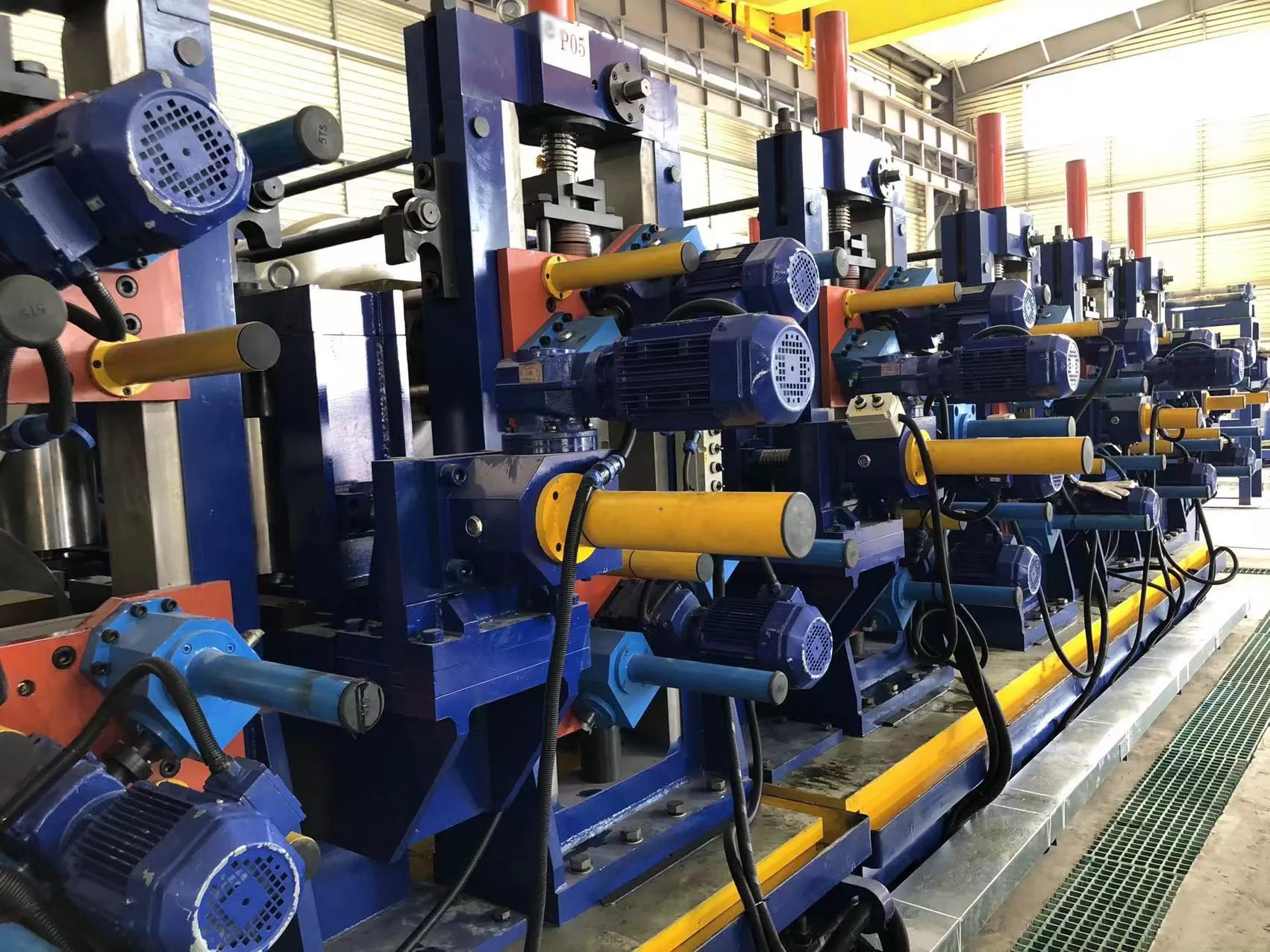
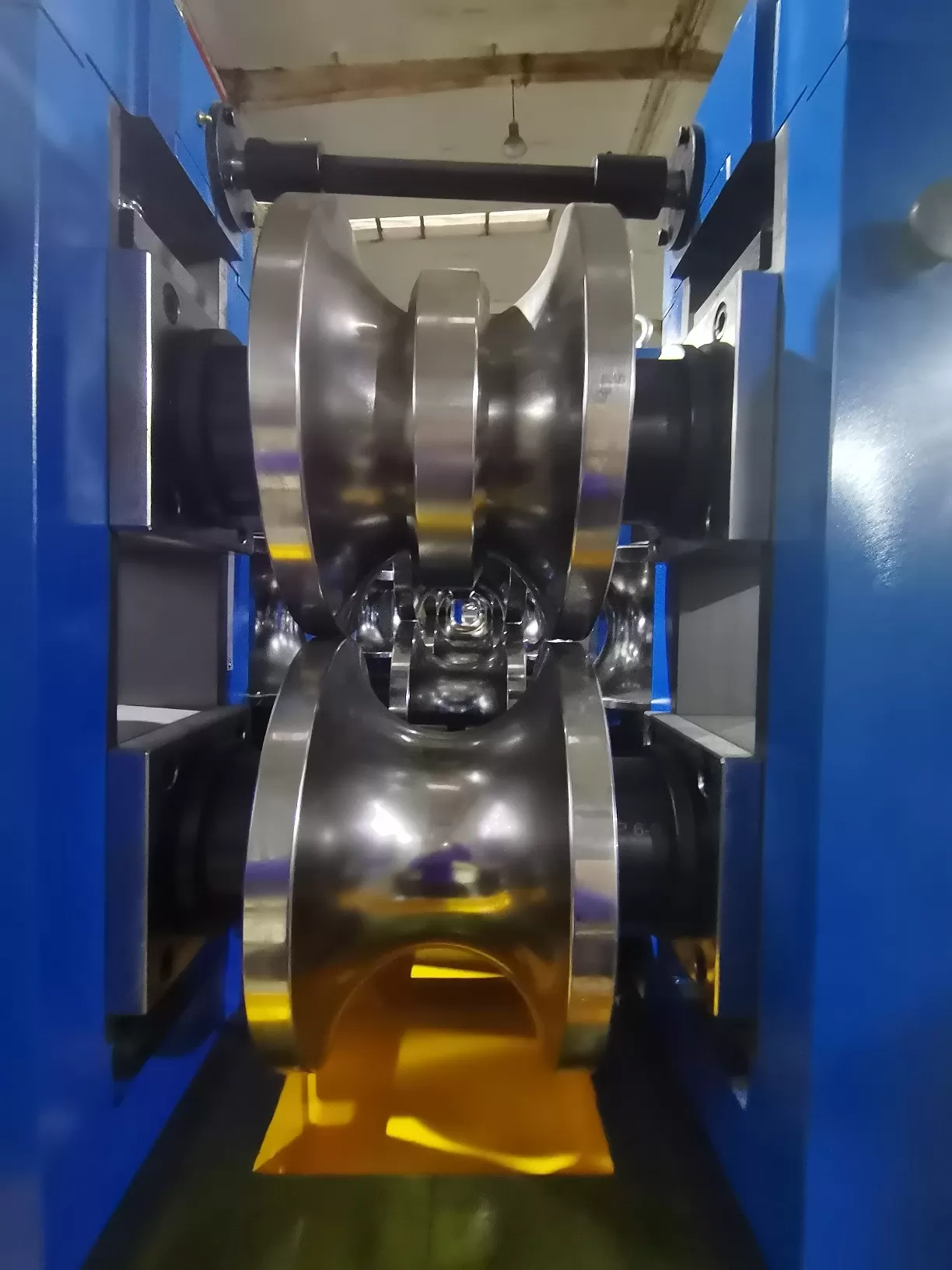
Producing welded steel tube requires a precisely aligned steel
tube mill line that transforms flat strip into closed profiles at
speeds from 20 to 120 m/min. Every station – uncoiler, strip accumulator,
forming rolls, welding box, sizing section, and flying cutoff – influences final
product geometry, weld seam integrity, and mechanical properties. SANSO manufactures complete
mill lines for round, square, and rectangular tubes from 10 mm to 300 mm OD, in
carbon steel, stainless steel, and galvanized materials. This article describes
the engineering principles behind each section of a modern steel
tube mill, common defects and their root causes, and process
adjustments to achieve consistent weld quality and dimensional tolerances.
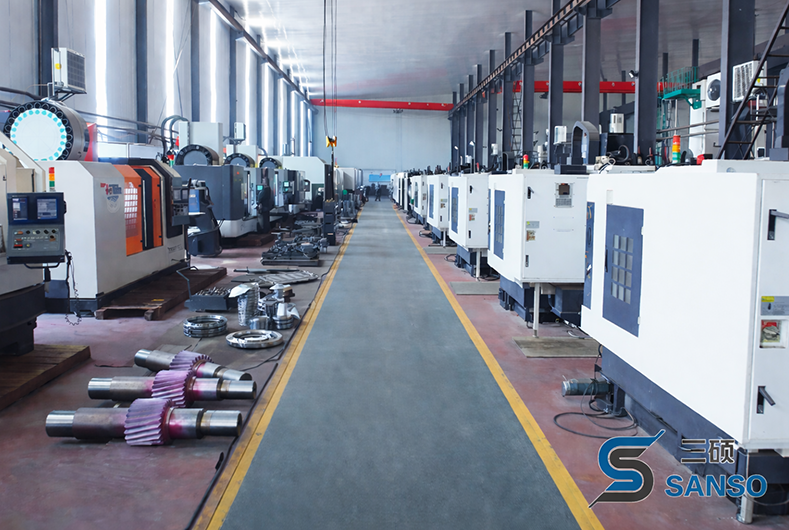
A typical steel
tube mill consists of seven integrated modules. Performance depends
on the proper alignment and maintenance of each.
1. Uncoiling and Strip Preparation
Double cone or mandrel uncoiler: Holds steel coils up to 25
tonnes. Hydraulic expansion secures the inner diameter, while brakes control
back tension to prevent strip wandering.
Strip accumulator (loop pit or horizontal carousel): Allows
continuous mill operation during coil changes – stores 30–60 meters of
strip.
Pinch roller and flattener: Levels the strip head and
removes coil curvature. Mismatched flattening causes edge wave or center buckle
in formed tube.
Shear welder (optional): Joins the tail of an expiring coil
to the head of a new coil for endless rolling. Weld must be ground flush to
avoid damaging forming rolls.
2. Forming Section – Breakdown and Fin Pass
The forming zone gradually bends the flat strip into an open seam tube. This
is the most mechanically critical part of a steel
tube mill. Two main approaches exist:
Conventional roll forming: 12–16 pairs of horizontal and
vertical rolls progressively close the strip. The breakdown stage (first 6–8
passes) creates a U-shape; the fin pass (last 3–4 passes) closes the edges into
a circular shape with a small gap for welding.
Direct forming (FFX or cage forming): Fewer roll stations
(8–10) with universal (horizontal + vertical) rolls that can switch between
round and square tube sizes without changing all rolls. SANSO specializes in direct forming square tube mills, offering rapid size changeover
within 20 minutes.
Key design parameters: roll material (D2 or M2 steel, often chromed), surface
finish (Ra <0.8 µm), and edge conditioning. Insufficient forming energy (too
few passes) creates springback, leading to open seams or weld misalignment.
3. Welding Section – High-Frequency Induction or Contact
After forming, the open seam must be welded continuously. Two high-frequency
methods dominate:
Induction welding: A multi-turn coil surrounds the tube,
inducing current that flows along the edges. No electrode contact – cleaner for
stainless. Frequency 200–600 kHz.
Contact welding (sliding contacts): Copper shoes press
directly on the strip edges just before the squeeze rolls. Higher efficiency for
low-carbon steel.
The welding process includes:
Impedor (ferrite core): Placed inside the tube to
concentrate current at the edge surfaces. Impedor degradation is a common cause
of cold welds.
Squeeze rolls: Forge the heated edges together. Excessive
squeeze pressure causes internal flash (fin) that must be scraped; insufficient
pressure leaves a lack-of-fusion seam.
Weld heat control: Infrared pyrometers monitor edge
temperature (1200–1400°C for steel). Too low – incomplete fusion; too high –
burn-through or excessive oxide formation.
After welding, an external scarfing tool removes the outer flash; an internal
scraper removes inner flash (mandatory for hydraulic tube applications).
4. Sizing and Straightening
Weld flash removal leaves a slightly oversize or out‑of‑round tube. The
steel
tube mill then passes the tube through:
Sizing section (2–4 stands): Reduces OD to final dimension
and restores roundness. For square/rectangular tubes, sizing rolls have matching
flat and corner profiles.
Turks head (optional): Four independently adjustable rolls
that straighten the tube in two planes, correcting camber and bow.
Annealing (in-line or off-line): For high‑strength or
stainless tubes, an induction coil post‑weld anneals the heat‑affected zone to
restore ductility.
5. Cutting and Discharge
Two cutting methods are used depending on line speed and wall thickness:
Flying cutoff (saw or shear): Synchronized with tube speed
– cuts without stopping the mill. For diameters up to 150 mm, a circular saw;
for larger, a cold shear.
Rotary cutoff (pipe cutter): Uses a set of rolling blades
that orbit around the tube – cleaner cut for thin wall.
The cut tubes are then conveyed to a runout table, bundled, and strapped.
Common Defects in Steel Tube Mill Products and Root Causes
Even a well‑maintained steel
tube mill can produce off‑spec tube if process parameters drift.
Below are frequent defects encountered by mill operators.
Weld offset (misaligned edges): Caused by uneven strip edge
condition, worn fin pass rolls, or incorrect strip guidance. Leads to weak seam,
leaking under hydrostatic test.
External or internal flash (over‑thick scarf): Improper
tool setting or dull scarfing blades. Excessive internal flash reduces flow area
in hydraulic lines.
Longitudinal seam cracks: Results from low welding heat,
high squeeze pressure, or contaminated strip edges (oil, rust). Often detected
by eddy current testing.
Out‑of‑roundness (ovality): Insufficient sizing passes or
worn sizing rolls. For round tubes, ovality >0.5% of OD fails fit‑up
specifications.
Camber or bow (curvature along length): Uneven cooling or
misaligned straightening rolls. Limits automatic feeding into downstream
processes.
Internal scoring: Worn internal scrapers or damaged impedor
coating leaving grooves inside the tube – unacceptable for high‑purity
applications.
Solutions: Process Optimization and Quality Assurance
Preventing these defects requires a combination of sensor feedback, regular
maintenance, and operator training. SANSO integrates the
following into its steel
tube mill lines to maintain consistent quality.
Online NDT and Monitoring
Eddy current testing (ECT): Coil placed after weld scarf
detects surface and subsurface flaws. Automatically marks defective sections for
removal.
Ultrasonic testing (UT): For heavy wall tubes (thickness
>4 mm) – detects lack of fusion in the weld root.
Diameter and wall thickness gauges: Laser micrometers and
ultrasonic sensors provide feedback to the sizing roll adjustment servos.
Weld power control: A closed‑loop system adjusts HF
generator output based on edge temperature and mill speed.
Roll Maintenance and Setup
Forming and sizing rolls are precision‑ground to ±0.02 mm. After every
500–1000 tonnes of production, rolls should be inspected for wear. Chromium
plating extends roll life by 3–5 times. For mills producing multiple shapes,
SANSO provides quick‑change cassettes that allow swapping
complete roll sets in under 60 minutes.
Strip Edge Preparation
Slit edges from the coil must be free of burrs and work hardening. Install an
edge trimmer (rotary shears) just before the accumulator to remove slit edge
defects. For stainless steel, edge grinding eliminates micro‑cracks that
propagate during welding.
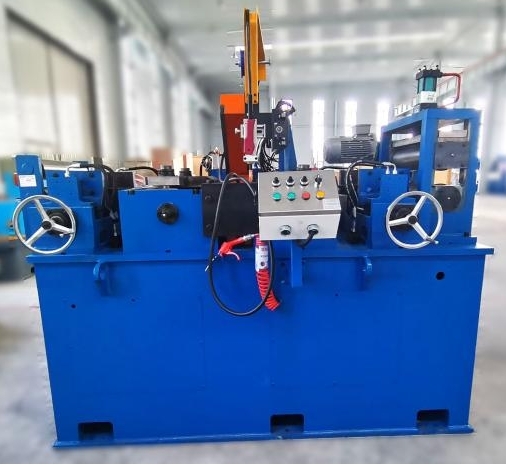
Application‑Specific Mill Configurations
Different end uses require distinct features on a steel
tube mill. Below are typical industry requirements.
Structural tube (square/rectangular for construction): Emphasis on corner radius consistency and torsional straightness. Mill should
include a Turks head with four‑way adjustment.
Automotive tubes (drive shafts, shock absorber bodies): Requires high‑frequency welding with internal flash removal and a post‑weld
annealing station. Wall thickness tolerance ±0.1 mm.
Precision hydraulic lines: Must be free of internal flash
and have full weld penetration. Mill line includes an internal scraping unit and
a hydrostatic test station.
Stainless steel tube (food, pharmaceutical): Mill rolls
must be polished (Ra <0.4 µm) to avoid surface marking. Induction welding
with inert gas shielding (argon) prevents oxidation.
Mill Speed and Throughput Considerations
The productivity of a steel
tube mill is measured in metres per minute. Typical ranges:
Thin wall (0.5–1.5 mm) carbon steel round tube: up to 120 m/min.
Medium wall (2–4 mm) square tube: 40–70 m/min.
Thick wall (5–10 mm) structural tube: 15–30 m/min.
Stainless steel (any wall): 15–40 m/min due to slower welding speeds to
avoid carbide precipitation.
Higher speeds demand larger weld power (up to 600 kW) and more robust forming
sections. Conversely, slow speeds can cause overheating and excessive flash.
Energy Efficiency and Modern Drives
Modern steel
tube mill lines employ AC vector drives with regenerative braking
on the uncoiler and accumulator to recover energy. Sizing and straightening
rolls are often individually driven, reducing slip and roll wear.
SANSO mills include an energy monitoring system that reports
kW‑hours per tonne, helping operators identify inefficient sections.
Frequently Asked Questions (FAQs) on Steel Tube Mill Design and
Operation
Q1: What is the difference between a tube mill and a pipe
mill?
A1: In industry, a steel
tube mill typically refers to lines producing smaller diameters (up
to 300 mm) for structural, mechanical, and automotive uses, often using HF
welding. Pipe mills (ERW or LSAW) produce larger diameters (300–3000 mm) for
oil, gas, and water transmission. The fundamental forming and welding principles
are similar, but pipe mills have heavier gauge handling and often offline heat
treatment.
Q2: How do I decide between conventional roll forming and direct
forming for a new steel tube mill?
A2: Conventional roll forming with many dedicated roll
stands is ideal for high‑volume, fixed‑size production (e.g., 10,000+
tonnes/year of the same diameter). Direct forming (FFX or cage) reduces tooling
inventory and changeover time, making it suitable for job shops producing 20+
different sizes per week. SANSO offers both configurations;
consult our engineers to match your product mix.
Q3: What maintenance tasks are required weekly on a steel tube
mill?
A3: Critical weekly checks: clean and inspect weld impedor
for cracks; verify alignment of fin pass rolls using a laser; measure roll
surface hardness (RC 55–60); check scarfing tool clearance (0.1–0.2 mm behind
the squeeze roll); lubricate all bearing blocks; test eddy current calibration
standards. Neglecting these leads to quality drift.
Q4: Can a single steel tube mill produce both round and square
tubes?
A4: Yes, but with modifications. After the welding and
sizing section, a dedicated square/rectangular forming station (often called a
Turk’s head or stretch‑reducing mill) converts round tube into square.
Alternatively, a direct forming mill can produce square tube directly from strip
using special roll passes. SANSO offers hybrid mills that
switch between round and square production in under 30 minutes.
Q5: What wall thickness to diameter ratio is feasible for HF welding
in a steel tube mill?
A5: For carbon steel, the thickness to diameter ratio (t/D)
can range from 0.5% to 10%. Very thin wall (t/D < 0.5%) is prone to weld
burn‑through and requires precise edge alignment; thick wall (t/D > 8%) needs
pre‑heating and higher weld power. Stainless steel has a narrower window (t/D
1–6%). Always consult the mill manufacturer’s forming capabilities before
ordering.
Ready to Specify or Upgrade Your Steel Tube Mill Line?
Selecting the right steel
tube mill configuration – number of forming stands, welding power,
sizing approach – directly impacts your product quality, material yield, and
changeover flexibility. SANSO provides turnkey lines
with process guarantee: we define the roll tooling, weld parameters, and NDT
package based on your target tube dimensions and steel grades. Our team also
offers remote tuning and annual maintenance audits.
Submit your inquiry now: https://www.sansotubemill.com/contact – Provide your desired tube sizes (OD x wall), material
(carbon/stainless/galvanized), and annual tonnage. We will respond with a
preliminary mill layout, power calculation, and a sample roll pass design within
5 business days.