
How Much Zinc Wire Is Used for 1 Ton of Galvanized Tube
2026-07-11
In galvanized tube production, the weld seam is a small area, but it has a direct influence on the corrosion resistance of the finished tube.
During ERW welding, the edges of the steel strip are heated and joined by the HF welder. This process forms the tube body, but it also affects the original zinc coating near the weld seam. After welding, part of the zinc layer on the seam area may be burned off or reduced. If this area is not treated properly, the corrosion resistance of the galvanized tube will not be uniform.
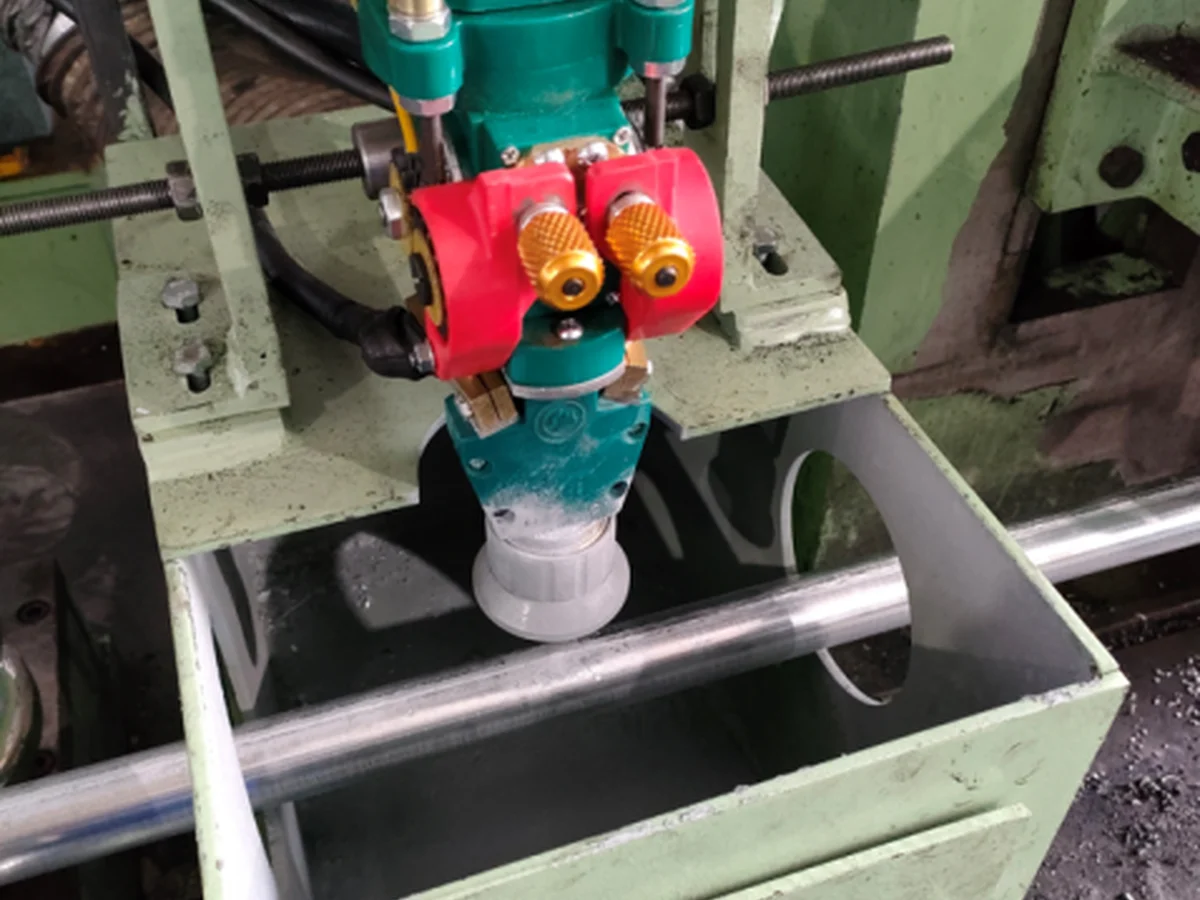
This is why many ERW tube mill lines are equipped with a zinc spraying machine. The zinc spraying machine uses zinc wire to apply a new zinc coating onto the weld seam area, helping restore the anti-corrosion performance of the galvanized tube.
For tube manufacturers, a very practical question often comes up before purchasing zinc wire:
How much zinc wire will be consumed to manufacture 1 ton of galvanized steel tube?
There is no single answer that fits every production line. Zinc wire consumption is affected by tube thickness, tube size, tube mill speed, wire diameter, spraying width, coating requirement, and machine adjustment. However, we can still use common production conditions to make a reasonable estimate.
Why Zinc Wire Is Needed After ERW Welding
Galvanized steel strip already has a zinc layer before it enters the tube mill. After forming, the strip edges are welded together by high-frequency welding. The welding heat is concentrated at the seam, so the zinc coating near that area is affected.
If the weld seam is left untreated, the tube may look complete, but the seam area may have weaker corrosion protection than the rest of the tube surface. For galvanized tubes used in construction, furniture, fencing, greenhouse structures, solar mounting, and other outdoor or semi-outdoor applications, this can become a quality concern.
Zinc spraying is used to solve this problem. The zinc spraying machine applies molten zinc particles to the weld seam area after welding. Once the zinc particles cool and bond with the tube surface, they form a new protective zinc layer.
In a galvanized tube production line, zinc wire is therefore not just a consumable. It is part of the weld seam protection process.
How a Zinc Spraying Machine Works
A zinc spraying machine is usually installed after the welding and seam treatment section of the ERW tube mill line. Its job is to feed zinc wire into the spray gun, melt the wire, atomize the molten zinc, and spray it onto the weld seam.
The process can be understood in three steps.
1. Melting the zinc wire
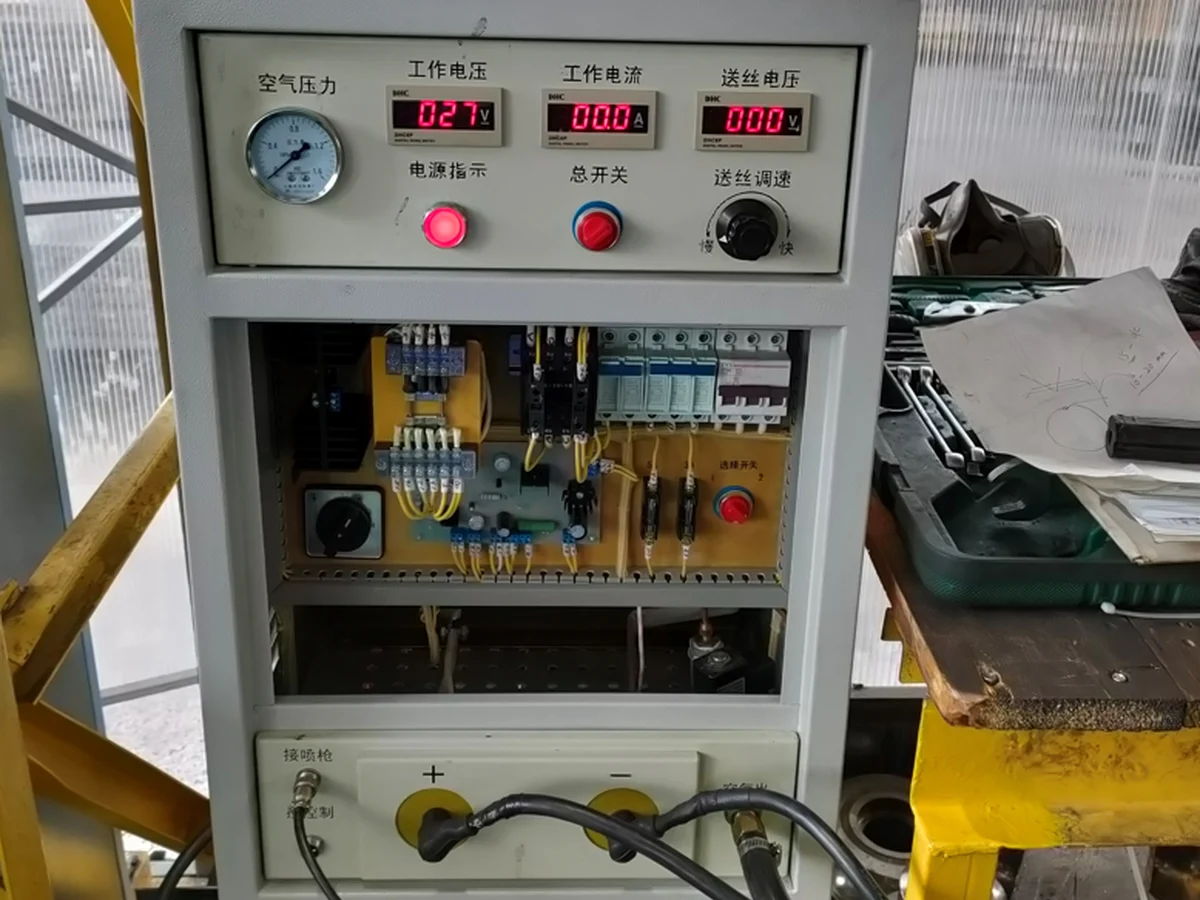
Inside the zinc spraying gun, two zinc wires are used as electrodes. When power is applied, an electric arc is generated at the tips of the zinc wires. The arc creates a very high temperature, which melts the zinc wire quickly.
2. Atomizing and spraying zinc particles
After the zinc wire is melted, compressed air breaks the molten zinc into fine particles. These zinc particles are carried by the airflow and sprayed at high speed toward the weld seam area of the galvanized tube.
The spraying position and angle are important. If the spray is not aligned with the weld seam, the zinc coating may be uneven or the zinc wire may be wasted.
3. Forming the zinc coating layer
When the zinc particles hit the tube surface, they flatten, cool rapidly, and attach to the weld seam area. This forms a new zinc coating layer over the welded section.
The coating is mainly a mechanical bond with the tube surface. For stable spraying quality, the weld seam should be clean, the spray gun should be properly adjusted, and the zinc wire feeding should be consistent.
Zinc Wire Diameter Selection
Different galvanized tube production conditions require different zinc wire diameters. In general, thinner tubes and lower tube mill speeds can use smaller zinc wire. Thicker tubes or higher production speeds may require larger zinc wire to maintain enough zinc spraying volume.
Common zinc wire diameters include:
- Φ1.2mm
- Φ1.5mm
- Φ2.0mm
- Φ2.5mm
- Φ3.0mm
The following reference table can be used as a general guide for selecting zinc wire diameter according to tube thickness and tube mill speed.
| Tube Thickness | Tube Mill Speed ≤60m/min | Tube Mill Speed 60–100m/min | Tube Mill Speed 100–140m/min |
|---|---|---|---|
| 0.8–1.2mm | Φ1.2mm | Φ1.2–1.5mm | Φ1.5mm |
| 1.2–1.8mm | Φ1.5mm | Φ1.5mm | Φ1.5–2.0mm |
| 1.8–2.5mm | Φ1.5–2.0mm | Φ2.0mm | Φ2.0mm |
| 2.5–3.5mm | Φ2.0mm | Φ2.0–2.5mm | Φ2.5mm |
| 3.5–4.5mm | Φ2.5mm | Φ2.5mm | Φ2.5–3.0mm |
| >4.5mm | Φ2.5–3.0mm | Φ3.0mm | According to actual production conditions |
This table should be treated as a practical reference, not as a fixed rule for every tube mill. The final selection still depends on the tube size, weld seam condition, required coating thickness, zinc spraying machine setting, and production speed.
How Much Zinc Wire Is Used for 1 Ton of Galvanized Tube?
Based on the production example provided, when using Φ1.2mm zinc wire at a tube mill speed of up to 60m/min, the zinc wire consumption is about 1kg for producing 1 ton of galvanized tube.
Under this condition, a typical 8-hour shift may consume around 50kg of zinc wire.
This gives buyers a useful starting point for purchasing calculation. For example, if a factory produces a certain number of tons of galvanized tube per day, it can estimate the daily zinc wire requirement based on actual output and then plan zinc wire stock accordingly.
However, this figure should not be understood as a universal standard. In real production, zinc wire consumption may increase or decrease depending on several factors:
- Tube thickness
- Tube outside diameter or section size
- Tube mill speed
- Zinc wire diameter
- Weld seam width
- Spraying thickness requirement
- Spray gun adjustment
- Compressed air pressure
- Operator setting
- Zinc coating quality requirement
- Production continuity and line stoppage frequency
For this reason, the most reliable method is to use the reference consumption as a starting point, then adjust the purchasing quantity according to real production records.
A Simple Way to Estimate Zinc Wire Purchasing Quantity
For purchasing teams, zinc wire consumption should be calculated together with the production plan.
A basic estimation method is:
- Confirm the planned galvanized tube output per shift or per day.
- Confirm the tube thickness and normal tube mill speed.
- Select the suitable zinc wire diameter.
- Use the actual consumption record or reference value to estimate zinc wire use per ton.
- Add a reasonable safety stock for trial production, machine adjustment, and order changes.
For example, if the line uses Φ1.2mm zinc wire and the production condition is close to the reference example, the buyer may estimate zinc wire consumption at about 1kg per ton of galvanized tube. If the factory plans to produce 50 tons per shift, the zinc wire requirement may be around 50kg per shift.
If the line speed is higher, the tube wall is thicker, or the required zinc coating is heavier, the actual consumption may be higher. In that case, the buyer should confirm the zinc wire diameter and spraying setting with the equipment supplier before placing bulk orders.
What Buyers Should Confirm Before Ordering Zinc Wire
Before purchasing zinc wire for a galvanized tube production line, it is better to provide the supplier with clear production information. This helps avoid choosing the wrong wire diameter or preparing insufficient stock.
Useful information includes:
- Tube type: round, square, or rectangular galvanized tube
- Tube size range
- Wall thickness range
- Normal tube mill speed
- Zinc spraying machine model
- Required zinc wire diameter
- Expected production output per shift
- Weld seam coating requirement
- Existing zinc wire consumption record, if available
- Packaging requirement for zinc wire coils
If the zinc spraying machine is part of a new ERW tube mill project, the zinc wire selection should be discussed together with the full line configuration. If the buyer is replacing zinc wire for an existing line, the current machine setting and previous wire diameter should be checked first.
Why Zinc Wire Quality Also Matters
Zinc wire consumption is not only about quantity. Wire quality also affects spraying stability.
A stable zinc wire should feed smoothly into the zinc spraying machine. If the wire diameter is inconsistent, the wire surface is poor, or the coil is not wound properly, the spraying process may become unstable. This can lead to uneven coating, more adjustment work, and higher material waste.
For continuous galvanized tube production, stable feeding is important. Even a small interruption at the zinc spraying section can affect the appearance and protection of the weld seam.
Therefore, buyers should consider both price and production performance when selecting zinc wire. A lower unit price does not always mean lower total cost if it causes unstable spraying or more waste during operation.
Conclusion
Zinc wire is used in galvanized tube production to restore the zinc coating on the weld seam after ERW welding. The zinc spraying machine melts the zinc wire, atomizes it with compressed air, and sprays zinc particles onto the weld seam to form a new protective layer.
As a practical reference, Φ1.2mm zinc wire at a tube mill speed of up to 60m/min may consume about 1kg of zinc wire for producing 1 ton of galvanized tube. A typical 8-hour shift under similar conditions may consume around 50kg of zinc wire.
For accurate purchasing, buyers should not rely on this figure alone. Tube thickness, tube mill speed, wire diameter, spraying requirement, and real production records should all be considered.
If you need zinc wire for a galvanized tube production line, or if you are selecting a zinc spraying machine for an ERW tube mill project, SANSO can review your tube size, wall thickness, line speed, and production plan to help you choose a suitable zinc wire diameter and estimate the required consumption.
article tags:
Related News
More Category
Hot Articles
-
 How to Choose the Right Reel Uncoiler for Your Welded Pipe Manufacturing Plant
 -
 High-Precision Decoiler and Straightener Systems: Industrial Selection & Setup Guide
 -
 Flying Cold Saw vs. Friction Saw: Which is Right for Your Tube Mill?
 -
 ERW Tube Mill: The Complete Engineering & Process Guide
 -
 Top 7 Global ERW Tube Mill Machine Manufacturers: Who Builds the Best?
New Articles
Hot Tags