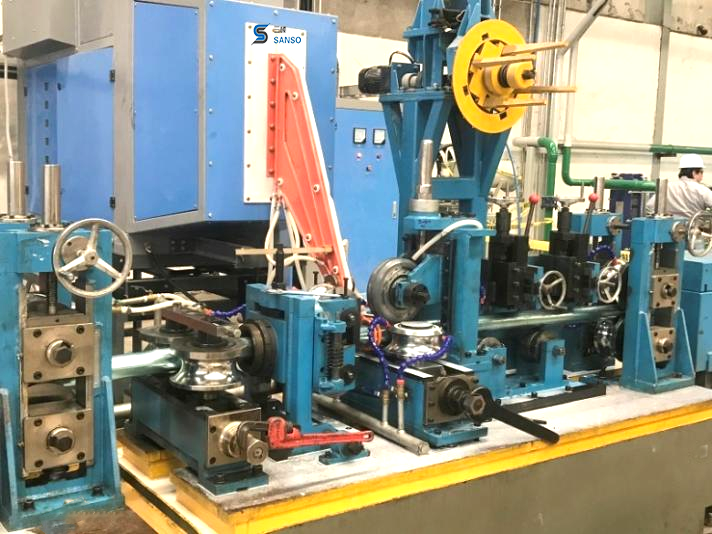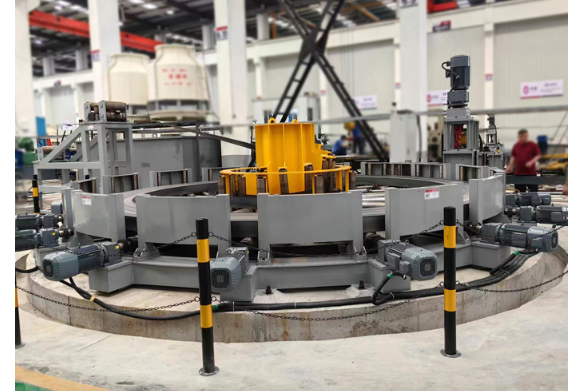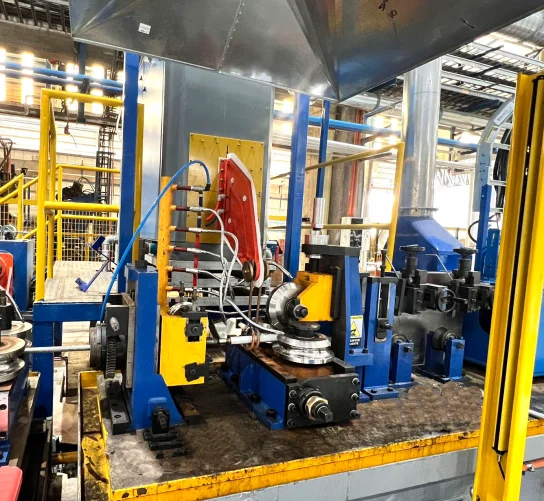
Continuous welded tube production demands high reliability from every component along the manufacturing line. Among these components, the cut-off system represents a primary determinant of final product quality and line productivity. Historically, friction sawing dominated this stage, relying on high speeds to melt through steel. However, the modern industrial pivot toward cold sawing has placed high-speed steel tooling at the center of high-efficiency pipe manufacturing. Selecting the appropriate saw blade hss determines not only the cycle time but also the structural integrity of the tube end.
Cold cutting with high-speed steel ensures that the mechanical properties of the cut-off pipe remain unaltered by thermal stress. High-frequency induction welded (ERW) tubes often contain hardened weld seams that present severe cutting challenges. By understanding the metallurgy, tooth geometry, and operational parameters of these specialized tools, tube mill managers can prevent premature blade failure and achieve consistent, burr-free cuts during continuous operations.
The operational capabilities of a high-speed steel circular blade originate from its alloy design. Unlike standard carbon steels, high-speed steel retains its hardness at elevated temperatures, a property known as red hardness. This characteristic is achieved through a precise balance of carbide-forming elements within the iron matrix.
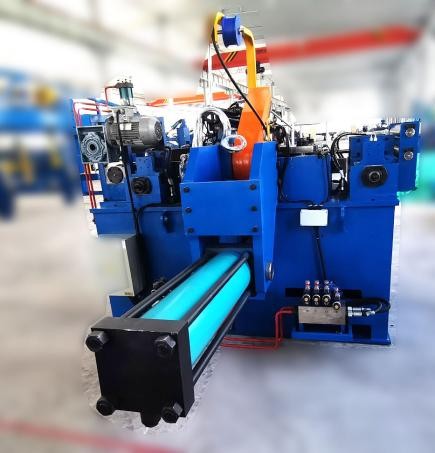
The two primary grades utilized in tube milling are M2 (DMo5) and M35 (Co5). For cutting standard structural carbon steel tubes, M2 provides an excellent balance of toughness and wear resistance. When dealing with high-tensile materials, stainless steel, or pipes with hardened weld seams, the cobalt-alloyed M35 grade is preferred due to its superior thermal stability. Equipment manufacturers like SANSO build robust flying cold saw units designed to handle these precise cutting dynamics, ensuring the mechanical properties of the blade match the rigid demands of the machinery.
Maintaining high-quality pipe ends is a persistent challenge in tube mill operations. Common defects such as heavy burrs, tube-end deformation, and micro-cracking along the cut perimeter often arise from improper cutting tool selection or incorrect machine setup. Achieving a clean, perpendicular cut requires the tool to shear the metal cleanly rather than pushing it aside.
Tube deformation typically occurs when the cutting pressure exceeds the yield strength of the pipe material. This issue is exacerbated by dull teeth or an inappropriate feed rate. When a saw blade hss is mounted onto a modern CNC flying saw, the tooth geometry must match the tube's wall thickness. If the teeth are too coarse, they will grab the thin wall, causing deformation and tooth breakage. Conversely, if the teeth are too fine, chips will clog the gullets, leading to heat accumulation and blade binding.
To mitigate these issues, physical vapor deposition (PVD) coatings are applied to the tool surface. Coatings such as Titanium Nitride (TiN) or Titanium Aluminum Nitride (TiAlN) provide a low friction coefficient and act as a thermal barrier. Applying a PVD coating to a saw blade hss significantly reduces friction coefficient during dry or semi-dry operations, preventing workpiece material from welding to the tooth face—a phenomenon known as built-up edge (BUE).
Integrating high-speed steel cutting tools into continuous tube mills requires precise control over several operating variables. Unlike stationary workshop saws, flying cut-off machines must match the linear speed of the tube mill while performing the radial cut. This synchronization demands high rigidity and responsive servo control.
The cutting speed (expressed in meters per minute) and the feed rate per tooth (expressed in millimeters per tooth) are the primary variables governing tool life. For standard carbon steel tubes, a cutting speed ranging from 80 to 140 m/min is typical, with a feed rate between 0.03 and 0.07 mm per tooth. If the cutting speed is set too high, localized heat weakens the tooth tips, accelerating wear. If the feed rate is too low, the teeth rub against the work hardened surface of the tube instead of penetrating it, leading to rapid blunting.
Tooth profile selection is another vital variable. The two most common profiles are:
The performance of a cutting tool is bound to the mechanical integrity of the machine spindle and clamping system. Any lateral runout or vibration in the spindle will transmit directly to the blade, leading to uneven tooth wear, chipping, and premature failure. Rigid clamping is required to secure the tube on both sides of the cut line, preventing axial movement during the cutting stroke.
With the mechanical integration provided by SANSO cutting systems, vibrational dampening is maintained at high production speeds. Eliminating backlash in the gearbox ensures that the transition of the blade teeth into and out of the metal is smooth. This mechanical stability allows the tool to run at its optimal parameters, ensuring that the cut edge requires minimal post-processing.
Coolant application also plays a significant role in tool performance. Continuous flood cooling or minimal quantity lubrication (MQL) systems must deliver lubricant directly to the cutting zone. The coolant serves a dual purpose: it lowers the temperature of the blade body and flushes chips out of the tooth gullets. Regular maintenance and timely resharpening of the saw blade hss help preserve the original tooth profile and cutting angles, extending the total lifespan of the tool over multiple production runs.
For tailored solutions, consulting with SANSO application engineers helps match tooth count with specific tube mill speeds, ensuring that every cut meets strict industrial specifications.
Q1: What is the main structural difference between M2 and M35 high-speed steel for tube mill applications?
A1: The primary difference lies in the chemical composition, specifically the addition of approximately 5% cobalt in the M35 grade. Cobalt increases the red hardness and thermal stability of the alloy, allowing the blade to maintain its cutting-edge hardness at higher operating temperatures than M2. This makes M35 more suitable for cutting high-tensile steels and stainless materials, while M2 remains the standard choice for general carbon steel tube production.
Q2: How does tooth pitch selection change when cutting thin-walled versus thick-walled steel tubes?
A2: Thin-walled tubes require a finer tooth pitch (more teeth per inch) to ensure that at least three teeth remain in contact with the material at all times, preventing the teeth from straddling the wall and breaking. Thick-walled tubes require a coarser tooth pitch (fewer teeth) with larger gullets to accommodate the larger chips generated during the longer cut path, preventing chip clogging and thermal buildup.
Q3: Why is coolant selection and delivery vital during the circular cold sawing process?
A3: Cold sawing relies on keeping the heat generated by friction in the chips rather than the blade or the workpiece. Coolant reduces friction at the cutting interface and aids in flushing chips out of the gullets. Without adequate coolant delivery, chips can re-enter the cut zone, leading to tooth chipping, poor surface finish on the tube end, and potential blade cracking due to thermal shock.
Q4: What causes premature tooth chipping on circular HSS saws during continuous tube mill operations?
A4: Premature chipping is generally caused by mechanical vibration, spindle runout, or insufficient clamping force which allows the tube to move during the cut. It can also occur if the entry speed of the blade into the tube is too high, or if the material contains a hardened longitudinal weld seam that has not been properly annealed.
Q5: How can operators determine the correct time to resharpen a high-speed steel saw blade?
A5: Operators should monitor signs such as an increase in burr height on the cut tube ends, visible wear land (exceeding 0.2 mm) on the flank of the teeth, changes in the cutting sound (high-pitched squealing or deep rumbling), and an increase in the motor spindle current load during the cutting cycle.
Selecting the correct cutting tools and matching them to your mill specifications is a precise engineering process. If you are facing issues with blade longevity, cut quality, or mill synchronization, our team of experts is ready to assist. Please submit your production requirements, including tube material grades, outer diameters, wall thicknesses, and current mill speeds. We will provide detailed recommendations and specifications tailored to your manufacturing line.