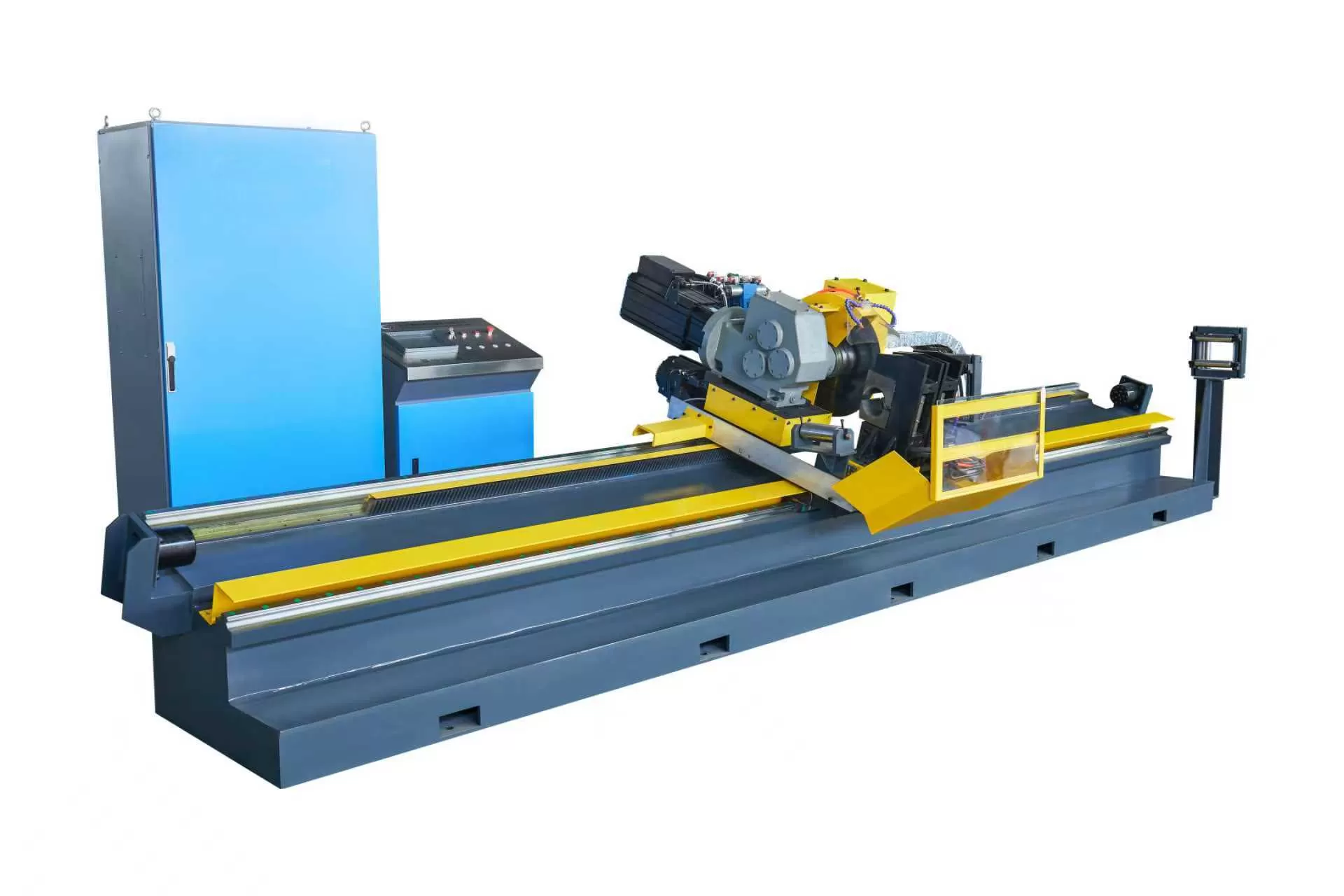
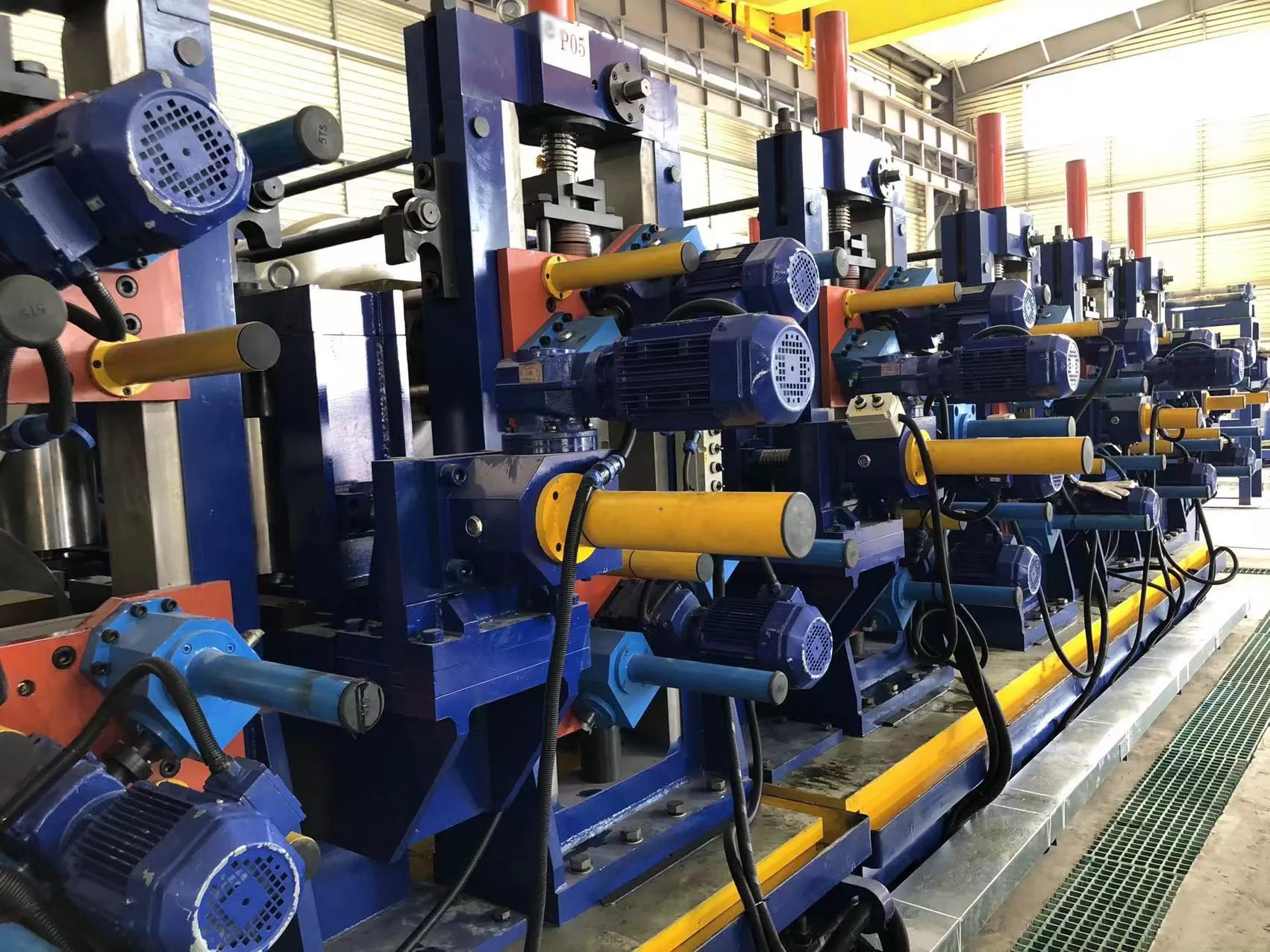
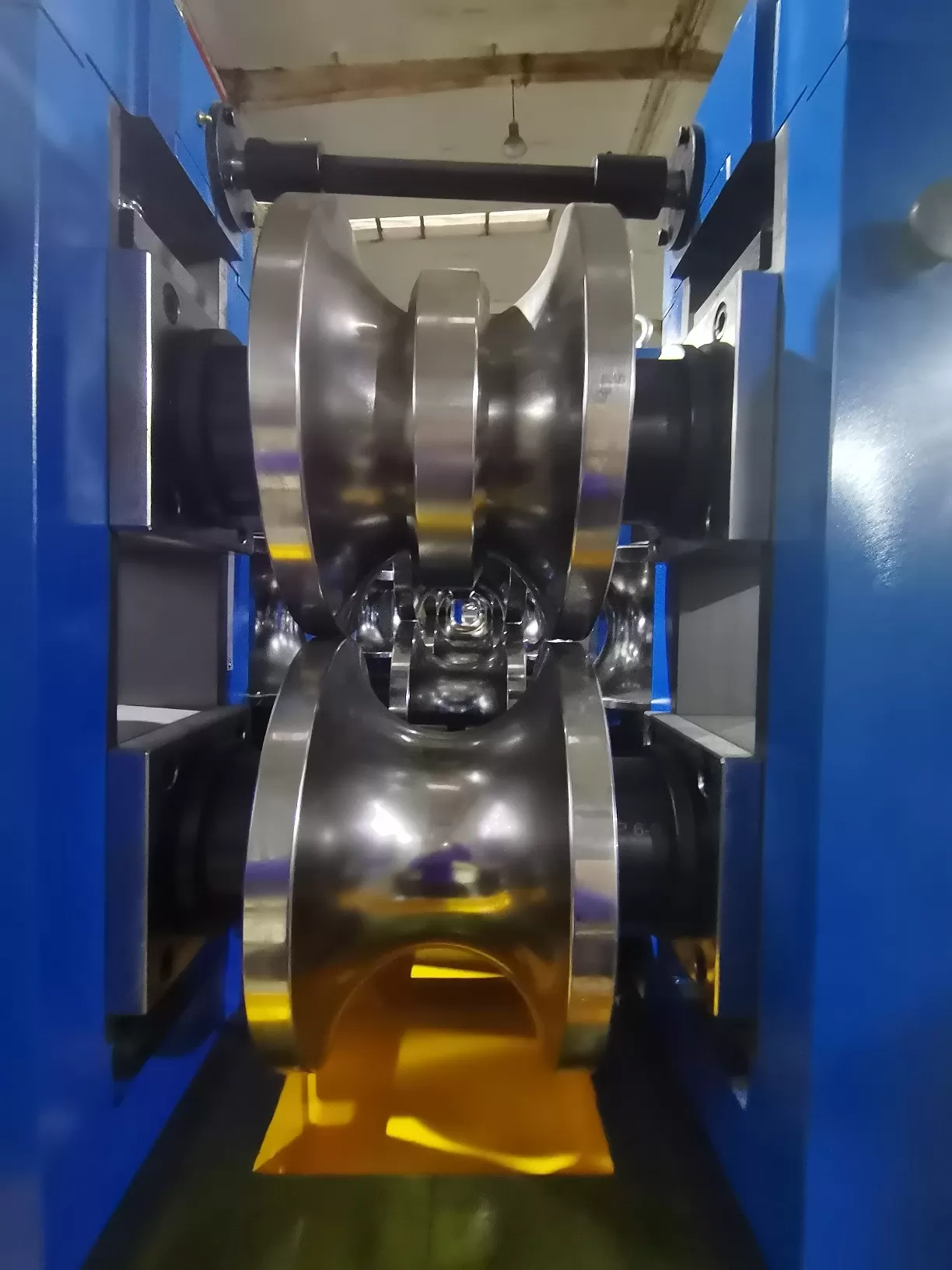
Industrial welded tube manufacturing demands continuous, high-efficiency operations where every component must perform reliably. Cut-off machines, specifically flying cold saws, represent the terminal phase of the in-line production process where the physical integrity and dimensional tolerance of the pipe must be preserved. A primary tool utilized in this operation is the circular saw blade hss. Selecting the correct tooling material, tooth configuration, and operational parameters directly influences both the throughput of the mill and the surface quality of the finished product. As an established manufacturer of high-precision tube mill machinery, SANSO focuses on the systematic integration of robust mechanical design and high-grade cutting tools to achieve clean, burr-free cuts under demanding production schedules.
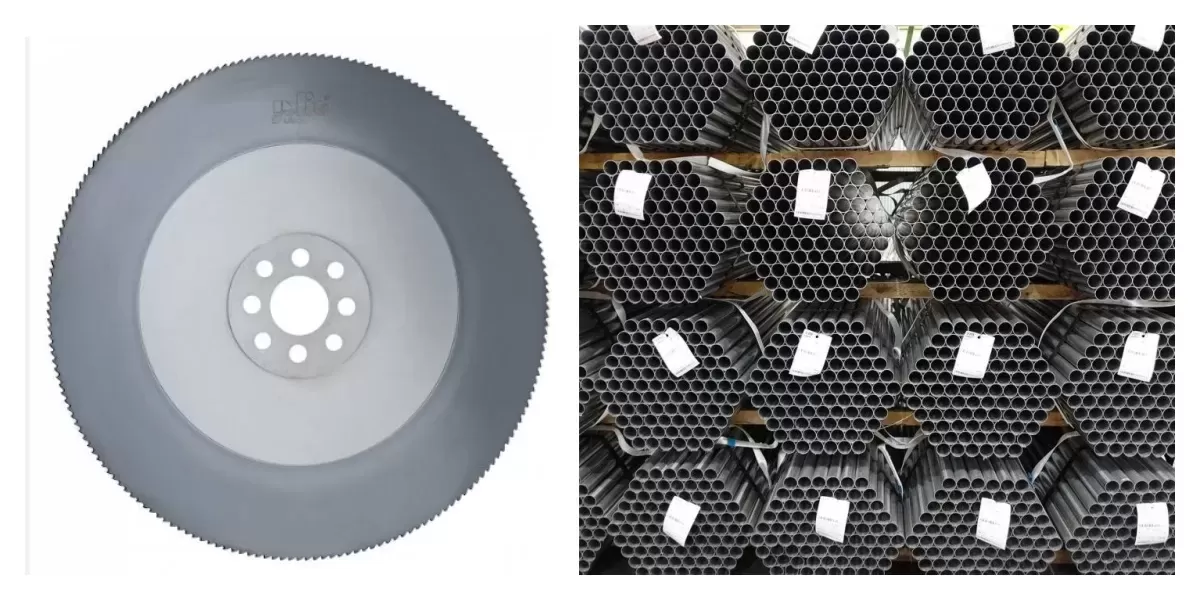
Metallurgical Foundations of High-Speed Steel Cutting Tools
High-Speed Steel (HSS) remains a highly valued material for industrial saw blades due to its high hardness, wear resistance, and high tempering stability. These attributes are derived from the alloys microstructure, which consists of a tough martensitic matrix interspersed with primary and secondary alloy carbides. The specific alloy composition determines how the blade responds to thermal and mechanical stresses during high-speed sawing.
Chemical Compositions: M2 (DMo5) vs. M35 (Co5)
The selection of the HSS grade is the first step in matching the tool to the application requirements:
M2 (DMo5) Grade: This is the standard material for most metal cutting applications. Containing approximately 6% tungsten, 5% molybdenum, and 2% vanadium, it offers a well-balanced combination of toughness and wear resistance. It performs reliably under standard mechanical loads when cutting mild carbon steels.
M35 (Co5) Grade: Designed for demanding applications involving high-tensile alloys or stainless steel. The addition of 5% cobalt increases the red hardness of the steel, which is the ability to retain hardness at elevated temperatures. Cobalt prevents rapid thermal degradation of the cutting edge during dry or minimally lubricated cuts.
Heat Treatment and Microstructure Stability
The performance of the steel is heavily dependent on the heat treatment process. Raw HSS must undergo precise vacuum hardening followed by multiple tempering cycles, usually at temperatures between 550°C and 570°C. This process converts retained austenite into tempered martensite, achieving a uniform hardness of 64 to 66 HRC for M2 and 65 to 67 HRC for M35. This structural stability minimizes the risk of micro-chipping along the cutting edge during interrupted cuts.
Tooth Geometry and Profiling for Tube Milling
Beyond metallurgical composition, the physical geometry of the circular saw blade hss dictates how efficiently it shears through metal and evacuates chips from the cut zone. Incorrect tooth profiles lead to excessive vibration, heat build-up, and premature tool failure.
Tooth Profiles: BW, C, and Hz
Different profiles distribute the cutting force across the blade edge in specific ways:
BW (Bevel Alternate) Profile: This design features alternating left and right-hand beveled teeth, typically at a 45-degree angle. It is highly suitable for cutting thin-walled tubes and light profiles. The alternating bevels split the chip, reducing the mechanical load on each individual tooth and minimizing exit burrs.
C-Type (Hz) Profile: Commonly applied to solid materials and heavy, thick-walled pipes. This profile uses a high roughing tooth followed by a lower finishing tooth. The roughing tooth features beveled corners on both sides, while the finishing tooth is flat and removes the remaining material. This configuration breaks the chip into three separate pieces, preventing chip packing within the tooth gullet.
Pitch Selection Based on Wall Thickness
Determining the tooth pitch—the distance between consecutive tooth tips—is a fundamental step in tool selection. A primary rule of cold sawing is that at least three teeth must be engaged in the cut simultaneously to prevent tooth stripping. If the pitch is too large, the teeth will ride over the tube wall, resulting in tooth breakage. Conversely, if the pitch is too small, the gullets will quickly clog with swarf, leading to frictional heat and thermal expansion. For a tube wall thickness of 1.5mm to 2.0mm, a tooth pitch of 4mm is recommended, whereas walls exceeding 5.0mm require a pitch of 7mm to 9mm.
To calculate the total number of teeth ($Z$) for a blade of diameter $D$ (in millimeters) with a chosen pitch $P$ (in millimeters), operators utilize the following formula:
$$Z = \frac{\pi \times D}{P}$$
Extending Tool Life with PVD Coatings
Applying thin-film coatings to a circular saw blade hss is a standard practice to reduce friction and thermal transfer between the workpiece and the tool. Physical Vapor Deposition (PVD) coatings create a protective barrier that substantially reduces adhesive wear.
PVD Coating Options
TiN (Titanium Nitride): A general-purpose coating characterized by its gold color. It offers a surface hardness of approximately 2,300 HV and remains stable at temperatures up to 500°C. It is suitable for cutting low-carbon structural steels.
TiAlN (Titanium Aluminum Nitride): Excellent for high-alloy steels and stainless steel processing. It exhibits a surface hardness of 3,000 HV and thermal stability up to 800°C. Under high heat, an aluminum oxide layer forms on the outer surface, acting as a thermal barrier that protects the underlying steel substrate.
AlTiN (Aluminum Titanium Nitride): Offers superior oxidation resistance and hardness (up to 3,300 HV). It is designed for applications where high surface speeds generate significant heat, or where cooling is limited.
By lowering the coefficient of friction, these coatings prevent cold-welding, which is the adhesion of workpiece material to the tooth flank. This keeps the gullets clean and reduces the spindle torque required to drive the cut.
Addressing Mechanical Challenges during Production
Even high-grade saw blades can fail prematurely if the surrounding mechanical system is out of alignment. Engineering design standards followed by SANSO prioritize the elimination of mechanical play to protect the tooling during the high-speed flying cut-off process.
Identifying Root Causes of Tool Failure
Tooth Chipping: Often caused by micro-vibrations in the clamping assembly or a slight mismatch in the synchronization speed between the flying saw carriage and the moving tube mill. Verifying the hydraulic pressure of the clamping jaws and ensuring they conform to the outer diameter of the tube is an important troubleshooting step.
Heavy Burr Formation: This is a clear indicator of tool wear or excessive axial runout. When the cutting edges become dull, they push the material aside rather than shearing it, creating a plastic deformation burr. Axial runout should be measured regularly with a dial indicator; runout exceeding 0.1mm on a 350mm diameter blade requires immediate attention.
Blade Deflection (Snaking): This occurs when the blade body loses its tension due to localized overheating. It can be remedied by adjusting the position of the coolant nozzles to ensure the fluid reaches the deep part of the cut, or by switching to a coarser pitch that prevents chip packing.
Establishing Accurate Operational Parameters for Cold Sawing
Operational parameter selection directly governs the tool life of a circular saw blade hss during production. Machine operators must adjust the cutting speed ($V_c$ in meters per minute) and the feed per tooth ($f_z$ in millimeters per tooth) to match the metallurgical properties of the material being processed.
The table below provides reference operational parameters for various steel types:
| Material Category | Example Steel Grade | Cutting Speed ($V_c$, m/min) | Feed per Tooth ($f_z$, mm/tooth) |
|---|
| Low Carbon Mild Steel | Q235, S235JR | 80 - 110 | 0.04 - 0.07 |
| Medium Carbon Steel | C45, 1045 | 60 - 80 | 0.03 - 0.05 |
| Alloy Steel | 42CrMo, 4140 | 40 - 60 | 0.02 - 0.04 |
| Austenitic Stainless Steel | SUS 304, SUS 316 | 20 - 40 | 0.01 - 0.03 |
To convert the cutting speed ($V_c$) into spindle rotational speed ($n$ in revolutions per minute), operators use the following formula:
$$n = \frac{V_c \times 1000}{\pi \times D}$$
The linear feed speed of the saw spindle carriage ($V_f$ in millimeters per minute) is determined by multiplying the feed per tooth ($f_z$), the total number of teeth ($Z$), and the spindle speed ($n$):
$$V_f = f_z \times Z \times n$$
Setting these values too high will cause immediate tooth overload, while setting them too low will cause the tooth to rub rather than cut, leading to rapid work-hardening of the material, especially in stainless steel applications.
Integrating Tooling Components with High-Speed Flying Saws
The mechanical interface between the saw blade and the cold saw machine spindle is a significant factor in tool longevity. To address this, SANSO manufactures flying cold saws equipped with heavy-duty spindle bearings and rigid drive gears designed to absorb the intermittent shock loads inherent to metal cutting.
The backing flanges clamping the blade must be of sufficient diameter—ideally at least one-third of the blade diameter—to provide adequate lateral support. Any debris or burrs on the flange faces will translate into magnified runout at the blade periphery, which accelerates uneven wear and compromises cut perpendicularity.
Maintaining Cutting Edge Integrity Through Professional Resharpening
Implementing a structured reconditioning cycle for a circular saw blade hss prevents catastrophic failure and maximizes the total volume of material cut over the tools lifespan.
Flank Wear Evaluation
Blades should be removed for grinding before the flank wear land exceeds 0.2mm. Operating a blade past this threshold increases cutting pressure, which can cause micro-cracks to propagate from the tooth root into the blade body, eventually leading to structural failure.
Precision Grinding Guidelines
Resharpening must be executed on CNC automatic grinding machines using flood coolant to prevent localized heat accumulation. If the grinding wheel heats the tooth tip excessively, it will anneal the HSS, significantly reducing its wear resistance. The original tooth angles—specifically the rake angle and clearance angle—must be maintained to ensure the blade performs consistently upon reinstalling it on the tube mill. Following the grinding process, the blade must be thoroughly demagnetized to prevent fine metal chips from adhering to the teeth during the next production run.

Industrial Inquiries for Customized Solutions
Selecting the correct blade dimensions, HSS chemistry, tooth profile, and coating involves a careful evaluation of your specific manufacturing parameters, including your mill speed, tube material, and wall thickness. For tailored advice on integrating high-performance cold saw systems and tooling configurations into your production lines, please contact our engineering support team. Provide details regarding your current tube mill specifications, and we will assist you with matching solutions for your operations.
Frequently Asked Questions
Q1: What is the main structural difference between M2 and M35 HSS saw blades?
A1: M2 (DMo5) is a molybdenum-tungsten alloy HSS that provides excellent toughness and wear resistance under standard operating conditions. M35 (Co5) contains 5% cobalt, which enhances its red hardness, allowing the blade to maintain its cutting edge at higher operating temperatures when processing harder materials like stainless steel.
Q2: How do I determine the correct tooth pitch for a thin-walled pipe?
A2: The tooth pitch must be small enough to ensure that at least three teeth are engaged in the pipe wall simultaneously. For very thin walls (e.g., 1.0mm to 1.5mm), a fine pitch of 3mm to 4mm is required to prevent the teeth from catching on the material edge and breaking.
Q3: Why does a PVD coating extend the operating life of an HSS blade?
A3: PVD coatings, such as TiN or TiAlN, provide a hard outer layer that reduces the coefficient of friction. This reduces the heat generated during the cutting process and prevents the tube material from adhering to the tooth flanks, thereby reducing wear and allowing for higher processing speeds.
Q4: What causes a saw blade to produce heavy burrs on the cut end of a tube?
A4: Heavy burrs are typically caused by a dull cutting edge or excessive axial runout. When the teeth lose their sharpness, they deform the metal plastically rather than shearing it cleanly. Regular inspection of the tools wear state and checking for spindle runout can help resolve this issue.
A5: A typical blade can be resharpened between 10 to 15 times, depending on the severity of the wear before each grind. Removing the blade early when flank wear reaches 0.2mm ensures that only a minimal amount of material needs to be ground away during each maintenance cycle, preserving the overall life of the tool.