
Ferrite Core Service Life and Function in Tube Mills
2026-07-11
In an ERW tube mill, the ferrite core is a small component, but it has a direct influence on welding efficiency and weld seam quality. Many operators also call it an impeder, because its job is to change the current path and help concentrate high-frequency welding energy where it is needed most.
A ferrite core may not look complicated from the outside. However, if it is missing, damaged, overheated, or poorly matched with the welding system, the tube mill may need more power to achieve the same welding result. In some cases, welding quality can become unstable, especially when the line speed is high or the tube size changes frequently.
For this reason, buyers and operators should understand two basic questions before using or replacing ferrite core in a tube mill:
How long does a ferrite core normally last?
And what exactly does it do during high-frequency welding?
Typical Service Life of Ferrite Core
Under normal production conditions, the typical service life of a ferrite core used in a tube mill is around 7 days.
This should be treated as a practical reference, not a fixed guarantee. The actual service life depends on many factors, such as tube size, welding power, line speed, cooling condition, material quality, installation position, and whether the strip joint passes through the welding area smoothly.
If the ferrite core is well cooled and properly installed, it can work more stably. If the cooling is poor, the strip joint is badly welded, or the impeder is hit or scratched during production, its service life may be much shorter.
In daily production, the better approach is not to judge the ferrite core only by calendar days. Operators should also watch the welding condition. If the same tube size suddenly needs more power, or if the weld seam becomes less stable, the impeder should be checked.
What Is a Ferrite Core or Impeder?
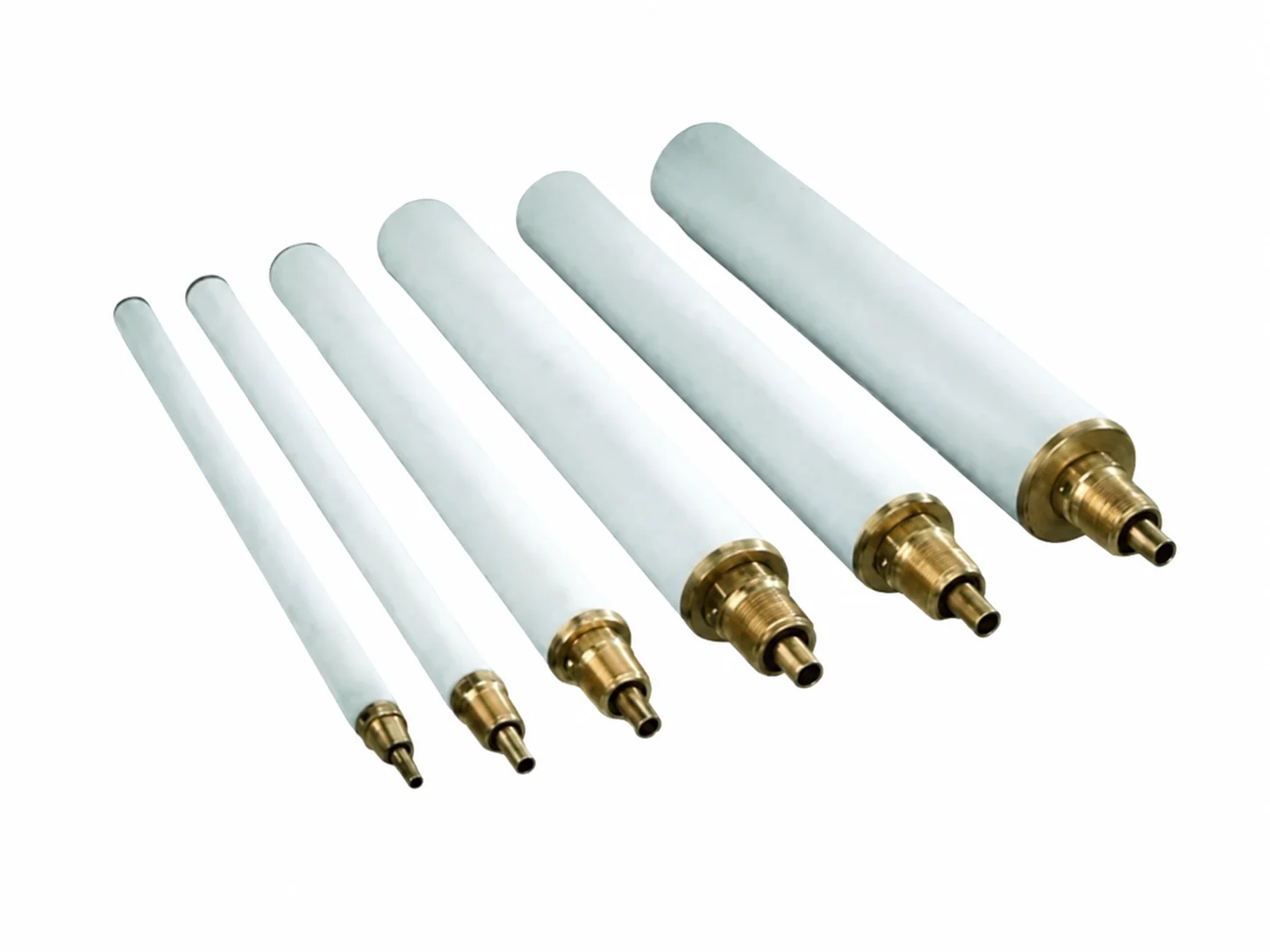
A ferrite core used in high-frequency welded pipe production is usually made from ferrite material, such as manganese-zinc ferrite or nickel-zinc ferrite. In tube mill applications, it is placed inside the tube blank near the welding area.
Its main purpose is to improve the way high-frequency current works during welding.
Without an impeder, part of the welding energy may spread around the tube wall instead of being concentrated at the V-shaped opening where the strip edges meet. This means more power is wasted, and the welding process becomes less efficient.
With a proper ferrite core installed, the magnetic field and high-frequency current are guided more effectively. More welding heat is concentrated at the weld edge, which helps the tube mill achieve faster and more stable welding.
Why Ferrite Core Is Important in High-Frequency Welding
In ERW tube production, the strip is formed into a tube shape and then welded by high-frequency current. The two strip edges are heated at the V-shaped opening and pressed together to form the weld seam.
The ferrite core helps this process in a very practical way. It increases the impedance inside the tube and reduces unnecessary current flow on the inner wall. As a result, more high-frequency current is concentrated near the weld edges.
This improves welding efficiency because the energy is focused where the steel actually needs to be heated.
For tube manufacturers, this can bring several benefits:
- Less unnecessary power loss
- Better energy concentration at the weld area
- More stable weld seam heating
- Better support for higher tube mill speed
- Improved matching with the high-frequency welding system
- More consistent welding performance during continuous production
In simple terms, the impeder helps the tube mill use welding energy more effectively. It does not replace the solid state HF welder, but it helps the welder perform better.
Working with a Solid State HF Welder
Modern ERW tube mills often use a solid state HF welder. This type of welder can provide high-frequency current for continuous tube welding and is widely used in steel tube production lines.
The ferrite core must work together with the solid state HF welder. If the impeder is properly selected and positioned, it helps convert electrical energy into useful welding heat at the weld seam. If the impeder is worn, overheated, or not suitable for the tube size, the welder may still operate, but the whole system becomes less efficient.
Operators may notice this problem in several ways. For example, the welding power may need to be increased. The weld seam may become less stable. The tube mill may not reach the expected welding speed. In some cases, weld quality may fluctuate even when other settings seem unchanged.
This is why the impeder should be viewed as part of the complete high-frequency welding system, not as a small accessory that can be ignored.
Curie Temperature: A Key Performance Indicator
One important technical point for ferrite core is Curie temperature.
Curie temperature is the temperature at which the ferrite material loses its magnetic properties. Once the ferrite core exceeds this temperature, it can no longer provide the same magnetic permeability and energy focusing effect.
For high-frequency welded tube production, the Curie temperature of the ferrite core should be high enough for the working environment. The original material suggests that ferrite cores used in this application should have a Curie temperature not lower than 310°C.
This matters because the impeder works close to the weld seam, where the temperature is high. If the ferrite core cannot maintain its magnetic properties under working conditions, its ability to focus welding energy will drop. The tube mill may then consume more power, and welding stability may be affected.
A higher Curie temperature can allow the ferrite core to work closer to the welding zone, which may improve the energy focusing effect. However, the final performance also depends on cooling, installation, tube size, and welding parameters.
Why Water Cooling Is Necessary
The ferrite core must be water-cooled during operation.
This is one of the most important precautions in daily tube mill production. The welding area is hot, and the impeder is installed close to the high-temperature zone. If cooling is not sufficient, the ferrite core may overheat, crack, lose magnetic performance, or fail earlier than expected.
Water cooling helps protect the ferrite material and keeps the impeder working within a suitable temperature range. It also helps maintain stable welding efficiency over a longer production period.
Before running the tube mill, operators should check whether the water cooling path is clear and whether the cooling flow is enough. If there is blockage, low flow, or unstable cooling, the impeder should not be forced to work continuously.
Common Causes of Ferrite Core Damage
Ferrite core damage is not always caused by normal wear. In many tube mills, the impeder fails early because of operating conditions.
Common causes include:
- Insufficient water cooling
- Wrong installation position
- Poor strip joint passing through the welding area
- Mechanical impact during production
- Excessive temperature near the weld seam
- Ferrite core used beyond its effective service life
- Tube size or welding power not matched with the impeder
- Poor-quality impeder material
One problem mentioned in the original material is poorly welded strip joint tube. If the strip joint is not welded or prepared properly, it may damage the ferrite core when passing through the welding section. This is why strip joint quality should be controlled before the material enters continuous production.
When Should Operators Replace the Ferrite Core?
A ferrite core should be replaced when its performance starts to decline, not only when it is completely broken.
One sign is higher power consumption. If the high-frequency welder needs more power than usual under the same tube size and line speed, the magnetic performance of the ferrite core may have weakened.
Other signs may include unstable weld seam quality, difficulty maintaining speed, unusual heating behavior, or visible damage to the impeder.
In many factories, replacing the ferrite core in time is more economical than forcing it to run longer. A weak impeder can waste power, reduce welding stability, and create more adjustment work for operators.
What Buyers Should Confirm Before Ordering Ferrite Core
When buying ferrite core or impeder for a tube mill, buyers should provide enough production information to the supplier. This helps avoid choosing a ferrite core that does not match the welding process.
Useful information includes:
- Tube diameter or size range
- Wall thickness range
- Tube material
- Welding method
- High-frequency welder power
- Working frequency range
- Tube mill speed
- Impeder size requirement
- Cooling method
- Current service life of the existing impeder
- Main production problem, such as high power consumption or unstable welding
If the ferrite core is used together with a new solid state HF welder or ERW tube mill, the selection should be discussed as part of the full welding system. If it is used for replacement on an existing line, the buyer should check the current impeder size, cooling condition, and actual working performance.
Conclusion
Ferrite core, or impeder, is an important part of high-frequency welding in an ERW tube mill. Its main function is to help concentrate welding energy at the V-shaped weld area, improve electrical efficiency, and support stable weld seam quality.
Under normal conditions, the service life of a ferrite core is typically around 7 days, but the actual replacement cycle depends on cooling, installation, welding power, tube size, line speed, and daily operating conditions.
For stable production, the ferrite core should be properly matched with the solid state HF welder, kept under effective water cooling, and replaced when its magnetic performance begins to decline.
If you need ferrite core, ferrite rod, or impeder for your tube mill line, SANSO can review your tube size, wall thickness, welder power, frequency range, and production speed to help you select a suitable specification.
article tags:
Related News
More Category
Hot Articles
-
 How to Choose the Right Reel Uncoiler for Your Welded Pipe Manufacturing Plant
 -
 High-Precision Decoiler and Straightener Systems: Industrial Selection & Setup Guide
 -
 Flying Cold Saw vs. Friction Saw: Which is Right for Your Tube Mill?
 -
 ERW Tube Mill: The Complete Engineering & Process Guide
 -
 Top 7 Global ERW Tube Mill Machine Manufacturers: Who Builds the Best?
New Articles
Hot Tags