The performance of high-frequency power converters—whether used in induction heating, switch-mode power supplies, or the control circuits of welding machines—hinges on the magnetic properties of the core material. Among the available magnetic materials, the ferrite core stands out for its low eddy current loss, high resistivity, and stable permeability over a wide frequency range. Engineers in the tube mill and welding equipment sectors frequently specify ferrite cores for transformers, chokes, and filter inductors, where efficiency and thermal stability directly affect production quality and equipment reliability.
This article provides a systematic examination of ferrite core materials, their magnetic characteristics, and the criteria that guide their selection for industrial power electronics. The discussion focuses on practical considerations—saturation flux density, temperature dependence, and core loss—that determine the suitability of a particular ferrite grade for a given application.
Material Classification of Ferrite Cores
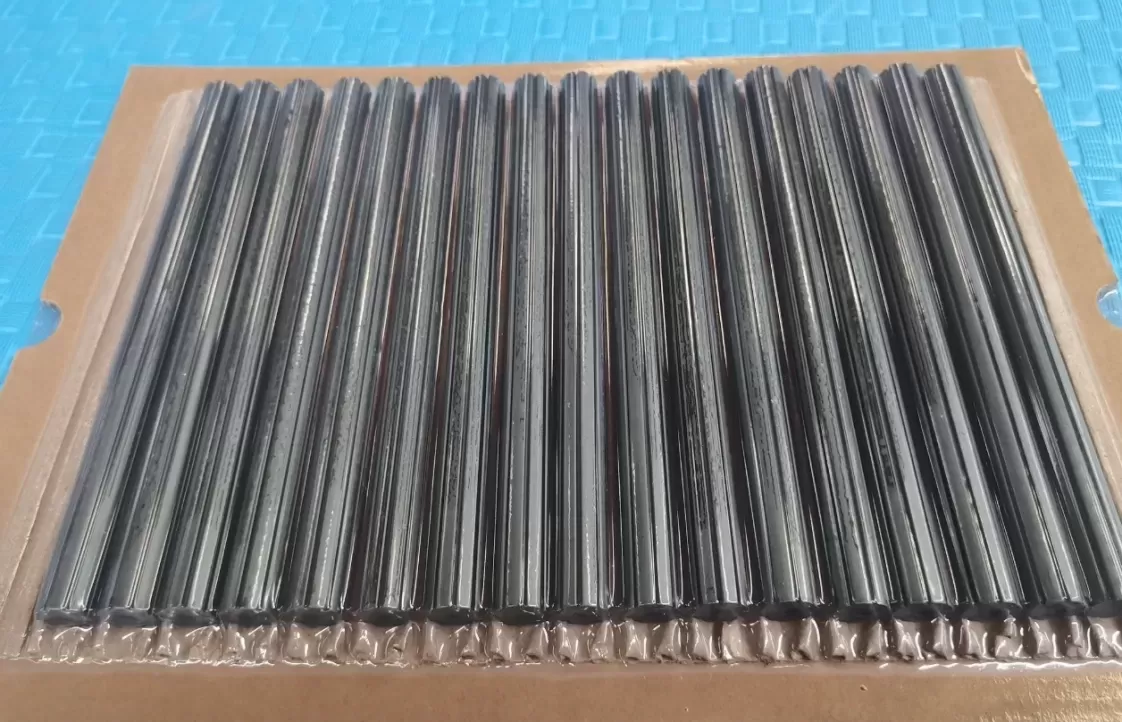
Ferrites are ceramic compounds composed of iron oxide (Fe₂O₃) combined with other metallic oxides, such as manganese, zinc, nickel, or cobalt. The manufacturing process—which includes calcination, milling, pressing, and sintering—allows precise control over the microstructure and, consequently, the magnetic behavior. The two dominant families in industrial use are manganese-zinc (MnZn) and nickel-zinc (NiZn) ferrites.
Manganese-Zinc Ferrites
MnZn ferrites exhibit high initial permeability (typically 1500 to 15000) and relatively high saturation flux density (up to 0.5 T). These properties make them suitable for applications operating up to several hundred kilohertz, such as switched-mode power supplies (SMPS) and power transformers. The high permeability allows for compact core designs with fewer turns, reducing copper losses and overall size. However, MnZn ferrites have lower resistivity (around 1–10 Ω·m) compared to NiZn, which restricts their use to frequencies below 1 MHz due to eddy current losses that rise sharply with frequency.
Nickel-Zinc Ferrites
NiZn ferrites offer higher resistivity (10² to 10⁵ Ω·m) and lower permeability (10 to 1000), enabling operation at frequencies from 1 MHz to well over 100 MHz. These cores are commonly found in high-frequency inductors, RF transformers, and electromagnetic interference (EMI) suppression filters. The lower saturation flux density (typically 0.3–0.4 T) represents a trade-off: while NiZn cores can handle high-frequency switching with minimal loss, they require larger core cross-sections to avoid saturation in high-power applications.
Beyond these two main categories, specialty ferrites incorporate cobalt or other dopants to tailor properties such as temperature stability, permeability versus frequency response, or DC bias performance. The selection of a specific ferrite grade must align with the operating frequency, power level, and ambient temperature of the equipment.
Core Loss Mechanisms and Their Impact on Efficiency
The total power loss in a ferrite core comprises hysteresis loss and eddy current loss. Hysteresis loss results from the irreversible magnetization of magnetic domains during each alternating cycle; it is proportional to the area of the B-H loop and the frequency. Eddy current loss arises from circulating currents induced within the core material by the time-varying magnetic field. Because ferrites have high electrical resistivity, eddy current losses are substantially lower than in metallic magnetic materials, yet they still increase with the square of frequency and the square of flux density.
Manufacturers provide core loss curves (usually expressed as milliwatts per cubic centimeter at a given flux density and frequency) to guide designers. For example, a typical power ferrite (e.g., PC40 or N27) might exhibit a core loss of 300 kW/m³ at 100 kHz and 0.2 T. Selecting a grade with lower loss at the target frequency translates directly to reduced heat generation, enabling higher power density and improved long-term reliability of the power stage.
Temperature also influences core loss. Most ferrite materials show a minimum loss near a specific temperature—often around 80–100°C for MnZn types. Operating the core within this temperature window minimizes dissipation, but thermal runaway becomes a concern if the core temperature rises above the Curie point (typically 120–200°C for MnZn, higher for NiZn). In welding equipment where ambient temperatures can be elevated, choosing a ferrite grade with a flat loss vs. temperature curve is a prudent design measure.
Application-Specific Selection Criteria
Industrial welding machines, particularly inverter-based DC welders and induction preheaters, rely on high-frequency transformers and output chokes that use ferrite cores. The selection process for these components involves several interrelated parameters:
Operating frequency: Modern welding inverters operate between 20 kHz and 100 kHz for IGBT-based designs, and up to 200 kHz for MOSFET-based designs. MnZn ferrites are typically chosen for the main power transformer, while NiZn ferrites may be used for EMI filtering or auxiliary power supplies.
Power throughput: The required volt-second product of the transformer determines the minimum core cross-sectional area to avoid saturation. Higher power levels necessitate larger cores or materials with higher saturation flux density.
Thermal environment: The core must sustain its magnetic properties under the combined heat from copper losses (I²R) and core losses. Forced air cooling or heat sinks may be necessary for high-power designs.
DC bias: Inductors carrying a significant DC current (such as output chokes) require cores with high DC bias capability—i.e., permeability that does not drop excessively with DC magnetizing force. Some ferrite grades are specifically optimized for this condition.
Mechanical constraints: The core shape (E-core, toroid, pot core, or RM core) affects winding ease, leakage inductance, and mounting method. Toroidal cores offer excellent flux confinement but require more complex winding automation.
For tube mill machinery that incorporates induction heating for seam welding or annealing, the frequency typically ranges from 100 kHz to 400 kHz. In these systems, the induction coil and its matching transformer often use NiZn ferrite cores due to their lower loss at higher frequencies. The correct choice of core material ensures that the heating power is delivered efficiently to the workpiece, minimizing energy waste and preventing overheating of the power electronics.
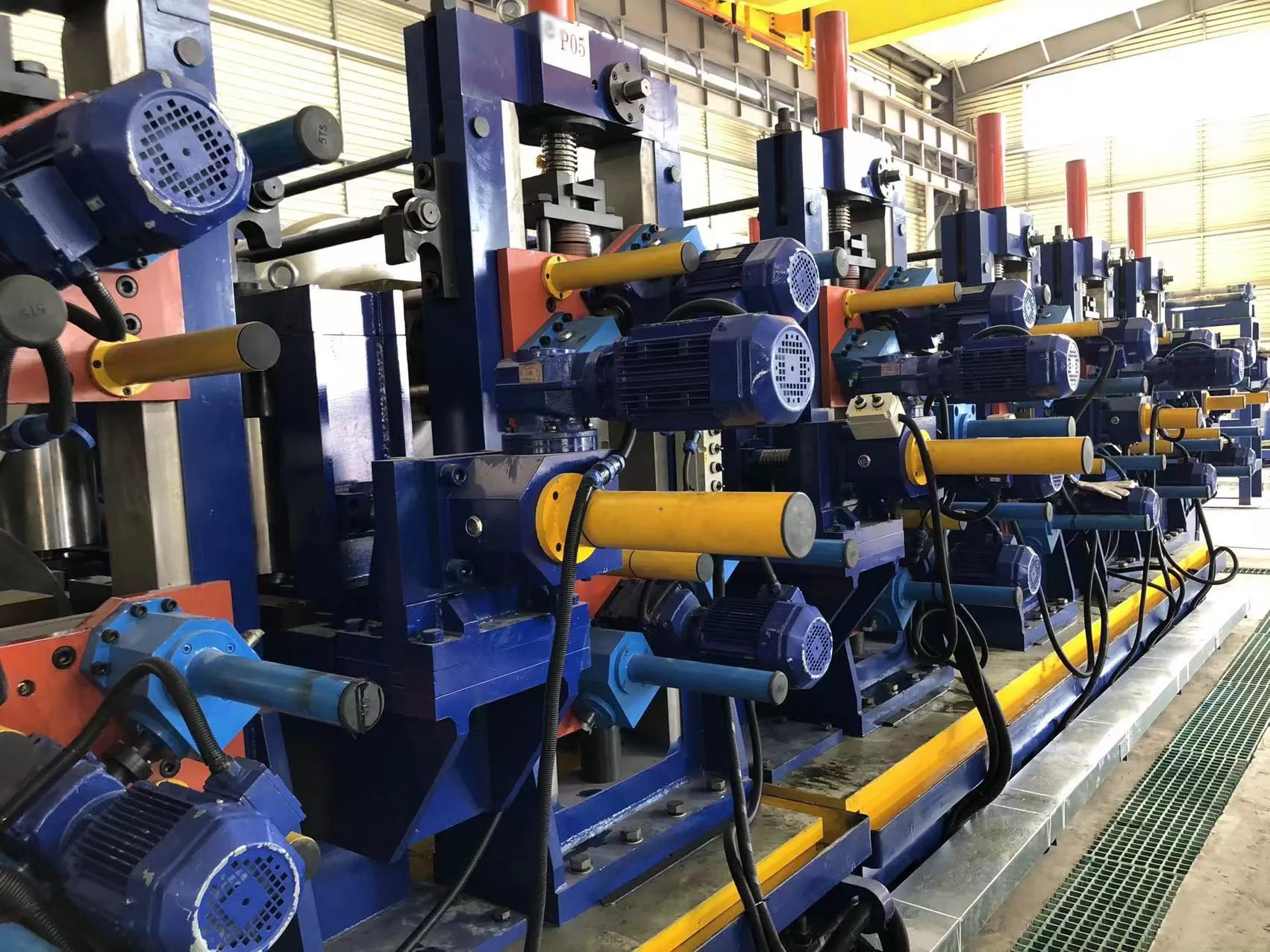
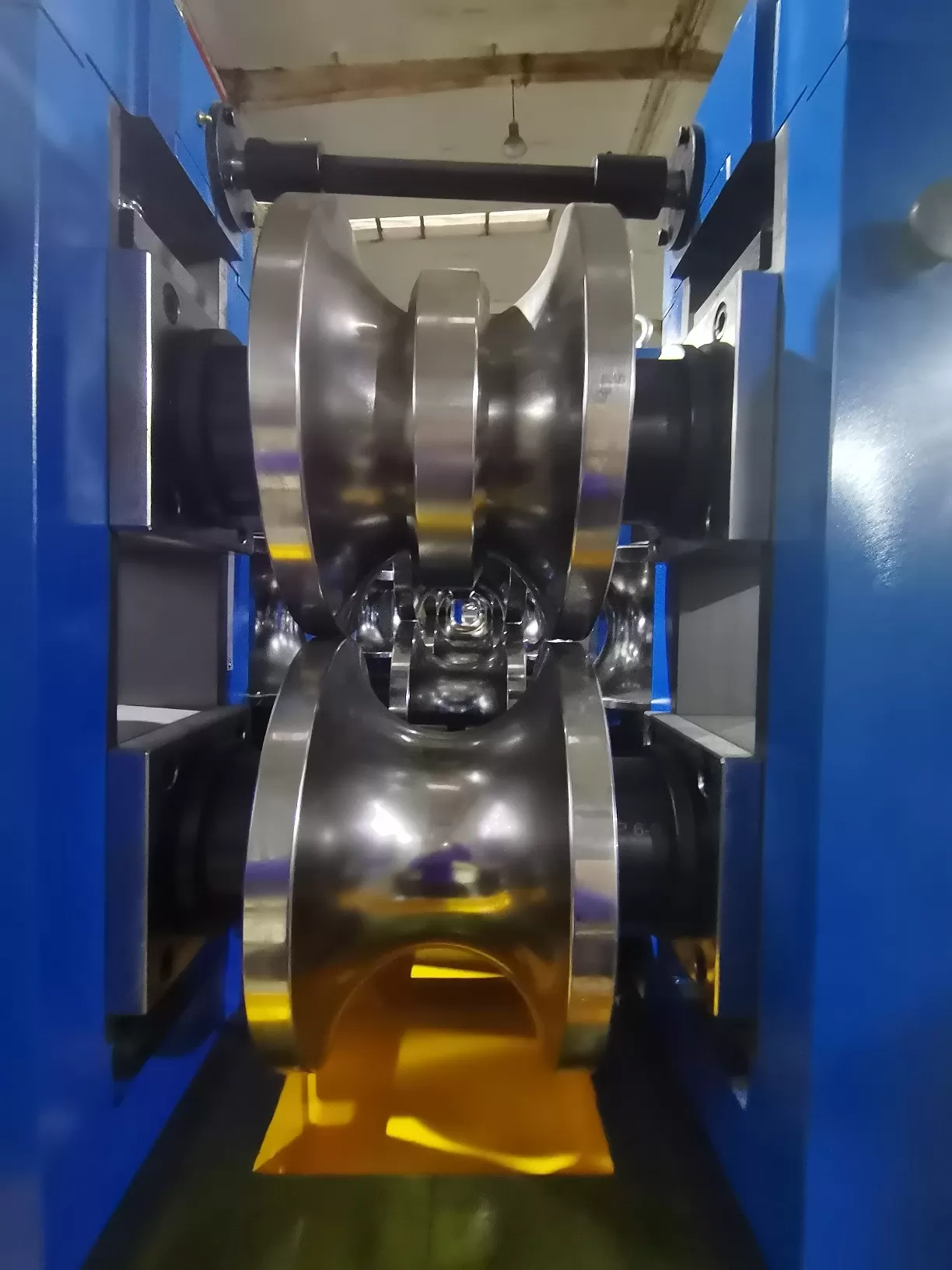
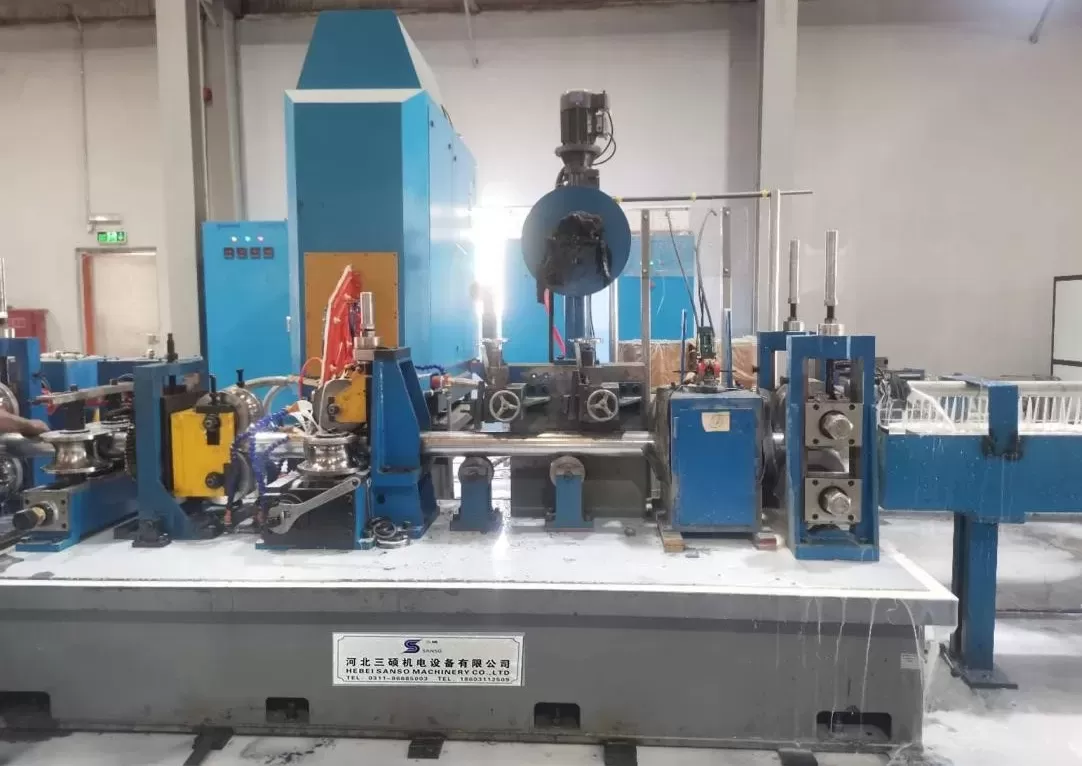
Manufacturers of welding and tube mill equipment, such as SANSO, incorporate carefully selected ferrite cores into their flux-cored wire production machines and high-frequency welders to achieve consistent output and prolonged service life. The integration of high-quality magnetic components is a hallmark of robust machine design.
Practical Considerations in Ferrite Core Procurement
When sourcing ferrite core components, engineering teams must evaluate not only the datasheet specifications but also the consistency of the material across production batches. Variations in sintering temperature or raw material purity can shift the permeability and loss characteristics, leading to unexpected performance deviations in the final product. Reputable suppliers provide lot traceability and batch test data for key parameters such as initial permeability, loss factor, and temperature coefficient.
Another aspect is the assembly process: gapping of the core (for example, in flyback transformers or DC chokes) is often required to stabilize inductance under DC bias. The gap length must be precisely controlled to achieve the desired AL value (inductance per turn squared). Poorly controlled gapping can result in unit-to-unit variability that complicates production tuning.
For high-volume manufacturing, automated winding and core handling demand consistent dimensional tolerances. Ferrite cores with tight dimensional control reduce reject rates and improve the yield of the final power module. Therefore, the procurement specification should include not only magnetic properties but also geometrical tolerances and surface finish requirements.
The interplay between core selection and the overall power stage design often requires iterative simulation and prototyping. Using software tools that model the magnetic circuit, engineers can predict core losses, flux density distribution, and temperature rise under various load conditions. This predictive approach reduces the number of physical prototypes and accelerates time-to-market for new welding equipment models.
SANSO provides technical resources that assist manufacturers in matching the appropriate ferrite core grade to their specific machine requirements, covering both standard and custom core geometries. The company’s engineering support extends to sampling and validation testing to ensure that the selected core performs as expected in the target application.
Frequently Asked Questions
Q1: What distinguishes MnZn ferrite cores from NiZn ferrite cores for power conversion applications?
A1: MnZn ferrites have higher permeability (1500–15000) and higher saturation flux density (up to 0.5 T), making them suitable for frequencies up to about 1 MHz in power transformers and chokes. NiZn ferrites offer much higher resistivity and lower permeability (10–1000), enabling low-loss operation at frequencies above 1 MHz, but with lower saturation flux density (0.3–0.4 T). The choice depends on the operating frequency and power level.
Q2: How do core losses affect the design of high-frequency welding inverters?
A2: Core losses generate heat that raises the temperature of the magnetic component. Excessive loss reduces efficiency and may cause thermal drift of permeability or even demagnetization if the Curie temperature is approached. Designers select ferrite grades with minimum loss at the specific switching frequency and incorporate adequate cooling to maintain core temperature within the recommended range.
Q3: Can a ferrite core be used in DC-biased circuits without saturating?
A3: Yes, but the core must be gapped or chosen with a low effective permeability to reduce the DC flux density. A gap in the magnetic path stores energy and linearizes the B-H curve, allowing a higher DC current before saturation. The trade-off is a lower inductance per turn, which may require more winding turns to achieve the target inductance.
Q4: What is the significance of the Curie temperature in ferrite core selection?
A4: The Curie temperature is the point at which the material loses its ferrimagnetic properties and becomes paramagnetic, resulting in a sharp drop in permeability. For MnZn ferrites, the Curie temperature is typically between 120°C and 200°C; for NiZn, it is often higher. Operating a core near or above its Curie point leads to loss of inductance and potential circuit failure. Selecting a grade with a Curie temperature well above the maximum expected operating temperature ensures stable performance.
Q5: How should engineers verify the quality of ferrite cores from different suppliers?
A5: Engineers should request batch test reports for key magnetic parameters—such as initial permeability, loss factor, saturation flux density, and temperature coefficient—measured under specified conditions. Physical dimensions and surface finish should also be inspected. Prototyping with samples from each potential supplier, followed by performance testing under actual operating conditions, provides the most reliable comparison.
Q6: Are there alternatives to ferrite cores for high-frequency power applications?
A6: Alternatives include powdered iron cores (which offer high saturation flux but higher losses at high frequency), amorphous and nanocrystalline cores (which have low losses and high permeability but are more expensive), and air-core inductors (which have no saturation but low inductance per volume). Ferrite cores remain the most cost-effective solution for the majority of medium-frequency power conversion systems due to their balance of loss, permeability, and thermal stability.
For detailed specifications and application guidance on ferrite cores for welding and tube mill machinery, the engineering team at SANSO is available to address your project requirements. Submit your inquiry through the contact form on our website to discuss core sizing, grade selection, and sample evaluation for your next equipment development program.