Continuous welded pipe manufacturing requires highly synchronized machinery
to transform flat strip coils into finished cylindrical or structural profiles.
The operational rhythm begins at the entry stage, where raw material must be fed
into the forming mill with consistent alignment and tension. Setting up this
initial phase incorrectly introduces geometric variations that propagate
throughout the entire roll forming process. Utilizing a highly efficient
uncoiler
machine at the entry stage is foundational to maintaining strip
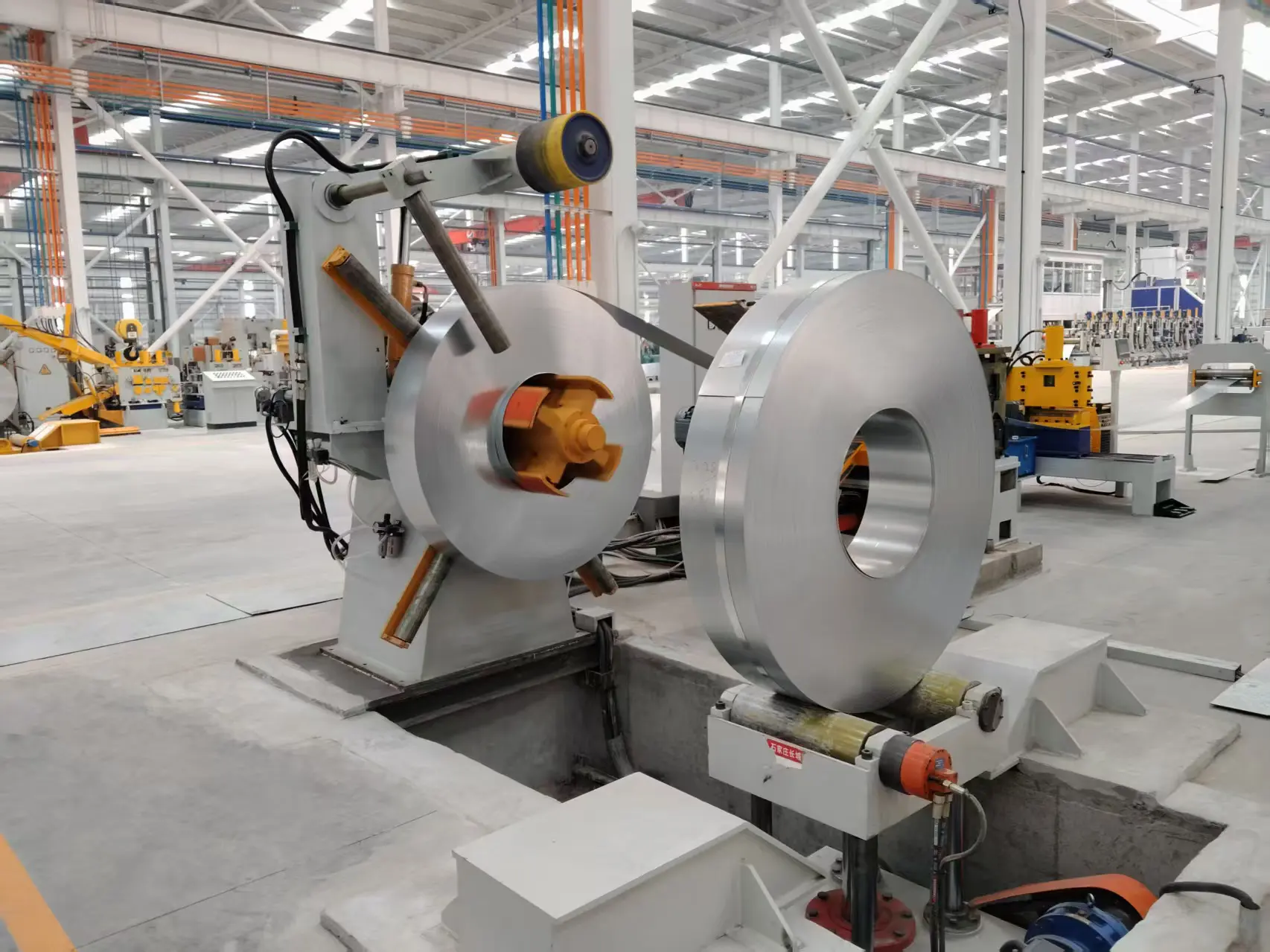
control from the outset. This equipment supports heavy coils of sheet metal,
expanding inside the inner core to grip the material securely while allowing
controlled rotation during the feeding phase.
In high-capacity mills, equipment durability and operational reliability
dictate overall productivity. The heavy-gauge coil handling systems designed by
SANSO demonstrate
how structural rigidity and precise tension control mitigate coil damage and
feed line misalignment. Understanding the engineering parameters, mechanical
configurations, and material handling physics of these machines allows
manufacturing facilities to improve throughput and maintain tight tolerances on
finished tube products.
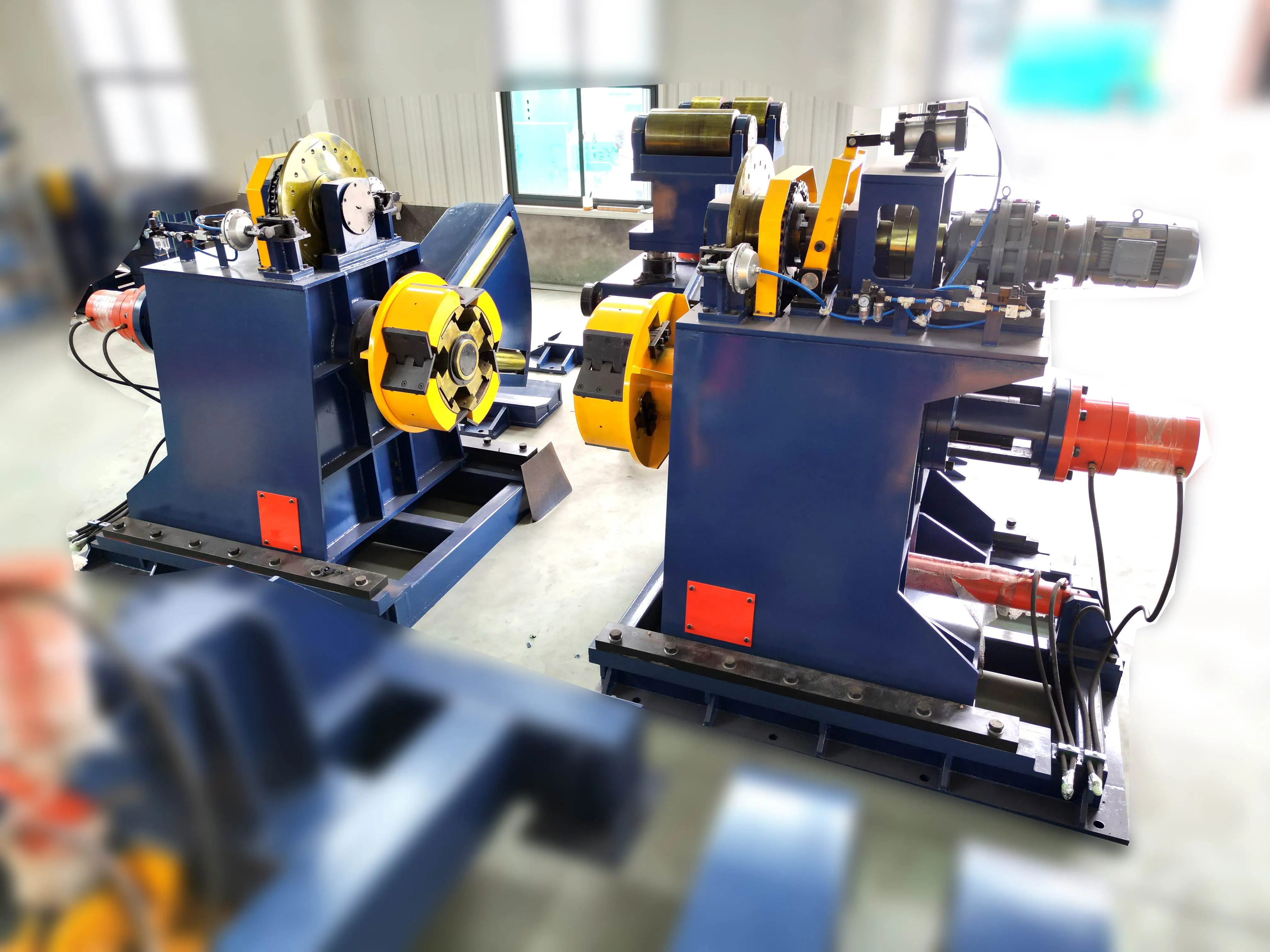
The Structural Architecture of Coil Payoff Systems
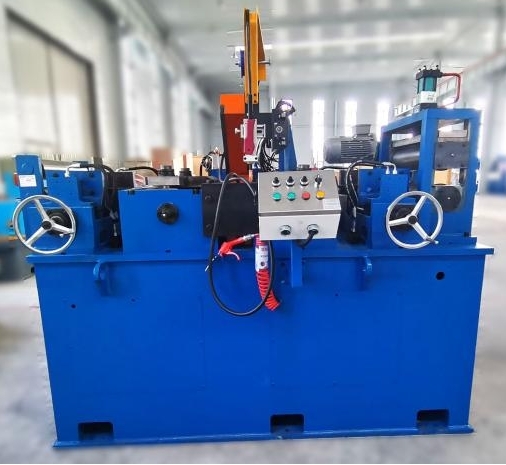
The core function of an uncoiler machine is to hold and feed the metal strip smoothly into the leveller or straightener
before it enters the forming rolls. If the coil is allowed to rotate freely
without controlled resistance, centrifugal forces and residual stresses can
cause the outer wraps to loosen rapidly, leading to a phenomenon known as
clock-springing. Conversely, excessive resistance can stretch narrow strips or
cause slippage within the forming drive rollers. To prevent these issues, modern
entry lines use heavy-duty shafts, robust bearings, and sophisticated braking
systems.
The main spindle of the payoff reel is subject to substantial bending moments
caused by the overhung load of the steel coil. For instance, a 15-metric-ton
coil exerts significant downward force on the unsupported end of the mandrel. To
withstand these forces without deflection, the shaft is forged from high-tensile
alloy steel and supported by heavy-duty double-row spherical roller bearings.
This structural rigidity minimizes shaft runout, ensuring that the coil remains
perpendicular to the centerline of the forming mill during rotation.
Hydraulic Mandrel Expansion versus Mechanical Linkages
Securing the coil onto the spindle requires a reliable expansion mechanism
that matches the internal diameter of the coil. This is achieved through either
hydraulic expansion or mechanical cone linkages. The choice between these two
designs depends on the weight of the coils, the material thickness, and the
frequency of changeovers.
Hydraulic Expansion: Uses a centralized hydraulic cylinder
acting on wedge-shaped slides to push mandrel segments outward. This
configuration provides uniform radial force along the entire inner circumference
of the coil. It is the preferred method for heavy coils, as the hydraulic
pressure actively holds the coil core against high torsional forces during
acceleration and braking.
Mechanical Cone Expansion: Relies on manual or motorized
screw jacks to move opposing cones into the coil ends. While suitable for
lighter coils or narrower strip widths, mechanical systems may experience
localized stress concentration at the coil edges, potentially deformation the
inner wraps of thin-gauge materials.
Selecting an appropriate uncoiler machine depends heavily on the maximum coil weight, outer diameter, and the range of
inner diameters required by the production schedule. Dual-cone configurations
are often deployed for wide, heavy steel coils, whereas single-mandrel
cantilevered designs are standard for medium-to-light duty pipe production lines
where rapid side-loading is preferred.
Mandrel Design Specifications
| Parameter | Light-Duty Configuration | Heavy-Duty Configuration |
|---|
| Coil Weight Capacity | 1,500 kg to 5,000 kg | 10,000 kg to 25,000 kg |
| Expansion Range | 450 mm – 520 mm | 508 mm – 610 mm (with adapter shoes) |
| Braking System | Pneumatic Disc Brake | Hydraulic Multi-Disc / Regenerative AC Motor |
| Threading Drive | Manual or Auxiliary AC Motor | Fully Synchronized Variable Frequency Drive (VFD) |
Addressing Common Feed Line Deviations
During high-speed tube forming, several operational issues can arise at the
entry section. Strip mistracking, where the metal drifts laterally away from the
mill centerline, causes uneven stress distribution across the forming rolls,
leading to twisted tubes or premature roll wear. This drift is often caused by
non-parallel alignment between the uncoiler shaft and the first entry guide
stand.
The engineering department at SANSO utilizes high-yield
steel frames and precision machining to ensure that the base assembly of the
payoff system remains aligned with the mill axis. To compensate for variations
in coil winding quality, some advanced feed lines incorporate lateral shifting
bases. These bases use hydraulic cylinders to slide the entire payoff assembly
left or right along linear guide rails, guided by automatic edge-sensing sensors
that actively detect strip position deviations in real-time.
Managing High-Strength and Spring-Back Materials
Processing high-strength low-alloy (HSLA) steels or thick-walled carbon
steels introduces significant mechanical resistance. When the steel banding
securing a new coil is cut, the stored elastic energy in the outer wraps can
cause violent unwinding. This poses safety hazards and risks damaging nearby
sensor arrays or feeding guides.
To safely manage high-strength coils, heavy-duty feed systems must be
equipped with an overarm hold-down wheel, also known as a snubber arm. This
hydraulic arm presses a heavy polyurethane-coated roller against the outer
diameter of the coil, maintaining downward pressure while the steel bands are
severed. Once the banding is removed, the hold-down wheel guides the leading
edge of the strip into the peeler plate and pinch rolls, preventing the material
from losing its coiled shape prematurely.
Integrating Material Handling: Coil Loading Cars and Snubber Rollers
Minimizing changeover time is a major priority for high-efficiency tube
production lines. The time spent crane-lifting a new coil, centering it on the
mandrel, and manually threading the strip reduces the overall operational
equipment effectiveness. An integrated coil loading car resolves this bottleneck
by staging the next coil while the current one is still being processed.
The coil car features a V-shaped cradle mounted on a hydraulic scissor lift,
traveling along floor rails perpendicular to the spindle axis. When the previous
coil is finished, the empty mandrel collapses, the coil car moves the new coil
into position, raises it to match the spindle centerline, and slides it onto the
mandrel. This automated sequence reduces loading times from twenty minutes down
to less than three minutes, protecting the mandrel segments from impact damage
associated with overhead crane loading.
When configuring a heavy-duty uncoiler
machine, engineers focus on coordinating the speeds of the payoff
spindle and the pinch roll feeder. In passive payoff setups, the strip is pulled
entirely by the forming mill or the leveler, with a pneumatic brake on the
spindle providing the back-tension. In active payoff configurations, an AC
variable frequency motor drives the spindle to feed the strip, synchronizing
with a loop control sensor located in a pit downstream. This looping system
prevents tension spikes from pulling the strip too tightly, protecting delicate
thin-walled materials from stretching.
Operational Synchronization and Safety Integration
The operational stability of the uncoiler machine directly impacts the dimensional accuracy of the subsequent forming stages.
Fluctuations in tension can lead to variations in the outer diameter of the
welded tube, particularly during high-frequency induction welding where
consistent weld-gap presentation is necessary. Consequently, integrating a loop
control system with photoelectric sensors or ultrasonic transducers allows the
drive motor to continuously adjust its rotation speed, maintaining a constant
catenary loop before the strip enters the straightener.
Safety systems must also be deeply integrated into the mechanical design of
the payoff line. Emergency stop sequences must halt the high-inertia rotation of
a 20-ton coil almost instantaneously. This requires pneumatic caliper disc
brakes or regenerative motor braking capable of absorbing large amounts of
kinetic energy without fading. Furthermore, interlocking guard rails,
pressure-sensitive mats, and light curtains prevent operators from approaching
the rotating spindle or the hydraulic pinch rollers during automatic
operation.
Key Engineering Parameters for Equipment Specification
Selecting the correct model for a welded tube production facility requires
analyzing several mechanical factors. Specifying a machine with insufficient
load capacity can lead to fatigue failure of the main bearing housing, while an
oversized system may lack the sensitivity required to process thin-walled
materials without causing strip distortion. Plant engineers should evaluate the
following structural specifications:
Maximum Coil Weight and Width: Determines the physical size
of the spindle, bearing size, and base frame construction.
Material Yield Strength and Thickness Range: Dictates the
required horsepower of the threading drive, the sizing of the hydraulic
expansion cylinder, and the down-pressure of the snubber arm.
Line Speed Capability: Must match or exceed the maximum
speed of the tube forming mill, typically ranging from 30 to 120 meters per
minute.
Mandrel Expansion Style: Determined by whether the inner
core diameters of incoming coils are uniform or vary across different steel
suppliers.
Correct alignment between the coil processing equipment and the subsequent
forming mill is necessary to prevent edge wave defects in the strip. Regular
maintenance schedules should include ultrasonic testing of the mandrel shaft to
detect micro-cracks, lubrication of the wedge slides to ensure uniform
expansion, and inspection of brake pad wear to guarantee consistent holding
tension during operation.
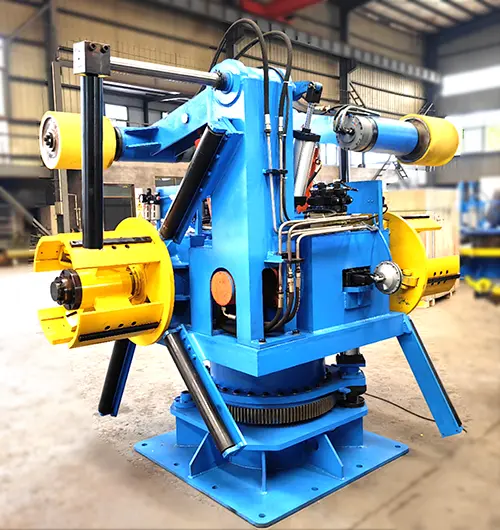
Inquiry Guidance for Manufacturing Facilities
Industrial pipe manufacturers requiring stable, heavy-duty strip feeding
solutions should evaluate how equipment configuration impacts production
efficiency. Proper equipment specification prevents feed line deviations,
minimizes material waste, and reduces mechanical downtime during coil changes.
The engineering team at SANSO assists facilities
globally by customizing payoff and coil handling lines to fit specific space
limitations and material parameters.
To receive a tailored technical proposal and detailed schematic drawings for
your specific tube mill line, please submit your manufacturing parameters,
including maximum coil weight, strip width range, wall thickness limits, and
material yield strengths, to our engineering division for a professional
consultation.
Frequently Asked Questions
Q1: What is the main structural difference between a single-mandrel and a
double-mandrel payoff machine?
A1: A single-mandrel machine features a cantilevered shaft supported on one
side, which is ideal for standard production lines where lateral loading is fast
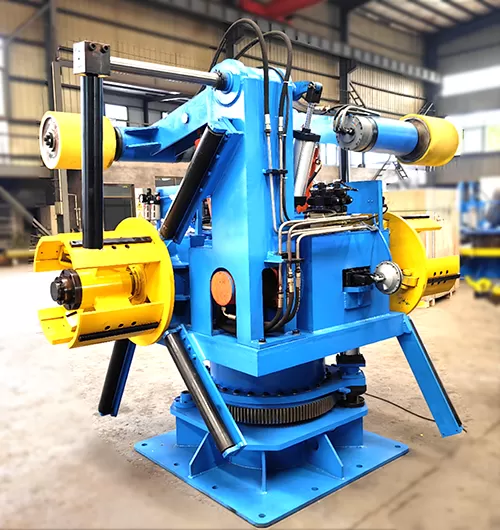
and convenient. A double-mandrel system, or rotary turret uncoiler, features two
separate spindles mounted on a rotating base. This allows the operator to load a
new coil on one side while the other spindle is feeding the line, reducing coil
changeover downtime in high-output plants.
Q2: How does the loop control system prevent tension spikes in the
strip?
A2: The loop control system uses ultrasonic or photoelectric sensors to
measure the depth of the strip loop in a pit located between the payoff unit and
the straightener. If the loop becomes too shallow, indicating high tension, the
sensor signals the variable frequency drive (VFD) to speed up the mandrel
rotation. If the loop becomes too deep, the drive slows down, maintaining a
constant catenary loop that isolates the mill from tension variations.
Q3: Why is hydraulic mandrel expansion preferred over manual mechanical
expansion?
A3: Hydraulic expansion provides uniform radial force along the inside
diameter of the coil via a centralized wedge system powered by a hydraulic power
unit. This ensures a more secure grip, which is necessary to prevent heavy coils
from slipping under high braking torque. Manual mechanical expansion relies on
screws or linkages that are difficult to tighten consistently on heavy loads and
are more prone to mechanical wear over time.
Q4: How does a snubber arm improve operator safety during threading?
A4: High-strength steel coils contain significant elastic spring-back energy.
If the packaging bands are cut without restraint, the strip ends can whip
outward violently. A hydraulic snubber arm presses a heavy roller against the
outside diameter of the coil, securely holding the outer wraps down while the
bands are cut, and then slowly rotates to feed the lead edge safely into the
entry pinch rolls.
Q5: What maintenance procedures are required to prevent mandrel alignment
issues?
A5: Regular maintenance requires lubricating the internal sliding wedges of
the mandrel to ensure complete and uniform expansion. Additionally, engineers
must inspect the main shaft bearings for play, verify that the hydraulic
cylinder rotary union is free of leaks, and check that the mounting bolts
securing the machine base to the foundation remain torqued to specification to
prevent lateral shifting.