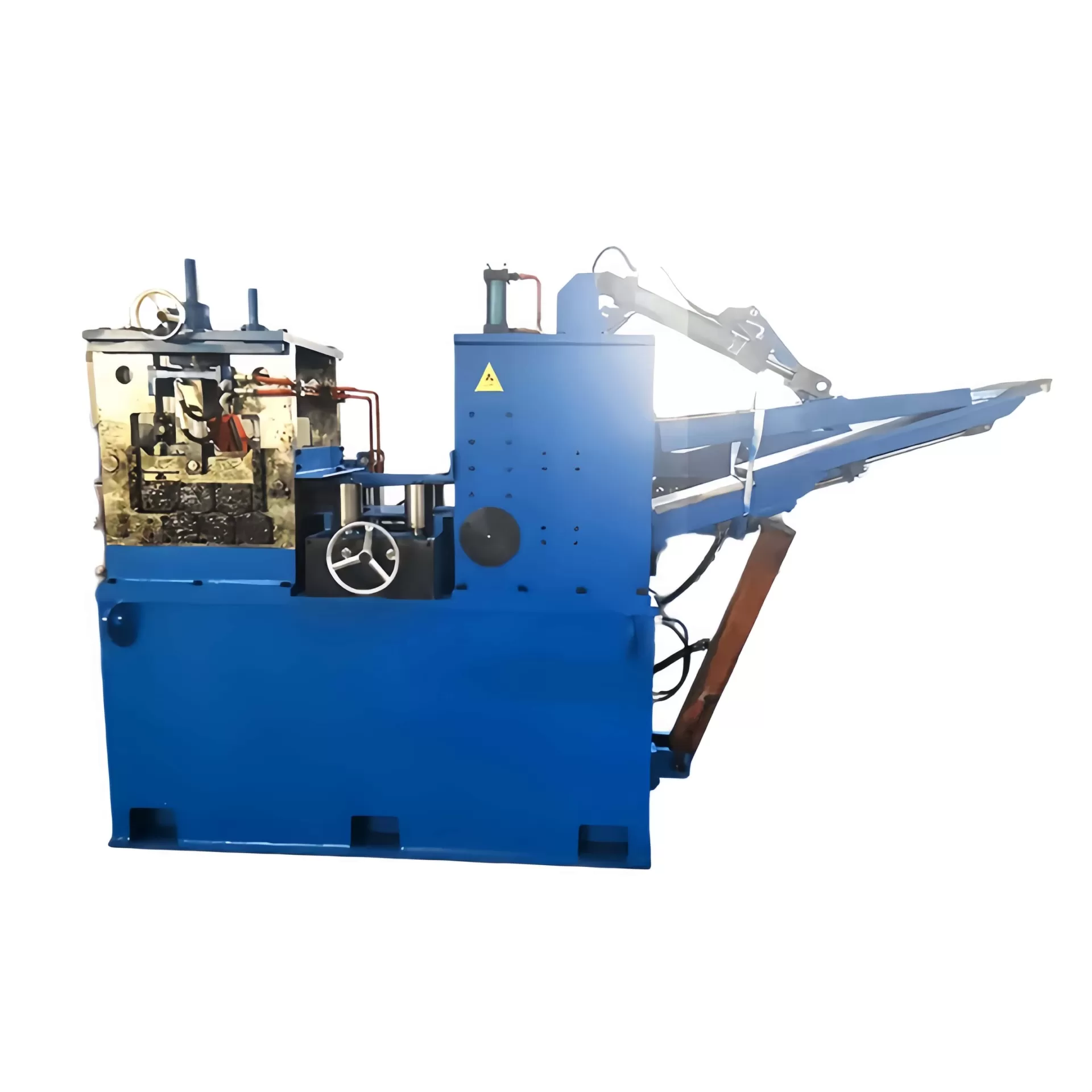
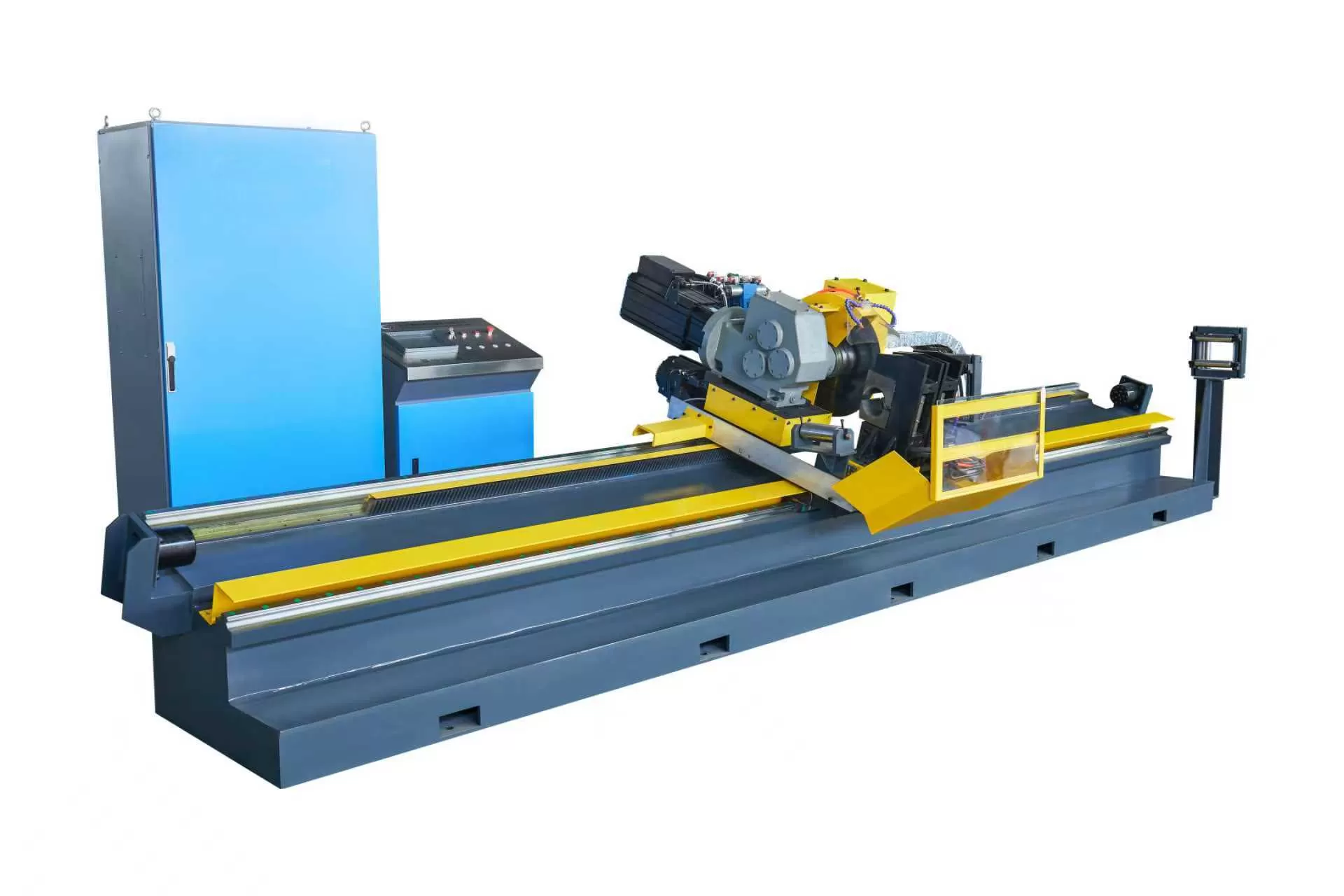
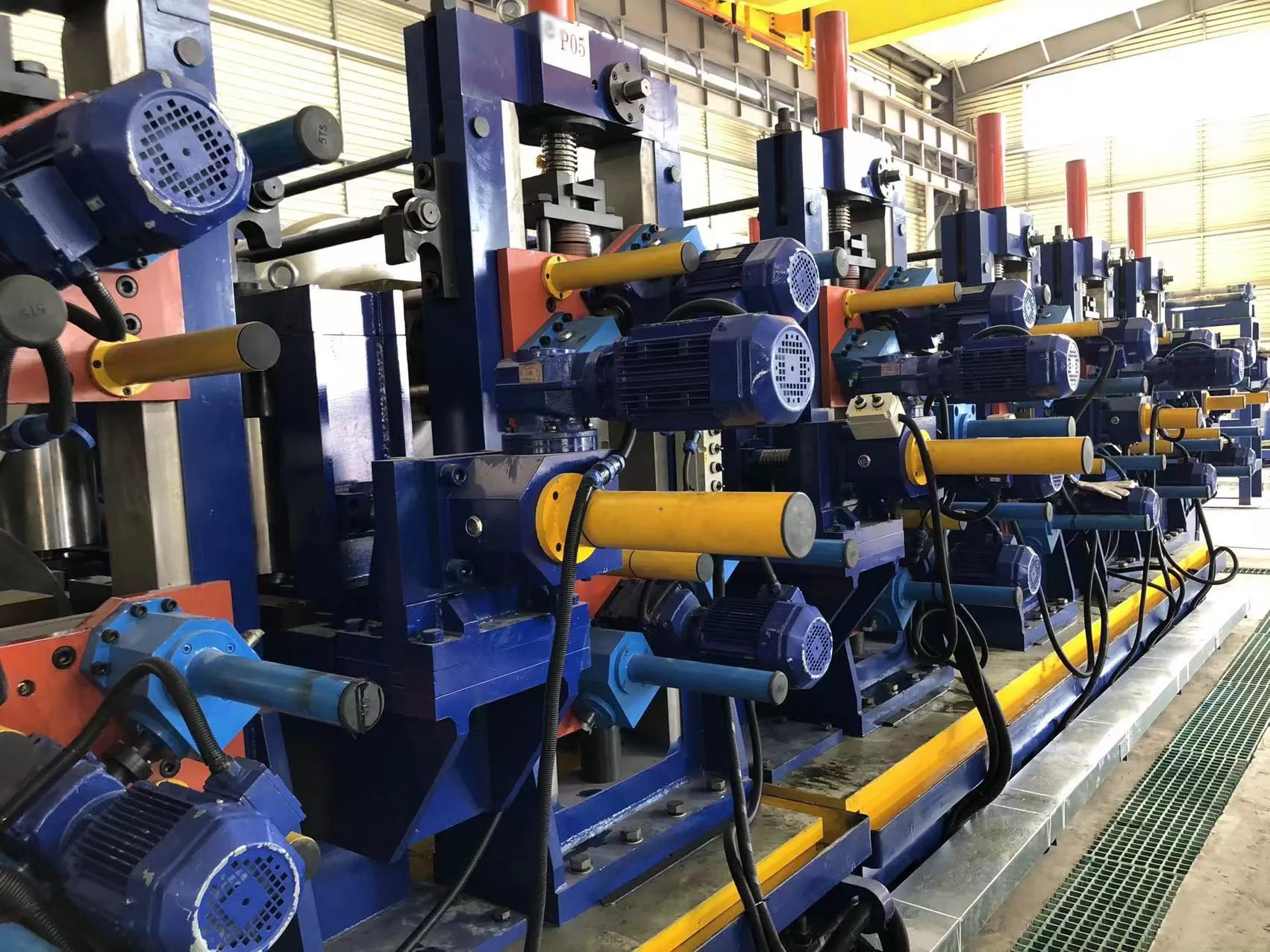
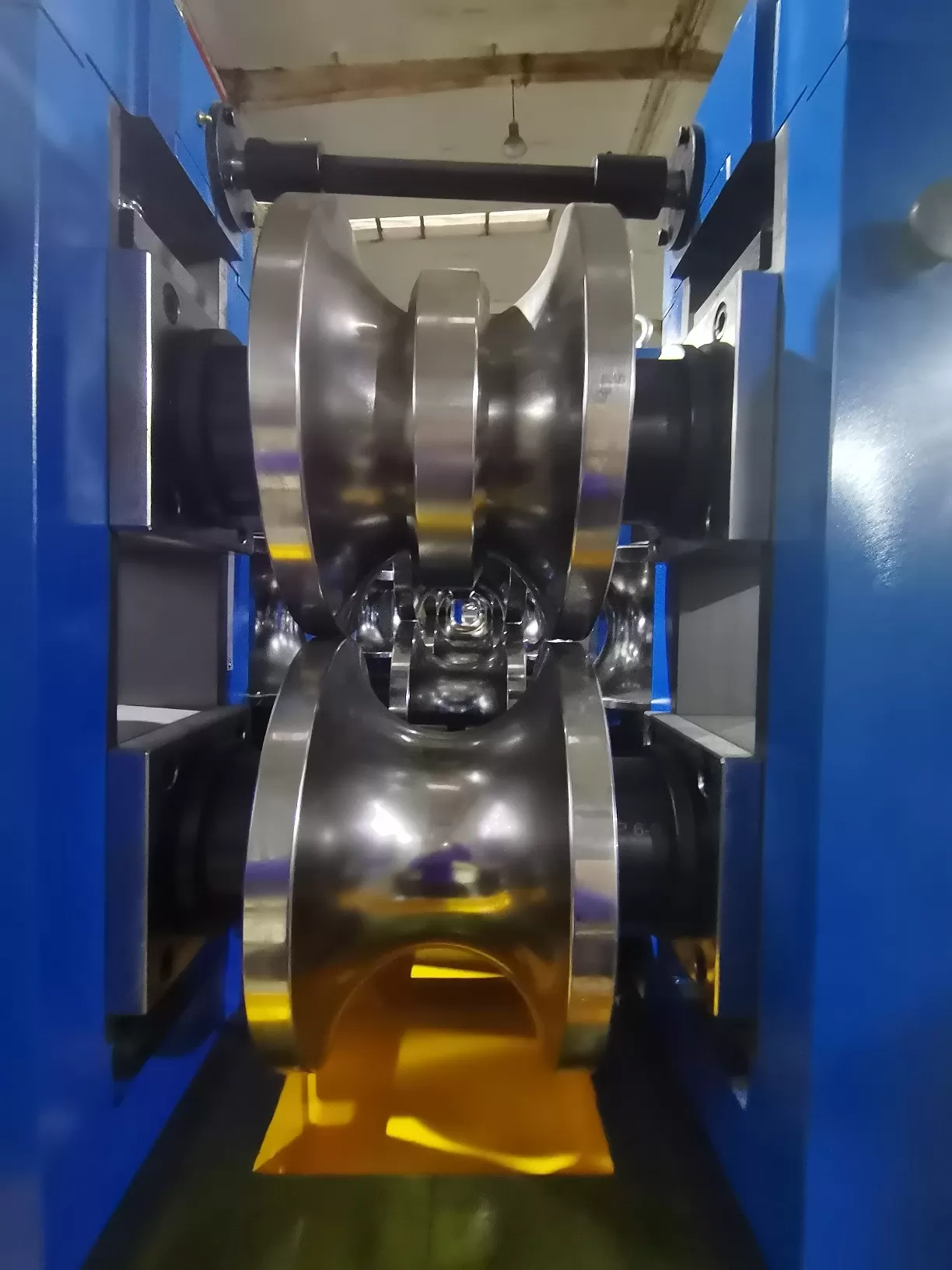
In the field of high-frequency welded tube manufacturing, the initial stage
of material handling determines the stability and precision of the entire
downstream process. Continuous tube fabrication demands a steady, controlled,
and aligned delivery of steel strip from heavy coils into the forming mill. The
machinery responsible for managing this transition is the payout reel or
decoiler. Achieving a consistent feed rate while managing high material inertia
requires deep structural engineering and precise mechanical synchronization.
For industrial operations, selecting and configuring the primary strip payout
machinery is not merely a matter of weight capacity. It involves analyzing the
interaction between material yield strength, coil dimensions, expansion
mechanics, and tension control. When integrated into a high-capacity production
line, the uncoiler acts as
the anchor of the continuous feed cycle, directly influencing the performance of
the leveling machinery, the accumulator, and the roll forming stands.
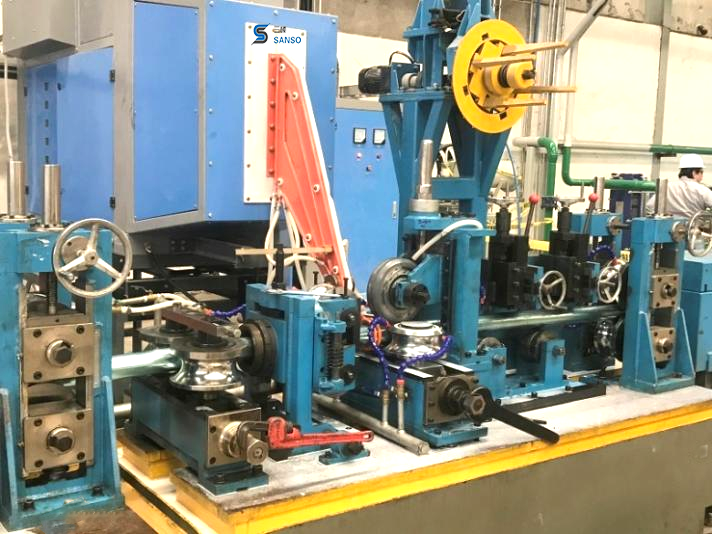
The Role of Uncoiling in Welded Tube Production
During the roll forming stage, a steel strip undergoes progressive plastic
deformation to form a round profile before induction welding. If the strip
enters the forming rolls with structural stress, variable tension, or lateral
misalignment, the resulting tube will exhibit defects such as twist, side-bend,
or mismatched weld seams. Controlling these variables begins at the coil entry
stage.
Steel coils arrive at the processing facility tightly wound, retaining
substantial residual bending stress, commonly referred to as coil set. As the
coil unwinds, this stored energy is released unevenly. Without precise
back-tension and physical containment, the material can experience
clock-springing, where the outer wraps expand rapidly and uncontrollably. This
creates severe operational hazards and damages the strip edges.
To prevent these issues, the payout system must perform three distinct
operational functions:
Securely grip the inner diameter of the coil to prevent slippage during
acceleration and deceleration phases.
Provide consistent, adjustable braking torque to maintain appropriate
back-tension, preventing strip sag or over-travel.
Keep the strip centerline aligned with the entry guide of the shear and butt
welder or strip accumulator.
Mechanical Specifications and Structural Engineering of an Uncoiler
From a structural standpoint, the machine frame must withstand massive
cantilevered loads. The weight of a standard steel coil can range from 3 metric
tons to over 20 metric tons, depending on the mill capacity. Because this mass
is supported from a single side on an expanding mandrel, the spindle bearings
and housing are subjected to severe bending moments.
Heavy-duty systems utilize a solid forged alloy steel spindle, heat-treated
for fatigue resistance and machined to tight tolerances. This spindle is housed
within a heavy, stress-relieved steel plate frame. Manufacturers like SANSO design these structural
components to minimize deflection under maximum load, which is necessary for
maintaining precise horizontal alignment with downstream leveling equipment.
Depending on the production volume and line configuration, plants deploy
either single-mandrel or double-mandrel designs:
Single-Mandrel Configurations
This layout features one expanding spindle mounted on a stationary or sliding
base. It is highly effective for medium-capacity lines where coil changeover
times do not limit overall productivity. The entire unit can be mounted on a
sub-base equipped with hydraulic positioning cylinders, allowing for active
side-shift adjustment to correct strip tracking in real time.
Double-Mandrel Configurations
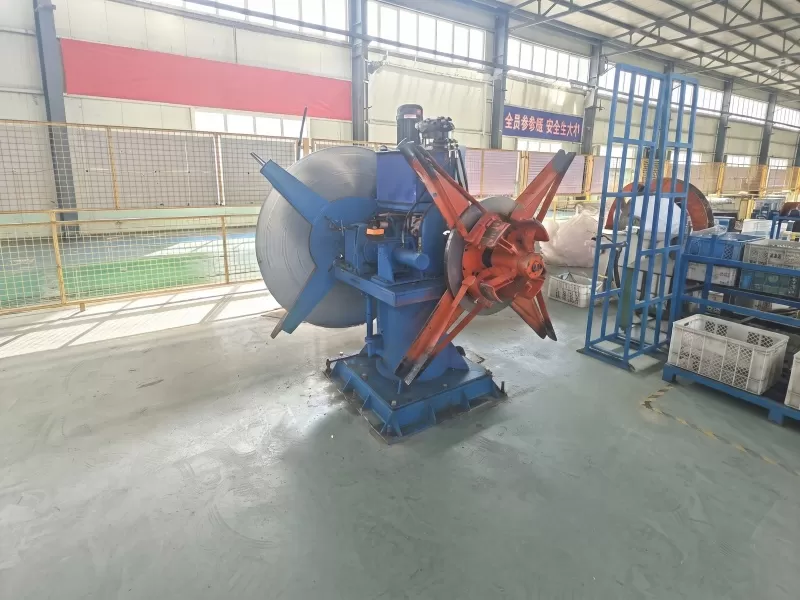
Commonly referred to as a rotary or dual-head uncoiler, this
design incorporates two separate mandrels mounted on a central indexing
platform. While one mandrel feeds the active production line, the second mandrel
can be safely loaded and prepared with a new coil. Once the active coil is
exhausted, the platform rotates 180 degrees, bringing the fresh coil into the
feeding position within minutes. This configuration is widely used in
high-frequency welding plants equipped with strip accumulators to run
continuous, uninterrupted cycles.
Mandrel Expansion Mechanics: Hydraulic vs. Manual
Gripping the internal coil surface securely is essential to prevent internal
slippage, which can score the material or cause erratic tension. The mandrel
consists of segmented leaves that expand radially outward to engage the inner
diameter of the coil.
Manual expansion designs rely on a mechanical wedge or screw link system. The
operator rotates an adjustment screw, which drives slide blocks along inclined
planes to push the segments outward. While cost-efficient and reliable for light
coils under 3 tons, manual systems are physically demanding and lack the
clamping force required for heavy industrial applications.
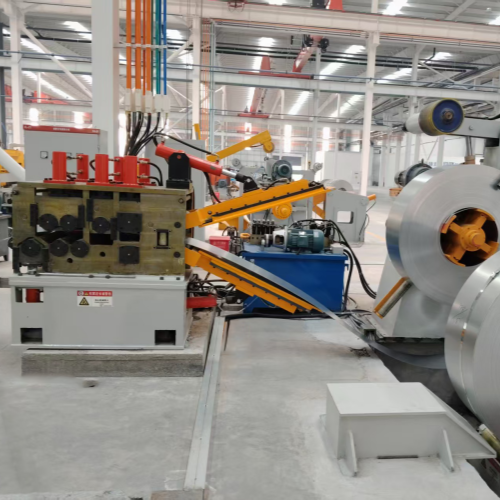
For high-performance environments, hydraulic expansion is the standard. In a
hydraulic uncoiler, a
rotary hydraulic cylinder mounted at the rear of the main shaft acts on a
central drawbar. This drawbar pulls a wedge expansion mechanism located inside
the mandrel, forcing the outer segments outward with consistent radial pressure.
This hydraulic mechanism offers several processing advantages:
Consistent radial force prevents internal coil collapse or deformation of
the inner steel wraps.
Adjustable pressure settings allow operators to match the gripping force
with the yield strength and wall thickness of the coil.
Rapid expansion and contraction cycles significantly reduce coil changeover
times, improving overall plant efficiency.
To accommodate variations in master coil dimensions, these mandrels are
engineered to cover standard inner diameter ranges, typically 480 mm to 520 mm.
For larger coil specifications, heavy-duty bolt-on adapter shoes or filler
plates are secured to the segments, extending the working expansion range up to
610 mm or more.
Tension Regulation and Dynamic Braking
As the strip travels through the forming mill, the payout reel must not spin
freely; doing so would result in material looping, strip buckle, and eventual
line jams. A controlled resistance, or back-tension, must be maintained.
Generating this tension requires a coordinated braking system capable of
adjusting its output as the coil diameter decreases.
During a production run, the outer diameter of the coil continuously shrinks,
reducing the torque arm. If the braking torque remains constant, the actual
tension pulled by the downstream feed rolls will rise proportionally. To
counteract this physical behavior, industrial uncoiler stations incorporate dynamic tension control systems.
Pneumatic disc brakes are frequently used for light to medium-duty
applications. These systems employ proportional pressure valves linked to a
coil-diameter tracking sensor, such as an ultrasonic distance meter or a
mechanical riding arm. As the sensor detects a reduction in coil diameter, the
control system reduces the pneumatic pressure to the brake calipers, keeping the
strip tension stable.
In high-speed, heavy-gauge lines, motorized systems with regenerative AC
drives are often preferred. Here, the motor acts as a generator, supplying
controlled back-tension while feeding electrical energy back into the plant
grid. This approach provides precise control during the rapid acceleration and
emergency stop phases of the tube mill.
Mitigating Operational Hazards and Coil Alignment Issues
Handling thick-walled or high-strength steel coils introduces mechanical
challenges that require dedicated auxiliary devices. High-yield carbon steel
displays a strong tendency to uncoil rapidly when the strapping bands are
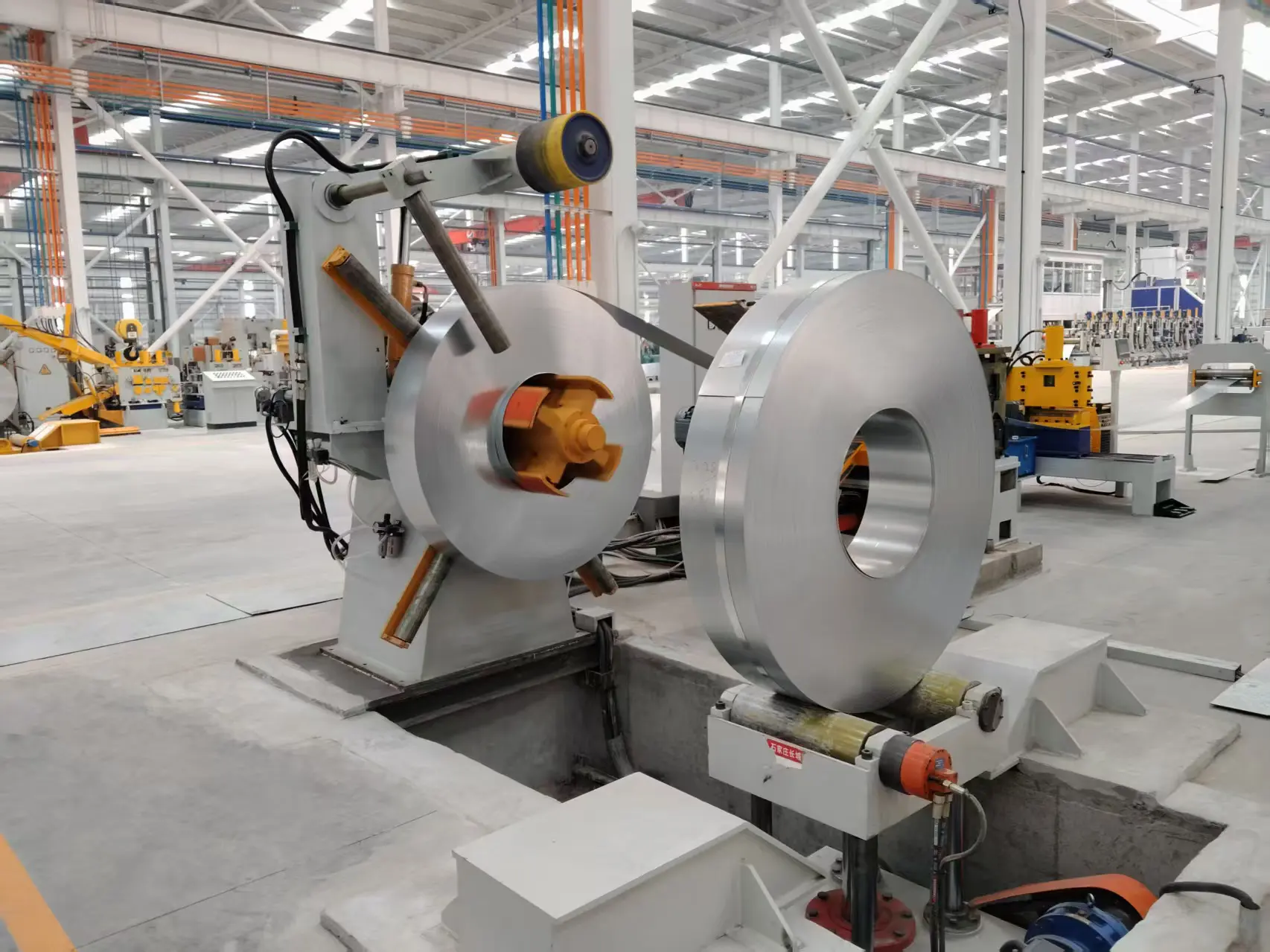
severed. To manage this safely, a heavy-duty hold-down arm, or snubber arm, is
positioned above the mandrel.
The snubber arm is hydraulically lowered onto the outer diameter of the coil.
Equipped with a motorized polyurethane-coated press roll, it applies constant
downward force, allowing the operator to safely cut the banding straps. The
motorized roll then assists in threading the leading edge of the strip into the
leveling unit.
Another common issue is material misalignment, or camber, where the strip
curves slightly along its length. If the coil is loaded off-center on the
mandrel, this error propagates down the line. To resolve this, the uncoiling
station is frequently paired with an automated coil loading car. The coil car
lifts the coil hydraulically, matches its height to the mandrel centerline, and
travels horizontally to slide the coil onto the expanded mandrel leaves,
preventing physical damage to the machine components.
Integration in High-Velocity Tube Production Lines
The efficiency of a high-frequency welded tube line manufactured by
SANSO depends on
seamless integration between the feeding section and the downstream welding
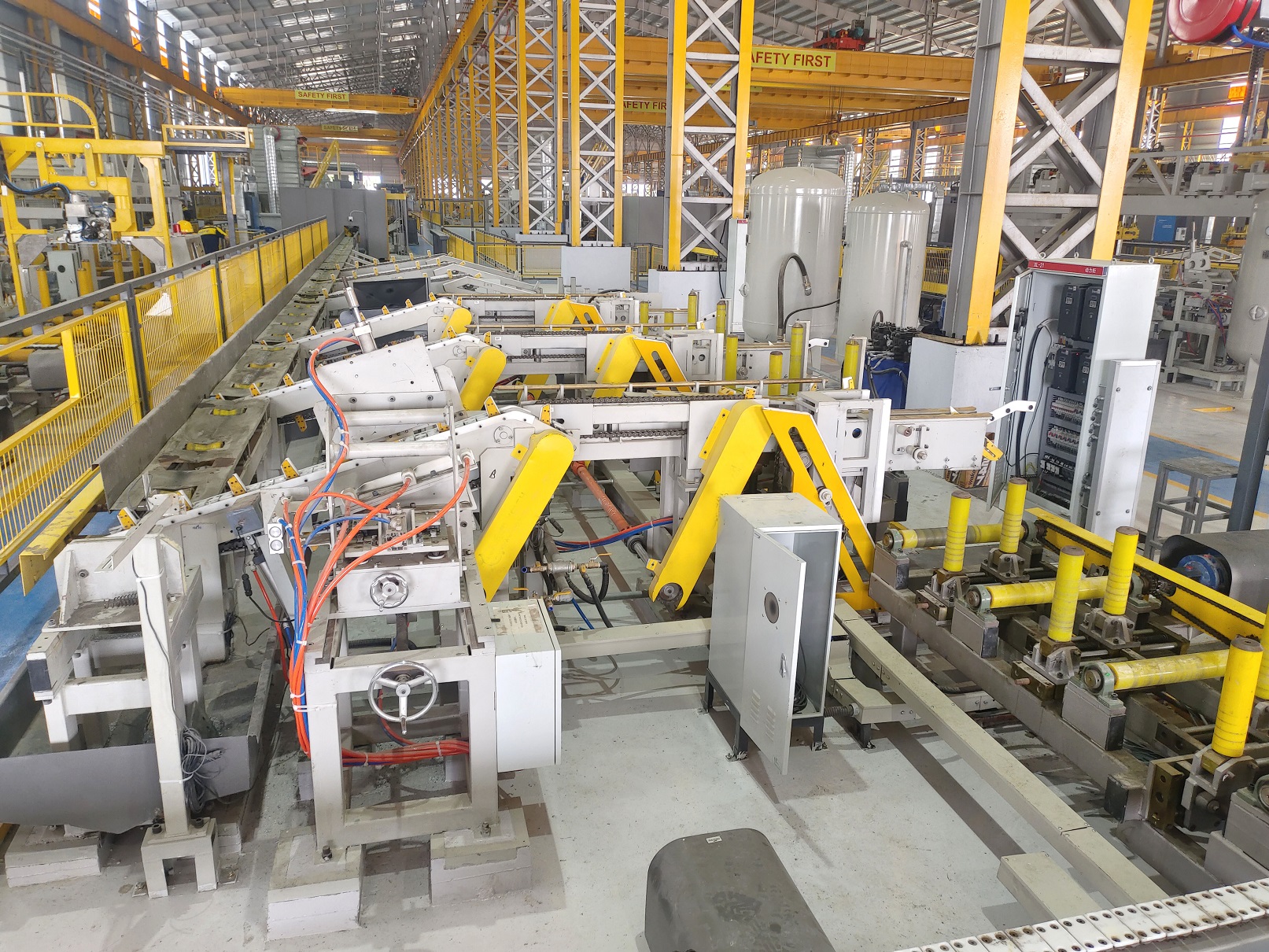
mill. In a modern setup, the uncoiling unit does not operate in isolation. It is
part of a synchronized system linked directly to the loop accumulator and the
main PLC control panel.
When starting a new coil, the leading edge is directed through a peeling
table and a pre-leveling unit, which flattens the strip end so it can be welded
to the trailing edge of the previous coil. The shear and butt welder crops both
ends and welds them together, ensuring a continuous strip flow. During this
temporary stoppage at the welding station, the downstream accumulator continues
to feed the active forming mill, preventing any stop-start defects in the weld
seam of the finished tube.
To ensure this continuous sequence works reliably, sensor arrays monitor loop
depth in a loop pit or accumulator feed tower. These sensors send real-time
analog signals to the payoff drive, automatically adjusting the rotation speed
of the uncoiler to
match downstream demand without jerking or stalling the steel strip.
Key Engineering Considerations for Equipment Selection
When specifying a payoff reel for a tube manufacturing facility, engineering
teams should evaluate several operational parameters to ensure long-term
reliability:
| Parameter | Engineering
Significance | Standard
Industry Ranges |
|---|
| Maximum
Coil Weight | Determines
spindle bearing sizing and shaft deflection limits. | 3,000
kg to 25,000 kg |
| Strip
Width Range | Defines
the axial length of the mandrel leaves and structural footprint. | 50
mm to 1,600 mm |
| Material
Thickness | Dictates
the required braking torque and need for a hold-down arm. | 0.5
mm to 16.0 mm |
| Mandrel
Expansion Range | Must
match the internal diameter of incoming mill coils. | Ø470
mm – Ø520 mm (expandable to Ø610 mm) |
| Line
Speed Matching | Ensures
synchronization with high-speed forming mills without loop lag. | Up
to 120 meters/minute |
By aligning these parameters with the chemical and physical properties of the
target steel grades, tube manufacturers can avoid issues like coil slippage,
strip deformation, and premature mechanical wear on the spindle bearings.
Frequently Asked Questions
Q1: What is the main structural difference between a decoiler and an
uncoiler?
A1: While both terms are frequently used interchangeably in the metal
processing industry, a decoiler often refers to a simpler, sometimes passive,
non-motorized reel that relies entirely on the pull of downstream machinery. In
contrast, an industrial payoff reel or uncoiling unit typically features active
components, such as integrated hydraulic expansion systems, dynamic pneumatic or
regenerative braking systems, and motorized snubber arms to handle heavier coil
weights and high-speed tube mill integration safely.
Q2: How does a loop control system regulate the feeding speed of the
mandrel?
A2: A loop control system monitors the slack portion of the strip situated
between the payout station and the first feed roll or accumulator. Utilizing
ultrasonic distance sensors, photoelectric arrays, or a mechanical dancer arm,
the system measures the depth of the material loop. This sensor output is
processed by a PLC to adjust the braking pressure or the variable speed drive
motor on the mandrel spindle, speeding up or slowing down rotation to match the
line speed.
Q3: What methods prevent high-strength steel coils from uncoiling
prematurely?
A3: To manage high-strength materials safely, machines are equipped with a
hydraulic snubber arm (hold-down arm) that presses a heavy, motorized roller
directly onto the outer diameter of the coil. This physical restraint keeps the
coil wraps tightly bound while the steel banding straps are cut. Additionally,
heavy-duty side guide rollers and peeler shovels are used to guide the springy
outer wrap into the pinch rolls without manual handling.
Q4: How do you select the correct mandrel expansion range for varying coil
inner diameters?
A4: Mandrels are engineered with a base expansion range, typically operating
between 470 mm and 520 mm via hydraulic wedge actuation. When a plant processes
coils with larger inner diameters, such as 610 mm, operators install bolt-on
segments or sector plates over the standard mandrel leaves. This extends the
outer clamping diameter while retaining full structural rigidity and hydraulic
grip force.
Q5: Why is back-tension necessary during the uncoiling phase?
A5: Back-tension is necessary because it prevents the steel strip from
slackening, which can cause lateral wandering, edge damage, and telescoping
(where the center of the coil slides outward horizontally). Maintaining a
constant, controlled tension ensures that the material enters the leveling
machine and forming rolls perfectly flat and aligned with the machine
centerline, which directly improves the geometry of the welded tube.
Technical Consultations and Engineering Inquiries
Selecting the correct material handling machinery requires a detailed
analysis of your production line, material specifications, and yield strengths.
The engineering team at SANSO specializes in
designing custom tube mill entry systems, including heavy-duty single and
double-head coil payoff stations, tailored to your specific operational goals.
To discuss your production parameters or to receive a detailed technical
proposal for a high-performance entry system, please submit a formal inquiry
with your coil dimensions and line speed requirements.