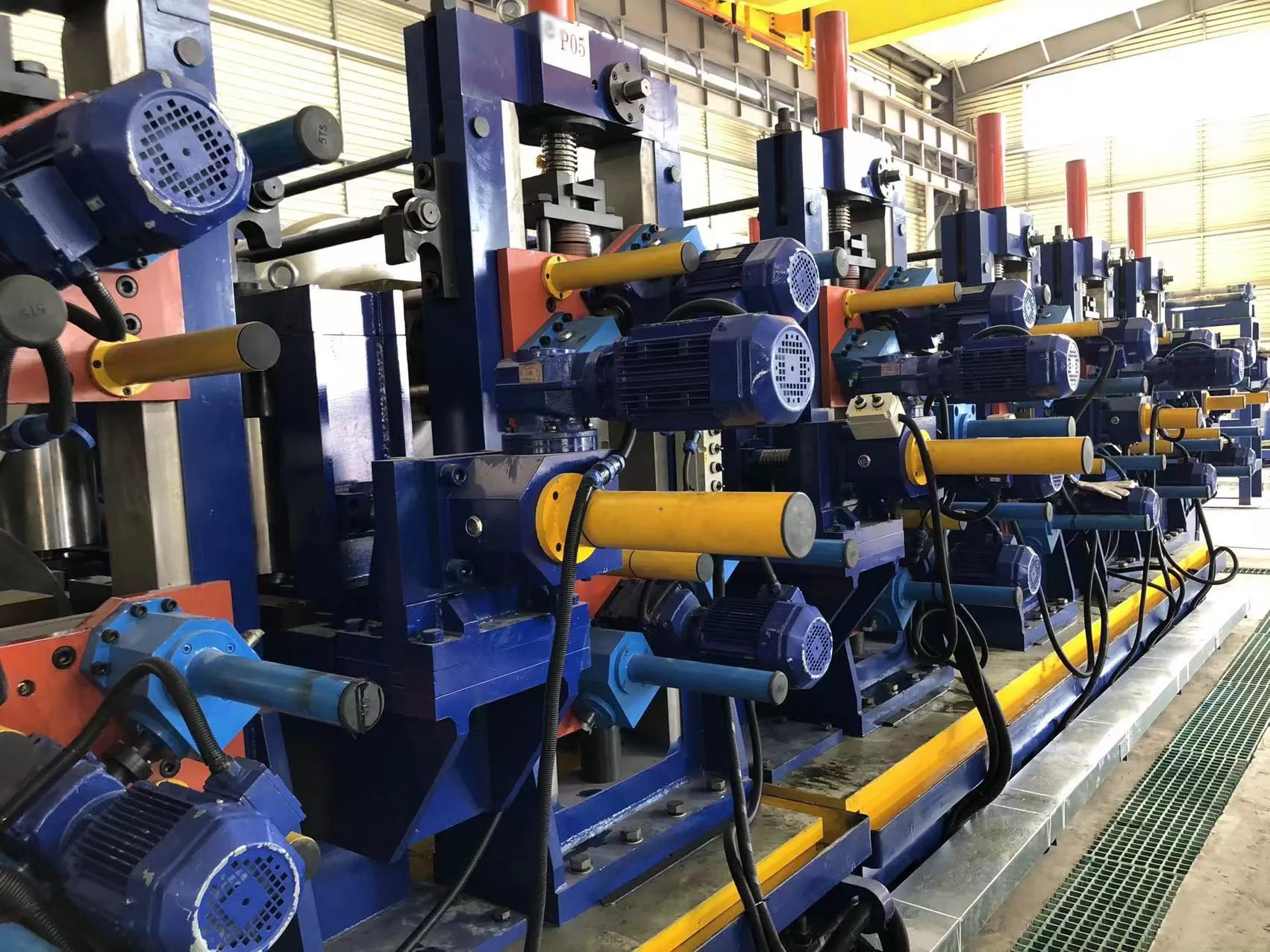
Continuous steel tube manufacturing demands a high degree of structural
stiffness, precise mechanical calibration, and consistent thermal control.
Within high-frequency induction welded pipe production, the structural design
and engineering precision of the machinery determine the final geometric
accuracy and metallurgical integrity of the product. Industrial operators seek
manufacturing systems that balance high production throughput with tight
dimensional tolerances. As a specialized manufacturer of heavy machinery,
SANSO designs
heavy-duty engineering systems that meet these rigorous production standards.
Selecting and calibrating the appropriate tube Mill
Equipment is the primary step in achieving reliable material
deformation and strong weld seams across various production volumes.
The manufacturing process transforms flat, hot-rolled or cold-rolled steel
coils into round, square, or rectangular profiles. This mechanical deformation
must occur without introducing internal stress concentrations or surface
defects. This analysis examines the mechanics of each production section,
identifies common operational bottlenecks, and outlines systemic solutions to
maintain continuous, high-yield operation.
Mechanical Breakdown of the Tube Production Line
A standard high-frequency welded pipe mill operates as a continuous
production line, with several machinery stations working in synchronization. If
any station experiences a mismatch in speed or force, the entire production flow
is compromised.
Entry Section: Coil Handling and Strip Accumulation
The entry zone is engineered to handle raw material coils and prepare them
for continuous forming. This section comprises the following components:
Uncoiler: Holds and rotates the steel coil, matching the
strip tension required by the downstream pinch rolls. Dual-cone or
single-mandrel designs are utilized depending on the coil weight and strip
width.
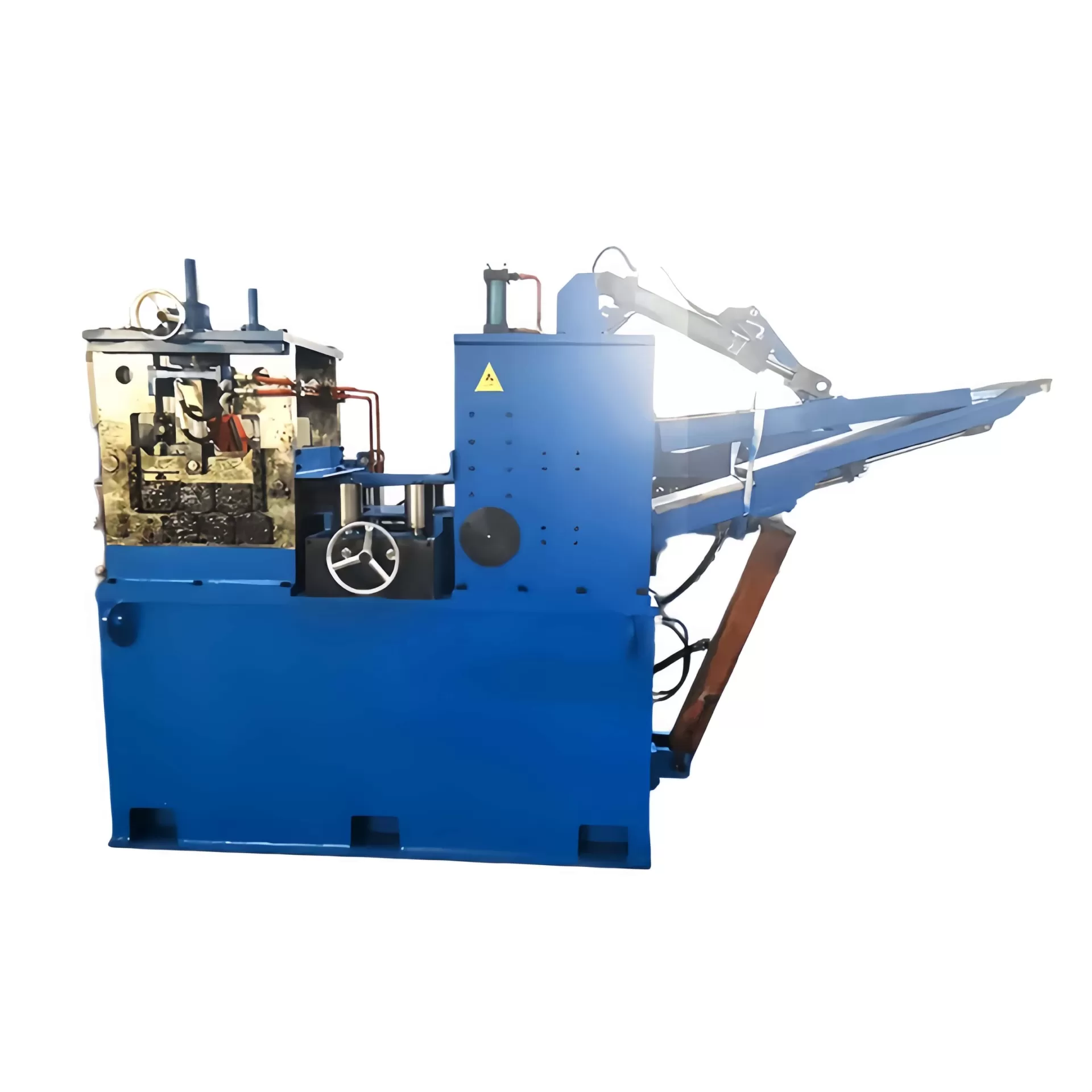
Shear and Welder: Cuts the uneven tail end of the preceding
coil and the lead end of the incoming coil, welding them together to form a
continuous strip. This prevents the forming stands from running dry during coil
changeover.
Accumulator: Acts as a buffer, storing a pre-determined
length of steel strip. While the uncoiler stops to allow welding of the two coil
ends, the accumulator releases its stored material to feed the forming stands
uninterrupted.
Forming Section: Cold Roll Deformation
The forming phase progressively bends the flat strip into a cylindrical
profile. This is achieved through a sequence of roll passes that distribute
bending forces evenly along the material profile:
Breakdown Passes: Perform the initial bending of the strip
edges. Utilizing W-bending or modified radius designs, these rolls apply high
compressive force to establish the primary radius without thinning the
material.
Side Roll Stands: Provide lateral guiding and progressive
bending between the driven breakdown stands, preventing strip buckling and
maintaining center alignment.
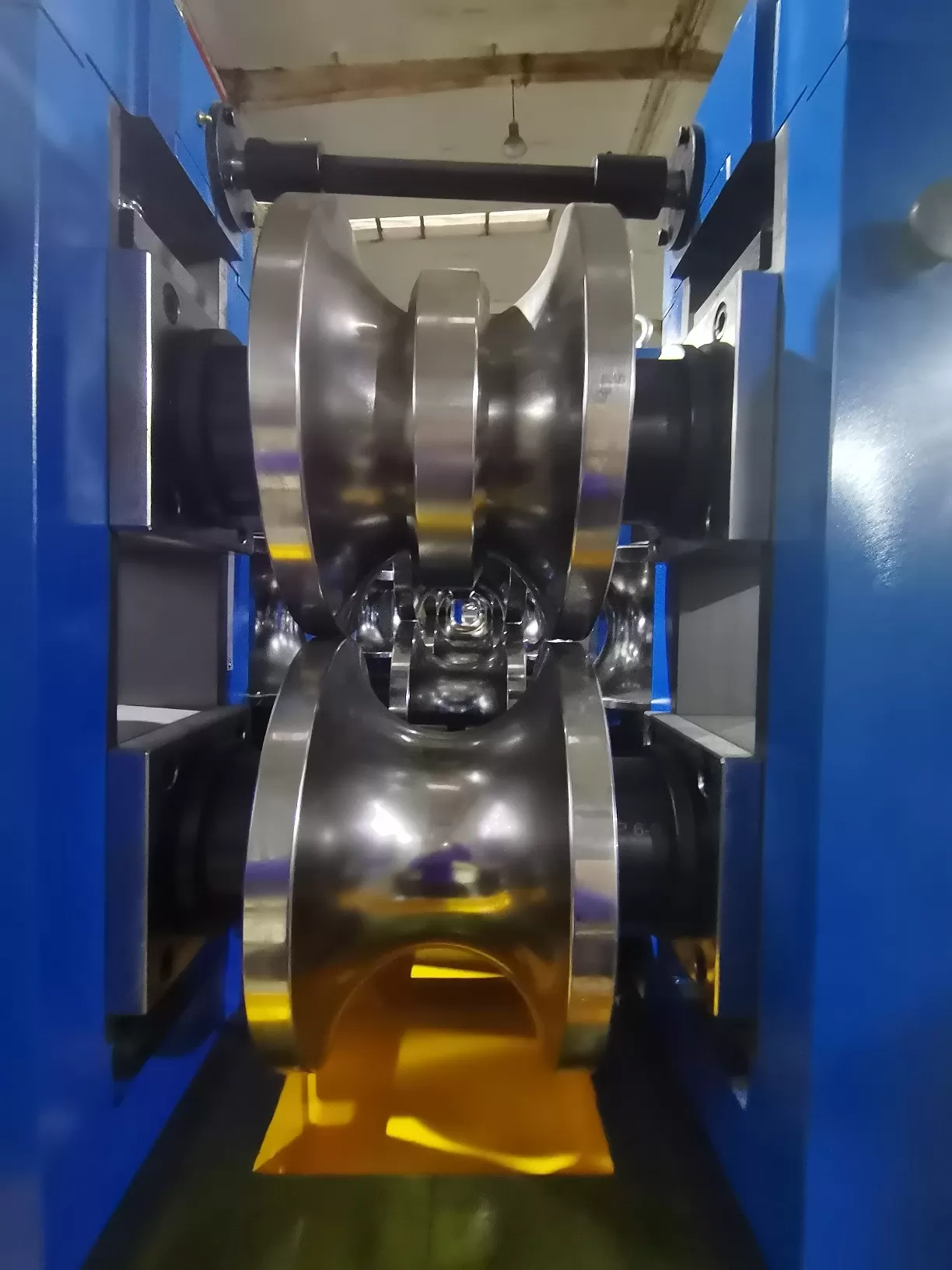
Fin Passes: Form the final circular shape and guide the
strip edges into the weld area. The fin pass rolls feature thin circumferential
fins that fit between the open strip edges, sizing the open profile and
preparing the edges for induction welding.
Welding Section: High-Frequency Induction and Forging
The open tube profile is welded into a continuous pipe in this zone. It
relies on electromagnetic principles and mechanical forge pressure:
Induction Coil: Carries a high-frequency alternating
current, inducing a magnetic field that concentrates electrical currents along
the outer surface of the open tube (the skin effect) and draws the current along
the converging strip edges (the proximity effect).
Impeder: Consists of ferrite rods placed inside the tube.
It increases the electrical impedance of the inner path, directing the induced
current to flow efficiently along the V-shape edges to the welding apex.
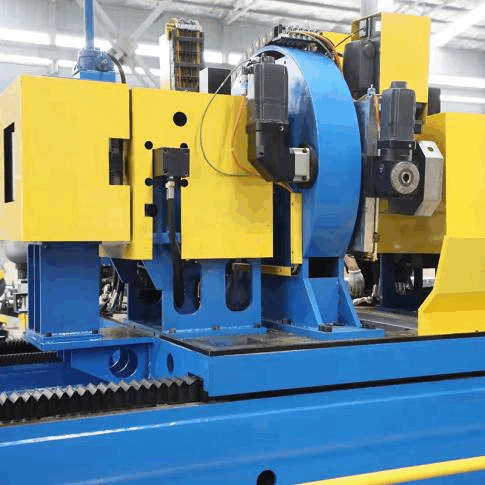
Squeeze Rolls: Apply radial pressure to forge the heated,
semi-molten strip edges together. This mechanical squeeze action extrudes
surface oxides and impurities, creating a solid-phase weld.
Optimizing these thermal and mechanical variables requires integrated
tube
Mill Equipment engineered to handle specific wall thicknesses and
material yield strengths.
Common Engineering Challenges in Welded Pipe Production
Operating a high-speed mill introduces several process variables that can
lead to product rejects if unmonitored. Understanding these challenges allows
operators to implement preventive calibration procedures.
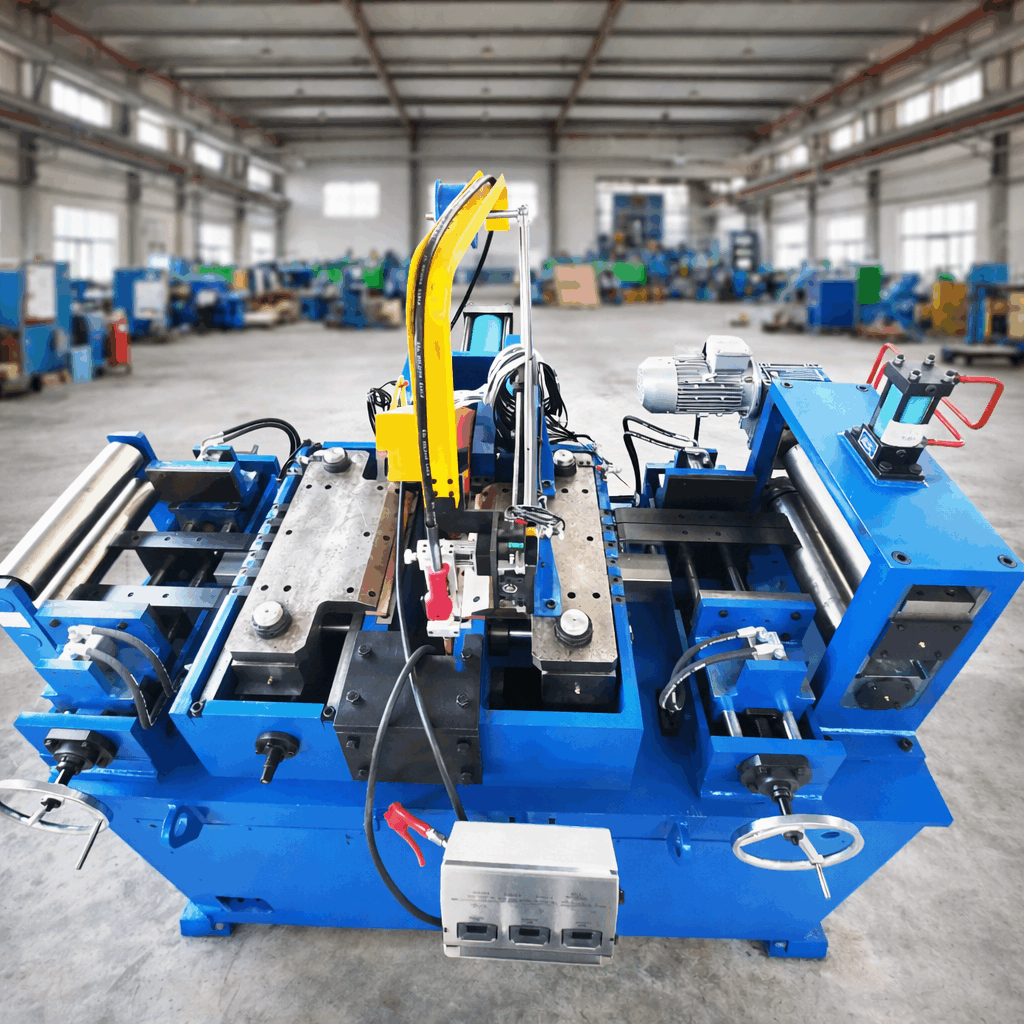
Weld Seam Misalignment and Squeeze Roll Deflection
During high-frequency welding, if the open strip edges do not align precisely
at the apex point under the squeeze rolls, mismatch occurs. This offset reduces
the effective wall thickness at the weld line and weakens the joint. This issue
is often caused by mechanical deflection in the squeeze roll stands or uneven
wear on the squeeze rollers. Squeeze stands must feature high structural
rigidity and fine-threaded adjustment screws to maintain micron-level alignment
under high forge pressures.
Weld Bead Control and Scarfing Accuracy
The mechanical forging process pushes excess material out of the joint,
creating internal and external weld beads. The external bead must be removed
cleanly while the metal is still hot. Outer diameter (OD) scarfers utilize
carbide tools profiled to the tube radius. If the scarfer is not rigidly mounted
or if the tube vibrates within the sizing section, the tool may gouge the tube
wall or leave behind a high bead, failing quality inspection. Stable tube
guiding directly downstream of the squeeze rolls is vital for smooth
scarfing.
Heat-Affected Zone (HAZ) Optimization
Excessive power input during high-frequency welding creates a wide
heat-affected zone, which can coarsen the grain structure of the steel and lower
its impact toughness. Conversely, insufficient heating leads to paste welds or
cold welds, which fail hydro-testing. Operators must regulate power based on
line speed. Modern automation systems integrate speed-sensing loops that
dynamically adjust the induction welder's power output to match the acceleration
and deceleration phases of the mill.
Advanced Tooling and Automation Technologies
To remain competitive, manufacturers are upgrading the tooling configurations
and control systems of their machinery to minimize changeover times and improve
product repeatability.
Traditional roll-forming lines require manual roll changes for every product
size, a process that can halt production for several hours. High-capacity
tube
Mill Equipment now incorporates motorized quick-change cassette
systems. These cassettes allow operators to slide out entire roll-stand
subassemblies and replace them with pre-configured tooling sets, reducing
changeover times from hours to minutes.
Furthermore, digital roll positioning systems utilize linear transducers and
PLC interfaces to store coordinates for different tube sizes. When a new
production run is selected, the roll stands automatically adjust to the
pre-programmed vertical and horizontal positions. This reduces reliance on
operator experience and minimizes test-run material scrap.
For manufacturers seeking long-term operational stability, SANSO provides customizable
machinery layouts tailored to specific spatial and material requirements,
ensuring that each roll stand maintains structural rigidity over decades of
continuous usage.
Material Specifications and Forming Limits
The mechanical properties of the raw material coil greatly affect how the
strip behaves during cold roll forming. Understanding these material
characteristics helps in configuring the roll-pass designs.
Carbon Steel vs. Stainless Steel Forming Dynamics
Carbon steel and stainless steel exhibit distinct forming
characteristics:
Carbon Steel: Typically displays predictable yield
strengths and moderate springback. It responds well to standard roller
configurations and is less prone to work hardening during progressive
deformation.
Stainless Steel: Possesses a high rate of work hardening
and higher tensile strength. It requires greater mechanical forming forces,
robust gearboxes, and highly polished, specialized roll tooling (such as
chromium steel or bronze alloys) to prevent surface galling and
scratching.
Managing Springback in Roll Design
When the bending force is released, the steel strip attempts to return to its
original flat shape due to elastic recovery. Roll designers must compensate for
this springback by over-bending the strip in the breakdown and transition
stages. The degree of over-bend is calculated based on the material's yield
strength, wall thickness, and outer diameter. High-yield structural steels
require more aggressive over-bending than standard commercial-grade carbon
steels.
Optimizing Line Speed and Yield
Maximizing the efficiency of a tube mill requires continuous operation with
minimal stoppages. Mechanical reliability and precise material handling are
vital to achieving this target.
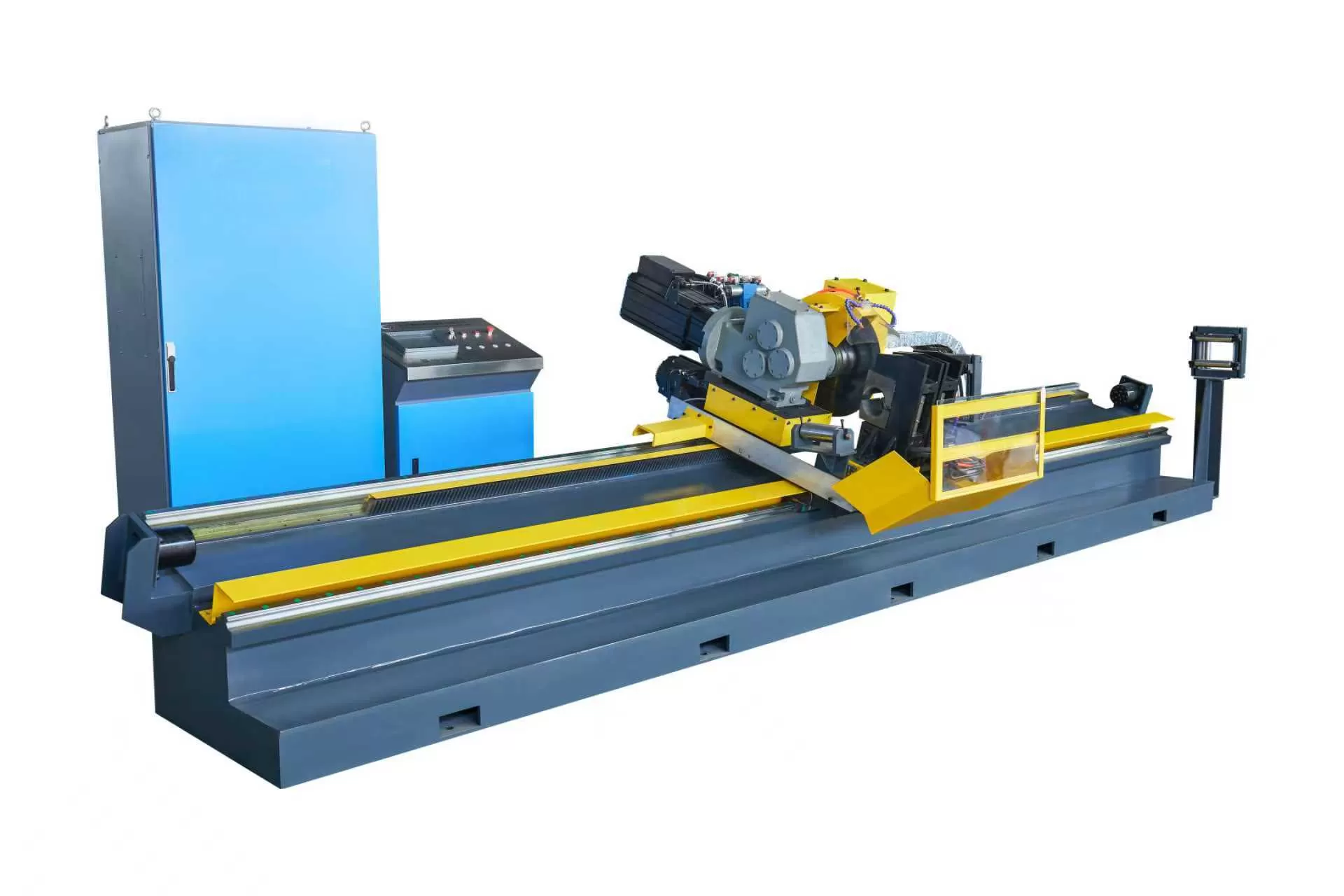
The speed-limiting factor of a mill is often not the welding section, but
rather the cutting and exit systems. High-speed lines require computerized
flying cold saws that track the moving tube with high precision using optical
encoders. These saws must accelerate to match the line speed, perform a clean,
burr-free cut, and return to the starting position without disrupting the
continuous flow of the tube.
An integrated approach to material accumulation, robust roll forming, precise
welding calibration, and automated cutting is what defines a high-yield
production line. By investing in structurally rigid tube Mill
Equipment, tube manufacturers can sustain high speed profiles,
minimize material scrap, and meet strict global pipe standards.
Frequently Asked Questions
Q1: What is the primary function of an accumulator in a tube
production line?
A1: The accumulator acts as a buffer that stores a reserves
of strip material. During a coil changeover, the entry uncoiler must stop so the
operator can shear and weld the end of the depleted coil to the start of the new
coil. The accumulator feeds its stored strip into the forming mill during this
period, allowing the downstream forming, welding, and sizing sections to
continue operating at normal speeds without stopping.
Q2: How does the skin effect influence high-frequency induction
welding?
A2: The skin effect is a physical phenomenon where
alternating current concentrates near the outer surface of a conductor. At the
high frequencies used in tube welding (typically 200 kHz to 400 kHz), this
effect forces the electrical current to flow only along a thin layer of the
steel strip edges. This concentrates the heat precisely where the weld seam is
formed, allowing fast local melting and high-efficiency forge welding.
Q3: Why is roll tooling wear monitoring necessary in tube
mills?
A3: Roll tooling is subject to high frictional forces and
pressure during cold forming. Over time, wear alters the profile of the rollers,
leading to inaccurate strip bending, uneven edge alignment, and surface scoring.
Regular monitoring and roll regrinding are necessary to maintain dimensional
tolerances and prevent defects in the finished pipe.
Q4: What is the difference between cold saw cutting and hot friction
sawing?
A4: A cold saw utilizes a circular carbide-tipped blade
rotating at a lower speed with high torque, creating a clean, burr-free cut with
minimal heat generation. A hot friction saw operates at extremely high speeds,
relying on friction to melt through the pipe material; this method is faster but
generates significant burrs, louder noise, and heat-affected zones at the tube
ends.
Q5: How does raw material coil camber affect the forming
process?
A5: Camber refers to the lateral curvature of the steel
strip edges. Severe camber causes the strip to wander sideways as it enters the
forming stands, resulting in uneven edge tension, twisting of the formed
profile, and misalignment of the welding joint at the squeeze rolls.
Ensuring consistent mechanical output requires careful engineering and robust
machinery designs. If your production line requires increased structural
rigidity, custom roll tooling, or automated accumulator integrations, contact
our engineering department at SANSO today to submit your
specific material profiles and production targets for a tailored machinery
analysis.