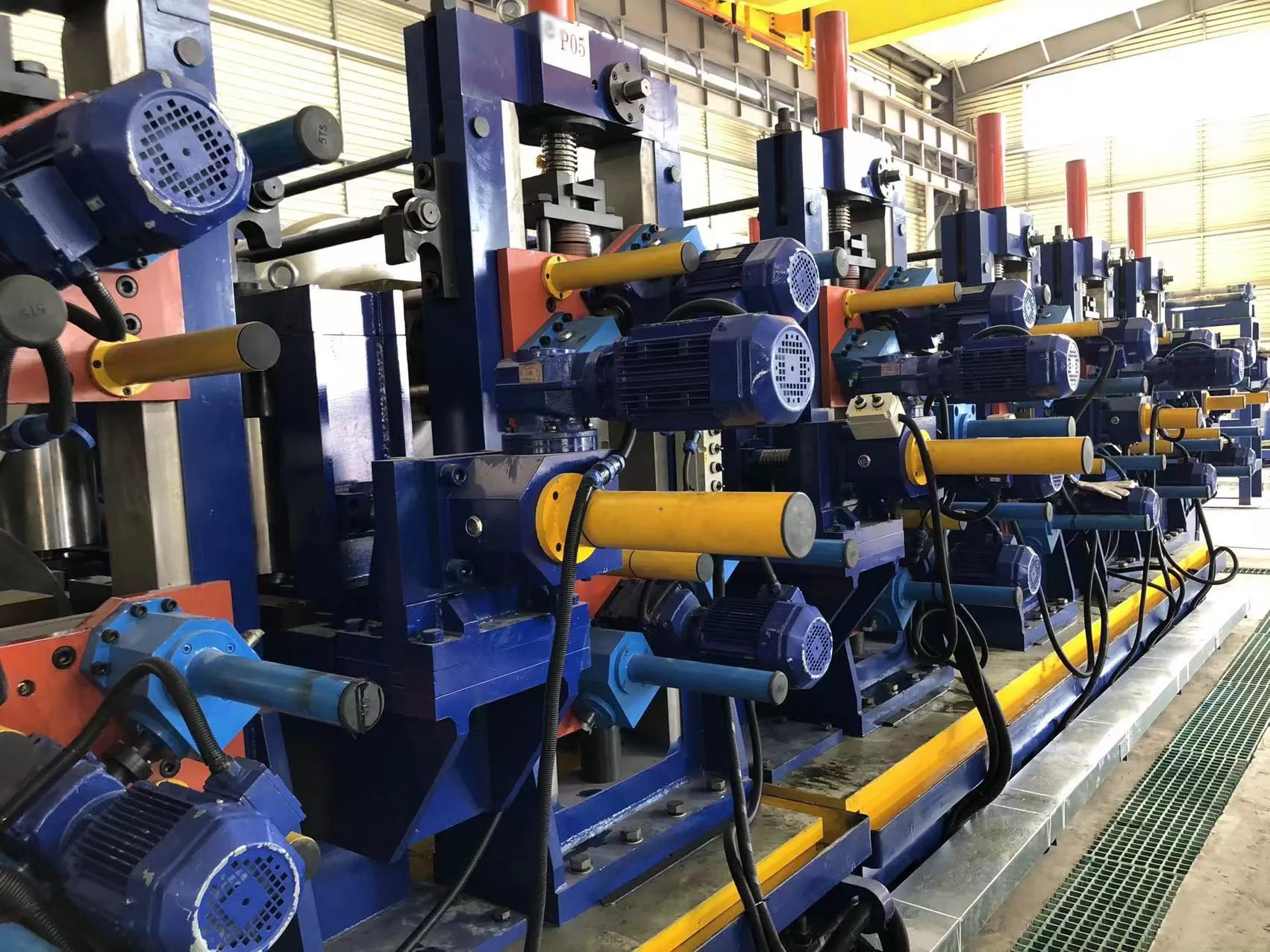
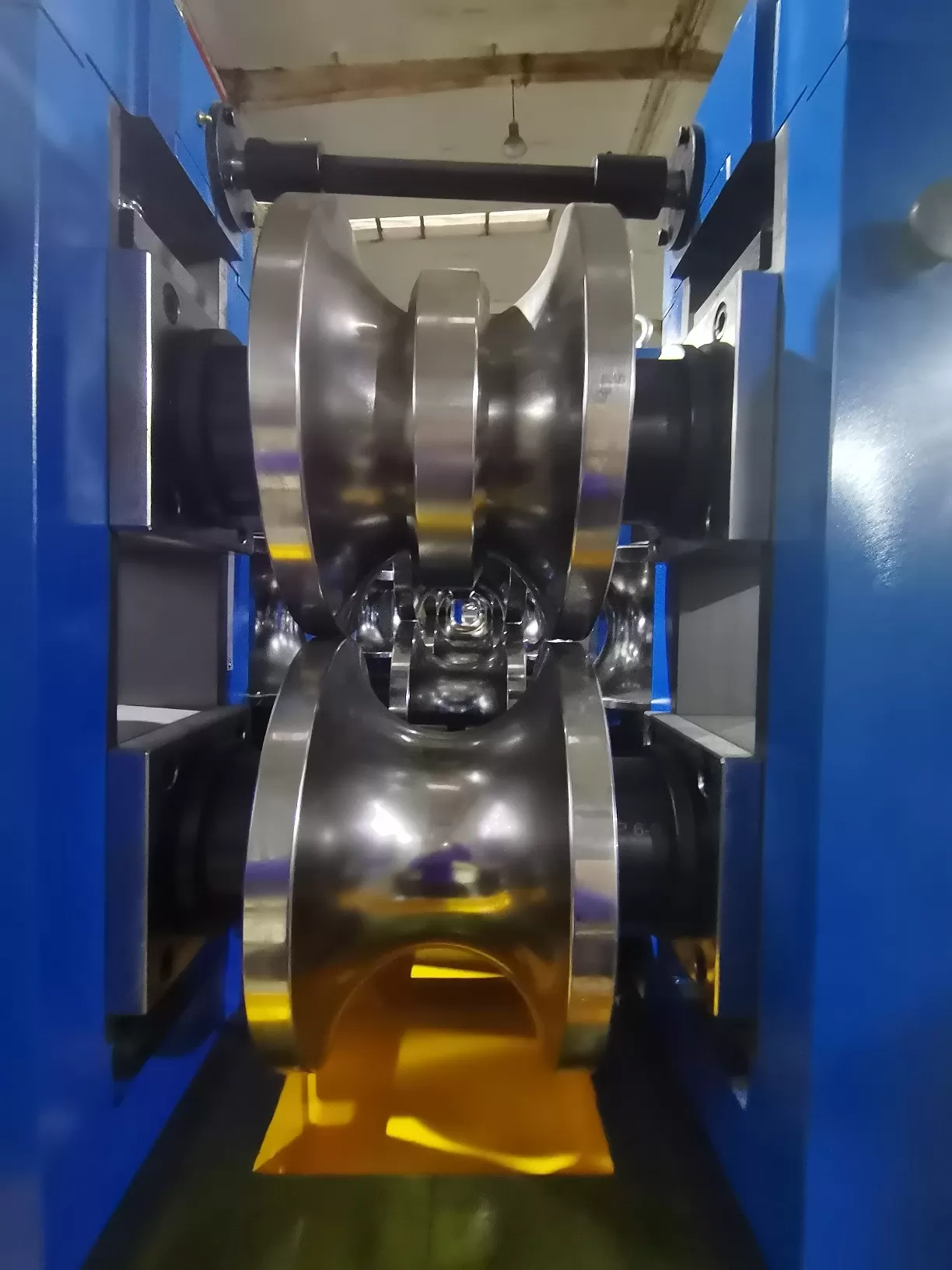
High-frequency induction welding (HFIW) stands as the industry standard for
producing high-quality electric resistance welded (ERW) steel tubes. This
process relies on generating intense heat at the joint edges of a formed steel
strip before mechanically forging them together under high pressure. While the
induction coil and the squeeze rolls are highly visible components of this
process, the efficiency of the entire operation often depends on a quieter,
internally positioned tool: the impeder in tube
mill systems.
Without this key component, a significant portion of the electrical energy
supplied to the induction coil would disperse throughout the interior of the
tube, resulting in low welding speeds, high energy waste, and inconsistent weld
quality. For manufacturers aiming to maintain high-speed production while
preserving weld integrity, understanding the electromagnetics, mechanical
placement, and maintenance of this tooling is paramount. Companies like
SANSO design and
manufacture high-precision forming and welding machinery designed to integrate
these systems seamlessly, ensuring optimal energy transfer and robust seam
quality.
The Electrodynamics of High-Frequency Tube Welding
To understand why an impeder is required, one must first analyze the behavior
of high-frequency electrical currents. When a high-frequency current (typically
ranging from 150 kHz to 400 kHz) is introduced into a copper induction coil
surrounding the formed tube, it induces a secondary current within the metallic
strip. This induced current must complete a closed loop. The goal of the welding
process is to force this current to flow along the open edges of the strip,
meeting at the apex (the exact point where the squeeze rolls forge the metal
together).
However, high-frequency currents are governed by two distinct electromagnetic
phenomena:
The Skin Effect: High-frequency current does not distribute
evenly throughout a conductor. Instead, it concentrates near the outer
boundaries or the "skin" of the material. The depth of this penetration
decreases as the frequency increases, which helps concentrate heat on the
immediate surfaces of the strip edges.
The Proximity Effect: When two conductors carrying current
in opposite directions are placed near each other, the current concentrates on
the surfaces closest to one another. In a tube mill, this forces the current to
flow along the opposing edges of the weld vee, maximizing heating efficiency at
the joint.
Despite these effects, the current naturally seeks the path of least
electrical impedance. The inner surface of the formed tube body offers a massive
alternative path. Without a barrier, the current will flow around the inside
diameter of the tube instead of concentrating at the weld vee. This bypass path
wastes energy, overheats the entire tube body, and prevents the strip edges from
reaching the correct welding temperature.
How the Impeder Modifies Electrical Impedance
The impeder in tube
mill serves a simple yet vital role: it drastically increases the
electrical impedance of the inner path of the tube. By placing a highly magnetic
material inside the tube, directly underneath the induction coil, the inductive
reactance of the internal current path rises to extreme levels. Because
high-frequency current naturally avoids paths of high impedance, it is forced
away from the tube interior and diverted directly to the strip edges forming the
weld vee.
This redirection of current achieves several key operational benefits:
Concentrated Heating: Energy is focused precisely on the
strip edges, heating them to the forging temperature (approximately 1300°C to
1400°C for carbon steel) within milliseconds.
Power Efficiency: Because the bypass current is minimized,
the power required from the high-frequency welder is significantly reduced,
resulting in immediate energy conservation.
Increased Line Speed: With more efficient heat
concentration, the tube mill can operate at higher line speeds without
sacrificing weld depth or seam quality.
Anatomy of a High-Performance Impeder
An impeder assembly is composed of three primary structural elements: the
ferrite core, the protective outer casing, and the internal cooling
channels.
The ferrite core is the functional heart of the device. It is typically
manufactured from manganese-zinc (MnZn) ferrite, a material chosen for its
exceptionally high magnetic permeability and low electrical conductivity. This
combination allows it to influence the magnetic field without conducting
currents itself, which would otherwise cause internal heating. However, ferrite
is inherently brittle and highly sensitive to temperature fluctuations.
The casing shields the fragile ferrite core from the harsh environment inside
the tube mill, where it is exposed to flying weld spatter, mechanical
vibrations, and intense radiant heat from the weld zone. These casings are
constructed from highly durable, non-conductive, and heat-resistant materials,
such as epoxy-glass laminates or silicone-glass compounds.
The cooling system is necessary because ferrite lose their magnetic
properties if they exceed their Curie temperature (typically between 200°C and
250°C). If the core reaches this temperature, it becomes paramagnetic, and its
ability to redirect current drops to near zero. Therefore, a continuous,
high-volume flow of clean cooling water is mandatory to maintain the ferrite
core well below its thermal limit during operation.
Selecting the Right Impeder Configuration
Choosing the correct configuration of an impeder in tube
mill depends on the specific product specifications, tube
diameters, and cleanliness requirements of the final product. There are two
primary structural styles utilized in industrial manufacturing:
1. Flow-Through Impeders
In a flow-through configuration, cooling water enters the rear of the impeder
casing, flows directly over the surface of the ferrite cores, and discharges
from the front of the casing directly into the interior of the welded tube. This
style is highly popular because of its simplicity and high cooling volume. It is
highly effective for larger diameter pipes where the presence of internal water
does not interfere with subsequent manufacturing steps or where an inline drying
system is active downstream.
2. Return-Flow Impeders
For applications where the interior of the tube must remain dry—such as in
small-diameter tubing, structural profiles, or when producing carbon steel tubes
prone to internal rust—a return-flow impeder is utilized. This design features a
closed cooling circuit. Water travels through a dedicated central channel, cools
the ferrite, and is pulled back through a return manifold to be discharged
outside the tube. While more complex to manufacture and maintain, return-flow
models prevent water accumulation inside the welded pipe, protecting the product
from internal corrosion.
Serrated vs. Solid Ferrite Cores
Ferrite cores can be solid cylindrical blocks or serrated (fluted) profiles.
Serrated cores feature longitudinal grooves running along their outer surface.
These grooves serve two purposes: they increase the surface area exposed to the
cooling water, enabling more efficient heat dissipation, and they provide
dedicated channels for water flow, reducing the risk of air pockets that can
cause localized overheating and thermal cracking.
Operational Parameters for Maximum Lifespan and Efficiency
To maximize the lifespan of an impeder in tube
mill, operators must focus on precise positioning, water quality,
and physical alignment within the weld section.
Precise Positioning and Alignment
The physical position of the impeder relative to the induction coil and the
weld rolls is a decisive factor in welding efficiency. The forward end of the
ferrite core should ideally extend past the centerline of the squeeze rolls by
approximately 1.5 to 3 millimeters. If the impeder is positioned too far
upstream (away from the weld rolls), the current path lengthens, reducing energy
concentration at the apex. Conversely, if it is placed too far downstream, the
intense heat and mechanical pressure of the squeeze rolls will cause premature
casing wear and thermal destruction of the ferrite.
Additionally, the impeder must be aligned perfectly parallel to the tube
axis. Any sagging or misalignment can cause the casing to rub against the moving
inner wall of the tube, resulting in rapid abrasive wear and mechanical
failure.
| Parameter | Target Setting / Condition | Operational Impact of Deviation |
|---|
| Forward Position | 1.5 to 3 mm past squeeze roll centerline | Too far back causes poor weld heating; too far forward causes thermal
destruction. |
| Water Flow Rate | Min. 15 to 30 liters/minute (depending on size) | Insufficient flow leads to ferrite reaching Curie temperature and losing
efficiency. |
| Water Pressure | 3 to 5 bar | Low pressure allows steam pockets to form; excessive pressure can rupture
casings. |
| Water Filtration | Filtered down to 50 microns (magnetic filtration) | Iron fines accumulate on magnetic ferrite, clogging flow and causing thermal
stress. |
| Fill Factor | 60% to 80% of tube inner diameter | Too small reduces electrical efficiency; too large blocks cooling and weld
bead clearance. |
Water Quality and Filtration Management
Because the ferrite core is highly magnetic, any iron particles, mill scale,
or magnetic debris suspended in the cooling water will be drawn directly to the
core surface. Over time, these particles accumulate, clogging the narrow water
passages inside the casing. This accumulation leads to localized hot spots,
thermal shocking, and catastrophic cracking of the ferrite.
To prevent this, the cooling water circuit must be equipped with
high-efficiency magnetic separators and fine-mesh mechanical filters.
Closed-loop cooling systems utilizing demineralized water or water treated with
rust inhibitors are highly recommended to prevent calcium scale buildup, which
acts as a thermal insulator and reduces cooling performance.
Overcoming Common Weld Area Challenges
In high-volume tube manufacturing, maintaining consistent weld quality
requires addressing several common operational challenges. For instance, when a
tube mill is running at high speeds, mechanical vibrations can cause the
internal support mandrel of the impeder to whip or sag. When this occurs, the
distance between the ferrite and the tube wall fluctuates, causing variations in
electrical impedance and resulting in "cold welds" or weld seam dropouts.
To mitigate this issue, manufacturers like SANSO recommend implementing
rigid, heavy-duty mandrel support assemblies that are adjustable in three axes.
These specialized supports allow operators to fine-tune the positioning of the
internal tooling without stopping the mill, ensuring that the impeder remains
perfectly centered even under high mechanical loads.
Another common issue is the accumulation of internal weld spatter. As the
squeeze rolls join the edges, excess molten metal is squeezed inward, creating
an internal weld bead (or flash). This hot, sharp metal can scrape against the
outer casing of the impeder. Utilizing high-performance, wear-resistant casing
materials and ensuring a sufficient gap between the top of the casing and the
weld seam helps prolong the life of the assembly.
Enhancing Productivity Through Precision Tooling Integration
By integrating a high-performance impeder in tube
mill into your production setup, you establish a foundation for
highly efficient, stable, and repeatable high-frequency welding. However, this
component does not work in isolation. It must be paired with precise roll
forming passes, robust squeeze roll stands, and stable high-frequency power
delivery systems.
When all these variables are aligned, tube manufacturers experience less
scrap, reduced power consumption, and highly uniform weld microstructures that
can easily withstand downstream processing, such as bending, flaring, and
hydroforming. Investing in high-grade ferrite cores and robust cooling auxiliary
equipment is a direct path to optimizing the yield of your tube mill line.
Frequently Asked Questions
Q1: How often should the ferrite cores in a tube mill impeder be
replaced?
A1: The lifespan of a ferrite core depends heavily on cooling efficiency and
physical protection. In a properly cooled, clean environment with adequate
filtration, a core can last for several weeks of continuous operation. However,
if cooling water flow is interrupted, or if magnetic particles clog the casing,
the ferrite can crack from thermal shock within minutes, requiring immediate
replacement.
Q2: Can I run a tube mill without an impeder?
A2: While it is physically possible to run the mill without one, the process
becomes extremely inefficient. Without the increased impedance provided by the
ferrite core, much of the high-frequency current flows around the inside of the
tube. This would require massive increases in welder power output, drastically
slow down maximum welding speeds, and likely result in incomplete fusion and
cold weld defects.
Q3: What is the optimal water pressure for cooling an impeder
assembly?
A3: The recommended water pressure is typically between 3 and 5 bar. If the
pressure is too low, steam pockets can form on the surface of the hot ferrite,
leading to localized overheating and cracking. If the pressure is too high, it
may cause mechanical damage to the non-metallic casing or lead to seal failures
at the connection joints.
Q4: Why is a return-flow impeder preferred over a flow-through model
for certain tube materials?
A4: Return-flow models are selected when the interior of the tube must remain
clean and completely dry. For example, high-strength steels or tubes intended
for immediate internal coating, galvanizing, or painting cannot tolerate
standing water inside the tube. The return-flow system routes all cooling water
back out of the entry side, preventing internal rust and contamination.
Q5: How does the "fill factor" affect the efficiency of
high-frequency welding?
A5: The fill factor is the ratio of the impeder's outer diameter to the
internal diameter of the tube being welded. A higher fill factor (typically 60%
to 80%) places the magnetic ferrite closer to the tube wall, which maximizes
electrical impedance and increases energy efficiency. However, sufficient
clearance must always be maintained to allow for cooling water flow and to
prevent contact with the internal weld bead.
Optimize Your Tube Mill Performance
Achieving consistent weld quality and high operational efficiency requires
deep engineering expertise and precision-engineered machinery. The correct
selection, alignment, and cooling of your internal tooling are vital steps
toward reducing energy waste and securing flawless weld seams. Our engineering
team specializes in configuring robust, high-performance forming systems
tailored to your specific production demands.
To discuss your tube mill configuration, optimize your tooling setup, or
request a detailed quotation for high-precision manufacturing equipment, please
contact our technical sales department today. Let us help you find the precise
mechanical solution to enhance your line throughput and product quality.