In tube and pipe production lines, the cut-off saw is among the most stressed
stations. A dull or misaligned HSS (high-speed steel) circular blade creates
burrs, dimensional deviations, and downtime. The solution lies in a dedicated
HSS saw blade sharpening
machine that restores original tooth geometry with repeatable
accuracy. This article examines why standard off-hand grinding fails, how
automatic sharpeners address core industry pains, and what specifications matter
for mill operators.
Why Conventional Sharpening Methods Undermine HSS Blade Performance
Many tube mills still rely on manual grinding wheels or third-party services.
However, uneven material removal alters the tooth pitch, rake angle, and gullet
depth. The result: increased cutting forces, overheating (leading to
micro-cracks in HSS), and premature blade failure. A professional HSS
saw blade sharpening machine eliminates these variables through
cam-controlled or CNC grinding cycles. Key differentiators include:
Tooth-to-tooth consistency – The machine indexes precisely,
maintaining ±0.02 mm in tooth height.
Preset clearance and rake angles – Adjustable from 0° to
15° for different HSS grades (M2, M35, M42).
Coolant application – Prevents heat-induced softening of
the cutting edge.
Automatic wheel dressing compensation – Ensures constant
grinding diameter over many cycles.
Anatomy of a High-Performance HSS Saw Blade Sharpening Machine
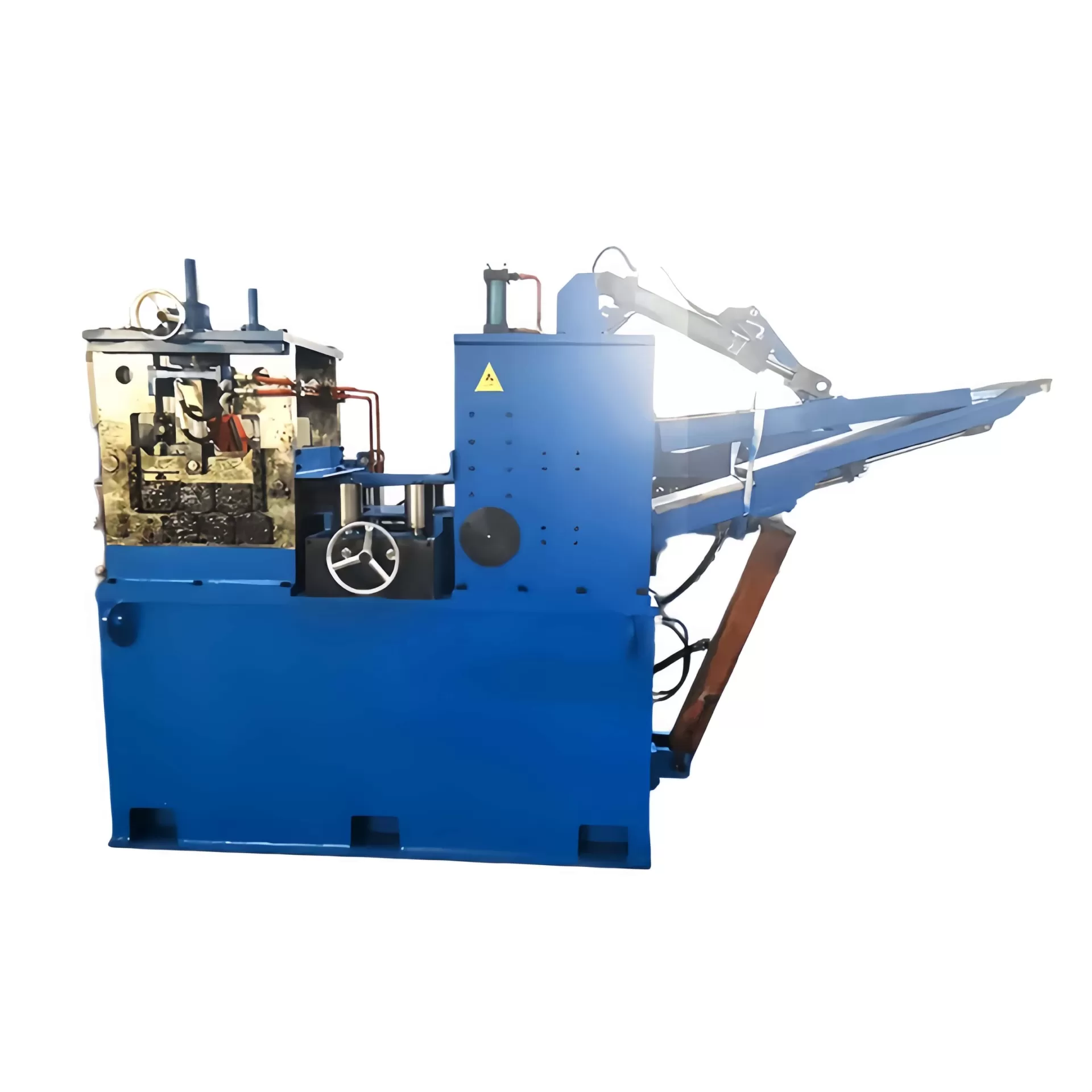
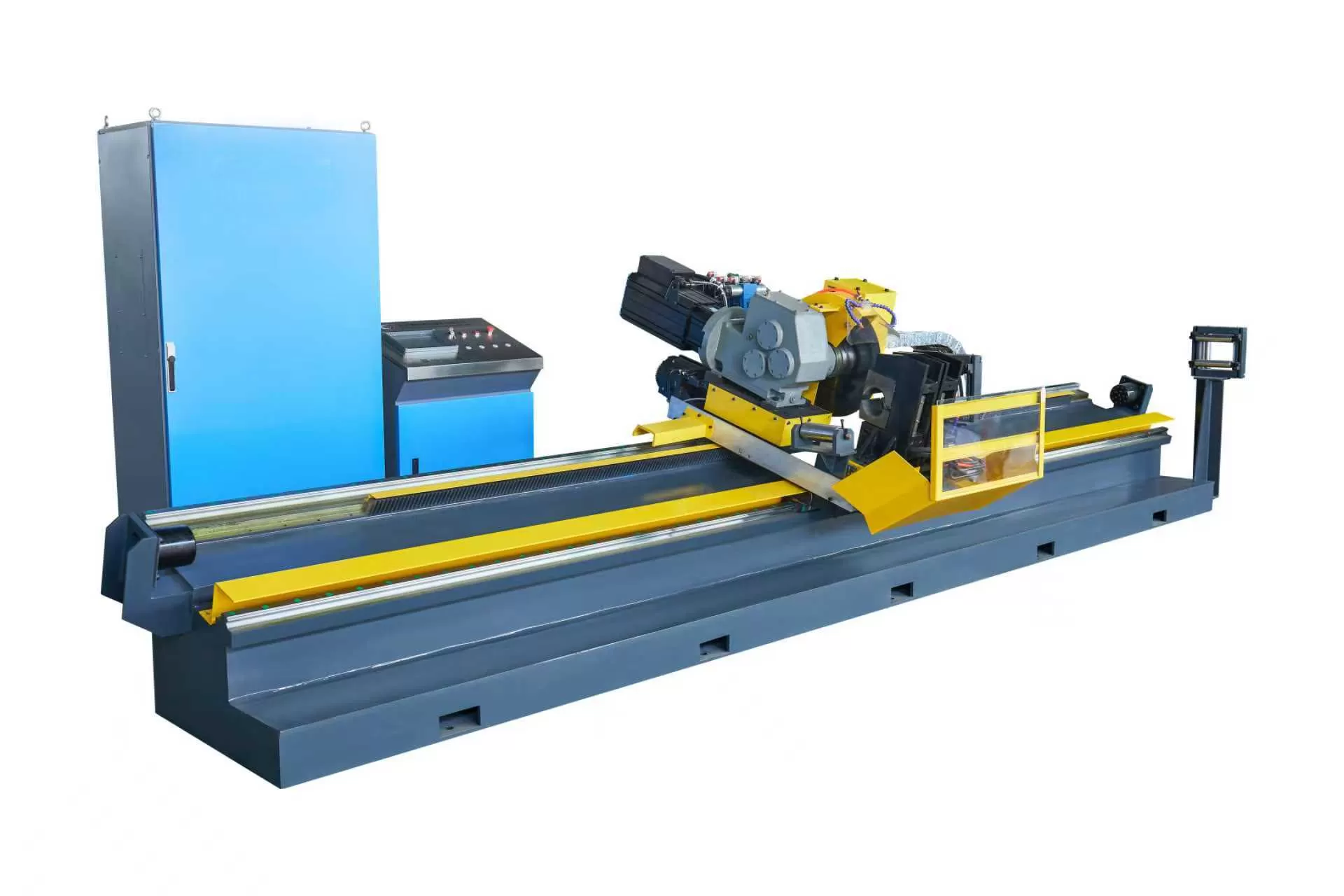
Modern machines are built for heavy-duty mill environments. The core
assemblies determine both output quality and operator safety.
1. Rigid Bed and Vibration Damping
Cast iron or welded steel bases with internal ribbing absorb harmonic
vibrations. Without this, chatter marks appear on the tooth face, reducing
surface finish on the cut tube.
2. Precision Indexing Mechanism
Two common designs: ratchet wheel with pawl (for coarse-pitch blades, 2–6
teeth per inch) or servo-driven rotary indexer (for fine-pitch blades, 8–32
TPI). Indexing error below 0.05° is mandatory for saws used in automotive
tubes.
3. Grinding Spindle and Wheel Selection
High-frequency spindles (4,000–8,000 RPM) with CBN or diamond wheels. For
HSS, vitrified CBN wheels (grit 120–400) deliver superior edge sharpness. The
machine must allow wheel speed adjustment based on blade diameter (200–800
mm).
4. Automatic Feed and Dwell Control
Two-axis motion: horizontal (tooth face grinding) and vertical (gullet
shaping). Programmable dwell at the tooth tip prevents burning. This level of
control is standard on any industrial HSS saw blade sharpening
machine from specialized manufacturers like SANSO.
Industry Pain Points Solved by Automated Sharpening
Pain Point 1: Inconsistent Cut Quality (Burrs, Wavy Edges)
When teeth have unequal heights, the highest tooth takes the entire cutting
load. This causes localized wear, increased noise, and burrs that require
secondary deburring. An automated sharpening machine restores full set
uniformity. After a complete grinding cycle, every tooth contacts the tube wall
with identical force, producing clean cut ends within +/-0.1 mm length
tolerance.
Pain Point 2: Frequent Blade Changes and Downtime
A tube mill producing 1,000 tons per month may change HSS blades every 40-60
hours when using manual sharpening. With a proper HSS
saw blade sharpening machine, blade life extends by 3–5 times. The
machine applies a consistent “hone” to the cutting edge, reducing
micro-chipping. Operators schedule sharpening during planned maintenance rather
than emergency stops.
Pain Point 3: Loss of Tooth Geometry Over Multiple Resharpenings
Each manual regrind removes more material than necessary (0.2–0.3 mm per
tooth). After 10 resharpenings, the blade diameter shrinks, altering cutting
speed and chip load. CNC-controlled sharpeners remove only 0.05–0.08 mm per
cycle, preserving original geometry for over 40 regrinds. The machine’s
programmed pitch correction compensates for diameter loss automatically.
Technical Specifications That Define Industrial-Grade Equipment
When evaluating a HSS saw blade sharpening machine, focus on
these parameters:
Blade diameter range – 150 mm to 800 mm (or up to 1200 mm
for heavy structural tubes).
Maximum tooth depth – At least 20 mm to accommodate worn
blades.
Grinding wheel diameter – 100–200 mm; wheel arbor should
accept both CBN and diamond.
Indexing modes – Straight pitch, variable pitch, and
grouped teeth (for saws with chip breakers).
Coolant system – Minimum 30 L/min, with magnetic separator
to remove HSS fines.
Tooth sensor – Optical or mechanical probe to detect
missing teeth before grinding.
Suppliers like SANSO integrate these
features into their sharpening line, offering both semi-automatic and fully
automatic load/unload stations for high-volume mills.
Application Scenarios Across Tube and Pipe Manufacturing
High-Frequency Welded (HFW) Tube Lines
Blades in HFW lines cut thin-wall tube (0.8–3 mm) at speeds up to 120
cuts/minute. The sharpener must maintain a burr-free exit edge to avoid damaging
the weld seam. A two-stage grinding process (face + side relief) is
recommended.
Stainless Steel Sanitary Tubes
HSS blades for stainless require a larger rake angle (12°–15°) and a polished
tooth surface to prevent cold welding. The sharpening machine should have
variable spindle speed (lower for stainless, higher for carbon steel).
Automotive Precision Tubes (Axles, Suspensions)
Tight length tolerances (≤ ±0.2 mm) demand absolute blade concentricity.
After sharpening, the blade runout must be below 0.03 mm. High-end machines
include an integrated runout gauge and automatic compensation grinding.
Large-Diameter Structural Pipe (16″–32″)
Heavy blades with carbide-tipped HSS teeth require a robust indexing
mechanism that handles weights up to 50 kg. The sharpener’s wheel head should
traverse on linear guides with a motorized vertical axis for gullet
grinding.
Operator Training and Maintenance Best Practices
Even the finest HSS saw blade sharpening machine requires
correct setup. Establish these standard procedures:
Wheel dressing frequency – After every 20–30 blades, use a
single-point diamond dresser to restore wheel flatness and expose fresh
abrasive.
Coolant concentration monitoring – Maintain 4–6% synthetic
coolant. Low concentration leads to wheel loading; high concentration reduces
cooling.
Magnetic separator cleaning – Remove HSS sludge daily to
avoid pump clogging.
Indexing pawl inspection – Replace the pawl every 500
hours; worn pawls cause pitch drift.
Reference blade test – Once per shift, sharpen a master
blade and measure tooth height variation with a dial indicator.
Signs That Your Sharpening Process Needs Upgrading
If you observe any of the following, your current sharpening method is likely
obsolete:
Burn marks (blue/brown discoloration) on the tooth flank – indicates
excessive wheel pressure or lack of coolant.
Feather burrs on the tooth back – wheel not dressed properly or incorrect
wheel grit.
Uneven tooth pitch after sharpening – index mechanism slipping or worn.
Blade wobble on the arbor – grinding wheel not perpendicular to blade
face.
Short blade life (less than 8 hours of cutting between resharpenings) –
material removal too aggressive, leaving stress risers.
Replacing an outdated grinder with a modern HSS
saw blade sharpening machine from a supplier like SANSO eliminates these
defects.
Frequently Asked Questions (FAQs)
Q1: Can a HSS saw blade sharpening machine handle blades with damaged
or missing teeth?
A1: Yes, most industrial machines include a tooth sensor
that detects gaps. The grinding wheel automatically retracts over missing teeth
to avoid collision. However, severely damaged blades (more than 15% missing
teeth) should be repaired by welding new HSS tips before sharpening. The machine
can then re-profile the entire set.
Q2: What is the typical grinding cycle time for a 500 mm diameter
blade with 120 teeth?
A2: On a fully automatic HSS saw blade sharpening machine
with a 5 kW spindle and 0.2 mm stock removal per tooth, cycle time ranges from 8
to 12 minutes. This includes indexing, face grinding, side clearance grinding,
and wheel retraction. Semi-automatic units may take 15–20 minutes due to manual
tooth positioning.
Q3: How often should the CBN grinding wheel be replaced?
A3: A quality vitrified CBN wheel (e.g., 1A1 180x10x32mm)
can sharpen 800 to 1,200 HSS blades before needing replacement. Frequent
dressing reduces wheel life. Wheel wear is accelerated when grinding hardened
M42 (cobalt HSS) compared to M2. Monitor wheel diameter; replace when it is 15
mm below original size.
Q4: Does a HSS saw blade sharpening machine require 3-phase power or
compressed air?
A4: Most industrial models need 400V/50Hz or 480V/60Hz
three-phase power for the grinding spindle and coolant pump. Pneumatic clamps
and wheel dressers require 6–8 bar clean, dry compressed air. Compact benchtop
units may run on single-phase 230V but are limited to blades under 400 mm
diameter.
Q5: Can the same machine sharpen carbide-tipped (TCT) saw
blades?
A5: Only if equipped with a diamond grinding wheel and
variable spindle speed (3,000–4,000 RPM for carbide). HSS and TCT require
different wheel bond types and grit sizes. Many HSS sharpening machines from
SANSO offer
optional TCT conversion kits – check the specifications. Using a CBN wheel on
TCT will result in rapid wheel wear and poor finish.
Q6: How do I confirm the sharpening machine maintains original tooth
geometry?
A6: Request a “first-article test.” The supplier grinds a
sample blade, then you measure tooth height, rake angle, and clearance angle
using an optical comparator or a CNC measuring machine. The variation should be
within ISO 3002-5 tolerances (≤ ±0.02 mm for tooth height). Reputable
manufacturers provide this verification as part of acceptance.
To receive a detailed comparison of semi-automatic versus CNC-controlled
HSS saw blade sharpening machine models suitable for your tube
mill’s diameter range and weekly blade consumption, submit your inquiry to the
engineering team at SANSO. Include your
current blade size (diameter and tooth count), monthly production footage, and
required cut end tolerance. The team provides a wheel selection chart and a
sample grinding test report within two working days.
Use the official contact form on SANSO to request a technical
datasheet or a remote demonstration of the sharpening cycle.