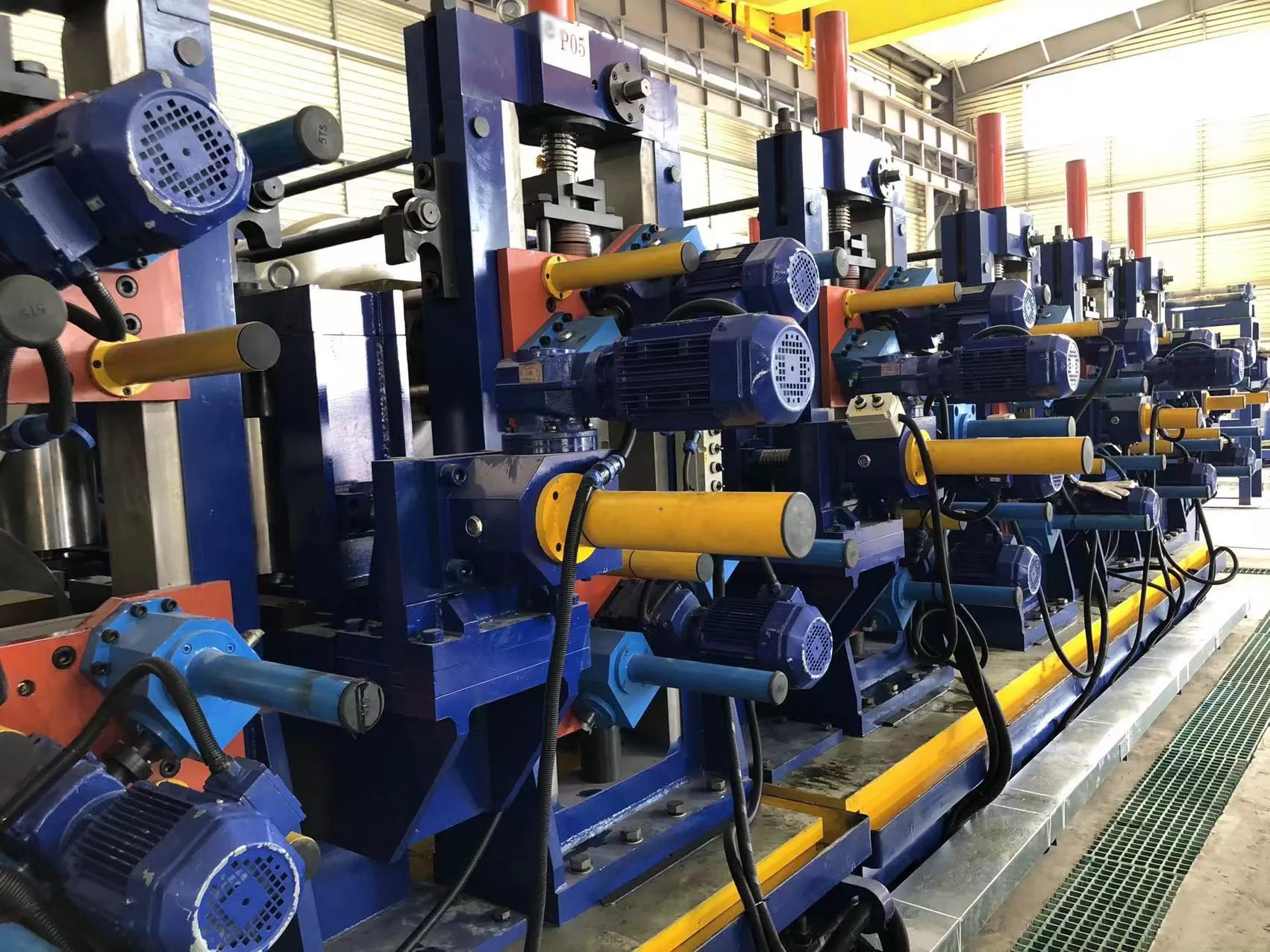
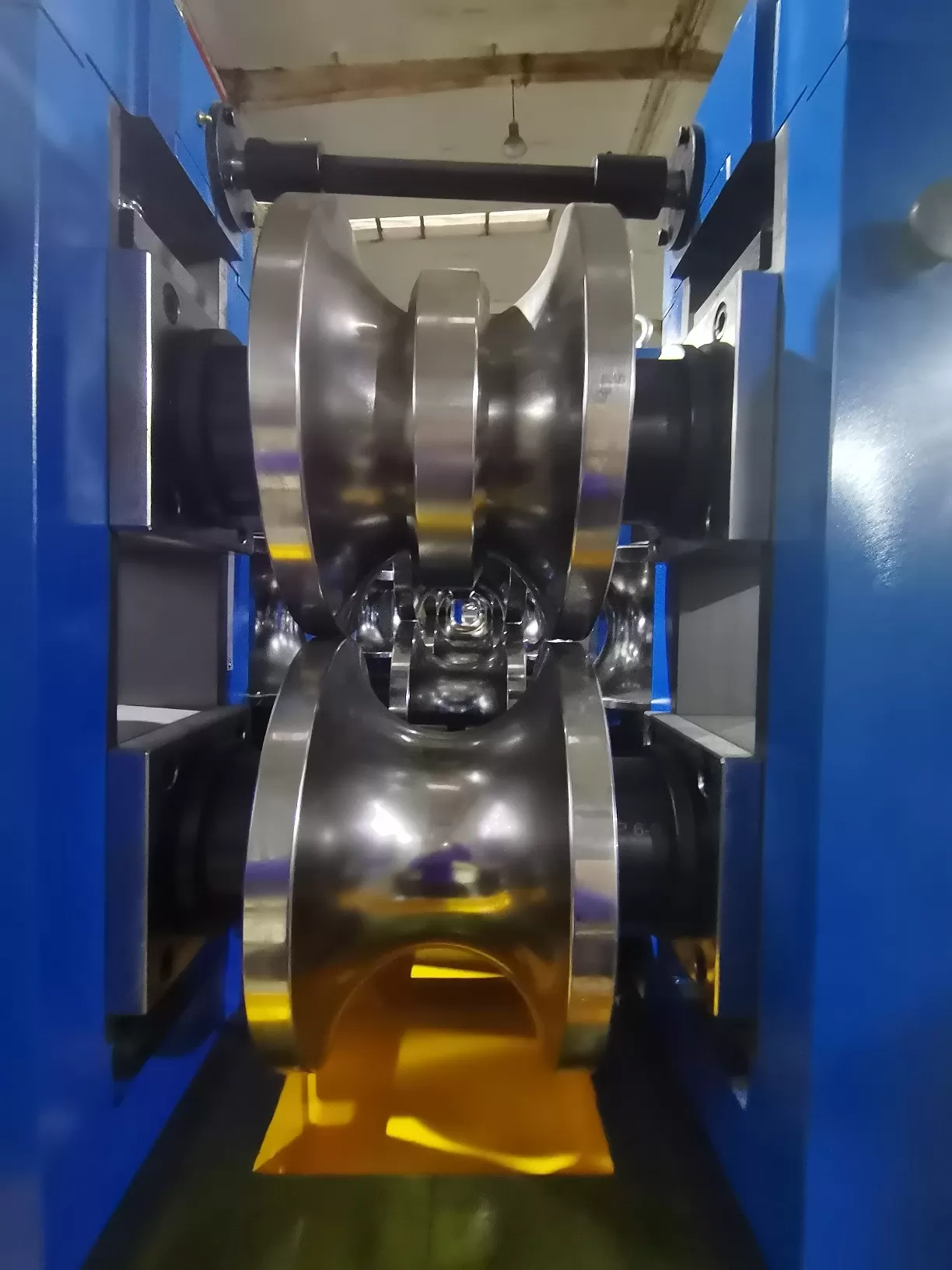
In tube mills, structural steel fabrication, and high‑production cold‑saw
lines, the performance of HSS round saw blades directly determines cut quality,
tooling cost, and line uptime. High‑speed steel circular blades are the
preferred choice for cutting carbon steel, alloy steel, and stainless steel
tubes and profiles because they maintain hardness at elevated temperatures and
resist tooth chipping under interrupted cuts. This article provides a
component‑level analysis of HSS round saw blades, covering HSS grades (M2, M35,
M42), tooth geometries (ATB, TC, variable pitch), coating technologies (TiN,
TiAlN, AlCrN), and critical process parameters (peripheral speed, feed per
tooth, lubrication). Drawing on data from SANSO's two decades of tube mill integration, we will
examine how to select the correct blade for your tube diameter, wall thickness,
and material – while avoiding common failures like tooth breakage, burning, and
out‑of‑square cuts. We will also address integration with flying saws and
cut‑off lines.

1. Why HSS Round Saw Blades Dominate Tube and Profile Cutting
The term HSS round saw blades refers to circular, toothed
blades made from high‑speed tool steel. They are the industry standard for
ferrous cutting because:
Hot hardness: HSS retains hardness (62–68 HRC) up to 600°C,
preventing tooth softening during continuous cutting.
Toughness: Unlike carbide, HSS is less brittle, making it
suitable for interrupted cuts (e.g., cutting tubes with a flying saw that
engages while the tube is moving).
Regrindability: A single blade can be reground 5–10 times,
lowering cost per cut.
Poorly selected or maintained HSS round saw blades lead to burrs, out‑of‑square
ends, heat‑affected zones, and frequent blade changes – all of which reduce mill
efficiency. SANSO engineers integrate
precision HSS blades into flying saw systems, achieving cut length tolerances of
±0.5 mm and burr heights below 0.1 mm on 2 mm wall tubes.
2. HSS Material Grades: Which One for Your Application?
The composition of the blade blank determines wear resistance and heat
tolerance. Common grades for HSS round saw blades:
M2 (standard HSS): 6 % tungsten, 5 % molybdenum, 2 %
vanadium. Good balance of toughness and wear resistance. Suitable for carbon
steel tubes with tensile strength < 600 MPa.
M35 (5 % cobalt): Increased red hardness – ideal for
stainless steel (304, 316) and higher cutting speeds. Cobalt improves resistance
to heat softening.
M42 (8 % cobalt): Very high wear resistance. Used for
high‑volume cutting of alloy steels (4140, 4340) and thick‑walled tubes
(>5 mm).
Powder metallurgy HSS (ASP 2000, ASP 2030): Extremely fine
carbides, longest tool life, but higher cost – justified for 24/7 production
lines.
For most ERW tube mills processing 2–4 mm wall carbon steel, M2 provides the
best cost‑performance. When switching to stainless or high‑strength low‑alloy
(HSLA) materials, upgrade to M35 or M42. SANSO’s recommended HSS round saw blades for general
purpose are M2 with TiN coating.
3. Tooth Geometry: Pitch, Rake, and Grind Pattern
The cutting action of HSS round saw blades is defined by
three geometric features.
3.1 Tooth Pitch (Number of Teeth)
Coarse pitch (fewer teeth): For thick walls (>5 mm) and
soft materials. Provides large gullets to evacuate chips.
Fine pitch (more teeth): For thin walls (1–3 mm) and hard
materials. Produces smoother surface, but requires rigid machine to avoid
chatter.
Variable pitch: Alternating tooth spacing (e.g.,
20/24/28 mm) reduces harmonic resonance – recommended for high‑speed flying
saws.
3.2 Rake Angle
Positive rake (5–15°): Sharp, low cutting force. Ideal for
thin‑wall tubes and soft steels. Risk of tooth breakage on interrupted
cuts.
Negative rake (‑5 to ‑10°): Stronger tooth tip, better for
high‑strength alloys and thick sections. Generates more heat.
Zero rake: General purpose, moderate cutting
force.
3.3 Grind Pattern
Straight tooth (ST): Simple, but leaves rougher
surface.
Alternate top bevel (ATB): Shearing action, cleaner cut on
tubes – most common for HSS round saw blades.
Triple chip (TC): Alternating high and low teeth – reduces
friction and heat, ideal for stainless and alloy steels.
For tube mills, a typical specification is ATB grind, 8° positive rake, and
variable pitch (24–32 teeth on a 350 mm diameter blade).
4. Coating Technologies for Extended Blade Life
Coatings reduce friction, increase surface hardness, and protect HSS
round saw blades from heat and wear.
TiN (titanium nitride): Gold colour, coefficient of
friction 0.4, hardness ~2300 HV. Increases tool life 2‑3× on carbon steel.
TiCN (titanium carbonitride): Grey, hardness ~3000 HV,
lower friction than TiN. Better for stainless and cast iron.
TiAlN (titanium aluminium nitride): Purple/black, hardness
~3300 HV, stable up to 800°C. Best for dry cutting and high speeds.
AlCrN (aluminium chromium nitride): Even higher oxidation
resistance, for demanding high‑speed applications.
A coated blade lasts 2–3 times longer than uncoated, but adds 30–50% to the
initial cost. For high‑volume production (over 10,000 cuts per month), the lower
cost per cut justifies the coating. SANSO supplies TiAlN‑coated HSS round saw blades for
dry‑cutting flying saw applications.
5. Cutting Parameters: Speed, Feed, and Lubrication
Even a premium blade will fail if cutting conditions are incorrect. Use these
starting parameters for HSS round saw blades.
5.1 Peripheral Speed (m/min)
Mild steel (C < 0.3 %): 80–120 m/min
Medium carbon steel (C 0.3–0.5 %): 60–90 m/min
Stainless steel (304, 316): 30–60 m/min
Alloy steel (4140 annealed): 25–45 m/min
Excessive speed generates heat, softening the HSS teeth; too low speed causes
rubbing and work hardening.
5.2 Feed per Tooth (mm/tooth)
For round tube cutting: 0.03–0.08 mm/tooth for thin walls (1–2 mm),
0.05–0.12 mm/tooth for thicker walls (3–6 mm). In flying saws, the feed is the
axial plunge rate. Example: a 350 mm diameter blade with 80 teeth rotating at
730 rpm (80 m/min peripheral) and 0.05 mm/tooth feed gives an axial feed of
0.05 × 80 × 730 = 2,920 mm/min – far too high for a full cross‑section cut. In
practice, plunge rates are 200–500 mm/min. Therefore, the effective feed per
tooth is much lower (0.005–0.015 mm). Use the blade manufacturer's recommended
feed force (e.g., 0.2–0.5 kN per cm² of cut area).
5.3 Lubrication and Cooling
For dry cutting (no liquid), use coated blades and apply minimum quantity
lubrication (MQL) of vegetable‑based oil at 5–10 ml/hour. For wet cutting, use
soluble oil (5–8% concentration) flood coolant. Mist lubrication is sufficient
for most tube mills. Flood coolant is needed for stainless or thick walls to
prevent thermal cracking.
6. Integration with Flying Saws and Cut‑off Lines
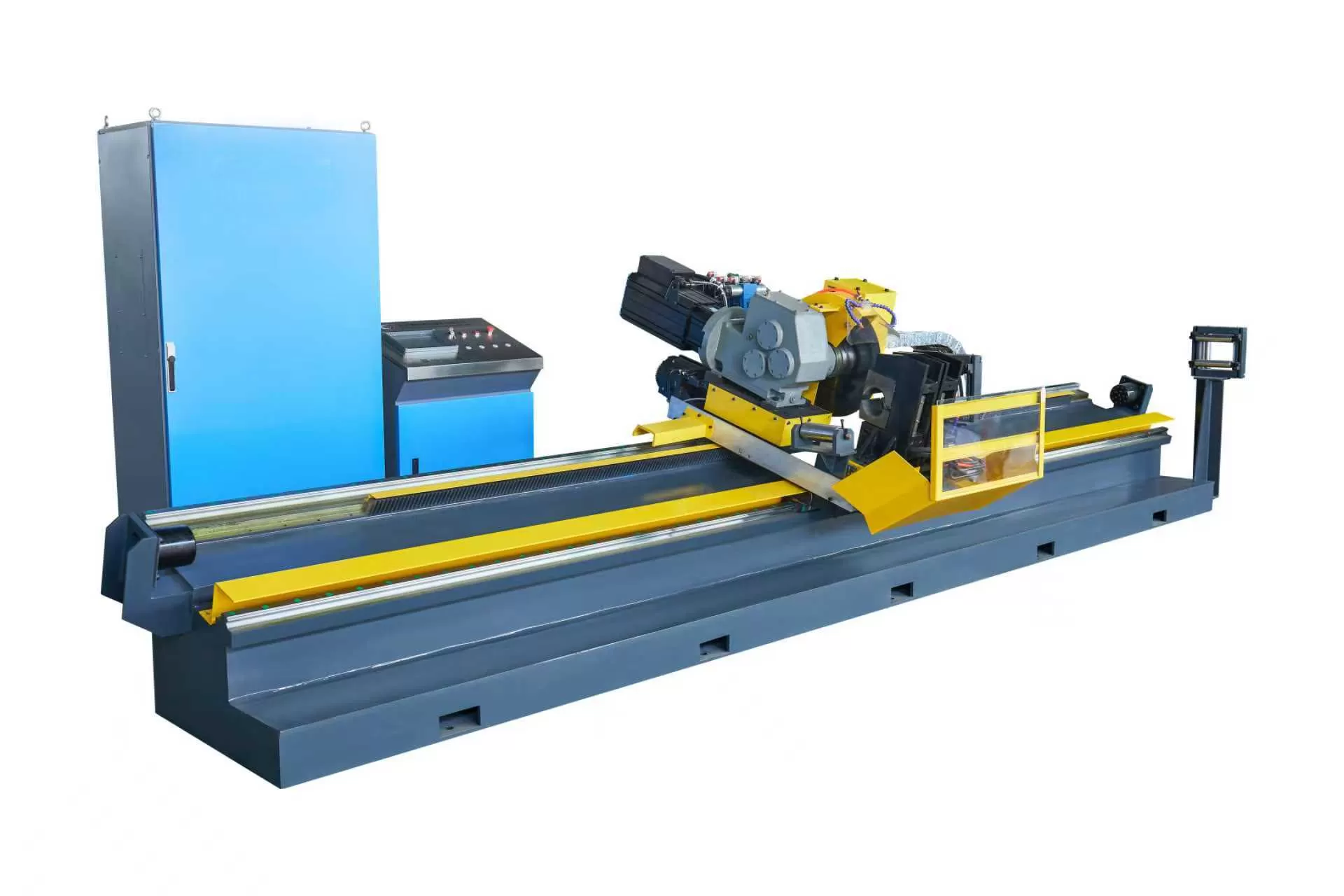
In continuous tube mills, HSS round saw blades are mounted
on flying saws that travel synchronously with the tube. Key integration
requirements:
Synchronisation accuracy: The saw carriage must match tube
speed within ±0.5 % to avoid scratching or bending.
Clamping vises: Hydraulic clamps must hold the tube without
crushing; use pressure regulators and tube‑specific jaws.
Blade engagement profile: A ramped or servo‑controlled
plunge reduces impact on the first tooth – extends blade life by 30%.
Chip evacuation: An auger or conveyor removes swarf to
prevent re‑cutting and blade damage.
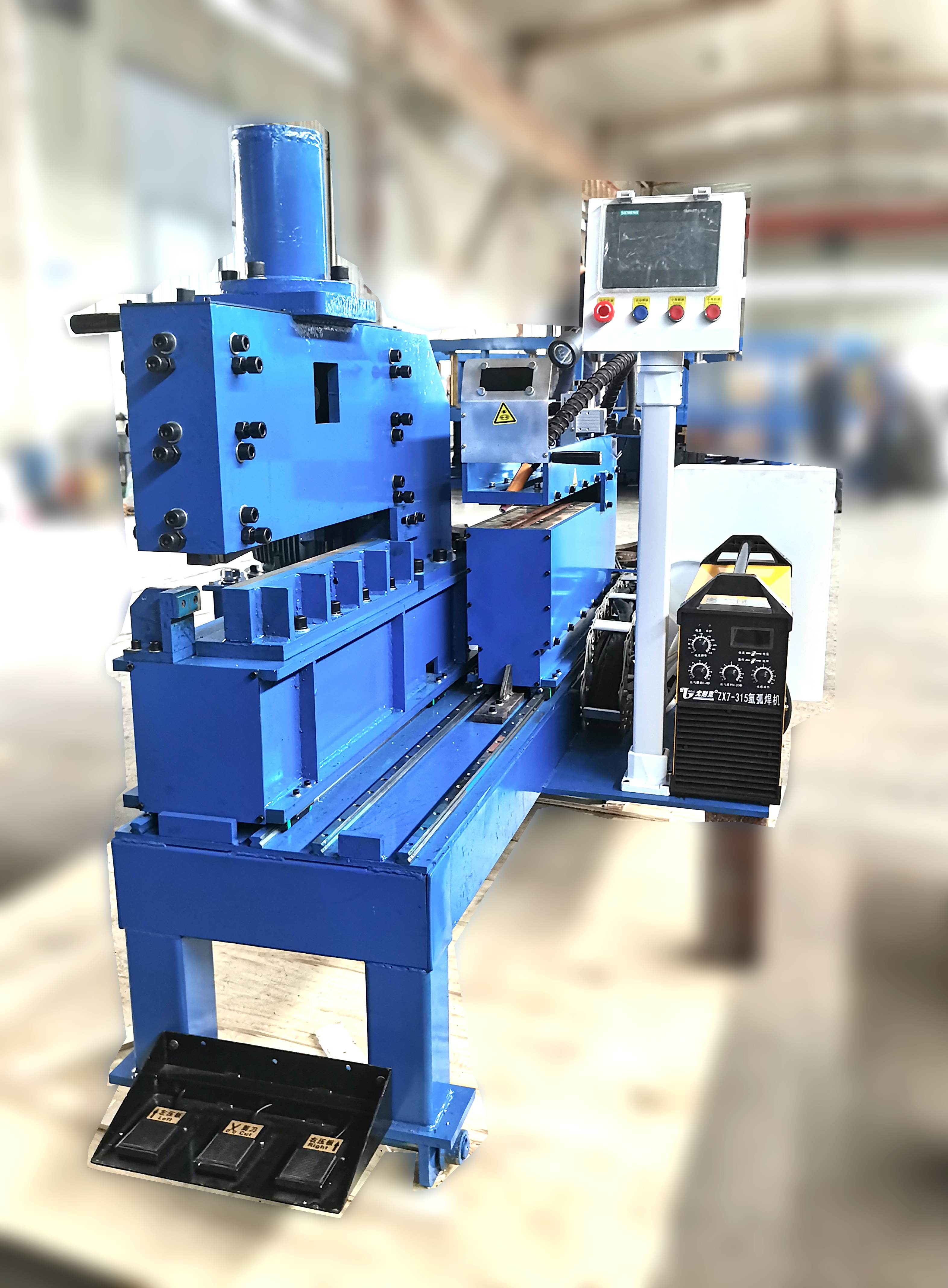
SANSO designs flying saws with automatic blade
lubrication, wear monitoring (cut counter), and quick‑change blade arbors,
reducing changeover time to under 5 minutes.
7. Industry Pain Points and Engineering Solutions
Even with well‑selected blades, tube mills face recurring issues. Below are
three common problems and remedies.
Tooth chipping at the entry side: Caused by impact when the
blade first contacts the tube. Solution – use a blade with negative rake or a
triple‑chip tooth pattern. Also program a soft start: reduce feed rate for the
first 2 mm of cut depth.
Burn marks and blue discoloration on cut ends: Indicates
excessive heat from dull blade or too high speed. Remedy – reduce peripheral
speed by 20%, increase coolant flow, or switch to a TiAlN‑coated blade. Check
blade sharpness – if worn, regrind.
Out‑of‑square cuts (angled ends): Caused by spindle runout
(>0.02 mm) or uneven blade clamping. Solution – measure runout, use precision
ground flanges, and balance blades to G2.5 or better. Also ensure the blade is
not warped – store blades vertically on arbors.
Field data from SANSO’s HSS round saw
blades users show that addressing these three issues increases
blade life by 40–70% and reduces scrap rates by 50%.
8. Regrinding and Maintenance Schedule
A single HSS round saw blade can be reground 5–10 times
before reaching minimum diameter. Signs that regrinding is needed:
Increased cutting noise (squealing or chattering).
Burr height exceeding 0.2 mm.
Higher saw motor current (monitor via PLC).
Visible rounding of tooth tips (inspect with 10× loupe).
Regrinding procedure: use a CNC tool grinder with CBN wheel, maintain
original tooth geometry, and avoid overheating (slow wheel feed). After
regrinding, the diameter reduces by 1–2 mm; adjust the saw’s down‑stop
accordingly. Store blades in a dry cabinet with anti‑rust spray. Never stack
blades directly on top of each other without spacers.
9. Frequently Asked Questions (FAQ) – HSS Round Saw Blades
Q1: What is the difference between HSS round saw blades and
carbide‑tipped circular saws?
A1: Carbide‑tipped
blades have brazed tungsten carbide teeth – they are harder (70–75 HRC) and last
longer on abrasive materials, but are more brittle and cost more per blade. HSS
blades are tougher, can be reground many times, and are preferred for thin‑wall
tubes (<3 mm) where impact resistance is critical. For thick structural steel
(>6 mm), carbide is often faster. HSS round saw blades remain the standard for tube mills due to lower cost per regrind and better
resistance to shock.
Q2: How do I choose the correct blade diameter for my tube
mill?
A2: The blade diameter should be at least 3×
the tube outer diameter (OD) to ensure a clean cut without blade deflection.
Example: 60 mm OD tube → minimum 180 mm blade, but 250–350 mm is common to allow
for multiple regrinds and lower tooth loading. Larger diameters also improve
heat dissipation. Always check your saw’s maximum capacity.
Q3: Can I use HSS round saw blades for dry cutting of stainless steel
tubes?
A3: Yes, but with precautions. Use a
high‑cobalt grade (M42) with TiAlN coating, reduce peripheral speed to
30–40 m/min, and apply MQL (minimum quantity lubrication) at 5–10 ml/hour. Even
with these measures, expect tool life to be 30–50% of that in carbon steel. For
high‑volume stainless cutting, consider a carbide‑tipped blade with flood
coolant.
Q4: Why does my blade produce a large inside burr on the
tube?
A4: Inside burr is caused by dull teeth or
incorrect rake angle. As teeth wear, they push material inward rather than
shearing. Increase the positive rake from 8° to 12° (if geometry permits) and
ensure the blade is sharp. Reduce feed rate by 20–30%. For critical applications
(e.g., hydraulic tubes), install a secondary internal deburring station.
Q5: How often should I replace or regrind HSS round saw
blades?
A5: For a typical tube mill processing 2 mm
wall carbon steel at 20 m/min line speed, a 350 mm diameter M2 blade with TiN
coating may last 15,000–25,000 cuts before regrinding. After each regrind, the
number of cuts between regrinds decreases by about 10–15%. Replace the blade
when the diameter is reduced to 70% of original or if any tooth is cracked. Keep
a log of cut counts per blade to predict change intervals.
Q6: What is the maximum feed rate for HSS round saw blades in a
flying saw?
A6: The maximum feed is limited by
tooth strength and chip evacuation. A general rule: the feed per tooth should
not exceed 0.02 mm for thin walls (1 mm) and 0.05 mm for thick walls (6 mm). For
a 350 mm blade with 80 teeth rotating at 730 rpm, 0.02 mm/tooth gives an axial
feed of 1,168 mm/min – still too high for a full tube cross‑section. In
practice, the saw’s plunge rate is set by the cut area and available motor
torque. Start with 200 mm/min and increase until burr or noise appears; then
back off 15%.
10. Optimise Your Tube Cutting Line with Precision HSS Round Saw Blades
Selecting the correct HSS round saw blades involves matching grade, tooth
geometry, coating, and cutting parameters to your tube material, wall thickness,
and line speed. Generic blades from non‑specialist suppliers often lack
consistent hardness or proper tooth grinding, leading to premature failure and
rejected tubes.
SANSO provides integrated solutions for tube
cutting:
Free cutting test on your tube samples to determine optimal blade
specification.
Supply of precision HSS blades from ISO 9001 certified manufacturers.
Retrofit and optimisation of flying saws – including servo plunge control
and vibration damping.
Operator training on speed/feed adjustment, blade change, and regrind
management.
Request a free cutting assessment today – send us your
tube OD, wall thickness, material grade, target cuts per hour, and current blade
life. Our cutting technology team will recommend the ideal HSS round saw
blades and provide a cost‑per‑cut comparison. Click here to contact SANSO’s
tube mill specialists or call+86 13303118751 / +86 311 8668 5003. Sample blades available
for on‑line trials.