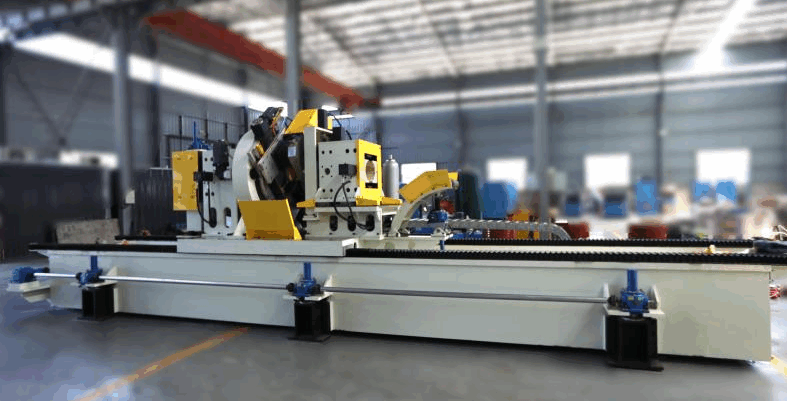
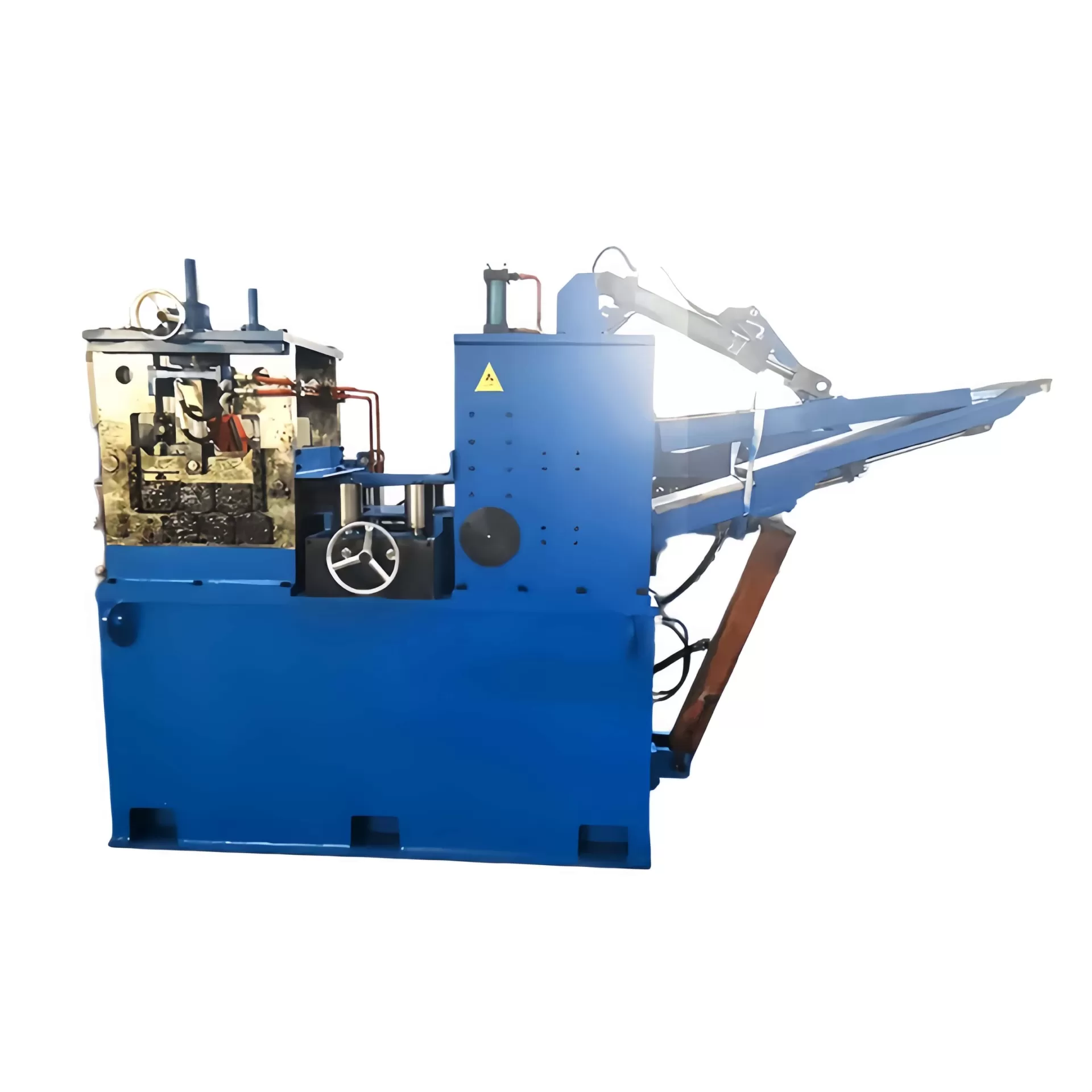
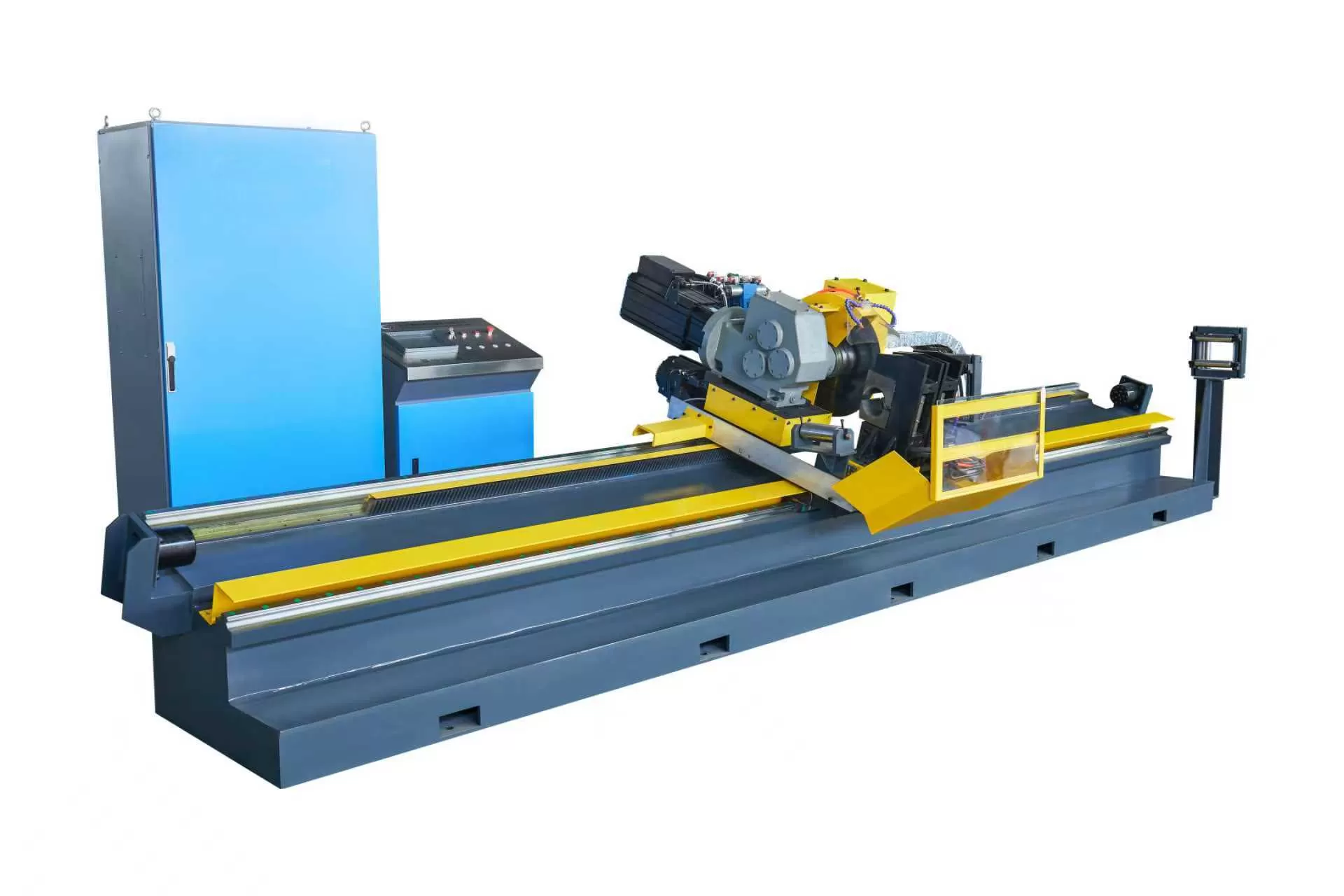
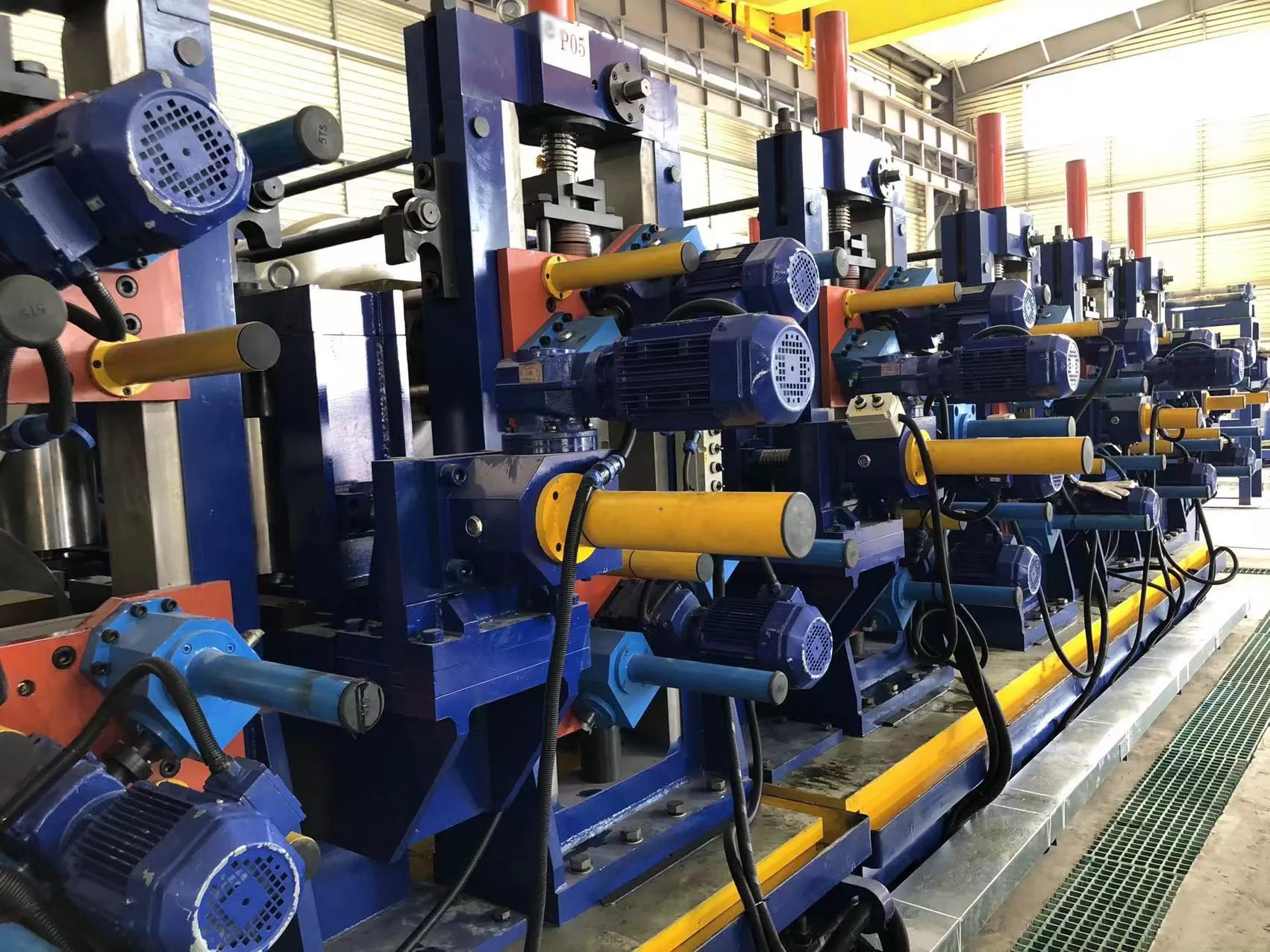
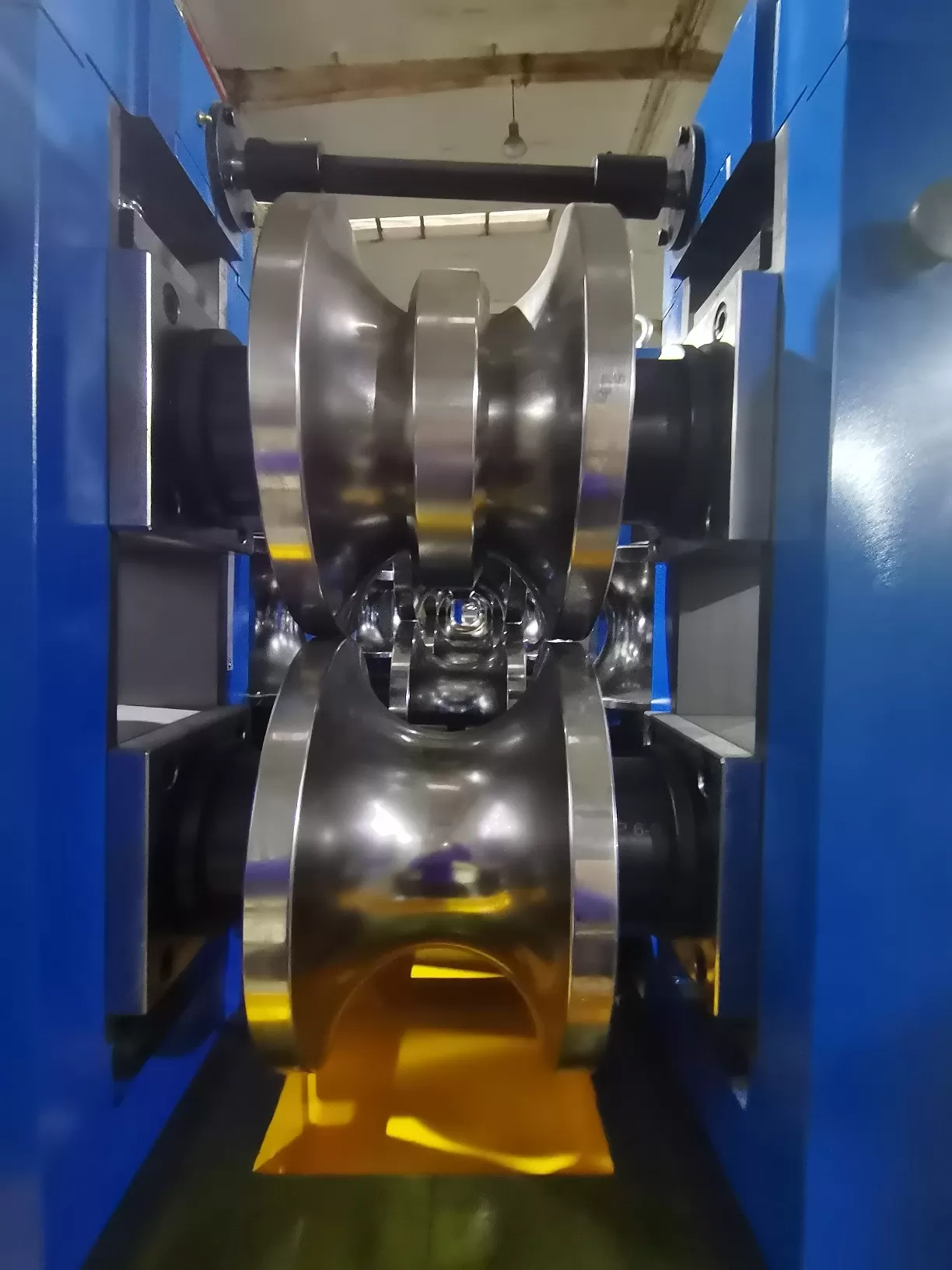
In tube and pipe production lines, the flying saw or cutoff station directly
impacts line speed, end squareness, and burr formation. A TCT saw – a circular blade with tungsten carbide tips
brazed to a steel body – has become the standard for cutting carbon steel,
stainless steel, aluminum, and copper tubes. Compared to high-speed steel (HSS)
blades, a TCT saw offers longer tool life, faster cutting
speeds, and cleaner cut faces when properly selected and maintained. This
article provides a deep technical examination of TCT saw design parameters,
carbide grade selection, tooth geometry optimization, and operational best
practices for tube mills. As a manufacturer of tube mill lines and cutoff
equipment, SANSO integrates TCT saw systems into our flying saw stations,
ensuring precision cutting at line speeds up to 120 m/min.
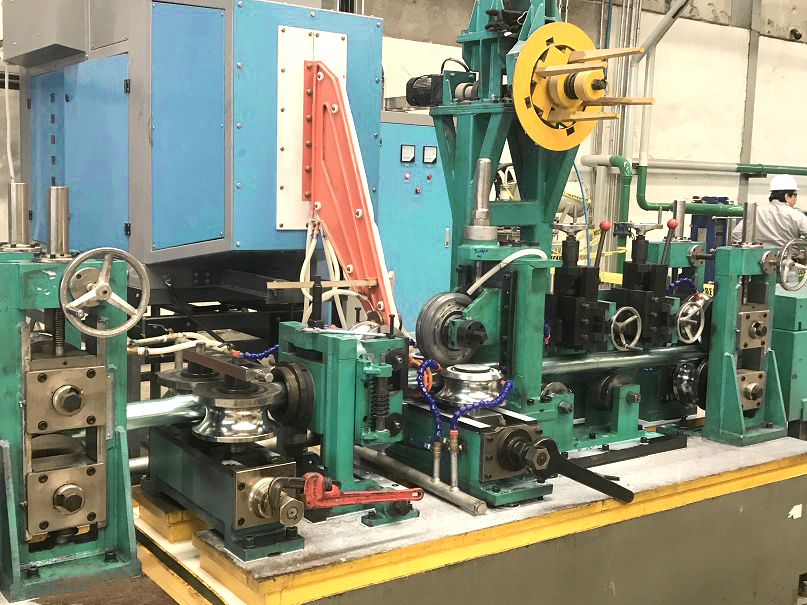
1. Why TCT Saw Outperforms HSS in Tube Cutoff
The primary advantage of a TCT saw lies in the combination
of a tough steel core and extremely hard carbide tips. Tungsten carbide (WC-Co)
has a hardness of 1,400–2,000 HV, compared to 600–700 HV for HSS. This allows
the blade to maintain sharpness for 50–100 times longer between regrinds. Key
performance comparisons:
Cutting speed: TCT saws operate at 80–150 m/min peripheral
speed for steel tubes, versus 30–60 m/min for HSS. This directly increases line
throughput.
Tool life per sharpening: A typical TCT saw produces
30,000–100,000 cuts (depending on tube diameter and wall thickness), while HSS
may need resharpening after 2,000–5,000 cuts.
Cut quality: TCT produces smoother cut ends with less burr
(typically <0.1 mm height), reducing secondary deburring.
Heat resistance: Carbide maintains hardness up to 800°C,
whereas HSS softens above 600°C. This permits dry cutting (no coolant) for many
applications.
However, TCT saws are more brittle and require precise blade tensioning and
feed control. A properly engineered TCT saw system from
SANSO includes a blade diameter, arbor size, and
tooth pitch matched to the tube dimensions and material.
2. Carbide Grade Selection for Tube Materials
The carbide grade – the mixture of tungsten carbide particles and cobalt
binder – determines wear resistance and toughness. For tube cutting
applications, common grades are:
K10–K20 (uncoated, fine grain): For non-ferrous metals
(aluminum, brass, copper) and thin-wall steel tubes (<2 mm). High wear
resistance, moderate toughness.
K20–K30 (coated or uncoated): For general carbon steel
tubes (STKM, STK400) with wall thickness 2–6 mm. Balance of wear and chipping
resistance.
K40–K50 (coarse grain): For stainless steel tubes (SUS304,
316L) or thick-walled pipes (>6 mm). Higher cobalt content (12–15%) improves
toughness to prevent tip fracture.
PVD-coated carbide (TiAlN or AlCrN): Reduces friction and
heat, extending tool life by 30–50% in dry cutting of stainless steel.
When selecting a TCT saw for a specific tube mill, the blade
supplier must know the tube material (carbon equivalence, tensile strength),
wall thickness, and desired line speed. SANSO provides a material compatibility chart to help
customers choose the correct carbide grade.
3. Tooth Geometry: Rake Angle, Pitch, and Tooth Form
The tooth design of a TCT saw dictates chip formation, cutting forces, and
surface finish. Key parameters:
3.1 Rake Angle
Positive rake (+10° to +20°): For soft materials (aluminum,
thin steel). Provides aggressive cutting, low power consumption, but higher edge
chipping risk.
Neutral or negative rake (0° to -5°): For thick-walled or
stainless tubes. Reduces chatter and tip fracture, but requires higher feed
force.
Hook angle: Typically 10–15° for general steel
tubes.
3.2 Tooth Pitch (Number of Teeth)
Pitch selection follows the "three-tooth rule" – at least three teeth should
contact the tube simultaneously. For round tubes, the effective contact arc
length is about 1/3 of the tube circumference. Example: For a 60 mm diameter
tube, circumference = 188 mm; contact arc = 63 mm. With 60 teeth on a 350 mm
blade, pitch = 18.3 mm. Number of teeth in contact = 63 / 18.3 ≈ 3.4 teeth –
acceptable. Too few teeth cause vibration; too many teeth lead to chip clogging
and overheating.
2.3 Tooth Form
Triple-chip grind (TCG): Alternating chamfered and flat
teeth. Best for thin-walled tubes and non-ferrous metals – produces very clean
cuts.
Alternate top bevel (ATB): Standard for general steel
cutting. Each tooth has a 15–25° bevel. Good balance of cut quality and tool
life.
Flat top (FT): For thick-walled, heavy-duty cutting;
rougher finish but more robust.
For a tube mill producing structural steel tubes (3–5 mm wall), an ATB tooth
form with 60 teeth on a 350 mm blade is common. SANSO offers customized tooth geometry based on tube
size and material.
4. TCT Saw Operating Parameters: Speed, Feed, and Coolant
To achieve maximum blade life, the TCT saw must operate
within recommended parameters. The cutting speed (Vc) is calculated as: Vc
(m/min) = π × D × N / 1000, where D = blade diameter (mm), N = spindle speed
(RPM). Guidelines:
Carbon steel (≤400 MPa tensile): Vc = 80–120 m/min
Carbon steel (400–600 MPa): Vc = 60–90 m/min
Stainless steel (304/316): Vc = 40–70 m/min
Aluminum: Vc = 200–400 m/min
Feed rate (mm per tooth) should be 0.03–0.08 mm/tooth for steel tubes. Higher
feed increases productivity but risks tip overload. A typical 350 mm blade with
60 teeth at 100 m/min (≈91 RPM) and 0.05 mm/tooth gives a linear feed of 91 × 60
× 0.05 = 273 mm/min. For flying saws synchronized with tube motion, the feed
rate matches the line speed plus a small overshoot.
Coolant: For carbon steel, dry cutting with compressed air (to clear chips)
is acceptable. For stainless steel or thick walls, a mist of water-soluble oil
(5–8% concentration) reduces heat and prevents built-up edge on the carbide.
SANSO flying saw stations include adjustable coolant
nozzles and chip conveyors.
5. Common Failure Modes and Prevention
Even high-quality TCT saws fail prematurely if operational errors occur.
Field data from tube mills identifies these frequent issues:
Chipped or broken carbide tips: Caused by excessive feed
rate, vibration, or encountering weld flash. Solution: Reduce feed by 20%;
ensure tube support rollers prevent vibration; use a blade with a coarser
carbide grade (higher cobalt).
Cracked blade body: Often due to improper tensioning or
clamping. The TCT saw body is a spring steel disc. If the arbor nut is
over-torqued, the blade warps. Solution: Use a torque wrench to specified value
(typically 150–200 Nm for 350 mm blade).
Burr formation on cut end: Dull teeth or incorrect tooth
geometry. Solution: Increase rake angle (more positive) or reduce feed rate;
send blade for resharpening when burr exceeds 0.2 mm.
Noise and chatter: Indicates insufficient tooth engagement
or worn arbor bearings. Solution: Check that at least 3 teeth contact the tube;
replace bearings if radial play >0.02 mm.
Regular maintenance: After every 8 hours of operation, inspect the TCT saw
for missing or cracked tips using a magnifying glass. Measure blade runout
(maximum 0.03 mm at the periphery). Keep the blade clean of resin or metal
buildup using a soft brush and solvent.
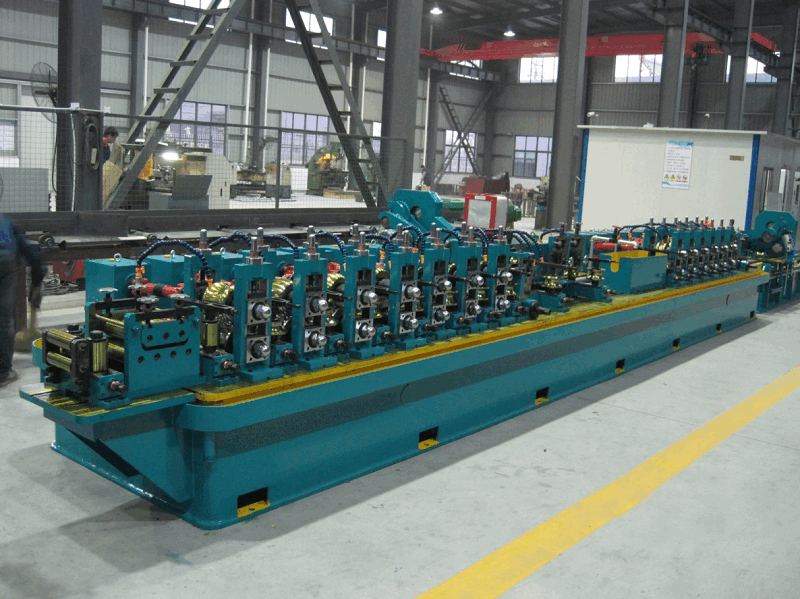
6. TCT Saw vs. Other Cutoff Methods in Tube Mills
Tube producers have several options: friction sawing, cold sawing with HSS,
laser cutting, or TCT sawing. Below is a comparison:
Friction saw (abrasive wheel): High noise, dust, and burr;
but low initial cost. Not suitable for high-speed lines.
HSS cold saw: Lower blade cost but frequent resharpening;
slower cutting speed; requires heavy coolant.
Laser cutting: No tool wear, precise, but high capital and
operating cost; slower for large diameters.
TCT saw: Best balance of speed, tool life, and cut quality
for tube diameters 20–200 mm, wall thickness 1–8 mm. Lower cost per cut than
laser, faster than HSS.
For a tube mill producing 10,000 tonnes per year, a TCT saw operating at 100
m/min can achieve 8–12 cuts per minute (depending on length). This makes it the
preferred choice for most carbon steel tube lines. SANSO supplies TCT saw systems as part of our
complete tube mill packages, including the saw arbor, servo feed, and automatic
blade wear compensation.
7. Resharpening and Retipping of TCT Saws
To maximize return on investment, TCT saw blades are resharpened multiple
times. A typical blade can be sharpened 10–20 times before the carbide tips
become too small. The sharpening process uses a diamond wheel to restore the
original tooth geometry (rake angle, clearance angle, and tooth height).
Recommended intervals:
Cutting carbon steel: sharpen every 30,000–50,000 cuts.
Cutting stainless steel: sharpen every 15,000–25,000 cuts.
Cutting aluminum: sharpen every 100,000+ cuts.
When the carbide tip length reduces to less than 1.5 mm (original ~3 mm), the
blade requires retipping – brazing new carbide segments onto the steel body.
Retipping costs about 40–50% of a new blade. Many tube mills maintain a pool of
TCT saws: one in use, one in sharpening, and one spare. SANSO can recommend local sharpening services or
provide a refurbishment exchange program.
Frequently Asked Questions (FAQ) About TCT Saws
Q1: What is the typical price range for a TCT saw used in tube
cutting?
A1: A 350 mm diameter TCT saw with 60 teeth for carbon
steel tubes costs $120–$250. For stainless steel grade (special carbide and
coating), $200–$400. Larger blades (450–600 mm) for heavy-wall pipes range
$350–$800. Prices vary by manufacturer and quantity. SANSO offers TCT saws as part of our flying saw
stations, with volume discounts for mills.
Q2: How do I know when my TCT saw needs resharpening?
A2:
Three signs: (1) Increased burr height on cut ends (>0.2 mm). (2) Higher
cutting noise or vibration. (3) Increased amperage on the saw motor (5–10% above
normal). Also, monitor the number of cuts; set a preventive sharpening schedule.
A well-maintained TCT saw should not be used until it
fails.
Q3: Can a TCT saw cut stainless steel tube without
coolant?
A3: Dry cutting of stainless steel is possible with coated
carbide (TiAlN) at reduced speed (40–50 m/min) and very rigid machine. However,
coolant (mist or flood) is strongly recommended to prevent work hardening of the
stainless surface. Without coolant, tool life may drop by 60–70%. SANSO flying saws include a coolant system for
stainless applications.
Q4: What is the maximum tube diameter that a TCT saw can
cut?
A4: The maximum diameter is limited by blade size. A 350 mm
blade can cut tubes up to 120 mm diameter (with appropriate saw stroke). For 200
mm diameter pipes, a 600 mm blade is needed. However, beyond 250 mm diameter,
band saws or friction saws become more economical. For typical tube mills (up to
6-inch OD), a TCT saw is ideal.
Q5: How do I mount a TCT saw correctly on the arbor?
A5:
First, clean the arbor flange and blade bore. Ensure the blade's rotation
direction matches the arrow (teeth pointing into the cut). Place the blade
against the back flange, then install the front flange and nut. Tighten to the
torque specified by the saw manufacturer (typically 150–250 Nm for 350 mm).
Never use a hammer to seat the blade – this can crack the carbide. SANSO provides detailed mounting instructions with
every saw.
Q6: What safety precautions are needed when operating a TCT
saw?
A6: Always use a blade guard that covers at least 270° of the
blade. Wear safety glasses and hearing protection (noise levels 95–105 dB).
Never exceed the maximum RPM marked on the blade. Before each shift, check for
loose teeth or cracks by tapping the blade with a wooden mallet – a dull sound
indicates a crack. Implement a lockout/tagout procedure for blade changes. A
properly used TCT saw is safe; misuse leads to tip ejection or
blade burst.
Ready to Optimize Your Tube Cutoff with TCT Saw Technology?
Selecting the right TCT saw involves matching blade diameter, tooth
pitch, carbide grade, and operating parameters to your tube material, wall
thickness, and line speed. SANSO provides complete
flying saw stations that integrate a heavy-duty arbor, servo feed system, and
automatic blade wear monitoring. Our engineers will analyze your tube mill's
production data and recommend a TCT saw specification that minimizes cost per
cut while achieving required end squareness (±0.5 mm).
Send your inquiry today – include tube diameter range, wall
thickness, material grade (e.g., STKM13C, SUS304), line speed (m/min), and
desired cut length tolerance. We will respond within 48 hours with a blade
selection chart, a quotation for the TCT saw and optional sharpening service,
and a drawing of the saw arbor interface.
Request a consultation for TCT saw
systems from SANSO – references available from tube mills producing
automotive, structural, and mechanical tubing.