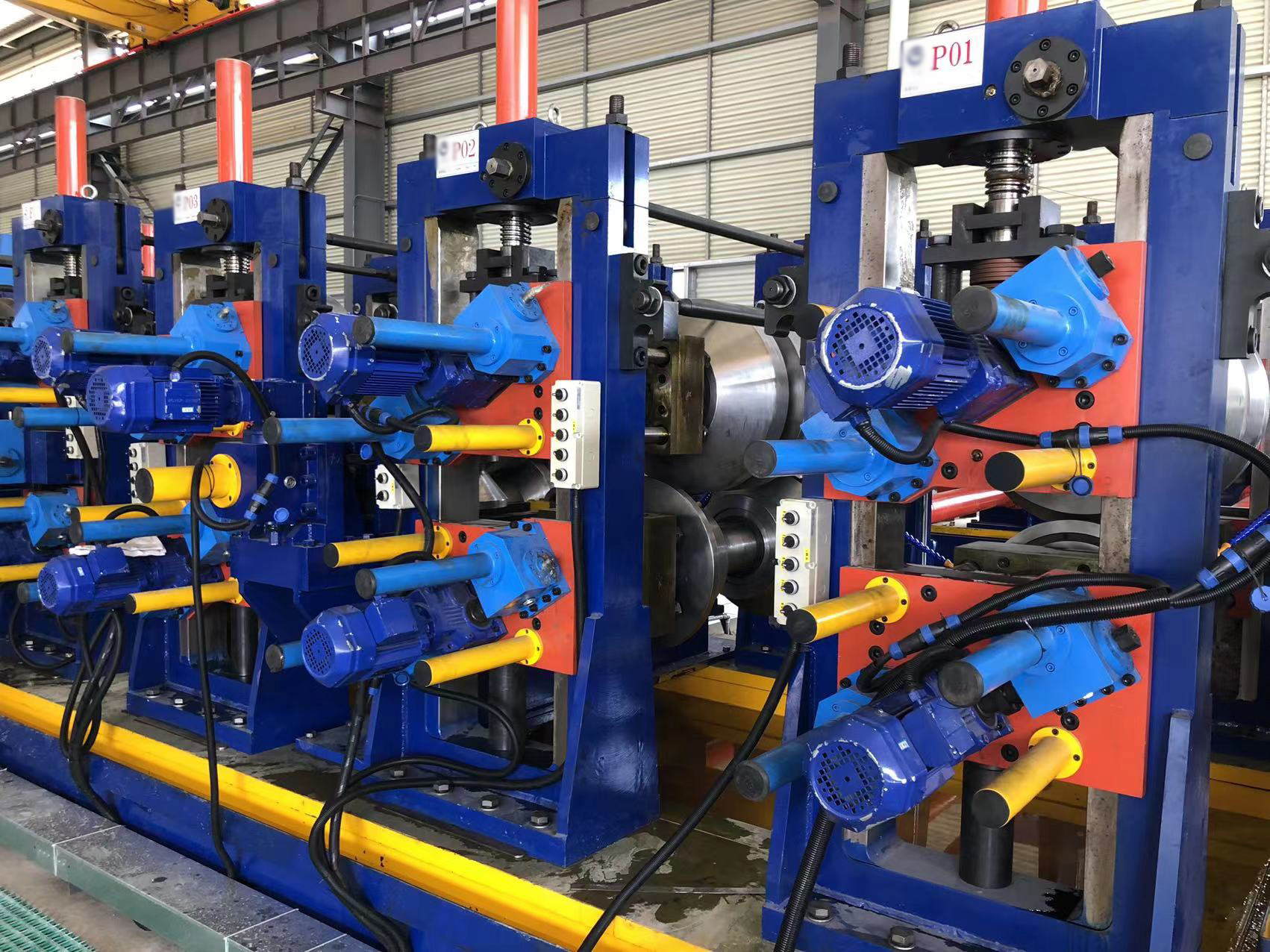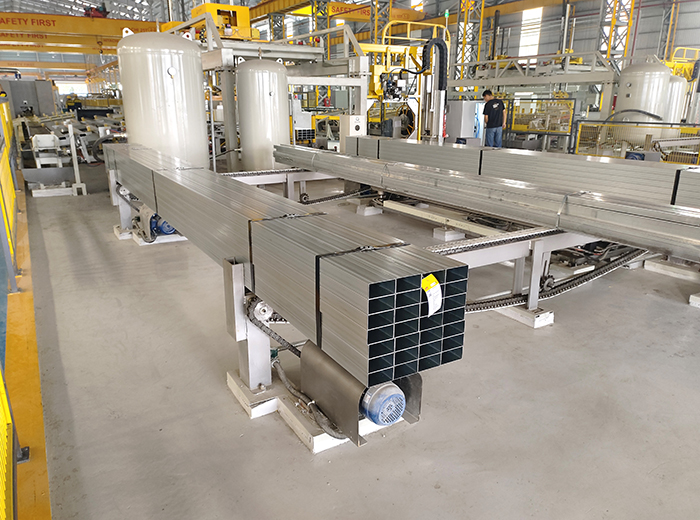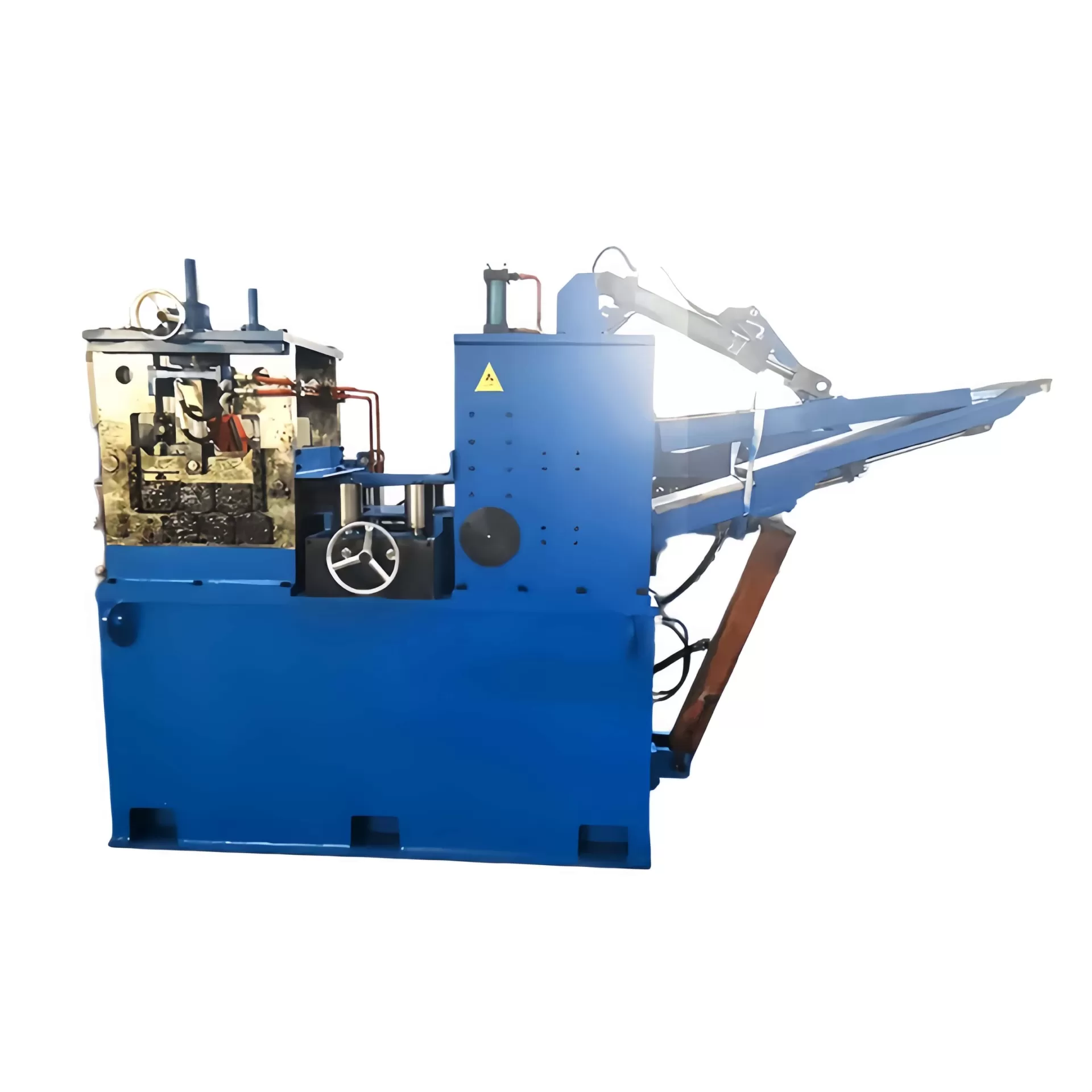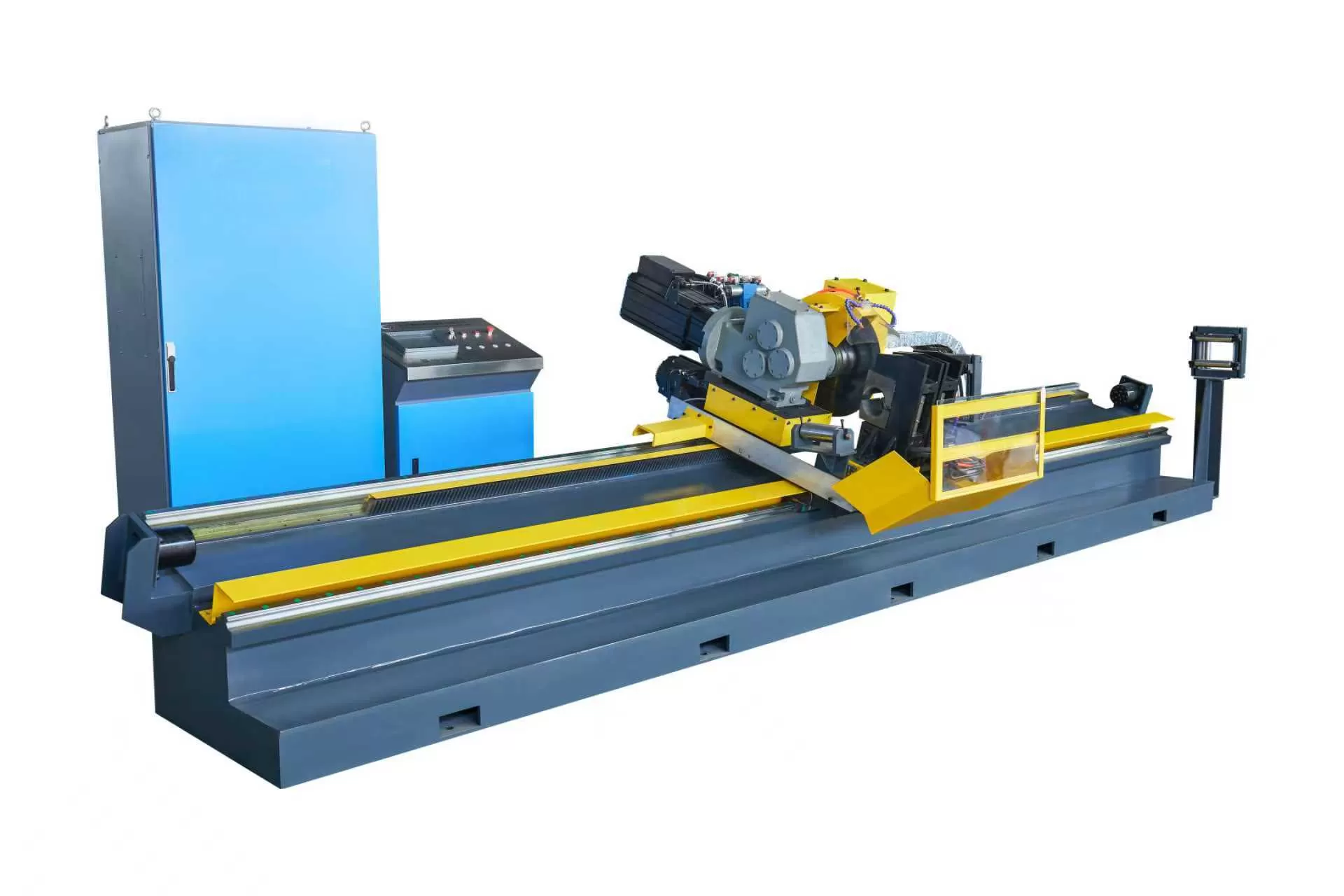
SANSO has supplied precision tube mill equipment and cutting tooling to the global metal forming industry for over 20 years. This technical guide examines the selection and application of a tct blade for metal – specifically focusing on the demands of high-speed welded tube cut-off systems. We will cover carbide substrate properties, tooth geometry optimisation, coating performance, and solutions to common cutting defects such as burr formation, premature wear, and chipping.
1. Defining the TCT Blade for Metal: Construction and Material Science
A tct blade for metal (tungsten carbide-tipped circular saw blade) consists of a hardened steel disc body (typically 65Mn or 75Cr1) with multiple carbide tips brazed onto the periphery. The carbide grade used is a cobalt-bonded tungsten carbide (WC-Co) with varying grain size and cobalt content. For ferrous metal cutting, the most common grades are:
Submicron grade (0.5–0.8 µm WC grain): High edge toughness, ideal for thin-walled tubes (≤ 2mm wall thickness).
Medium grain (1.0–1.5 µm): Balanced wear resistance and impact strength – suitable for general carbon steel pipe cutting.
Coarse grain (2.0–2.5 µm): Maximum wear resistance for high-silicon aluminium or stainless steel (but lower impact resistance).
The cobalt content ranges from 6% to 12%. Higher cobalt (10–12%) provides better fracture toughness, recommended for interrupted cuts or when cutting tubes with weld seam flash. Lower cobalt (6–8%) gives higher hardness and wear resistance, suited for high-volume cutting of mild steel tubes with consistent wall thickness.
2. Tooth Geometry and Its Influence on Cut Quality
Tooth design directly determines chip formation, cutting forces, and surface finish. For tube mill cut-off operations, the following geometries are standard on a tct blade for metal:
Triple-chip grind (TCG): Alternating trapezoidal and flat teeth. Reduces vibration and prevents corner chipping – best for thin-walled tubes (0.8–2.5mm).
Alternate top bevel (ATB): 15°–20° bevel angle. Produces a clean, burr-free cut on thicker walls (3–8mm).
Flat grind (FG): Used for non-ferrous metals (aluminium, brass) to avoid material smearing.
Hook angle: Positive hook (10°–15°) for soft metals; negative hook (-5° to 0°) for stainless steel and high-strength alloys.
Tooth pitch selection follows the "three teeth in cut" rule: the blade must have at least three teeth engaged with the tube diameter. For a 60mm OD tube, a pitch of 12–15mm (approx. 120–150 teeth on a 350mm blade) is recommended. Wider pitch leads to vibration; narrower pitch risks chip packing.
3. Coatings and Surface Treatments for Extended Tool Life
Uncoated carbide can suffer from adhesion wear when cutting sticky materials (low-carbon steel, aluminium). The following coatings are applied to premium tct blade for metal solutions:
TiN (Titanium Nitride): Gold-coloured; reduces friction coefficient to 0.4–0.5; increases hardness to 2300 HV. Suitable for general carbon steel.
TiCN (Titanium Carbonitride): Grey-blue; hardness 3000 HV; better resistance to built-up edge (BUE) on low-carbon tubes.
AlTiN (Aluminum Titanium Nitride): Violet-black; retains hardness up to 800°C; recommended for stainless steel and high-speed dry cutting (≥ 80 m/min).
CrN (Chromium Nitride): Silver-grey; low affinity to copper and aluminium – used for non-ferrous tube cutting.
Coatings are applied via PVD (physical vapour deposition) at temperatures below 500°C to avoid decarburization of the carbide substrate. A thickness of 2–4 µm is typical; thicker coatings increase edge rounding.
4. Cutting Parameters and Feed Rate Calculation
Performance of a tct blade for metal depends on correct cutting speed (Vc) and feed per tooth (fz). For tube cut-off saws, the following starting parameters are recommended:
Carbon steel (C20–C45): Vc = 60–90 m/min, fz = 0.02–0.05 mm/tooth. Use TiCN-coated blades.
Stainless steel (304/316): Vc = 30–50 m/min, fz = 0.01–0.03 mm/tooth. Use AlTiN coating, negative hook angle.
Aluminium (6063/6061): Vc = 200–400 m/min, fz = 0.05–0.10 mm/tooth. Use TCG geometry with polished rake face.
Galvanised tube: Reduce speed by 15–20% compared to bare carbon steel to avoid zinc adhesion.
For tube mills with flying cut-off saws, the blade must also withstand axial and radial forces during synchronized travel. In such cases, specify a blade with a reinforced body (stress-relieved and tensioned) to prevent wobble. SANSO provides application-specific blade tensioning for cut-off speeds up to 120 cuts per minute.
5. Industry Pain Points: Burr Formation, Chipping, and Premature Wear
Even high-quality blades encounter problems when operating conditions deviate. Below are the most frequent complaints from tube mill operators and engineering solutions:
5.1 Excessive Burr on Cut End
Burr height > 0.2mm often leads to secondary deburring operations. Causes: dull teeth, incorrect hook angle (too positive for hard material), or worn blade guides. Solution: switch to a negative hook angle (e.g., -5° for stainless), increase feed per tooth to break chip earlier, and verify blade runout (< 0.03mm).
5.2 Chipped or Broken Carbide Tips
Chipping occurs from: interrupted cut due to weld seam misalignment, excessive feed rate, or using a blade with insufficient cobalt content. Solution: use a grade with 10–12% Co, reduce feed by 30%, and ensure the tube's weld seam is ground flush before cut-off. TCT blade for metal with a triple-chip grind (TCG) is more resistant to chipping than ATB.
5.3 Premature Flank Wear
Flank wear > 0.2mm increases cutting forces and power consumption. Causes: cutting speed too high for material hardness, lack of coolant, or using uncoated carbide on abrasive materials (e.g., galvanised or pickled tubes). Solution: reduce Vc by 20%, apply mist lubrication (5% soluble oil), and specify an AlTiN coating.
5.4 Work Hardening of Cut Surface (Stainless Steel)
Stainless steel work-hardens when cut with dull blades or insufficient feed. The hardened layer (up to 300 HV increase) complicates subsequent welding or flaring. Solution: maintain a sharp blade (re-sharpen every 500–1000 cuts), use a coarse tooth pitch, and apply a positive rake angle (5°–8°) with aggressive feed to cut below the work-hardened zone.
6. Blade Maintenance, Sharpening Cycles, and Cost Optimisation
A professional tct blade for metal can be re-sharpened 5–10 times before the carbide tips are consumed. Recommended sharpening intervals:
Mild steel tube: every 800–1200 cuts (or 300–500 linear metres).
Stainless steel: every 400–600 cuts.
Aluminium: every 2000–3000 cuts (coated blades last longer).
Sharpening must be performed on a CNC tool grinder with a diamond wheel (mesh size D64 for roughing, D15 for finishing). The original tooth geometry (rake angle, clearance angle) must be restored within ±0.5°. After sharpening, the blade must be re-tensioned to avoid vibration. SANSO offers a blade reconditioning service that includes tip inspection, grinding, and dynamic balancing to ISO 1940 G6.3.
7. Selection Guide: Matching TCT Blade to Tube Mill Type
Different cut-off systems impose distinct demands on the blade:
Flying cut-off saw (continuous tube mill): Blade must withstand axial travel forces; choose a blade with a thicker body (2.5–3.0mm for 350mm diameter) and high-cobalt carbide (10–12% Co).
Stationary cold saw (cut-to-length line): Higher torque, slower feed – use a blade with ATB geometry and TiCN coating for general steel.
Portable pipe cutter (on-site): Lower RPM (800–1500) – select a blade with a positive rake angle (15°) and submicron carbide to reduce hand-feed effort.
For high-production mills (over 10,000 cuts per shift), consider a tct blade for metal with a segmented carbide ring (continuous carbide rim brazed onto the body) – this eliminates individual tip loss and allows regrinding up to 20 times.
8. Frequently Asked Questions (FAQ) – TCT Blade for Metal
Q1: What is the difference between a TCT blade for metal and a standard abrasive cut-off wheel?
A1: A TCT blade cuts via shearing (chip formation) whereas an abrasive wheel grinds through friction. TCT blades produce no dust, leave a burr-free finish (with correct parameters), and last 50–200 times longer than abrasive wheels on tube cutting. However, TCT blades require rigid machinery and cannot cut hardened steel (above HRC 45).
Q2: Can I use a wood-cutting TCT blade on metal tubes?
A2: No. Wood-cutting blades have a positive hook angle (20°–25°) and soft carbide grade (K10–K20) that will chip instantly on steel. Metal-cutting TCT blades have neutral or negative hook angles and higher cobalt grades (K40–K50). Using the wrong blade is a safety hazard.
Q3: How do I clean a TCT blade that has built-up edge (BUE) from cutting aluminium?
A3: Soak the blade overnight in a 10% sodium hydroxide (NaOH) solution – this dissolves aluminium without attacking carbide or steel. Never use steel wire brushes, as they dull the carbide edges. After cleaning, rinse with water and apply a light oil film to prevent rust on the steel body.
Q4: What is the maximum wall thickness a TCT blade for metal can cut?
A4: For carbon steel tubes, a 350mm diameter blade can cut up to 8mm wall thickness in a single pass. For thicker walls (10–15mm), a two-pass cut (first cut 70% depth, then finish) or a larger blade (450–500mm) is required. For solid bars, use a dedicated cold saw blade with a different tooth design.
Q5: How often should I replace the brazed carbide tips on a TCT blade?
A5: Tips are replaced when the remaining carbide height falls below 2mm (from original 4–5mm). With proper re-sharpening, a quality blade from SANSO can have tips replaced once or twice. Tip replacement requires induction brazing and re-grinding – typically cost-effective only for blades over 400mm diameter.
Q6: Why does my TCT blade produce a rough cut surface on stainless steel tube?
A6: Rough cuts (surface roughness Ra > 3.2 µm) usually indicate insufficient feed per tooth – the blade rubs instead of cuts. Increase feed by 20–30% and verify that the cutting speed is below 50 m/min. Also check that the blade is not running in reverse direction (teeth must point into the rotation).
9. Inquiry – Technical Consultation and Quotation for TCT Blades
Selecting the correct tct blade for metal for your tube mill or cut-to-length line requires analysis of material grade, tube dimensions, cut rate, and machine rigidity. SANSO provides:
Custom tooth geometry for specific tube profiles (round, square, rectangular).
Coating selection based on your coolant type (dry, mist, flood).
Blade tensioning for flying cut-off saws with high acceleration.
Re-sharpening and re-tipping service contracts.
Send your inquiry with the following details: tube material (grade), outer diameter range, wall thickness, cut-off rate (cuts per minute), and current blade life (meters per sharpening). Our engineers will recommend the optimal carbide grade, geometry, and coating for your operation. Request a quotation or sample blade for on-site testing.
Submit your technical inquiry now: Click here for the official inquiry form or visit our product specification page for datasheets and case studies.