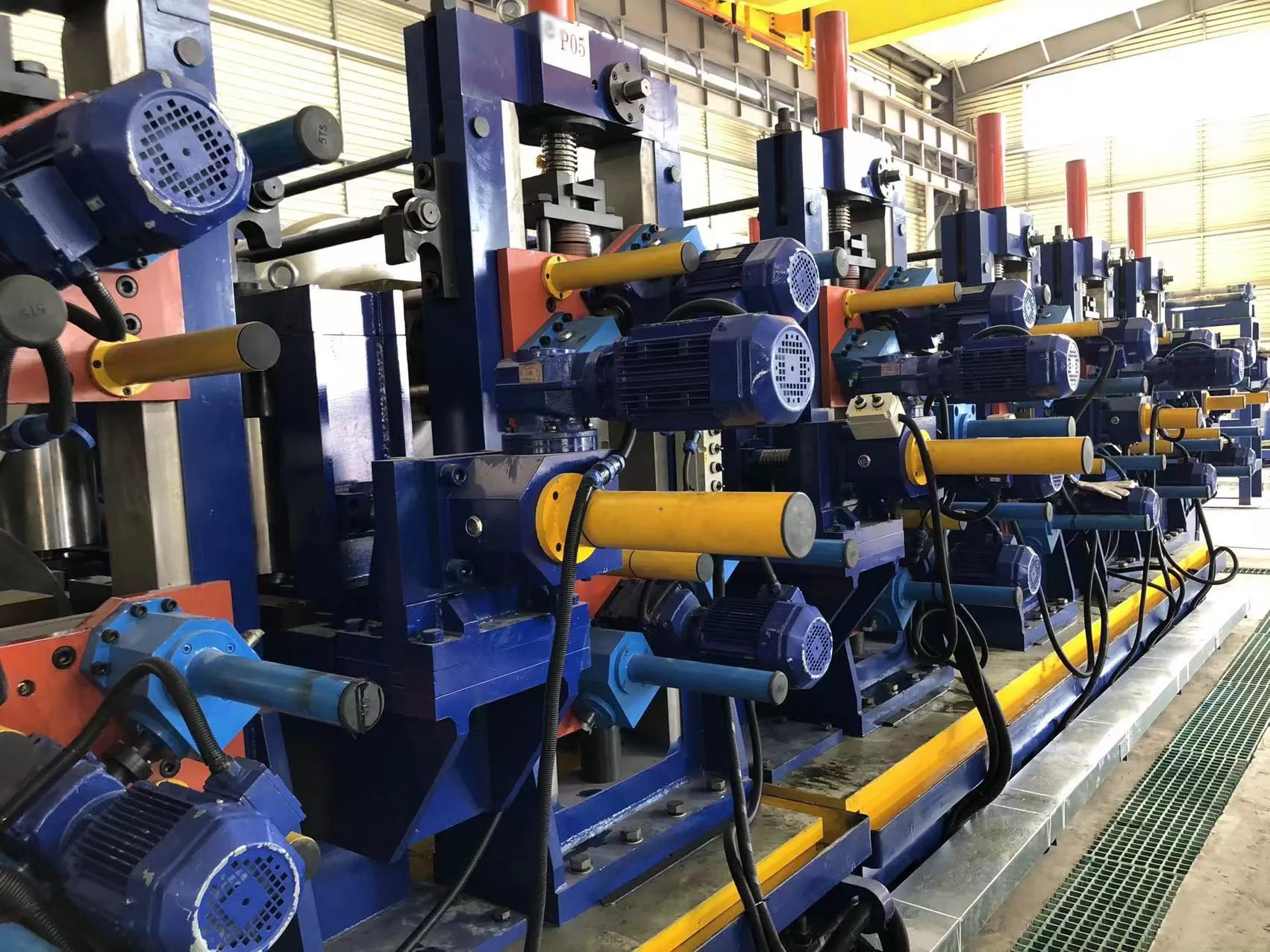
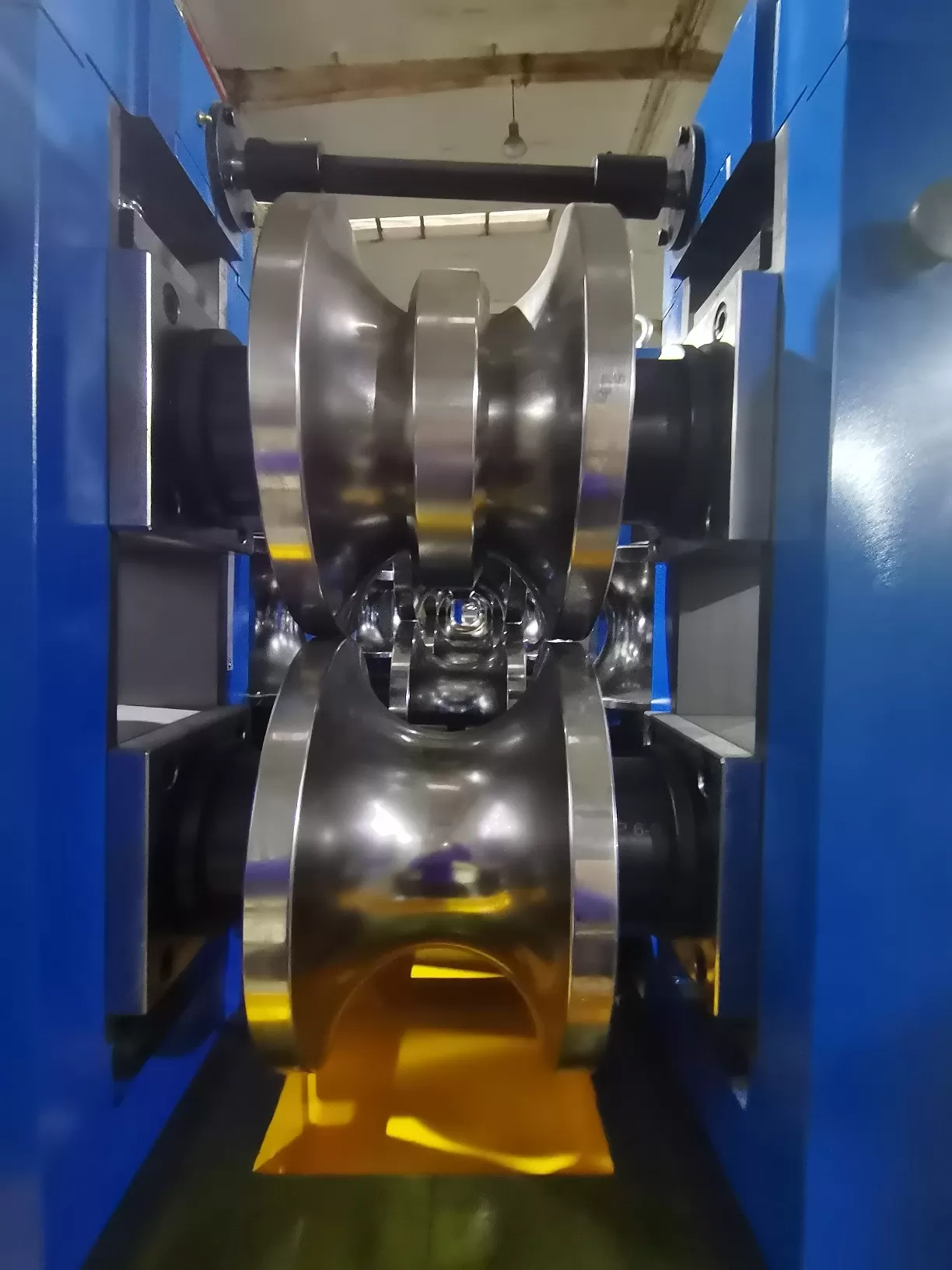
In high-volume welded pipe and tube manufacturing, operational continuity
directly influences product quality, tooling wear, and overall factory
efficiency. A primary challenge in these production lines is handling the
transition between finished steel coils and new raw material. Stopping the roll
forming mill to join strip ends manually or even semi-automatically introduces
thermal variations in the welding unit, damages tooling, and creates material
waste.
To prevent these operational interruptions, modern tube mill configurations
incorporate a strip storage system. A high-performance Coil
Accumulator acts as the buffer zone, storing a predetermined length
of steel strip during normal operations and paying it out continuously while the
entry section stops for coil joining. This systematic approach ensures that the
roll forming, welding, sizing, and cutoff sections run without interruption,
maintaining a steady-state manufacturing process.
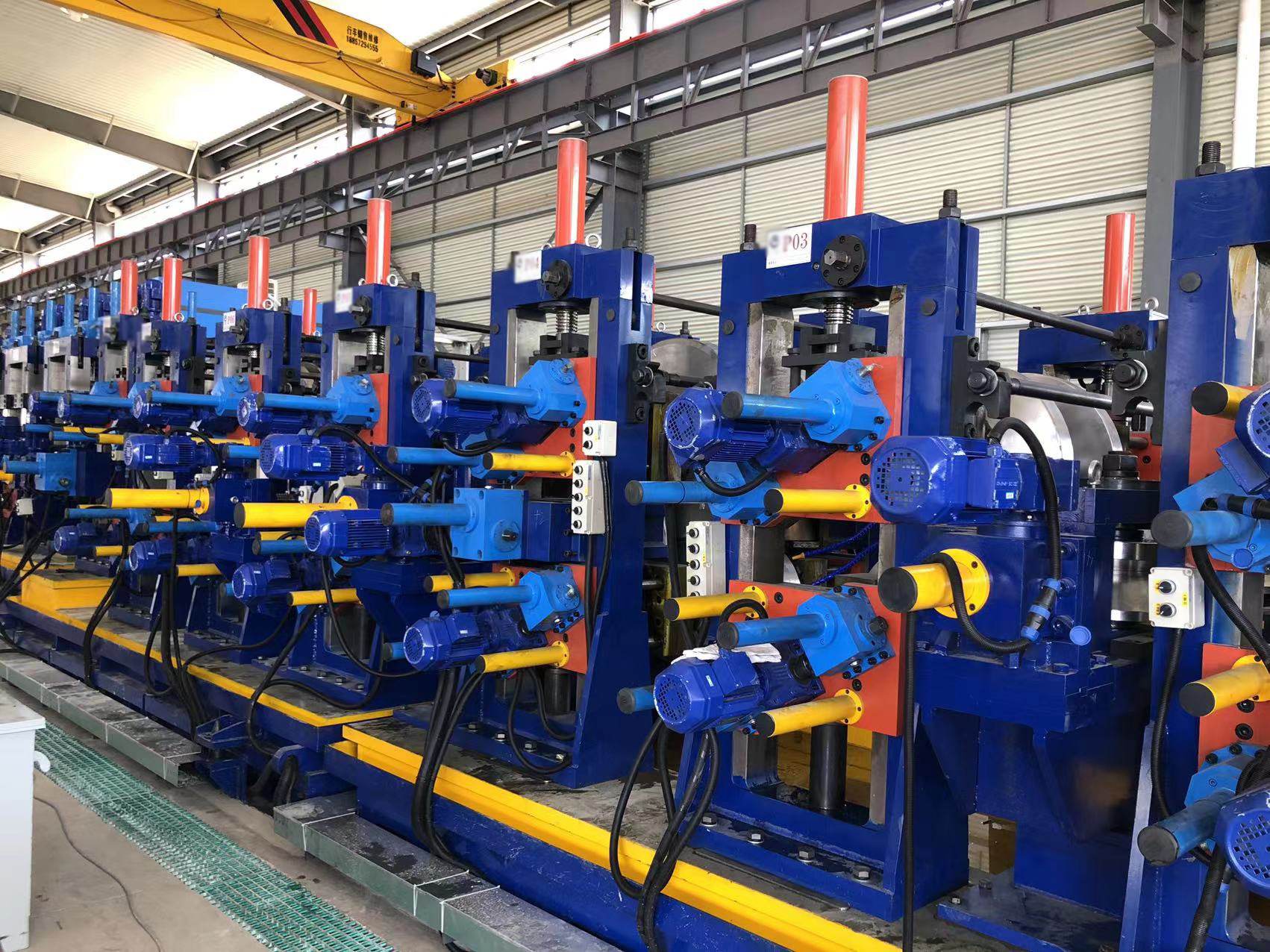
The Mechanical Dynamics of Continuous Strip Feeding
The core function of a loop storage system relies on a controlled speed
differential between the entry section of the tube mill and the forming mill
itself. Under typical operation, the entry equipment—comprising the uncoiler,
pinch rolls, flattener, and shear/welder—runs at a higher speed than the
downstream forming section. This overspeed capability allows the storage unit to
replenish its reserve after a coil change has been completed.
When the active coil is nearly depleted, the trailing end is clamped in the
shear and end welder. The entry feed stops completely to allow the operator to
cut the tail end and weld it to the leading end of the next coil. Throughout
this splicing sequence, the forming mill continues to pull strip from the
accumulator at normal production speed. Once the join is finished, the entry
clamping mechanism releases, and the entry pinch rolls run at high speed to
refill the accumulator loop before the next coil change cycle occurs.
As a manufacturer of high-precision tube mill machinery, SANSO designs continuous
entry systems that handle various coil widths and thicknesses without causing
edge damage, ensuring a smooth transition during high-speed operations.
Primary Configurations: Horizontal vs. Vertical Accumulators
Selecting the correct Coil
Accumulator configuration depends on specific line parameters such
as maximum mill speed, material yield strength, and strip thickness. The two
most common mechanical configurations used in industrial tube mills are
horizontal spiral units and vertical cage units.
Horizontal Spiral Accumulators
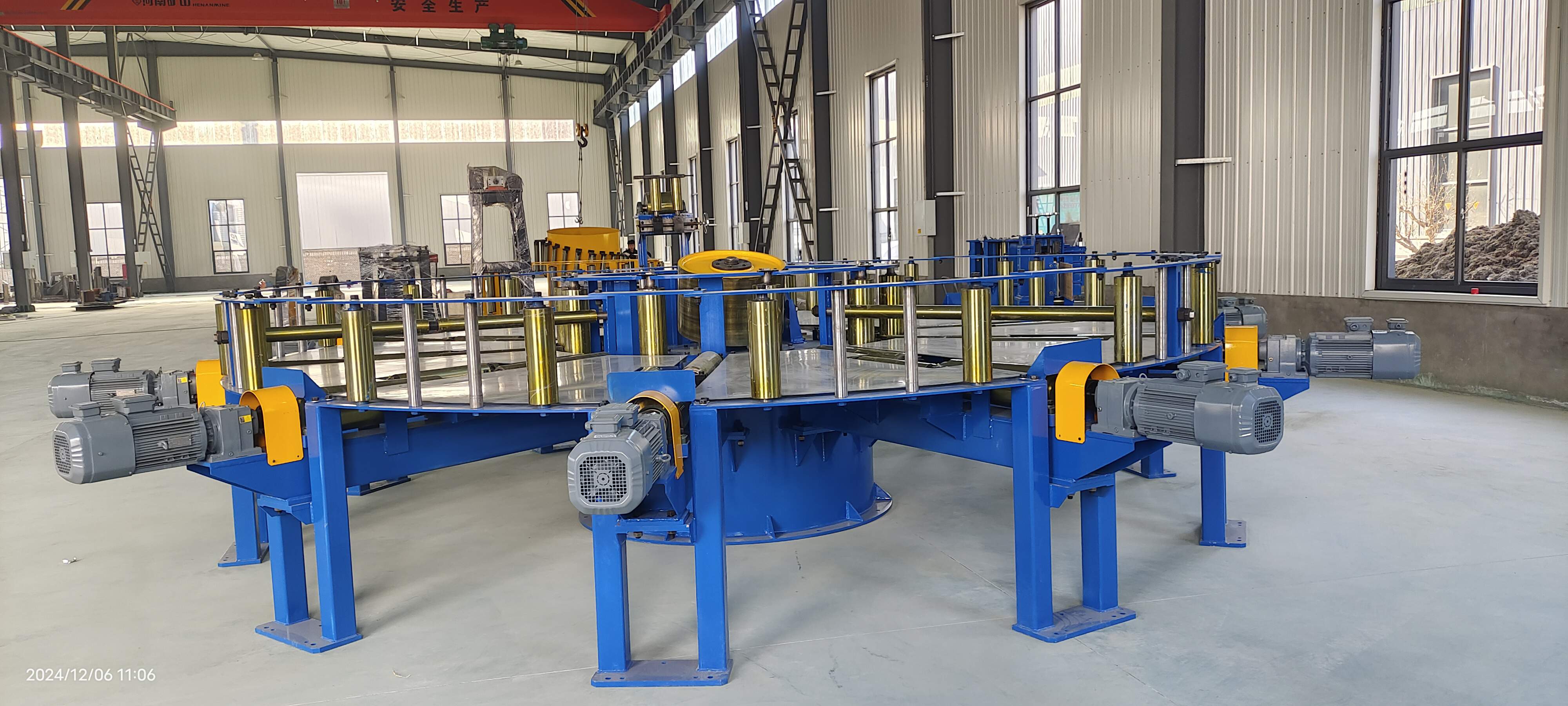
Horizontal spiral systems store the steel strip in concentric loops on a
horizontal plane. The strip is fed into the outer diameter of the accumulator
basket and guided spirally toward the center, from where it is drawn out
vertically or diagonally toward the forming mill. This configuration offers
several key mechanical characteristics:
High Storage Capacity: Able to store hundreds of meters of
strip, making them suitable for high-speed mills or lines requiring extended
welding times.
Low Edge Wear: By supporting the flat face of the strip on
wear-resistant rollers or plates, horizontal systems prevent lateral deformation
and edge damage.
Broad Thickness Range: Highly effective for medium-to-heavy
wall thicknesses where vertical bending radiuses would exceed the material's
elastic limit.
Vertical Basket and Cage Accumulators
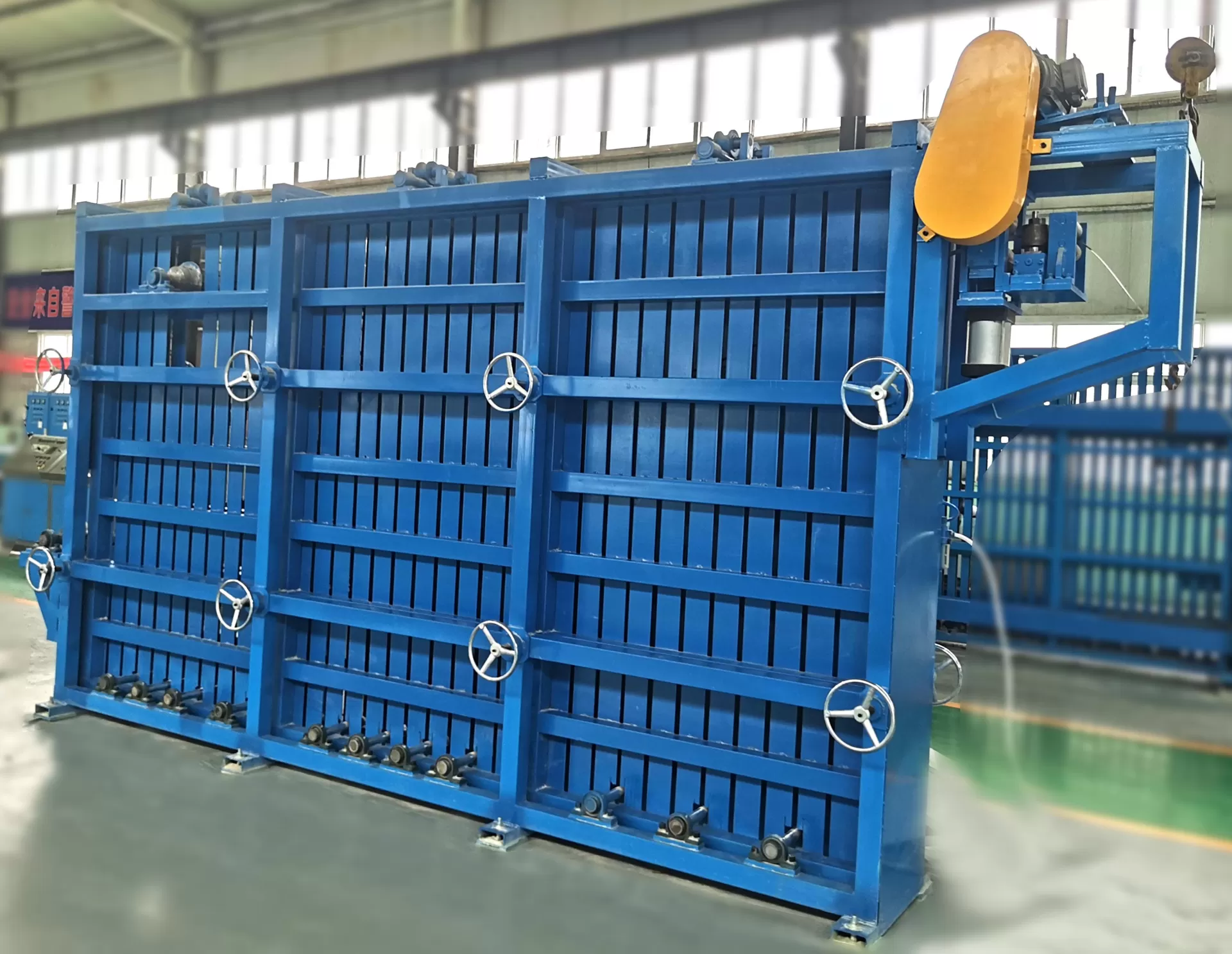
Vertical cage accumulators store the strip in a vertical loop configuration,
typically using a simple basket design where the strip forms a natural downward
loop. These systems are characterized by:
Compact Footprint: Vertical systems require significantly
less floor space than horizontal spiral units, making them suitable for
factories with space constraints.
Simpler Mechanical Construction: Fewer moving parts
translate to straightforward maintenance procedures and reduced mechanical
complexity.
Material Limitations: Because the strip relies on gravity
and natural bending to form the loop, vertical cages are generally limited to
thinner gauges and highly flexible materials to avoid permanent deformation or
strip buckling.
Overcoming Core Industry Pain Points in Welded Pipe Production
Without a reliable strip storage system, pipe manufacturers face recurring
challenges that affect both operational margins and product quality.
Implementing a robust Coil
Accumulator addresses several deep-seated production pain
points:
1. Inconsistent Weld Seam Quality
High-frequency induction welding (HFIW) relies on a constant heat input per
unit of material length. When the tube mill slows down or stops, the heat
balance is disrupted. This causes localized overheating, burning, or
under-welding at the stop point. When the line restarts, a substantial portion
of the pipe must be discarded as scrap because it fails structural or pressure
tests. Continuous strip feeding maintains a constant mill speed, ensuring
uniform heat distribution and consistent weld seam integrity.
2. Accelerated Roll Tooling Wear
Frequent stopping and starting of the roll forming mill subjects the forming
rolls, sizing rolls, and drive shafts to severe torsional stress and shock
loading. Additionally, static friction between the stationary strip and the
rolls during a stop can cause surface scuffing and micro-cracking on highly
polished tooling surfaces. Continuous operation distributes the friction evenly
and extends the service life of expensive roll tooling.
3. High Energy Consumption and Peak Demands
Starting heavy roll forming stands from a dead stop requires substantial
electrical current, leading to power surges and increased energy consumption.
Keeping the mill running at a constant, optimized speed stabilizes the
electrical load, reducing stress on the facility's power infrastructure and main
drive motors.
Implementing a high-capacity Coil
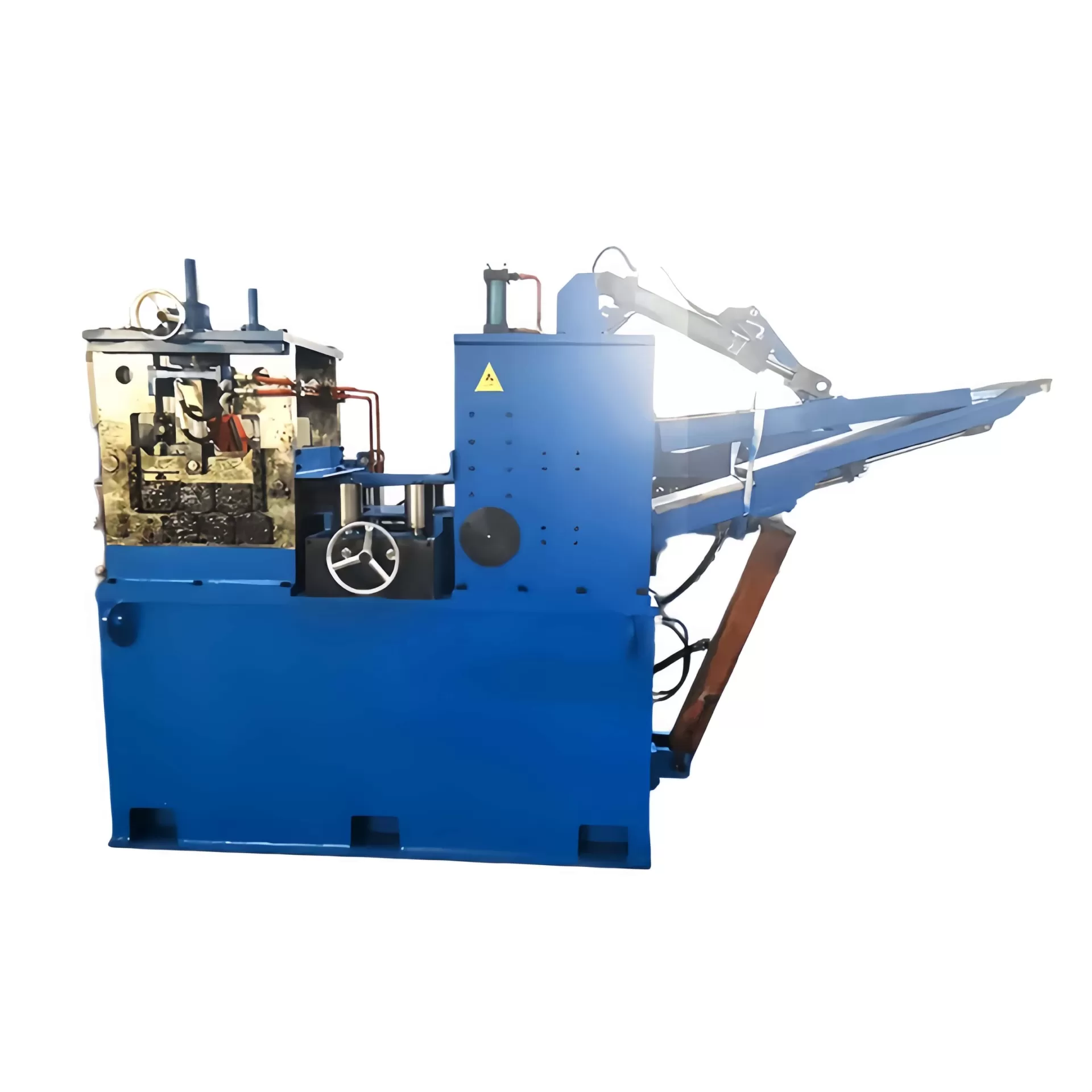
Accumulator allows operators to perform shear and end-welding
processes calmly, maintaining high safety standards without rushing to prevent a
line stoppage.
Engineering Considerations for System Integration
Integrating a loop storage unit into an existing or new tube mill line
requires precise engineering calculations. The storage capacity must be
calculated based on the maximum mill speed and the worst-case splice time. The
splicing time includes clamping, shearing, aligning, welding, and unclamping the
strip.
For example, if a tube mill operates at a steady speed of 80 meters per
minute, and the operator requires 90 seconds (1.5 minutes) to perform a
high-quality end weld, the minimum active storage capacity needed is:
Storage Capacity = Mill Speed × Splice Time = 80 m/min × 1.5 min = 120
meters
To ensure a safety margin for unexpected operator delays or minor alignment
issues, engineers typically apply a safety factor of 1.2 to 1.3, resulting in a
target storage capacity of approximately 144 to 156 meters.
Engineering teams at SANSO focus on minimizing
tension variations within the accumulator loop to protect delicate strip edges,
ensuring that the strip enters the forming section perfectly aligned and free
from physical distortion.
Another major factor is strip tension control. Without precise tension
control, the strip inside a Coil
Accumulator can buckle or scratch, compromising the final product's
surface quality. Modern systems use variable frequency drives (VFDs) combined
with loop position sensors to dynamically adjust the entry feed speed. This
prevents excessive tension that could stretch thin-gauge strips, while also
avoiding slack that could lead to strip tangling within the storage basket.
With decades of field experience, SANSO has refined the
structural integrity of these storage units, integrating wear-resistant nylon or
polyurethane rollers to protect sensitive carbon steel and stainless steel
surfaces from friction damage during high-speed accumulation cycles.
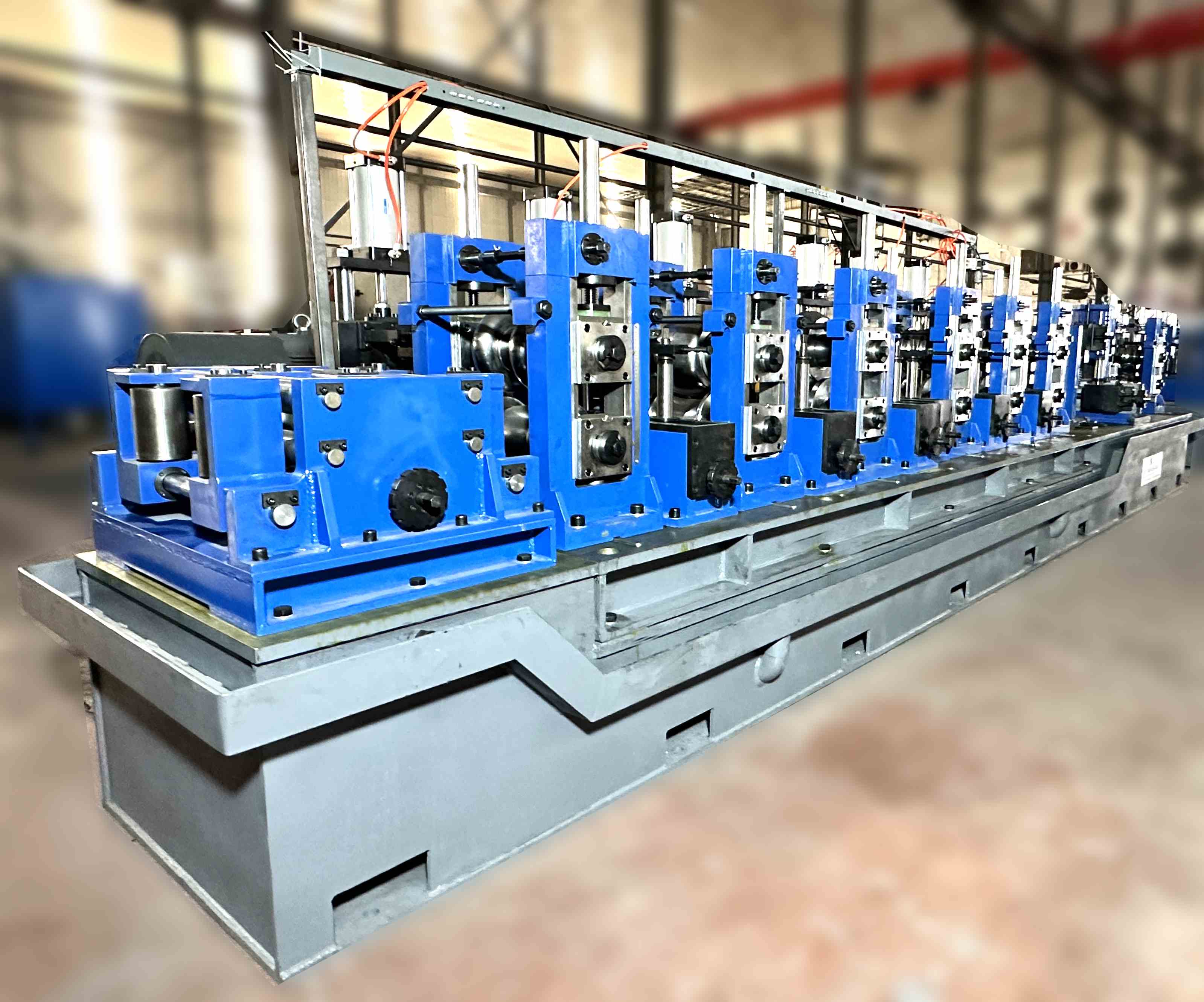
Operational Maintenance and Longevity
To maintain high reliability, the continuous accumulator requires structured
preventative maintenance. Because these units process thousands of tons of steel
strip, they are subjected to continuous vibration, abrasive metal scale, and
high centrifugal forces in spiral configurations.
Scale Accumulation Management: High-carbon and hot-rolled
steel strips shed significant amounts of iron oxide scale during bending and
uncoiling. If left unmanaged, this abrasive dust can settle into roller bearings
and guide tracks, causing premature wear. Regular cleaning and dust extraction
systems are recommended.
Roller Inspection: The guide rollers within the accumulator
basket or concentric cages must rotate freely. A seized roller can cause severe
scratching on the strip surface and introduce unwanted drag, leading to tension
spikes.
Sensor Calibration: Loop control sensors, whether
ultrasonic, photoelectric, or mechanical limit switches, must be calibrated
regularly to prevent overfilling or over-emptying the storage area.
Summary of Continuous Mill Advantages
Implementing an automated strip storage system alters the operational
efficiency of a tube mill. By removing the bottleneck of manual coil change
stoppages, manufacturers achieve consistent weld parameters, protect their
investment in roll tooling, and lower the volume of scrap material generated
during mill restarts.
Frequently Asked Questions
Q1: How does a spiral accumulator differ from a vertical basket
accumulator?
A1: A horizontal spiral accumulator stores the strip in concentric loops flat
on a horizontal bed, supporting the material face to allow for large storage
capacities and heavy wall thicknesses. A vertical basket accumulator stores the
strip in a loose vertical loop using gravity, requiring less floor space but
limiting the maximum thickness due to bending limitations of thicker steel.
Q2: What is the average calculation for strip storage capacity in a
continuous line?
A2: Storage capacity is calculated by multiplying the maximum continuous line
speed of the tube mill by the total time required to perform the shear and weld
operation, then multiplying by a safety factor of 1.2 to 1.3 to accommodate
operational delays.
Q3: Can a coil accumulator handle high-strength steel (AHSS) strips?
A3: Yes, but high-strength steel requires a larger minimum bending radius to
prevent permanent deformation or cracking. A horizontal spiral accumulator
designed with larger internal and external cage diameters is typically required
to handle the spring-back forces of high-strength materials.
Q4: What maintenance is required to ensure the long-term reliability of a
coil accumulator?
A4: Pivotal maintenance tasks include checking and lubricating guide roller
bearings, removing accumulated metal scale shed by hot-rolled steel, inspecting
polyurethane roller coatings for wear, and calibrating loop control sensors to
ensure accurate speed synchronization.
Q5: How does a coil accumulator prevent strip edge damage during high-speed
accumulation?
A5: Edge damage is prevented through the use of wide, flat support rollers
rather than narrow vertical flanges, along with dynamic tension control systems
that prevent the strip from whipping or rubbing against the outer cage structure
during high-speed pay-in and pay-out phases.
Contact Our Engineering Team
Optimizing a tube mill production line requires a careful balance of
mechanical capacity, space allocation, and robust control systems. If you are
looking to integrate a dependable strip storage system to eliminate mill
downtime, improve weld quality, and extend tooling life, our engineering team is
available to assist. Please contact us to discuss your specific material
dimensions, line speeds, and factory layout requirements for a customized
solution.