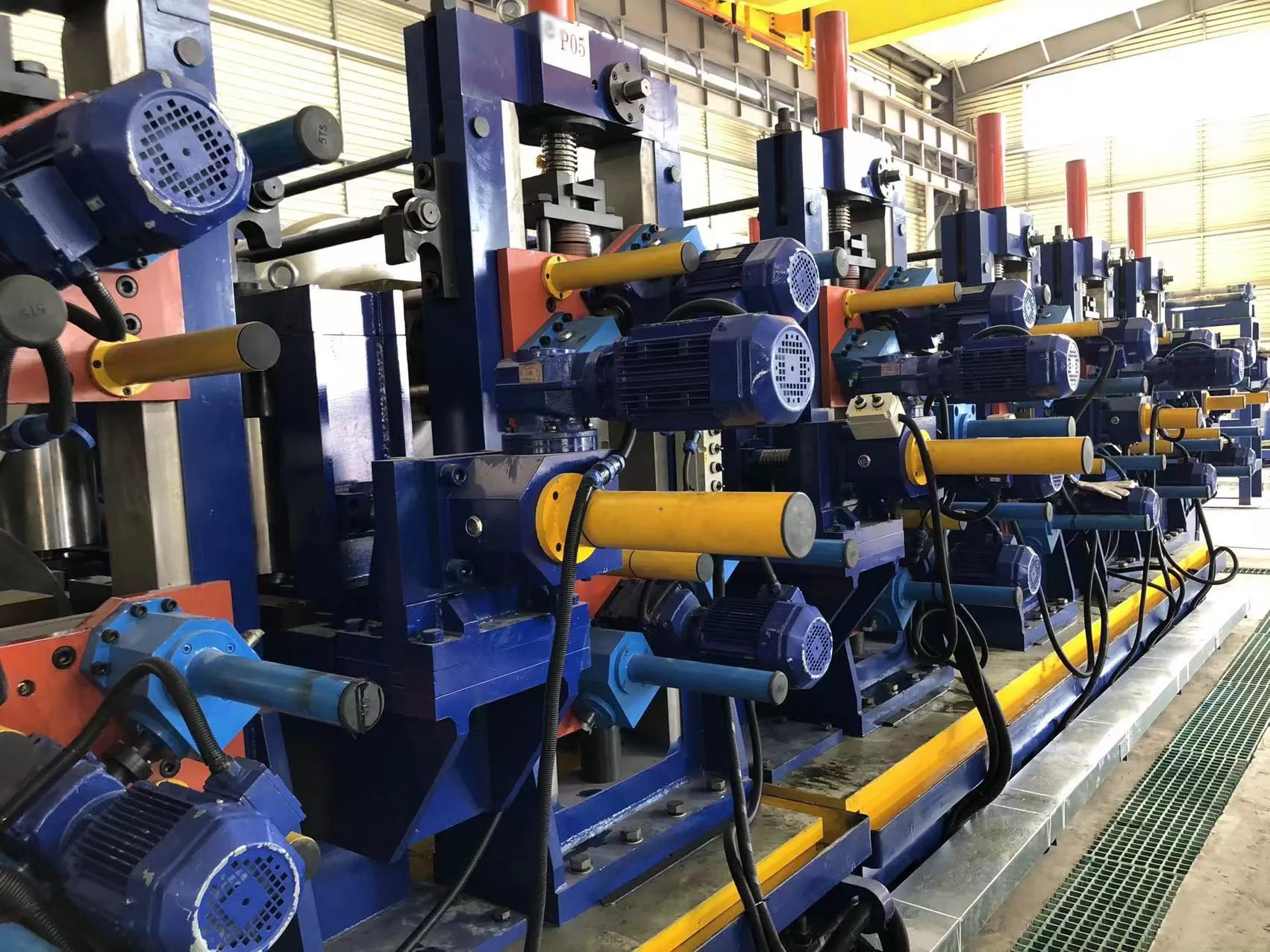
Selecting a tube mill manufacturer involves far more than
comparing line speeds or max wall thickness. Modern welded tube production
demands a system that maintains weld seam integrity across material grade
transitions, controls residual stress for subsequent bending operations, and
provides rapid changeover between diameters. A poorly configured mill results in
strip edge misalignment, inconsistent weld bead geometry, and excessive tooling
wear. This article provides a technical framework for evaluating mill
suppliers—covering roll forming station rigidity, high-frequency (HF) welder
integration, sizing box tolerances, and accumulator dynamics. References to SANSO engineering practices illustrate industry
benchmarks.
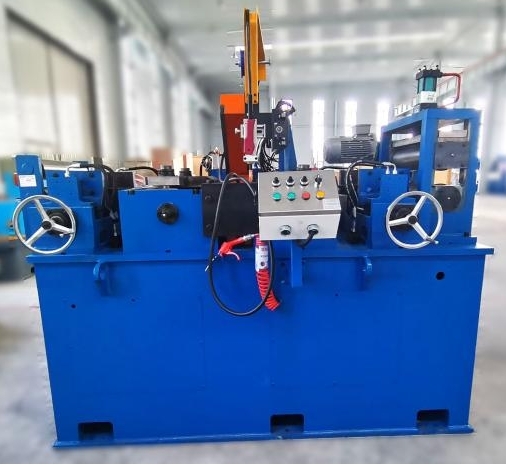
1. Why the Tube Mill Manufacturer’s Forming Methodology Dictates Downstream
Quality
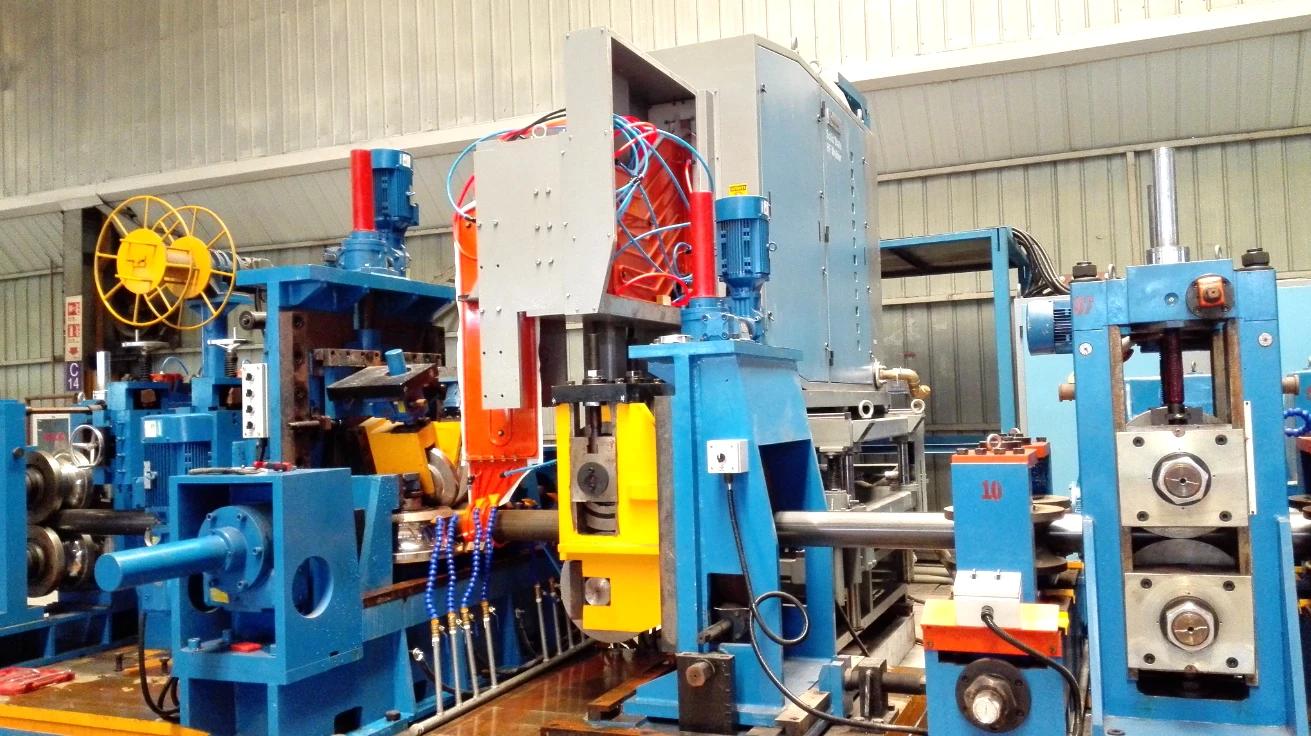
Every welded tube mill converts flat strip into a closed section through a
progressive forming sequence. The tube mill manufacturer must design the flower
pattern – the gradual edge deformation from flat to round – with specific
attention to edge extension. Excessive edge stretch leads to longitudinal weld
cracks, while insufficient forming causes weld mismatch. Three forming
philosophies exist:
Conventional traveling forming: Break-down passes (first
6-8 stands) convert flat strip to a U-shape, followed by fin passes that close
the gap. Suitable for diameters 20-200mm, walls up to 6mm.
Constant-width forming: Maintains strip width constant
through early passes, reducing edge buckling. Preferred for stainless and
thin-wall tubes (0.5-2mm).
Flexible cage forming: Adjustable side rolls that
accommodate diameter changes without changing horizontal stands. Reduces
changeover time but requires precise vertical alignment.
A reputable tube mill manufacturer will provide forming
simulation data (FEA) showing predicted edge strain distribution. Request the
analysis for your target tube size – any peak edge strain exceeding 15%
indicates risk of martensite formation in carbon steel.
2. Welding Section Parameters That Differentiate Capable Suppliers
High-frequency induction or contact welding remains the core process.
Technical specifications to assess:
Impedor design: Ferrite core with cooling channels. Impedor
position relative to weld point must be adjustable within ±3mm. Poor impedor
geometry reduces weld efficiency by 25%, causing cold welds.
Weld roll geometry: Squeeze roll gap (typically 0.1-0.3mm
below tube OD) and roll contour radius. Incorrect squeeze pressure creates
external burr heights >0.3mm, requiring aggressive scarfing.
Power supply matching: Solid-state HF generators (400-800
kHz for mild steel, 200-400 kHz for stainless) with power factor correction. A
properly sized generator maintains output within ±2% despite load variations
from strip edge irregularities.
Seam annealing station: Post-weld induction coil for
heat-treating the heat-affected zone (HAZ). Required for API 5L and automotive
tubes to restore ductility.
Leading tube mill manufacturer designs incorporate weld
current monitoring synchronized with line speed. If speed drops 10%, current
reduces proportionally to prevent overheating and burn-through.
3. Accumulator Integration: Buffering Coil Joins Without Line Stops
Continuous tube mills require an accumulator – a storage tower or horizontal
loop – to decouple the entry section (coil feeding) from the forming/welding
section. The tube mill manufacturer must ensure accumulator
tension control prevents strip buckling or over-stretching. Two accumulator
types:
Vertical looping tower: Uses a movable carriage with
multiple roller banks. Provides 2-5 minutes of strip storage. Requires precise
servo tension control to avoid strip tear during acceleration.
Horizontal looping pit: Lower height but larger footprint.
Allows 60-90 seconds storage. Simpler tension system but prone to strip twisting
if guide rolls misaligned.
Specify that the accumulator includes edge guide sensors (ultrasonic or
laser) that correct strip position within ±1mm. Without this, strip walking
before the forming section causes spiral weld seams.
4. Sizing & Straightening Section: Final Tolerance Authority
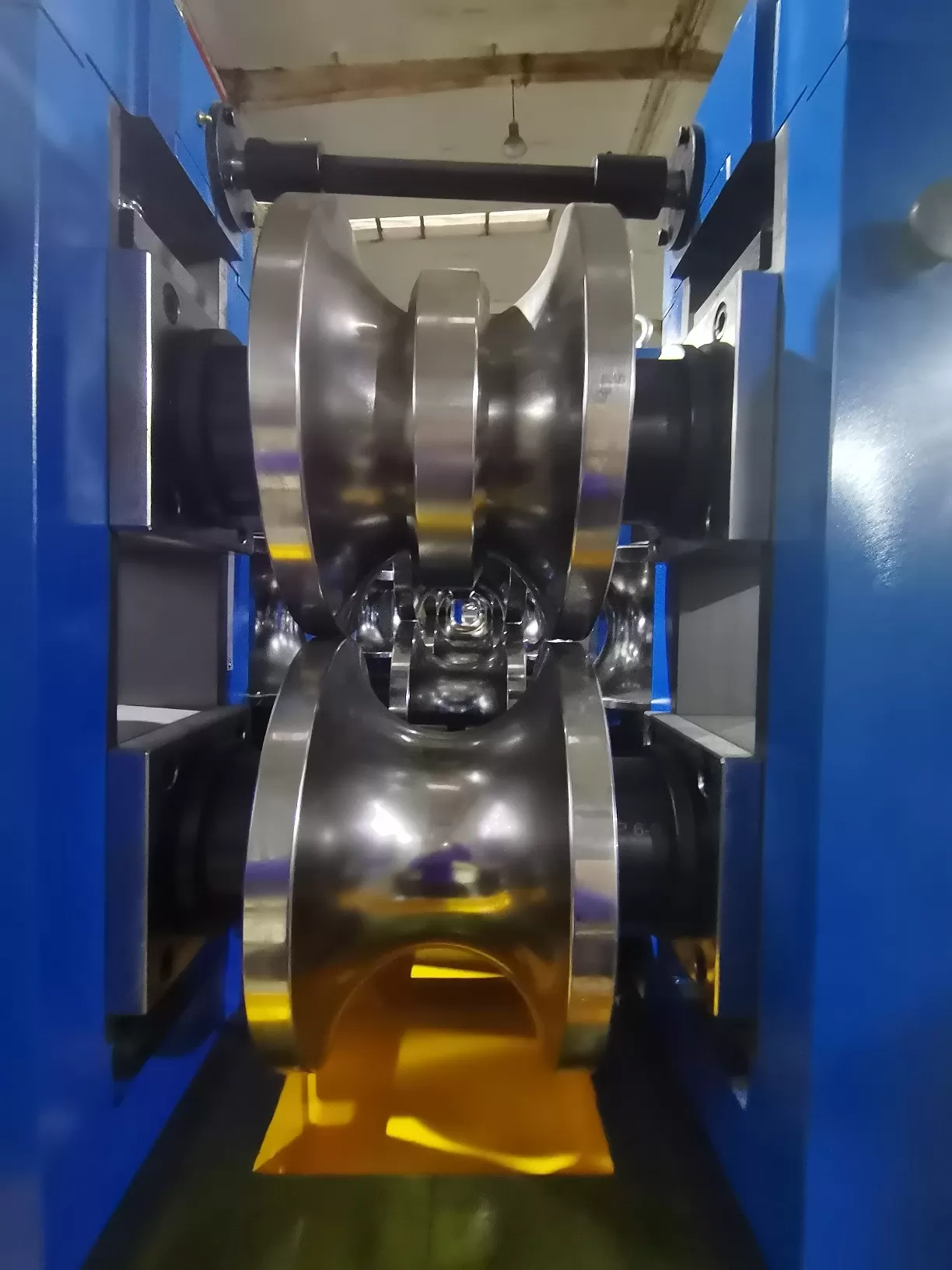
After welding and scarfing, the tube passes through sizing stands (usually
4-6 pairs of horizontal and vertical rolls) that calibrate OD and roundness.
Critical design aspects:
Turks head adjustment: Independent horizontal and vertical
roll movements with micrometer dials (0.01mm resolution). Allows correction of
ovality down to ±0.1% of OD.
Sizing roll material: Through-hardened D2 steel (58-60 HRC)
for carbon steel; for stainless tubing, specify Teflon-coated rolls to prevent
galling.
Straightening rolls: Two-plane roller straightener with
adjustable pitch reduces tube bow to 0.5mm per meter length. Verify the
straightener can handle your material’s yield strength – for HSLA grades, roll
pressure must reach 30-40 kN.
A competent tube mill manufacturer will provide a tolerance
chart: expected OD variation, wall thickness eccentricity, and straightness
deviation across your production range.
5. Operational Challenges and Engineering Solutions from the Field
Experienced mill operators report recurring issues linked to initial machine
design. Below are field-derived solutions that a tube mill manufacturer should address
preemptively.
5.1 Weld Seam Off-Center (Longitudinal Seam Drift)
Root cause: Strip edge alignment error before the fin
passes, often due to worn entry guides or asymmetric roll load.
Solution: Install a weld seam tracking system – an eddy current
sensor after the weld box that detects seam position and adjusts the last fin
stand side rolls automatically. SANSO mills
integrate this as a closed-loop option, reducing scrap from seam drift by
80%.
5.2 Internal Burr (Roll-In) on Thick-Walled Tubes
Root cause: Excessive squeeze roll pressure or underpowered
impedor causing molten metal to flow inward. Solution: Use an
internal burr removal tool – a stationary mandrel with carbide cutting edge
placed immediately after weld point. Requires real-time force feedback to avoid
cutting into base metal.
5.3 Strip Edge Cracking During Forming (Edge Work Hardening)
Root cause: Forming rolls with sharp radii or excessive
lateral compression. Solution: Increase breakdown roll radii to
8-10x material thickness. Also, apply roll coolant with extreme pressure (EP)
additives to lower friction coefficient.
5.4 Rapid Tooling Wear on High-Strength Steel Lines
Root cause: Roll materials with insufficient hardness (below
55 HRC) or lack of surface coating. Solution: Specify CrN or
TiAlN PVD coating on forming rolls. Extends roll life from 500 tons to 2,500
tons for DP600 material.
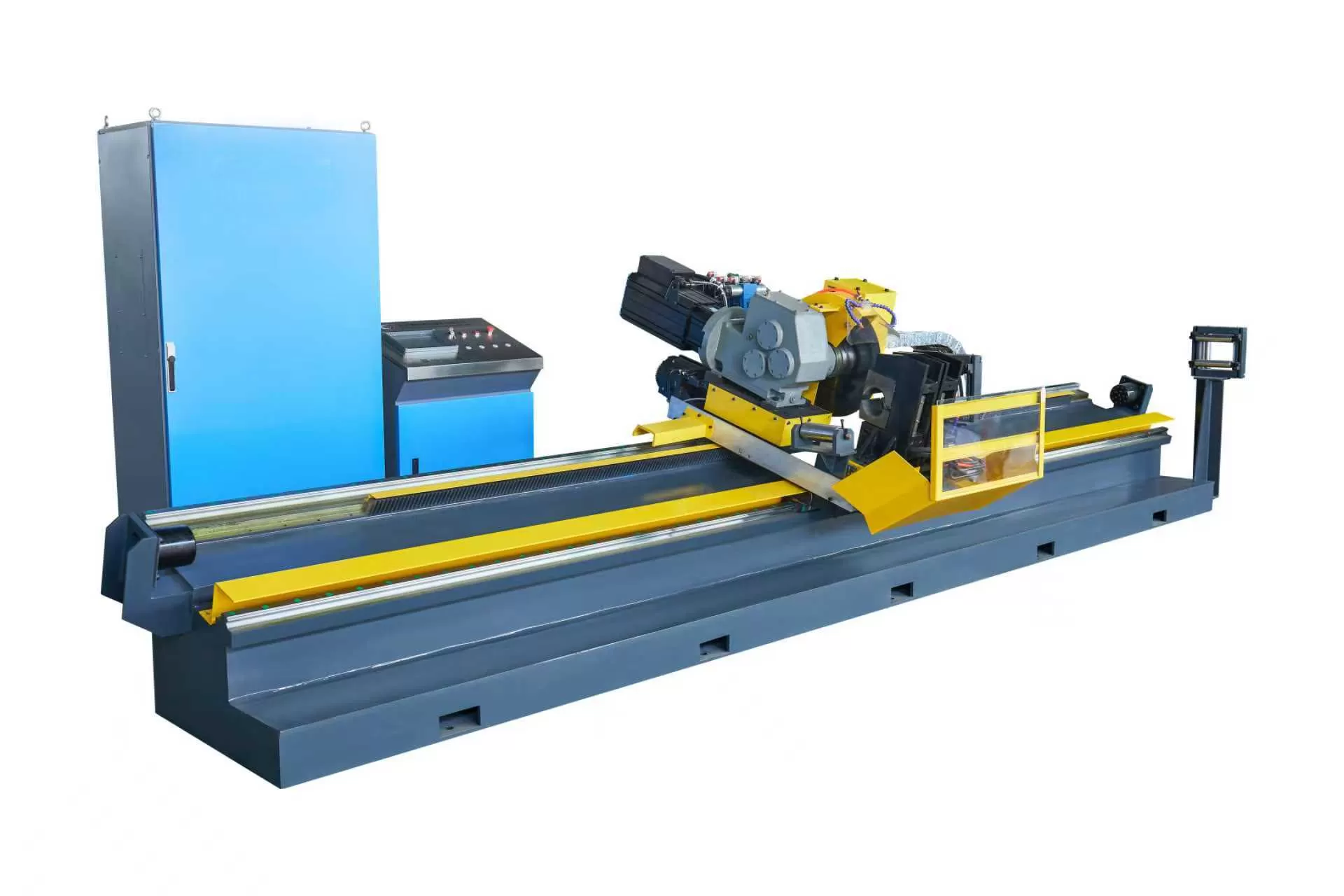
5.5 Tube Ovality After Cutting-to-Length
Root cause: Residual circumferential stress release when the
tube is cut. Solution: Implement a flying cut-off with a
rotating head that shears while the tube rotates. This distributes cutting
stress evenly, reducing ovality by 60% compared to static shears.
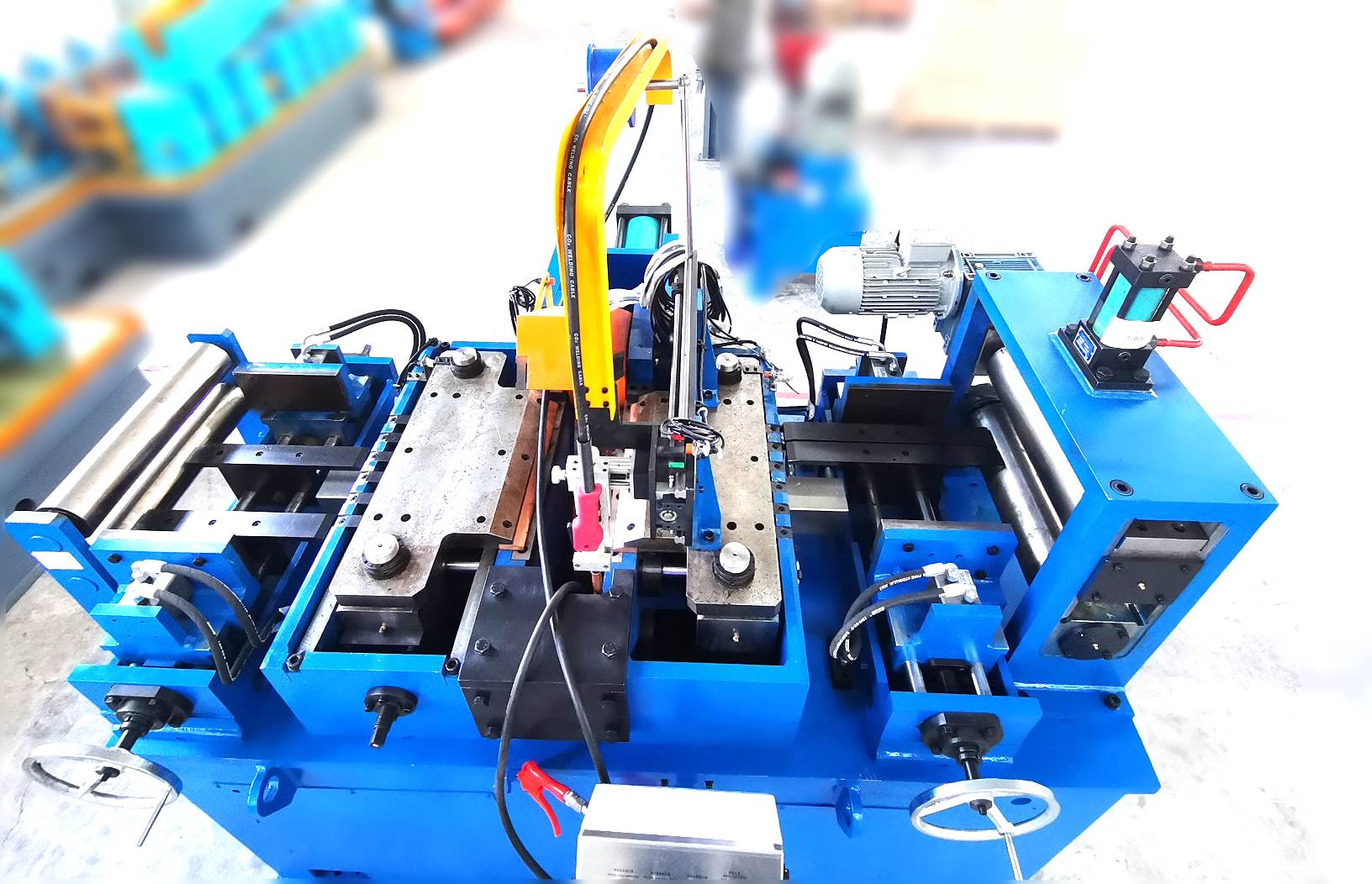
6. Automation Level and Data Integration for Traceability
Industry 4.0 requirements expect the tube mill manufacturer to provide standardized
communication interfaces. Key features:
PLC and HMI: Siemens S7-1500 or Rockwell CompactLogix with
recipe management for 500+ product setups. Touchscreen displays real-time weld
current, line speed, and accumulator fill status.
OD & wall ultrasonic gauges: Non-destructive testing
(NDT) stations before and after sizing. Data logged per meter and can trigger
automatic roll gap adjustment.
Edge weld defect detection: Infrared thermal imaging of the
weld zone; any temperature deviation >±15°C from baseline stops the line or
marks the defect.
MES connectivity: OPC UA server exports production
counters, tool wear data, and rejection reasons. Allows root cause analysis of
weld failures per coil batch.
When evaluating bids, request the typical data structure. Avoid suppliers
that offer proprietary lock-in systems without SQL database export
capability.
7. Mechanical Rigidity and Maintenance Access
Long-term mill reliability hinges on construction details often overlooked. A
transparent tube mill manufacturer will disclose the
following:
Base frame: Welded heavy-gauge steel box sections,
stress-relieved after fabrication. Specify minimum 40mm thickness for housings
on stands.
Drive system: AC vector motors with independent drives for
each forming section (breakdown, fin, sizing). Avoid single-motor mechanical
lineshafts – they cause torsional vibration that marks the tube surface.
Lubrication: Centralized automatic grease system for all
roll bearings. Manual lubrication points inevitably get skipped, leading to
bearing seizure within 12 months.
Quick-change tooling: Cartridge-style roll cassettes that
can be pre-assembled offline. Changeover time under 40 minutes for diameters
25-114mm.
SANSO provides 3D maintenance simulations showing
access space for roll replacement and bearing inspection – a useful benchmark
for comparison.
8. Material Range Capability: From Thin-Wall HVAC to Heavy Structural
One mill cannot economically cover all thicknesses. Specify your target
envelope and verify the tube mill manufacturer offers variant designs:
Light-gauge mills (0.4-2.0mm): Lower inertia rolls
(aluminum or composite), stand spacing 450-600mm, maximum forming speed 120
m/min. Used for furniture tube, automotive exhaust.
Medium-range mills (1.5-6.0mm): Cast iron stands, 800mm
spacing, 60 m/min. Suited for structural square tube, line pipe.
Heavy-duty mills (5.0-12.7mm): Hydraulic assisted roll
adjustment, reinforced arbors, speed 20-30 m/min. For oil country tubular goods
(OCTG) and piling tube.
Request the mill’s rigidity modulus (kN per mm deflection). For a given wall
thickness, a mill with higher rigidity allows tighter forming tolerances without
springback compensation.
Frequently Asked Questions (FAQ) on Tube Mill Manufacturer Selection
Q1: What technical documentation should a tube mill manufacturer
provide before purchase?
A1: At minimum: general
arrangement drawing with foundation loads, power consumption per drive motor,
forming flower pattern drawings for three reference diameters, weld power
requirement curve vs. material thickness, and a list of all rolling elements
with material specifications. Additionally, request a FAT (factory acceptance
test) protocol showing runout measurements of all roll shafts.
Q2: How does the tube mill manufacturer handle weld seam annealing
for high-frequency welded tubes?
A2: Post-weld
annealing uses a transverse induction coil placed 100-200mm after the weld box.
The tube mill manufacturer must size the coil to heat
the HAZ to 650-750°C (for carbon steel) without overheating the base tube. Ask
for temperature profile validation using thermocouples embedded in sample tubes.
Without proper annealing, the weld zone remains brittle and fails flare
tests.
Q3: Can a single tube mill be reconfigured later to produce larger
diameters?
A3: Limited. Most mills allow diameter
increase by 20-30% by adding spacer blocks to roll stands, but beyond that you
need new forming sections. A flexible tube mill manufacturer offers modular stands that
can be relocated along the base frame – this allows future expansion from, say,
114mm max to 165mm max by adding 2-3 breakdown stands. However, the weld box and
sizing section must be replaced entirely. Plan capacity needs for 5 years
ahead.
Q4: What is the typical effect of strip edge geometry (sheared vs.
slit) on mill performance?
A4: Slit edges (from a
tube mill manufacturer's upstream slitter) produce
a work-hardened burr that can cause erratic weld current. Sheared edges (from
cut-to-length lines) are cleaner but may have tighter radius on one side.
Optimal is a precision trimmed edge with 0.03-0.06mm burr, ground or milled.
Specify that your mill supplier includes an edge trimming station before the
accumulator to ensure consistent weld quality.
Q5: How to verify the tube mill manufacturer’s post-sale support
without relying on references?
A5: Request a copy
of their spare part catalog with lead times. Check if they stock critical
components (impeder cores, weld roll bearings, drive belts) locally. Also ask
for remote diagnostic capability – do they offer VPN access to the mill’s PLC
for troubleshooting? A supplier with 24/7 hotline and guaranteed 48-hour
dispatch of emergency parts demonstrates commitment. Do not rely on marketing
claims; ask for a service level agreement draft.
Q6: What is the role of strip edge alignment sensors in reducing weld
seam defects?
A6: Before the weld box, a pair of
ultrasonic or laser sensors detects the gap between strip edges. Any mismatch
>0.1mm across the thickness triggers hydraulic correction of the last fin
stand. Mills without this feature rely on operator visual inspection, which
typically misses 70% of edge misalignments. A reputable tube mill manufacturer will include this as
standard, not an option, for tubes below 100mm diameter.
Q7: How are cooling and lubrication systems designed for high-speed
tube mills?
A7: For mills operating above 60 m/min,
recirculating coolant is sprayed on forming rolls and the weld area. The tube mill manufacturer must design chip filters
(50μm absolute) and coolant temperature control (±2°C). Inadequate cooling leads
to roll galling and weld porosity due to steam formation. Specify a closed-loop
system with flow meters per spray nozzle – any blockage triggers an alarm.
Choosing the right tube mill manufacturer requires a detailed
technical alignment of forming strategies, weld energy control, and automation
integration. SANSO provides engineered solutions based on your
exact material spectrum and production targets. Send your inquiry with target
tube dimensions, weekly tonnage, and material grades to receive a customized
line proposal, including 3D simulation reports and a preliminary GA drawing.
Submit your technical requirements now:
Email: info@sansohftubemill.com
Online form: https://www.sansotubemill.com/contact.html
Request a
remote engineering consultation – include your line layout sketch for a faster
response. Average reply time: 12 business hours.