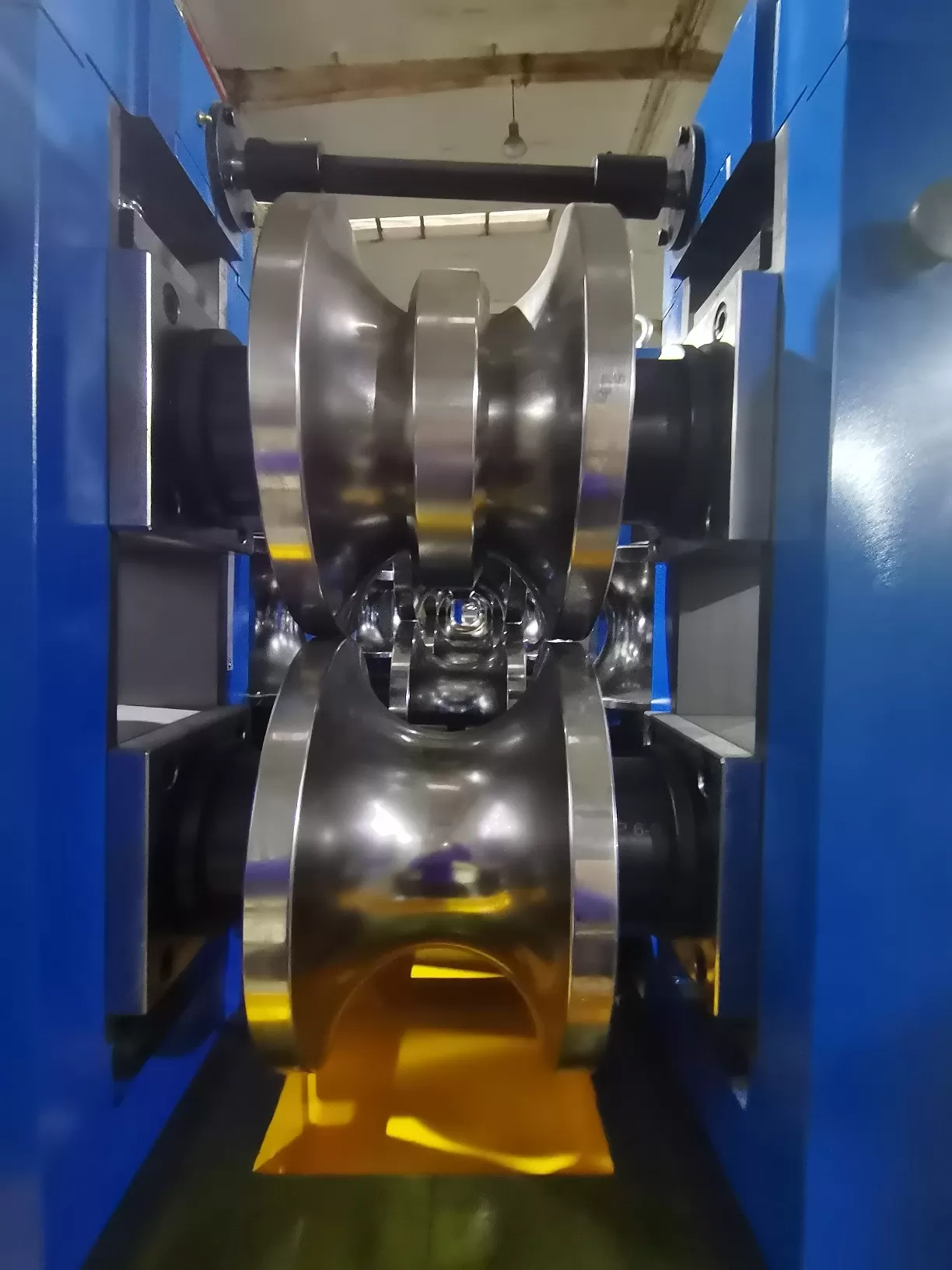
In welded tube and pipe production, the quality of the feed
material—specifically the flat strip cut from master coils—directly influences
final weld integrity, dimensional consistency, and overall yield. A
high-performance cut to length line machine is not merely a shearing
station; it is the gatekeeper of precision, managing coil decoiling, flattening,
measuring, and cutting with repeatable tolerances below ±0.3 mm. For fabrication
plants aiming to reduce scrap, lower inventory costs, and improve downstream
forming stability, mastering this equipment’s engineering principles becomes a
strategic advantage. This article examines core mechanics, common processing
defects, and integration tactics, drawing on field data from heavy-duty
installations, including systems provided by SANSO, a
specialist in synchronization of cut-to-length lines with high-frequency welded
tube mills.
1. Core Architecture and Material Flow of a Cut to Length Line Machine
Before analyzing optimization techniques, it is necessary to understand the
main stations of a typical cut to length
line machine configured for pipe mill feed. The line converts a
loosely wound master coil into accurately sized blanks, ready for edge
preparation and roll forming. The sequence includes:
Hydraulic decoiler (uncoiler): Handles coil IDs from
450–610 mm, with expansion mandrels and constant tension control to prevent
telescoping. For heavy-gauge strips (up to 8 mm thickness), a double-cone
decoiler is often used.
Pinch & straightener unit: A set of multi-roller
levellers (typically 7–11 work rollers) that removes coil curvature, wavy edges,
and residual stresses. The straightener gap is adjusted via hydraulic cylinders,
with a typical flattening tolerance ≤ 1 mm/m².
Loop pit or free-loop control: Accumulates enough strip to
allow the shear mechanism to operate without stopping the decoiler, ensuring
continuous production at speeds up to 80 m/min.
Servo-driven feeding rolls: High-accuracy
encoder-controlled rolls that precisely advance the strip to the preset length.
Feedback resolutions down to 0.01 mm are available on modern servo systems.
Flying shear / high-speed cutoff: Two main types: (a)
stop-start shear for thicker plates (>6 mm) and (b) rotary flying shear for
thin-gauge (0.3–4 mm) high-cycle cutting. The shear blade clearance is
adjustable from 5% to 10% of strip thickness to minimize burr.
Runout conveyor + stacking station: Automatic
cross-transfer stacking with programmable counting ensures leveled bundles are
prepared for the tube mill infeed.
When any stage misaligns—especially the leveller or feed roll calibration—the
result is length variation, edge burr exceeding 0.2 mm, or surface marks that
compromise welding. Hence, the cut to length
line machine requires systematic certification of each module, a
principle applied in SANSO’s integrated lines where real-time thickness feedback
adjusts straightener pressure automatically.
2. Technical Deep Dive: Precision Factors in Flying Shear Systems
For pipe mills processing coils of HR, CR, GI, or stainless steel (grades
304, 316L, 430), the cutting method dictates edge squareness and deformation.
Below are critical performance levers and industry benchmarks:
Shear type vs. material: Rotary flying shears (with two
rotating drums) are preferred for thin gauges ≤3 mm at line speeds >60 m/min
because the blade matches strip speed, eliminating impact marks. Stop-and-start
shears are used for thicker, high-strength materials (e.g., API 5L X65) where
inertia control is crucial.
Blade geometry and clearance: Optimal clearance is
0.08–0.12 mm per mm thickness. Excessive clearance creates rolled-over edges;
insufficient clearance leads to secondary shear cracks. Regular hardness testing
(HRC 58–62) is required every 300 operating hours.
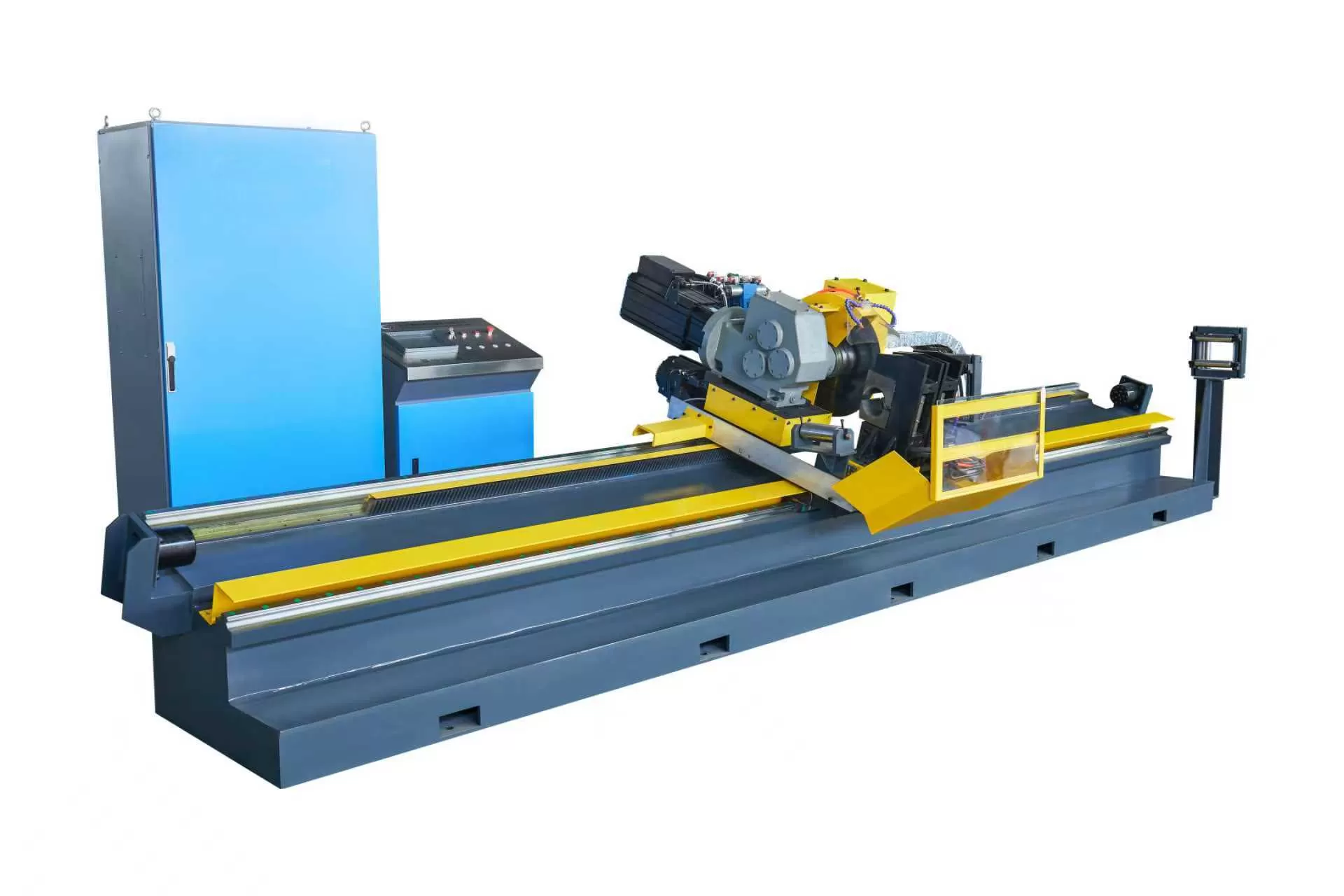
Length tolerance & statistical control: A modern
cut-to-length line can maintain ±0.3 mm for lengths up to 8 m when using
dual-servo feeding. For high-frequency tube mills producing 25.4 mm OD pipe,
this translates to stable forming without staggered edges.
Dynamic inertia compensation: During
acceleration/deceleration of the feeding rolls, the predictive control algorithm
adjusts the cutoff position, preventing “ghost pulses.” SANSO’s control platform
includes adaptive inertia mapping for coils of varying widths and
densities.
Real-world case: a welded tube plant in Southeast Asia replaced an old
eccentric shear with a servo-driven cut-to-length line, reducing blank length
deviation from +1.2 mm to ±0.2 mm, and scrap from 3.1% to 0.7% within two
months. This directly increased tube mill utilization by 8%.
3. Addressing Six Industry Pain Points with Advanced Cut-to-Length
Engineering
Even well-specified lines face recurring production hurdles. Below are
typical coil processing failures and engineering solutions verified in pipe mill
environments.
3.1 Coil memory and camber after straightening
Problem: Residual stress from slitting or pickling causes
the strip to curve laterally (camber > 3 mm/2 m), leading to misalignment in
forming rolls.
Solution: Add a roller leveler with
intermediate anti-camber rolls (adjustable tilt angle) and online edge-trimming
sensors. The cut to length line machine must include a breakout straightener
with individually adjustable top rolls.
3.2 Length variation due to feed roll slippage
Problem: Oily or coated strips reduce friction, causing
slippage during high acceleration.
Solution: Install pinch
rolls with tungsten carbide coating (Ra 1.6–2.0 µm) and independent pressure
control. Using an encoder on both upper and lower rolls detects slip in real
time, triggering setpoint correction.
3.3 Micro-burr affecting weld penetration
Problem: Burr > 0.1 mm on sheared edges prevents proper
edge closure during high-frequency (HF) welding, creating
porosity.
Solution: Apply a patented shear with angled
blades (1–2 degrees) and an in-line deburring station using rotating carbide
brushes. Many SANSO lines integrate a deburring module before the exit conveyor,
reducing post-cut finishing costs.
3.4 Strip scratching on runout tables
Problem: Surface-sensitive materials (e.g., pre-coated or
polished stainless) get scratched by conventional slat
conveyors.
Solution: Use a belt-driven conveyor with nylon
mats or air-flotation tables for non-contact movement. Additionally, set a
programmable magnetic stacking lift to lower blanks gently.
3.5 Tooling changeover downtime
Problem: Switching between different strip widths or
thicknesses takes >45 minutes, reducing overall equipment effectiveness
(OEE).
Solution: Implement quick-release cassettes for shear
blades and automated width adjustment for entry guides. A servo-driven
cut
to length line machine can reduce changeover to under 12 minutes,
significantly boosting job flexibility.
3.6 Shear dust contamination near welding zone
Problem: Fine metallic dust from cutting migrates to the
tube mill, causing pitting and electrode damage.
Solution: Install a central vacuum extraction hood right above the shear blade exit, with
a dust collection efficiency of 99.5% for particles > 5 µm.
4. Performance Metrics and Selection Roadmap for Welded Pipe Operations
Selecting the correct cut-to-length line for a tube mill is often
misinterpreted as just checking max thickness. Experienced engineers evaluate
five additional parameters to future-proof the investment.
Maximum yield strength (MPa): A line rated for 600 MPa
cannot reliably shear 800 MPa dual-phase steel. The shear force requirement
increases linearly; oversizing by 25% is a safe engineering margin.
Cut length range vs. mill cycle: For tube mills producing 6
m lengths, the cut-to-length line must process at least 12–15 blanks per minute
to avoid starving the forming section. Calculate required strokes/min = (line
speed / blank length) × 1.2 (buffer factor).
Stacking precision for automatic infeed: The stacking
station must align blanks within ±2 mm lateral and ±1 mm front stop to enable
robotic or magnetic feeding to the tube mill edge trimmer. Vibratory alignment
tables are an add-on but highly recommended.
Integration with edge milling/beveling: If your tube
process includes strip edge planing for thick-wall pipes, the cut-to-length line
should have extra space for an in-line edge milling unit before stacking. Some
SANSO platforms include modular docking for edge bevelers.
Automation level (PLC & SCADA): Recipe management
(e.g., storing 500 material grades) with remote diagnostics reduces human error.
Ensure the controller supports OPC UA for integration with your MES.
For standard carbon steel tubes (ERW, ½” to 8”), a 6 mm x 1600 mm width
cut-to-length line with flying shear and servo feed covers most demands. But for
stainless or special alloys, a non-marking pinch roll and increased shear force
are mandatory. Conducting a process FMEA with the manufacturer ensures the line
matches your specific coil catalogue.
5. Workflow Integration: Merging Cut-to-Length Lines with High-Speed Tube
Mills
When a cut to length line machine directly feeds a tube mill,
physical layout and control synchronization become as important as the hardware.
Two common configurations exist: inline (direct feed) and offline
(cut-and-stack). Most modern plants prefer inline for continuous, high-volume
production while maintaining a small buffer magazine.
Inline synchronous mode: The cut-to-length line’s exit
conveyor is positioned just before the tube mill’s edge trimming/drive section.
The master PLC coordinates the speed of both systems. When the tube mill demands
a new blank, the cut-to-length line sends the next pre-cut blank into the feed
rolls. Advantages include zero intermediate storage and minimal handling damage.
However, any downtime in the shear unit stops the whole process.
Buffer magazine mode: A shuttle stacker places 10–20 blanks
onto a walking beam conveyor between the cut-to-length line and the tube mill.
The shear unit can continue production even during short tube mill stoppages
(e.g., diameter change). This decoupling reduces interruptions by up to 70% in
multi-shift operations. SANSO’s integrated package includes both stacker and
destacker modules with heavy-duty chain conveyors to suit 24/7 pipe
production.
An important consideration: when the pipe size changes (OD or gauge), the
blank width and thickness also change. The cut-to-length line operator must
recall the proper recipe from the HMI, and the tube mill forming rolls should be
adjusted in parallel. A centralized recipe database with QR code scanning of
coil IDs significantly reduces setup errors. For example, a South Korean pipe
manufacturer reduced changeover-related rejects by 53% after linking their SANSO
cut-to-length line with the tube mill’s Allen-Bradley control system.
6. Maintenance Protocols and Safety Systems for Long-Term Reliability
To maintain length precision below 0.5 mm over decades of operation, plant
engineers must implement structured maintenance intervals. Below are the key
actions based on historical data from 47 tube mills across Europe and Asia:
Blade rotation and regrinding: Every 200–400 tons of
processed material depending on steel grade. Keep two sets of backup blades to
reduce downtime. Edge roughness should be ≤Ra 1.6 µm after regrind.
Feeding roll wear inspection: Use a dial gauge to measure
roll runout every 800 operating hours. Replace if runout exceeds 0.05 mm,
otherwise strip slippage increases length variation.
Lubrication of linear guides & shear slideways: Automated grease lubrication systems with high-load EP2 grease, set to pulse
every 4 hours each for 2 seconds.
Straightener roll calibration: After any heavy impact or
jamming, perform a parallelism check with a laser alignment tool. Misalignment
>0.1 mm/m results in strip twist.
Safety light curtains and emergency stops: Every
cut-to-length line must have two independent E-stop circuits on both operator
sides. Additionally, a torque limiter on the shear flywheel prevents
catastrophic failure when an oversize strip enters.
A documented CMMS (computerized maintenance management system) that triggers
alerts based on actual load cycles—instead of calendar days—boosts blade life by
18% on average. Several SANSO clients use the built-in IoT module to send
real-time shear force data to the cloud, enabling predictive blade replacement
before quality drifts.
7. SANSO’s Engineering Approach: Tailored Cut-to-Length Solutions for Welded
Tube Mills
With over two decades of experience in synchronizing coil processing
equipment with high-frequency, ERW, and stainless tube mills, SANSO provides
fully customized cut-to-length lines that prioritize process stability and
conversion cost reduction. Their design philosophy centers on three pillars:
precision mechanics, adaptive automation, and service support for severe duty
cycles. For a recent 3” tube line in the Middle East, SANSO integrated a flying
shear cut-to-length machine capable of managing 6 mm x 1250 mm hot-rolled coils
at 45 strokes/min while maintaining length tolerance of ±0.25 mm. The line
reduced scrap by 2.8% and allowed just-in-time blank feeding directly into the
forming section.
Engineers at SANSO often emphasize that a cut to length
line machine is not a commodity; the correct sizing of the
straightener, selection of shear kinematics, and control logic mapping to the
tube mill recipe are what differentiate uptime of 95% vs. 78%. The company’s
modular product range includes light-gauge lines (0.3–3 mm), medium-duty (3–8
mm), and heavy plate cut-to-length systems (8–20 mm) for structural pipe mills.
Every line comes with a remote diagnostic portal, emergency spare parts kit, and
on-site commissioning by field engineers.
Frequently Asked Questions (FAQ)
Q1: What is the typical tolerance achievable with a modern cut to
length line machine for tube mill feed?
A1: For
line speeds up to 80 m/min and lengths between 1 m and 12 m, industry-leading
systems (including SANSO’s servo-driven lines) maintain length tolerance of ±0.3
mm for thicknesses under 6 mm. For high-strength steel (>600 MPa), expect
±0.5 mm. Tight tolerances require proper blade condition and encoder feedback
resolution of at least 0.05 mm per pulse.
Q2: How does a flying shear differ from a stop-and-start shear for
cut-to-length applications?
A2: Flying shear moves
with the strip during cutting, eliminating the need to stop the line. It is
ideal for high-speed processing (up to 120 cuts/min) of thin gauges (0.3–4 mm).
Stop-and-start shear requires the strip to halt completely before cutting; it
provides cleaner edges on thick plates (6–20 mm) but reduces throughput. For
tube mills that frequently change gauge, a flying shear with adjustable blade
speed is more versatile.
Q3: Can a cut to length line machine handle both stainless steel and
galvanized coils without cross-contamination?
A3: Yes, but with precautions. Stainless requires non-marking rolls (polyurethane or
hard chrome) to avoid galling; galvanized coils need soft contact surfaces to
prevent zinc flaking. A dedicated set of pinch rolls and straightener covers
should be used for each material family. High-end lines feature quick-exchange
roll cassettes, allowing changeover in under 30 minutes.
Q4: What is the average ROI period for replacing an obsolete
shear-based line with a servo-driven cut to length line
machine?
A4: Based on data from 22 pipe mills, ROI
ranges from 12 to 24 months. Savings come from three sources: (1) reduction in
scrap from 2–4% down to <0.8%, (2) decreased labor costs due to automation,
and (3) energy savings of up to 20% with direct servo drives. Higher throughput
also contributes when the cut-to-length line no longer becomes a bottleneck for
the tube mill.
Q5: How to integrate a cut-to-length line with an existing tube mill
that uses a manual loading station?
A5: The
simplest method is to add a powered conveyor and a destacker that automatically
feeds the edge trimmer. The cut-to-length line’s exit must align with the mill’s
entry axis within ±3 mm. You will need a synchronization controller (PLC) that
exchanges “blank ready” and “mill demand” signals. Many retrofits are complete
within 5 days with assistance from manufacturers like SANSO, including all
mechanical interfaces and safety guarding.
Q6: Is in-line stacking with automatic counting necessary for small
tube sizes (OD < 50 mm)?
A6: Yes, especially for
high-volume production. Without automatic counting and organized stacking,
operators often miscount blanks, leading to production shortfalls or excess
inventory. A programmable stacking station can form batches of 50–500 blanks
with end stops and side aligning systems, improving downstream loading
efficiency by 35%.
Ready to optimize your coil-to-tube workflow? Our
engineering team provides detailed process audits, performance simulations, and
customized proposals for cut-to-length lines integrated with your existing
welded tube mill. Submit your coil specifications (material grade, width range,
thickness, yield strength) and desired output rate to receive a comprehensive
ROI analysis and technical layout drawing.
Contact SANSO’s industrial solutions group now to discuss your
project requirements or request a live cut-to-length line demonstration via
remote connection. Get a fast quote and engineering consultation:
Send your inquiry to the sales engineering department —
include your line speed goals, material types, and target length tolerance. Our
experts will respond within 24 hours with validated proposals and reference case
studies in the welded pipe sector.