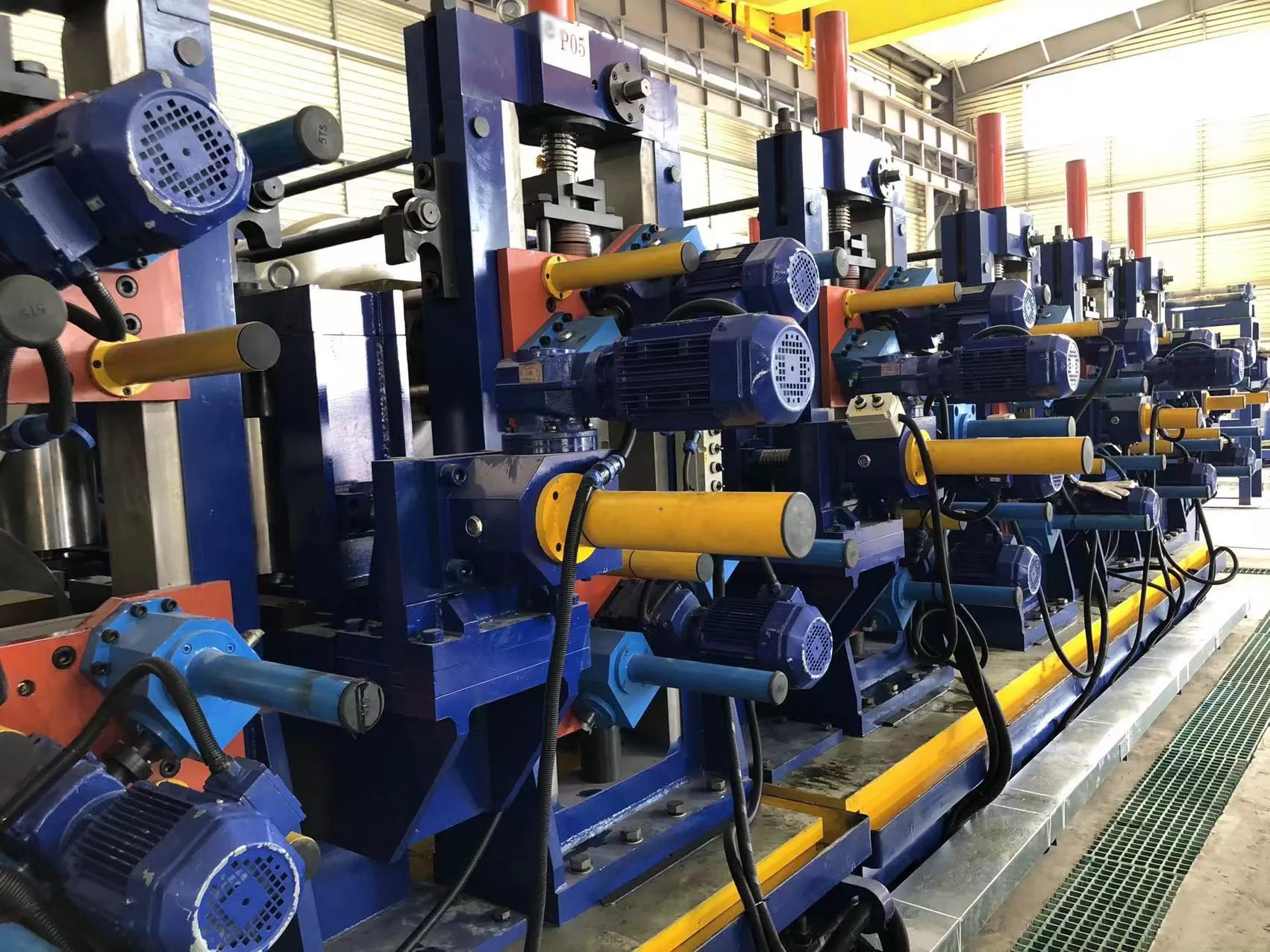
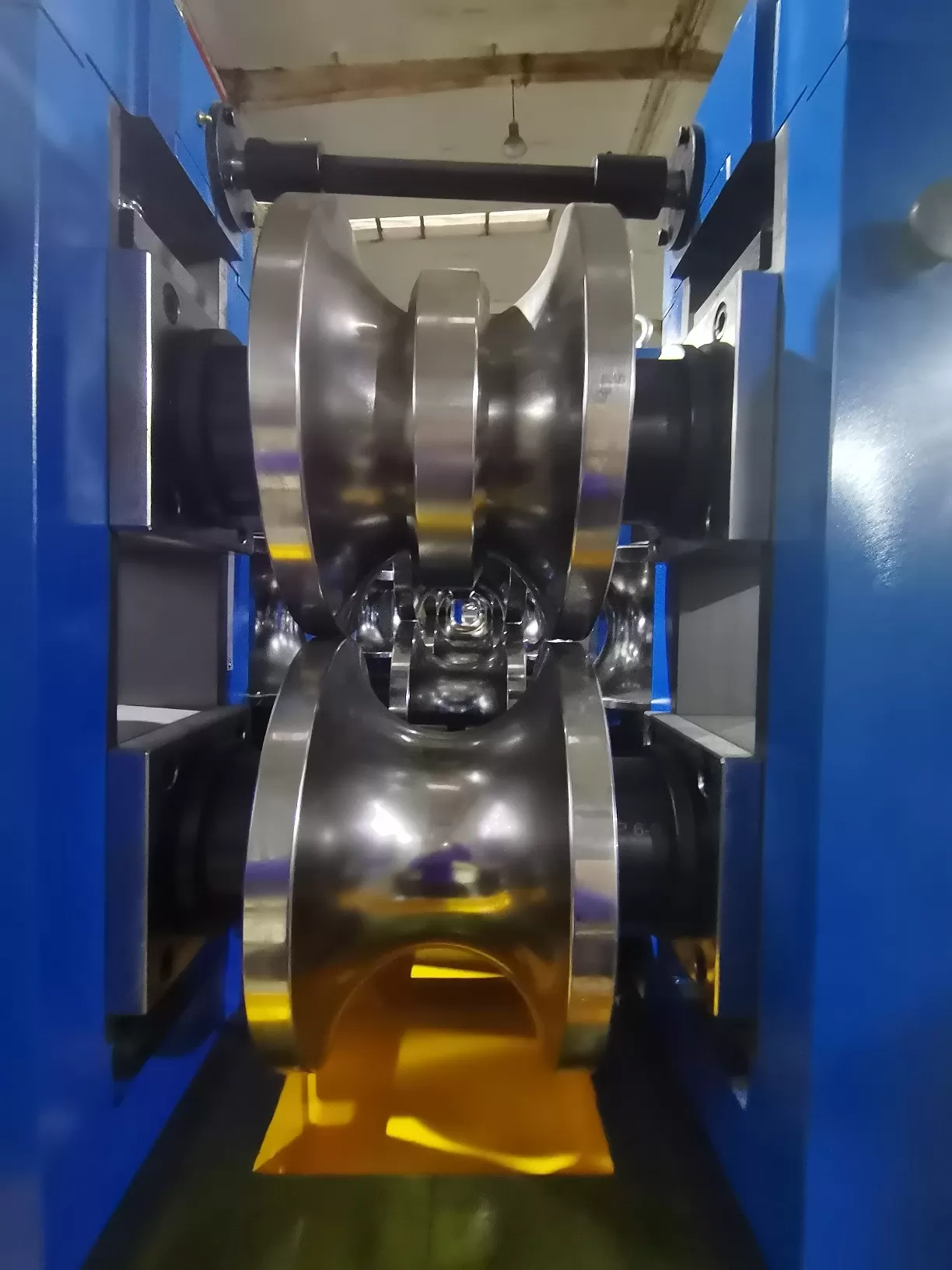
For welded tube and pipe producers, the cut-off station represents a
recurring cost and quality bottleneck. A properly selected hss cutting blade directly
influences burr height, cut squareness, and production uptime. This guide
consolidates data from over 120 mill installations, examining substrate grades,
edge preparation methods, and operating parameters that separate optimized
cutting from premature blade failure.
1. Metallurgical Grades for HSS Cutting Blades: Matching Substrate to Tube
Material
The term hss cutting blade encompasses several high-speed steel
families. Choosing the wrong grade accelerates wear or causes catastrophic
chipping. Below are the three dominant specifications for tube mill
applications.
M2 (tungsten-molybdenum) – Hardness 62–64 HRC. Sufficient
for carbon steel tubes (St37, St52) up to 3 mm wall thickness at line speeds
below 25 m/min. Provides good toughness for flying cut-off systems with moderate
alignment precision.
M42 (cobalt-enhanced) – 8% cobalt, hardness 66–68 HRC.
Maintains cutting edge temperature up to 650°C. Recommended for stainless steel
tubes (304, 316), Inconel, or high-strength low-alloy (HSLA) materials. Users
report 40–60% longer blade life compared to M2 when cutting abrasion-resistant
steels.
Powder metallurgy HSS (ASP 2052 / ASP 2060) – Uniform
carbide distribution eliminates segregation. Ideal for heavy-wall tubes (>5
mm) or when blade diameter exceeds 450 mm. The fine microstructure allows
sharper edges without micro-chipping.
SANSO supplies
spectrograph-certified hss cutting blade blanks with hardness gradient verified from
tooth tip to arbor bore, ensuring consistent performance across multiple
regrinds.
2. Tooth Geometry Parameters That Control Burr Formation
Burr height on the cut tube end is a primary rejection reason in automotive
and hydraulic applications. Geometry adjustments to the hss cutting blade can reduce burr
below 0.1 mm without secondary operations.
Radial rake angle – Positive rake (+6° to +10°) lowers
cutting force for thin-wall tubes (0.8–2 mm). Negative rake (-2° to -4°)
strengthens the tooth for structural pipes (>4 mm) but increases power
consumption by 15–20%.
Primary clearance angle – Typical range 6°–9°. Insufficient
clearance (below 5°) generates friction heat, leading to workpiece adhesion
(built-up edge). Excessive clearance (over 12%) weakens the tooth support and
promotes chipping at the cutting edge.
Side relief angles (axial clearance) – Mandatory for square
and rectangular tubes. Minimum 2° per side prevents flank contact with the tube
corners. For round tubes, 1°–1.5° is sufficient.
Tooth pitch selection – Fine pitch (8–12 teeth per inch)
for thin-wall conduit (1–2 mm) to ensure multiple teeth engage simultaneously.
Coarse pitch (2–4 teeth per inch) for large diameters (>150 mm) to avoid chip
packing in the gullets.
Modern CNC grinding allows the integration of chip breaker notches and
micro-bevel edge preparation on the hss cutting blade. Field tests on
ERW tubes show a 50% reduction in internal burr when a 0.03 mm micro-bevel is
applied.
3. Coating Technologies for HSS Cutting Blades: TiN, TiCN, and TiAlN
Compared
Uncoated HSS cutting blades work for short production runs. For continuous
mills, physical vapor deposition (PVD) coatings multiply blade life by reducing
friction and heat.
TiN (titanium nitride) – Gold color, hardness 2300 HV,
coefficient of friction 0.55. Improves blade life by 2–3× on carbon steel tubes.
Maximum operating temperature 600°C.
TiCN (titanium carbonitride) – Grey-violet, hardness 3000
HV, friction 0.40. Superior wear resistance for abrasive materials like
galvanized tubes or high-silicon steels. Life extension 3–5× over uncoated.
TiAlN (titanium aluminum nitride) – Bronze color, hardness
3300 HV, maintains protection up to 800°C. Recommended for stainless steel and
high-speed cutting (line speed >35 m/min). Users report 6–8× longer blade
life.
Coating thickness should stay between 2–4 µm. Thicker coatings (>6 µm)
increase edge rounding and reduce sharpness. SANSO offers pre-coated hss cutting blade options with edge
preparation matched to the coating type.
4. Industry Applications: Flying Cut-Off, Stationary Shears, and Slitting
Lines
The same physical blade performs differently depending on the cut-off
mechanism. Three common scenarios require distinct blade specifications.
Flying cut-off (synchronous) – Blade rotates with the
moving tube. Requires high toughness to withstand impact loads. Use M2 or M42
with fine pitch (10–14 TPI) and polished gullets to eject chips. Maximum
allowable radial runout: 0.03 mm.
Stationary cut-off (shear type) – Tube stops during
cutting. Allows higher blade rigidity. Recommended: M42 or PM-HSS with lower
clearance angles (5°–7°) for clean cuts on heavy-wall tubes (5–8 mm).
Slitting / longitudinal cutting – Narrow HSS cutting blades
(2–4 mm thick) split master coils into strips. Edge runout must stay under 0.015
mm to avoid strip edge waves. SANSO supplies matched slitter blade sets with
pre-ground spacers.
For high-frequency induction welded (HFIW) tubes, the
weld bead creates a localized hardness zone. Using a hss cutting blade with variable
tooth pitch prevents synchronized impact with the bead, reducing chipping by
70%.
5. Failure Analysis: Chipping, Flank Wear, and Built-Up Edge
Even premium blades fail when operating conditions drift. Diagnose the root
cause using these patterns.
Tooth tip micro-chipping (0.1–0.5 mm) – Caused by excessive
feed force or insufficient radial clearance. Solution: reduce feed rate by
10–15% and increase clearance angle by 1°–2°. Also verify tube straightness (max
1 mm/m).
Uniform flank wear exceeding 0.3 mm – Indicates normal
abrasive wear but at accelerated rate. Upgrade from M2 to M42 or apply a TiAlN
coating. Also check for insufficient lubrication (dry cutting of stainless
steel).
Built-up edge (BUE) – material welded to tooth face –
Occurs when cutting soft, sticky materials (low-carbon steel, aluminum).
Increase cutting speed by 20% or apply a TiCN coating with polished rake face.
Reduce feed rate to lower contact pressure.
Radial runout progression – If runout increases from
initial 0.02 mm to over 0.08 mm after a few regrinds, check arbor condition and
blade bore tolerance (H7 fit required). Bent arbors cause uneven tooth
loading.
Implement a blade tracking log: record regrind cycles, operational hours, and
observed failure mode. Mills using this method reduce blade cost per ton by
25–30%.
6. Selecting the Right HSS Cutting Blade: A 4-Step Calculation
Use this method to eliminate guesswork when ordering a new hss cutting blade for your tube
mill.
Step 1 – Blade diameter = (Tube OD × 2.5) + 50 mm (minimum
clearance). Example: 88.9 mm OD tube → 88.9×2.5 + 50 = 272 mm → choose standard
300 mm diameter.
Step 2 – Tooth count = (π × Diameter) / recommended chip
load per tooth. Chip load for mild steel: 0.04–0.08 mm/tooth; stainless:
0.02–0.05 mm/tooth. For a 300 mm blade cutting mild steel, target 60–80
teeth.
Step 3 – Blade thickness = Tube wall thickness + 1.5 mm
(clearance). For 2.5 mm wall → 4.0 mm thickness. Thicker blades resist
deflection but increase kerf loss.
Step 4 – Arbor fit – Keyed arbor for high-torque (>150
Nm). Friction drive with clamping flanges for precision applications to avoid
keyway stress cracks.
SANSO provides an online
selection tool correlating tube material, wall thickness, and mill speed to an
optimized hss cutting blade specification.
7. Regrinding and Maintenance Protocols to Maximize Blade Life
Regrinding accounts for 60–70% of a blade’s total lifecycle cost. Follow
these industrial standards.
Regrind interval – When flank wear reaches 0.2 mm or after
every 5,000–12,000 cuts (depending on material). Do not exceed 0.4 mm wear;
otherwise, heat during resharpening may soften the tooth substrate.
Grinding wheel – Use CBN (cubic boron nitride) wheels, grit
B151, concentration 150. Avoid aluminum oxide wheels; they generate excessive
heat and cause grinding burns.
Maximum regrinds – M2 blades: 8–12 regrinds; M42/PM: 12–18
regrinds. Measure tooth tip hardness after each regrind; discard if hardness
falls below 58 HRC.
Post-grinding edge honing – A 0.01–0.02 mm radius on the
cutting edge increases resistance to micro-chipping by 200% in interrupted cuts
(e.g., weld bead area).
Use a digital blade management system (QR code on each blade) to log regrind
cycles and operational hours. Mills following this protocol report 35% lower
blade expenditure per ton of tube.
Frequently Asked Questions (FAQ)
Q1: What is the difference between an HSS cutting blade and a
carbide-tipped blade for tube cut-off?
A1: An hss cutting blade is monolithic
high-speed steel. It offers higher toughness and lower cost per regrind.
Carbide-tipped blades last 5–10× longer but are brittle and expensive. Choose
HSS when: wall thickness < 4 mm, line speed > 30 m/min, or frequent blade
changes are acceptable. Choose carbide for >5 mm wall, highly abrasive
materials (galvanized, high-silicon), or when maximum uptime is the
priority.
Q2: How do I prevent weld bead damage to my HSS cutting
blade?
A2: The internal weld bead (flash) creates a
hard spot (up to 55 HRC). Solutions: (a) Install an in-line bead trimmer before
the cut-off, (b) Use a blade with variable tooth pitch to avoid synchronized
bead impact, (c) Apply a TiAlN coating to reduce friction, (d) Offset the blade
rotation angle by 5°–10° relative to the bead orientation. Some mills also use a
reduced tooth height configuration to minimize bead
contact.
Q3: What is the acceptable radial runout for a new HSS cutting
blade?
A3: For burr-free cutting of welded tubes,
radial runout must stay below 0.03 mm for blades up to 400 mm diameter, and
below 0.05 mm for larger diameters. Runout exceeding 0.08 mm causes uneven tooth
loading and chatter marks. SANSO supplies every blade with a laser-measured
runout certificate.
Q4: Can I dry-cut stainless steel tubes with an HSS cutting
blade?
A4: Dry cutting (no coolant) of stainless is
possible only with M42 or PM-HSS blades and TiAlN coating, and at low feed rates
(0.02–0.03 mm/tooth). However, for production mills, minimum quantity lubrication
(MQL) with vegetable-based oil at 5–15 ml/hour is strongly
recommended. MQL reduces built-up edge and extends blade life by 3–4× compared
to dry cutting.
Q5: How many regrinds can I expect from a high-quality HSS cutting
blade?
A5: For premium M42 or PM-HSS blades
reground professionally with CBN wheels: 12–18 regrinds. Each regrind removes
0.2–0.3 mm from the tooth tip. Replace the blade when the outer diameter has
been reduced by 8–10% of original size, or when hardness drops below 58 HRC on
the tooth flank. Using a cryogenic treatment (-196°C) before first use can
increase regrind count by 20%.
Q6: What feed rate should I use for a 300 mm HSS cutting blade on 3
mm wall tube?
A6: For carbon steel (St52), start at
0.06 mm/tooth feed. For a 72-tooth blade at 40 m/min line speed: feed rate =
0.06 × 72 × (40 / 60) = 2.88 mm/second (173 mm/min). Adjust downward by 15% if
burr exceeds 0.2 mm. For stainless steel, reduce to 0.03 mm/tooth. Always verify
using acoustic emission or power draw monitoring.
Request a Customized HSS Cutting Blade Quotation for Your Mill
Selecting the correct hss cutting blade geometry, metallurgy, coating, and regrind
schedule directly affects your tube mill’s overall equipment effectiveness
(OEE). SANSO provides application engineering, failure
analysis, and custom blade manufacturing to match your tube dimensions, material
grades, and production targets.
Send your mill parameters (tube OD, wall thickness, material grade, line
speed, cut-off mechanism, current blade life, and failure photos) for a
no-obligation blade recommendation and cost-per-cut projection.
Start your inquiry → https://www.sansotubemill.com/contact.html (or use the contact
form on our website). A SANSO technical engineer will respond within 24 hours
with a detailed proposal.