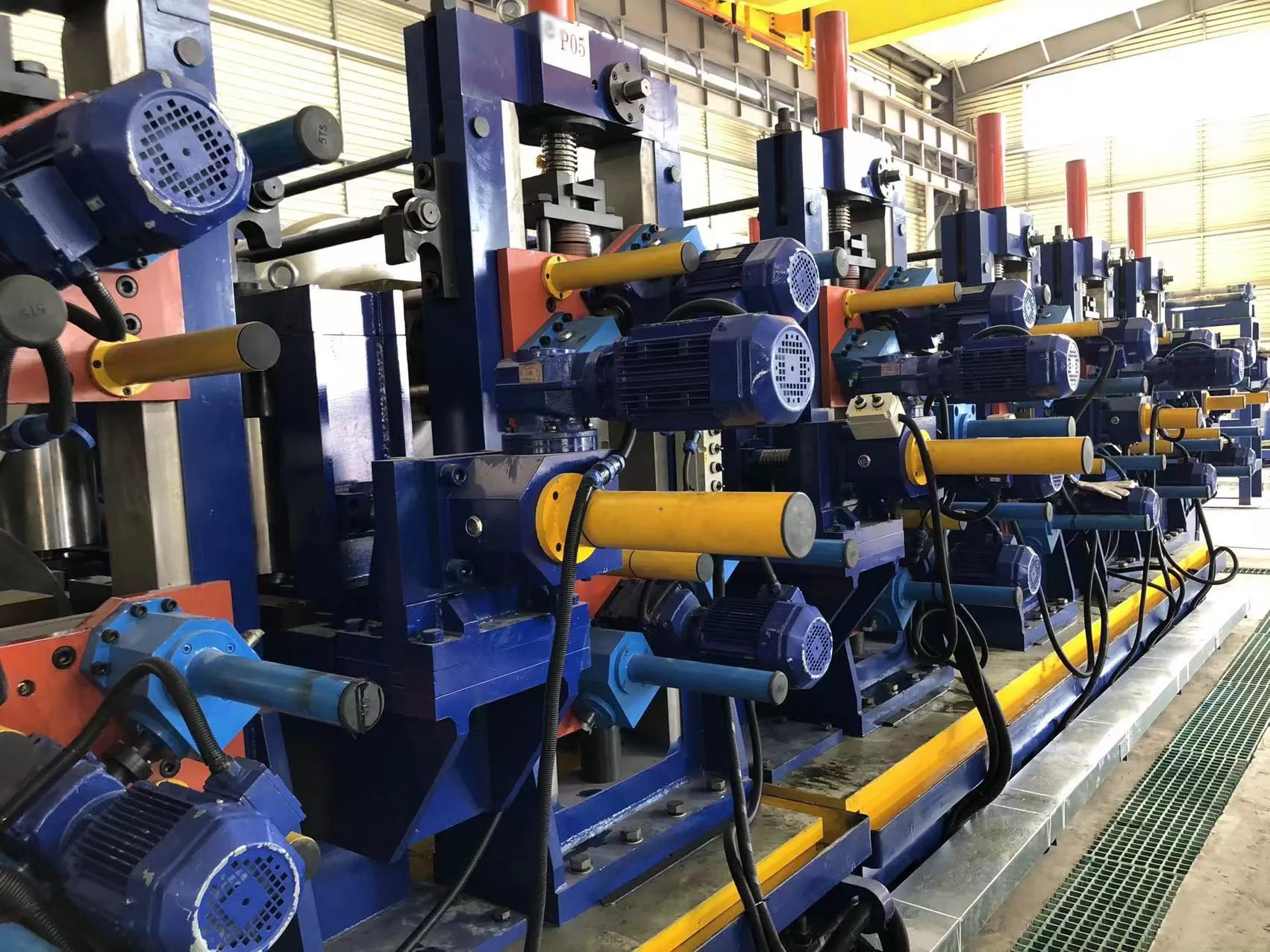
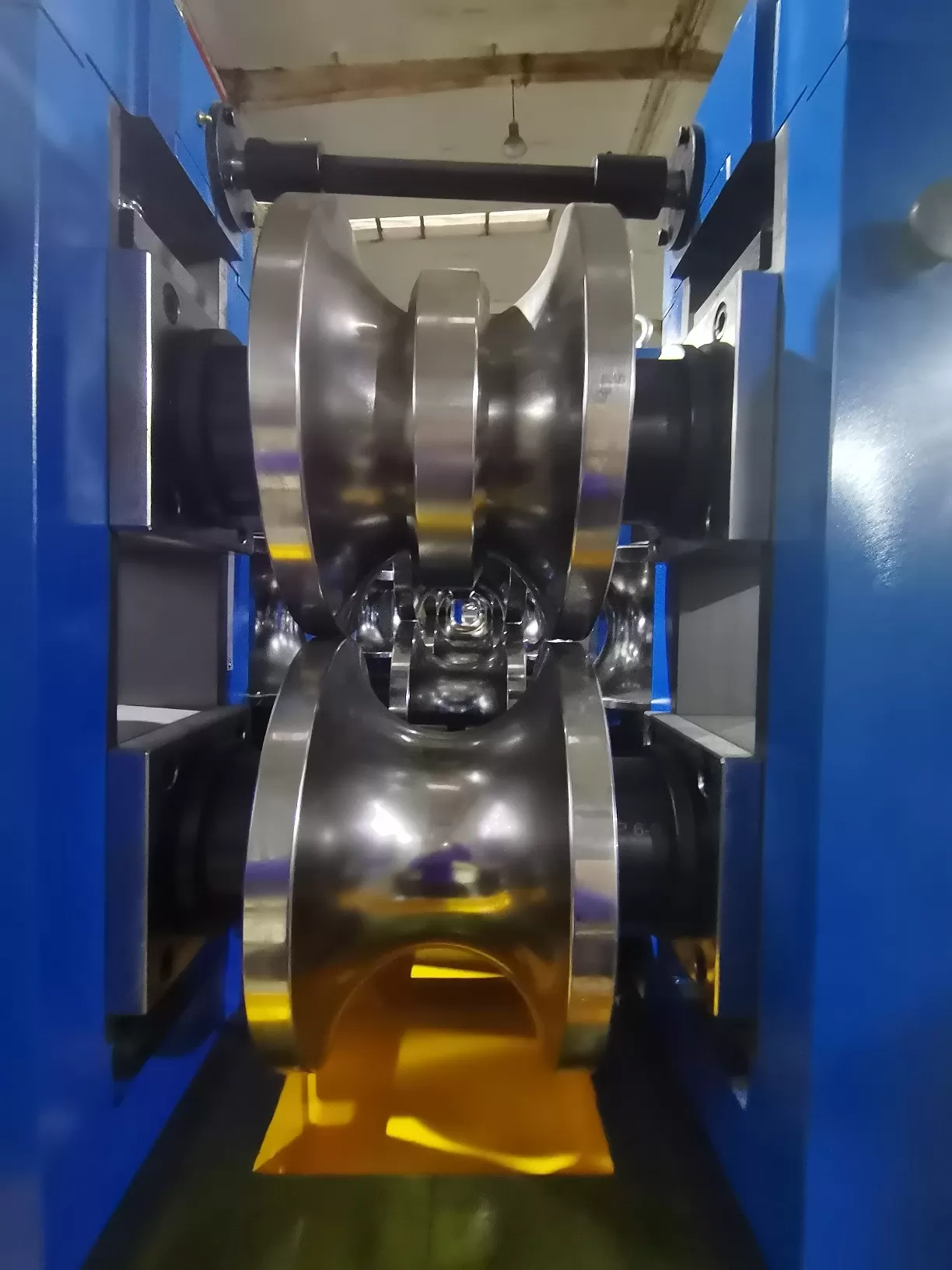
In welded tube production, the first meters of steel coil set the stage for
everything that follows. A coil processing machine is not a peripheral unit—it
is the foundational asset that transforms hot-rolled or cold-rolled master coils
into dimensionally accurate, stress-relieved strips ready for forming and
high-frequency welding. Field data from over 130 tube mills indicates that more
than 60% of weld defects (inner bead irregularities, cold welds, and seam
splits) originate from poor strip preparation upstream of the forming section.
This article provides a technical breakdown of modern coil processing equipment,
including uncoilers, levelers, edge trimmers, and accumulators, with a focus on
measurable improvements in yield, tool life, and final tube geometry.
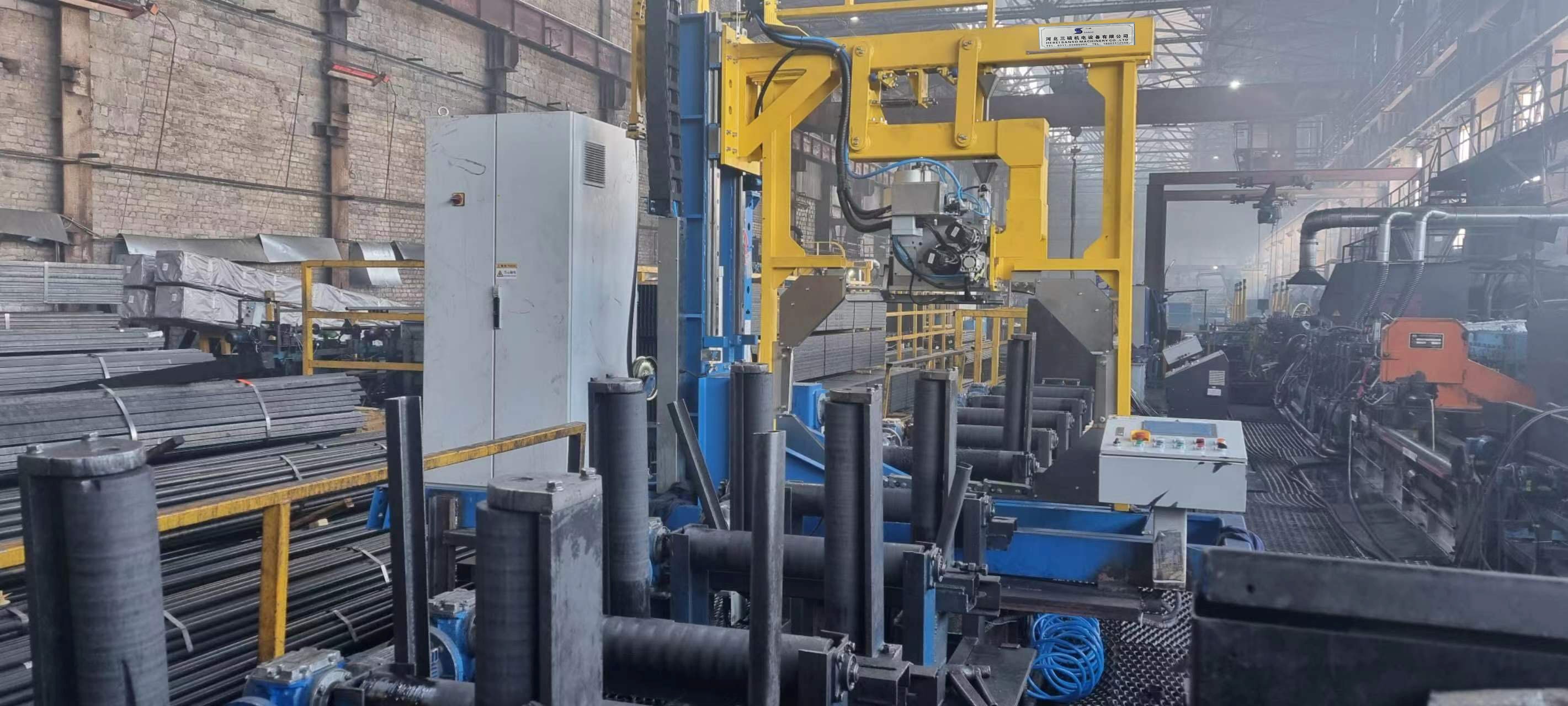
1. Components of an Industrial Coil Processing Line for Pipe Mills
A complete coil processing machine system for welded tube production typically includes five integrated stations.
Each station directly influences downstream forming stability and weld
integrity.
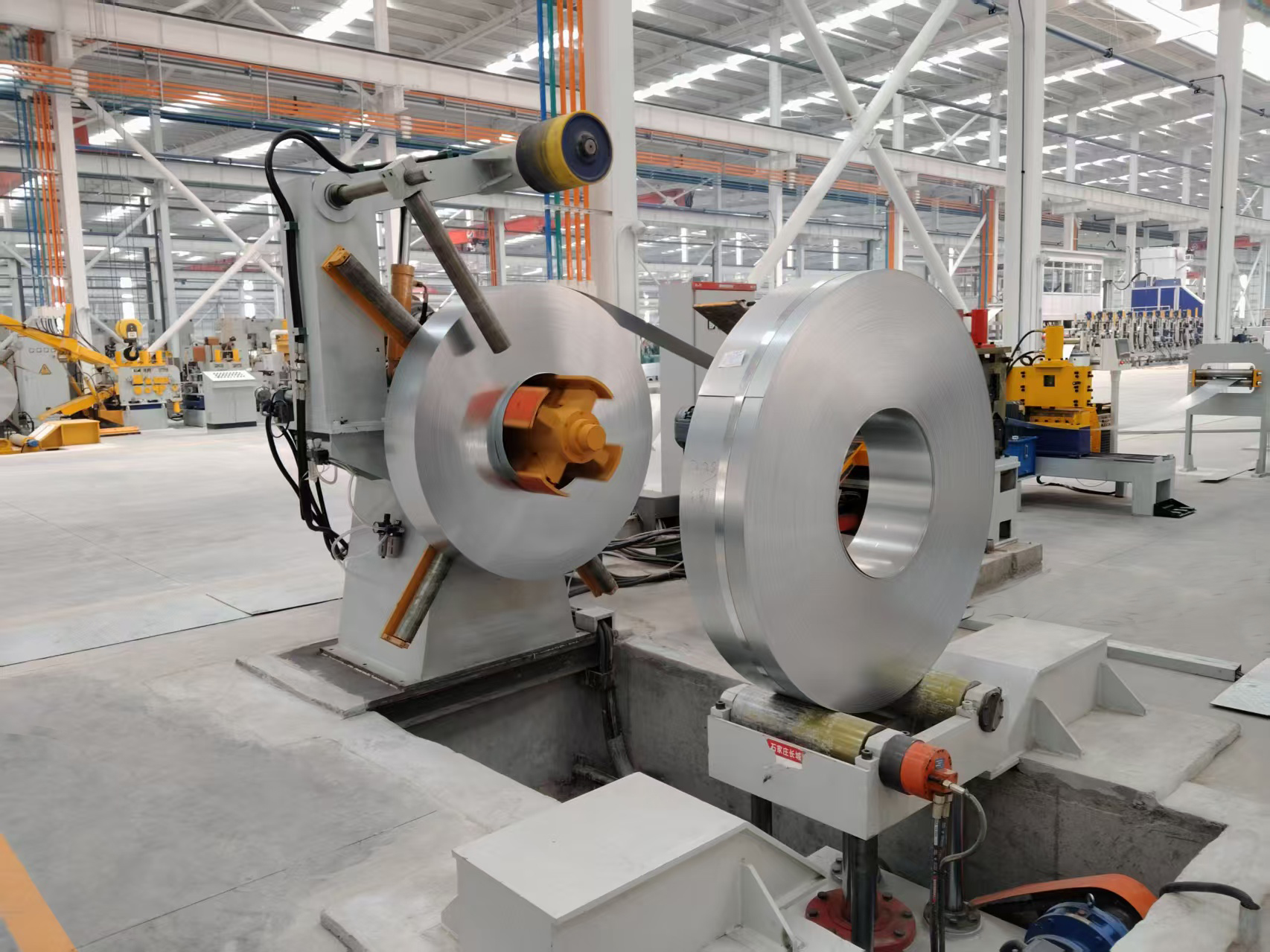
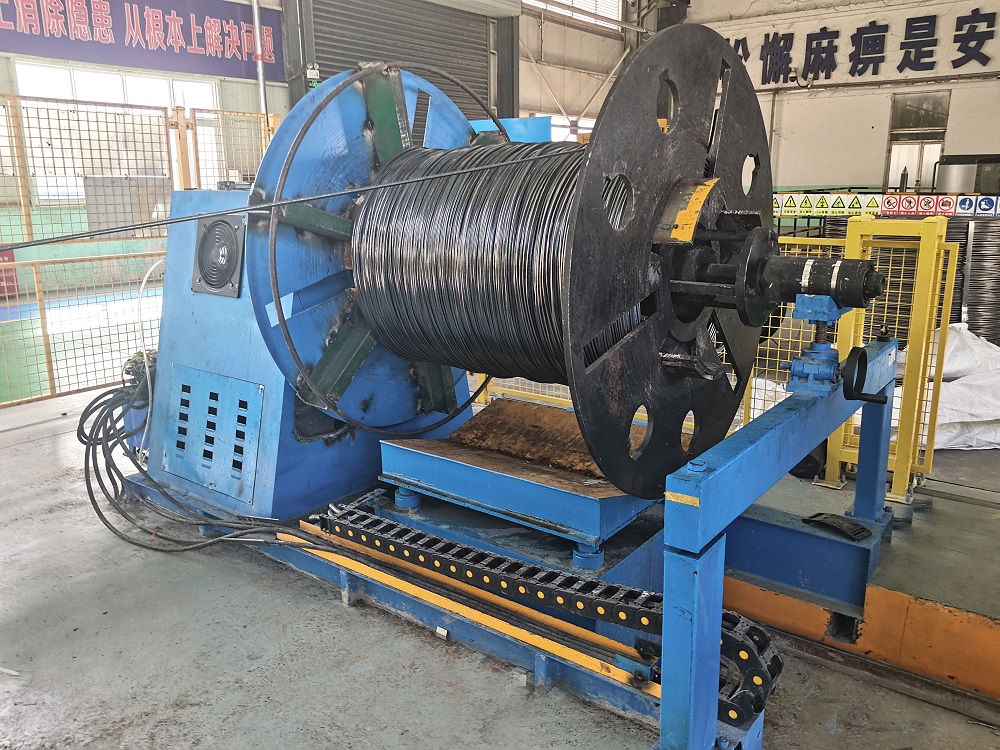
Pay-off reel (uncoiler): Hydraulic or motor-driven with
expansion mandrels to hold coils up to 30 tons. Mandrel surface speed control
maintains back tension during strip withdrawal.
Pinch roller & straightener (flattener): Removes coil
set and crossbow from stored curvature. Multi-roll straighteners with
independently adjustable backup rolls reduce residual stresses.
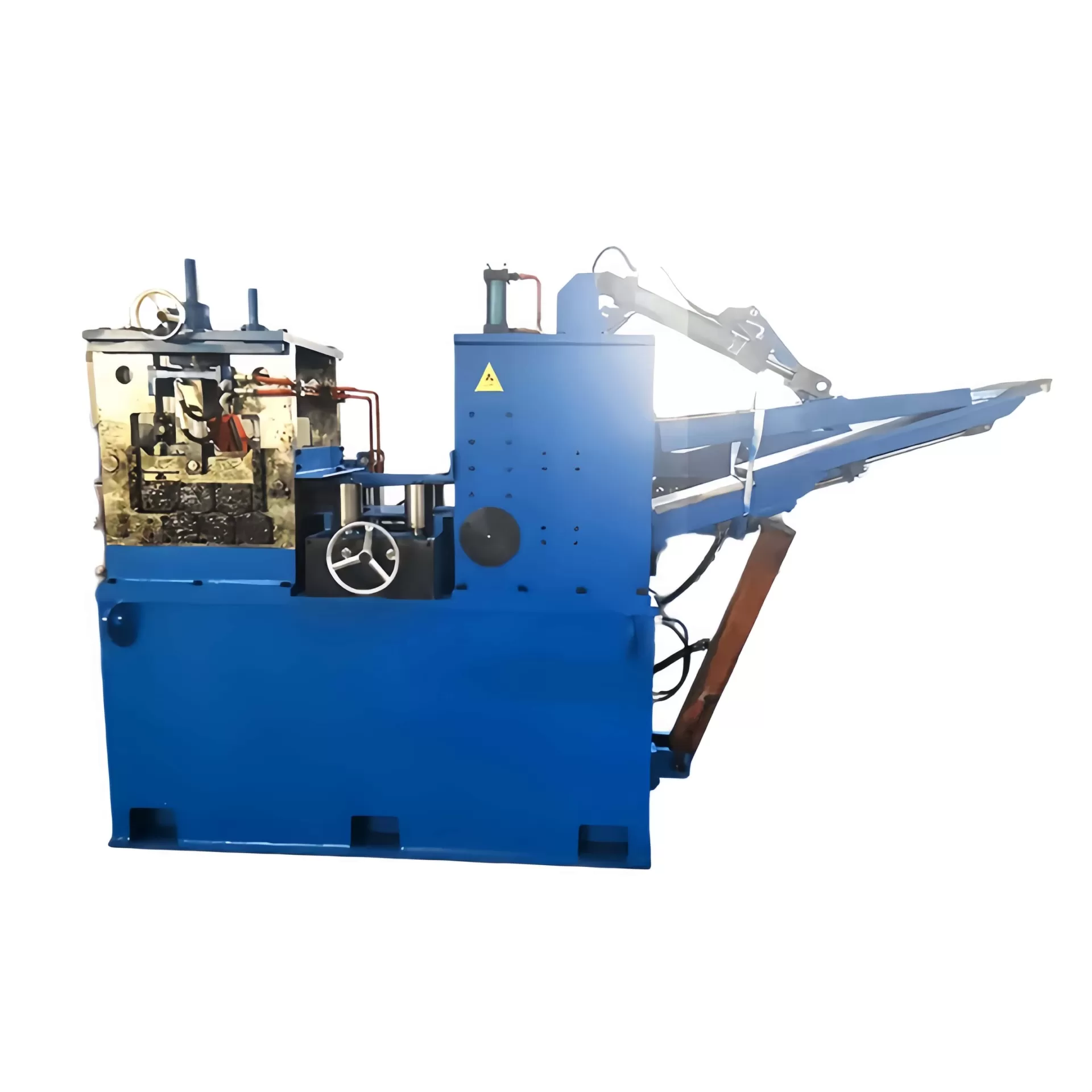
Edge trimming station: Rotary shear knives trim both edges
to eliminate work-hardened edges and achieve precise strip width (typically ±0.2
mm). Scrap choppers handle waste.
Loop control zone (accumulator or pit): Maintains constant
strip tension between discontinuous coil joining and continuous tube forming.
Dancer roll or vertical loop pit designs absorb speed variations.
Strip feeding and centering guides: Lateral steering rolls
with photo-electric sensors ensure the strip enters the forming section without
edge wandering.
Each component must be selected based on coil width (300–2,000 mm), thickness
(0.5–12 mm), and material yield strength (up to 1,200 MPa for AHSS). Mismatched
components create bottlenecks. For instance, an underpowered leveler fails to
remove crossbow from high-strength coils, resulting in twisting inside the
forming rolls. SANSO designs complete coil
processing systems where each module’s torque, rigidity, and control are matched
to the tube mill’s maximum output speed—preventing starvation or
overfeeding.
2. Critical Strip Defects Eliminated by Advanced Coil Processing
Typical raw coils contain three types of geometric imperfections that must be
corrected before tube forming. A properly configured coil processing
machine targets each defect systematically.
Coil set (longitudinal curvature): The inherent curvature
from coiling at the steel mill. Removed by passing the strip through a leveler
with alternating work rolls that plastically deform the strip past its yield
point. A 17-roll leveler can reduce coil set to <5 mm per meter.
Crossbow (lateral curvature across width): Caused by uneven
cooling on the original coil. Requires a leveler with independently adjustable
backup rolls on each quadrant. Crossbow values above 2 mm over 100 mm width
cause uneven pressure distribution in forming rolls, leading to oval tubes.
Edge burr and micro-cracks: From slitting or shearing at
the service center. An edge deburring unit (rotary brush or carbide scraper)
removes burr below 0.05 mm. For high-cycle fatigue applications like hydraulic
cylinders, edge conditioning is mandatory.
Case example: A manufacturer of structural square tubes (80×80 mm) was
experiencing 4% rejection due to seam overlap variation. Investigation traced
the root cause to coil set left uncorrected by their old two-roll uncoiler.
After upgrading to a 7-roll precision leveler within the coil processing machine, the strip entered the
forming section with residual curvature below 2 mm/m. Rejection dropped to 0.8%,
and tooling life on forming rolls increased by 35%.
3. Tension and Loop Control – The Hidden Parameters Affecting Weld
Consistency
One of the most overlooked factors in coil processing is tension management
between the uncoiler and the forming mill. Inconsistent tension produces strip
elongation (strain) variations that directly alter the welded tube’s
straightness and diameter.
Two primary architectures exist for continuous tube mills:
Loop pit system: A deep pit (3–5 m) with free-hanging strip
loops. Gravity provides constant low tension (approx. 200–500 N). Suitable for
thin gauges (≤3 mm) and high speeds (up to 120 m/min). Requires pit depth
calculation to accommodate acceleration and deceleration.
Horizontal accumulator (dancer arm system): A moving
carriage with multiple pulleys maintains constant strip tension via pneumatic or
servo control. More compact than pits, and works for thicker strips (up to 8 mm)
at 40–80 m/min. Control precision of ±2% tension reduces camber
formation.
Advanced coil processing machine controllers integrate the
uncoiler brake torque with real-time loop position feedback. For example, when
the tube mill accelerates from 20 to 60 m/min, the loop length decreases
momentarily. A proportional-integral-derivative (PID) loop adjusts the uncoiler
motor torque within 200 ms to maintain dancer arm position, preventing tensile
overload that could stretch the strip edges. SANSO provides adaptive tension control algorithms
that self-tune based on strip width and thickness, reducing setup time by 50%
compared to manual braking systems.
4. Tooling and Maintenance Strategies to Maximize Coil Processing
Uptime
Productivity losses in coil processing often stem from three preventable
issues: leveler roll wear, edge trimmer knife dulling, and bearing failures in
the uncoiler mandrel. Implementing a data-driven maintenance schedule cuts
unplanned downtime by over 60%.
Leveler work rolls: Rolls with surface hardness of 58–62 HRC
typically last 8,000–12,000 tons of hot-rolled mild steel. For galvanized or
aluminized coatings, harder rolls (65 HRC) with tungsten carbide coating extend
life to 20,000 tons. Inspect roll surface weekly using a profilometer; replace
when surface roughness exceeds Ra 0.8 µm to avoid marking strip.
Edge trimmer knives: Rotating circular knives with 200–300
mm diameter. Regrind interval based on total linear meters rather than calendar
time. A typical rule: regrind after every 150,000 meters for 2 mm material, or
after 60,000 meters for 4 mm high-strength steel. Use a dedicated knife grinding
machine that maintains concentricity within 0.01 mm.
Mandrel expansion segments: Lubricate annually with
high-pressure grease. Worn expansion slides cause coil ID slippage, leading to
scoring of the mandrel surface and uneven back tension. Replace segments when
radial clearance exceeds 0.3 mm. SANSO’s condition monitoring system tracks
vibration spectra on the uncoiler bearings and sends predictive alerts 300 hours
before failure, allowing scheduled replacement during planned maintenance
windows.
For tube mills operating two shifts, a complete inspection of the coil processing machine should include:
Weekly: leveler roll parallelism check (within 0.05 mm across 1,500 mm
width).
Monthly: trimmer knife clearance measurement (use feeler gauges at 4
points).
Quarterly: mandrel expansion force test (hydraulic pressure decay less than
5% over 10 seconds).
5. Integrating Coil Processing with Modern Tube Mill Automation
Today’s competitive tube manufacturing environment demands real-time data
exchange between the coil processing machine and the downstream
mill controls. Closed-loop systems improve product consistency and reduce
operator intervention.
Key integration features:
Strip width feedback: Laser sensors after the edge trimmer
send width data (every 500 mm) to the tube mill’s forming roll position
actuators. If width drifts beyond ±0.1 mm, the system adjusts trimmer knife
overlap automatically.
Thickness profile mapping: An upstream ultrasonic thickness
gauge records a thickness map across the coil width. The leveler’s backup roll
actuators tilt to selectively apply more reduction on thicker zones, equalizing
strip thickness before forming.
Material tracking: Barcode or RFID tags on each coil link
heat number and mechanical properties to the processing parameters. When a new
coil grade is loaded, the system recalls the stored recipe (leveler gaps,
trimmer clearances, tension setpoints) from a central database.
SANSO delivers fully integrated coil processing lines
with OPC-UA connectivity to any tube mill control platform. A customer in
Southeast Asia producing API 5L pipes reduced changeover time from 45 minutes to
14 minutes by using automated recipe loading on their coil processing line. The
system also logs strip edge condition reports, which are attached to each
finished pipe bundle for full traceability.
Frequently Asked Questions (FAQ) – Coil Processing for Tube Mills
Q1: What is the main difference between a coil processing machine and
a conventional slitting line?
A1: A slitting line is designed to
split a wide master coil into multiple narrow strips, while a coil processing
machine for tube mills focuses on preparing a single full-width strip (or
already slit strip) for forming. The processing line includes leveling, edge
trimming (one pass per edge), tension control, and loop accumulation—functions
that directly feed a continuous tube mill. Most tube mills use a dedicated coil
processing line rather than an integrated slitter.
Q2: How do I calculate the required straightening capacity (leveler)
for high-strength steel coils?
A2: The necessary straightening force
depends on material yield strength and thickness. As a rule, the leveler's work
roll diameter (D) should be at least 10× the strip thickness for HSLA grades up
to 700 MPa. For AHSS (≥800 MPa), D must be 15–18× thickness to avoid roll
deflection. Additionally, the number of work rolls should be ≥11 for materials
above 6 mm. SANSO provides a free straightener selection calculator based on
your coil spec range.
Q3: What causes strip edge wave (longitudinal ripples) after
processing, and how to fix it?
A3: Edge wave results from uneven
crossbow correction where the center of the strip is stretched more than the
edges. This often occurs when leveler backup rolls are set too aggressively or
when the uncoiler brake tension is too high, causing the strip center to yield.
Solution: Leveler work rolls can be crowned (center slightly higher) or use
split backup rolls to independently reduce pressure at the center. Also, reduce
uncoiler braking torque by 15–20% while increasing loop length.
Q4: Can a coil processing machine handle coils with welded-on leaders
(end tabs from the steel mill)?
A4: Yes, but you need a thickness
skip detector. Welded leaders create a double thickness (up to twice the base
gauge) that can damage leveler rolls and trimmer knives. Install a non-contact
thickness sensor (laser or ultrasonic) before the pinch rolls. When a weld joint
is detected, the system automatically opens leveler roll gap by 2–3 mm and
shifts trimmer knives apart. After the weld passes, parameters return
automatically. SANSO includes this function as standard on all automated
lines.
Q5: How often should I replace the pinch roll cover material to avoid
strip slippage?
A5: Pinch rolls are typically covered with
polyurethane (80–95 Shore A) or rubber. Replace when the surface shows visible
cracks or when the coefficient of friction drops below 0.4. With daily use (8
hours), polyurethane covers last 12–18 months. Use a torque monitor: If the
pinch roll motor torque exceeds 15% above baseline for the same strip gauge,
replace the covers. Stored material (oil, scale) accelerates wear; weekly
cleaning with a solvent extends life by 30%.
Q6: What is the maximum allowable camber in processed strip for
producing straight welded tubes?
A6: For round tubes up to 100 mm
OD, camber should be ≤2 mm over 5 meters of strip length. For larger diameters
(200–500 mm), camber must be ≤1 mm per 5 meters. Camber beyond these values
causes the strip to spiral inside the forming rolls, creating a helical weld
seam instead of a straight seam. Correct camber by adjusting the leveler’s roll
tilt or installing an active steering guide that shifts the strip laterally just
before the forming section.
Q7: Is it possible to retrofit an existing uncoiler with automatic
coil centering (without replacing the whole machine)?
A7: Yes.
Retrofit kits are available that include two hydraulic cylinders pushing a
sliding base, plus two photoelectric sensors at the coil edges. The controller
measures coil offset and shifts the entire uncoiler carriage (or the mandrel) to
center the strip before feeding. This retrofit reduces edge wandering by 90% and
typically pays back in 6–8 months through reduced scrap and less roll wear.
SANSO offers field retrofit kits for most major uncoiler brands.
Need to upgrade your coil preparation workflow for better tube
quality and lower reject rates? Request a comprehensive evaluation of
your existing coil processing machine performance. SANSO engineers provide
on-site audits, tension mapping, and leveler calibration services.
Complete the inquiry form below or contact our technical
sales team to receive a customized proposal including equipment specification,
automation level, and projected ROI based on your annual coil consumption. Start
producing defect-free strips for your tube mill today.
Send us your coil dimensions and target tube range for a no-obligation
system design.