In modern tube and pipe manufacturing, incoming strip quality directly
determines weld integrity, dimensional consistency, and downstream productivity.
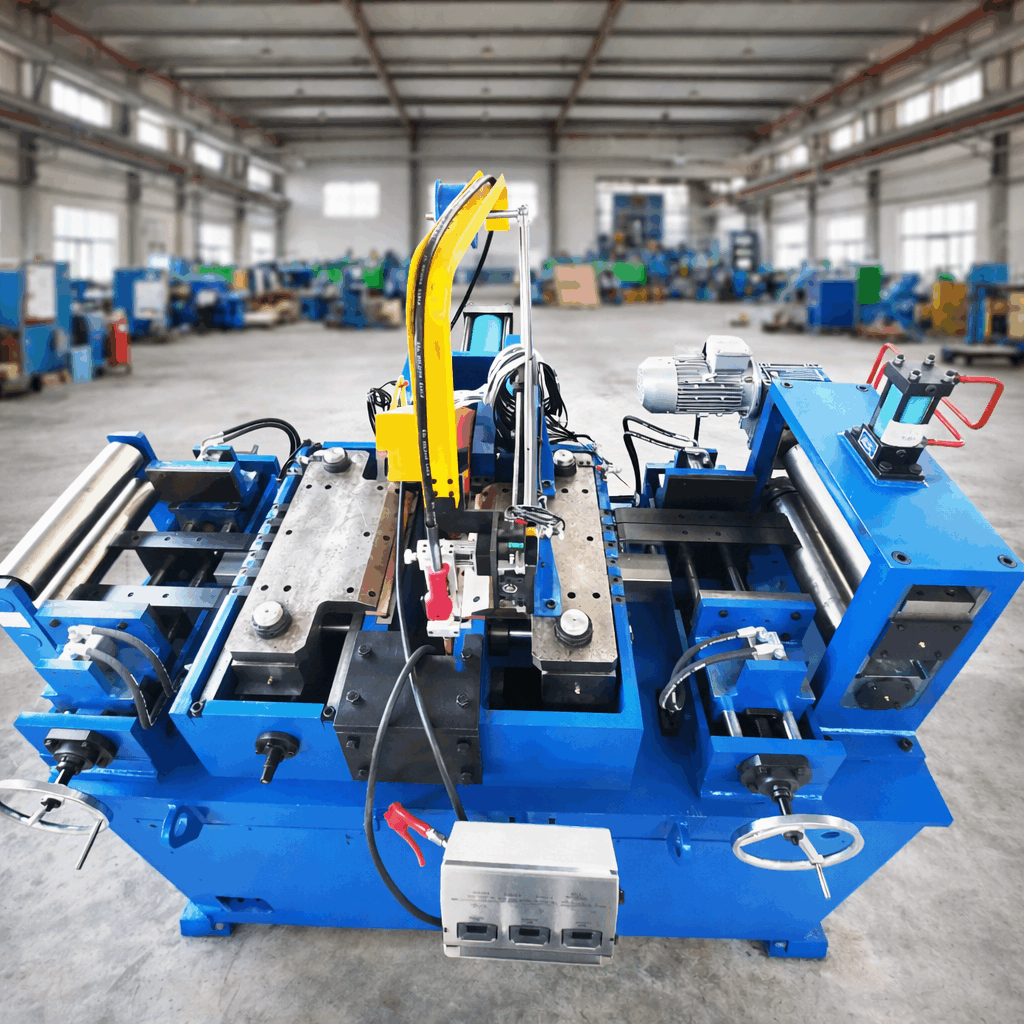
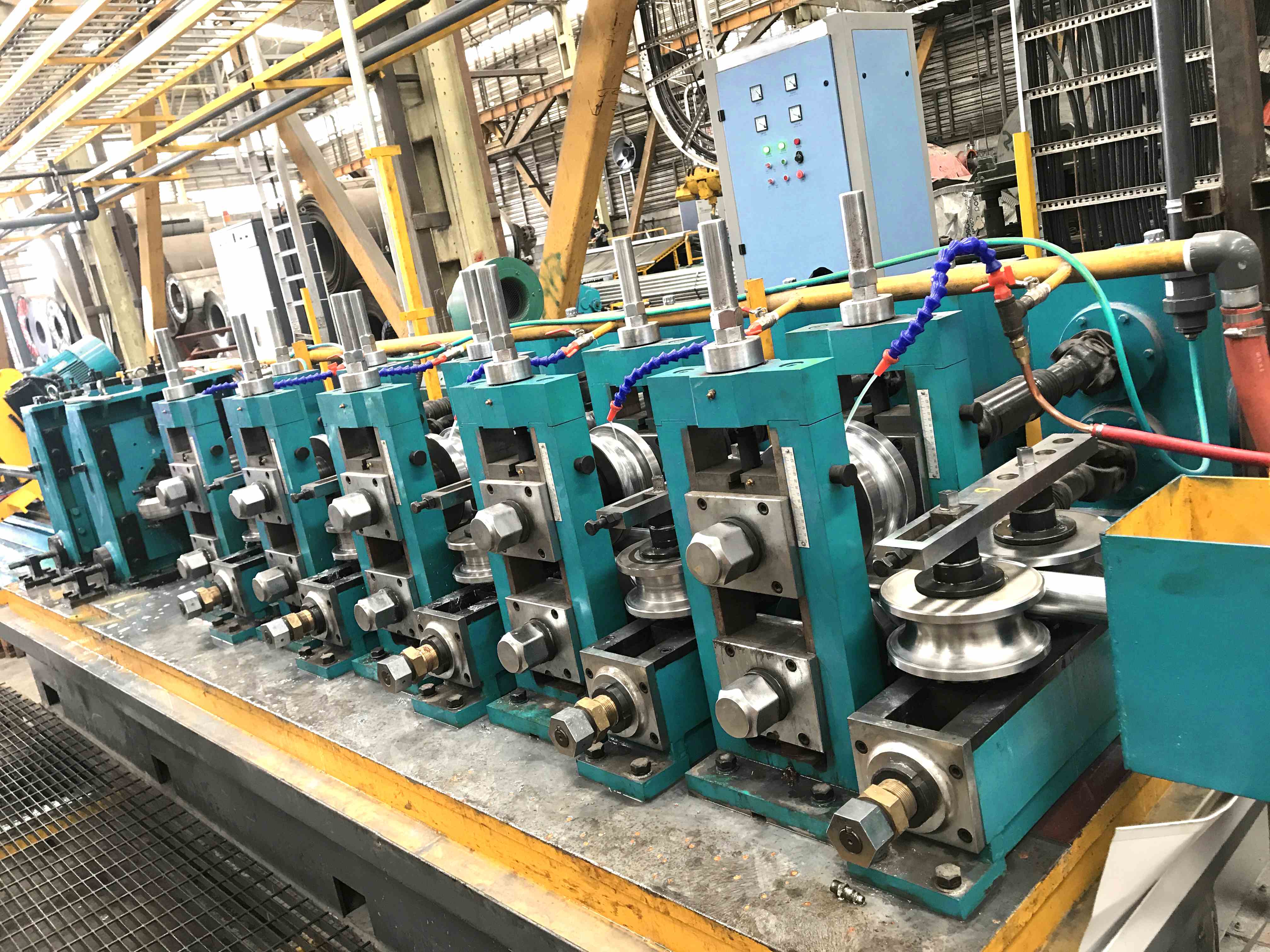
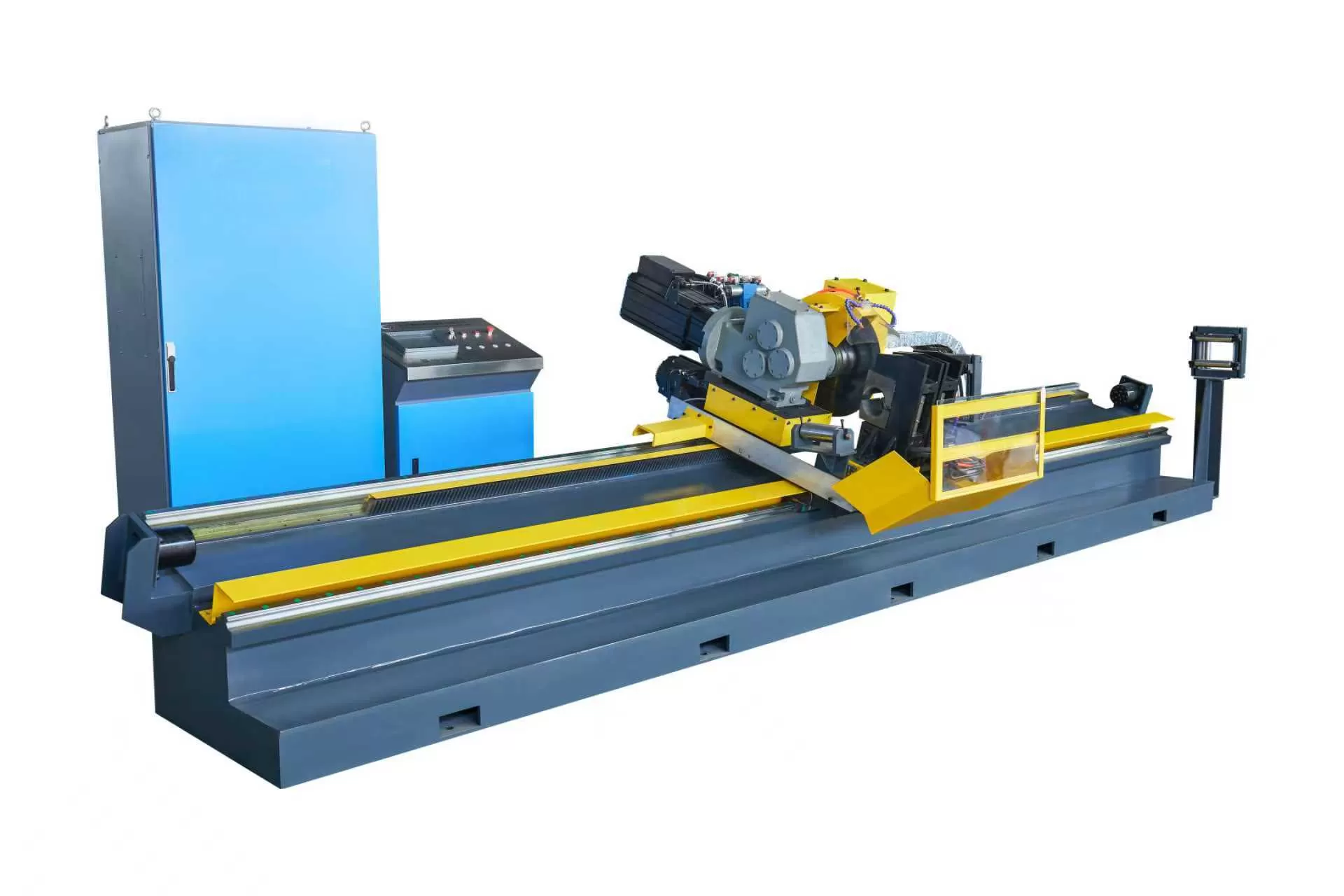
A high-performance steel coil slitting
line is not merely a cutting station—it is the critical gateway
that transforms master coils into defect-free, precision-width strips. Poor
slitting leads to burrs, camber, uneven tension, and scrap losses, which
propagate into welded tube failures and rejected batches. With over two decades
of engineering integration, SANSO has helped more than
120 mills optimize their slitting operations, reducing edge burr by 60% and
improving yield by over 4% per line. This article dissects the technical
architecture, hidden failure modes, and actionable solutions for operating a
world-class slitting line tailored to tube and cold-formed profiles.
1. Core Architecture: Key Modules of a Modern Steel Coil Slitting Line
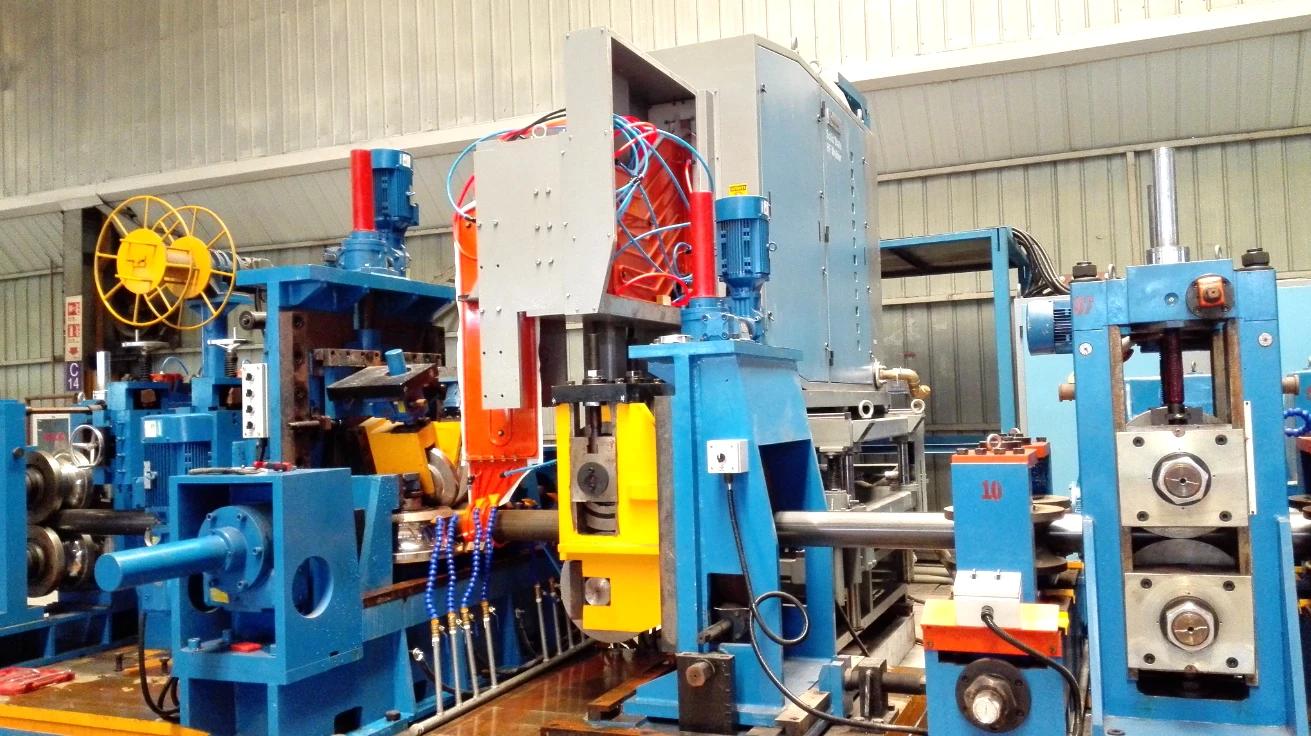
A robust steel coil slitting
line integrates several interdependent systems. Compromising any
single component introduces cumulative errors. Below are the essential stations,
each with specific performance criteria for tube mill applications.
Hydraulic mandrel expansion (350–600mm arbor): Handles coil
IDs from 508mm to 610mm, with coil weights up to 25 tons. Must provide
controlled brake torque to prevent telescoping.
Peeler & threading table: Automated leading-end feeding
reduces setup time; anti-fluting rolls maintain coil integrity for high-strength
steels (DP600/CP800).
Edge guide control: Photoelectric or ultrasonic sensors
keep strip centered within ±1.5mm, critical for subsequent slitting
precision.
Slitter Head – The Precision Core
Dual arbor design (carbide-coated): Overhung or
through-shaft configurations. For tube mills producing strips 30–600mm width,
quick-change cartridge arbors reduce downtime by 55%.
Tooling selection: Rotary shear slitting (conventional)
dominates for 0.3–8mm thickness, while razor slitting is used for foil-thin
materials (<0.3mm). Carbide or D2/M2 steel knives with 4–6μm surface finish
deliver 1500–2000 tons between regrinds.
Side trimming / multi-strand slitting: Simultaneous
production of 4–20 strips from a master coil, with strip width tolerance ISO
9445 Class 2 (±0.1mm).
Scrap Winder & Tension Section
Scrap ballers or rotary choppers: For edge trim (30–50mm
each side), chopping into 50–80mm pieces for easy recycling. Critical to avoid
trim jam, which can snap slitting knives.
Loop pit (deep/shallow) or bridle rolls: Provides tension
isolation between slitter and recoiler. For high-speed lines (150–300 m/min),
bridle rolls with dancer position feedback maintain constant back tension.
Separator / rewind table: Felt-lined or polyurethane
rollers prevent surface scratching on precision strips used for automotive
tubes.
2. Technical Pain Points & Root-Cause Solutions in Slitting Lines
Even modern steel coil slitting
line configurations suffer from recurring quality issues. Based on
SANSO field audits of 78 tube mills, we identified the top three failure
patterns and corrective engineering measures.
Edge Burr & Micro-Burr (Above 8% of material thickness)
Root causes: Excessive knife clearance, worn arbor bearings,
or misaligned shafts. For 2mm mild steel, clearance exceeding 8% thickness
raises burr height from 0.06mm to 0.2mm—directly causing weld porosity in ERW
tubes.
Solution: Implement laser-based clearance gauge with
closed-loop adjustment (target 5–7% of thickness per material grade). For
high-tensile steels (>450MPa), use micro-clearance tooling (3–5%) and shear
angle of 0.5°–1°. SANSO integrates automatic
knife gap positioning with HMI recipe storage, reducing setup variance to
±0.01mm.
Camber & Bow (Lateral curvature exceeding 2mm/2m)
Root causes: Uneven knife pressure, differential strip
tension across multiple slit strands, or worn separator disks. Camber forces
misalignment in tube forming rolls, causing spiral weld seams.
Solution: Deploy individual strand tension control via
segmented rubber-covered pinch rolls (each 50mm wide). Real-time camber
detection via laser edge sensors linked to PLC adjusts left/right brake torque
independently.
Scuff marks & scratching on high-gloss surfaces (stainless or
pre-coated)
Root causes: Contact with steel loop pit floors, metal guide
plates, or uncleaned felt wipers. Scratching depth >10μm rejects decorative
tubes (handrails, automotive trims).
Solution: Polyurethane-lined loop pits, HDPE entry guides,
and non-woven fabric separators on recoiler. Replace metal deflectors with
ceramic-coated rollers.
3. Application-Specific Requirements: Tube Mills, Automotive & HVAC
Different downstream industries impose unique demands on the slitting line
configuration. A generic setup will underperform.
ERW structural tubes (API 5L, EN10219): Requires slitting
lines with heavy-duty scrap ballers and edge conditioning (corner radius
≤0.2mm). Thickness range 1.5–10mm, widths up to 800mm. High rigidity slider
guides mandatory.
Precision automotive tubes (drive shafts, steering
components): Strip width tolerance ±0.05mm, burr height ≤0.03mm.
Slitting line must include edge rolling attachment to work-harden cut edges
before tube forming. Motorized back tension control within 0.5% precision.
Stainless steel sanitary tubes (ASTM A270): Requires
PVC-coated arbor sleeves, oil-free slitting (dry slitting or food-grade
lubricant), and complete separation of ferrous particles via magnetic scrap
removal system.
HVAC ducting (G90 galvanized, pre-painted): Speed-oriented
slitting lines (200–350 m/min) with automatic tool lock systems. Surface
protection is critical to avoid zinc flaking: rubber-coated entry rolls and
electrostatic oiler.
SANSO offers modular slitting
line architectures that reconfigure between these application groups in less
than 45 minutes—combining quick-change cartridge arbors and recipe-driven
tension profiles.
4. Productivity Optimization: SMED, Tooling Life & Digital
Monitoring
Downtime for tool changes, setup errors, and unexpected blade wear reduces
effective OEE (Overall Equipment Effectiveness). Data from 52 installations show
that optimizing these factors lifts line utilization from 68% to 89%.
Single-Minute Exchange of Die (SMED) Implementation
Pre-staged tool cassettes: Offline knife stacking using automated spacer
management software reduces changeover from 90 min to 18 min.
Hydraulic clamping without manual bolt tightening: Reduce operator
variability.
Key metric: For coils of varying widths (six changeovers
per shift), SMED can add 2.5 extra production hours weekly.
Predictive Tool Life Management
Measure accumulated slitting meterage per knife set; carbide slitter knives
typically last 80–120 km before edge radius exceeds 25μm.
Vibration sensors on arbor housings detect harmonic changes indicating
micro-chipping—integrated alert to maintenance system.
Regrind cycle optimization: removing 0.10–0.15mm per regrind extends total
tool life by 40% versus ad‑hoc grinding.
Digital Production Twin Integration
Interface slitting line PLC with MES: record strip width, burr height
(measured by laser profilometer after recoiler), and tension profile per batch.
Generate SPC charts for ISO/TS 16949 compliance.
SANSO provides a Condition
Monitoring Portal (CMP) that calculates knife wear predictions and suggests
re-grind schedules, reducing unplanned tool failures by 70% in reported customer
cases.
5. Maintenance Strategy to Avoid Catastrophic Slitter Failures
Neglected lubrication, arbor runout, and bearing play are silent yield
killers. Implement this four-step maintenance protocol for any steel coil slitting
line.
Weekly: Check arbor radial runout (limit ≤0.02mm) using
dial gauge. Any deviation indicates bearing wear or shaft bending. Replace
bearings every 4,500 operating hours.
Monthly: Inspect knife spacers for burr imprints—even 5μm
protrusions cause local thickness variation. Polish on a surface grinder to
restore parallelism.
Quarterly: Verify tension roll surface hardness (Shore A
85–90 for polyurethane; hardness loss below 75 causes slippage). Re-coat or
replace rolls.
Annually: Laser alignment of entire line (uncoiler to
recoiler). Maximum allowable deviation is 0.3mm over 10 meters. Misalignment
accounts for 35% of edge wave defects.
Frequently Asked Questions (FAQ) – Steel Coil Slitting Line for Tube
Mills
Q1: What is the optimal knife clearance for slitting HSLA
steels (Grade 80) on a steel coil slitting line?
A1: For HSLA (high-strength low-alloy) steels with yield
strength >550MPa and thickness 2–4mm, the recommended knife clearance is 5–6%
of material thickness. For example, 2.5mm HSLA requires 0.125–0.15mm clearance.
Excessive clearance (above 8%) creates work-hardened burrs that cannot be
removed by deburring stations. SANSO recommends using carbide-tipped slitter
knives with a shear angle of 1° to reduce peak cutting force by
22%.
Q2: How does tension control influence strip edge cracks in
a high-speed slitting line?
A2: Excessive tension (above 30% of material yield strength)
stretches the strip edges differentially due to minor slit width variations,
initiating micro-cracks. For soft aluminium or deep-drawing steel, optimum back
tension is 10–12% of yield. In contrast, dual-brake tension systems with load
cells maintain setpoint within ±2%, eliminating edge tearing. Missing tension
isolation between stands is a common design flaw in older
lines.
Q3: Can an existing slitter head be retrofitted with
automatic gap adjustment to reduce burr?
A3: Yes, most through-shaft arbor slitters can be
retrofitted with electro‑mechanical actuators or hydraulic wedge systems. SANSO
offers retrofit kits including servo motor-driven positioners, CN-controlled
stops, and a manual override. Typical ROI is 6–9 months due to lower scrap rates
and reduced secondary edge finishing. Retrofit requires arbor end machining but
avoids replacing the entire steel coil slitting
line.
Q4: What is the recommended slitting strategy for stainless
steel coils (304/316) to avoid edge work hardening?
A4: Stainless work-hardens rapidly. Adopt rotary shear
slitting with small shear gap (0.02–0.05mm), knife overlap of +0.1mm, and use of
high‑rake angle blades. Avoid razor slitting. Cooling with 3–5% soluble oil
reduces heat buildup. Additionally, set line speed 20–30% lower than for carbon
steel to control strain rate. Post-slitting annealing should not be necessary if
edge temperature stays below 150°C.
Q5: What are the signs that the slitter arbor bearings need
immediate replacement?
A5: Four red flags: (I) Periodic scrap width variation
exceeding ±0.5mm along the strip; (II) High-frequency vibration measured >6
mm/s at the arbor housing; (III) Burr height fluctuating asymmetrically between
left and right edges; (IV) Temp rise over 65°C on bearing blocks after 2 hours
of operation. Replace with class P5 or higher angular contact bearings,
pre‑loaded to axial clearance ≤0.01mm.
Conclusion: Integrate a Future-Ready Steel Coil Slitting Line into Your Tube
Mill
The evolution from a basic cutting unit to a smart, sensor-rich steel coil slitting
line defines competitive advantage in precision tube making. By
mastering arbor precision, tension linearity, and predictive tool management,
manufacturers achieve burr-free strips, zero camber, and 98% material
utilization. SANSO provides fully
engineered slitting solutions—from torque calculation and arbor metallurgy to
full-line automation—customized to your tube diameter range, coil inventory, and
production targets.
Need a Custom-Engineered Slitting Line for Your Tube
Mill?
Request a free process audit: our engineers will review your current steel
coil slitting line, provide a burr/camber diagnostic report, and simulate
potential yield gains using SANSO’s parametric design tool. Get recommendations
on tooling upgrades, tension system retrofits, or a complete line with
guaranteed edge quality for ERW / stainless / automotive tubes.
Send your inquiry today – include coil dimensions, materials
processed, and target monthly output. We will respond within 24 hours with
technical specs and budgetary options.
info@sansohftubemill.com| SANSO – Engineered
for precision metal forming.