For high-frequency welded tube and pipe producers, the quality of the
incoming coil directly determines final product integrity, yield, and production
uptime. Steel coil
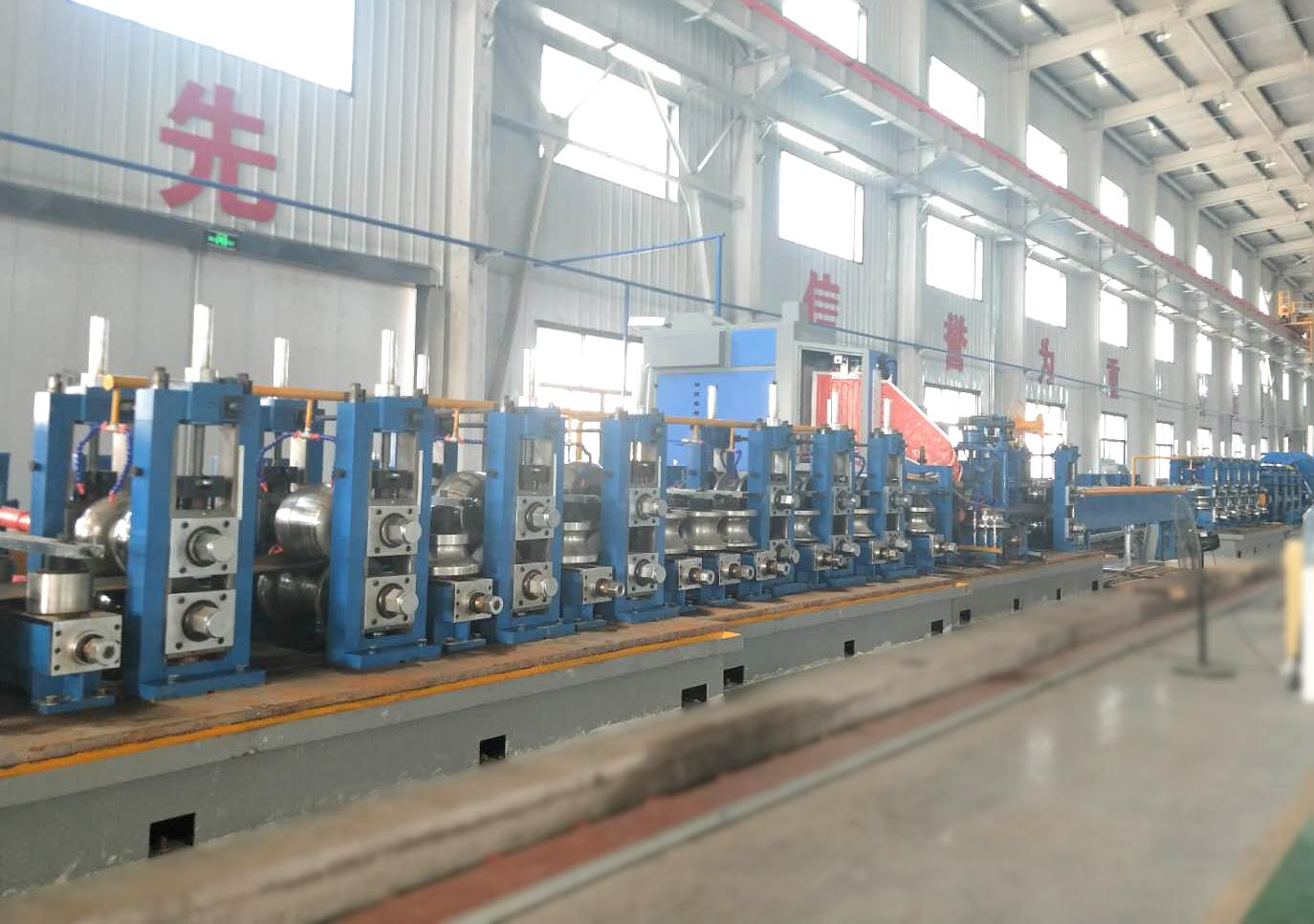
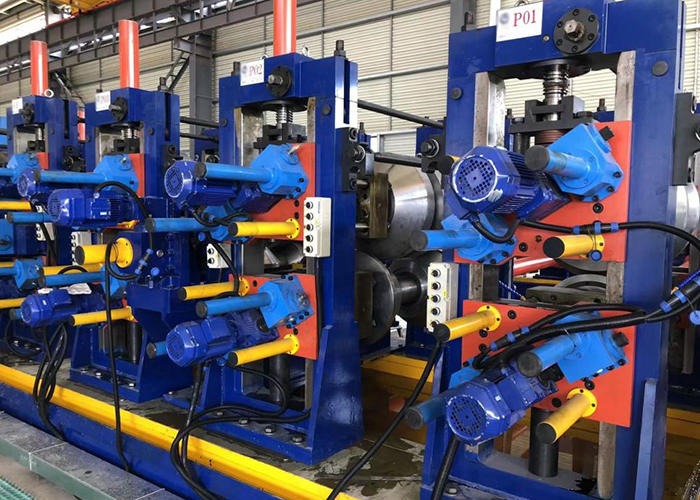
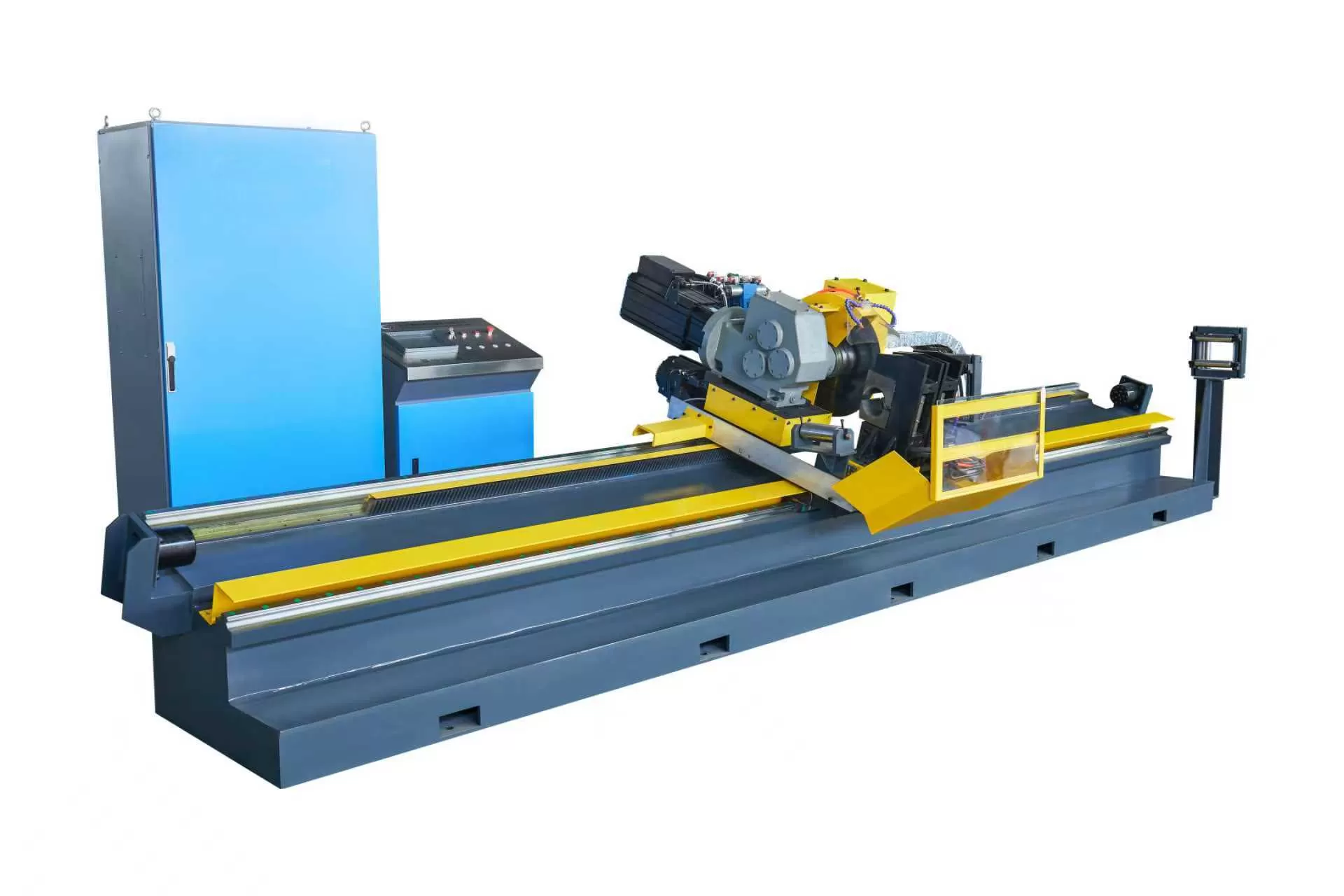
processing equipment forms the critical front end of any precision
tube mill — from uncoiling and leveling to edge conditioning and strip
accumulation. Poorly configured or outdated systems introduce edge wave,
crossbow defects, and inconsistent strip tension, leading to weld seam flaws and
dimensional drift. This technical deep-dive examines each module of the coil
processing line, highlights industry-proven solutions for common failure points,
and provides actionable selection criteria for plant engineers and technical
buyers.
1. Core Modules of Modern Coil Processing Lines
Any robust steel coil processing setup must handle coils from 5 to 35 metric
tons, strip widths up to 1,200 mm (for common tube diameters), and thickness
ranges between 0.8 mm to 12 mm. Below are the essential components for a
zero-defect feeding system.
1.1 Heavy-Duty Uncoilers and Double-End Decoilers
Electro-hydraulic expansion mandrels – Provide slip-free
coil gripping with typical expansion force up to 180 kN, preventing inner-wrap
slippage.
Drag brake systems – Pneumatic or regenerative DC braking
ensures constant back tension (3–20 kN) to avoid loop formation before the
leveler.
Coil car with load cells – Automatic centering and lifting
capacity matching mill line speed, reducing manual intervention.
In modern tube mills, double-end decoilers reduce coil changeover time to
under 90 seconds through dual mandrels and an automatic strip jointer. This
directly impacts OEE (Overall Equipment Effectiveness) — a key metric in
high-volume ERW pipe production.
1.2 Precision Roller Levelers with Anti-Wave Control
As-rolled hot- or cold-rolled coils inevitably contain residual stresses. A
six-high or seven-high roller leveler (often with intermediate back-up rolls)
flattens the strip to within 1.0 mm/meter flatness tolerance. The latest
servo-adjustable levelers incorporate:
Individual entry/exit roll gap actuators
Work roll diameters from 40–120 mm depending on material yield strength
Vertical adjustment resolution of ±0.05 mm via digital position
feedback
For advanced high-strength steel (AHSS) grades, levelers must incorporate
work roll bending and cross-tilting to correct quarter-buckling without
over-rolling the edges.
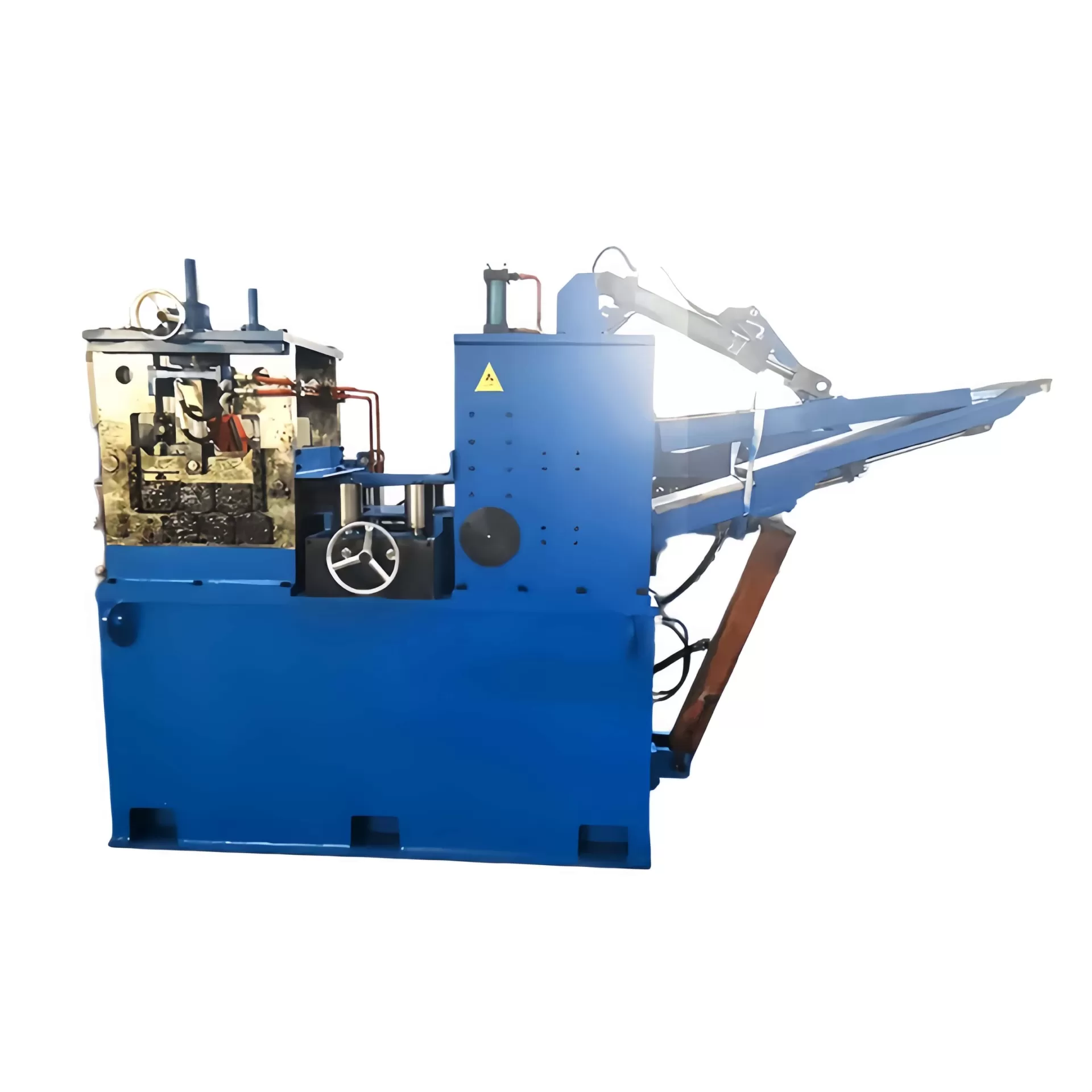
1.3 Edge Trimming & Slitting Stations
To guarantee a consistent weld seam gap, the strip edges require shearing or
milling to remove work-hardened burrs and micro-cracks. Integrated rotary shear
trimmer heads with adjustable overlapping cutters (clearance optimized per
gauge) achieve burr heights below 0.02 mm. For tube mills producing API 5L or
ASTM A500 grades, edge slitting also ensures the absence of side-trim curl,
which otherwise causes fins inside the welded tube.
2. Solving High-Speed Accumulation & Strip Joining
Continuous tube welding lines demand uninterrupted strip flow during coil
changeovers. Here, horizontal or vertical loop accumulators store 180 to 300
meters of strip. The latest servo-driven looping cars use non-contact laser
position sensors to regulate strip tension within ±2% of setpoint, eliminating
over-stretch or slack pockets.
Complementing the accumulator is an automatic strip end welder (shear welder
or mash seam welder). A shear welder trims both coil ends squarely with 0.5°
angular accuracy, then performs a MIG/TIG overlap weld that maintains less than
10% thickness overfill. This guarantees that the welded joint passes through the
forming rollers and sizing section without damaging tooling.
Field experience from 200+ tube mill audits reveals three recurring failures
directly tied to inadequate front-end systems. Below we discuss each pain point
and the engineering countermeasures available.
3.1 Pain Point: Coil Edge Cracking and Breakage
Root causes: Slit edges with residual shear burrs or local
work-hardening from dull trimmer knives.
Solution: Install edge conditioners (deburring units) with
rotating carbide brushes or fine grinding heads. For high-strength coils, inline
eddy-current surface scanners detect micro-cracks >0.5 mm before they
propagate through the forming section. Implementing these measures reduces scrap
rates by 30–40% according to a 2023 industry survey.
3.2 Pain Point: Lateral Strip Wander (Camber)
Uncontrolled strip camber causes misalignment in the forming rolls, resulting
in helical seam defects. The fix is a closed-loop steering guide system
downstream of the leveler: a pair of non-contact linear photoelectric sensors
detect edge position every 20 ms, then a hydraulic cylinder shifts the entire
guiding roller assembly to keep the strip centerline within ±1.0 mm tolerance.
This level of accuracy is standard in high-speed mills running at 120 m/min.
3.3 Pain Point: Surface Contamination / Rust
Hot-rolled coil often carries mill scale and residual lubricants. A coil
cleaning section (brush roller + high-pressure rinsing + air knife drying)
removes 99% of particulate contaminants, preventing pitting and inclusion lines
in the weld zone. Integrated with vacuum oil mist extractors, such systems also
comply with OSHA/NIOSH workplace air quality standards.
4. Automation Architecture for Coil Processing Lines
Today’s steel coil processing equipment operates under a
centralized PLC/HMI with digital networking (Profinet or EtherCAT). Key features
for a future-proof line:
Recipe management – Stores parameters (uncoiler torque,
leveler gaps, trimmer clearance) for 50+ coil grades.
Predictive maintenance – Vibration sensors on leveler
work-roll bearings and trimmer spindles alert operators to tool wear before
product quality degrades.
Data historian – Tracks strip tension, flattening reduction
ratio, and edge quality per coil, enabling traceability for ISO 9001 or API Q1
audits.
Integrating these features reduces unplanned downtime by 25% based on field
data from mills that upgraded legacy lines with modern sensors.
5. Why Process Integration Matters – Case Insights
A Southeast Asian manufacturer producing 2″ to 6″ ERW pipes replaced their
1990s uncoiler and trimmer with a fully synchronized line from SANSO. The new
steel coil processing equipment reduced strip edge burr from
0.08 mm to 0.015 mm and eliminated edge wave beyond 1.2 mm/m. After three
months, welding speed increased from 38 m/min to 52 m/min, and weekly scrap
dropped by 17 metric tons. This example illustrates that an integrated approach
to coil handling — not just individual machines — delivers measurable ROI.
For plants retrofitting separate components, SANSO provides
turnkey engineering: from hydraulic systems and electrical cabinets to field
commissioning. Their proprietary leveler control algorithm automatically
compensates for varying coil crown, a feature often missing from generic
equipment packages.
6. Technical Selection Checklist for Buyers
When evaluating steel coil processing equipment suppliers or
upgrading individual stations, use this checklist developed from ISO/TC 44
(welding and allied processes) recommendations:
What is the maximum coil OD/ID and weight capacity relative to your future
product mix?
Does the leveler offer independent back-up roll adjustment for edge-wave
correction?
Is the accumulator loop control synchronized with the mill’s forming section
via a dedicated motion controller?
Are wear parts (trimmer blades, leveler work rolls) available off-the-shelf
with documented hardness HRC 58–62?
Does the control system provide real-time strip thickness deviation data for
downstream welding parameter tuning?
Addressing these points upfront avoids costly modifications during
commissioning.
7. Future-Proofing: Low-Profile Coil Line Footprint & Energy
Recovery
Floor space constraints in existing tube mills call for compact coil
processing designs. Modern units integrate the coil car, uncoiler, and pinch
straightener onto a single skid, reducing length by 3-4 meters. Furthermore,
regenerative drives on the decoiler mandrel recover braking energy back to the
plant’s DC bus, trimming power consumption by up to 12% per coil change.
Frequently Asked Questions (Technical & Operational)
Q1: How does steel coil processing equipment affect weld seam
strength in ERW pipes?
A1: Directly. Uneven strip edges or residual
camber create inconsistent edge heating and forging pressure. High-quality
processing ensures uniform edge geometry and clean surfaces, which yields a seam
with 98–100% parent metal strength after normalizing.
Q2: Can the same coil processing line handle both hot-rolled (HR) and
cold-rolled (CR) coils?
A2: Yes, but with configuration changes. HR
coils up to 8 mm require a stronger leveler (≥250 kN backup roll force) and
carbide slitter knives to resist scale abrasion. CR coils need anti-marking
rolls and dust extraction. A flexible line setup allows re-tooling within 2–3
hours.
Q3: What is the typical payback period for upgrading an existing
uncoiler to a double-head decoiler with automatic strip joining?
A3:
For mills operating two shifts (5,000 operating hours/year), the reduction in
coil changeover downtime (from 12 minutes to 2 minutes) saves approximately 800
hours annually. With conversion costs around $95,000, payback occurs in 7–9
months.
Q4: How do online strip flatness measurement systems work, and are
they necessary?
A4: Capacitive or laser-based flatness rollers
measure tension distribution across the strip width. For tube mills producing
automotive structural components (with ≤0.5 mm/m flatness spec), closed-loop
flatness control is mandatory. For general pipe, manual check with a feeler
gauge every two coils is acceptable.
Q5: Does SANSO offer retrofit packages for accumulator tension
control upgrades?
A5: Yes. SANSO provides
modular servo-loop packages including laser distance sensors, ABB drives, and
pre-programmed PLC software, compatible with most legacy horizontal
accumulators. The system installs in a single 8-hour shift with remote
commissioning support.
Conclusion & Next Steps
To summarize, reliable steel coil processing
equipment acts as the foundation for high-speed tube welding,
directly impacting edge preparation, strip tension stability, and material
waste. Evaluating your current line against the technical metrics and pain point
solutions above will highlight specific upgrade opportunities — whether it’s a
trimmer with burr control, an automated steering guide, or a complete
accumulator retrofit.
Ready to discuss your coil processing bottlenecks or request a
customized line layout? Contact SANSO directly for a
no-obligation technical consultation and detailed proposal. Our engineering team
provides line audits, ROI calculations, and process guarantees tailored to your
tube dimensions and production targets.
Send Inquiry → (or email info@sansohftubemill.com for same‑day response from a senior application
engineer).