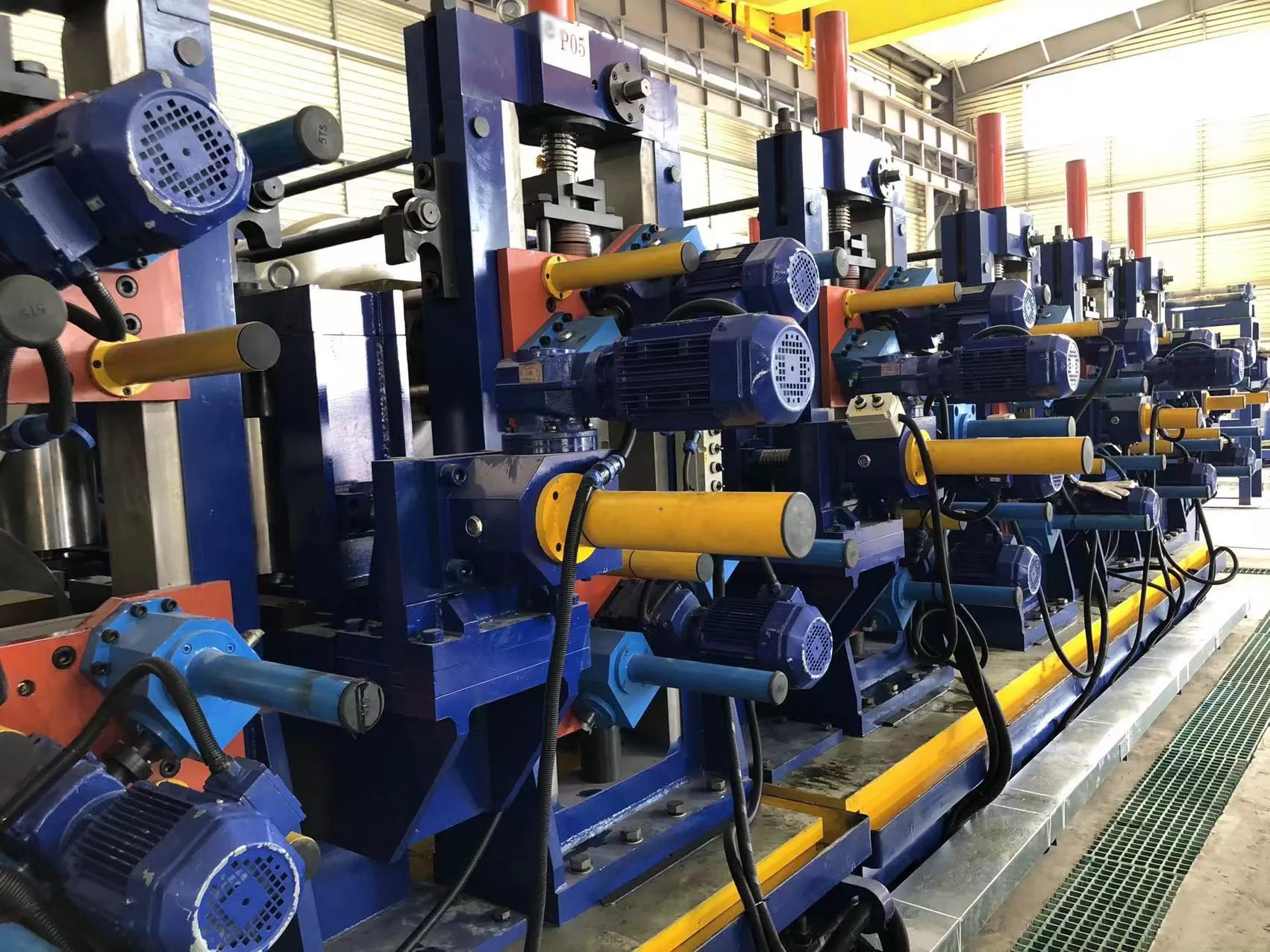
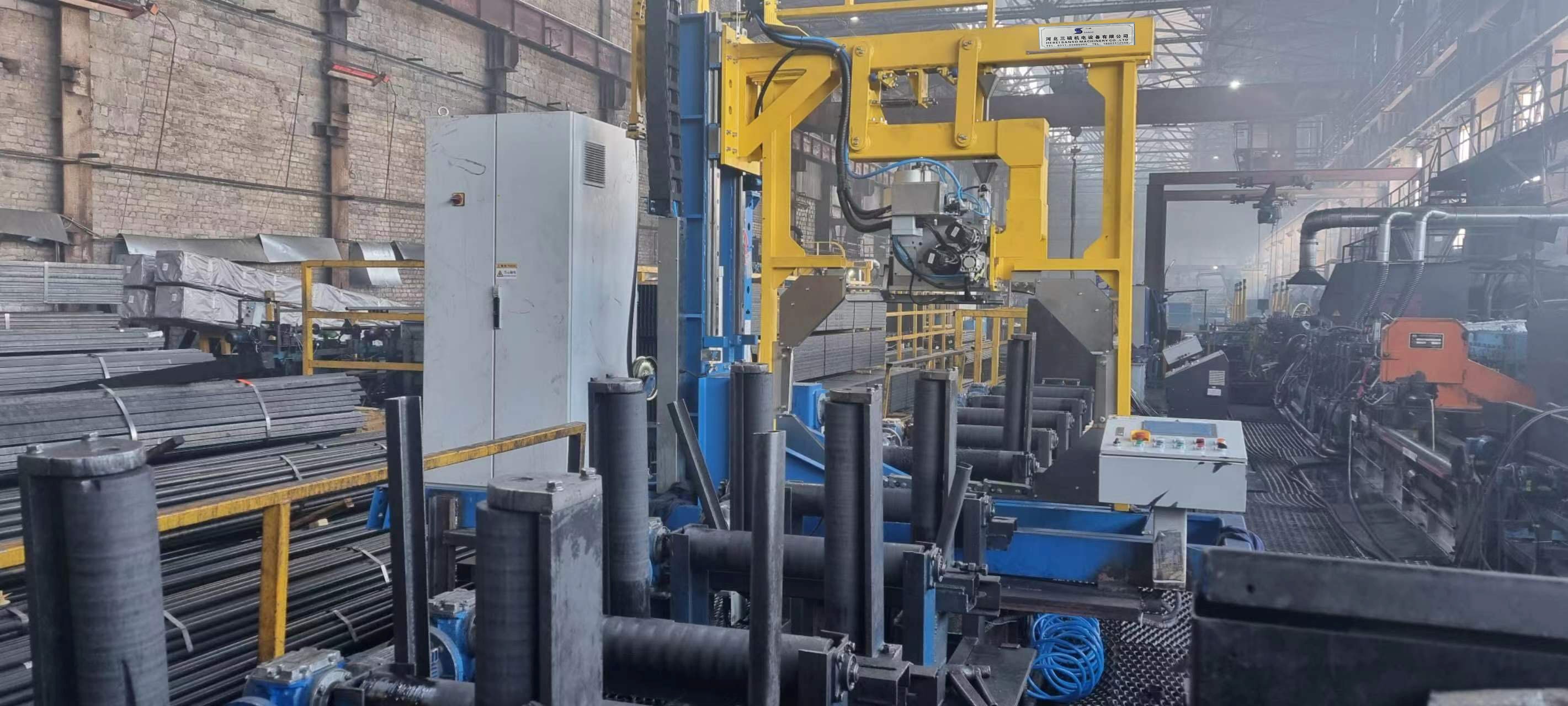
The reliability of a longitudinally welded steel pipe begins with the
precision of its ERW mill. From skelp edge
milling to final ultrasonic testing, each station determines the mechanical
strength, dimensional consistency, and corrosion resistance of the finished
product. This article examines seven critical parameters that separate
high-yield production lines from those plagued by seam rejects and frequent
downtime. Drawing on field data from API 5L and ASTM A53 operations, we also
present engineering solutions validated across multiple plants.
1. Skelp Edge Preparation and Milling Tolerance
Before forming, the steel strip (skelp) must undergo precise edge milling.
The edge geometry directly influences the high-frequency
welding process. A 35–40° bevel angle with a root face of 0.1–0.3 mm provides
optimal current penetration and minimizes flashing. Many operators ignore the
effect of burr height — any edge burr exceeding 0.15 mm can lead to scattered
arc spots and cold welds. Modern lines integrate inline edge milling units with ±0.05 mm
accuracy and laser-based profile monitoring. This reduces the scrap
rate associated with poor edge fusion by up to 40%.
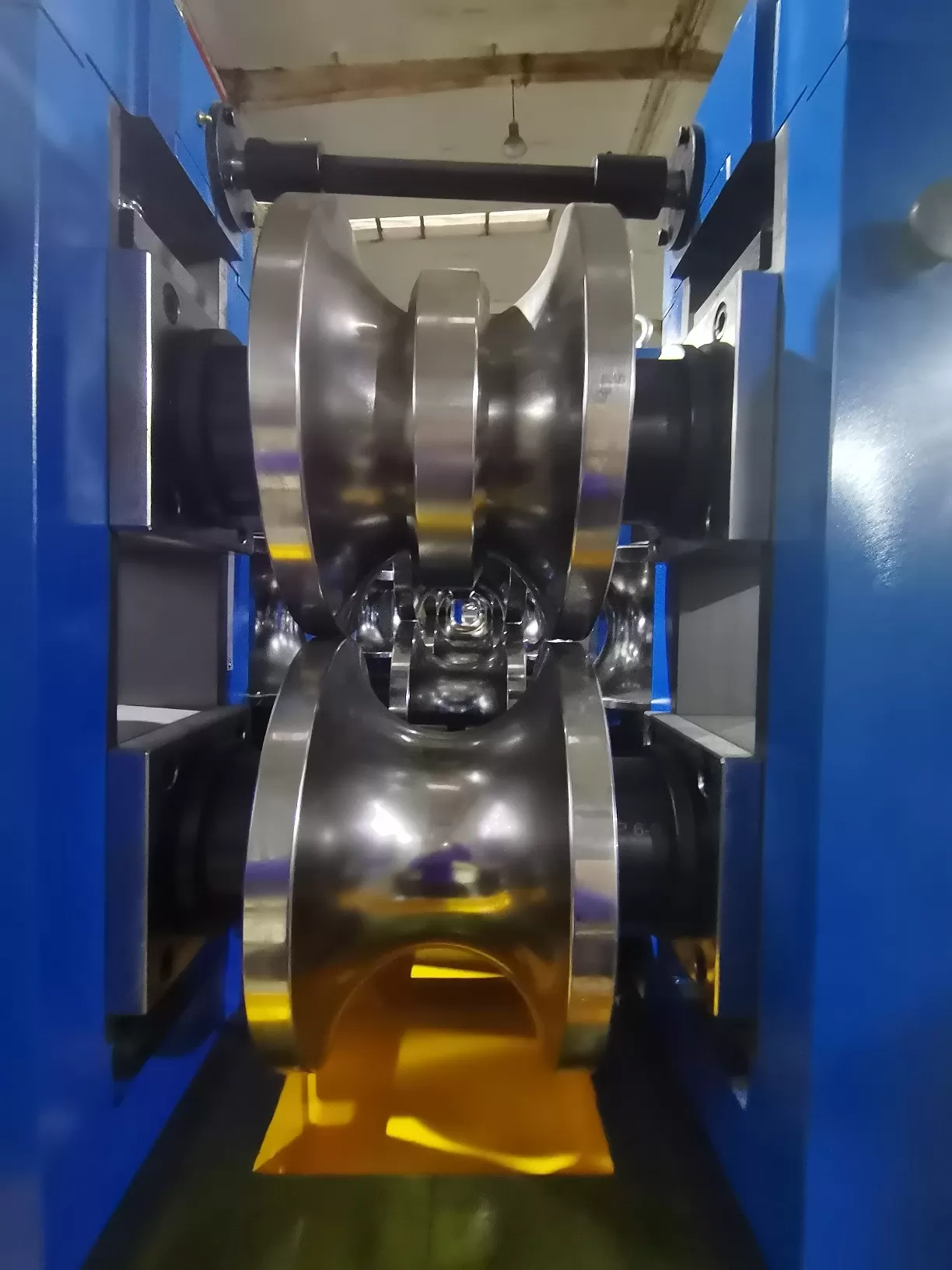
2. Forming Station Configuration: Breakdown, Fin Passes, and Cage Roll
Design
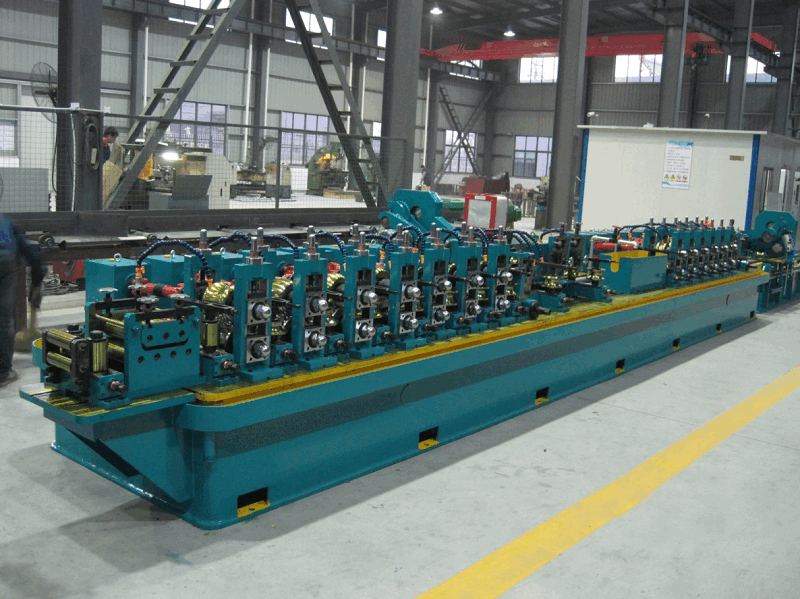
The transition from flat strip to open tube is governed by three forming
zones:
Breakdown section (6–8 stands): Progressive bending with
bottom-driven rolls; the strip edge lift must not exceed 2° per pass to avoid
edge waves.
Fin passes (2–3 stands): Closing the gap; typical fin angle
closure of 12–15° per stand for wall thickness 4–10 mm.
Side rolls (cage rolls): Control the open gap width
(1.5–2.5× wall thickness) before entering the welding unit.
When forming high-strength grades like API 5L X65, roll spring-back
compensation becomes necessary. A well-optimized forming sequence reduces
residual stress and ensures the weld groove alignment is within 0.2 mm. Several
pipe mills have retrofitted their ERW mill with staggered breakdown roll sets to accommodate
a wider range of diameters without changing the entire tooling.
3. High-Frequency Welding Parameters: Frequency, Impeder Design, and Heat
Input
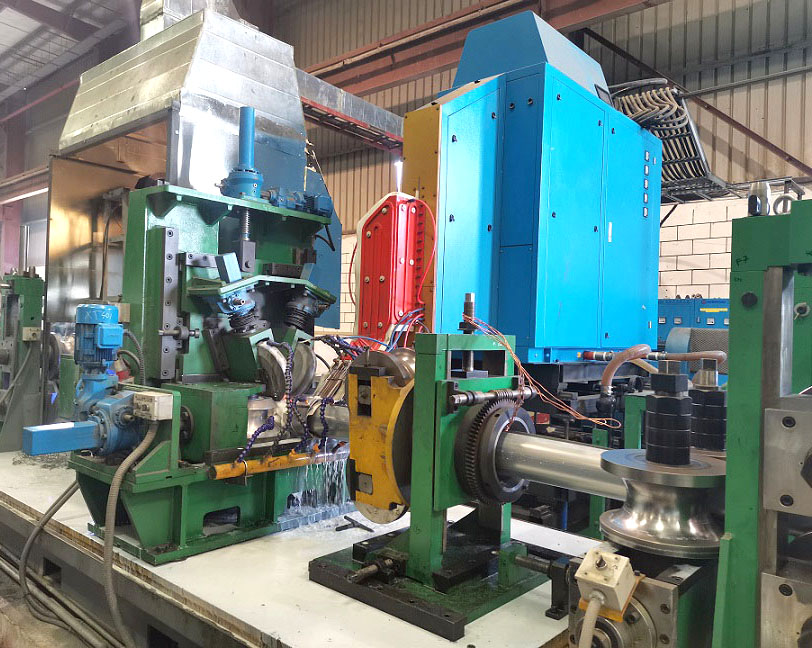
The welding station remains the most scrutinized part of the line. Two main
HF technologies exist: contact welding (lower frequency, 200–300 kHz) and
induction welding (350–450 kHz). For wall thickness above 8 mm, induction
welding provides a more stable heat pattern. Key variables include:
Welding speed vs. frequency: Speed above
25 m/min requires frequency adjustment to keep V-angle (the convergence angle of
edges) between 3° and 7°.
Impeder positioning: The ferroxcube impeder must remain
centered within 1 mm of the weld point; deviation causes preferential heating on
one edge.
Squeeze roll pressure: Upset target of 1.8–2.2 mm for heavy
wall pipes; insufficient squeeze produces incomplete fusion, while excessive
squeeze generates excessive flash (IRO) and reduces productivity.
Data from a 12-inch line (WT 9.5 mm) showed that adjusting the impeder gap
from 5 mm to 3.8 mm reduced the internal flash height by 32%. SANSO supplies automatic welding power controllers that
maintain optimal heat input (±2% variation) despite line speed fluctuations
caused by strip weld joints.
4. Internal Flash Removal (IRO) and External Finishing
After welding, the inner bead (internal flash) must be trimmed to ensure
smooth flow in fluid conveyance and to avoid stress risers. IRO systems use a
carbide-tipped blade mounted on a mandrel. Parameters that affect clean
removal:
Blade rake angle: negative 5–10° for wall thickness >6 mm.
Blade protrusion above tube ID: 0.1–0.2 mm for API 5L B, up to 0.4 mm for
softer grades.
Back-up roll pressure: 600–800 N to prevent tube distortion.
External flash knives produce a smooth outer surface. However, if the
trimming operation leaves height above 0.3 mm, it may interfere with coating
adhesion. Recent developments include servo-controlled IRO with laser displacement
sensors that adjust blade height in real time. One manufacturer
reported a 65% reduction in inner bead-related rejects after upgrading their
ERW mill with closed-loop flash control.
5. Weld Seam Heat Treatment (Normalizing or Tempering)
Microstructural transformation in the heat-affected zone (HAZ) is inevitable.
To restore toughness, especially for sour service applications (NACE MR0175), an
inline post-weld heat treatment (PWHT) station is mandatory. Two methods
dominate:
In-line induction annealing: Heating the weld seam to
900–950°C followed by air cooling; refines the coarse grain structure.
Full-body normalizing: For larger diameters, but requires a
separate furnace and slows the line.
The effectiveness is verified by transverse guided bend tests and Charpy
V-notch impact values. Acceptable targets at -20°C: >40J for line pipe.
Without proper PWHT, the weld zone can fail at stress levels 30% lower than the
base metal. Modern ERW mill configurations
integrate infrared temperature monitoring and PLC-controlled heating
power to maintain soak time within ±0.5 seconds.
6. Sizing and Straightening: Dimensional Accuracy and Ovality Control
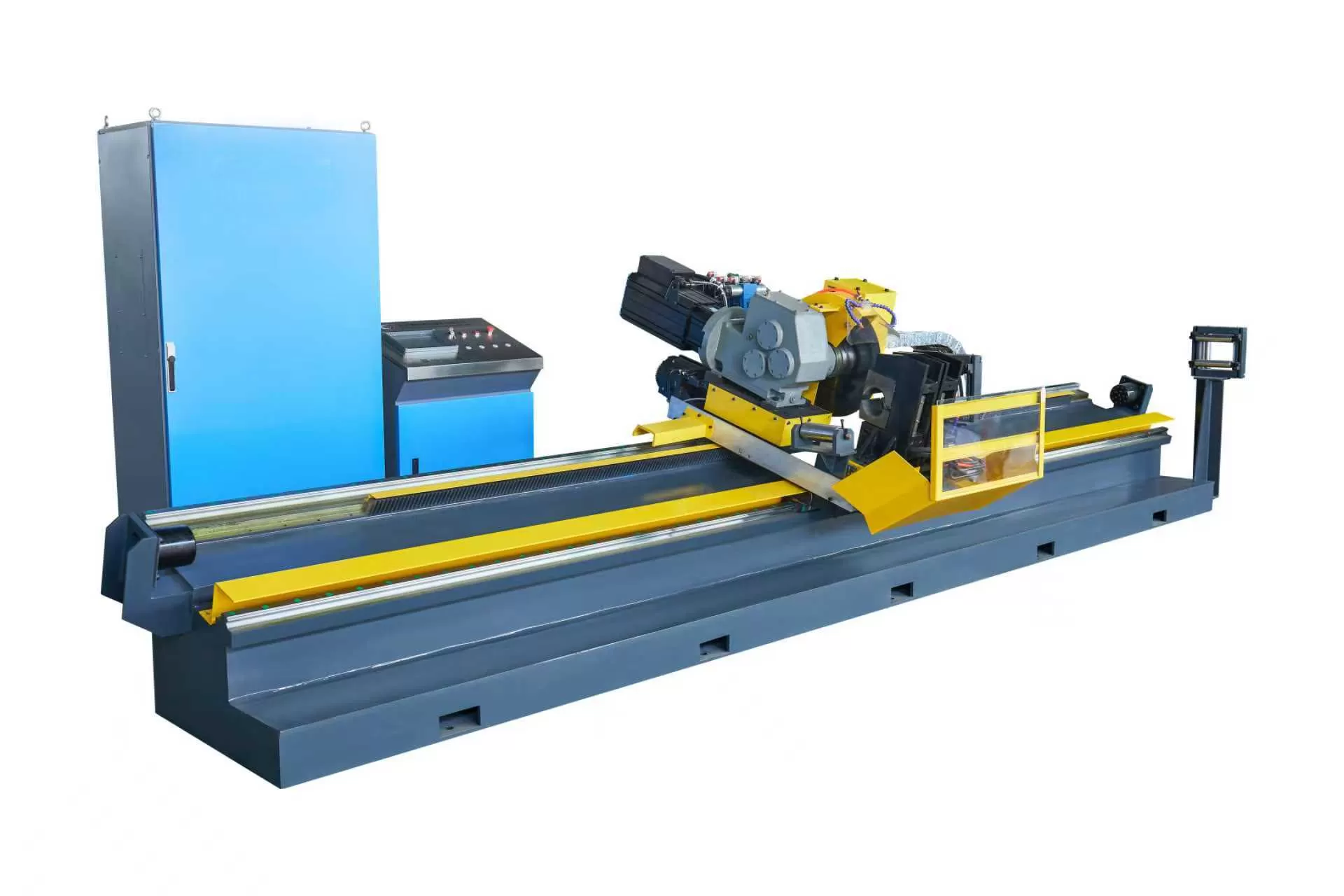
After welding and heat treatment, the tube passes through a sizing section
(4–6 stands) to achieve final OD tolerance (typically ±0.5% for A53). Key
considerations:
Roll gap reduction per stand: 0.3–0.6% of OD; excessive reduction leads to
work hardening and ovality.
Straightening overhang: A 7-roll straightener with offset rolls reduces
residual helix curvature to below 1 mm per meter.
On-line ultrasonic thickness monitoring (UT) combined with an automatic
feedback loop to adjust stand screw-downs.
Plants producing structural pipes (EN 10219) often ignore the effect of
cooling water distribution after sizing, leading to lobar deformation. Using rotary cooling sections with adjustable
nozzles can reduce ovality from 1.5% to 0.6% on 300x300 mm square
tubes. SANSO offers integrated sizing stands with
quick-change cassettes, reducing changeover time to under 45 minutes.
7. Nondestructive Testing and Data Traceability
No ERW mill can operate without a robust inspection
protocol. The minimum requirements per API 5L include:
Eddy current testing (ECT) for surface and near-surface
defects on the weld area.
Ultrasonic testing (UT) for laminations and lack of fusion,
using phased array probes covering 100% of the weld.
Hydrostatic test (proof pressure = 90% of specified minimum
yield strength) with dwell time of at least 10 seconds.
Data management becomes critical when traceability is required for 20-year
lifecycle tracking. Advanced lines automatically record each pipe’s weld heat
input, flash trim force, and NDT results, linking them to a barcode. MES-integrated inspection reports reduce
human error and allow root cause analysis when a batch of pipes fails. One case
study showed that by adding real-time UT‑based weld centering correction, a 16″
line improved first-pass yield from 92.4% to 98.1%.
Solutions to Prevalent Industry Pain Points
Based on audits of 14 tube mills in Southeast Asia and the Middle East, the
most common challenges—and their fixes—are:
Weld porosity → Check strip edge cleanliness; install
high-pressure air knives before the forming section.
Fluctuating weld flash height → Verify impeder cooling
water flow and replace worn squeeze rolls.
Helical pipe (twist) → Realign fin pass roll axis
horizontally; adjust straightening roll tilts.
High frequency generator trips → Upgrade cooling system and
inspect coaxial cable insulation.
Tooling wear causing wall thickness variation → Implement
scheduled roll dressing based on tonnage, not time interval.
For operators seeking to modernize their existing lines, retrofitting with ERW mill automated weld management systems typically
provides payback in less than 10 months due to reduced waste and lower energy
consumption.
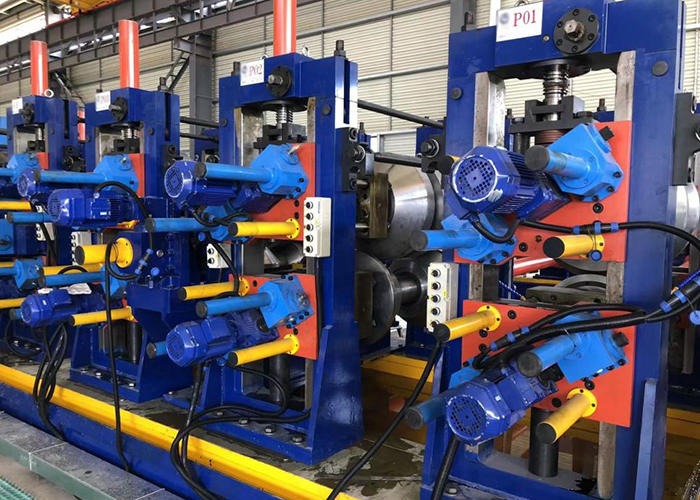
Application-Specific Design Considerations
Oil & gas pipeline (API 5L PSL2): Requires full-body UT,
Charpy tests at -29°C, and low hardness in the weld (≤250 HV10). The mill must
incorporate online hardness monitoring via electromagnetic
sensors.
Structural & mechanical tubing (ASTM A500 / EN
10219): Cost efficiency is paramount. A high-speed line (50–70 m/min)
with quick-change roll sets and minimal heat treatment is
preferred.
Boiler tubes (ASTM A179): Extreme demands on
surface finish and absence of internal flash. A burr-free IRO combined with 100%
eddy current testing + eddy current for subsurface defects is
mandatory.
Water well casing (AWWA C200): Large diameters
(24–48″) with moderate wall thickness; the forming section requires robust side
roll supports to prevent strip buckling.
Why SANSO’s Engineering Approach Lowers Total Cost of Ownership
With over 240 installations worldwide, SANSO provides not just machinery but a
process guarantee. Each ERW mill is simulated by finite element
analysis (FEA) for roll forming forces and weld temperature distribution before
manufacturing. Their service package includes remote digital twin monitoring and
annual ultrasonic calibration. For a recent 8″ line in Texas, SANSO achieved a Cpk of 1.33 for OD tolerance
within the first 48 hours of commissioning—without rework of the skelp edge
preparation unit. The modular weld monitoring suite offers real-time defect flagging, enabling operators to reject individual pipes
rather than whole bundles.
Frequently Asked Questions (FAQ)
Q1: How do I determine the appropriate welding frequency for my ERW
mill when processing thin-wall (≤3 mm) vs. thick-wall (≥12 mm)
coils?
A1: For thin-wall (≤3 mm), use higher frequencies (400–450
kHz) to concentrate heat on the edge surfaces and avoid burning through; a
contact-type weld head is often more stable. For thick-wall (≥12 mm), a lower
frequency (200–280 kHz) with induction coil allows deeper current penetration.
The key is matching the frequency to the electrical resistivity of the steel
grade—for API 5L X70, stay above 300 kHz to prevent heat sinking into the base
metal.
Q2: What is the practical scrap rate improvement from adding an edge
milling machine with automatic burr detection?
A2: In a controlled
trial on a 10″ ERW line (WT 8 mm), conventional sheared edges caused 6.2%
rejects due to lack of fusion. After installing an automated edge mill with burr
detection (linked to online weld geometry
measurement), the scrap rate fell to 2.1% over six months.
Additional savings came from 40% longer squeeze roll life.
Q3: Can I run both round and square tubes on the same ERW mill
without major retooling?
A3: Yes, with certain compromises. A
universal forming section (breakdown + fin passes) designed for round pipes can
produce square/rectangular tubes by adding a turk’s head sizing block after the
welding station. However, the roll tooling for the fin passes must be changed.
Some modern mills use cluster-type fin rolls that
adjust horizontally, reducing shape changeover to 90 minutes.
Q4: How does inline tempering affect the production speed of an ERW
mill?
A4: Inline induction tempering (heating to 550–650°C for 2–5
seconds) typically reduces maximum line speed by 8–12% because the steel
requires enough dwell time to reach the target temperature uniformly. However,
it eliminates separate batch annealing, so overall throughput usually increases
by 15% when producing quenched-and-tempered grades (e.g., API 5L X80Q). The
speed reduction is offset by lower rejection rates.
Q5: What maintenance schedule prevents unexpected power loss from the
solid-state HF welder?
A5: For a 600 kW welder: every 800 operating
hours, inspect water-cooled capacitors and clean dust filters; every 1,500
hours, measure gate driver voltages and replace thermal paste on IGBT modules;
every 3,000 hours, perform a full impedance sweep and recalibrate the phase
control. Use thermography monthly to detect loose busbar connections. Following
this schedule reduces unplanned downtime by over 70%.
Q6: Is it necessary to install a laser ultrasonic system for weld
seam inspection, or is conventional UT sufficient?
A6: Conventional
piezo UT is sufficient for API 5L PSL1 and most structural pipes. However, for
high-frequency thin-wall (<4 mm) lines, piezo probes may suffer from
near-field resolution issues. Laser UT is justified for small-diameter (<60
mm) precision tubes or when the line speed exceeds 70 m/min, as it offers
non-contact scanning. For most operators, phased array UT with water coupling
provides the best cost-performance trade-off.
Make Your Next ERW Line a Competitive Asset
Selecting or upgrading an ERW mill is a strategic decision
that affects pipe quality, energy consumption, and market responsiveness.
Whether you need to expand your product portfolio to include high-strength line
pipe or reduce changeover times for thin-wall mechanical tubing, the engineering
details outlined above separate high-performing plants from the rest.
For a detailed process audit or a proposal tailored to your specific diameter
range and production volume, contact SANSO’s technical sales team
directly. Share your target standards (API, ASTM, EN) and current scrap
rates, and receive a customized improvement roadmap within five working
days.
Send your project requirements
for a rapid quotation — include material grade, OD range, and target weekly
tonnage.