A properly designed coil slitting
line transforms master steel coils into narrow precision strips for
tube welding, roll forming, and stamping operations. However, many mills face
chronic issues: edge burr exceeding 0.1 mm, camber development, and inconsistent
strip width—directly causing weld defects and tool wear. This technical guide
examines each component of modern slitting systems, from pay-off reels to
recoilers, and provides solutions for the five most frequent production
failures. We also look at how integrated steel coil processing
equipment architecture improves slitting line OEE by 22% based on
field retrofits.
1. Core Stations of a High-Precision Coil Slitting Line
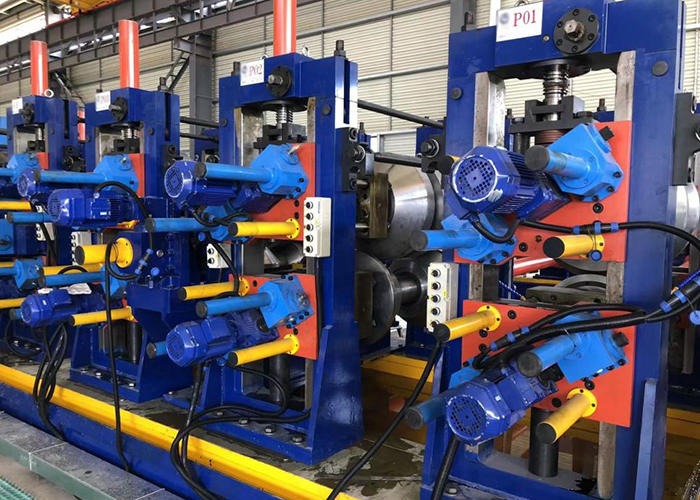
Any industrial coil slitting line consists of six primary
modules. Performance bottlenecks often originate in the synergy between these
stations.
1.1 Uncoiler (Pay-Off Reel) with Tension Control
Hydraulic expansion mandrel – 4‑segment design for coils up
to 25 tons, expansion range 480–610 mm ID.
Drag brake system – Closed-loop pneumatic braking maintains
back tension between 2.5–18 kN to prevent strip flutter before the slitter.
Coil lift car – Integrated load cells for automatic
centering (±2 mm accuracy) reduces edge damage during loading.
For slitting lines processing AHSS (yield strength > 700 MPa), a
double-cone uncoiler with electromagnetic brakes provides finer tension
resolution compared to conventional friction pads.
1.2 Entry Pinch Roll & Flattening Unit
Before slitting, the strip must be leveled to eliminate crossbow and coil
set. A four-high flattening unit with work rolls of 60–90 mm diameter applies
0.5–3% elongation, relaxing internal stresses. Modern lines incorporate a
hydraulic anti-pecking cylinder that lifts the top roll during through-feed of
welded joints, protecting slitter knives from impact damage.
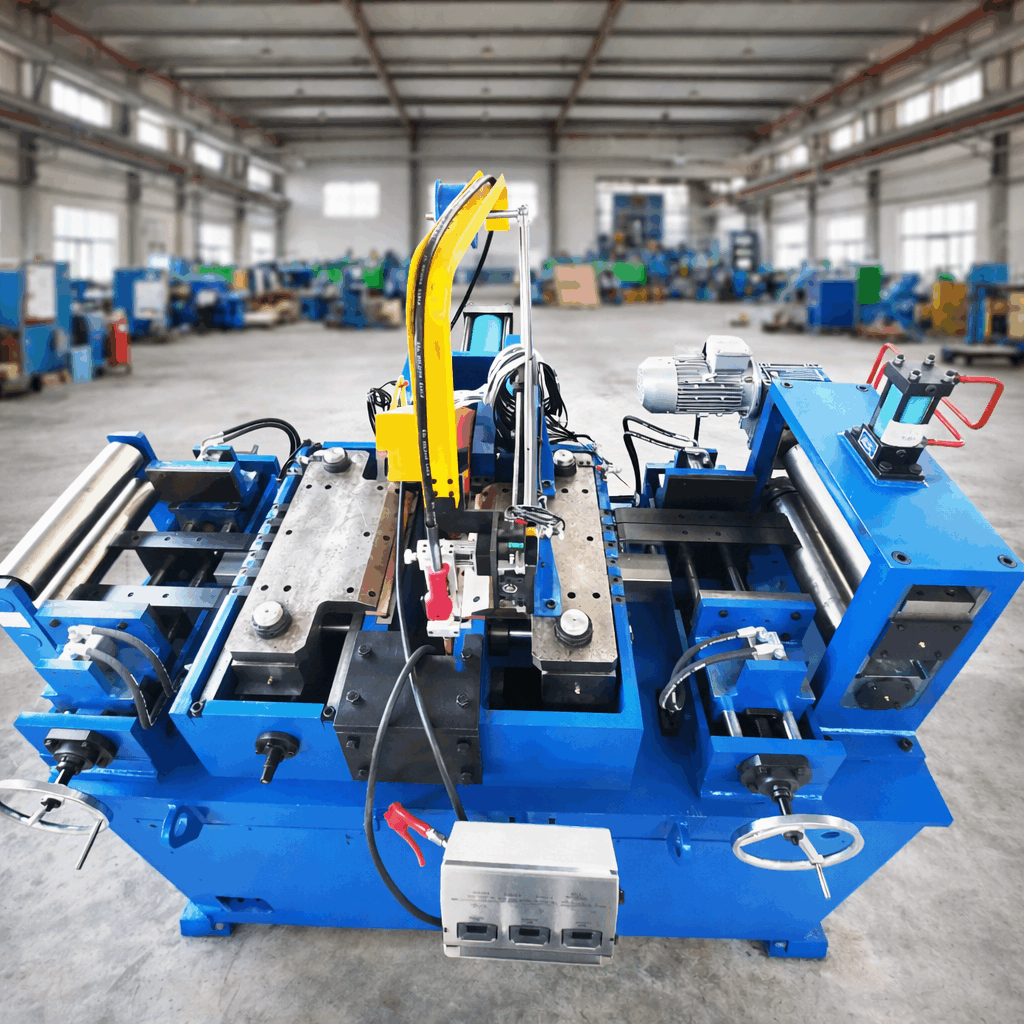
1.3 Slitter Head – The Heart of the Coil Slitting Line
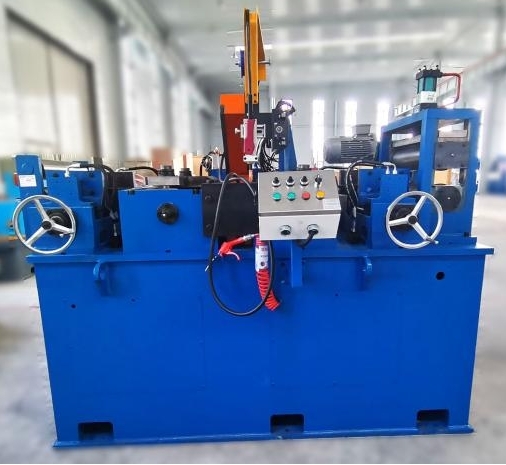
Slitter heads are built around two parallel shafts (arbors) carrying circular
knives and spacers. Key specifications for repeatable slitting include:
Arbor diameter: 180–300 mm depending on strip thickness (up to 12 mm for
heavy-gauge).
Knife material: D2 or M2 high-speed steel, hardness HRC 60–62, with TiN
coating for abrasive materials.
Knife overhang (side clearance): Typically 5–10% of material thickness; for
2 mm strip, clearance 0.10–0.20 mm per side.
Axial runout < 0.02 mm measured at the knife cutting edge.
Quick-change slitter heads (turret type or cassette type) reduce tooling
changeover from 90 minutes to under 12 minutes—vital for job shops running 5–8
coil changes per shift.
1.4 Scrap Winders (Side Trimmers) and Tension Stand
Slit strands must be separated and tensioned individually to prevent weaving.
A tension stand with a set of bridle rolls (S‑wrap) applies isolated drag
tension to each strand. For multistrand slitting (6–12 strips), segmented
tension rolls with independent pneumatic brakes are mandatory. Scrap edges
(20–30 mm each side) are wound by dual scrap winders with automatic ejection;
poorly designed scrap winding often jams, leading to line stoppages.
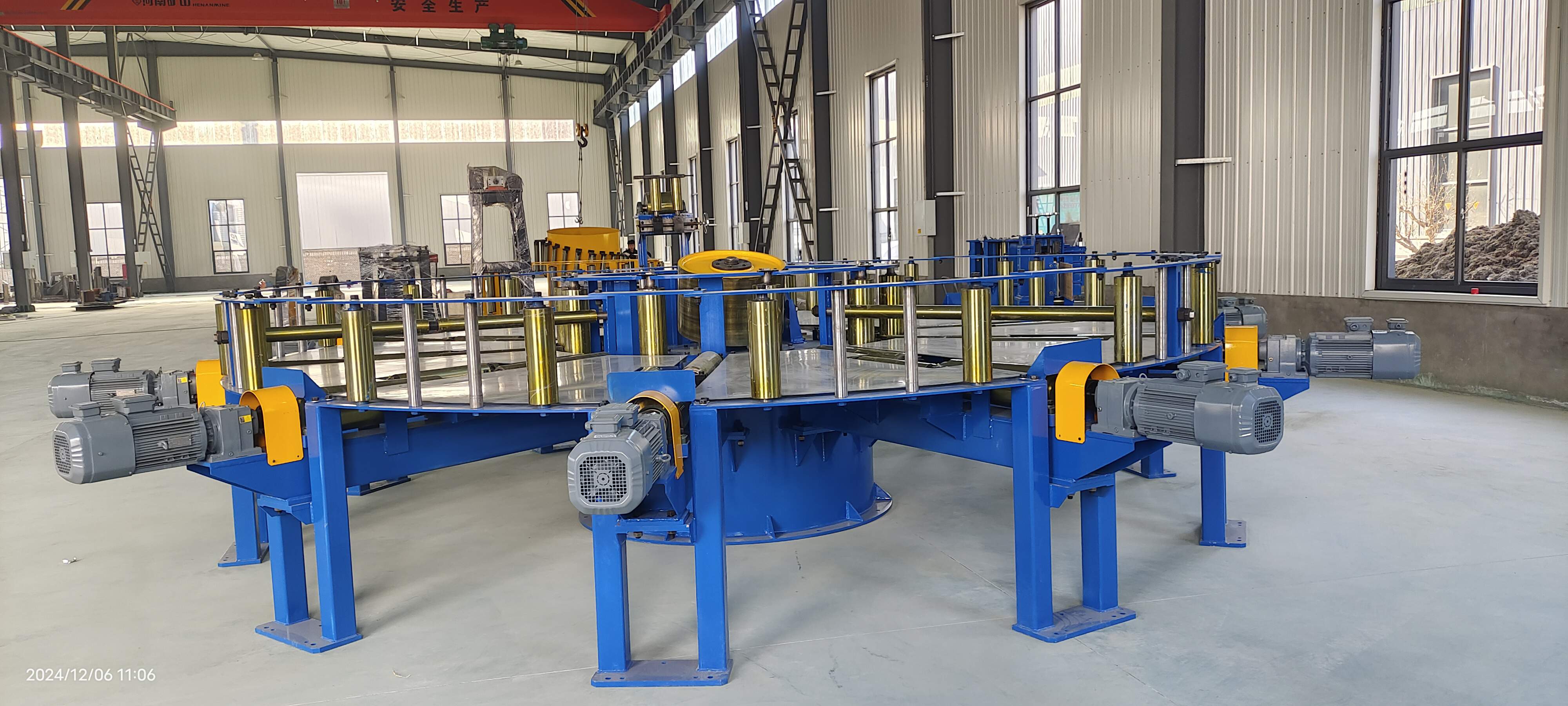
1.5 Recoiler with Overarm Separator
The recoiler rewinds individual slit coils. An overarm separator (tracking
guide) uses pneumatic fingers to maintain gap width between adjacent strands,
preventing interlocking and edge damage. For heavy-gauge strips (>6 mm), a
push-off plate assisted by a coil stripper ensures safe coil removal.
2. Technical Deep-Dive: Eliminating Slitting Burr and Camber
Two defects account for 70% of rejected slit coils. Below we explain root
causes and engineering countermeasures.
2.1 Burr Formation and Control
Root causes: Excessive knife clearance, dull cutting edges,
or asymmetrical knife wear. Burr heights >0.05 mm create weld arc instability
in HF tube mills. Solutions:
Implement laser-based burr detection (after slitter) with closed-loop knife
clearance adjustment (manual or servo-driven).
Use shear-slitting (vs. crush-slitting) for thicknesses ≤3 mm; for thicker
plates, install in-line deburring wheels (rotary brushes with 600–800
grit).
Schedule preventive knife regrinding every 150–200 coil shifts depending on
material abrasiveness (recorded in CMMS).
A properly tuned slitter head keeps burr consistently under 0.03 mm on CQ and
DQ grades, verified by optical profilometer.
2.2 Strip Camber (Lateral Curvature)
Camber occurs when uneven knife penetration or arbor deflection causes one
edge to be slit with more side-roll than the other. Measurable
thresholds: >2 mm over 2 meters is unacceptable for tube forming.
Remedies:
Check arbor parallelism using dial indicators; deviation must be <0.05 mm
over 1 meter.
Use back-up bearings (roller bearings) behind each knife to reduce arbor
bending under slitting force.
Install automatic camber correction system: a pair of infrared edge sensors
downstream, feeding back to a hydraulic steering roller at the entry
guide.
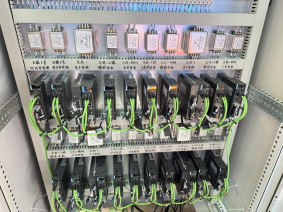
3. Advanced Automation for Coil Slitting Lines
Modern slitting lines incorporate Industry 4.0 features that
directly reduce scrap and setup time. For mills considering an upgrade of their
steel coil
processing equipment, these capabilities should be prioritized:
Recipe-based tooling setup – Stores knife stack width,
spacer order, and side clearance for 200+ coil SKUs. Barcode scanning of knife
cassettes validates configuration.
Real-time width measurement – Laser triangulation sensors
after the slitter measure each strand width every 100 ms, flagging any drift
beyond ±0.15 mm.
Predictive knife wear analytics – Monitoring motor torque
and vibration on the slitter arbor; when torque increases by 12% above baseline,
a regrind alert is triggered.
One European service center reduced setup errors by 80% after integrating a
fully automated slitter head positioning system with SANSO control architecture
(SANSO). The same
line now produces slit coils with width tolerance ≤ ±0.1 mm on 3 mm DP800
material.
4. Industry Pain Points and Solutions Matrix
Based on 45 line audits across automotive and tube manufacturing, the table
below summarizes recurring problems and proven fixes. These directly influence
the ROI of any coil slitting line investment.
Pain point: Scrap winder overfeeding / jamming
→ Install
loop pit or dancer-controlled accumulator before scrap winder; use
frequency-controlled AC motor with torque limiting.
Pain point: Slit strands overlapping during recoiling
→
Add electro-pneumatic strand separators (fingers) with polyurethane coating;
separate tension control per strand using individual dancer rolls.
Pain point: Coil set re-emerging after slitting
→
Increase flattening roll penetration (additional 0.5–1.0% elongation) and add a
straightening cassette with small-diameter offset rolls.
Pain point: Tooling marking on coated material (e.g.,
galvannealed)
→ Replace steel spacers with polyurethane-coated
spacers; use tungsten-carbide-coated knives with polished side faces.
Pain point: High noise levels (>95 dBA)
→ Enclose
slitter head with acoustic panels and install sound-dampening rubber pads under
arbor support stands.
5. Case Example: Upgrading a Legacy Slitting Line to <0.05 mm Burr
A Midwest US processor of API 5L grade coils for line pipe was rejecting 7%
of slit coils due to edge burr >0.12 mm, which caused weld porosity. After
evaluating three suppliers, they selected a complete retrofit package from SANSO, including:
New servo-driven slitter head with 220 mm arbors and quick-lock knife
mounting.
In-line deburring unit with 45° angled carbide brushes.
Automatic knife clearance preset system using laser edge
detection.
Results after 6 months: burr reduced to 0.02–0.04 mm, slit width variation
from ±0.4 mm to ±0.09 mm, and scrap rate down to 1.1%. The line now runs at 85
m/min (previously 55 m/min) without quality trade-offs. This demonstrates that a
modern coil slitting line, when properly engineered, pays back
in under 10 months.
6. Selection Criteria for Slitting Line Components
When procuring new steel coil processing equipment for
slitting operations, technical buyers should request the following data from
vendors:
Arbor deflection curve at maximum slitting force (kN) – should remain below
0.08 mm per meter.
Knife life data (linear meters per grind) for materials similar to your
typical grades.
Scrap winder torque profile – must be able to handle full coil edge volume
without overloading during acceleration.
Changeover time documentation for 5, 10, and 15-strand setups.
Additionally, ask for a witness test at the manufacturer's facility using
your own coil samples; measure burr and camber with independent instruments.
7. Frequently Asked Questions – Coil Slitting Line Engineering
Q1: What is the practical minimum slit width achievable on a
heavy-gauge coil slitting line?
A1: For material thickness 3–6 mm,
the reliable minimum slit width is 50–70 mm with standard arbors. For thinner
gauges (0.5–2 mm), widths down to 20 mm are possible if the line includes a loop
pit and tension-controlled recoiler. Below 20 mm, edge camber becomes hard to
control.
Q2: How often should slitter knives be reground in a
high-productivity environment?
A2: A common rule: every 100–200
operating hours or every 30,000–50,000 linear meters (depending on material
hardness). Monitor slitting motor current; a 15% increase from baseline
indicates knife dulling. Always keep two complete knife sets in rotation to
avoid downtime.
Q3: What is the difference between "loop slitting line" and
"pull-through slitting line"?
A3: Loop slitting uses a horizontal or
vertical accumulator between slitter and recoiler, allowing continuous operation
during coil changeovers (ideal for high-volume). Pull-through (or free-loop)
lines run intermittently — the recoiler stops during coil joining. Loop lines
cost 30–40% more but offer higher OEE for 24/7 production.
Q4: Can a coil slitting line process both hot-rolled (HR) and
cold-rolled (CR) coils without changing knives?
A4: Partially. HR
material (with scale) requires carbide-tipped knives or M2 steel with TiCN
coating. CR can use conventional D2 knives. Swapping between them without knife
change is not recommended because clearance and knife geometry differ. A better
approach: use a quick-change slitter cassette designed for 15‑minute
changeover.
Q5: Does SANSO provide customized slitting lines for narrow strip
production (widths under 30 mm)?
A5: Yes. SANSO offers
micro-slitting configurations with 120 mm arbors, precision ground spacers
(±0.005 mm), and independent tension stands for up to 32 strands. Contact their
engineering department for a feasibility analysis based on your specific gauge
range and annual tonnage.
Conclusion – From Coil to Precision Strip Without Compromise
An optimized coil slitting
line is not merely a cutting station—it is a harmonized system of
tension control, tooling precision, and automation. Addressing burr, camber, and
setup efficiency directly translates to downstream weld quality and lower
operating costs. Whether you are planning a new greenfield line or retrofitting
an existing unit, the technical parameters discussed above serve as a benchmark
for procurement decisions.
Ready to discuss your slitting challenges or request a performance
guarantee for your next project? Reach out to the SANSO slitting
solutions team. We provide detailed line layouts, knife life simulations, and
on-site commissioning support. Send your inquiry today for a consultation with
one of our senior process engineers.
Send Inquiry → (Specify your coil width, thickness range, and desired slit tolerances for a
prompt technical response).