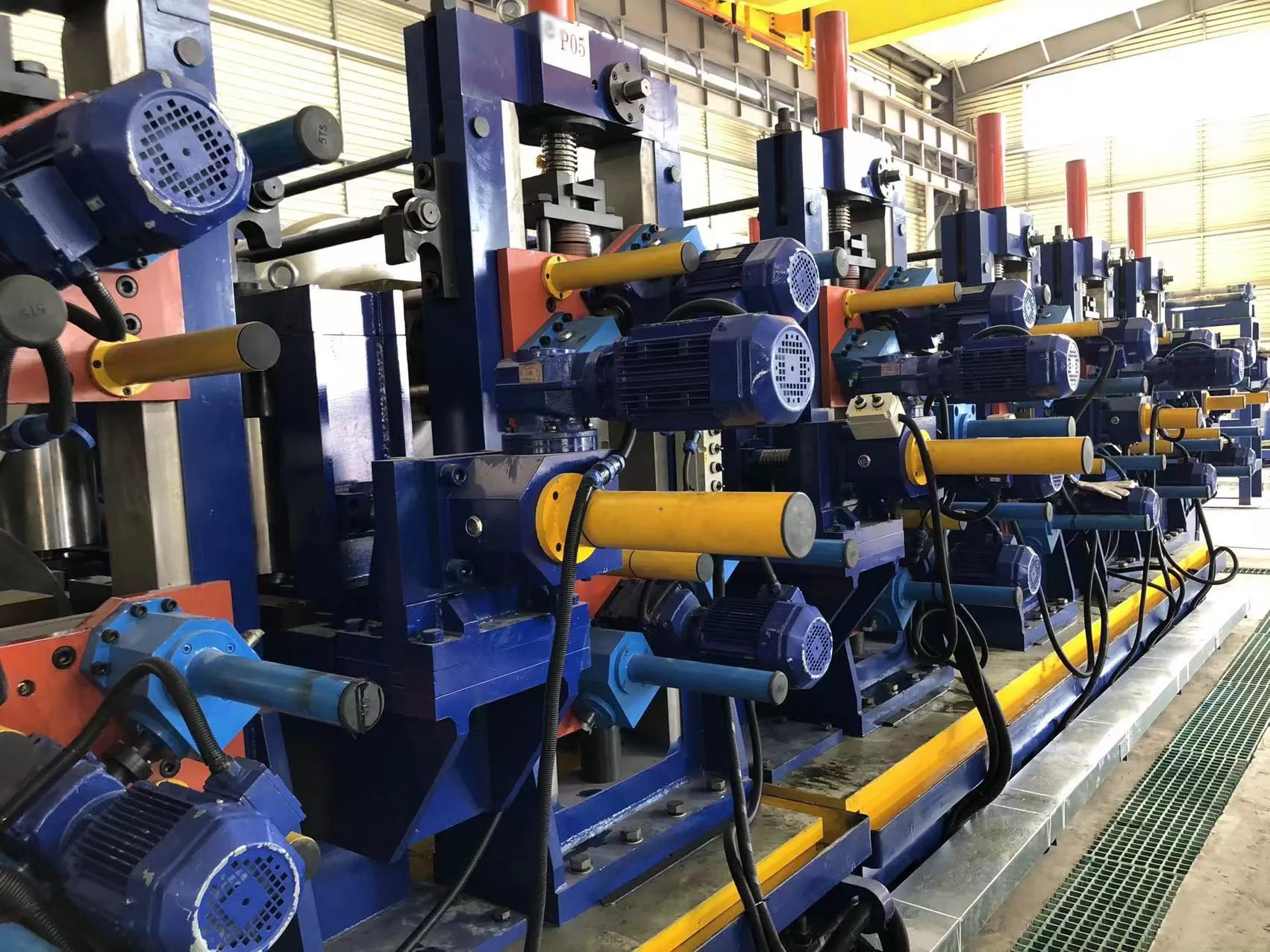
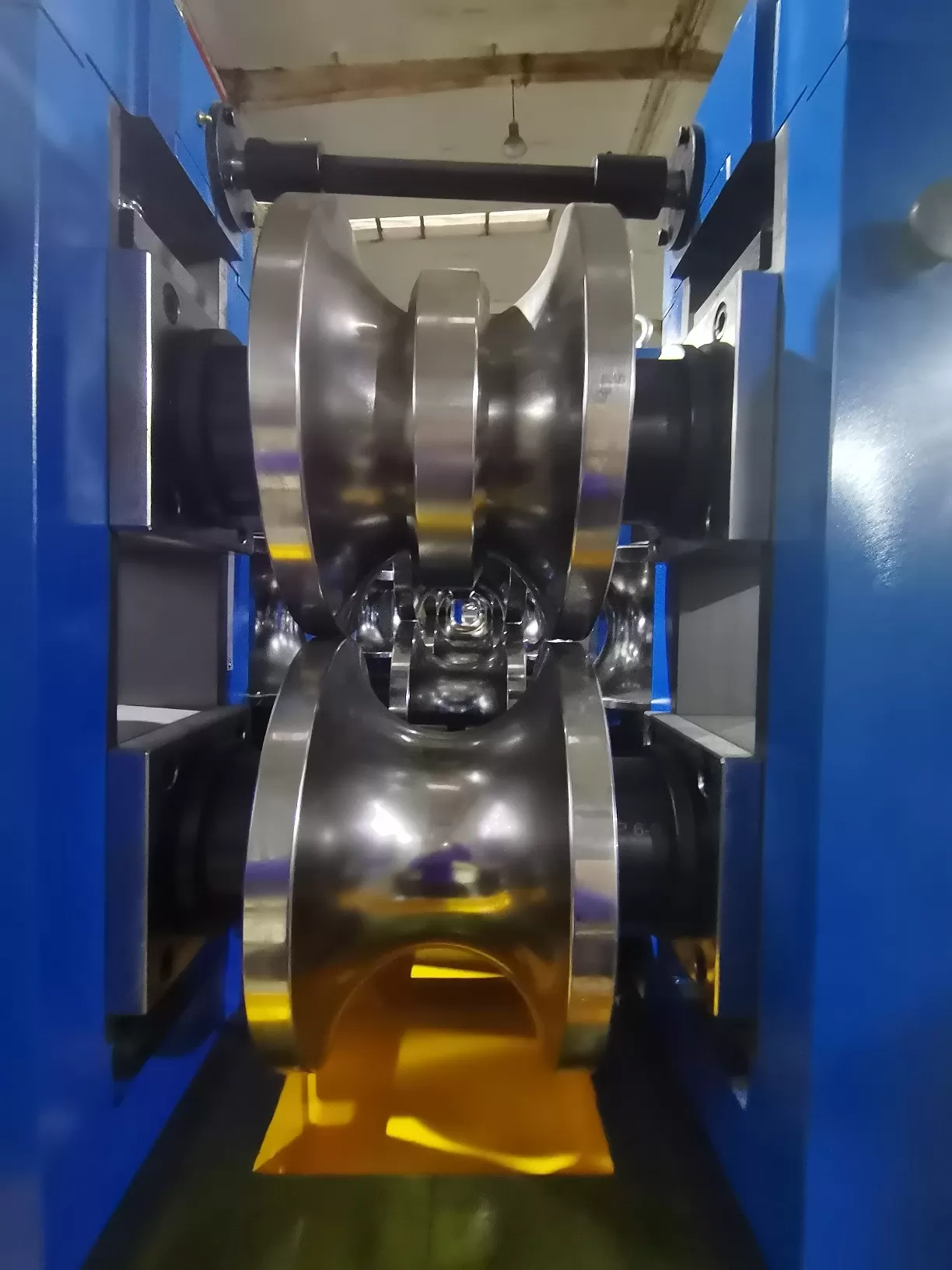
In the domain of precision welded tube and pipe manufacturing, the quality of
the input strip directly dictates the integrity of the final product. A
steel slitting line is not
merely a coil processing accessory—it is the critical first gatekeeper of
dimensional accuracy, edge metallurgy, and downstream forming stability. For
mills producing ERW, laser, or induction welded tubes, any deviation in slit
width, camber, or edge burr propagates directly into weld defects, inconsistent
mechanical properties, and elevated scrap rates. This article provides a
data-driven examination of modern slitting line engineering, common failure
modes, and actionable solutions, drawing from decades of field experience in
high-tolerance strip preparation.
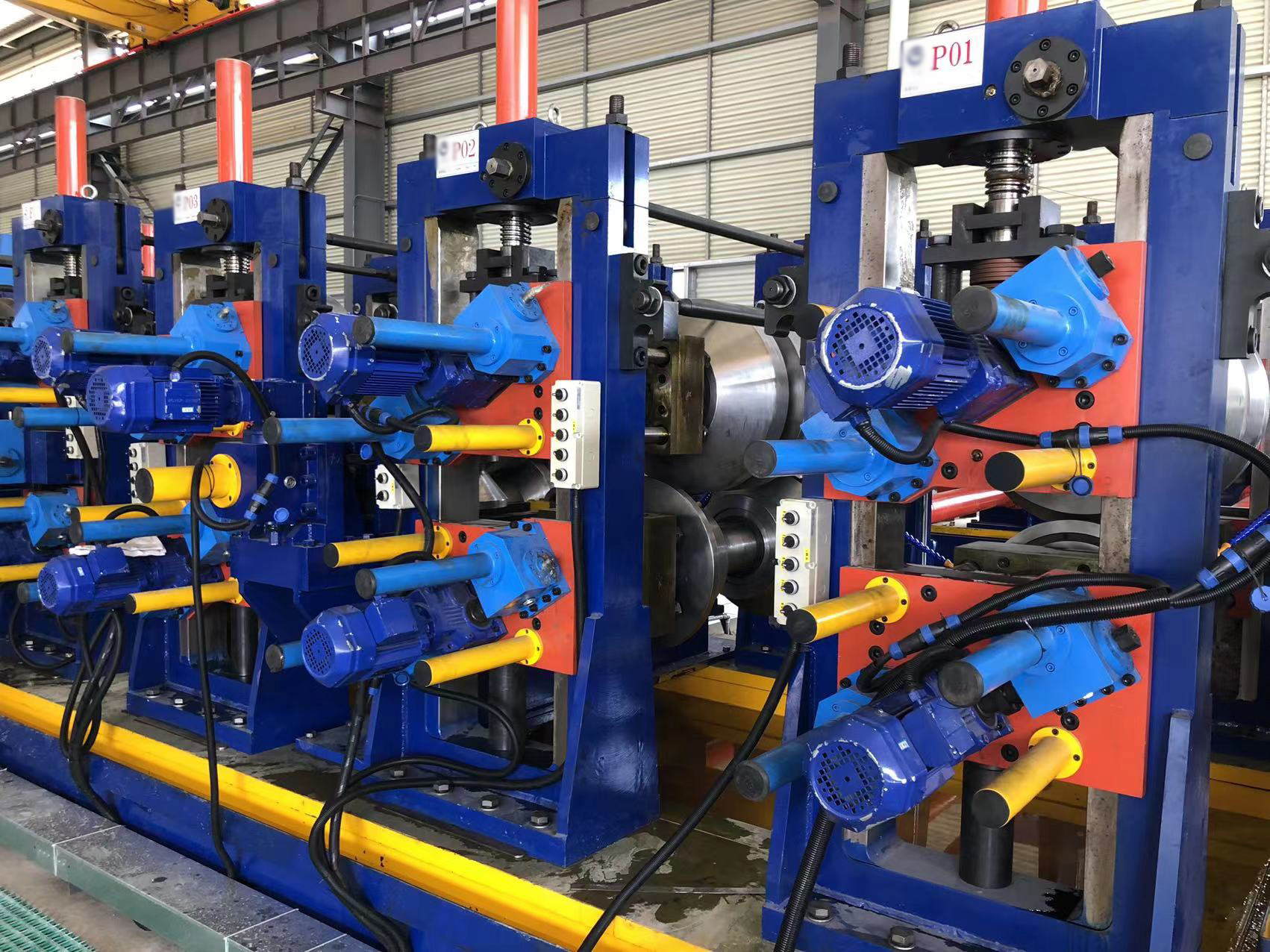
1. Role of Steel Slitting Lines in Downstream Tube Forming Processes
The transition from master coil to multiple slit strands involves precise
longitudinal shearing. A steel slitting line performs rotary shearing using
pairs of circular knives mounted on arbors. For tube mills, the slit strip
becomes the direct feedstock for forming rollers. Any deviation in strip width
tolerance (beyond ±0.3 mm for high-frequency welded tubes) compromises the
welding squeeze ratio, leading to cold welds or excessive inside bead height.
Furthermore, edge condition—specifically burr height and shear droop—directly
influences the weld zone's fatigue life. Advanced mills integrate real-time
width feedback from the slitter to the tube forming section, creating a
closed-loop quality system.
Key functions of an industrial slitting line for welded pipe production:
Precision width partitioning: Converting 1,500mm wide
master coils into multiple narrow strips (from 30mm to 600mm) with consistent
width tolerance.
Edge quality control: Generating clean shear planes with
minimal burr (target ≤5% of material thickness for automotive tubes).
Stress management: Eliminating residual bending stresses
that cause camber—a lateral curvature that destabilizes tube forming.
Surface protection: Preventing roll marks or scratches that
become corrosion initiation sites in finished pipes.
When a tube mill operates with poorly slit coils, the most common
consequences include weld overlap deviations, strip edge folding inside the weld
zone, and accelerated wear on forming rolls. SANSO integrates decades of welding mill expertise
into slitting line designs, ensuring that strip edge geometry is optimized for
high-frequency welding processes.
2. Technical Parameters That Determine Slitting Line Efficiency
To achieve consistent output, a steel slitting line must be
configured based on material grade, thickness range, and yield strength. Below
are the critical engineering parameters that separate industrial-grade slitters
from light-duty processing lines.
Arbor design and rigidity: Hydraulic locking or mechanical
clamping arbors with minimal runout (≤0.02 mm). Deflection under load creates
tapered strip edges. Heavy-duty slitters use arbor diameters of 200–350 mm for
thicker gauges (6–12 mm).
Knife material and clearance: For advanced high-strength
steel (AHSS) up to 1,200 MPa tensile strength, powder metallurgy (PM) steel
knives with carbide coatings extend regrind intervals by 300%. Clearance
adjustment per side (5–10% of material thickness) is critical to avoid secondary
shear cracks.
Tension control system: Loop pits or dancer roll assemblies
maintain back tension between slitter and recoiler. Inconsistent tension causes
strip wandering and camber. Modern lines employ closed-loop load cells
regulating braking torque with accuracy ±2%.
Strip edge deburring: Rotary brushing units or induction
edge conditioning reduce burr to below 0.03 mm for demanding applications like
hydraulic tubing.
Performance benchmarks for a high-precision slitting line include width
tolerance of ±0.1 mm for strips 150–400 mm wide, camber less than 2 mm per 10
meters, and burr height under 0.05 mm on 3 mm HR steel. SANSO engineerings employ finite element analysis
(FEA) to predict arbor deflection and optimize knife geometry before
manufacturing, resulting in tool life increases of up to 40% compared to
conventional designs.
3. Common Defects in Slit Strip – Root Causes and Countermeasures
Field experience across over 200 coil processing installations reveals that
most tube mill quality issues trace back to four primary slitting defects.
Understanding these mechanisms enables targeted corrective actions.
Excessive burr (rolled-over edge): Caused by dull knives,
incorrect clearance (too large), or insufficient overlap (knife penetration).
Solution: Regrind knives with prescribed surface finish (Ra ≤0.2 µm);
set clearance to 6% of thickness for mild steel; maintain overlap of 30–50% of
material thickness.
Periodic camber (lateral curvature): Results from uneven
knife wear across the strip width or inconsistent tension between payout and
recoiler sections. Solution: Perform eddy current inspections on arbor
parallelness; calibrate tension zones using independent AC drives with torque
feedback.
Fractured edges (micro-cracks): Occurs when slitting
high-carbon or spring steels with insufficient side clearance. Material
experiences secondary shear beyond the ductile fracture zone. Solution: increase side clearance to 12-15% of thickness; pre-heat material to 80–120°C if
hardness exceeds 40 HRC.
Strip edge waviness (edge wave): Plastic elongation at
strip edges due to excessive roll tension or misaligned entry guides.
Solution: Implement loop pit control with ultrasonic loop height
sensors; straighten incoming coil with a 7-roll leveler before
slitting.
For tube mills sourcing slit coils externally, implementing an incoming
inspection protocol using laser micrometers and burr gauges can reject
non-conforming material upstream. However, the most reliable approach is to
operate an in-house steel slitting line with SPC monitoring (Statistical
Process Control) of width and burr at 10-meter intervals. SANSO provides turnkey
integration of vision systems that record edge profiles and automatically adjust
knife actuator clearances—reducing setup time by 65%.
4. Advanced Tooling and Setup Methodology for Extending Knife Life
Tooling cost per ton of slit material is often the largest variable operating
expense. Selection of knife steel grades and proper setup procedures directly
impact scheduled downtime.
Knife material recommendations by coil grade:
Mild steel (≤400 MPa): D2 or DC53 tool steel, hardness
58-60 HRC. Expected life: 600-800 cuts between regrinds.
High-strength low-alloy (HSLA - 600 MPa): M2 Molybdenum
high-speed steel, hardness 62-64 HRC. Life: 300-500 cuts.
AHSS / Martensitic (≥950 MPa): Powder metallurgy grade ASP
2052 with TiAlN coating. Life: 150-250 cuts with edge lubrication.
Setup checklist for maximum tool life:
Confirm knife concentricity runout ≤0.01 mm using a dial gauge at three
radial positions.
Apply oil-mist lubrication at entry side (flow rate 20–50 ml/min per knife
pair) to reduce friction heat.
Record clearance for each thickness/grade combination in a digital setup
library – eliminates guesswork.
After each coil change, inspect lower knife for adhered material – clean
with fine stone without rounding the cutting edge.
SANSO provides automated tool management software
within its slitting line control architecture. The system logs knife usage (tons
slit per knife position), predicts remaining tool life, and sends regrind alerts
to maintenance teams, resulting in predictable production planning.
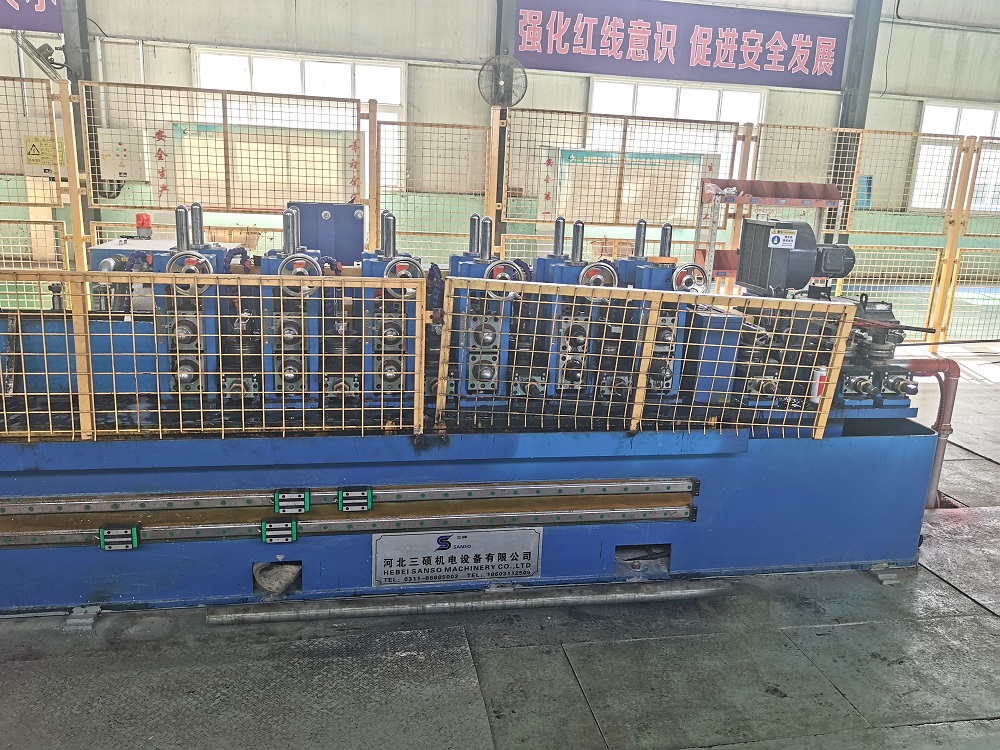
5. Integrating Coil Processing Solutions into Your Mill Workflow
For tube manufacturers aiming to achieve total control over strip quality,
incorporating a dedicated steel slitting line upstream of the
forming section delivers measurable ROI. The integration must account for coil
storage, coil car feeding, strip joining (if continuous operation), and data
exchange with the mill's MES. SANSO designs modular slitting lines with the
following integration features:
Automated coil loading: Hydraulic coil car with centering
sensors reduces operator intervention and prevents edge damage.
Quick-change slitter heads: Cassette-style arbor assemblies
that allow offline tool setup while the line is running another order –
changeover under 12 minutes.
Edge trimming and scrap management: Side trimmers with
fan-type choppers convert scrap edge into manageable pieces, directly feeding to
a pneumatic extraction system.
Real-time data integration: OPC-UA server exports width
measurements, burr alarms, and footage counts to the tube mill's production
dashboard.
Case example: A European manufacturer of structural hollow sections reduced
weld rejection from 4.2% to 0.9% within six months of installing a complete
SANSO slitting and tube mill package. The key improvement was eliminating width
fluctuations that previously caused irregular weld bead geometry. By using
closed-loop width feedback from steel slitting line sensors to adjust forming roll
pressure, the customer achieved first-pass yield above 98.5%.
Frequently Asked Questions (FAQ)
Q1: What is the typical strip width tolerance achievable on a modern
steel slitting line for welded tube production?
A1: For a properly
maintained industrial slitter equipped with hydraulic arbor clamping and digital
width feedback, width tolerances of ±0.10 mm for strip widths under 300 mm and
±0.15 mm for widths up to 600 mm are achievable on materials up to 6 mm thick.
For thicker plates (8–12 mm), tolerance expands to ±0.25 mm. These values assume
consistent coil edge condition and knife sharpness. SANSO lines incorporate
laser width gauges that automatically reject any slit strand exceeding
programmed limits.
Q2: How does slitter arbor design affect strip edge geometry and
subsequent welding quality?
A2: Arbor deflection under slitting
forces is the primary cause of progressive edge taper (thicker on one side than
the other). When the upper and lower arbors misalign by even 0.05 mm, the knife
overlap becomes inconsistent across the strip width. The resulting uneven shear
plane leads to "step" defects on the strip edge that cause arc instability
during high-frequency welding. Rigid arbors with 200 mm minimum diameter and
anti-deflection backing bearings ensure uniform edge geometry across the entire
coil length.
Q3: What is the recommended clearance between slitting knives for
processing dual-phase and martensitic steels (800–1200 MPa)?
A3: For
AHSS grades, clearance per side should be set at 10–14% of material
thickness—higher than the 6–8% used for mild steel. For example, slitting 2.5 mm
DP800 steel requires a clearance of 0.25–0.35 mm per side. Too little clearance
generates secondary shear cracks extending 0.5 mm into the edge; too much
clearance produces a pronounced burr exceeding 0.15 mm. Side clearance must be
verified with feeler gauges at four points around the knife circumference.
Q4: How to systematically troubleshoot intermittent camber that
appears only in the last 30% of a slit coil?
A4: Intermittent camber
localized to the coil tail indicates decreasing tension as the payout coil
diameter shrinks. This is common on lines without compensated unwinding brake
control. Solution: Replace mechanical friction brakes with an AC motor drive in
regenerative mode, maintaining constant tension (setpoint 50–70 N/mm² of strip
cross-section). Additionally, inspect the loop pit dancer roll for free
movement; sticking pivot bearings cause tension spikes that permanently deform
strip edges. Implement tension monitoring with predictive algorithms that adjust
braking torque based on real-time coil diameter calculation.
Q5: Can a steel slitting line process advanced high-strength steels
(AHSS) for automotive tubes without edge micro-cracking?
A5: Yes,
but three modifications are required: 1) Use carbide-coated PM steel knives with
edge radius of 0.03 mm. 2) Introduce a strip edge heating system (induction or
infrared) to raise edge temperature to 120–150°C, reducing crack propagation. 3)
Increase knife overlap to 60% of thickness and incorporate a post-slitter edge
rolling unit that applies compressive stress along the shear zone to close any
micro-tears. SANSO has delivered AHSS slitting lines capable of processing 3 mm
martensitic steel (1200 MPa) at 60 m/min with burr <0.04 mm and zero
detectable edge cracks via magnetic particle inspection.
Q6: What maintenance schedule best maximizes uptime for a high-volume
slitting line?
A6: Based on 24/5 operations: Daily – clean knife
areas and check lubrication mist nozzles; weekly – measure arbor runout and
adjust tension dancer; monthly – perform regrind on upper knives (assuming 400
ton throughput); quarterly – certify load cell calibration and replace scraper
rubbers; annually – ultrasonic inspection of arbors and bearing housings. Using
an IoT-enabled condition monitoring system (as offered by SANSO), vibration
sensors on arbor bearings can predict failures 200 hours in advance, enabling
scheduled maintenance during shift changes.
Q7: How does strip edge burr height correlate with HF welding defects
in API 5L line pipe?
A7: For high-frequency welded pipes, burr
heights exceeding 0.10 mm on 6 mm wall thickness cause localized current
concentration during welding, leading to "burn-through" on the inside weld bead.
Even smaller burrs (0.05 mm) can trap oxides that reduce CVN impact values by
25-30%. The industry standard for line pipe applications requires burr ≤0.04 mm
or removal via scarfing tool after slitting. Always specify a burr measurement
station (laser profilometer) at the slitter exit for critical pipe grades.
Ready to eliminate strip-related welding defects and achieve
consistent tube dimensions? For a customized steel slitting line engineered to your material mix
and tube specifications, request a technical consultation with SANSO engineers. We provide process audits, tooling
optimization studies, and line automation packages that deliver measurable ROI
within 12 months.
Complete our inquiry form to receive a detailed slitting
line proposal, including capacity calculations, knife selection guide, and
integration timeline. Achieve zero-defect strip edges for your welded tube mill
today.
Contact SANSO now for a no-obligation technical assessment of your coil
slitting requirements.