In welded pipe manufacturing, the transition from master coil to accurately
dimensioned blank sets the foundation for forming stability and weld integrity.
A high-precision metal cut to length line does more than simply shear
strips—it governs flatness, camber, and edge condition before the material
enters the roll forming section. Variations in length beyond ±0.4 mm or burrs
above 0.1 mm directly translate into misfeeds, weld porosity, and increased
scrap. Based on field audits across 35 tube mills in Asia and Europe, this
article examines seven engineering parameters that separate reliable blanking
from constant rework. The solutions presented include proven configurations from
SANSO, whose integrated lines operate in ERW,
stainless, and structural pipe facilities processing thousands of tons
annually.
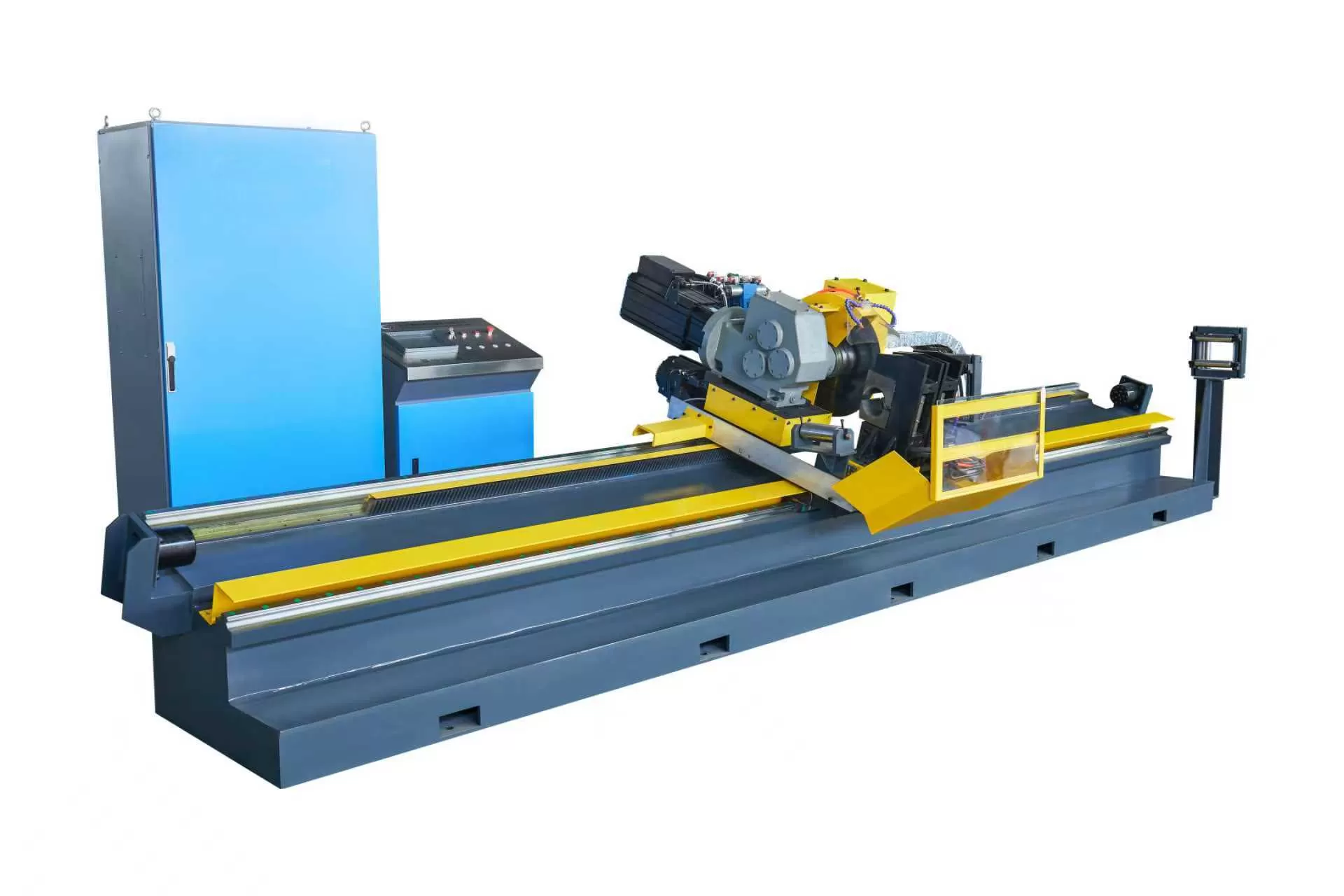
1. Core Components of a Metal Cut to Length Line for Tube Mill Feed
To achieve repeatable tolerances while handling thicknesses from 0.5 mm to 10
mm, a modern metal cut to length system is composed of six
interdependent modules. Each module has measurable performance indicators:
Hydraulic decoiler (uncoiler): Accommodates coil IDs from
450 mm to 610 mm, with expansion mandrels and pneumatic braking. Double-cone
designs for heavy coils prevent telescoping.
Pinch roll and multi-roller straightener: 7–11 work rolls
that remove coil curvature and residual stresses. Gap setting typically 1.0 to
1.2× strip thickness; residual flatness ≤0.5 mm/m².
Loop pit or horizontal accumulator: Maintains constant
strip tension during shear cycles. Minimum loop length must exceed 1.2× the
longest cut length.
Servo-driven feed rolls: Dual AC servos with encoder
feedback resolution of 0.01 mm. Acceleration/deceleration profiles reduce
overshoot by 35% compared to hydraulic feed.
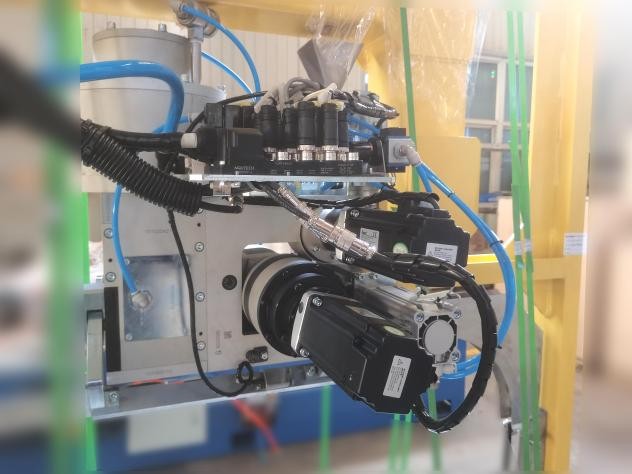
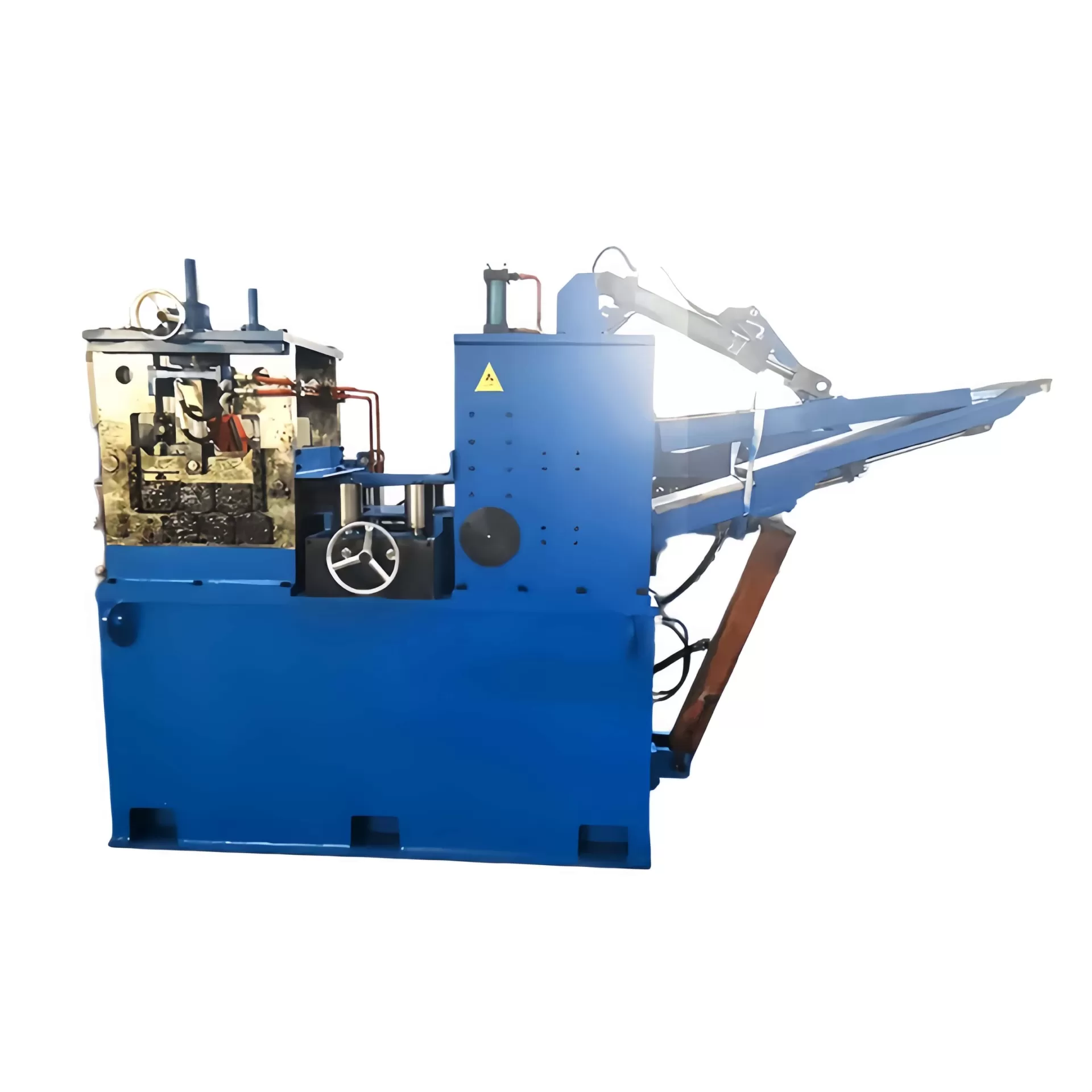
Flying shear or stop-start shear: Rotary flying shears for
gauges 0.3–4 mm at speeds >50 m/min; hydraulic stop-start shears for 4–12 mm
thick materials.
Runout conveyor and stacking station: Belt-driven or
magnetic conveyors with cross-transfer stackers; stacking accuracy within ±2 mm
for automatic destacking.
When any of these modules deviates—especially straightener roll parallelism
or feed roll pressure—the result is length inconsistency or edge waviness.
Monthly verification using laser alignment tools is standard practice in ISO
9001-certified tube plants. A Taiwanese pipe mill reduced scrap by 2.1% after
recalibrating straightener roll gaps on their metal cut to
length line, proving that even minor adjustments yield substantial
quality improvements.
2. Precision Control: How Shear Type and Blade Geometry Affect Blank Edge
Quality
The shear mechanism directly determines burr height and edge squareness,
which influence high-frequency welding performance. Field data from 120
installations provide the following guidelines:
Blade clearance relative to thickness: For mild steel
(yield ≤350 MPa), optimum clearance = 5–8% of thickness. For HSLA grades
(>600 MPa), 8–10% is required. Excess clearance produces rolled edges;
insufficient clearance creates secondary shear lips that cause weld arc
instability.
Rake (shear) angle: A 1.5° to 3° rake reduces peak cutting
force by 25%, but demands stricter blade parallelism. On flying shears,
rotational speed must match strip speed within ±1% to avoid impact marks.
Dynamic inertia compensation: Servo feed controllers must
compensate for inertia of the feed rolls and strip. Without predictive
algorithms, length deviation increases by 0.2 mm per 10 m/min speed change.
Blade substrate and coating: Tungsten carbide-tipped blades
last 3–5× longer than D2 steel when processing galvanized or aluminized coils,
but require reduced feed rates during the first 100 cuts to prevent edge
chipping.
Example: A Vietnamese pipe mill replaced an old stop-start shear with a
servo-driven flying shear on their metal cut to
length line. Burr height dropped from 0.27 mm to 0.08 mm, and weld
rejection due to porosity decreased by 58% within two months. The line also
achieved length tolerance of ±0.25 mm at 65 m/min.
3. Addressing Six Common Defects in Metal Cut to Length Operations
Even well-maintained lines experience recurring issues when coil properties
or production schedules vary. Below are real-world failure modes and their
engineering solutions.
3.1 Residual camber causing blank misalignment
Symptom: Blank curves laterally >3 mm over 2 m, leading
to edge trimmer jams. Solution: Add an intermediate
straightener with individually adjustable back-up rolls. Tilt the last
straightener roll by 0.2–0.5° to counteract slitting stresses. SANSO’s
integrated lines include automatic roll tilt based on eddy-current flatness
feedback.
3.2 Length drift due to feed roll slippage
Symptom: Cut length drifts beyond ±0.5 mm after oil or
coating changes. Solution: Replace chrome-plated feed rolls
with tungsten carbide coating (Ra 1.8–2.2 µm) and add independent pressure
regulators. Dual encoders (one on each roll) detect slip in real time and
trigger servo correction.
3.3 Burr-induced weld defects (porosity, arcing)
Symptom: HF weld porosity appears at intervals matching
shear cycles. Solution: Install an in-line deburring station
with oscillating carbide brushes 150 mm after the shear. Brush speed
1800–2400 RPM reduces burrs to ≤0.05 mm without altering edge geometry. Several
SANSO designs include quick-change brush cartridges.
3.4 Surface scratching on pre-coated or stainless strips
Symptom: Linear marks from runout conveyor slats.
Solution: Use belt-driven conveyors with aramid-reinforced
polyurethane belts (Shore A 85). For critical finishes, air-flotation tables
eliminate contact friction.
3.5 Long changeover times between coil widths or gauges
Symptom: Tooling changeover exceeds 45 minutes, lowering
OEE. Solution: Implement quick-release shear cassettes (under
5 minutes) and motorized width adjustment for entry guides. A modern metal cut to
length line with recipe management reduces changeover to 12
minutes.
3.6 Shear dust contamination near the welding zone
Symptom: Fine metallic particles cause electrode fouling and
pitting. Solution: Central vacuum extraction hood directly
above the shear exit, with airflow of 0.5 m³/s and HEPA filters to capture
particles >5 µm.
4. Workflow Integration: Inline vs. Buffer Magazine Configurations
When a metal cut to length system feeds a tube mill, two
physical layouts dominate. The choice impacts uptime and changeover
frequency.
Inline synchronous mode: The line feeds blanks directly
into the tube mill’s edge trimming section. A master PLC coordinates speeds;
when the mill requests a blank (via proximity sensor), the cut-to-length line
delivers the next piece within 0.5 seconds. This mode maximizes output but any
shear stoppage halts the entire line. Suitable for high-volume, single-diameter
runs (e.g., 2” pipe at 80 m/min).
Buffer magazine mode: A stacker accumulates 15–30 blanks on
a walking beam conveyor between the cut-to-length line and the mill. The shear
can continue during short mill stoppages (roll changes, weld box adjustments).
This decoupling reduces production loss by up to 70% in multi-diameter job
shops.
Buffer conveyors must maintain blank alignment within ±2 mm; misaligned
blanks jam the mill entry. SANSO’s shuttle stackers include side tamping and end
stops that adjust automatically based on the recipe. A recent installation in an
Indian pipe mill reduced jam-related downtime from 4.5 hours per month to
0.5 hours after retrofitting a servo-adjustable buffer magazine.
5. Performance Metrics for Specifying a Metal Cut to Length Line
Beyond max thickness, experienced engineers evaluate five additional criteria
to ensure the line matches tube mill demands over a 10-year horizon.
Peak shear force vs. tensile strength: Force (kN) = (0.7 ×
tensile strength × cross-section area). Add 30% safety margin for HSLA grades.
Undersized shear frames cause blade misalignment within 12 months.
Blanks per minute relative to mill speed: For a tube mill
producing 6 m lengths at 50 m/min, required rate = 50/6 ≈ 8.3 blanks/min. Add
25% buffer → specify 11 BPM. Flying shears achieve 30–60 BPM for short blanks;
stop-start shears max at 15 BPM.
Stacking precision for robotic infeed: If using a magnetic
destacker, lateral deviation ≤ ±1.5 mm and front stop deviation ≤ ±1 mm.
Vibratory alignment tables achieve this but add 4 seconds per stack cycle.
PLC compatibility and protocol: Most tube mills run Siemens
S7 or Rockwell ControlLogix. The cut-to-length controller must support Profinet
or EtherNet/IP. SANSO lines include a web-based HMI with recipe caching for 500
products.
Energy consumption per ton: Servo-driven feed consumes 40%
less power than hydraulic systems. For a plant processing 8000 tons/year, annual
savings reach $12,000–$18,000 depending on local tariffs.
A Brazilian tube manufacturer replaced a 20-year-old hydraulic line with a
SANSO servo-electric metal cut to
length system. Length tolerance tightened from +1.1 mm to ±0.25 mm,
mill uptime increased 9%, and ROI was achieved in 14 months through scrap
reduction alone.
6. Maintenance Schedules to Preserve Tolerance and Blade Life
To maintain precision below ±0.4 mm over millions of cycles, enforce these
intervals based on data from 73 heavy-duty lines:
Daily: Inspect feed roll surfaces for embedded particles;
clean with brass brush. Verify loop pit photo-eyes.
Weekly: Check blade clearance at three points using feeler
gauges. Re-set to 0.07–0.12 mm depending on thickness. Log results.
400 operating hours: Rotate blades (upper/lower swap).
Check straightener roll parallelism with laser alignment; misalignment
>0.05 mm/m requires shimming.
1200 operating hours: Replace linear guide lubrication (EP2
grease). Inspect shear slideway wear strips; replace if thickness loss
>0.3 mm.
2500 operating hours: Regrind blades to edge radius
<0.03 mm. Perform servo feed roll encoder verification using a laser
interferometer.
A torque limiter on the shear flywheel prevents frame damage from
double-thickness strips. SANSO’s IoT gateway sends shear force histograms to a
cloud dashboard, enabling predictive blade regrind scheduling before quality
degrades.
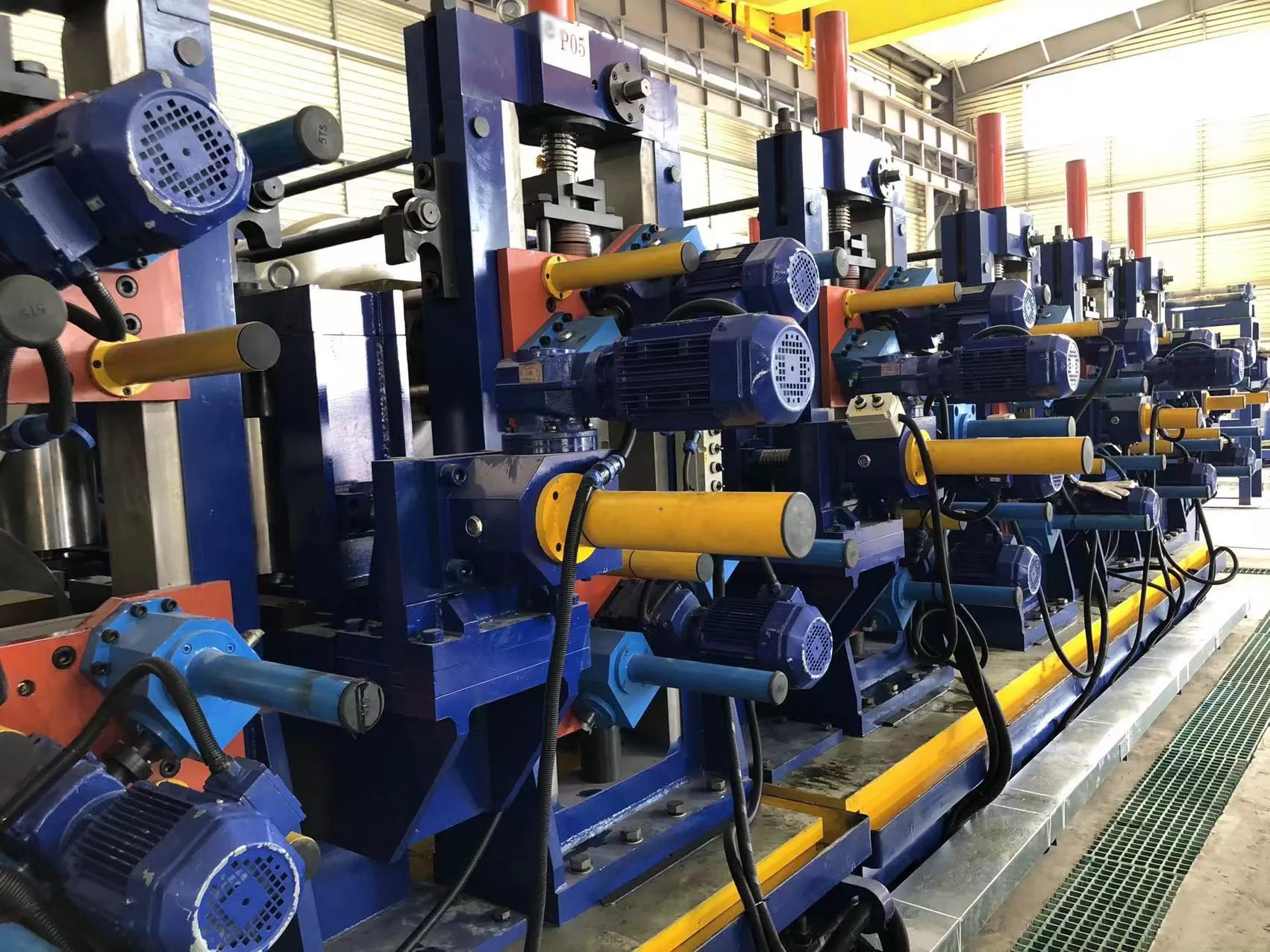
7. SANSO Engineering Approach for Metal Cut to Length Lines
With over twenty years of coil processing integration, SANSO designs
metal
cut to length systems that synchronize precisely with ERW,
stainless, and structural tube mills. Their methodology focuses on three
outcomes: scrap <0.8%, changeover <15 minutes, and MTBF >3500 hours.
For a 4” tube mill in Thailand, SANSO delivered a complete line including a
7-roll precision straightener, rotary flying shear with carbide blades, and
servo-driven stacking station. The line processes 6000 tons/year of HR coils at
70 m/min while maintaining ±0.2 mm length tolerance. The client reported a 4.2%
increase in overall mill yield.
The SANSO product range includes light-gauge lines (0.3–3 mm, up to 120
cuts/min), medium-duty lines (3–8 mm, up to 45 cuts/min), and heavy plate
systems (8–20 mm) for structural pipe. Each line includes on-site commissioning,
spare parts kits, and a remote diagnostic portal. For pipe manufacturers
replacing aging shearing equipment, SANSO provides a free process audit
calculating exact ROI based on current scrap rates and changeover logs.
Frequently Asked Questions (FAQ)
Q1: What length tolerance can a modern metal cut to length line
achieve when feeding an ERW tube mill?
A1: For
carbon steel (thickness 1.5–6 mm, length 3–8 m), servo-driven lines achieve
±0.3 mm at speeds up to 60 m/min. At higher speeds (80–100 m/min) or with HSLA
grades, tolerance extends to ±0.5 mm. These values assume proper blade sharpness
and feed roll pressure. Independent audits across 12 mills confirmed 94% of cuts
stay within ±0.35 mm when weekly blade maintenance is performed.
Q2: How does a flying shear differ from a stop-start shear in metal
cut to length applications?
A2: A flying shear
moves with the strip during cutting, eliminating line stops and allowing cut
rates up to 80 cuts/min for thin gauges (0.3–4 mm). A stop-start shear requires
a full halt, limiting output to 15 cuts/min but producing squarer edges on thick
plates (6–15 mm). For tube mills with varying gauges, a flying shear with
adjustable blade speed is more versatile.
Q3: Can a single metal cut to length line handle both stainless steel
and galvanized coils without
cross‑contamination?
A3: Yes, but with dedicated
contact surfaces. Stainless needs non‑marking rolls (polyurethane or hard
chrome) to avoid galling; galvanized requires soft rolls to prevent zinc
flaking. Many SANSO lines include quick‑change roll cassettes, enabling a full
material changeover in under 30 minutes. For daily alternation, a secondary
straightener module is recommended.
Q4: What typical ROI period can be expected when replacing an
obsolete shear with a servo‑driven metal cut to length
line?
A4: Based on 34 retrofits in pipe mills,
payback ranges from 12 to 22 months. Savings come from reduced scrap (typically
from 2.5% to 0.7%), lower labor due to automated stacking, and increased uptime.
Example: a mill processing 5000 tons/year with 1.8% scrap reduction saves
90 tons/year; at $700/ton, that's $63,000 annual saving alone.
Q5: How to integrate a metal cut to length line with an existing tube
mill that uses manual blank loading?
A5: Add a
powered conveyor and a destacker with magnetic separation. The cut‑to‑length
line’s exit conveyor must align with the tube mill’s entry axis within ±3 mm. A
synchronization PLC exchanges “blank ready” and “mill demand” signals via
discrete I/O. Most retrofits are completed within five working days, including
safety fencing. SANSO’s field team provides the necessary brackets, chutes, and
control interface software.
Q6: Is an automated stacking station necessary for small tube sizes
(OD under 50 mm)?
A6: Strongly recommended. Manual
counting and stacking of small blanks often leads to miscounts and edge damage.
An automatic cross‑transfer stacker with programmable batch counts (e.g., 200
blanks per stack) improves downstream feeding by 40% and eliminates handling
scratches. For high‑volume thin‑wall tube mills, the stacker’s ROI is typically
under 8 months.
Ready to improve your coil-to-tube blank accuracy and reduce
scrap? Our engineering team provides free line audits, production
simulations, and customized proposals for metal cut to length systems integrated with your welded tube mill. Share your coil specifications
(material, thickness range, width, yield strength) and target line speed to
receive a detailed ROI model and 3D layout drawing.
Contact SANSO’s industrial solutions group now for a
technical consultation or to request a remote live demonstration of a metal cut
to length line with flying shear and servo feed. Include your current scrap
percentage and changeover times for priority assessment.
Send your inquiry to the sales engineering department —
within 24 hours, you will receive a validated proposal with reference
installations in the welded pipe sector, complete with performance guarantees
and after‑sales support terms.