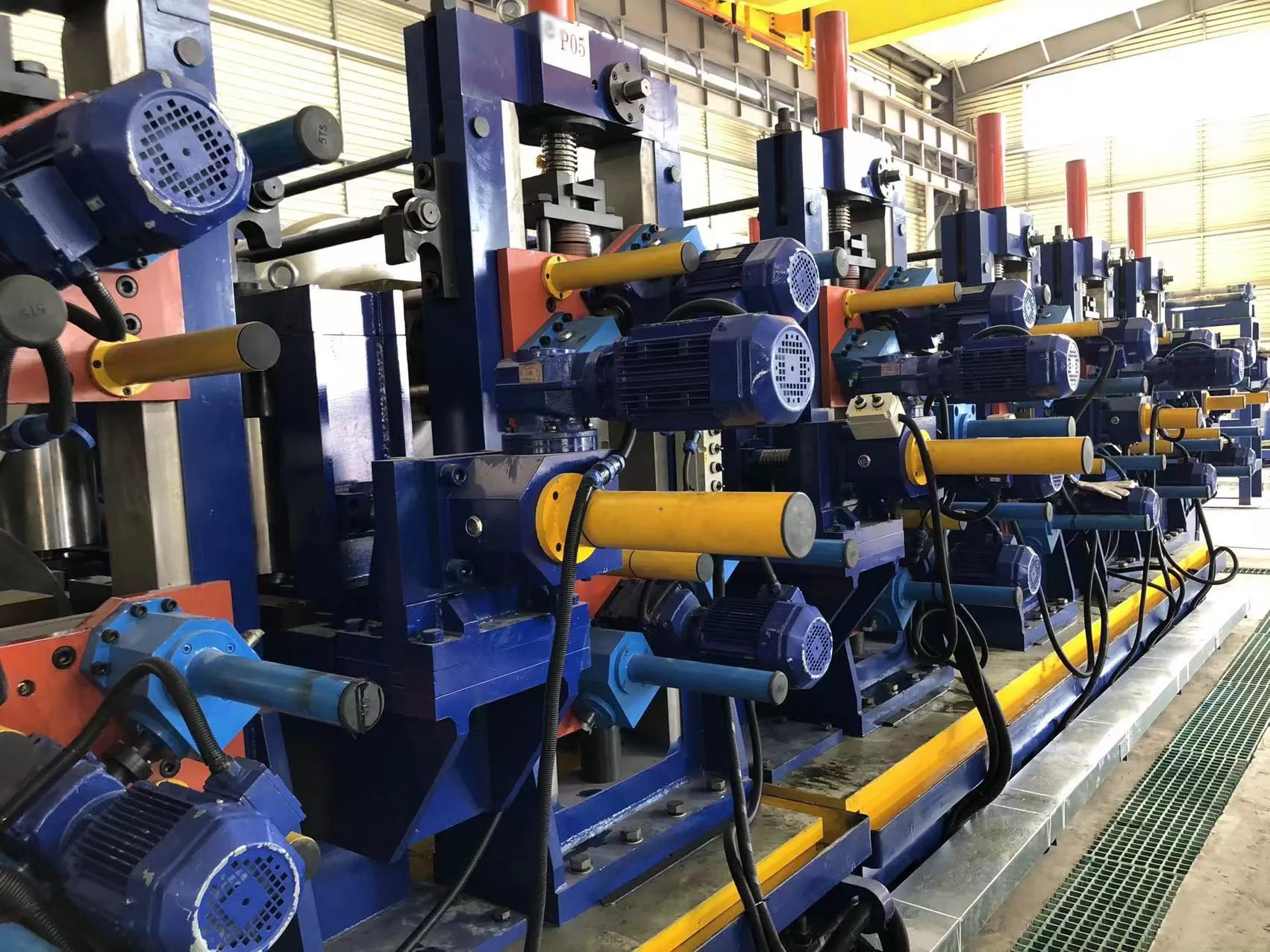
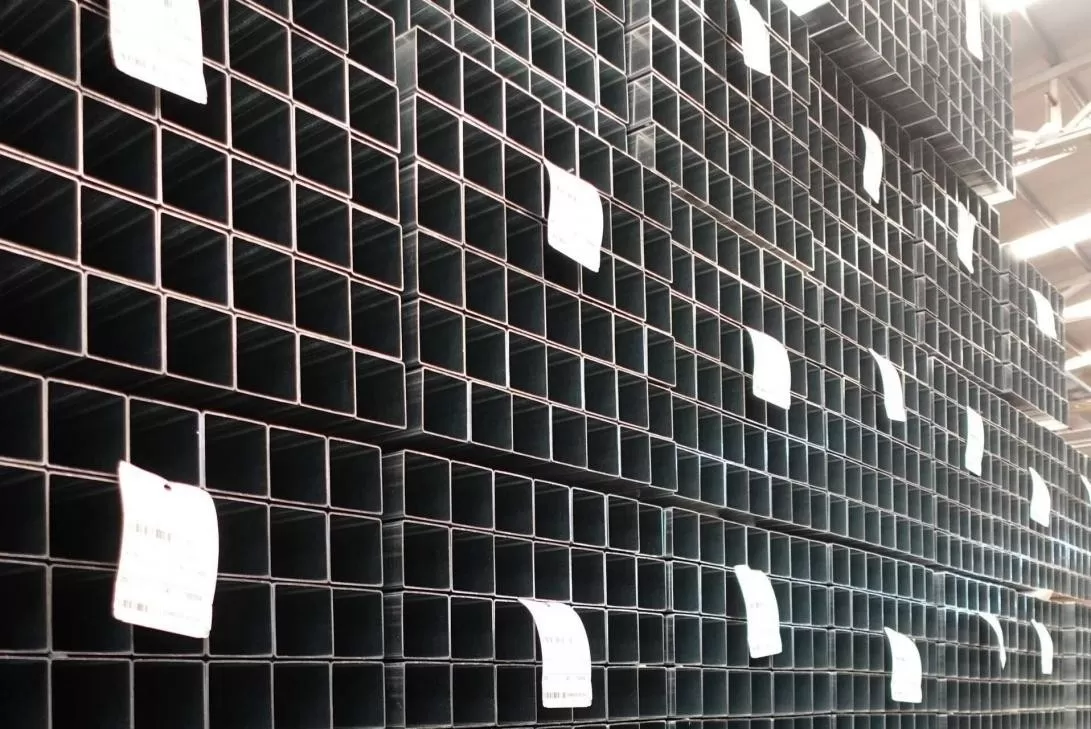
Structural hollow sections have become indispensable components in modern
civil engineering, heavy machinery manufacturing, and transport infrastructure.
The production of these high-integrity profiles demands manufacturing machinery
capable of high precision and consistent performance. A high-integrity
square tube
mill represents a highly specialized system designed to
continuously process flat metal coils into precise square and rectangular
profiles. Achieving the exact tolerances required for architectural and
industrial applications depends on a series of highly synchronized mechanical,
metallurgical, and thermal processes.
Manufacturing high-quality square hollow sections (SHS) requires a deep
understanding of strip deformation mechanics and continuous roll forming. Unlike
standard cylindrical pipes, square profiles present unique challenges in metal
flow, stress distribution, and corner radius consistency. Proper design of the
forming line determines not only the dimensional accuracy of the end product but
also the operational longevity of the tooling and the structural soundness of
the welded seam.
Forming Methodologies: Direct Forming vs. Round-to-Square Conversion
The choice of forming methodology is one of the most significant design
decisions in structural profile production. Industrial manufacturers typically
employ either the traditional round-to-square conversion process or the modern
direct-forming method. Each process features distinct mechanical characteristics
that influence the structural properties of the finished tube.
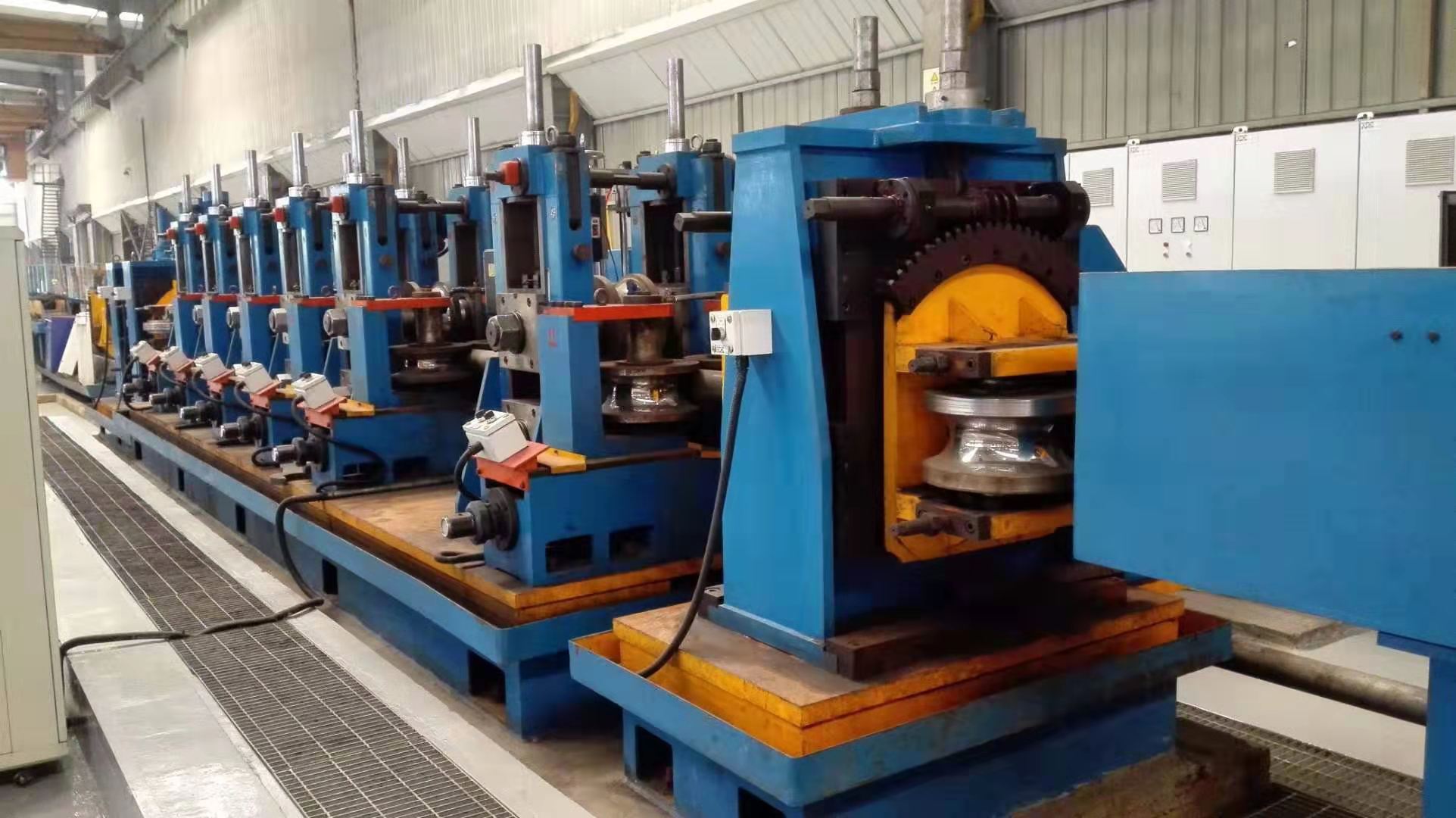
The round-to-square method first deforms the flat steel strip into a
cylindrical pipe through a series of breakdown and fin-pass rolls. After the
round profile is welded and cooled, it passes through a sizing section equipped
with shaping rolls that progressively flatten the sides and sharpen the four
corners. While this method is highly effective for producing a wide range of
standard round tubes and simple profiles on a single line, it subjects the steel
to secondary cold-working stresses. This dual-stage deformation can lead to
uneven yield strength distribution across the cross-section, particularly near
the corners.
Direct forming, on the other hand, bypasses the intermediate cylindrical
stage. The flat strip is directly shaped into a square profile prior to the
welding station. This method is highly favored for heavy-duty structural
applications due to several engineering advantages:
Reduced Strip-Edge Stretching: Direct forming minimizes the
tensile stress applied to the strip edges during the initial breakdown stages,
reducing the potential for edge wave defects.
Consistent Wall Thickness: By shaping the corners directly,
the material flow is controlled more evenly, preventing excessive thinning at
the outer corner radii.
Energy Efficiency: Eliminating the need to over-bend a
round tube into a square profile reduces the overall mechanical force required,
lowering the electrical power consumption of the main drive motors.
Sharp Corner Radii: The tooling geometry in direct-forming
configurations allows for tighter, more precise corner radii, which is highly
desirable for structural connections.
For operations requiring high-speed production of structural profiles with
demanding dimensional tolerances, custom-engineered direct-forming systems
designed by custom engineering partners like SANSO provide the rigidity
and calibration accuracy needed to match specific production requirements.
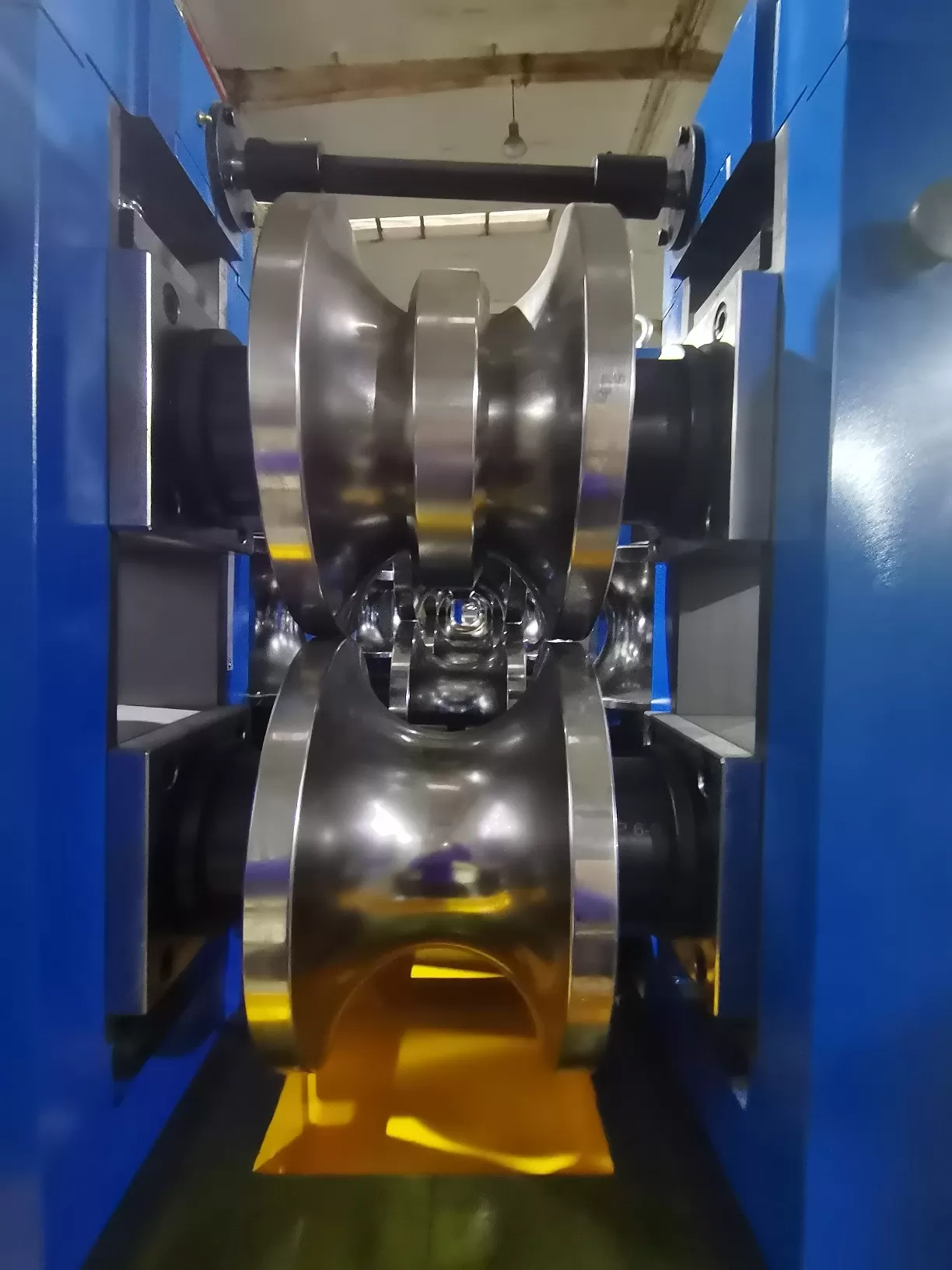
Roll Tooling and Flower Pattern Design
The core of any roll forming system lies in its tooling design, often
referred to as the "flower pattern." This pattern represents the superimposed
cross-sections of the metal strip at each successive roll stand. The design of
this progression governs how stress is distributed throughout the sheet metal as
it deforms from a flat plane into a closed hollow section.
The pass design of a modern square tube
mill requires complex modeling software to simulate material
strain. If the deformation per pass is too aggressive, the material will exceed
its ultimate tensile strength, leading to surface cracking, edge stretching, or
springback problems. The roll profile must guide the strip neutral axis
carefully to prevent localized thinning.
The tooling material itself must withstand high compressive loads and
abrasive wear. Premium tool steels, such as D2 or high-chromium alloy steels,
are typically selected for the rollers. These materials undergo vacuum heat
treatment and precise grinding to achieve high surface hardness and deep wear
resistance. To prevent marking on galvanized or highly polished surfaces,
specialized roll coatings or tungsten carbide inserts are often integrated into
high-wear zones, such as the sizing and squeezing passes.
High-Frequency Welding and Impedance Control
Once the strip has been formed into the target open-profile shape, the joint
edges must be joined. High-Frequency Induction Welding (HFIW) is the standard
technology used for this process. The efficiency and quality of the weld depend
on managing the skin effect and the proximity effect of high-frequency
electrical currents.
During induction welding, an induction coil induces high-frequency current
into the open tube. This current concentrates along the edges of the strip as
they approach the weld point. The impedance of this circuit is managed by an
impeder assembly positioned inside the tube, directly beneath the induction
coil. The impeder contains ferrite cores that focus the magnetic flux,
redirecting the current along the strip edges to the convergence point
(V-angle). This concentration of energy rapidly heats the material to its
forging temperature.
Equipment designs manufactured by SANSO integrate high-grade
impeder materials and precise cooling systems to prevent thermal degradation of
the ferrite cores during continuous high-speed runs. Once the proper temperature
is reached, a set of highly rigid squeeze rolls applies mechanical forge
pressure, forcing the molten edges together to form a solid-state weld. The
resulting squeeze-out, or weld bead, is immediately removed by an external
scarfer to leave a smooth, flush surface.
Managing Mechanical Vibrations and Structural Deviations
In high-speed profile production, mechanical vibrations and geometric
deviations represent major manufacturing challenges. Without precise calibration
and robust machine construction, the finished tubes can suffer from defects such
as twist, camber, bow, and weld seam mismatch.
Twisting occurs when the profile rotates along its longitudinal axis as it
exits the sizing stands. This is typically caused by asymmetric roll pressure or
misalignment of the roll passes. Camber and bow refer to horizontal or vertical
curvature along the length of the tube, often stemming from uneven strip tension
or variations in incoming coil flatness. To counteract these geometric
deviations, the sizing section of the production line must incorporate a
multi-roll straightening system, commonly known as a Turk's head.
A Turk's head assembly utilizes four non-driven rollers arranged in a single
plane, allowing for precise adjustment in the vertical, horizontal, and
rotational axes. By applying targeted localized pressure, operators can
neutralize the residual stresses induced during the forming process, ensuring
the profile meets strict straightness tolerances.
Sizing, Straightening, and Cutting Technologies
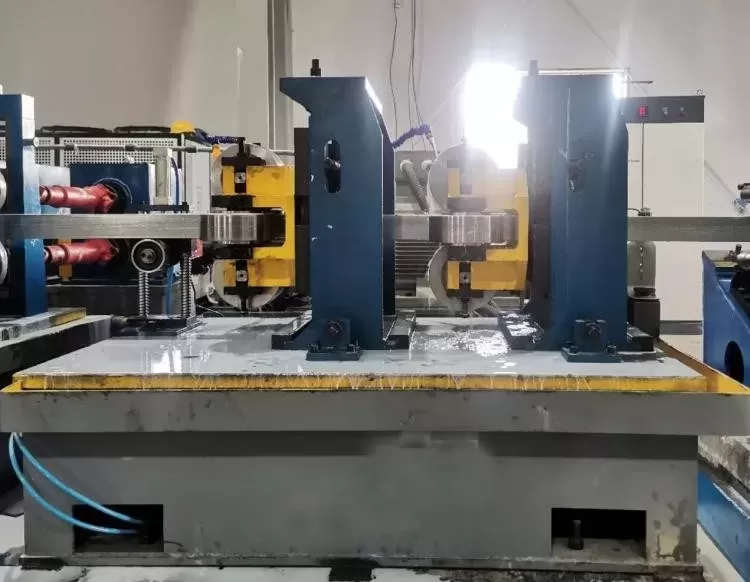
Integrating a precise sizing section within the square tube
mill is necessary to control the final dimensional tolerances.
After welding and cooling, the tube enters the sizing rolls, which compress the
profile slightly beyond its final dimensions to account for elastic recovery.
This stage defines the final width, height, and corner symmetry of the square
section.
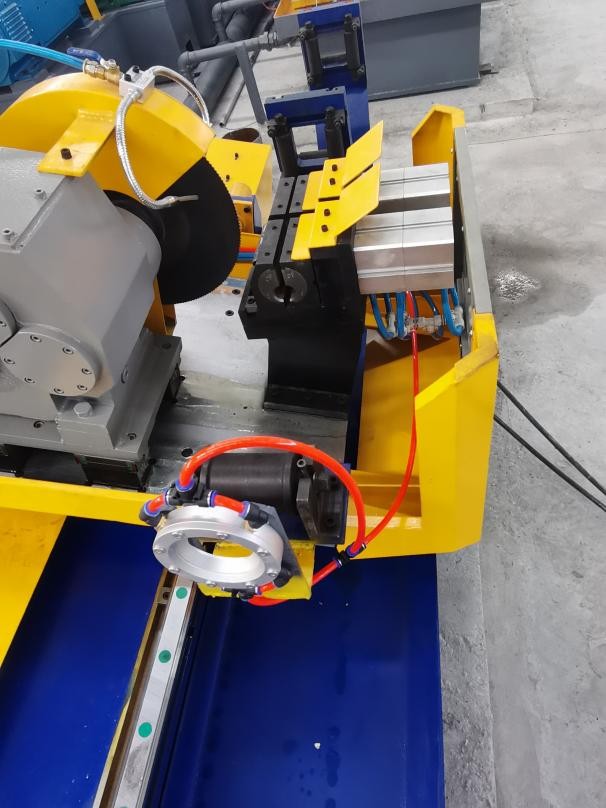
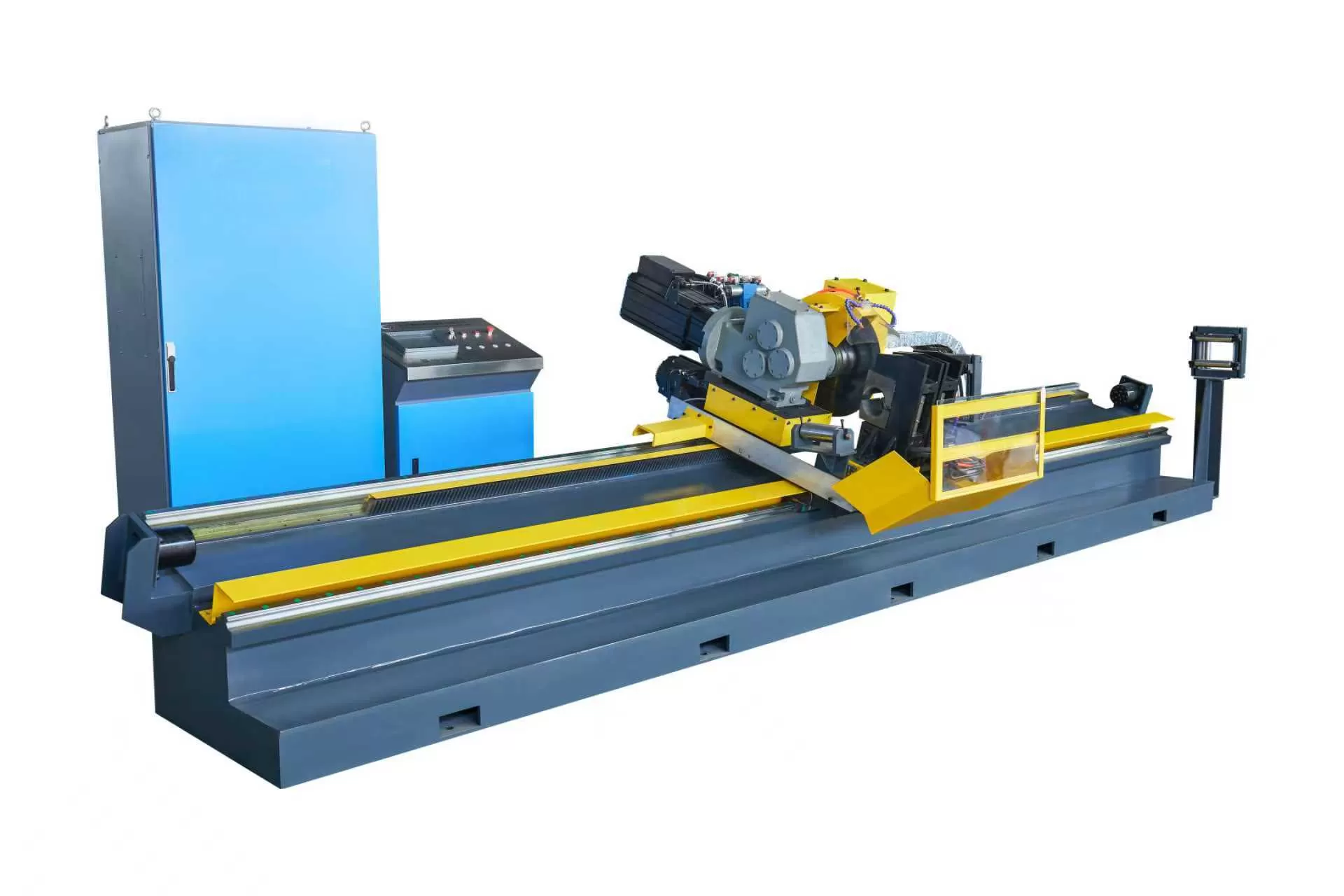
Following the sizing and straightening phases, the continuous tube must be
cut to precise lengths without disrupting the continuous flow of the production
line. This is achieved using a flying cutoff machine, which synchronizes its
travel speed with the exit speed of the tube before initiating the cut. There
are two primary cutting technologies utilized in modern operations:
Friction Sawing: This method utilizes a high-speed steel
blade rotating at extreme velocities to melt and shear through the metal. While
fast, it produces significant heat-affected zones, loud noise, and heavy burrs
that require subsequent deburring.
Cold Sawing: Utilizing carbide-tipped or high-speed steel
(HSS) blades rotating at lower speeds with liquid coolant, cold sawing cuts the
material at lower temperatures. This yields a clean, square, burr-free end cut,
which reduces secondary processing requirements and improves overall component
quality.
Material Variables and Springback Control
The mechanical properties of the incoming steel coils heavily influence the
behavior of the forming line. High-Strength Low-Alloy (HSLA) steels, structural
carbon steels, and galvanized coils each exhibit unique yield strengths, tensile
strengths, and elongation characteristics. One of the primary engineering
challenges when working with these materials is springback.
Springback is the elastic recovery of the metal after the forming force is
removed. High-strength materials possess a wider elastic deformation range,
meaning they exhibit significantly more springback compared to mild steels. When
operating a square tube
mill with high-yield materials, springback behaves as a major
variable that must be compensated for during the initial roll design. The
rollers must be engineered with over-bending angles to guide the steel beyond
its target yield point, allowing it to spring back exactly into the desired
90-degree corner configuration.
Additionally, galvanized steel coils pose challenges regarding zinc coating
preservation. The pressure exerted by the forming rolls can scrape the
protective zinc layer, damaging the corrosion-resistant properties of the
product and causing zinc buildup on the rollers. Tooling designers must use
specialized roll geometries and advanced lubrication systems to reduce friction,
ensuring the integrity of both the coating and the machinery.
Engineering Consultation and Procurement Specifications
Selecting and configuring a production line for structural profiles is a
complex engineering task. Every variable, from strip feed speed and
high-frequency generator capacity to roll tooling metallurgy and cutting
precision, must be aligned with your production targets and material
specifications.
To ensure your manufacturing system delivers consistent dimensional accuracy,
minimal downtime, and long service life, it is important to collaborate with an
experienced equipment manufacturer. For tailored layout designs, mechanical
specifications, or custom engineering consultations regarding your next
production line installation, please submit your inquiries to SANSO.
Frequently Asked Questions
Q1: What are the primary advantages of direct-forming compared to
round-to-square forming in square hollow section production?
A1: Direct-forming shapes the steel strip directly into a square profile
prior to welding, which reduces strip-edge stretching, minimizes corner
thinning, and consumes less electrical energy. It also enables sharper corner
radii compared to the round-to-square conversion process.
Q2: How does the impeder assembly function during the high-frequency
welding phase of a square tube?
A2: The impeder, containing ferrite cores, is positioned inside the tube
beneath the induction coil. It diverts the high-frequency current path along the
strip edges to the convergence point, maximizing thermal efficiency and ensuring
a clean, homogeneous weld seam.
Q3: What parameters govern the sizing accuracy of a square tube
mill?
A3: Sizing accuracy is governed by the rigidity of the roll stands, the
precision of the roll pass design, the control of roll gap adjustments, and the
ability of the Turk's head assembly to compensate for internal stresses and
mechanical deflection.
Q4: How does springback affect roll tool design for high-strength
steel grades?
A4: High-strength steel grades possess higher yield strengths, leading to
substantial springback after deformation. Roll tool design must incorporate
over-bending angles in the early forming passes to compensate for this elastic
recovery, ensuring the finished profile retains its exact 90-degree corners.
Q5: Why is a flying cold saw preferred over a friction saw for
structural square tubes?
A5: A flying cold saw uses high-speed steel or carbide-tipped blades rotating
at low speeds with coolant, producing a clean, burr-free, and square-cut end.
This eliminates secondary end-facing operations, whereas friction sawing uses
high heat that creates heavy burrs and hardens the tube ends.