In high-capacity steel tube and pipe manufacturing, the final packaging phase
is just as important as the initial forming and welding processes. Once tubes
exit the sizing mill, cooling bed, and cut-off section, they must be organized
into secure, uniform packages for storage, shipping, and handling. This is where
an automated pipe strapping
machine plays a pivotal role in maintaining operational throughput
and product integrity.
To design a packaging layout that functions reliably under harsh mill
conditions, manufacturers such as SANSO focus on mechanical
durability, structural alignment, and precise control interfaces. This analysis
examines the engineering principles, material considerations, and mechanical
configurations required to achieve reliable pipe bundling in industrial
environments.
The Physics and Engineering Challenges of Industrial Pipe Bundling
The primary function of pipe packaging is to prevent structural shifts during
transit. Steel pipes are heavy, rigid, and often coated with protective oils,
making them prone to slipping if not bundled under correct tension. Designing an
effective bundling system requires a deep understanding of the structural forces
at play within a pipe pack.
Bundle Geometry: Hexagonal vs. Square Configurations
Round pipes are naturally suited for hexagonal bundling. A hexagonal
arrangement is structurally stable because it minimizes the void space between
individual pipes, maximizing the contact surface area between adjacent tubes.
This configuration distributes the radial compression forces evenly across the
bundle, reducing the likelihood of internal shifting.
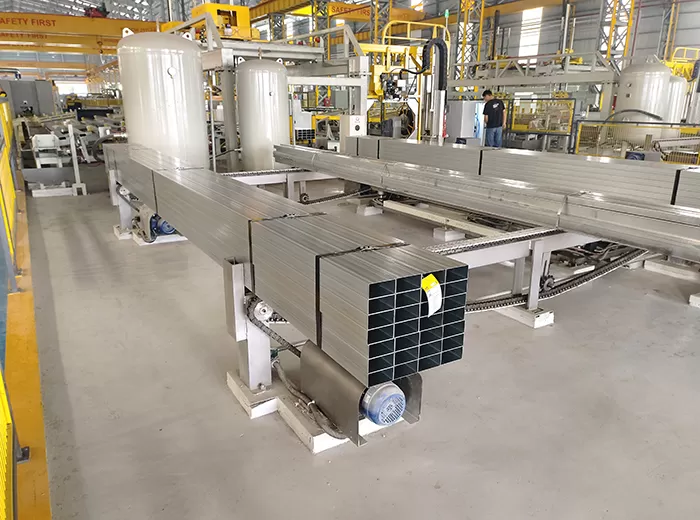
Square and rectangular profiles, such as structural hollow sections (SHS and
RHS), require a different stacking pattern. These profiles are layered in rows
and columns, demanding a system that can apply vertical and lateral compression
before applying the strap. Without proper pre-compaction, the outer layers of
the bundle can flare outward, causing tension loss in the strap and potential
bundle failure during lifting operations.
The Phenomenon of Tension Decay
Once a strap is applied and sealed, it is subject to tension decay. This
occurs due to several factors:
Mechanical Settling: During transport, road vibrations and
crane handlings cause the individual pipes to nestle closer together, closing
minor gaps that were present during the strapping process.
Thermal Expansion and Contraction: Fluctuations in
environmental temperature cause the steel pipes and the strapping material to
expand and contract at different rates, leading to slack.
Material Creep: Over prolonged periods, certain strapping
materials under continuous tension experience minor permanent elongation,
reducing the overall tightness of the bundle.
To counteract these challenges, a high-performance pipe strapping
machine must apply dynamic pre-tensioning and high-pressure
compaction, ensuring that the bundle is compressed to its maximum density before
the strap is locked in place.
Mechanical Architecture of Automatic Strapping Systems
An automated strapping system is composed of several coordinated
sub-assemblies. Each sub-assembly must be engineered to withstand the demanding
environment of a continuous tube mill, where scale dust, oil residues, and heavy
impacts are common.
The Strapping Head
The strapping head is the functional core of the machine. It performs three
primary operations: feeding the strap around the bundle track, tensioning the
strap to a preset value, and sealing the joint. Depending on the operational
requirements, different sealing methods are utilized:
Sealless Joints (for Steel Strap): This method punches
interlocking keys directly into the overlapping ends of the steel strap. It
eliminates the need for external metal seals, reducing consumables inventory and
mechanical wear associated with seal-feeding mechanisms.
Seal-Joints (with Metal Clips): Used primarily in
heavy-duty applications where high joint-efficiency is required. A metal seal is
fed from a magazine and crimped over the overlapping strap ends.
Friction Weld Joints (for Polyester/PET Strap): A
high-frequency vibratory foot applies pressure and friction to the overlapping
PET strap ends, melting them together to form a highly reliable joint without
external fasteners.
Feed and Tensioning Assemblies
High-capacity systems employ dual-motor tensioning mechanisms. A high-speed
feed motor quickly drives the strap through the guide track surrounding the
bundle. Once the strap surrounds the package, a high-torque tensioning motor
reverses the strap, pulling it tight against the pipes. Modern control systems
use closed-loop feedback, utilizing load cells or current-limit sensors on the
tensioning motor to ensure consistent strap tension regardless of minor
variations in bundle perimeter size.
Compaction Press Jaws
Relying solely on strap tension to shape a bundle is insufficient for heavy
steel pipes. Modern systems incorporate hydraulic or pneumatic compaction jaws.
These jaws press the bundle from the sides and top, forcing the pipes into a
rigid hexagonal or rectangular matrix. While the compaction jaws hold the bundle
under high force, the pipe strapping
machine applies and seals the strap. This sequence ensures that the
strap is not subjected to structural load during application, allowing it to
maintain its full tension for securing purposes.
Material Selection: Steel vs. Polyester (PET) Strapping
Choosing the correct strapping material is a fundamental decision that
affects the structural integrity of the bundle and the design of the packaging
line.
| Property / Parameter | High-Tensile Steel Strapping | Polyester (PET) Strapping |
|---|
| Tensile Strength | Very High (up to 1,100 MPa) | High (up to 450 MPa) |
| Elongation Recovery | Low (rigid hold, limited elasticity) | High (absorbs shocks, returns to shape) |
| Corrosion Resistance | Requires coating/galvanizing to prevent rust | Immune to rust and chemical exposure |
| Surface Protection | Can scratch polished or painted pipes | Soft material, minimizes surface marking |
| Joint Efficiency | 80% to 90% (Sealless or Seal-joint) | 75% to 85% (Friction weld) |
Steel strapping remains the preferred choice for heavy, large-diameter
structural pipes where ultimate load hold is necessary. However, heavy-duty PET
strapping has gained traction for precision tubes, stainless steel pipes, and
galvanized products. PET offers excellent shock absorption during transport, as
its elastic memory allows the strap to contract back to its original length when
the bundle settles, preventing loose packages.
Integration into the Tube Mill Finishing Line
For a tube mill to operate efficiently, the packaging system must be fully
integrated with the upstream production machinery. If the packaging station
cannot match the cycle time of the tube mill, the entire mill must slow down,
causing severe productivity drops.
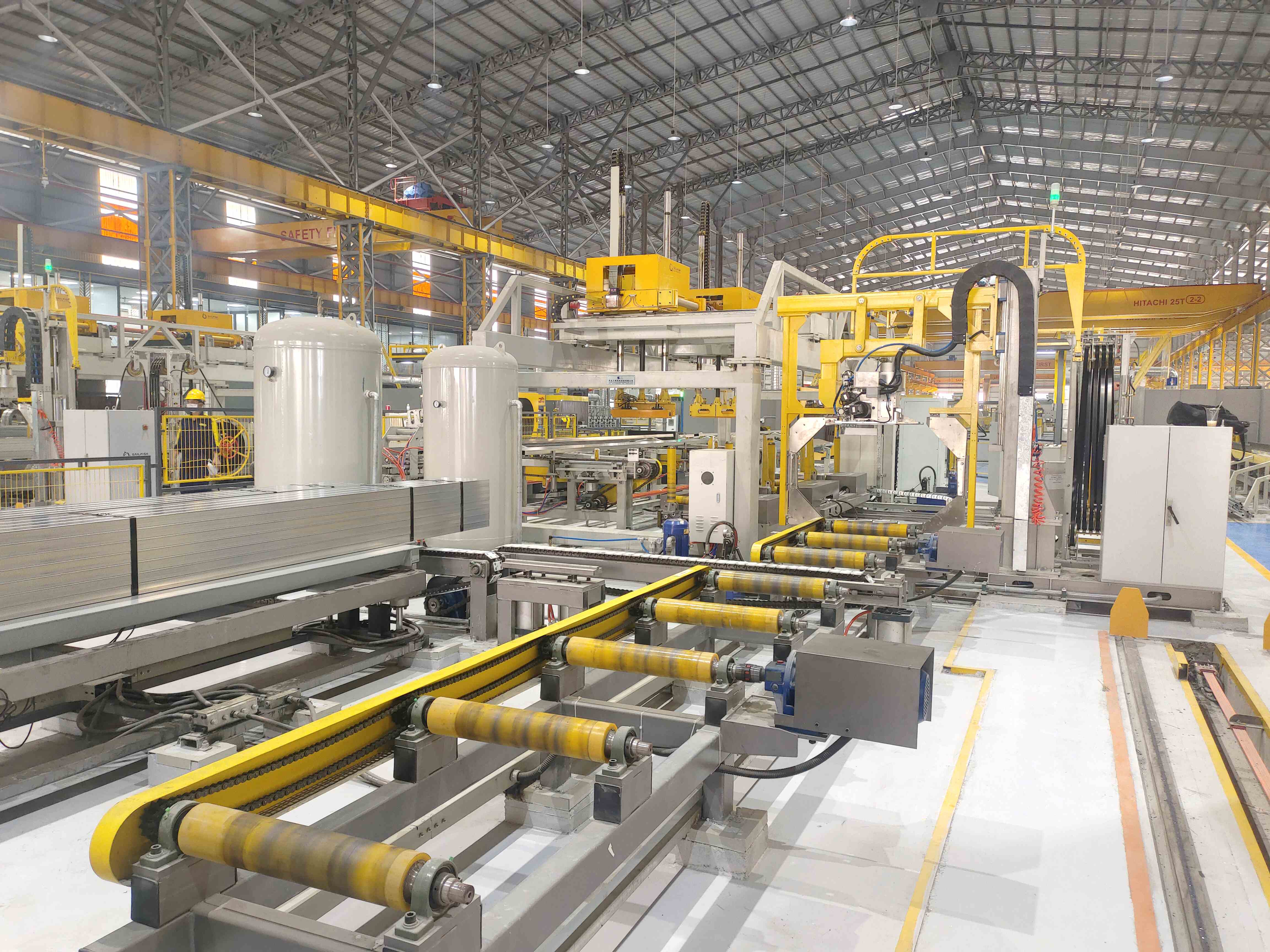
The bundling and strapping line is positioned directly after the inspection
and sorting stations. Pipes are transferred via cross-transfer chains or walking
beams to the bundling cradle. Once the designated number of pipes is
accumulated, they are aligned longitudinally. End-alignment devices push the
pipes from one or both ends to ensure a flush, neat bundle profile.
An integrated pipe strapping
machine is then indexed to the correct positions along the bundle
length. Depending on the production volume, a mill may utilize a multi-head
system where several strapping heads apply bands simultaneously, or a
single-head indexing system that moves along the length of the stationary
bundle. Plant designers like SANSO customize these mill
layouts to ensure that conveyor speeds, accumulation capacities, and strapping
cycles are perfectly synchronized with the mill's output rate.
Common Operational Bottlenecks and Engineering Solutions
Automated strapping systems operate under demanding mechanical stress.
Addressing potential fail points through proactive engineering design is key to
preventing unscheduled downtime.
Strap Feed Jamming
One of the most frequent issues in automated strapping is the strap failing
to feed completely around the guide track, leading to a "short feed" error. This
is often caused by debris, scale dust, or oil build-up inside the guide track
channels. Engineered solutions include:
Segmented Spring-Loaded Tracks: Chutes that open
mechanically only when the strap is tensioned, reducing the accumulation of
airborne mill scale.
Air-Blow Cleaners: Integrated pneumatic nozzles that blow
high-pressure air through the strap path before each feed cycle to clear scale
and dust.
Hardened Steel Feed Rollers: Dual driving rollers with
knurled surfaces to prevent slippage even when the strap material is coated in
anti-rust oil.
Inconsistent Tensioning
When bundling varying pipe diameters, the strap path length changes. If the
tensioning system relies purely on stroke distance or time, tensioning will be
inconsistent. Implementing closed-loop torque-sensing control via the PLC
ensures that the strapping head continues to pull strap until the precise
pre-determined tension force is reached, regardless of the bundle's size or
shape.
Industrial Application Profiles
Different piping sectors require specific bundling configurations. A
versatile packaging system must accommodate these distinct requirements.
Structural Hollow Sections (SHS/RHS)
Structural tubes used in building construction require neat rectangular
stacks. The packaging system must employ vertical side-press arms that square
the sides of the stack before applying the strap. Because these profiles have
sharp 90-degree corners, the strapping head must be capable of feeding strap
around sharp angles without snagging, often requiring reinforced guide
tracks.
Water and Gas Line Pipes
These pipes are typically painted, varnished, or epoxy-coated. Any
metal-to-metal contact during strapping or transport can damage the protective
coating, leading to premature corrosion. In these applications, the conveyor
rollers are lined with heavy-duty polyurethane or vulcanized rubber, and the
pipe
strapping machine is configured to use PET strap or is equipped
with automatic cardboard/plastic corner protector inserters.
OCTG (Oil Country Tubular Goods)
Casing and tubing used in oilfield applications are subject to strict API
standards. These pipes are heavy, have thick walls, and are often fitted with
thread protectors. The bundling system must handle these high-tonnage loads
safely, applying heavy steel straps with high seal joint efficiency to withstand
the aggressive handling cycles typical of marine and remote oilfield
logistics.
Selecting the Right System Configuration
When planning a new finishing line or upgrading an existing mill, several
parameters must be evaluated to select the appropriate equipment configuration.
Engineering specialists like SANSO evaluate the overall
footprint of the mill, the production speed, and the specific material
properties of the pipes to configure a balanced packaging system.
Key design factors include:
Cycle Time Requirements: Determining if a single-head
indexing machine is sufficient or if a multi-head stationary system is required
to meet the mill's throughput.
Space Availability: Fitting the bundling station, strapping
machine, conveyor lines, and run-out tables within the existing layout.
Material Compatibility: Ensuring the strapping head is
optimized for the chosen strap type (high-tensile steel vs. PET) and width
(typically 19mm, 25mm, or 32mm).
Automation Level: Deciding between a semi-automatic system
(manual pipe accumulation with automatic strapping) and a fully automatic system
(automatic sorting, bundling, strapping, weighing, and labeling).
System Engineering Proposals and Inquiries
Securing steel tube bundles requires a balanced combination of heavy
mechanical force, reliable control logic, and durable strapping materials. An
engineered packaging line not only protects the finished tubes from physical
damage during transit but also ensures a safe working environment within the
mill and during subsequent logistics operations.
Every tube mill has unique spatial constraints, speed requirements, and
product profiles. Standard off-the-shelf machinery rarely delivers the
efficiency required for modern high-output mills. If you are seeking to optimize
your finishing line, improve bundle presentation, or transition from manual
packaging to automated systems, detailed engineering collaboration is the most
reliable path forward.
We invite you to submit your production specifications—including your pipe
dimensions, daily tonnage requirements, and facility layout constraints—to our
engineering team. We will review your data and provide a tailored system
proposal designed to meet your operational goals.
Frequently Asked Questions
Q1: What is the main operational difference between pneumatic and hydraulic
tensioning in bundling machines?
A1: Pneumatic tensioning systems utilize compressed air and
are suitable for lighter bundling applications requiring moderate, consistent
tension. They are generally simpler to maintain but have lower maximum force
limits. Hydraulic tensioning systems use pressurized oil to deliver much higher
clamping and tensioning forces, which are necessary for heavy-duty steel pipe
bundles. Hydraulic systems offer precise force control but require more robust
maintenance procedures for the hydraulic power unit, valves, and seals.
Q2: Can a single strapping head handle both steel and polyester (PET)
strapping materials?
A2: No, a single strapping head cannot run both materials.
Steel and PET strapping require entirely different mechanical actions for
feeding, tensioning, cutting, and sealing. Steel strapping requires heavy-duty
feed gears and either a punch-die sealless mechanism or a seal crimper. PET
strapping requires a high-frequency vibratory welding foot to melt and fuse the
strap ends. To switch material types, the entire strapping head must be swapped
out, or a dual-head system must be installed on the machine frame.
Q3: How does the system prevent surface scratching on sensitive stainless
steel or galvanized pipes?
A3: To protect sensitive pipe surfaces, several protective
measures are engineered into the line. These include using polyurethane-lined
conveyor rollers and V-blocks to prevent metal-on-metal contact. Additionally,
the strapping machine can be configured to use PET strapping instead of steel.
If steel strapping is mandatory, the system can be equipped with an automatic
corner inserter that places plastic or heavy cardboard edge protectors on the
bundle corners before the strap is tensioned.
Q4: What are the primary wear parts in an automatic strapping head, and how
often do they require maintenance?
A4: The primary wear components in any strapping head are
the feed rollers, tensioning wheels, cutting blades, and gripper pads. In steel
strapping heads, the punch dies are also high-wear items. For PET heads, the
vibratory welding foot and heating element require regular inspection. Under
continuous three-shift operations, these components should be inspected weekly,
cleaned of steel dust and scale, and lubricated. Depending on throughput,
high-wear components typically require replacement every 3 to 6 months.
Q5: How does the strapping machine integrate with the mill's overarching ERP
or SCADA systems?
A5: Modern automated strapping lines are equipped with
industrial PLCs (such as Siemens or Mitsubishi) that support standard industrial
communication protocols like Profinet, Modbus, or EtherNet/IP. This allows the
strapping line to exchange real-time data with the factory's SCADA or ERP
systems. The machine can receive packaging recipes (such as pipe count per
bundle and strap positioning) for incoming production runs, and send back
operational metrics, bundle counts, material consumption data, and diagnostic
alarm logs for production tracking.