The manufacturing of metallic tubing and hollow structural sections (HSS)
serves as the backbone of global infrastructure, automotive engineering, and
industrial furniture production. To meet the rigorous demands of these sectors,
the contemporary tube
mill line has evolved into a highly synchronized assembly of
mechanical and electromagnetic systems. For B2B manufacturers, the objective is
no longer simply producing a tube; it is about achieving microscopic precision
in weld integrity, dimensional accuracy, and surface quality while maintaining
high-velocity throughput.
As an industry leader in the design and fabrication of advanced manufacturing
equipment, SANSO has observed that the operational success of a facility depends on the
harmonious integration of material handling, forming dynamics, and
high-frequency welding. This analysis provides an authoritative overview of the
mechanical principles, common industry obstacles, and the advanced solutions
that define a modern production environment.
The Sequential Architecture of a Continuous Production System
A sophisticated tube
mill line is structured as a continuous flow process, starting with
raw metal coils and ending with finished, cut-to-length structural sections. The
process is divided into three primary zones: the entry section, the forming and
welding section, and the sizing and finishing section. Each stage must be
perfectly aligned to prevent material deformation or line stoppages.
Entry Section: Material Preparation and Continuity
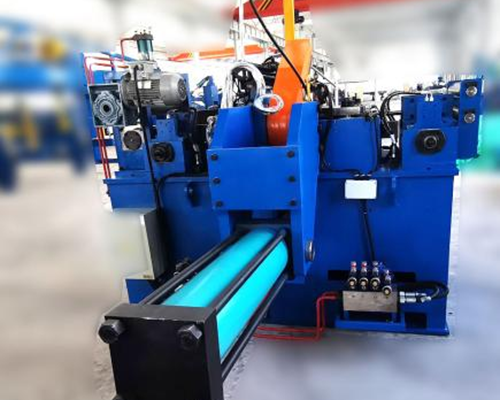
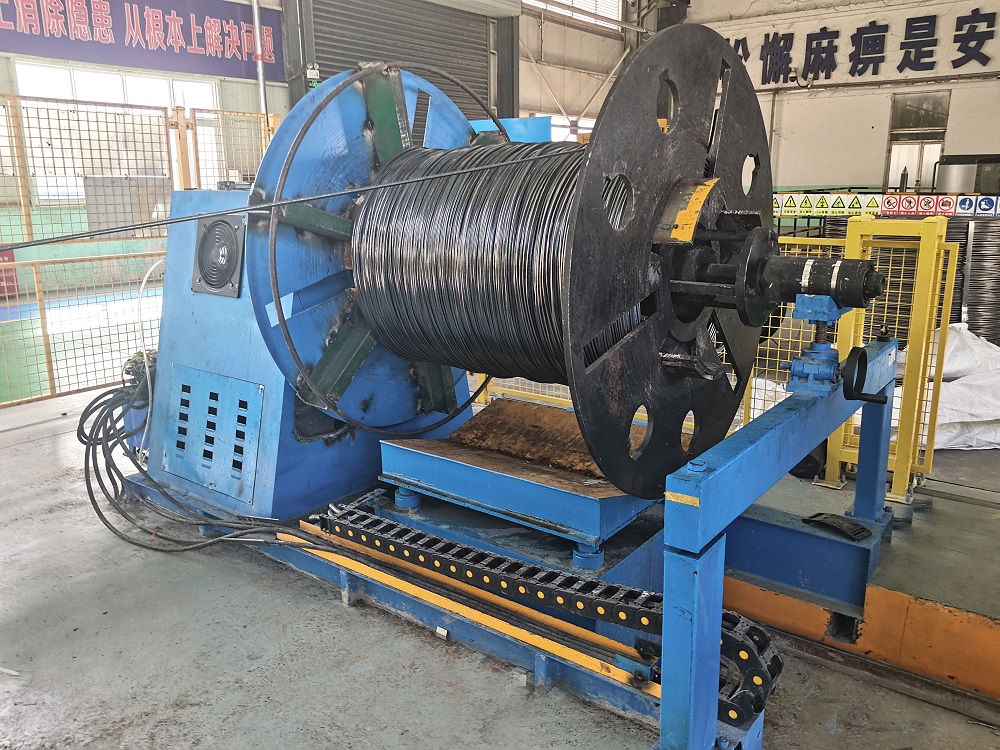
The journey begins with the uncoiler, which handles heavy steel coils—often
hot-rolled, cold-rolled, or galvanized steel. To ensure the mill never stops, a
shear and end welder joins the trailing edge of an expiring coil to the leading
edge of a new one. The most fundamental component for high-speed operation is
the accumulator. By storing a massive buffer of strip material, the accumulator
allows the entry section to pause for welding while the rest of the line
continues at full production speed. Without this buffer, the start-stop cycle
would lead to inconsistent weld quality and significant time loss.
Forming Zone: The Flower Design and Stress Management
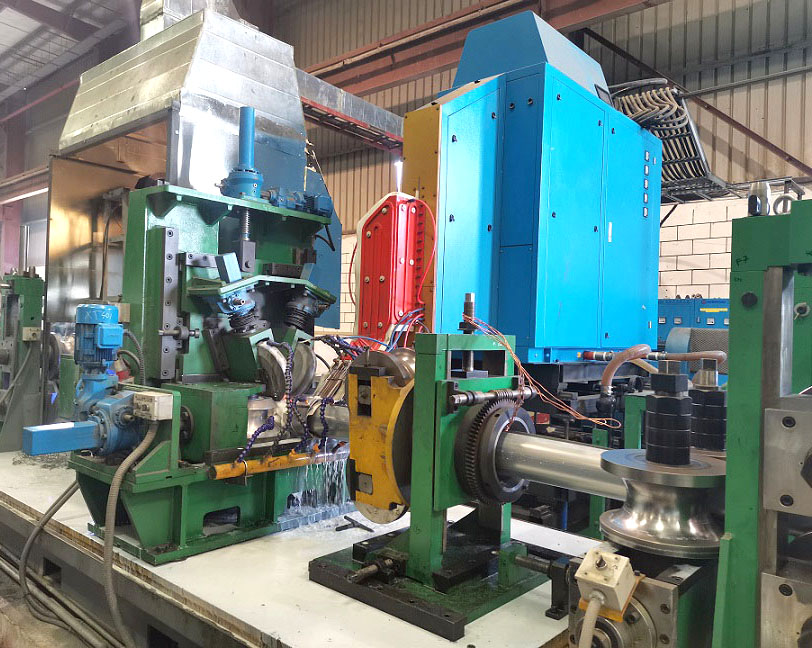
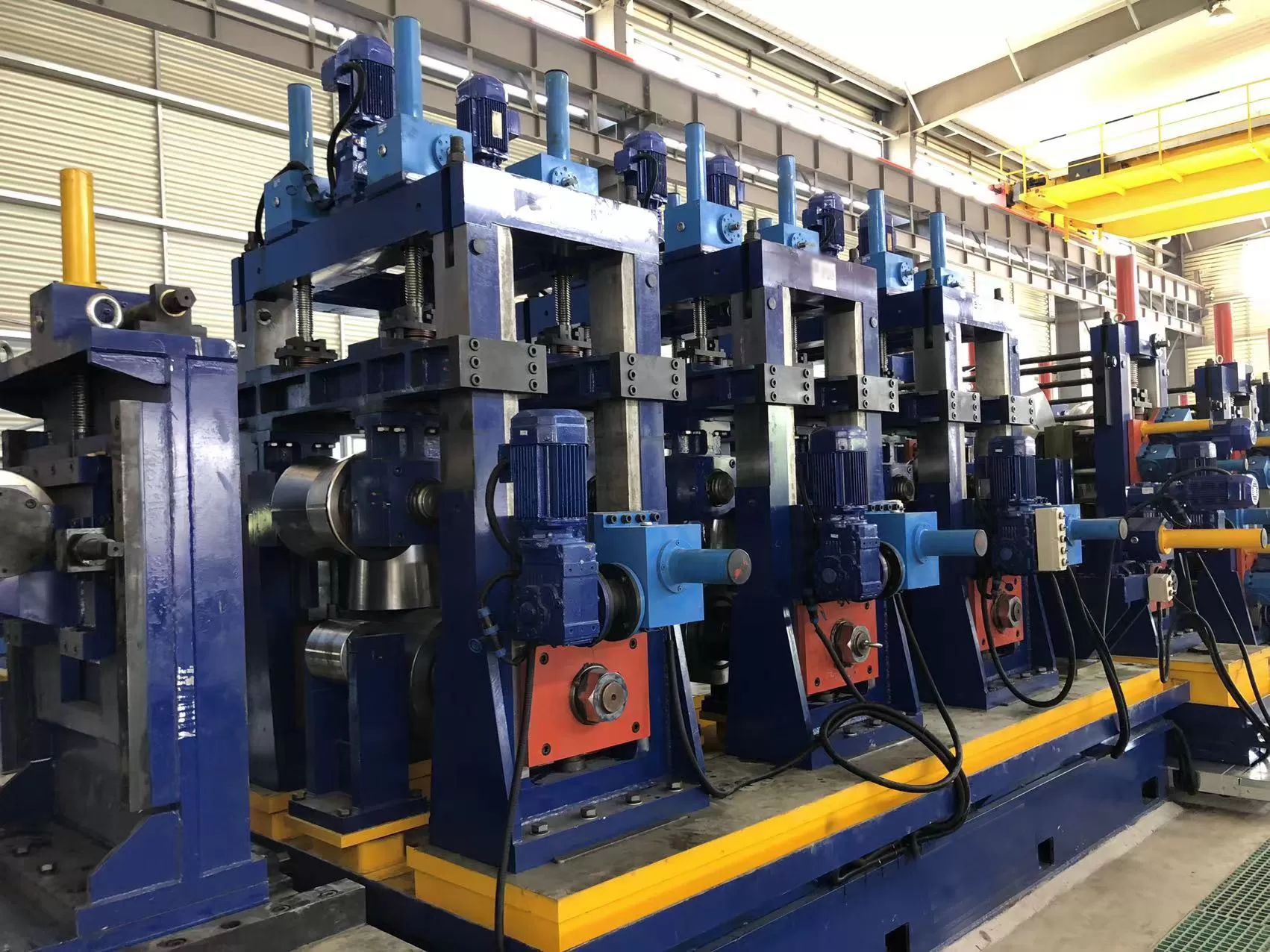
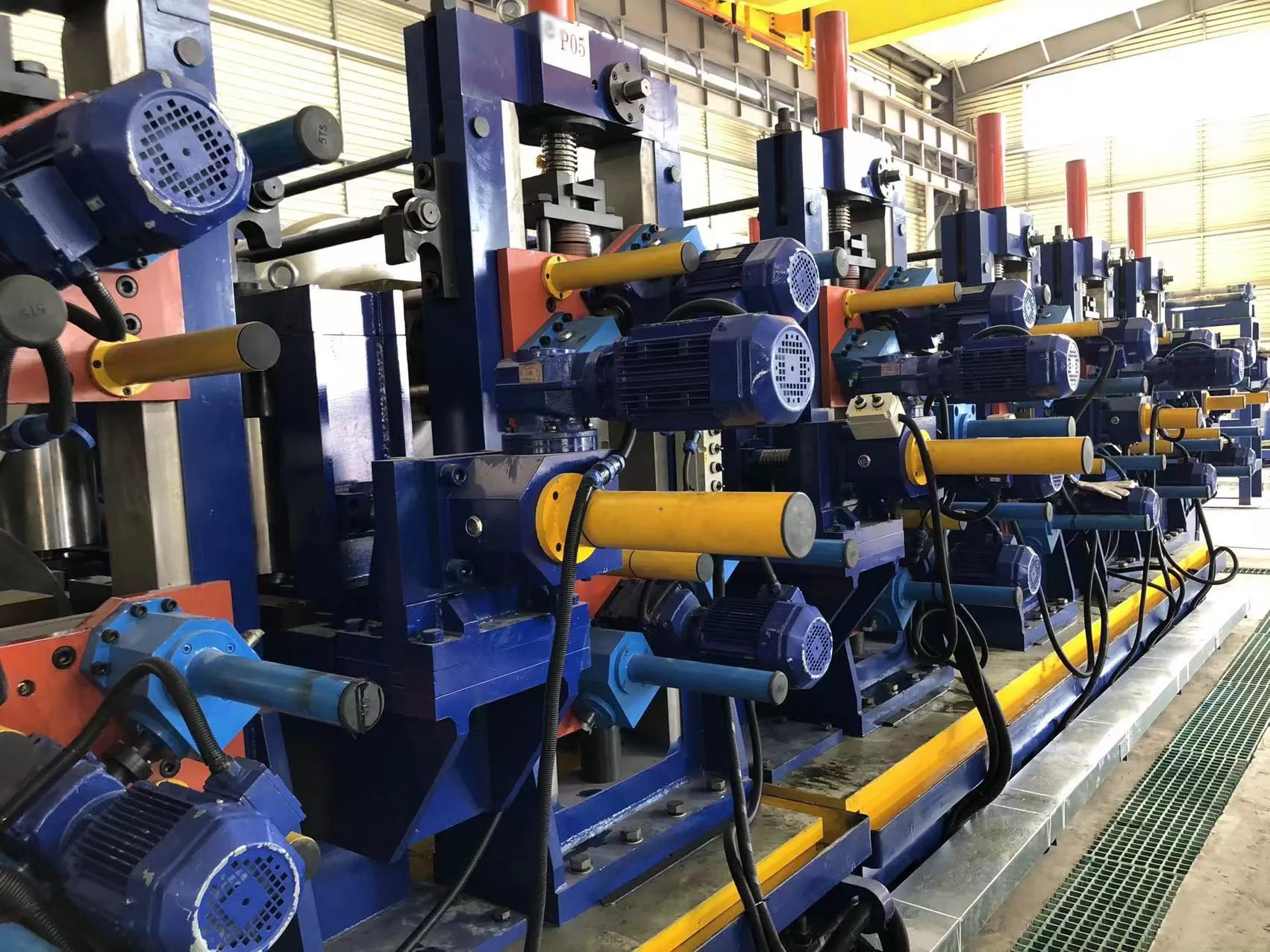
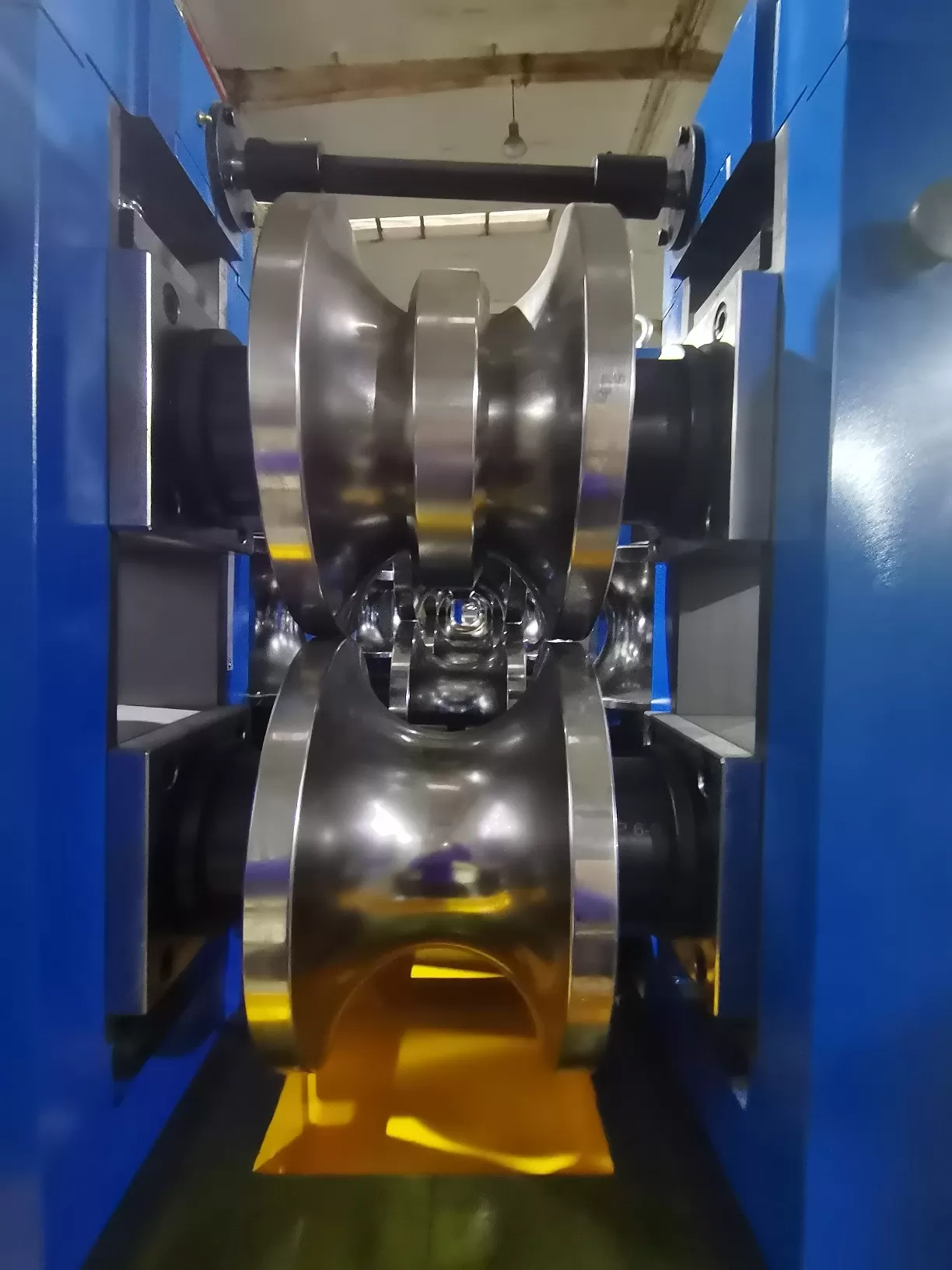
In the forming section, a series of roll stands gradually shape the flat
strip into a cylindrical or rectangular profile. This is achieved through cold
roll forming. Engineers develop what is known as a "flower pattern," which is
the theoretical sequence of cross-sectional changes the steel undergoes at each
stand. If the bending is too aggressive in a single pass, it can induce
excessive residual stress, leading to edge waves or structural failure in the
final product. SANSO specializes in
optimizing these forming sequences to minimize material fatigue and ensure a
perfect longitudinal seam alignment.
High-Frequency Induction (HFI) Welding Mechanics
The integrity of the weld is perhaps the most scrutinized aspect of a
tube
mill line. Modern systems primarily utilize High-Frequency
Induction (HFI) welding, which operates between 200 kHz and 500 kHz. This
technology relies on the skin effect and the proximity effect to concentrate
high-density current at the very edges of the formed strip.
As the edges reach their forging temperature, they are pressed together by a
set of squeeze rolls. This is a forge weld, not a fusion weld, meaning no filler
material is used. The resulting bond is as strong as the base metal itself.
Following the weld, a specialized scarfing tool removes the external bead
(flash) to create a smooth surface. For applications in the fluid transport or
food industry, internal scarfing is also performed to ensure a completely
unobstructed inner diameter.
Key Factors for Weld Quality:
Impeder Performance: A ferrite impeder is positioned inside
the tube to direct the magnetic flux to the weld V-angle, preventing energy loss
through the tube's inner circumference.
Vee-Angle Control: The angle at which the strip edges meet
must be constant. Variations here cause fluctuations in the heat-affected zone
(HAZ), leading to potential seam failure.
Squeeze Roll Pressure: Excessive pressure can cause "upset"
metal to flow inward or outward too aggressively, while insufficient pressure
results in a "paste" weld with poor mechanical strength.
Cooling Rate: After welding, the tube passes through a
cooling trough (water or air) to stabilize the metallurgy before it enters the
sizing stands.
Sizing, Straightening, and Shaping Strategies
Once the tube is welded and cooled, it enters the sizing section. This part
of the tube
mill line performs two vital functions: it brings the tube to its
final outside diameter (OD) and ensures its circularity or rectangularity. This
is a cold-working process that slightly increases the yield strength of the
material.
Following sizing, the tube passes through a Turks-head straightener. This
component consists of multiple sets of rolls that can be adjusted on several
axes to correct for any bow, camber, or twist. For B2B clients who utilize
automated laser cutting or robotic welding on the finished tubes, the
straightness of the section is a non-negotiable requirement. Any deviation in
the straightness can cause significant errors in subsequent downstream
manufacturing processes.
Addressing Industrial Pain Points and Operational Challenges
Operating a high-speed production line involves managing several variables
that can compromise efficiency. Industry leaders must address these pain points
through robust mechanical design and proactive maintenance protocols.
1. Tooling Wear and Surface Marking
Continuous contact between the steel strip and the rolls causes friction and
heat, leading to wear. This wear can result in surface scratches on the finished
product, which is particularly problematic for ornamental or automotive tubes.
Solution: Utilizing high-grade tool steel (such as D2 or SKD11) and implementing
advanced lubrication systems to reduce friction and heat buildup.
2. Line Downtime during Size Changes
Traditional mills require hours of labor to swap out roll sets for different
diameters. This is a significant bottleneck in a "just-in-time" manufacturing
environment. Solution: SANSO incorporates rafted
mill designs where entire sections of roll stands can be swapped out
simultaneously, reducing changeover times from hours to minutes.
3. Material Inconsistency
Variations in the chemical composition or thickness of the incoming coil can
lead to spring-back issues or inconsistent weld quality. Solution: Advanced
PLC-controlled systems that monitor line tension and welding power in real-time,
making instantaneous adjustments to compensate for material fluctuations.
Advanced Application Scenarios
The versatility of a modern tube
mill line allows for the production of a wide range of specialized
products across various industrial sectors:
Structural Engineering (HSS): High-strength square and
rectangular sections used in building frames and bridges. These require
direct-forming technology to ensure uniform wall thickness at the corners.
Automotive Components: Fuel lines, exhaust pipes, and
chassis components require high-precision welding and the ability to handle
aluminized or stainless steel.
Energy Sector: API-grade pipes for oil and gas transport
require rigorous Non-Destructive Testing (NDT), such as Eddy Current or
Ultrasonic testing, integrated directly into the production line.
Agricultural Equipment: Heavy-duty tubing for irrigation
systems and machinery frames requires high durability and resistance to
environmental stress.
Direct Forming vs. Round-to-Square Transformation
In the production of square and rectangular tubes, there are two primary
methodologies. The traditional method forms a round tube first and then reshapes
it into a square. However, modern high-efficiency lines often utilize "Direct
Square Forming." This method bends the strip directly into the final rectangular
shape. This approach significantly reduces the stress on the corners of the tube
and provides a more consistent wall thickness, which is a mandatory requirement
for load-bearing structural applications. It also reduces the number of roll
sets required, simplifying the overall machine configuration.
The Role of Automation and Smart Monitoring
The integration of Industry 4.0 principles is transforming the way production
lines are managed. Modern systems are equipped with sensors that provide
real-time data on motor load, vibration, and temperature. This information is
processed by a central control unit to predict when a component is likely to
fail, allowing for maintenance during planned downtime rather than during a
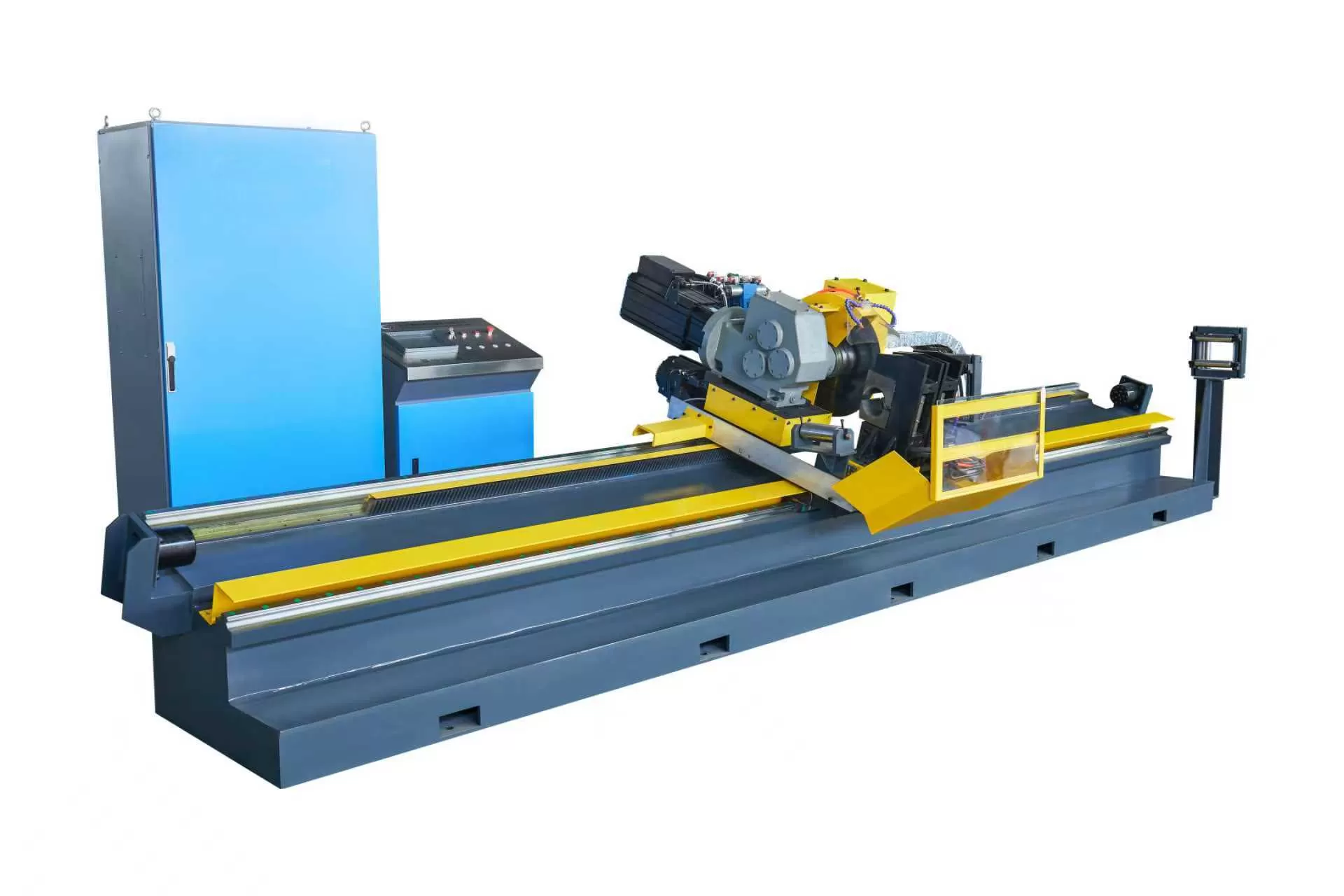
production run. Furthermore, automated cut-off systems—whether using cold saws
or flying saws—ensure that every piece is cut to a precise length with a
burr-free finish, ready for immediate packaging or further processing.
Establishing Long-Term Manufacturing Stability
Selecting a high-quality tube
mill line is a fundamental decision that determines a company's
competitive position in the global market. By focusing on mechanical rigidity,
precision in the forming passes, and advanced welding controls, manufacturers
can ensure that their output meets the most stringent international standards.
As the demand for higher strength and lower weight materials continues to grow,
the technology behind these production lines will remain a cornerstone of
industrial progress. SANSO continues to drive
innovation in this field, providing the robust engineering solutions required
for the next generation of industrial manufacturing.
Frequently Asked Questions (FAQ)
Q1: What are the primary advantages of HFI welding over traditional
TIG welding in a tube line?
A1: HFI welding is significantly faster, allowing for production speeds of
over 100 meters per minute, whereas TIG is much slower. HFI also provides a
narrower heat-affected zone (HAZ), which preserves more of the base metal's
mechanical properties and results in a stronger seam for industrial
applications.
Q2: How does a horizontal accumulator improve mill
efficiency?
A2: A horizontal accumulator stores a large volume of the steel strip in a
spiral configuration. This allows the mill to continue running at full speed
while the entry section is stopped to weld the end of one coil to the next. This
ensures a truly continuous process, maximizing uptime and reducing material
waste.
Q3: Can a single mill handle both carbon steel and stainless
steel?
A3: While it is possible, it is not recommended without specialized roll
materials. Stainless steel is much more abrasive and prone to "galling." A mill
intended for both would need high-performance coated rolls and different welding
parameters to prevent contamination of the stainless steel surface.
Q4: Why is internal scarfing necessary for certain pipe
applications?
A4: Internal scarfing removes the weld bead from the inside of the tube. This
is necessary for pipes used in fluid transport (to prevent turbulence),
automotive applications (for fitment over other parts), and any application
where a smooth inner diameter is required for cleanliness or mechanical
clearance.
Q5: What is the benefit of "Direct Forming" for square
tubes?
A5: Direct forming shapes the strip directly into a square or rectangle. This
reduces the mechanical strain on the corners, prevents thinning of the material
at the bends, and often results in a more dimensionally stable product compared
to the round-to-square conversion method.
Are you looking to optimize your industrial tube production with
advanced mechanical engineering? Our team of specialists is ready to
provide you with the technical insights and high-performance equipment necessary
to exceed your production targets. Contact us today for a comprehensive
consultation on our latest line configurations. Inquiry Now