The manufacturing of hollow structural sections (HSS) and industrial piping
has progressed from rudimentary forge welding to highly automated,
precision-driven processes. At the center of this transformation is the
steel
pipe mill, a complex assembly of synchronized machinery designed to
transform flat metal strips into dimensionally accurate tubes. For B2B
manufacturers supplying the construction, automotive, and energy sectors, the
ability to maintain tight tolerances while maximizing line speed is the primary
driver of operational success.
As an industry leader in the design and fabrication of tube processing
equipment, SANSO has observed that the most successful facilities prioritize the synergy between
mechanical rigidity and control system responsiveness. This article examines the
engineering intricacies of the modern pipe production line, exploring the
variables that dictate weld quality, surface finish, and structural
longevity.
Mechanical Architecture: The Entry Section and Material Preparation
The journey of a steel tube begins at the entry section, where raw coils of
hot-rolled or cold-rolled steel are introduced into the system. The consistency
of this feeding process determines the stability of the entire downstream
operation. A fundamental requirement here is the strip joiner and the
accumulator system. Without a reliable accumulation mechanism, the entire line
must stop during the transition between coils, leading to significant downtime
and inconsistent weld quality at the stop-start points.
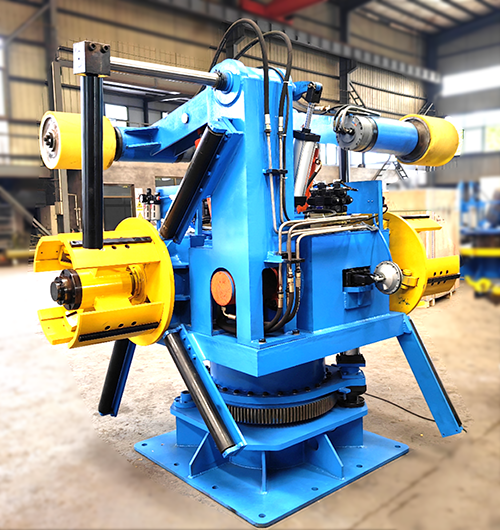
The role of the steel pipe
mill accumulator is to provide a buffer of material, allowing the
welding of the trailing edge of one coil to the leading edge of the next without
interrupting the continuous flow of the mill. Horizontal spiral accumulators or
vertical basket types are selected based on the strip thickness and the
available floor space. SANSO specializes in
high-capacity accumulation solutions that ensure the strip remains
tension-regulated and free from surface scratching, which is a mandatory
requirement for high-end automotive applications.
Foundational Components of the Entry Section:
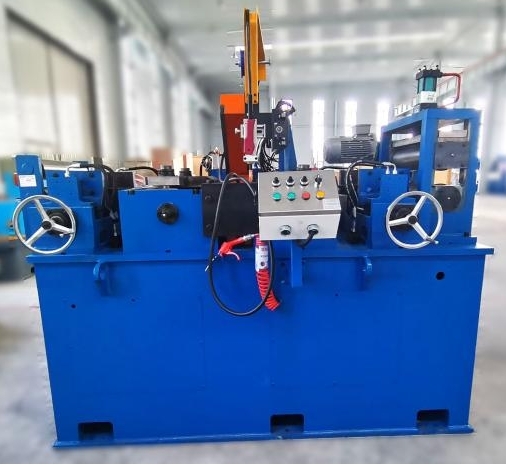
Uncoiler: Manages the payoff of the heavy steel coil, often
featuring double-headed designs for rapid changeover.
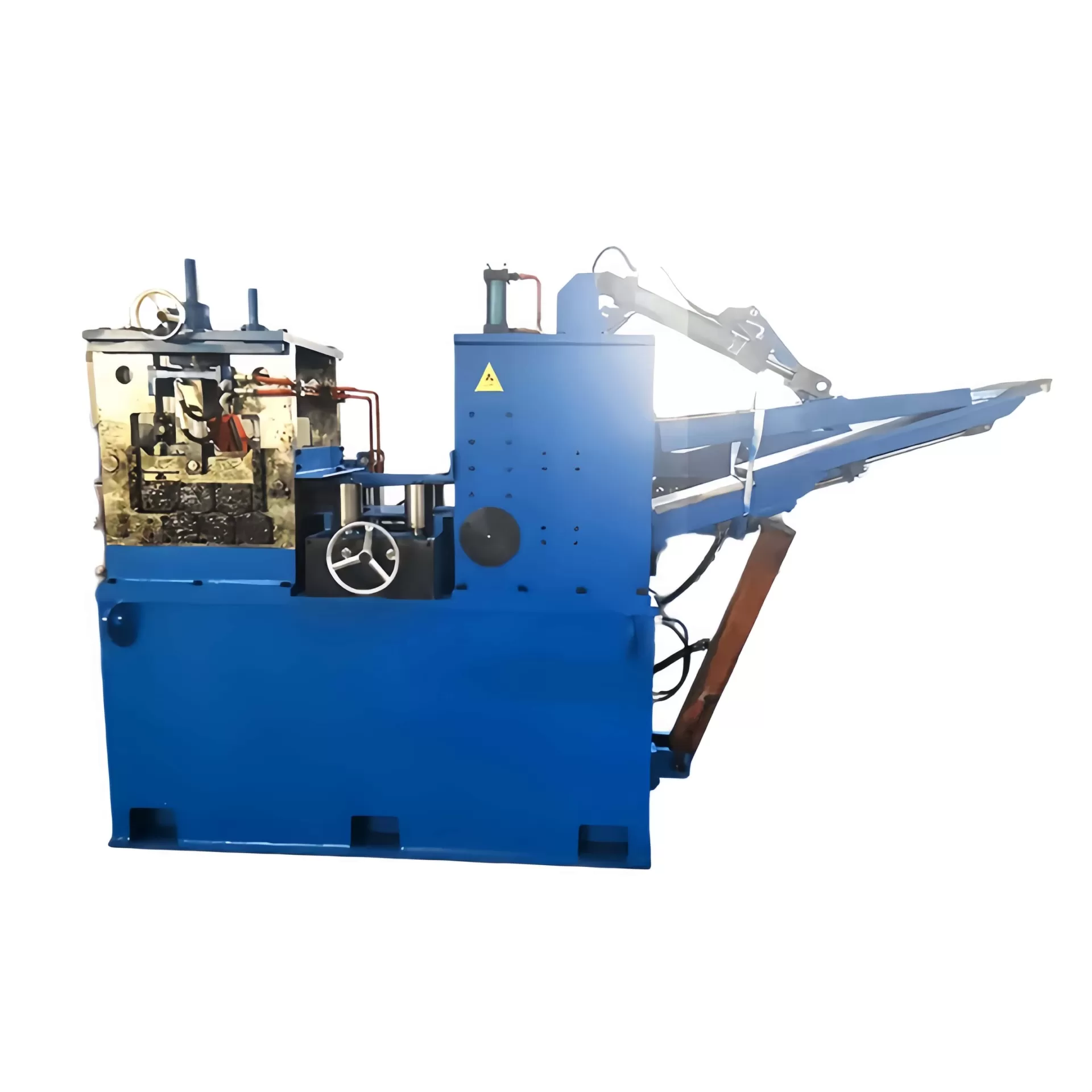
Shear and End Welder: Precisely cuts the strip ends and
joins them via TIG or MIG welding to maintain a continuous ribbon.
Leveler: Flattens the strip to remove coil set and internal
stresses, ensuring a uniform feed into the forming passes.
Strip Edge Milling: Prepares the edges of the strip by
removing oxides and ensuring a perfect geometric profile for the induction
welding stage.
The Physics of Roll Forming and Structural Shaping
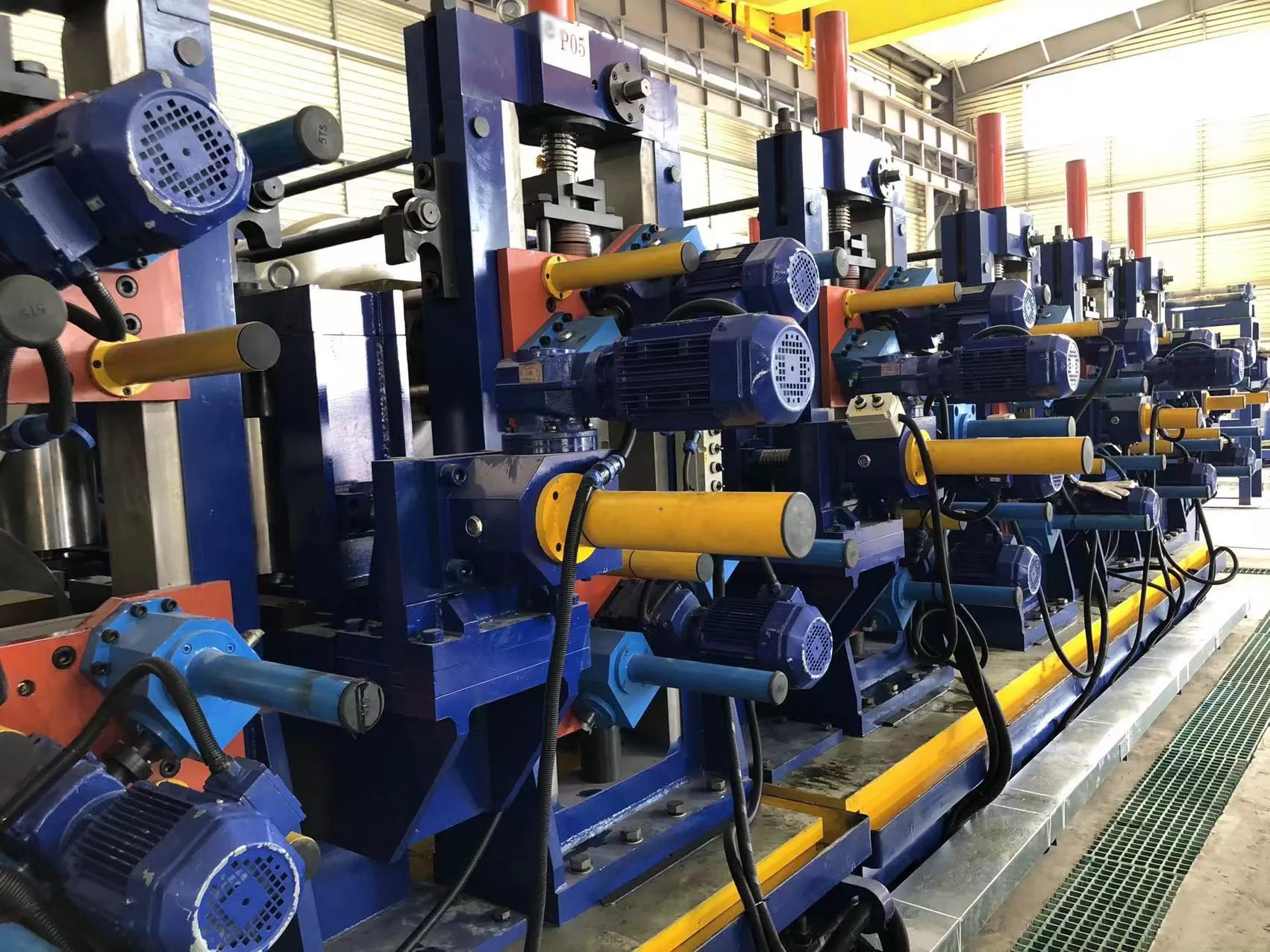
The forming section is the heart of the mechanical process. Here, the flat
strip is gradually bent into a circular shape through a series of drive-rolls
and idler-rolls. This process, known as cold roll forming, relies on a carefully
calculated "flower pattern"—the sequence of cross-sectional profiles that the
strip assumes as it passes through each stand. Engineering this sequence is a
balancing act; too much strain in a single pass can lead to edge stretching,
while too little can cause the strip to wander, resulting in a skewed seam.
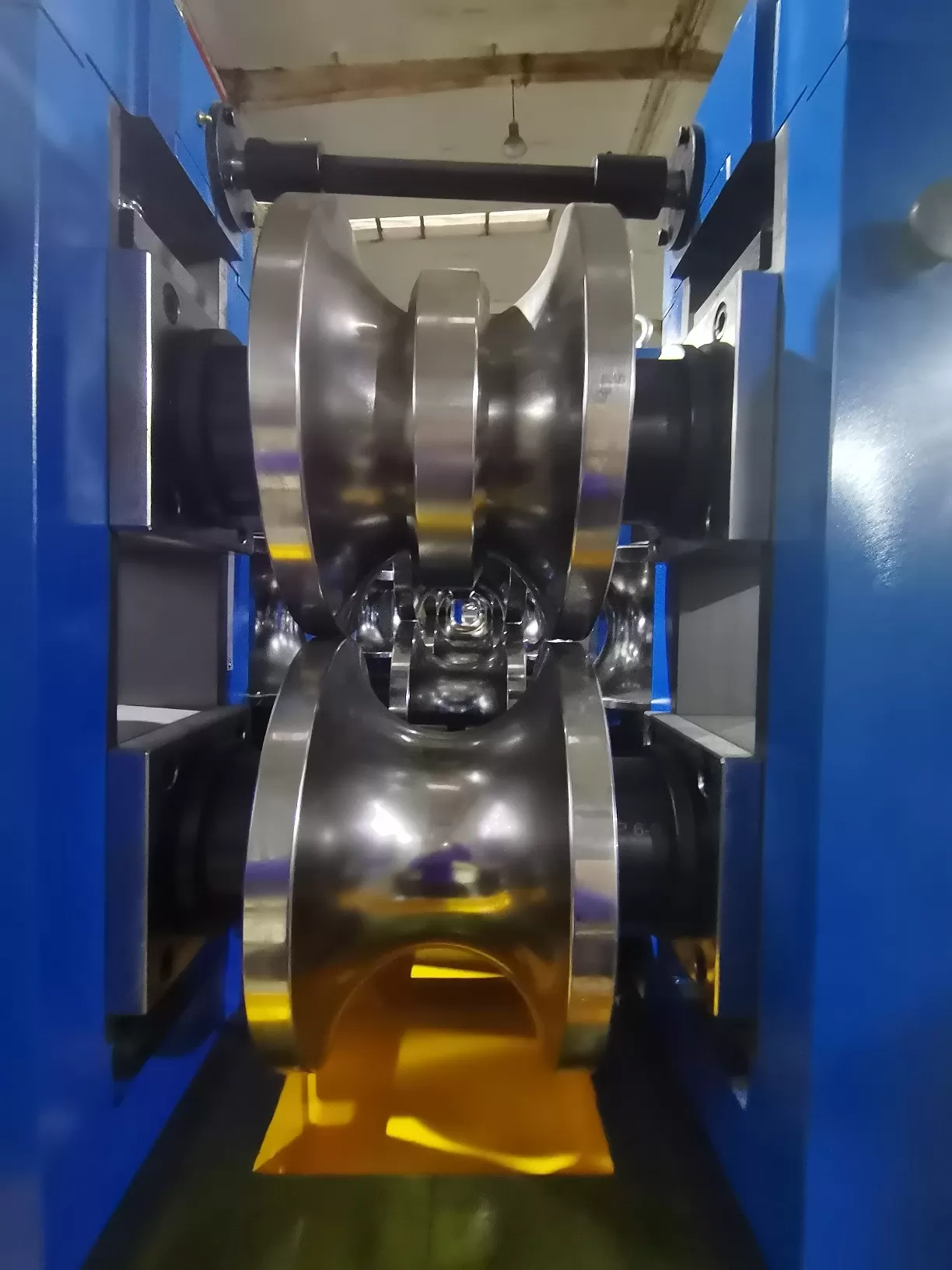
In a high-performance steel pipe
mill, the breakdown stands initiate the primary bending, followed
by the fin-pass stands. The fin-pass stands are particularly important as they
utilize a central "fin" or blade that fits into the seam, precisely aligning the
edges before they enter the welding throat. This stage is where the final
dimensional accuracy of the tube is established. Advanced mills now incorporate
"W-Forming" or "Cage Forming" configurations, which reduce the number of
required roll changes and provide more uniform stress distribution across the
material width.
High-Frequency Induction Welding: Ensuring Seam Integrity
Once the strip has been formed into an open tube, the edges must be fused.
Most modern lines utilize High-Frequency Induction (HFI) welding. This method
relies on the "skin effect" and "proximity effect" of high-frequency electricity
(typically 200 kHz to 500 kHz). The current is induced into the tube surface via
an induction coil, concentrating the heat at the very edges of the strip. As
these white-hot edges are pressed together by the squeeze rolls, a forge weld is
created.
The internal "impeder"—usually a ferrite rod—is a fundamental component here.
It prevents the current from flowing around the inside of the tube, instead
forcing it to concentrate at the edges. This efficiency is what allows the
steel
pipe mill to reach speeds exceeding 100 meters per minute.
Following the weld, the external (and sometimes internal) weld bead or "flash"
is removed using a specialized scarfing tool, leaving a smooth, continuous
surface that is virtually indistinguishable from the base metal.
Variables Affecting Weld Quality:
Induction Power Frequency: Higher frequencies are better
for thinner walls, while lower frequencies provide deeper heat penetration for
heavy-gauge pipes.
Squeeze Roll Pressure: Insufficient pressure leads to cold
welds or "paste" welds, while excessive pressure results in an oversized
internal bead and metal fatigue.
Impeder Cooling: Ferrite loses its magnetic properties at
the Curie temperature; therefore, high-volume water cooling is a requirement for
continuous operation.
Vee Angle: The angle at which the strip edges meet must be
kept constant to maintain a stable welding point.
Sizing, Straightening, and Finishing Operations
After welding and air/water cooling, the tube is often slightly oversized or
out-of-round due to the thermal stresses of the welding process. The sizing mill
consists of several stands that reduce the diameter by a small percentage,
"cold-working" the material to its final specified dimensions. This section also
determines the final shape; by using different roll sets, a circular tube can be
converted into a square, rectangular, or oval profile at this stage.
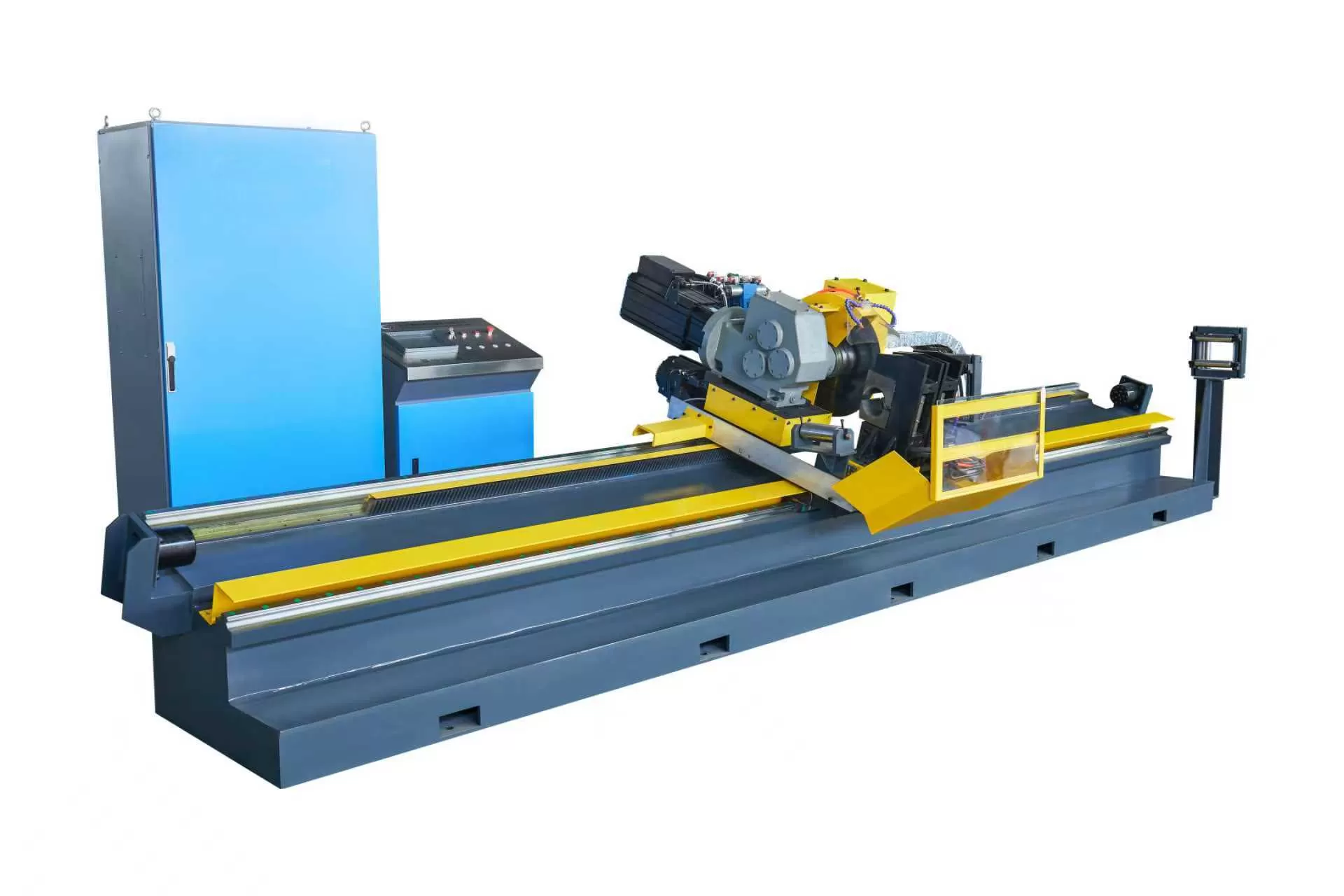
The straightening process follows, typically utilizing a Turks-head or a
multi-roll straightener. This eliminates any bow, camber, or twist that may have
been introduced during the forming or cooling phases. Accuracy here is vital for
B2B clients who use the pipes in automated CNC machining or laser cutting
systems, where even a slight deviation in straightness can cause production
errors. SANSO integrates precision measurement sensors at this stage to provide real-time
feedback on diameter and ovality, allowing for immediate mechanical
adjustments.
Addressing Common Industry Pain Points
Manufacturers face several recurring challenges that can compromise the
efficiency of a steel pipe
mill. Understanding these issues is the first step toward
implementing effective engineering solutions.
1. Material Inconsistency
Variation in the yield strength or thickness of the incoming coil can lead to
"spring-back" issues, where the tube fails to hold its shape after forming.
Solution: Implementing automated roll-gap adjustment systems that use load cells
to compensate for material hardness variations in real-time.
2. Edge Wave and Scalloping
This occurs when the strip edges are stretched more than the center during
the breakdown passes. Solution: Optimized flower design and the use of side-roll
stands to support the strip edges more effectively throughout the transition
zones.
3. Roll Wear and Maintenance
Continuous contact with abrasive steel surfaces wears down the rolls, leading
to surface marking on the pipes. Solution: Using high-chromium or D2 tool steel
for rolls, often with specialized coatings like Tungsten Carbide or Chrome
plating to extend the service life between regrinds.
Application Scenarios and Industry-Specific Requirements
The configuration of a mill is heavily dictated by its intended output. A
line designed for ornamental stainless steel will look significantly different
from one intended for API-grade oil and gas pipes.
Structural and Construction: These mills focus on
high-speed production of square and rectangular sections. Dimensional tolerance
for the corner radius is a mandatory requirement to ensure weldability in
building frames.
Automotive Exhaust and Fuel Lines: These applications
require superior internal scarfing and high corrosion resistance. The mill must
be able to handle aluminized or stainless steel without damaging the
coatings.
Oil and Gas (OCTG): These lines are characterized by heavy
wall thicknesses and the need for rigorous Non-Destructive Testing (NDT).
Ultrasonic and Eddy Current testing systems are often integrated directly into
the line.
Precision Mechanical Tubing: Used in furniture and
bicycles, these pipes require a high-quality surface finish and extremely tight
ovality tolerances.
Integrating Automation and Smart Manufacturing
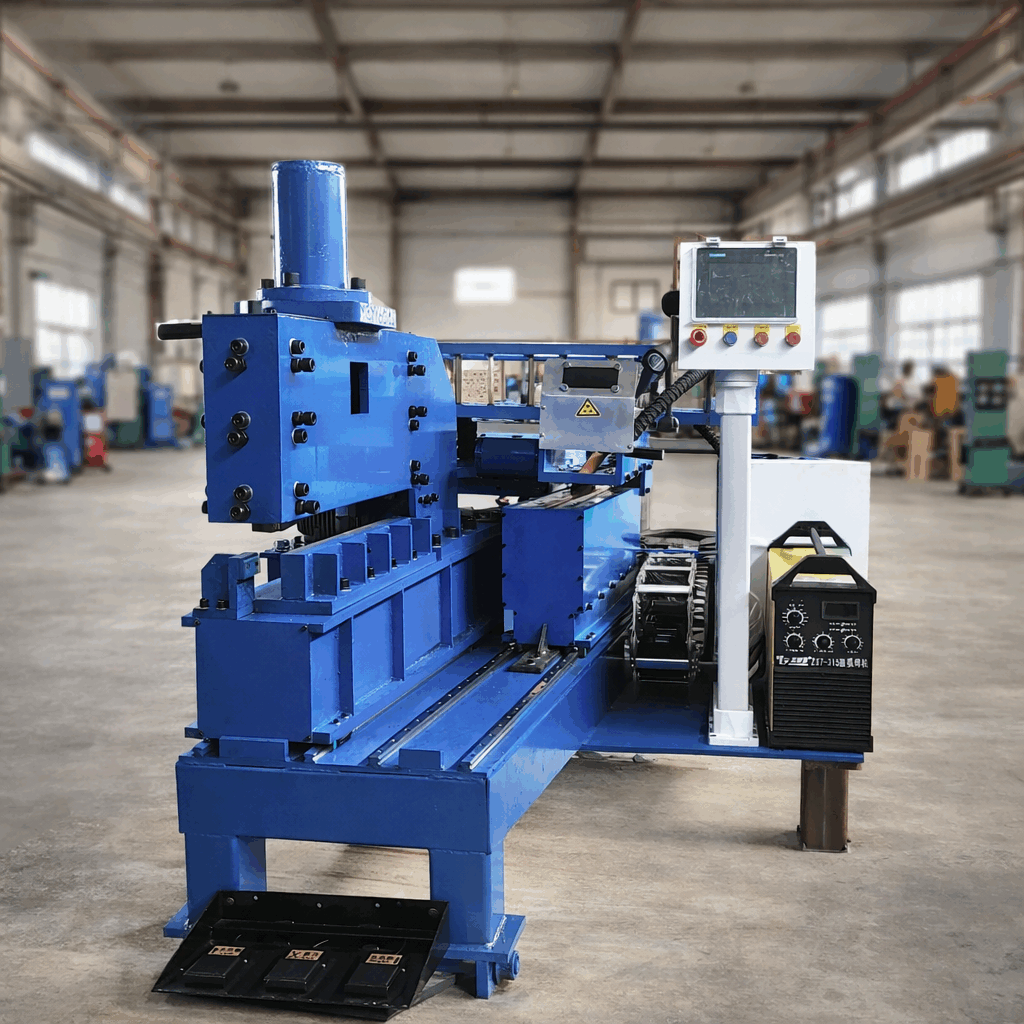
The modern manufacturing environment demands data-driven insights. Today’s
high-end production lines are equipped with SCADA (Supervisory Control and Data
Acquisition) systems that monitor everything from the kilowatt-hour consumption
of the welder to the vibration levels of the roll stand bearings. This allows
for predictive maintenance, where components are replaced before a failure
occurs, drastically reducing unscheduled downtime.
Furthermore, quick-change systems have become a standard requirement. In the
past, changing a mill from one diameter to another could take an entire shift.
With modern rafted mill designs, where entire sets of roll stands can be swapped
out simultaneously using overhead cranes, changeover times have been reduced to
under 30 minutes. This agility is what allows B2B suppliers to handle smaller
batch sizes efficiently in a "just-in-time" supply chain.
Selecting the Right Mechanical Partner
Investing in a steel pipe
mill is a long-term strategic commitment. The quality of the
engineering dictates the reliability of the output for years to come. By
focusing on mechanical rigidity, precision in the forming passes, and advanced
induction welding control, manufacturers can ensure they remain competitive in a
sector that demands ever-increasing quality. SANSO continues to push the
boundaries of what is possible in tube mill engineering, providing the
foundational technology that powers global infrastructure.
Frequently Asked Questions (FAQ)
Q1: What is the difference between ERW and HFI welding in a pipe
mill?
A1: ERW (Electric Resistance Welding) is a broad term that includes both
low-frequency and high-frequency welding. HFI (High-Frequency Induction) is a
specific type of ERW that uses an induction coil to generate heat without
physical contact with the strip. HFI is generally preferred for modern
industrial applications due to its higher efficiency and superior weld
quality.
Q2: Why is the accumulator considered a requirement for high-speed
mills?
A2: The accumulator stores a large amount of strip material that can be fed
into the mill while the entry-section uncoiler is stopped to weld the end of a
new coil. Without it, the mill would have to stop every 20-40 minutes, leading
to wasted material and inconsistent heat settings at the weld seam.
Q3: Can a single mill produce both round and square
pipes?
A3: Yes. Most mills produce a round tube first and then pass it through a
"sizing and shaping" section. By changing the rolls in this final section, the
round tube can be reshaped into square, rectangular, or other profile shapes
while maintaining the same weld seam.
Q4: How do you prevent internal rust in pipes produced on a
mill?
A4: During the production process, an internal "anti-rust" spray system can
be integrated after the sizing section. This applies a thin coat of protective
oil or lacquer to the inner diameter of the tube. Additionally, maintaining a
dry and temperature-controlled environment for the finished goods is a standard
requirement.
Q5: What is "scarfing" and why is it necessary?
A5: When the strip edges are pressed together during welding, some molten
metal is squeezed out, creating a bead on both the inside and outside of the
pipe. Scarfing is the mechanical process of using a carbide tool to shave off
this excess material while it is still hot, resulting in a smooth surface.
Are you looking to enhance your production capacity with
high-precision pipe manufacturing technology? Our engineering team is
ready to provide you with tailored solutions that maximize your throughput and
ensure structural excellence. Contact us today for a detailed consultation on
our latest mill configurations. Inquiry Now