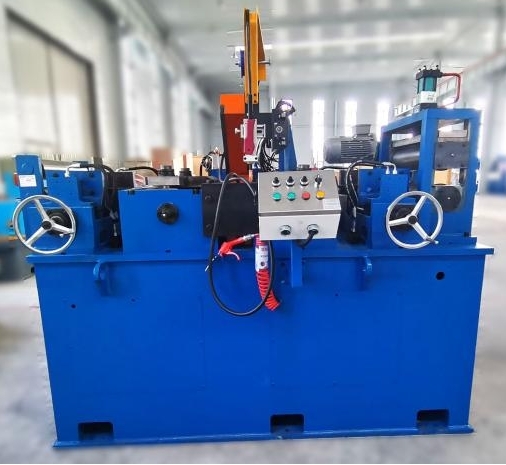
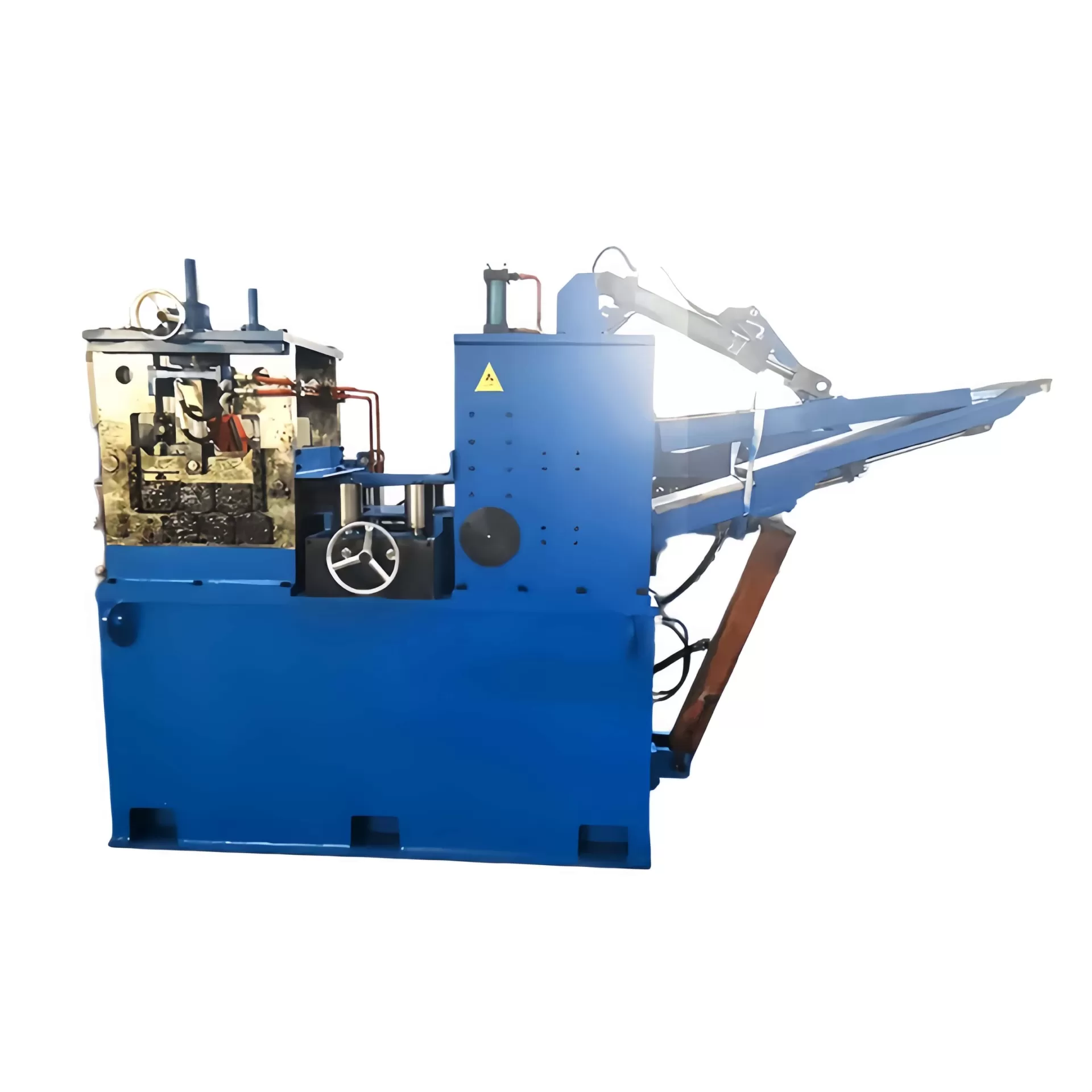
In the high-pressure environment of welding pipe manufacturing, the efficiency of your production line is often dictated by its weakest link. While many engineers focus heavily on the high-frequency welder or the cut-off saw, the process begins much earlier. The uncoiler machine is the foundation of the entire tube mill entry section. If this piece of equipment fails or is improperly specified, your mill stops, and profitability vanishes.
Choosing the right decoiling equipment is not just about holding a roll of steel. It is about tension control, safety, and reducing the time between coil changes. Whether you are running a small decorative tube line or a heavy-duty API pipe mill, selecting the correct uncoiler machine determines the smoothness of material flow into the accumulator and leveling systems.
This article breaks down the critical technical aspects you must evaluate to ensure your entry line runs at peak performance.
Understanding the Role of an Uncoiler Machine in Tube Production
The primary function of an uncoiler machine goes beyond simply supporting the steel coil. In a modern pipe milling setup, this machine is an active component of the line speed synchronization. It must feed the strip into the shear welder and accumulator at a rate that matches the consumption of the mill, often with rapid acceleration and deceleration.
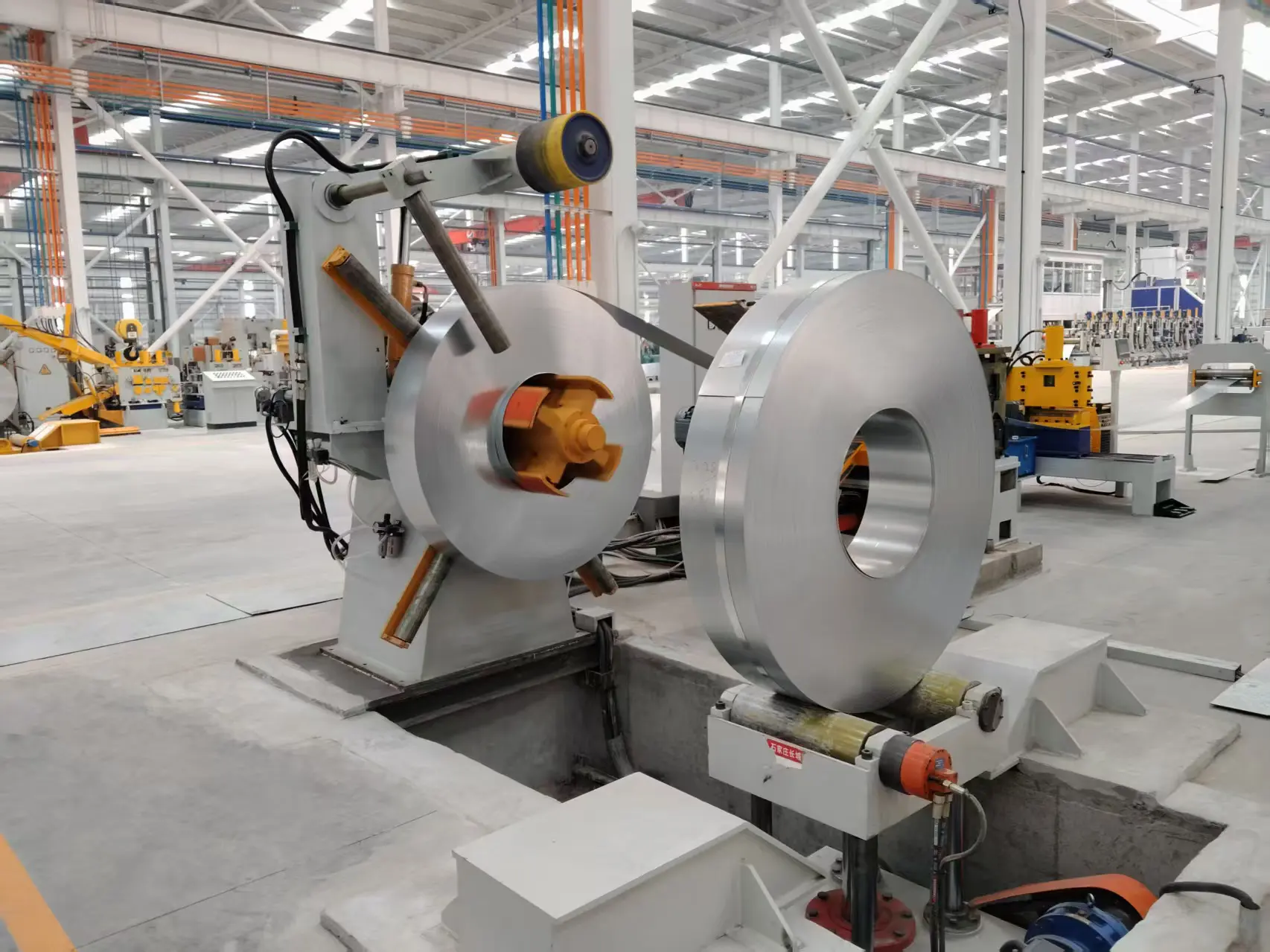
A standard uncoiler machine consists of an expanding mandrel to grip the inner diameter (ID) of the coil, a drive system for payoff, and a braking mechanism to prevent over-spin. In the context of pipe making, the steel strip is often thick and heavy. A poorly built machine will suffer from bearing fatigue and mandrel collapse under the weight of 20-ton or 30-ton coils.
When production managers look to upgrade their facility, they often overlook the "start" of the line. However, a robust uncoiler machine ensures that the strip enters the flattener centered and under correct back-tension, which is vital for high-quality forming later in the process.
One of the first decisions you will face is choosing between a single mandrel and a double head configuration. This decision largely depends on your required throughput and budget.
A single-head uncoiler machine is simpler and requires less floor space. It is often suitable for lines where coil changes are infrequent or where budget constraints are tight. However, the downtime associated with loading a new coil can be significant. The crane must remove the empty strap, bring the new coil, and load it carefully onto the mandrel.
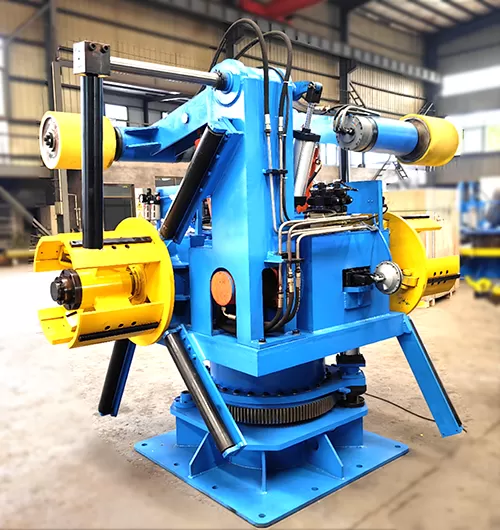
Conversely, a double-head uncoiler machine is the industry standard for high-speed pipe mills. While one side is feeding the mill, the operator can load the next coil onto the idle side. When the first coil finishes, the machine rotates 180 degrees, and the new coil is ready to be threaded immediately. For mills running 24/7, the reduction in changeover time makes the double-head uncoiler machine an investment that pays for itself quickly.
Analyzing Weight Capacity and Strip Width
The specifications of your uncoiler machine must match the maximum parameters of your raw material suppliers. Steel coils for pipe making are incredibly dense. Overloading an uncoiler is a leading cause of shaft failure and hydraulic system leaks.
You must define the maximum coil weight. A standard machine might handle 5 tons, but heavy-duty structural pipe lines often require an uncoiler machine capable of handling 25 to 40 tons. This requires a much larger base frame and heavy-duty bearings.
Furthermore, strip width is a critical factor. The mandrel length must accommodate your widest strip, but it also needs to support narrow strips effectively without causing the mandrel segments to twist. When you specify your uncoiler machine, ensure the back-plate radius and the mandrel expansion range cover all standard coil IDs (typically 508mm or 610mm) used in your region.
Hydraulic Expansion Mechanisms and Coil Security
How the machine grips the coil is a matter of safety and stability. Older or lighter-duty machines might use manual expansion, where an operator uses a crank to expand the mandrel pads. In the pipe milling sector, this is rarely acceptable due to the weight of the coils.
A modern uncoiler machine utilizes hydraulic expansion. A hydraulic cylinder inside the main shaft pushes a wedge or link system to expand the mandrel segments outward. This provides massive gripping force on the coil ID.
This grip is essential. As the coil diameter shrinks, the tension dynamics change. If the uncoiler machine loses its grip, the coil can slip, damaging the internal layers of the steel and potentially causing a catastrophic safety hazard. The hydraulic system should feature a check valve or a continuous pressure setting to ensure the grip remains tight even if line pressure fluctuates.
Tension Control and Braking Systems
Controlling the momentum of a spinning coil is physics in action. When the accumulator fills up and the entry section stops, a 20-ton coil spinning at speed has immense kinetic energy. Without a proper braking system, the uncoiler machine will continue to spin, dumping loose steel strip onto the floor (known as "bird nesting").
A high-quality uncoiler machine is equipped with a pneumatic water-cooled disc brake or a heavy-duty air brake. This brake works in conjunction with the loop control system.
Additionally, back-tension is required to keep the strip taut as it enters the leveler. Some machines use a "drag generator" or a motorized break to provide consistent resistance. This prevents the strip from wandering side-to-side. If your pipe mill produces defects related to seam alignment, check if your uncoiler machine is providing consistent back-tension.
The Necessity of Snubber Arms and Peeling Tables
In the international welding pipe milling field, safety is paramount. Handling heavy-gauge high-strength steel (like X70 or X80 grade) can be dangerous. When the retaining bands are cut, the outer layer of the coil acts like a giant spring.
To prevent injury and equipment damage, your uncoiler machine should be equipped with a hydraulic snubber arm (also called a hold-down arm). This arm presses a motorized wheel onto the top of the coil, holding it shut while the bands are cut.
Furthermore, threading thick steel into the flattener is physically difficult. A peeler table (or spade) is an essential accessory. It extends from the uncoiler machine to lift the leading edge of the strip and guide it into the pinch rolls. For any pipe mill running material thicker than 3mm, a peeler table and snubber arm are mandatory features for your uncoiler machine.
Integration with Coil Loading Cars
You cannot discuss the efficiency of an uncoiler without considering how the steel gets there. A coil loading car is a hydraulic trolley that moves on rails perpendicular to the uncoiler mandrel.
Attempting to load a heavy coil using only an overhead crane is time-consuming and risks damaging the mandrel pads. A coil car lifts the coil from the saddle and aligns it perfectly with the uncoiler machine center line.
Advanced coil cars include functions to prevent "telescoping" of the coil during movement. When purchasing your uncoiler machine, ensure the hydraulic power pack is sized to handle both the expansion of the mandrel and the lifting action of the coil car simultaneously to avoid pressure drops.
Durability and Maintenance in Harsh Environments
Pipe mills are dirty, hot, and often filled with metal dust. An uncoiler machine built for light HVAC ductwork will not survive in a structural tube mill. You need equipment built with heavy welded plate steel, not bent sheet metal.
Look for centralized lubrication points. The sliding wedges inside the mandrel undergo immense stress; if they cannot be easily greased, they will seize. The hydraulic hoses should be routed through protective chains to prevent abrasion.
Regular maintenance of the uncoiler machine is critical. Operators should check the brake pads for wear weekly and inspect the hydraulic fluid for contamination. A well-maintained machine can last for 20 years, whereas a neglected one will develop "mandrel droop" (where the shaft sags) within a few years, causing uneven tracking of the steel strip.
Price vs. Long-Term Value
It is tempting to select the cheapest option when sourcing equipment. However, the uncoiler machine is a bottleneck asset. If it breaks, the welder stops.
When evaluating quotes from manufacturers, look beyond the price tag. Check the diameter of the main shaft. Check the brand of the hydraulic components and bearings (e.g., SKF, Timken, Rexroth). A cheaper uncoiler machine often uses undersized shafts that will fatigue under dynamic loads.
Calculate the cost of downtime. If a budget machine saves you $10,000 upfront but causes 10 hours of downtime a month due to jamming or hydraulic failure, the savings are lost immediately. Investing in a heavy-duty uncoiler machine ensures reliability for the lifespan of your pipe mill.
The selection of an uncoiler machine is a technical decision that impacts the safety, speed, and quality of your pipe production. From the gripping power of the hydraulic mandrel to the thermal capacity of the braking system, every component plays a role in successful tube manufacturing.
For factory owners in the international welding pipe milling sector, moving from manual, light-duty decoilers to robust, double-head systems with automated loading cars is a necessary step toward modernization. By focusing on weight capacity, tension control, and safety features like snubber arms, you ensure that your production line starts strong. A reliable uncoiler machine is the silent workhorse that allows your mill to run at maximum efficiency.
Frequently Asked Questions (FAQ)
Q1: How do I calculate the required braking torque for my uncoiler machine?
A1: Braking torque is calculated based on the maximum coil weight, the outer diameter of the coil, and the line deceleration speed. Essentially, the heavier the coil and the faster the line stop time, the more brake torque is needed to prevent the coil from spinning out of control. It is best to consult with your manufacturer, providing them with your maximum line speed and emergency stop time requirements.
Q2: Can a single uncoiler machine handle both 508mm and 610mm coil IDs?
A2: Yes, but it usually requires adapter pads. Most standard uncoiler machine mandrels are designed for a specific base diameter (often 508mm). To handle 610mm coils, you bolt on "filler plates" or "leaves" to the mandrel segments to increase the diameter. Hydraulic expansion alone usually does not have enough range to cover this gap safely.
Q3: What is the difference between "active" and "passive" payoff on an uncoiler machine?
A3: A passive payoff relies on the mill or leveler to pull the strip off the coil; the uncoiler simply brakes to create tension. An active payoff (motorized) drives the mandrel to feed the strip. Active payoff is typically used for thin materials or during the threading process to push the steel into the flattener, while passive is common for running heavy gauge steel at high speeds.
Q4: Why is my uncoiler machine causing the strip to track to the left or right?
A4: This is usually due to misalignment or "mandrel droop." If the main shaft of the uncoiler machine is not perfectly 90 degrees to the production line, the strip will walk. Alternatively, if the bearings are worn, the heavy coil causes the shaft to sag, creating a conical shape that forces the strip to one side.
Q5: How often should I change the hydraulic oil in the uncoiler machine?
A5: For a pipe mill operating on a standard shift, hydraulic oil should typically be changed every 2,000 to 3,000 operating hours, or at least once a year. However, filters should be checked monthly. The environment in a pipe mill is dusty, and if contaminants enter the hydraulic cylinder of the uncoiler machine, it can lead to seal failure and loss of gripping pressure.