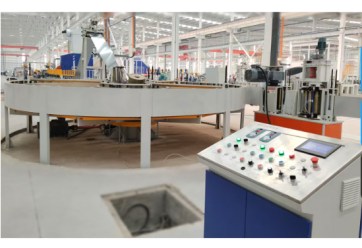
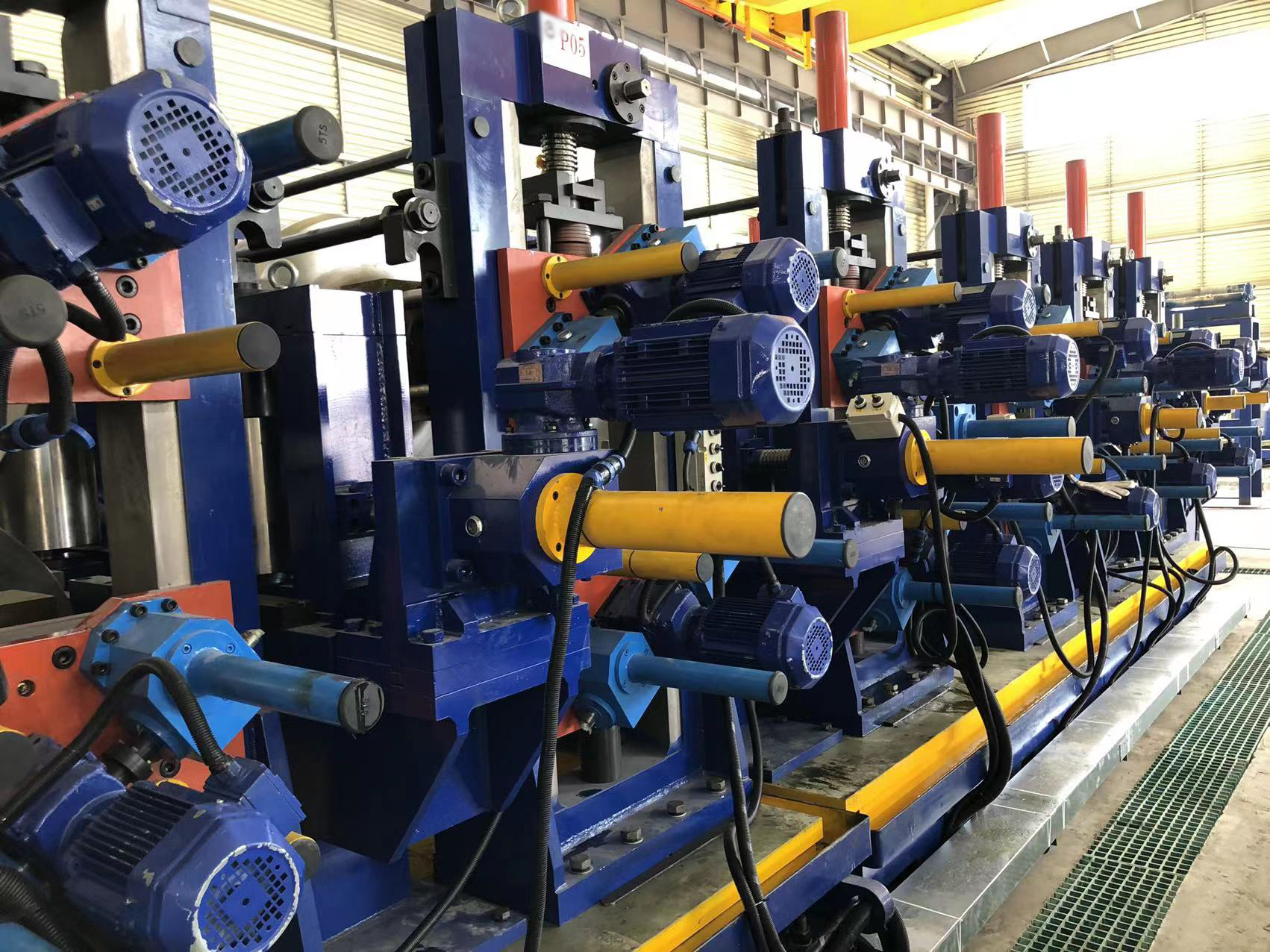
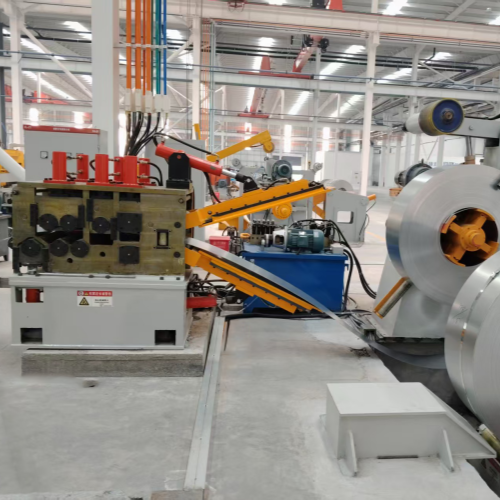
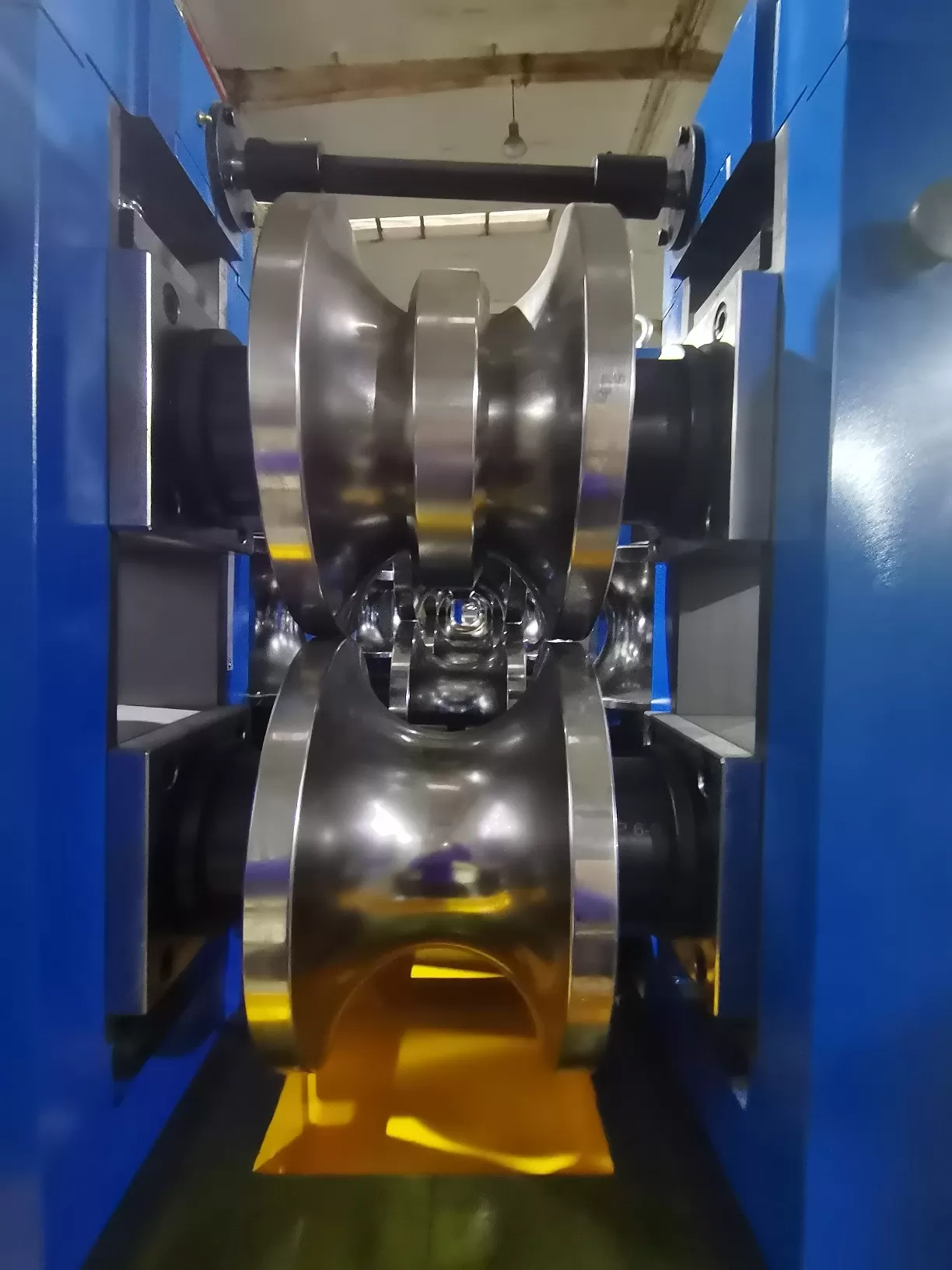
In high-frequency welded tube mill lines, the process begins long before the
forming rolls shape the metal or the welding unit seals the seam. The stability
and continuous performance of the entire mill depend directly on the raw
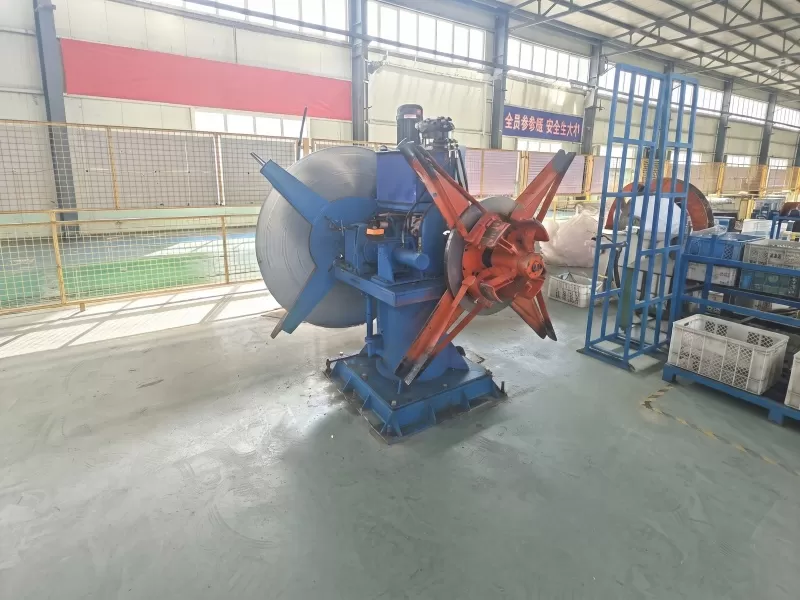
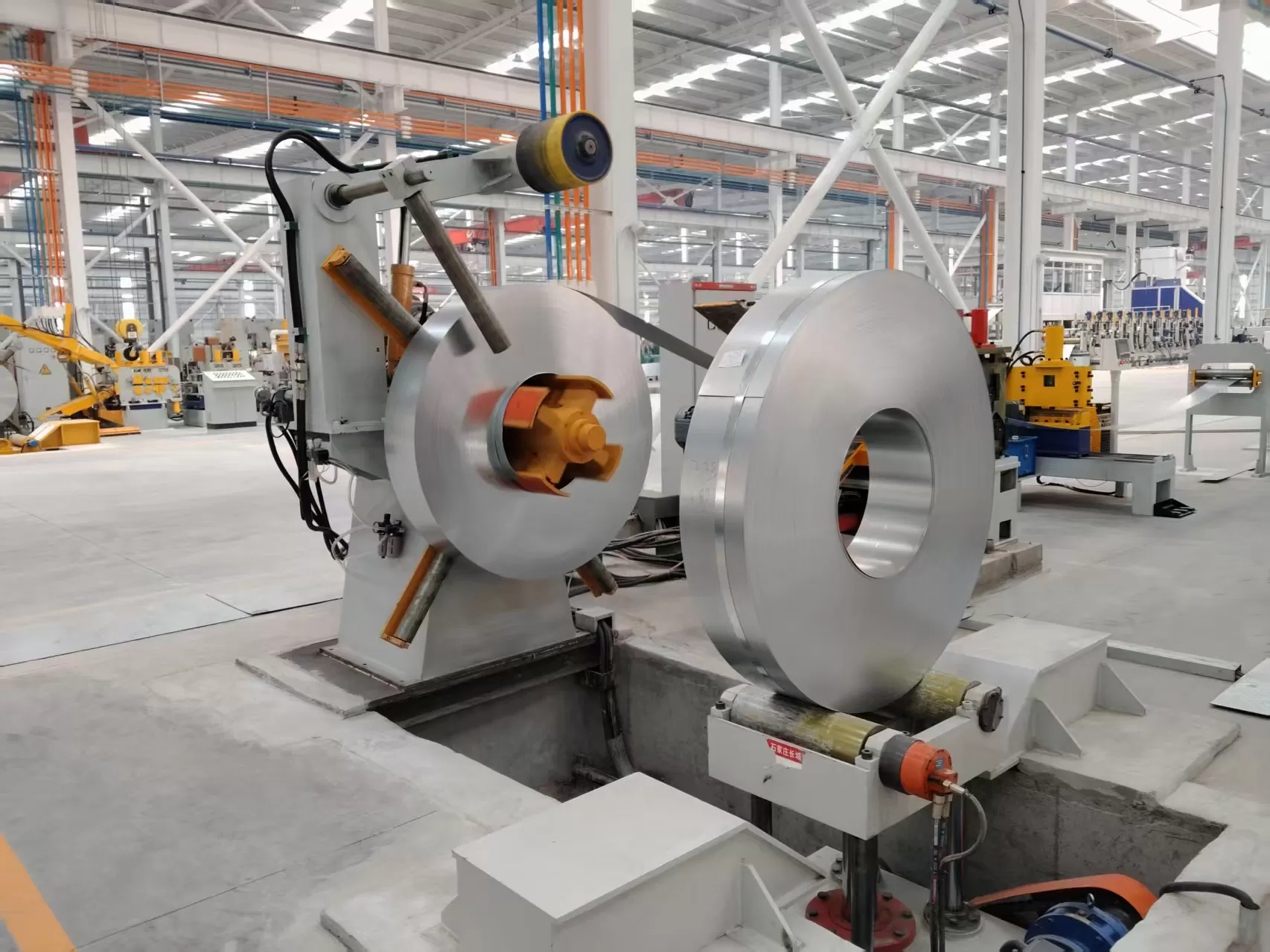
material handling phase. The primary machine responsible for managing this phase
is the uncoiler, which holds, expands, and pays out heavy steel coils into the
feed section of the production line. A poorly configured unwinding system can
cause downstream complications, including strip edge damage, inconsistent
tension, and frequent production halts.
As pipe manufacturers face demands for high-strength steel processing and
faster line speeds, the choice of raw material feeding equipment becomes a key
consideration. SANSO designs heavy-duty strip feeding solutions to address the
mechanical demands of modern tube production. Understanding the mechanics,
configuration options, and integration requirements of these machines is
necessary for any manufacturing facility aiming to run a profitable, continuous
tube mill operation.
Structural Classifications of Modern Uncoiler Machinery
The choice of uncoiler configuration depends heavily on the production line
speed, coil weight, strip thickness, and the desired level of automation. In the
pipe manufacturing industry, systems generally fall into two structural
categories, each offering distinct operational characteristics.
Single-Mandrel Systems
Single-mandrel designs feature a single cantilevered shaft supported by
heavy-duty bearings inside a rigid steel frame. These systems are typically used
in applications where coil changeovers are less frequent or where space
constraints limit the floor plan. The mandrel is expanded either manually via a
wedge mechanism or hydraulically using an integrated cylinder. While
single-mandrel units require lower capital investment, they present a clear
limitation in high-speed operations: the production line must stop completely
during the loading and threading of each new coil, unless a substantial strip
accumulator is positioned downstream.
Double-Mandrel Rotary Systems
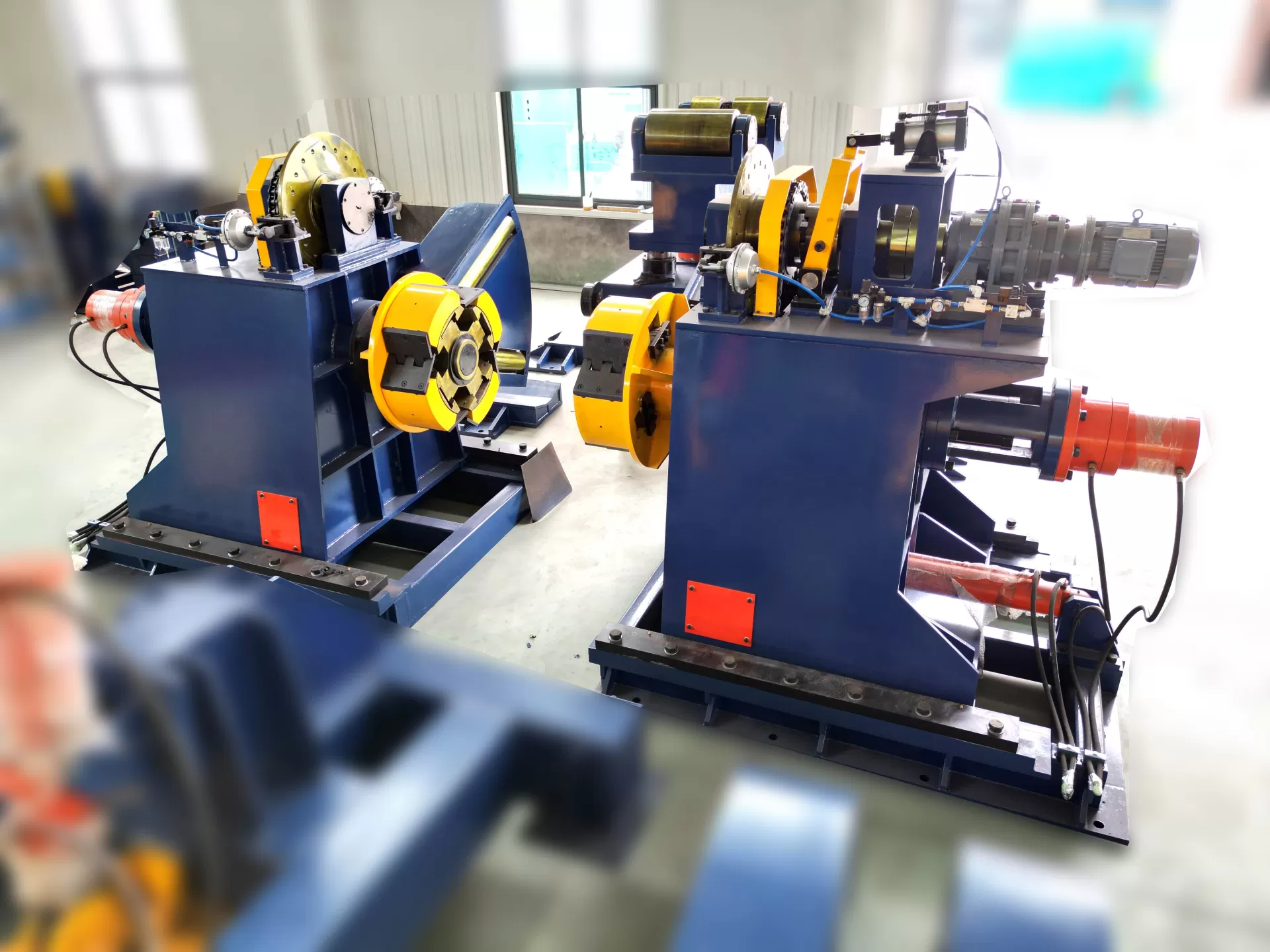
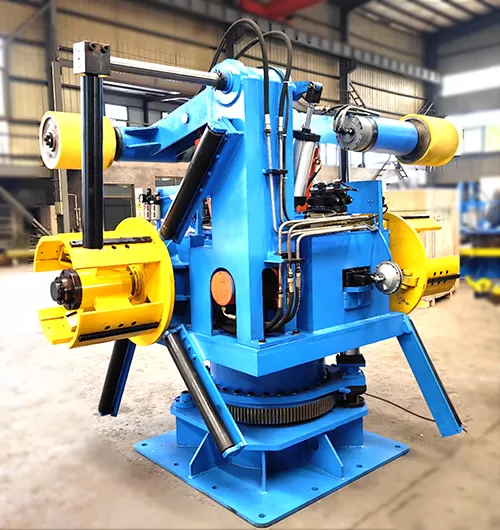
For high-capacity, continuous tube mill lines, double-mandrel configurations
are the industry standard. These units feature two independent mandrels mounted
on a 180-degree rotating base. While one mandrel actively feeds the strip into
the production line, the operator can safely load the next coil onto the idle
mandrel on the opposite side.
Once the active coil is fully uncoiled, the rotary base turns 180 degrees,
bringing the new coil into the feeding position within minutes. This design
dramatically reduces changeover times and works in tandem with downstream strip
accumulators to allow non-stop, continuous tube production. SANSO designs
double-mandrel rotary units with robust locking pins to prevent any structural
vibration during the high-speed rotation cycle.
Mechanics of Mandrel Expansion and Tension Control
The operational efficiency of an uncoiler depends on two primary mechanical
systems: the expansion of the mandrel segments and the control of back-tension.
Both systems must handle significant mechanical forces without damaging the
steel strip or the machine components.
Hydraulic Mandrel Expansion
Steel coils are supplied with standard inner diameters, typically 508 mm or
610 mm. To secure these heavy loads, which often range from 5 to 20 metric tons,
the mandrel must expand radially outward with high clamping force. This is
achieved through a multi-segment link mechanism driven by a rear-mounted
hydraulic cylinder.
As the hydraulic piston rod moves axially through the hollow main shaft, it
forces matching wedge sliders to move the outer mandrel segments outward. This
mechanical motion ensures concentric expansion, keeping the coil balanced on the
center axis. Concentricity is important; any eccentricity during rotation causes
rotational inertia imbalances and uneven strip feed speeds, which can disturb
the downstream roll forming tools.
Active vs. Passive Tension Control
Maintaining correct back-tension is necessary to prevent the steel strip from
sagging or telescoping as it is pulled into the leveling machine. There are two
main methods used to govern this process:
Pneumatic and Hydraulic Braking (Passive): A pneumatic disc
brake system is mounted to the main shaft. As the coil diameter decreases, the
braking force must be adjusted to maintain constant strip tension. This system
is highly reliable and suited for medium-speed lines.
Regenerative Drive Motor Systems (Active): In advanced
high-speed tube mills, a variable frequency drive (VFD) motor is geared directly
to the shaft. The motor acts as a generator during unwinding, providing precise
resistance to maintain tension while feeding power back into the factory grid.
This method delivers smooth tension control across the entire diameter range of
the coil.
To assist in the initial threading process, active systems can also run in
forward rotation, pushing the heavy strip leader into the pinch rolls of the
flattener without manual intervention from the operator.
Managing Common Operational Challenges
Operators of welded pipe lines often face specific challenges during the
unwinding phase that directly affect product quality and equipment longevity.
Addressing these challenges requires a combination of robust machine
construction and smart auxiliary features.
One major issue is strip telescoping, which occurs when the inner wraps of
the steel coil slip laterally during rotation. This lateral movement causes the
strip to enter the leveler at an angle, leading to edge damage and poor welding
alignment. To counter this, SANSO incorporates heavy-duty hold-down arms, also
known as snubber arms. Equipped with a motorized or idle press roll, the snubber
arm applies downward hydraulic pressure to the outer diameter of the coil,
preventing the wraps from clock-springing or shifting during the band-cutting
and threading phases.
Another operational challenge is the physical handling of high-tonnage coils.
Manually loading a 15-ton coil onto a mandrel using an overhead crane is
time-consuming and introduces safety concerns. The integration of a hydraulic
coil loading car resolves this issue. The coil car travels on floor rails, lifts
the coil vertically using a V-shaped platform, and moves it horizontally onto
the collapsed mandrel. This automated loading sequence protects the mandrel from
impact damage and reduces loading times to under three minutes.
Integration within the Welded Tube Mill Line
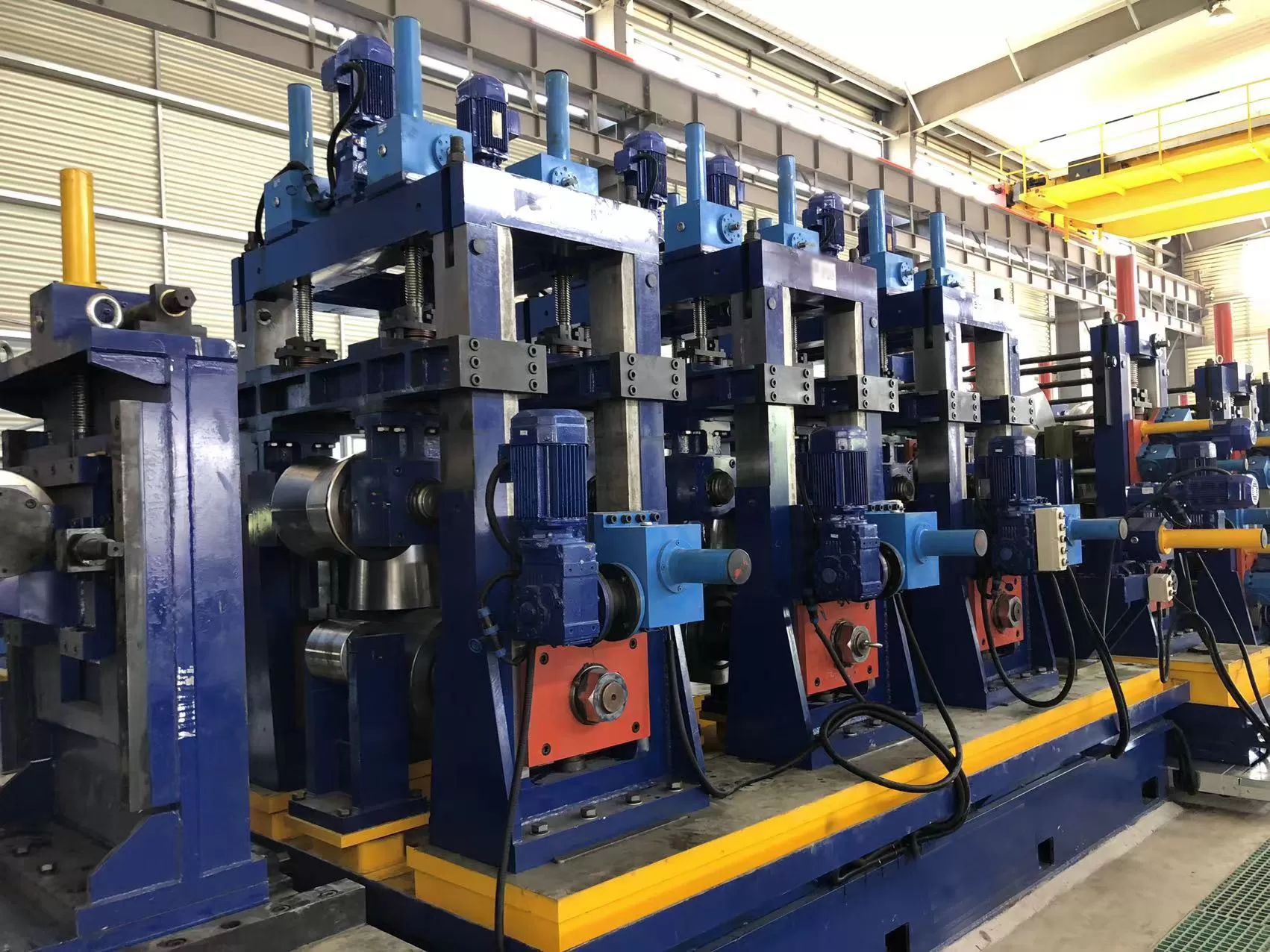
An uncoiler cannot operate as an isolated machine; it must be fully
integrated into the control system of the entire production line. The
synchronization between the unwinding speed and the entry speed of the forming
section is mediated by several auxiliary machines.
Immediately following the uncoiler, a pinch roll and flattener unit grips the
strip leader. The top roll of the pinch unit is hydraulically operated to clamp
the strip and pull it off the coil. Once the strip is threaded through the
flattener, it enters the shear and end welder, where the trailing end of the old
coil is welded to the leading end of the new coil.
To keep the forming mill and high-frequency welder running during this
welding process, the strip is fed into a vertical or horizontal accumulator. The
accumulator stores a buffer of material. During normal operation, the uncoiler
runs faster than the forming mill to fill the accumulator. When a coil end is
reached, the uncoiler stops for the welding process while the forming mill
continues to pull material from the accumulator. This complex coordination
requires precise PLC integration, utilizing ultrasonic loop sensors or dancer
arms to continuously monitor strip loops and adjust the motor speeds
accordingly.
Key Specifications for Machinery Procurement
When selecting or customizing an uncoiler for a tube mill project, several
engineering parameters must be specified to ensure compatibility with production
goals. The table below outlines the core parameters that engineering teams must
evaluate:
| Parameter Description | Standard Range (Light-Medium Duty) | Heavy-Duty Capacity |
|---|
| Maximum Coil Weight | 1,500 kg – 5,000 kg | 10,000 kg – 25,000 kg |
| Strip Width Capacity | 100 mm – 400 mm | 400 mm – 1,600 mm |
| Material Thickness Range | 0.5 mm – 3.0 mm | 3.0 mm – 16.0 mm |
| Mandrel Expansion Range | 450 mm – 520 mm | 480 mm – 610 mm (with adapter shoes) |
| Maximum Coil Outer Diameter | 1,200 mm | 1,600 mm – 2,000 mm |
| Line Speed Synchronization | Up to 60 m/min | Up to 120+ m/min |
In addition to these structural dimensions, metallurgical factors such as the
yield strength of the steel must be considered. High-strength low-alloy (HSLA)
steels have high elastic memory and require stronger hydraulic holding pressures
and heavier press rolls compared to standard carbon steels.
SANSO works closely with B2B clients to customize frame rigidities and
hydraulic capacities based on these specific metallurgical requirements,
ensuring the chosen machine operates reliably under maximum loading conditions
without structural deflection.
Frequently Asked Questions
Q1: What is the difference between an active driven uncoiler and a
passive uncoiler?
A1: An active driven system uses an electric motor to rotate the mandrel,
which is necessary for thin or soft materials that cannot withstand the pulling
force of downstream levelers, and for heavy coil threading. A passive system
relies on the downstream pinch rolls or forming mill to pull the strip, using a
pneumatic or hydraulic brake on the mandrel to provide resistance and maintain
back-tension.
Q2: Why is hydraulic expansion preferred over manual mechanical
expansion?
A2: Hydraulic expansion utilizes hydraulic cylinders to expand the mandrel
segments evenly and with high clamping force. This is fast, safe, and easily
handles heavy coils. Manual expansion requires operators to turn a mechanical
screw thread to expand the segments, which is slow, physically demanding, and
limited to lighter coil weights (typically under 3 tons).
Q3: How do adapter shoes or expansion leaves assist in the uncoiling
process?
A3: Adapter shoes are auxiliary curved plates bolted onto the main mandrel
segments. They increase the default expansion range of the mandrel. For example,
they can convert a standard 508 mm mandrel to accommodate 610 mm inner diameter
coils, allowing a single machine to process different coil standards without
buying a second mandrel shaft.
Q4: What mechanical features prevent a heavy steel coil from
spring-opening when the strapping bands are cut?
A4: A hydraulic hold-down arm (snubber arm) is positioned on top of the coil.
The arm lowers a heavy, motorized roller directly onto the outer wrap of the
coil. This roller holds the tension while the operator cuts the steel bands,
allowing the strip leader to be safely fed into the pinch rolls without
uncontrolled unwinding.
Q5: How does the loop control system coordinate speeds between the
uncoiler and the tube mill?
A5: The loop control system uses ultrasonic sensors, photo-electric eyes, or
mechanical dancer arms located in a pit or loop guide between the uncoiler and
the flattener. If the loop grows too deep, the sensor sends a signal to the
drive controller to slow down the rotation. If the loop rises, indicating the
line is consuming strip faster than it is being paid out, the system signals the
motor to speed up.
Submit Your Mechanical Requirements for Custom Evaluation
Selecting the appropriate strip feeding equipment is an engineering decision
that directly impacts the daily output and operational stability of your tube
mill line. SANSO specializes in configuring rugged, high-performance uncoiler
systems tailored to specific strip dimensions, metallurgical grades, and floor
space configurations.
To receive detailed machine layouts, technical drawings, or a formal
commercial proposal for your upcoming welded pipe project, please contact our
engineering support division. Our team will review your production parameters
and assist in developing a reliable, long-term solution for your manufacturing
facility.