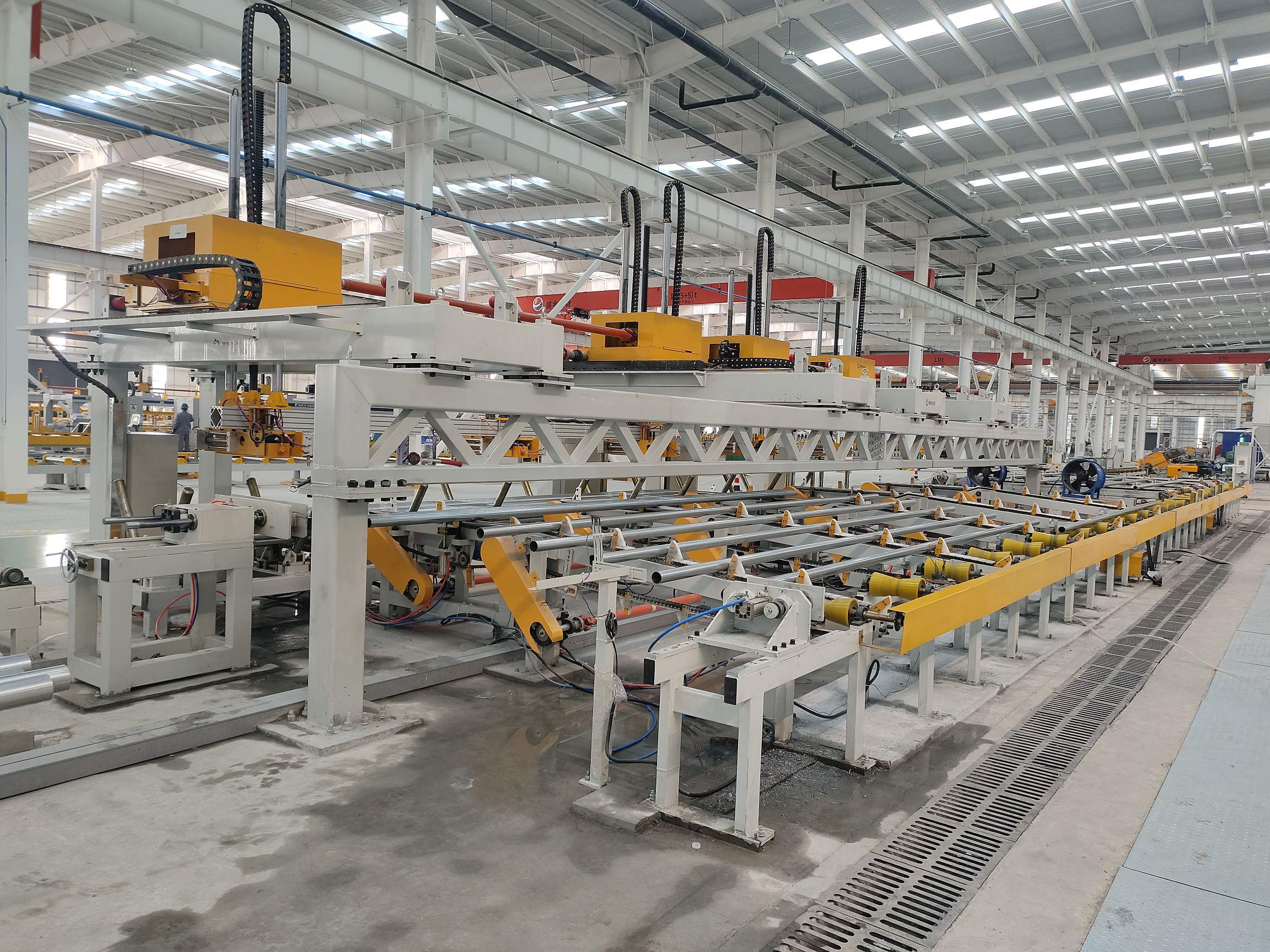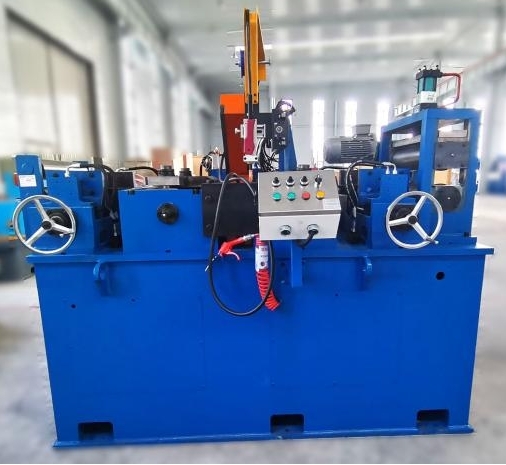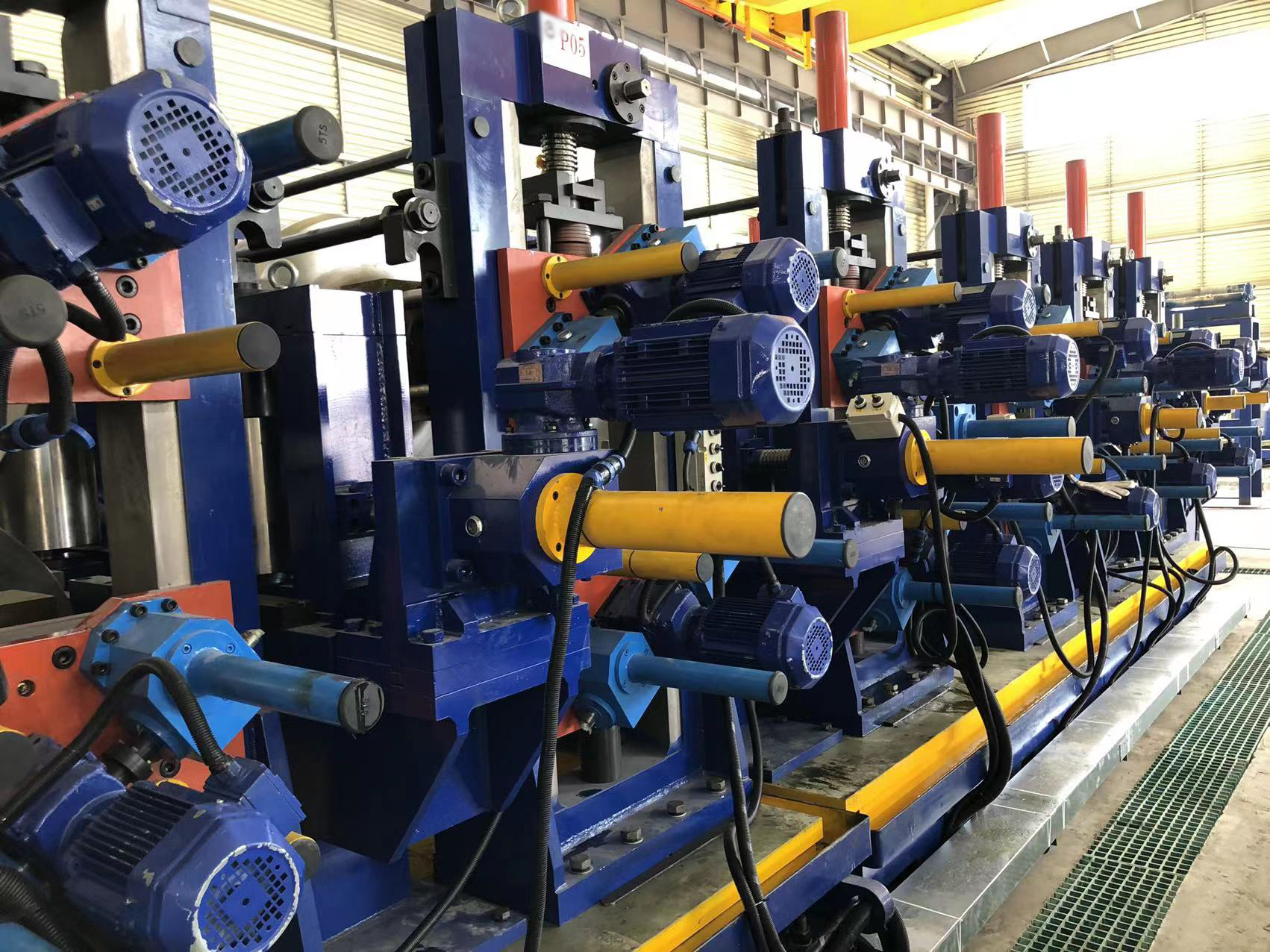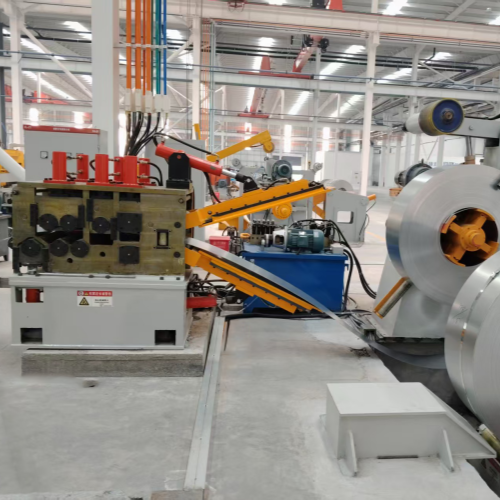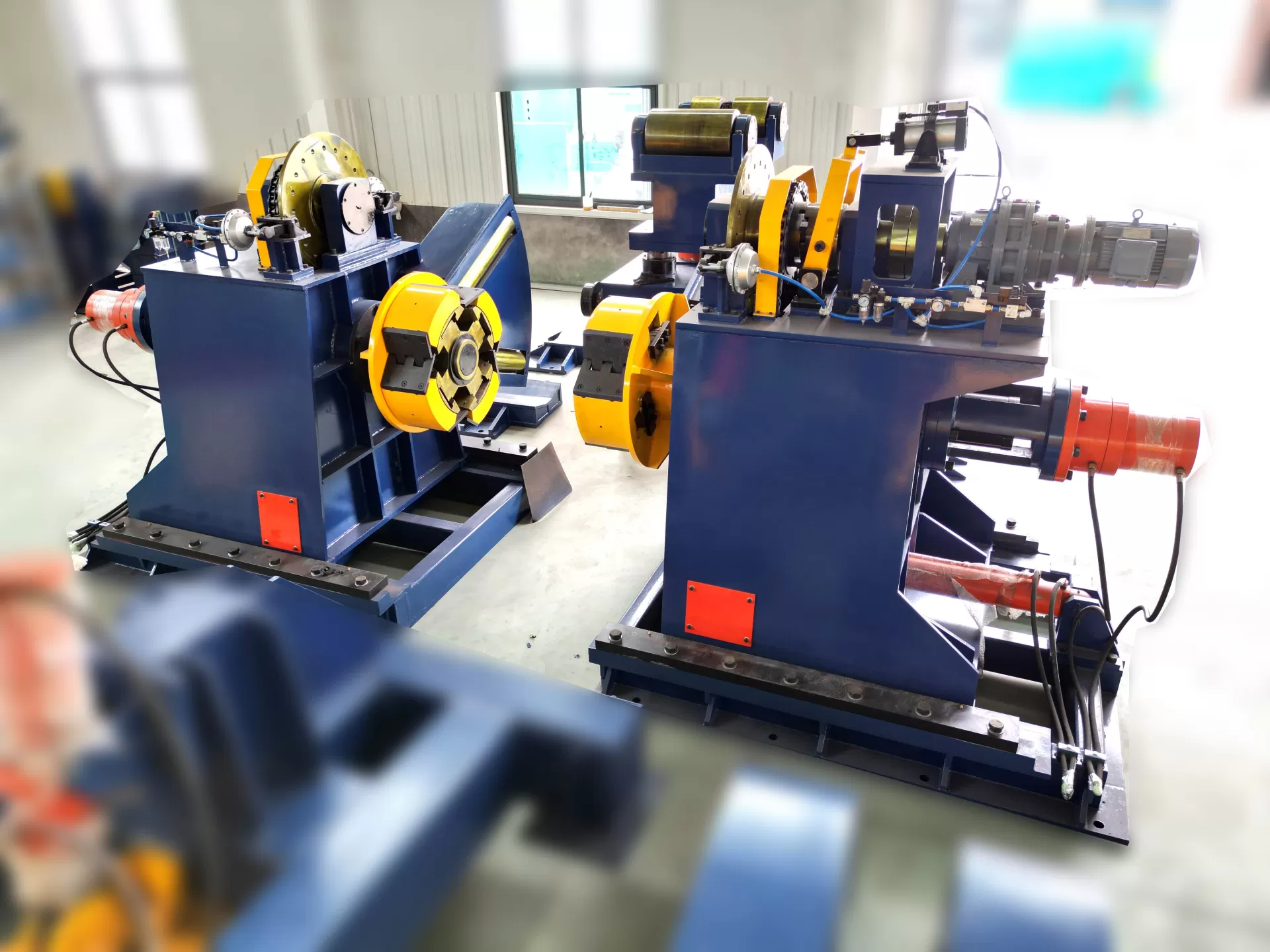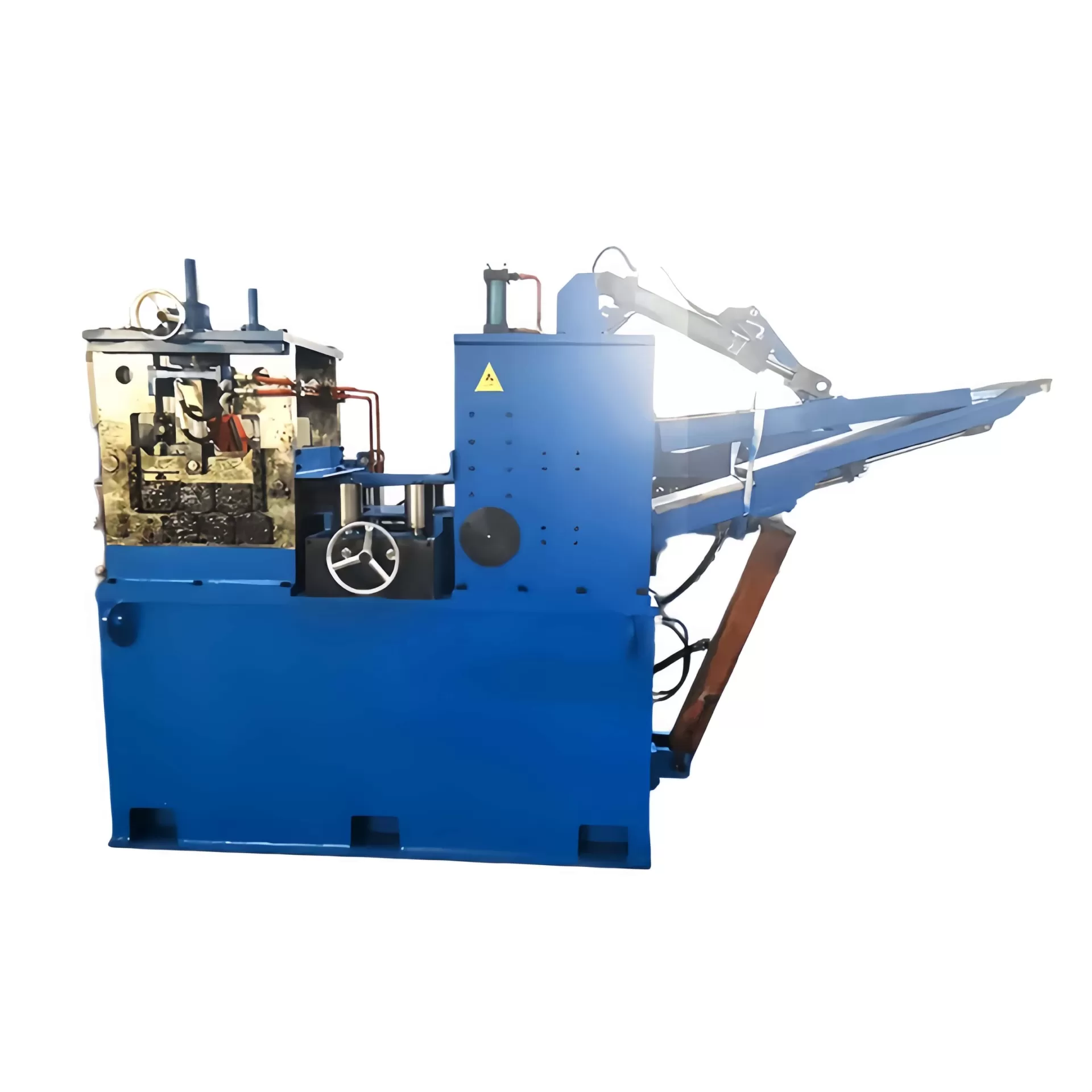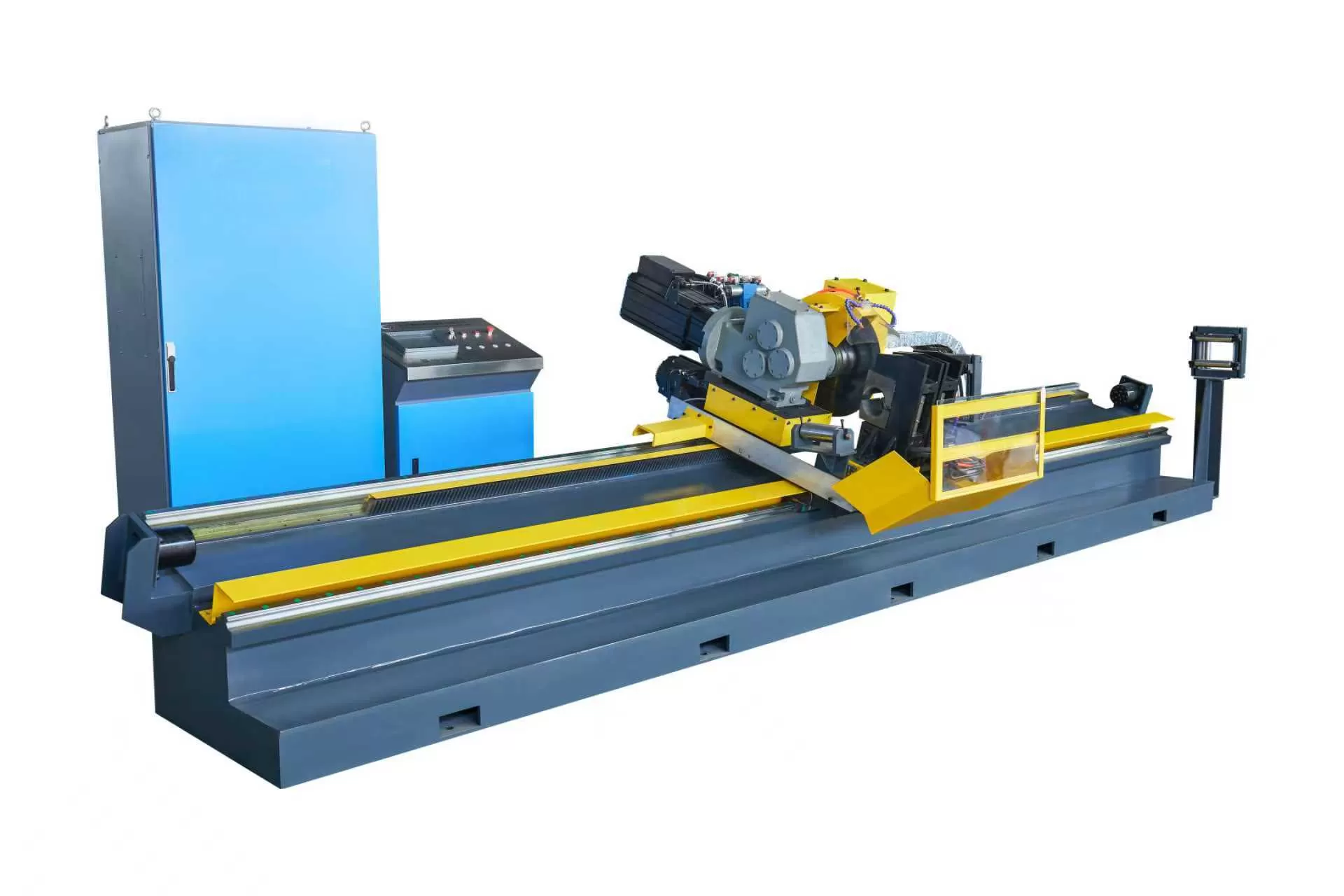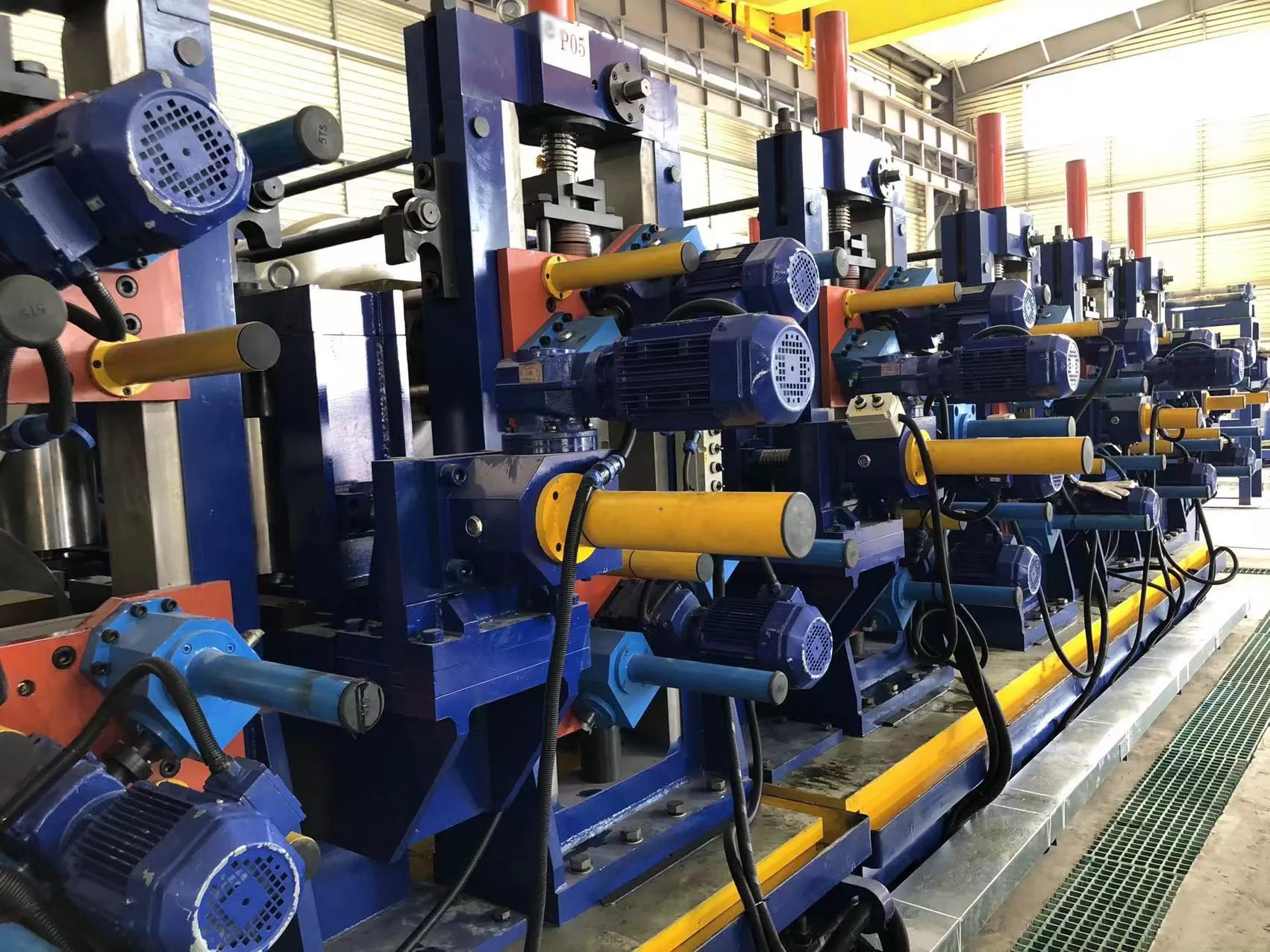
The uncoiler (also known as a decoiler or payoff reel) is the foundational component of any tube or pipe mill entry line. It supports the coil, provides controlled back tension, and ensures a smooth transition of strip into the forming section. The performance of the uncoiler directly affects strip shape, edge alignment, and ultimately the quality of the weld seam. This article offers a deep technical examination of modern uncoiler engineering—from mechanical design to digital automation—drawing on the expertise of SANSO, a leading manufacturer of tube mill equipment.
1. The Uncoiler’s Critical Role in the Entry Section
In a typical ERW or roll forming line, the entry section includes a coil car, uncoiler, peeler/breaker, straightener, and strip accumulator. The uncoiler must securely hold coils weighing up to 30 tons, with outer diameters exceeding 2000 mm and widths from 100 mm to 2000 mm. It must allow for quick coil changes to minimize downtime—often within 2–3 minutes. Key parameters that dictate uncoiler selection include:
Coil mass and geometry: Inner diameter (typically 508 mm or 610 mm), outer diameter, and width.
Material characteristics: Yield strength and surface sensitivity (e.g., stainless requires scratch‑free handling).
Line speed: Modern mills operate at speeds up to 120 m/min, demanding responsive tension control.
A poorly performing uncoiler can introduce strip crossbow, coil set, or edge damage that propagates through the forming stands, increasing scrap rates. Therefore, precision engineering of the uncoiler is essential for overall line efficiency.
2. Core Mechanical and Hydraulic Systems of Modern Uncoilers
2.1 Mandrel Expansion Mechanisms: Hydraulic vs. Mechanical
The mandrel is the heart of the uncoiler. It expands to grip the coil’s inner diameter and prevent slippage during rotation. Two dominant designs exist:
Hydraulic expansion: Uses a hydraulic cylinder to push wedges that expand the segments. Advantages include infinitely variable expansion range (e.g., 480–520 mm) and constant holding torque regardless of segment wear. Hydraulic mandrels are preferred for heavy coils and high‑speed lines because they maintain grip without mechanical play.
Mechanical expansion: Employs a handwheel or motor‑driven screw to move wedges. Simpler and lower cost, but expansion is stepwise and requires manual adjustment when coil ID varies. Often found on older or light‑duty uncoilers.
Modern uncoiler systems from SANSO use hydraulic expansion with integrated pressure sensors that detect any mandrel slip, triggering an immediate tension adjustment. The segments are coated with tungsten carbide or polymer to grip without marking the strip inside diameter.
2.2 Coil Loading and Centering
Automated coil loading reduces operator intervention and cycle time. A typical sequence:
Coil car lifts the coil and positions it concentrically with the mandrel.
Optical sensors measure coil width and ID to guide the mandrel insertion.
Once the mandrel expands, the coil car retracts and the peeler unit pivots to lift the strip end.
Edge position control (EPC) systems use ultrasonic or laser sensors to track the strip edge and shift the entire uncoiler laterally, ensuring the strip remains centered on the mill entry. This prevents uneven wear on forming rolls and reduces the risk of edge wave.
2.3 Braking and Tension Control
Back tension is critical to prevent strip flutter and maintain consistent elongation. Two primary braking methods are used:
Hydraulic disc brakes: Provide high torque at low speeds, suitable for heavy‑gauge lines. Closed‑loop control modulates hydraulic pressure based on feedback from a dancer roll or load cell.
Regenerative drives: In motor‑driven uncoilers, the motor acts as a generator, feeding energy back to the DC bus while applying precise torque. This allows dynamic tension changes during acceleration and deceleration.
Tension accuracy should be within ±2% of setpoint to avoid strip buckling or stretching beyond yield point. Advanced controllers incorporate inertia compensation algorithms that account for the changing coil diameter.
3. Uncoiler Configurations: Single‑End, Double‑End, and Turret Designs
Production requirements dictate the uncoiler configuration. Single‑end units are simplest but require the line to stop for coil changes. For continuous operation, double‑end or turret designs allow off‑line coil preparation:
Double‑end uncoiler: Two mandrels on opposite sides of a rotating base. While one pays off, the operator can load the other. Changeover is achieved by rotating 180°—typical transition time under 60 seconds.
Turret uncoiler: A rotating turret with two or three mandrels. This design often includes integrated peeler and straightener, enabling fully automated coil end preparation while the line runs. Turret uncoilers are essential for high‑utilization mills producing automotive or precision tubes.
SANSO offers both configurations, with turret models featuring independent drives on each mandrel for simultaneous rotation during splicing, minimizing accumulator depletion.
4. Automation and Industry 4.0 in Uncoiler Operation
4.1 Sensor Integration for Diameter and Edge Position
Modern uncoilers are equipped with laser distance sensors that continuously measure the outer coil diameter. This data is used to calculate remaining strip length and to adjust the deceleration profile for the end of the coil. Edge sensors (CCD cameras or ultrasonic arrays) detect lateral drift and command the hydraulic cylinder that shifts the uncoiler base.
4.2 Drive Control and Communication
Servo‑hydraulic or AC vector drives receive tension setpoints from the line PLC via industrial Ethernet (Profinet, EtherNet/IP). Real‑time synchronization with the entry accumulator ensures that the uncoiler responds instantly to changes in line speed. Data logging of tension, speed, and mandrel pressure per coil enables traceability and quality analysis.
4.3 Predictive Maintenance
Vibration sensors on mandrel bearings and temperature probes on hydraulic power units feed into a condition monitoring system. Algorithms detect anomalies (e.g., increasing vibration indicating bearing wear) and schedule maintenance before failure occurs. SANSO’s remote diagnostic platform allows service engineers to access uncoiler data worldwide, reducing mean time to repair.
5. Selecting the Right Uncoiler for Tube Mill Applications
Choosing an uncoiler involves matching mechanical ratings to the production mix. Below are typical selection criteria based on material and throughput:
Heavy structural pipe (API 5L, up to 20 mm wall): Requires a heavy‑duty uncoiler with 30‑ton capacity, hydraulic expansion, and regenerative braking to handle high tension (up to 50 kN). Mandrel diameter often 760 mm to accommodate large ID coils.
Automotive and precision tubes (0.8–4 mm wall): High‑speed turret uncoiler with quick‑change features, soft‑touch peeler to avoid scratching, and EPC with ±1 mm accuracy.
Stainless steel or non‑ferrous: Mandrel sleeves made of nylon or brass to prevent galvanic corrosion; tension control with very low inertia to avoid marking soft materials.
Data from a recent installation of a SANSO double‑end uncoiler at a European tube producer showed a 15% reduction in coil change time and a 0.5% decrease in material waste due to improved tension stability.
6. Common Operational Challenges and Engineering Solutions
6.1 Coil Telescoping and Misalignment
Coils with poorly wound edges (telescoping) cause the strip to enter the mill at an angle. This can be mitigated by a hydraulically shiftable uncoiler base that re‑centers the strip dynamically. Some systems use a loop control that measures the strip position after the straightener and adjusts the uncoiler position accordingly.
6.2 Surface Damage and Coil Breaks
The peeler blade and snubber roll must lift the strip end without gouging the underlying wraps. Modern uncoilers employ a pivoting peeler with a carbide‑tipped blade and a soft rubber snubber roll, actuated by proportional hydraulics to apply just enough force. For sensitive materials, an optional belt wrapper can be used.
6.3 Maintenance of Expansion Segments
Mandrel segments wear over time, reducing grip and causing ID damage. Inspection every 2000 operating hours is recommended. Segments with hardfacing can last 5–10 years under normal use. Lubrication of slide ways must follow manufacturer schedules; automatic lubrication systems are available as an option on SANSO uncoilers.
7. SANSO’s Approach to Uncoiler Engineering
With decades of experience in tube mill machinery, SANSO designs uncoilers that combine robust mechanics with intelligent control. Every uncoiler is engineered for the specific coil parameters and line speed of the customer. Features such as automatic coil width measurement, remote diagnostics, and energy‑efficient hydraulic systems are standard on many models. The company’s global service network ensures that uncoiler performance is sustained throughout the machine’s life. For detailed specifications, visit the uncoiler product page.
Frequently Asked Questions (FAQ)
Q1: What is the difference between a single‑mandrel and a
double‑mandrel uncoiler?
A1: A single‑mandrel
uncoiler has one payoff spindle; the line must stop to load a
new coil. A double‑mandrel uncoiler has two spindles on a
rotating base, allowing one coil to be loaded while the other pays out, enabling
near‑continuous operation.
Q2: How do I calculate the required uncoiler capacity for my tube
mill?
A2: Capacity is determined by the maximum coil mass (weight)
and the required back tension. Coil mass should be at least 20% higher than the
heaviest coil you plan to run. Tension capacity (kN) must be sufficient to
overcome the strip’s yield point multiplied by its cross‑sectional area.
Q3: Can an uncoiler handle coils with different inner diameters
without changing the mandrel?
A3: Yes, if the mandrel has a
sufficient expansion range. Hydraulic mandrels typically offer a range of 50–100
mm (e.g., 480–530 mm). For larger ID variations, interchangeable sleeve segments
or a multi‑step mandrel may be required.
Q4: What safety features are essential in an
uncoiler?
A4: Key safety elements include: light curtains around the
coil loading area, emergency stops with positive braking, mandrel anti‑drop
latches, and guarding that prevents access to rotating parts during operation.
CE and OSHA compliance is mandatory.
Q5: How often should the expansion segments be
replaced?
A5: Under normal operation with carbon steel, expansion
segments typically last 5–8 years. Inspect them annually for wear; replace if
the grip surface is worn smooth or if there is more than 2 mm of radial
play.
Q6: What is the role of the peeler unit in the
uncoiler?
A6: The peeler (or breaker) unit lifts the outer wrap of
the coil and feeds it into the straightener or pinch rolls. It must do this
without damaging the strip edge or surface, and often includes a deflector roll
to guide the strip safely.
For more information on uncoiler systems and to discuss your specific tube mill requirements, contact SANSO today.