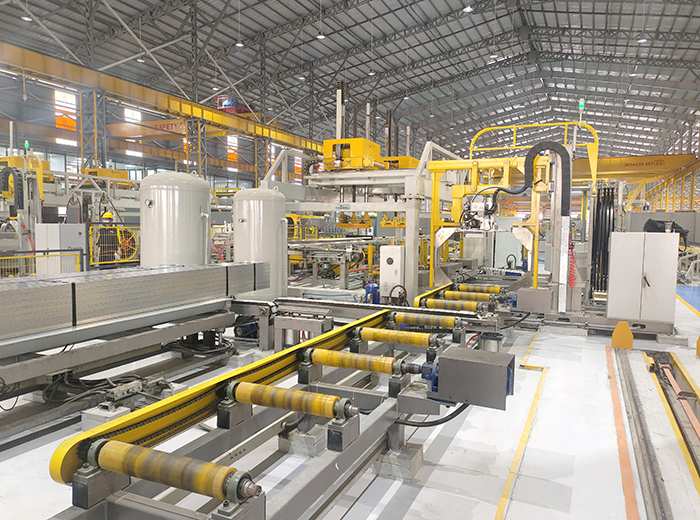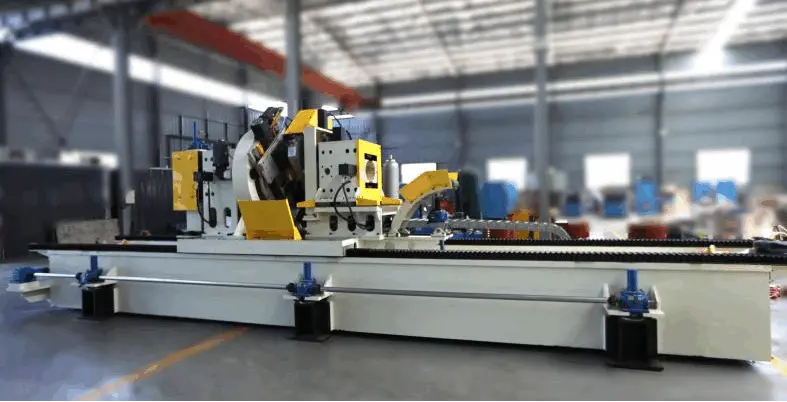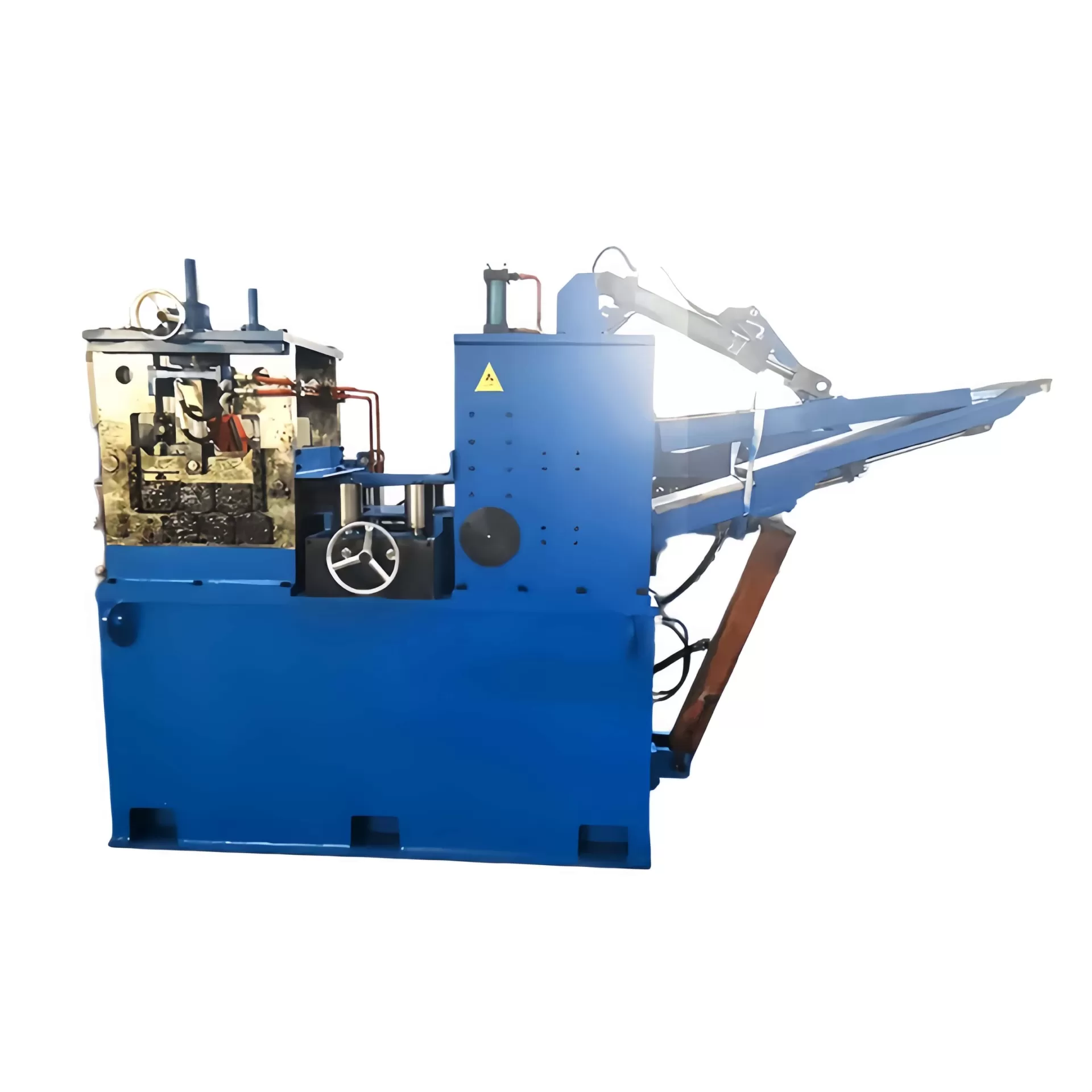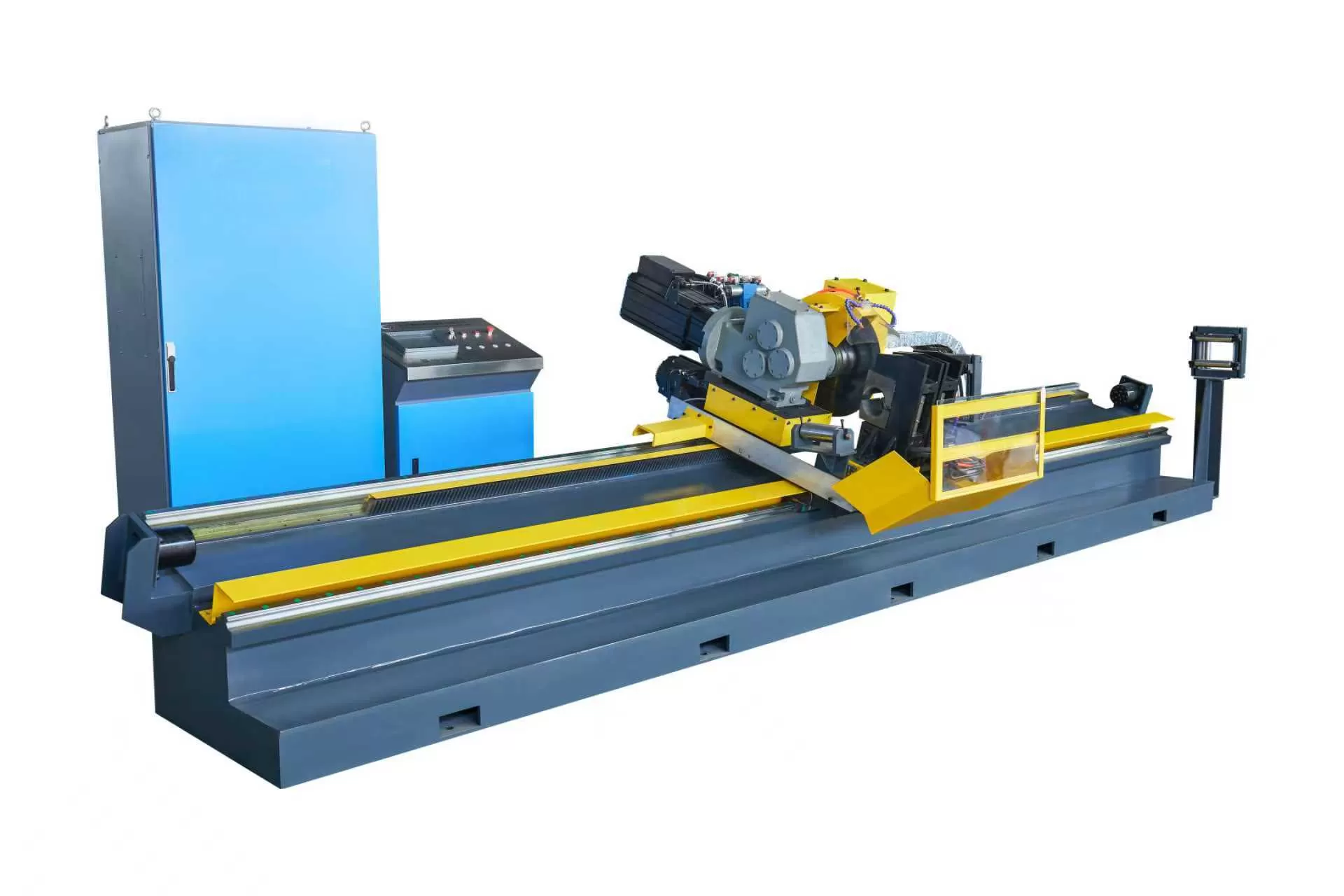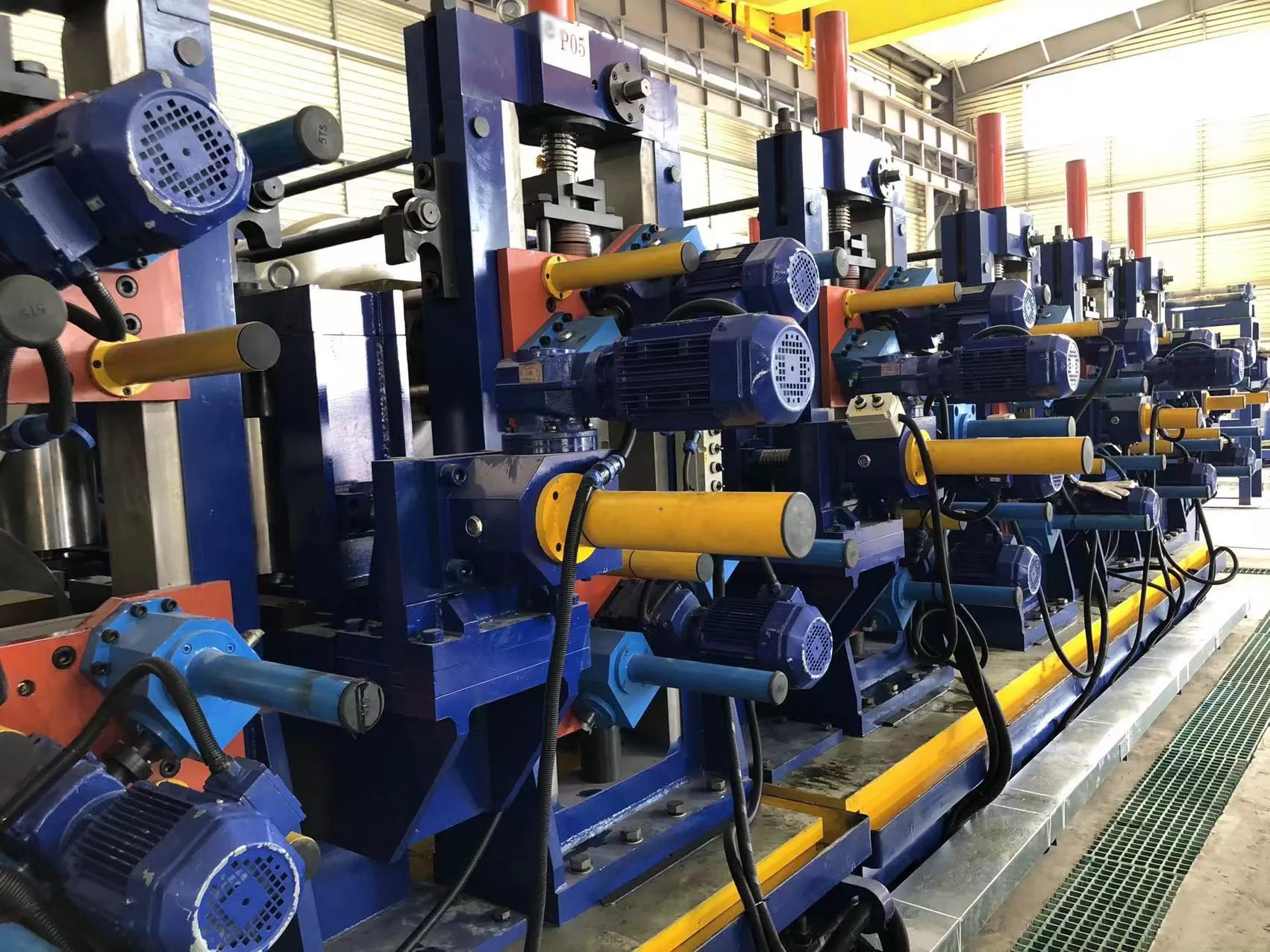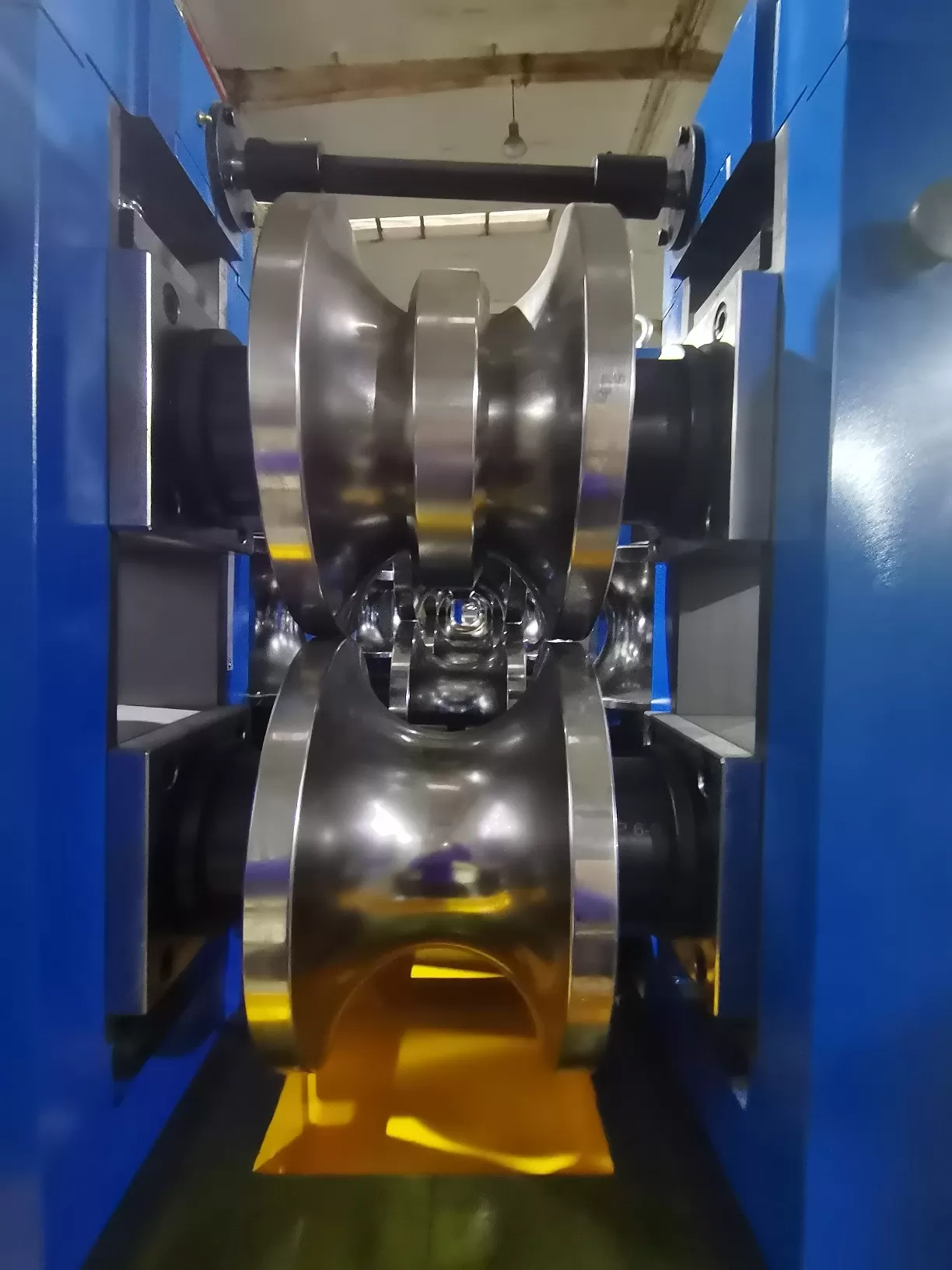
In high-frequency tube welding (ERW) and roll forming lines, the strip joiner (also known as coil end welder) is the linchpin of uninterrupted production. By permanently joining the trailing end of one coil to the leading end of the next, it enables true continuous operation, minimizing downtime and maximizing yield. This article provides a technical examination of modern strip joiner technologies, key performance indicators, integration challenges, and best practices for maintenance—anchored in the expertise of SANSO, a leader in tube mill equipment.
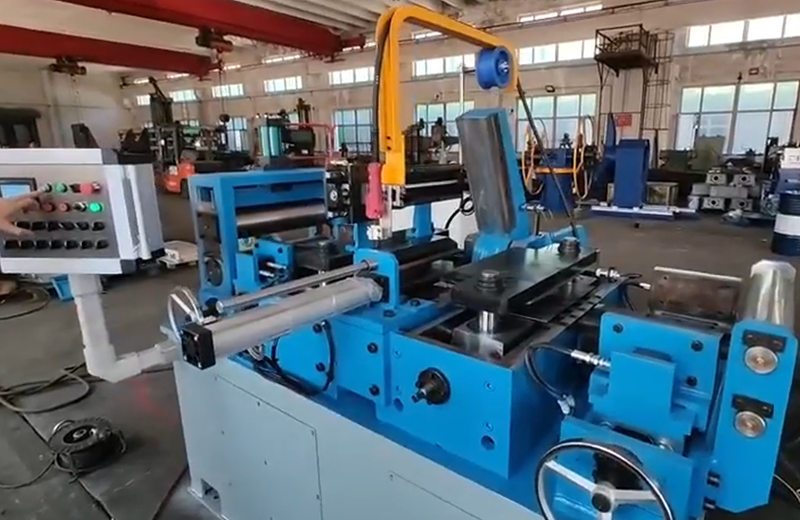
1. The Role of the Strip Joiner in the Mill Entry Section
A tube mill's entry system typically comprises a coil car, uncoiler, strip accumulator, and the strip joiner itself. While the accumulator supplies strip to the forming section during coil change, the joiner must complete a high-integrity weld within a tight time window—usually 45 to 90 seconds depending on strip thickness and width. The process involves:
Strip preparation: Hydraulic shears cut both coil ends square and burr-free; edge milling or grinding may be used for high-strength steels.
Alignment and clamping: Precision guides and clamps position the strip edges with gap tolerances below 0.2 mm to ensure weld penetration consistency.
Welding and upsetting: For butt-weld joiners, the ends are brought together under controlled force (upset) while current or laser energy fuses the material. Flash (expelled metal) is trimmed flush.
Post-weld annealing (optional): Induction or resistance annealing restores ductility in the heat-affected zone, critical for materials that will undergo severe forming.
Modern strip joiner systems integrate with the line PLC to synchronize with accumulator level and strip speed, ensuring seamless transition without operator intervention.
2. Welding Technologies Compared: Laser, TIG, and Resistance Strip Joiners
Selecting the correct welding principle depends on strip material, thickness range, and production speed. Below is a technical comparison of prevalent strip joiner configurations:
2.1 Laser Strip Joiners
Solid-state and fiber laser sources (4–8 kW) are increasingly specified for advanced high-strength steels (AHSS) and stainless. Key advantages: narrow heat-affected zone (HAZ), minimal distortion, and ability to join dissimilar thicknesses (e.g., 2.0 mm to 3.5 mm) with tailored energy density. Cycle times for 5 mm carbon steel can be under 40 seconds, including annealing. SANSO’s laser strip joiner platforms incorporate real-time seam tracking and adaptive focus control, compensating for strip camber and surface variations.
2.2 TIG (GTAW) Strip Joiners
TIG remains prevalent for thin to medium gauges (0.5–6.0 mm) in carbon, stainless, and exotic alloys. The process offers excellent control over heat input, crucial for materials prone to sensitization. Modern TIG joiners use automated voltage control (AVC) to maintain constant arc length, and cold wire feeders can add filler metal when gaps are unavoidable. However, TIG speeds are generally slower than laser, and electrode life requires strict adherence to dressing schedules.
2.3 Resistance Flash Butt and Upset Joiners
For heavy-wall pipe (≥8 mm) and large widths (up to 2000 mm), resistance flash butt welding is common. The ends are heated by electrical resistance and then forged together. The process creates a forged weld with properties matching the base metal if post-heat treatment is applied. Main drawbacks: larger HAZ and significant flash that must be removed by a planing or milling unit integrated into the strip joiner station.
3. Key Performance Indicators for Strip Joiner Evaluation
To quantify strip joiner effectiveness, tube and pipe producers monitor these metrics:
Weld strength coefficient: Destructive tests should show tensile strength ≥ 95% of base metal, and elongation ≥ 80% for ductility-critical applications (e.g., API 5L grades).
Alignment accuracy: Optical or mechanical sensors must ensure strip edge mismatch ≤ 0.1 mm to prevent die damage and uneven forming loads.
Cycle time consistency: Standard deviation of total join time (shear to ready) should be <5% to maintain accumulator capacity.
Mean welds between failures (MWBF): Advanced joiners achieve >10,000 welds without unplanned maintenance on clamps, electrodes, or drives.
Data from a 2023 installation of a strip joiner by SANSO in a Southeast Asian ERW plant showed a 22% reduction in entry-end downtime and a 0.7% increase in overall equipment effectiveness (OEE) after replacing an older flash welder.
4. Automation and Industry 4.0 Integration
Today’s strip joiner is a cyber-physical node. Controllers log weld parameters (current, force, travel speed) per coil, enabling traceability and predictive maintenance. Common integration features include:
Communication with the mill’s MES via OPC UA for recipe management (different material grades call for distinct weld schedules).
Vision systems that inspect weld bead geometry and detect surface imperfections immediately after flash trimming.
Automatic tool changers for clamping jaws to accommodate width changes without manual intervention.
SANSO offers a fully networked strip joiner control suite that provides real-time diagnostics and remote service access, reducing mean time to repair (MTTR).
5. Overcoming Material and Transition Challenges
Producers often run mixed schedules with abrupt changes in grade or thickness. Strip joiner systems must handle these without compromising joint integrity. Solutions include:
5.1 Tapered Transition Welds
For thickness jumps exceeding 30%, some joiners use a dual-pass or oscillating weld technique to gradually blend the thicker edge into the thinner one, avoiding stress risers. SANSO’s software includes an algorithm that calculates optimal energy ramp rates based on thickness ratio.
5.2 Dissimilar Material Joining
When joining galvannealed to uncoated steel (e.g., for automotive structural tubes), zinc vaporization can cause porosity. Laser joiners with controlled pulse shaping and shielding gas nozzles minimize this issue. Similarly, stainless-to-carbon joints require nickel-based filler in TIG joiners to prevent carbide precipitation.
5.3 Edge Conditioning
Integrated edge mills or laser ablation stations remove coatings or oxides from the strip ends immediately before welding, ensuring consistent conductivity and fusion.
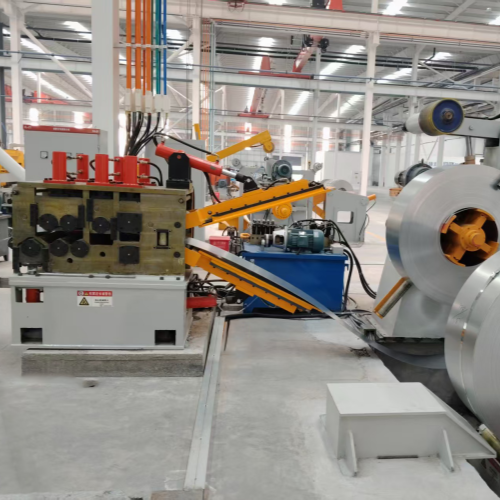
6. Maintenance Best Practices for Strip Joiners
Reliability of the strip joiner directly impacts mill availability. A structured maintenance plan should include:
Clamping jaw inspection: Jaws with serrated surfaces must be checked for wear every 500 welds; worn jaws lead to slip and misalignment.
Electrode dressing/ replacement: For resistance and TIG joiners, electrode geometry affects current density. Dress copper electrodes weekly to remove pitting.
Shear blade sharpness: Dull blades create burrs that prevent tight clamping. Blade life typically ranges from 5,000 to 15,000 cuts depending on material.
Cooling system maintenance: Laser and resistance units require deionized water circuits; check conductivity and filter status monthly.
SANSO provides condition monitoring sensors that alert operators to anomalies in clamping force or weld current, enabling predictive interventions.
7. Why SANSO’s Strip Joiner Solutions Define Industry Standards
With over three decades of experience in tube mill engineering, SANSO has developed a family of strip joiners that address the full spectrum of production demands—from high-speed automotive lines to heavy-wall structural mills. Each strip joiner is designed for modularity: customers can specify laser, TIG, or resistance heads with common interfaces to the entry system. Recent innovations include energy recovery systems that reduce power consumption by up to 18% compared to previous generations. The company’s engineering team supports integration with existing lines, ensuring that the strip joiner becomes a seamless contributor to overall line efficiency.
Frequently Asked Questions (FAQ)
Q1: What is the typical cycle time for a hydraulic-mechanical strip
joiner on 3 mm carbon steel?
A1: Modern servo-hydraulic joiners can
complete the entire sequence—shearing, clamping, welding, and flash trimming—in
approximately 55 to 70 seconds for 3 mm x 300 mm strip. Laser-based systems
often reduce this to under 45 seconds.
Q2: Can a strip joiner handle different strip widths without
mechanical changeover?
A2: Yes, most joiners feature automatic width
adjustment via motorized side guides. Width ranges can span from 100 mm to 800
mm on a single machine, provided the clamping system accommodates the variation.
SANSO’s design allows width changes within the weld cycle via
programmable positioning.
Q3: How does strip surface condition affect weld quality in a strip
joiner?
A3: Oil, rust, or coatings (e.g., zinc) can cause porosity,
inconsistent arc ignition, or electrode contamination. Advanced joiners
incorporate pre-weld brushing or laser ablation, and some use specialized weld
schedules (e.g., stepped current for coated steels) to mitigate these
effects.
Q4: What safety features are mandatory in modern strip
joiners?
A4: Light curtains or safety mats prevent operation when
operators are near moving clamps or shears. Enclosures with interlocks contain
arc flash and spatter. Laser joiners require Class 1 enclosures with beam
shutoff if doors are opened. All SANSO joiners comply with CE
and UL standards.
Q5: How often should welding tips or electrodes be dressed on a TIG
strip joiner?
A5: Depending on usage (typically every 200–400 welds)
and material, thoriated tungsten electrodes should be re-ground using a
dedicated diamond wheel to maintain a stable arc. Automatic dressing units are
optional on high-production lines.
Q6: What is the maximum material thickness a standard strip joiner
can weld?
A6: Standard TIG or plasma joiners cover 0.5–8 mm. For
thicker materials (up to 20 mm), flash butt or narrow-gap laser hybrid systems
are available. SANSO offers heavy-duty models specifically
engineered for wall thicknesses beyond 12 mm.
For detailed specifications and engineering consultation on strip joiner systems, visit the product page or contact SANSO directly to discuss your tube mill requirements.