The demand for square and rectangular hollow structural sections (HSS)
continues to grow across construction, infrastructure, automotive, and furniture
industries. At the heart of this production lies the square tube
mill—a sophisticated assembly of forming, welding, and sizing equipment that
transforms steel strip into precisely dimensioned tubes. This article provides a
technical deep dive into modern square tube mill lines, covering forming
strategies, welding integrity, tolerance control, and common operational
challenges, while highlighting how SANSO engineering delivers
robust solutions for high‑volume HSS production.
Key Components of a Modern Square Tube Mill
A typical square tube mill line is designed for continuous, high‑speed
operation. Understanding each station is essential for optimising overall
performance and final product quality.
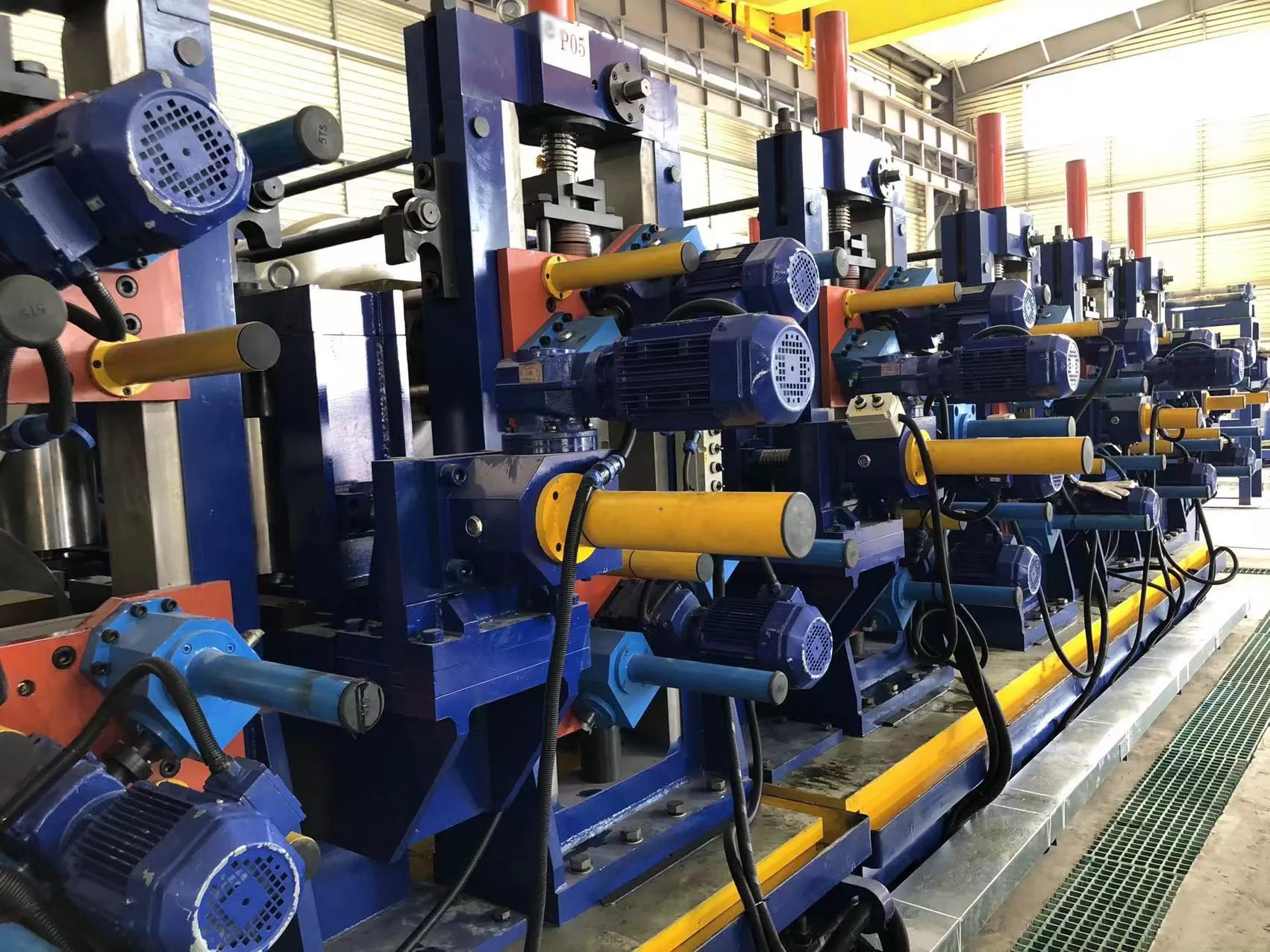
Entry Section: Uncoiler, strip accumulator (often a
tube
mill accumulator), and strip end joiner ensure uninterrupted flow
during coil changes.
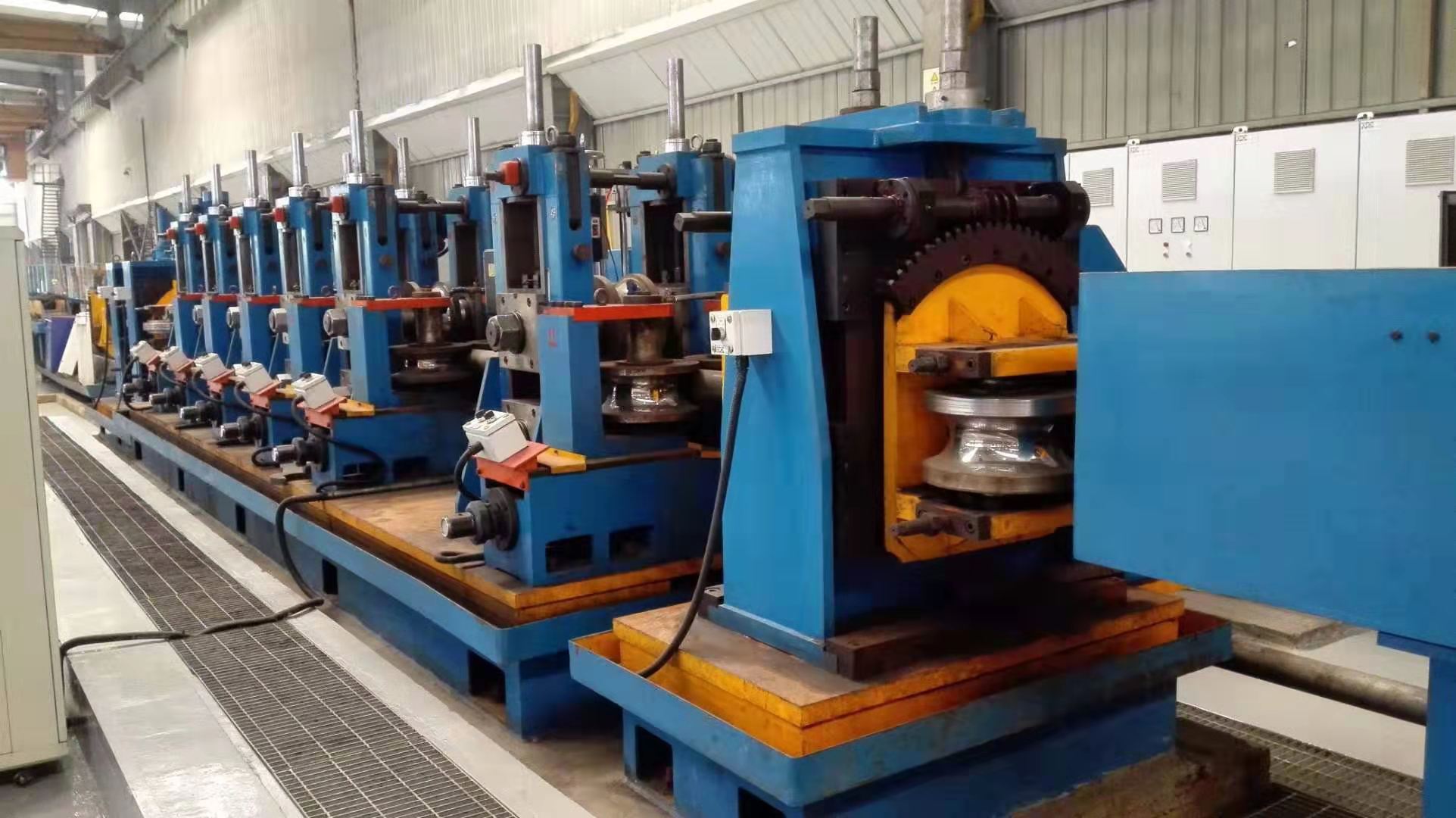
Forming Section: A series of driven and idle rolls
progressively shape the flat strip into a circular or square pre‑form. Roll
design directly affects corner fill and material distribution.
Welding Station: High‑frequency induction (HFI) or contact
welding melts the strip edges; squeeze rolls forge the seam. Scarfing tools
remove internal/external flash.
Weld Seam Normalizing: Optional in‑line heat treatment
refines the weld grain structure for improved ductility.
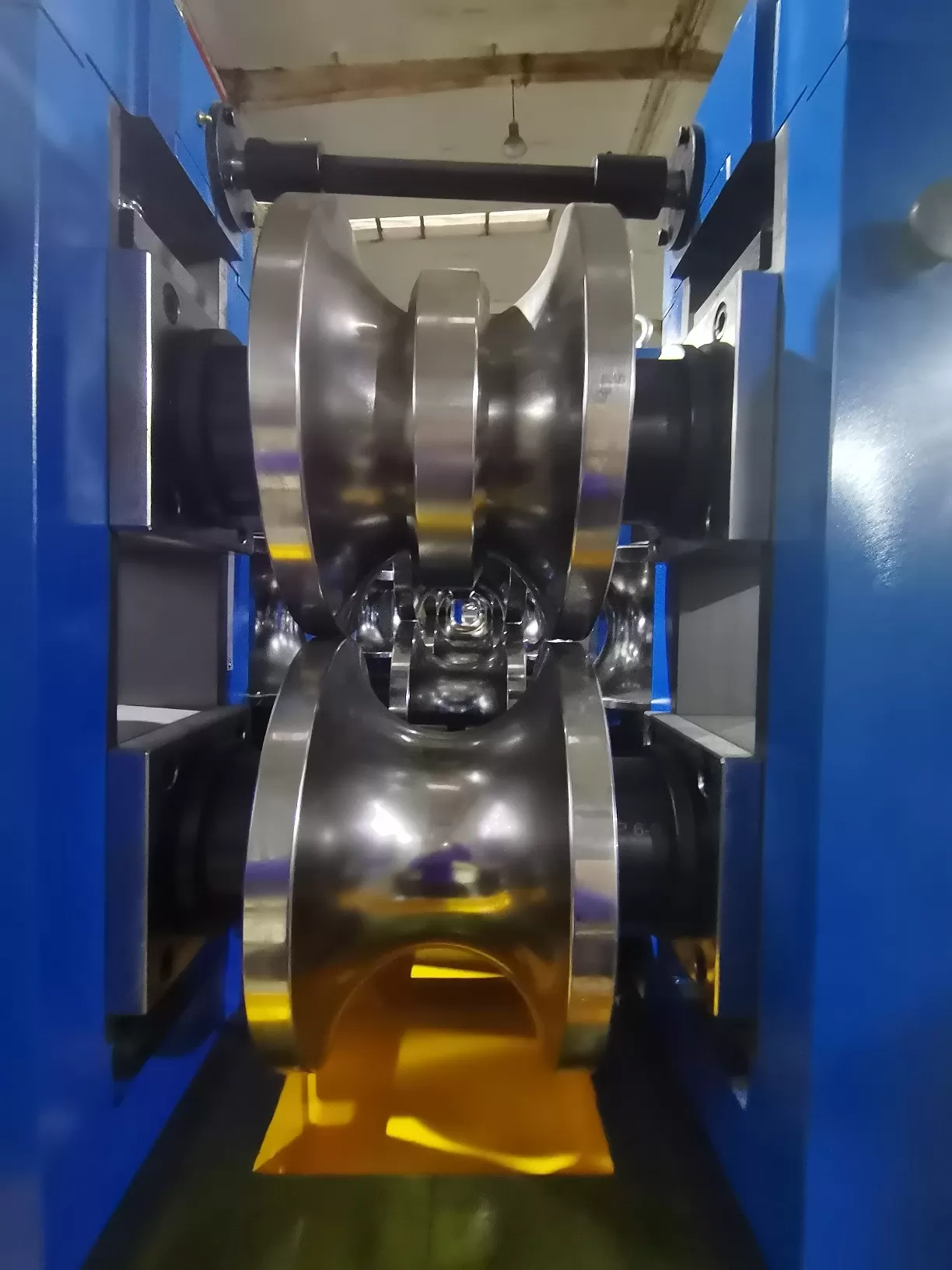
Sizing Section: Calibrating rolls achieve the final square
dimensions, corner radii, and straightness. This section is critical for meeting
ASTM A500 or EN 10219 tolerances.
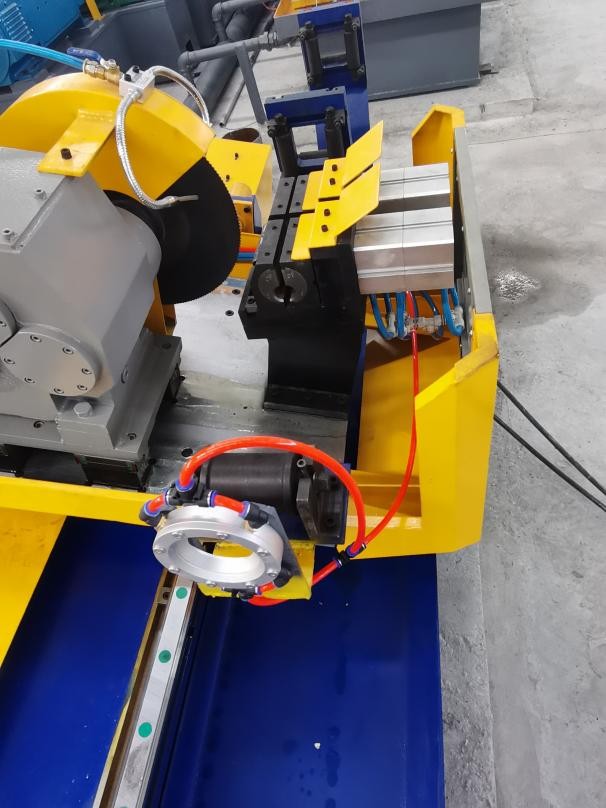
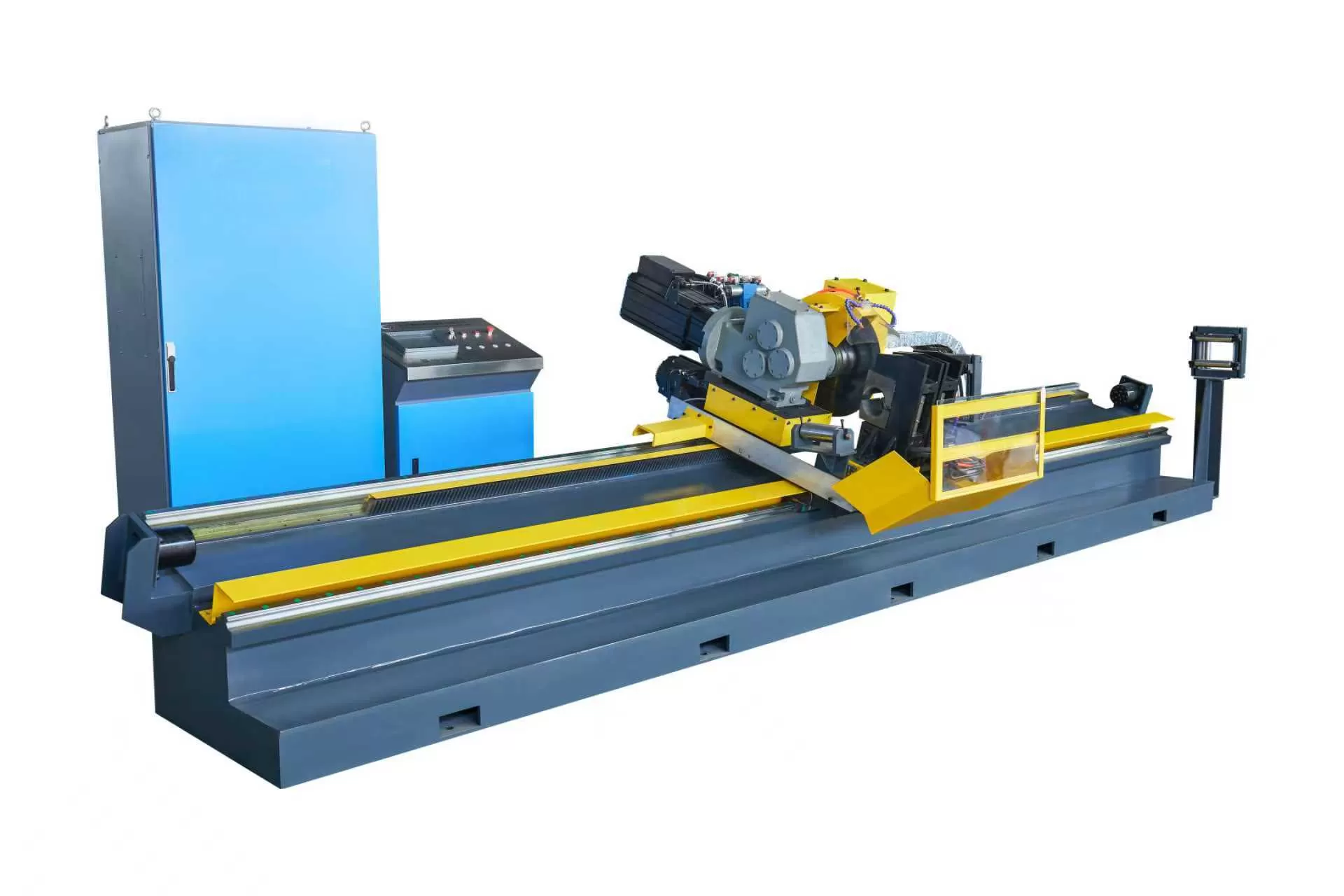
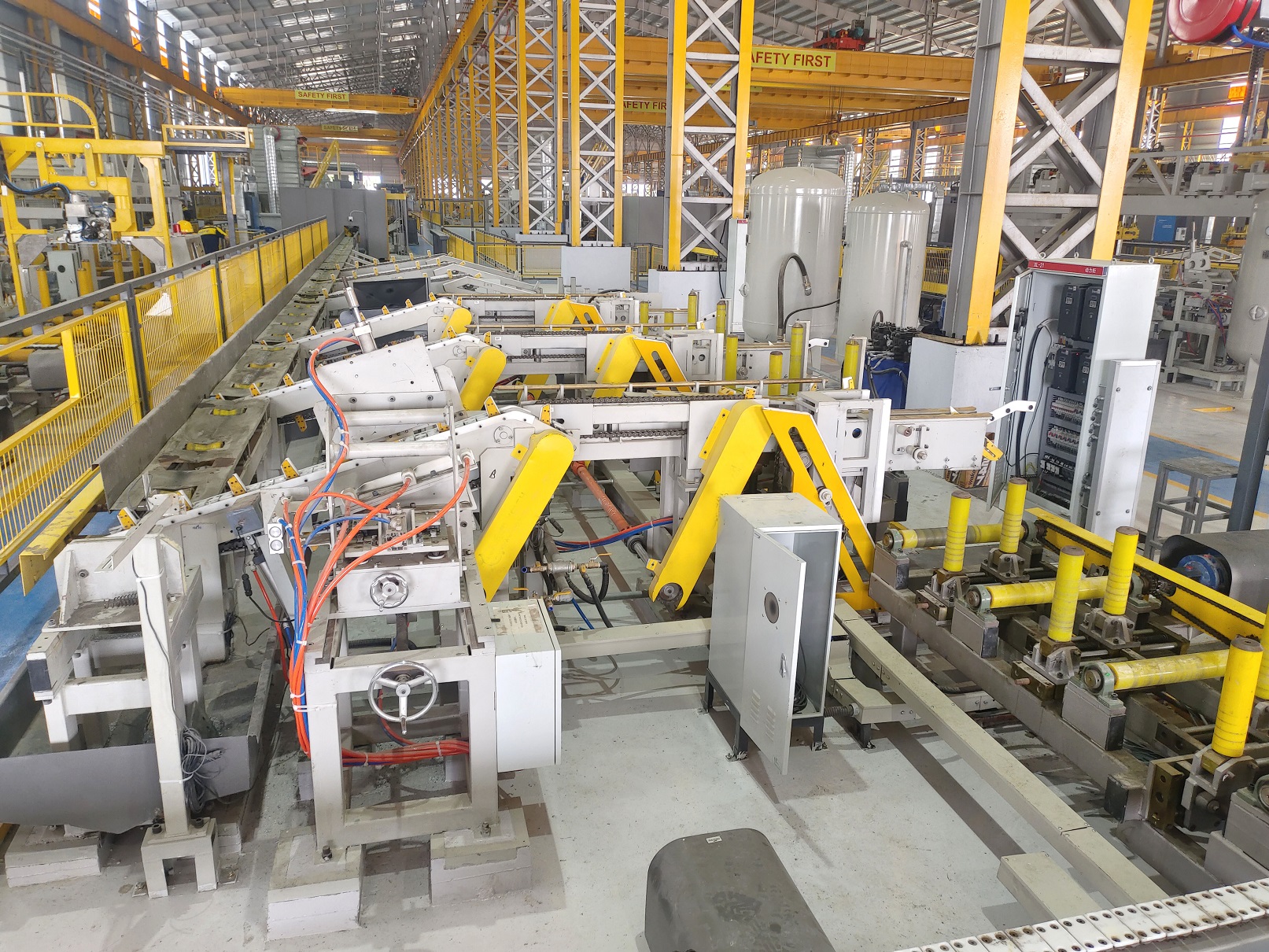
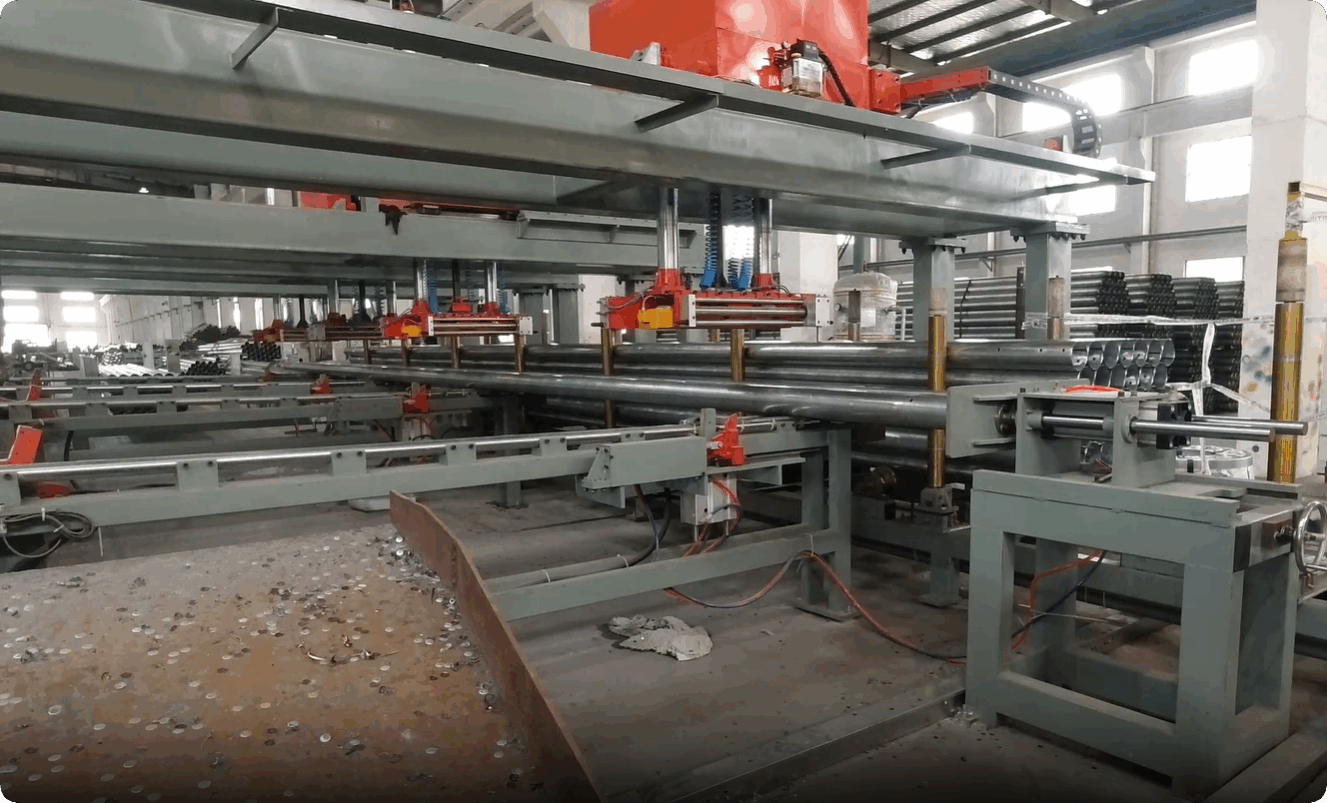
Cut‑off and Runout: Flying saws cut tubes to length without
stopping the line; runout tables and stacking systems handle finished
products.
Forming Technology: Direct vs. Indirect Forming for Square Tubes
The transition from a flat strip to a square section can be achieved through
two primary forming routes: direct forming from strip to square, or the more
common indirect method (round‑to‑square).
Indirect (Round‑to‑Square) Forming
In this widely adopted approach, the strip is first formed into a round tube,
welded, and then passed through a turks head or a series of sizing rolls that
progressively reshape the round into a square. Benefits include:
Simpler roll sets for the initial forming stages.
Easier control of weld seam placement (typically at the corner or in the
flat face depending on final application).
Proven technology for medium to heavy wall thicknesses.
Direct Forming (Square‑Direct)
Some modern mills employ direct forming, where the strip is gradually shaped
into a square box section without an intermediate round stage. This method can
reduce the total number of stands and improve corner material flow, but requires
more complex roll design. It is often used for lighter gauges and specialty
profiles.
Whichever method is chosen, the forming rolls must be precisely machined to
control material distribution—especially at the corners, where thinning can lead
to burst tests failures. SANSO provides
custom‑engineered roll sets based on finite element analysis (FEA) to ensure
uniform wall thickness and optimal corner filling.
Welding and Seam Integrity in Square Tube Production
The weld seam of a square tube is subjected to complex stresses during
subsequent sizing and in service. High‑frequency welding (HFW) remains the
dominant process due to its speed and reliability. Key parameters include:
Vee angle: The angle at which the strip edges meet before
the squeeze rolls. A typical range of 4–7° ensures proper current
concentration.
Squeeze force: Sufficient pressure to forge the heated
edges together without creating excessive internal or external flash.
Scarfing: Removal of internal flash is often required for
applications where fluid flow or subsequent coating is critical. External flash
can be removed in‑line or left depending on the end use (e.g., exposed
structural members).
Weld quality is monitored continuously using eddy current or ultrasonic
testers. In a well‑tuned square tube
mill, the weld zone should exhibit mechanical properties equivalent to the
base metal after normalising.
Precision Sizing and Straightening: Achieving Tight Tolerances
After welding, the tube enters the sizing section—a set of rolls that impart
the final square shape and dimensions. Sizing stands are typically arranged in a
sequence that gradually reduces the corner radius and flattens the sides.
Important aspects:
Squareness tolerance: The difference between side lengths
and the perpendicularity of adjacent sides. Modern mills achieve ±0.5 mm on
medium sizes.
Corner radius: Controlled by the final passes; too sharp a
radius can cause corner cracking, while too large a radius may not meet
architectural specifications.
Straightening: Some lines include dedicated straightening
rolls or a roller straightener after sizing to eliminate any bending or
twisting.
For high‑strength materials (e.g., S355 or higher), spring‑back compensation
must be built into the roll design. SANSO mills incorporate
quick‑change cartridge stands that allow rapid adjustment of roll gaps to
maintain tight tolerances even during production runs.
Common Challenges and Solutions in Square Tube Mills
Even with well‑designed equipment, square tube producers face several
operational hurdles. Below are frequent issues and proven countermeasures.
Corner Cracking or Lamination
Cause: Excessive cold work at the corners, often due to
incorrect roll gaps or material with limited
ductility.
Solution: Adjust the forming sequence to
distribute strain more evenly. Use rolls with larger radii in intermediate
passes, and consider annealing if material properties are marginal. In‑line
normalising of the weld area can also help.
Waviness (Buckling) on the Tube Faces
Cause: Compression stresses during sizing, often because the
vertical and horizontal rolls are not
synchronised.
Solution: Ensure that the drives are properly
tuned and that the interstand tensions are controlled. Using driven sizing
stands reduces the risk of buckling.
Twist or Helical Distortion
Cause: Misaligned roll stands or uneven cooling after
welding.
Solution: Laser alignment during setup and periodic
verification. Cooling beds should be level, and tube handling must avoid
inducing torsion.
Inconsistent Squareness Tolerance
Cause: Worn bearings, loose roll shafts, or thermal
expansion of the mill housing.
Solution: Implement a
predictive maintenance schedule. Modern mills use temperature‑compensated
housings and constant‑gap control systems.
Weld Seam Tracking Issues
Cause: The seam may shift away from the intended corner
position during sizing, leading to off‑corner welds that can fail hydrostatic
tests.
Solution: Use seam guiding systems before the sizing
section. SANSO offers automated seam orientation control that rotates the tube just before
sizing to lock the weld at the desired corner or mid‑face position.
The SANSO Advantage: Integrated Square Tube Mill Solutions
With decades of experience in tube mill manufacturing, SANSO delivers complete lines
that address every aspect of square tube production. Our mills feature:
Heavy‑duty forming stands with CNC‑machined rolls for quick size
changeovers.
High‑efficiency accumulators (tube mill
accumulator designs) that ensure continuous operation at speeds up to 80
m/min.
Integrated quality control: inline eddy current testing, dimensional laser
gauges, and real‑time data logging.
Energy‑saving AC drives and induction welding power supplies.
Customizable downstream equipment: flying cut‑off, stackers, and bundling
stations.
Our engineering team works closely with customers to define the optimal line
configuration based on their product mix—whether it’s precision automotive
tubing, heavy structural sections, or decorative furniture profiles.
Quality Control and Testing for Square Tubes
Ensuring that every meter of tube meets specifications requires a multi‑layer
quality approach:
Dimensional checks: Laser micrometers measure side lengths,
corner radii, and straightness at the mill exit.
Non‑destructive testing (NDT): Eddy current arrays detect
surface flaws in the weld and parent metal; ultrasonic testing can be added for
thick‑wall tubes.
Destructive testing: Flattening, flare, and flange tests
per ASTM A370 or equivalent standards verify weld integrity and
ductility.
Data from these checks is fed back to the mill control system, allowing
automatic adjustment of welding power or roll gaps to maintain quality within
limits.
Q1: What materials can be processed on a square tube mill?
A1: Most square tube mills are designed for carbon steels
(ASTM A36, A500, S235–S355), but with appropriate roll materials and welding
parameters, they can also handle stainless steels (304, 316), aluminum, and even
some copper alloys. High‑strength low‑alloy (HSLA) steels require careful
attention to forming loads and weld heat input.
Q2: How does a square tube mill differ from a round tube mill?
A2: The primary difference lies in the sizing section. A
round tube mill uses round sizing rolls, while a square tube mill includes turks
heads or square‑shaped sizing stands that impart the final square profile. The
forming section may also be configured differently to prepare the strip for
either direct or indirect forming.
Q3: What is the typical production speed for square tubes?
A3: Speeds vary with wall thickness and material. For
light‑gauge tubes (1–3 mm wall), speeds of 60–80 m/min are common. Heavy
structural sections (6–12 mm wall) typically run at 10–30 m/min. The limiting
factor is often the cooling capacity after welding and the cut‑off cycle
time.
Q4: How can I reduce tooling changeover time on my square tube mill?
A4: Investing in cartridge‑type forming stands and
quick‑release couplings can cut changeover time from hours to minutes.
SANSO offers a
“size‑on‑the‑fly” system that allows certain adjustments without stopping the
line, significantly increasing overall equipment effectiveness (OEE).
Q5: What causes “elephant foot” distortion on the ends of cut square
tubes?
A5: This refers to a flared end caused by the cutting
process, especially with abrasive saws. Using a high‑speed flying shear with
proper blade clearance or a cold saw with controlled feed rate minimises
deformation. Some mills also add an end‑facing station after cutting to ensure
perfectly square ends.
Q6: Can I produce rectangular tubes on the same mill?
A6: Yes. A well‑designed square tube mill can produce both
square and rectangular sections by changing the sizing rolls. The forming
section remains the same, while the final sizing rolls are swapped to achieve
the desired width‑to‑height ratio.
Selecting and operating a square tube
mill requires a deep understanding of forming mechanics, welding physics,
and material behaviour. By focusing on proper equipment design, precise roll
tooling, and integrated quality control, manufacturers can consistently produce
hollow structural sections that meet the most stringent standards. With
SANSO as your
partner, you gain access to decades of tube mill engineering expertise,
customised solutions, and worldwide support. Contact us to discuss your next
square tube mill project and discover how we can help you achieve superior
product quality and production efficiency.