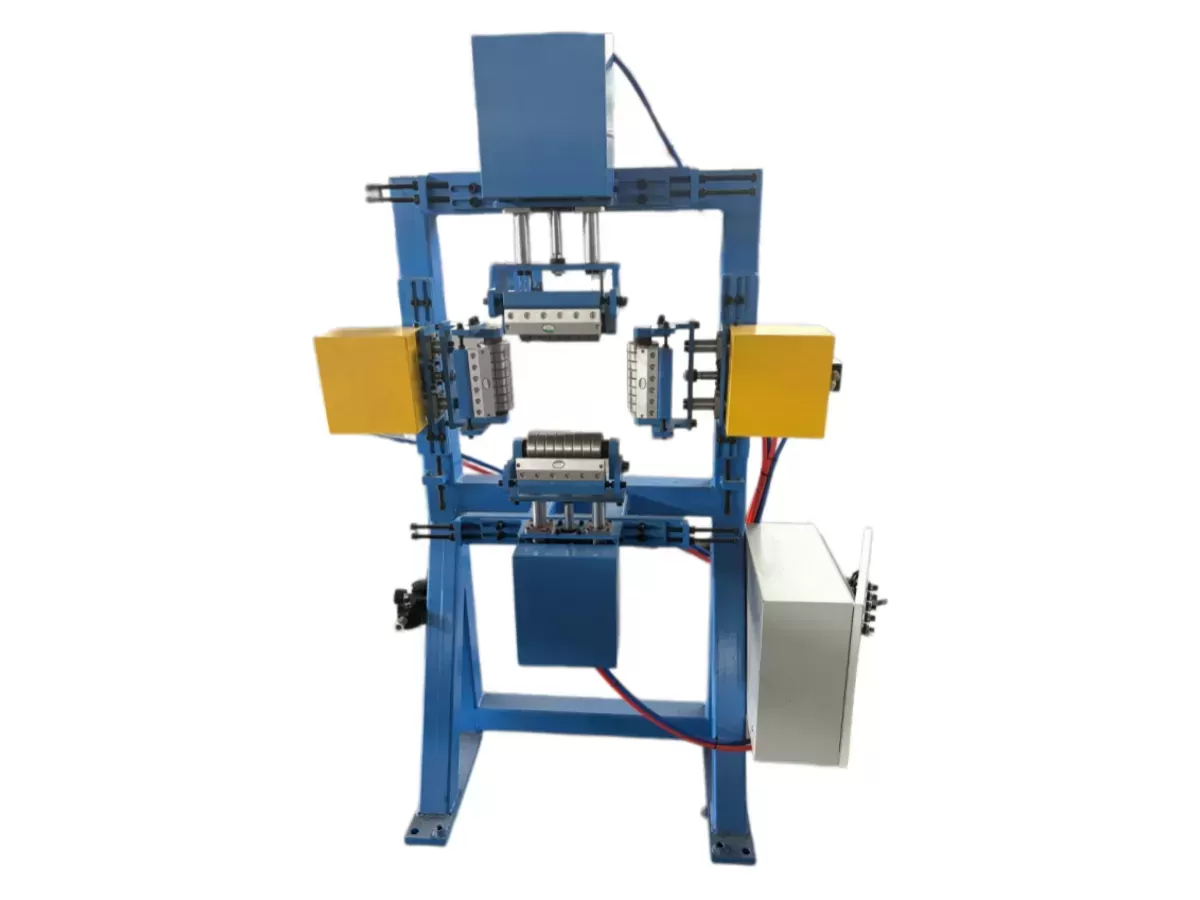
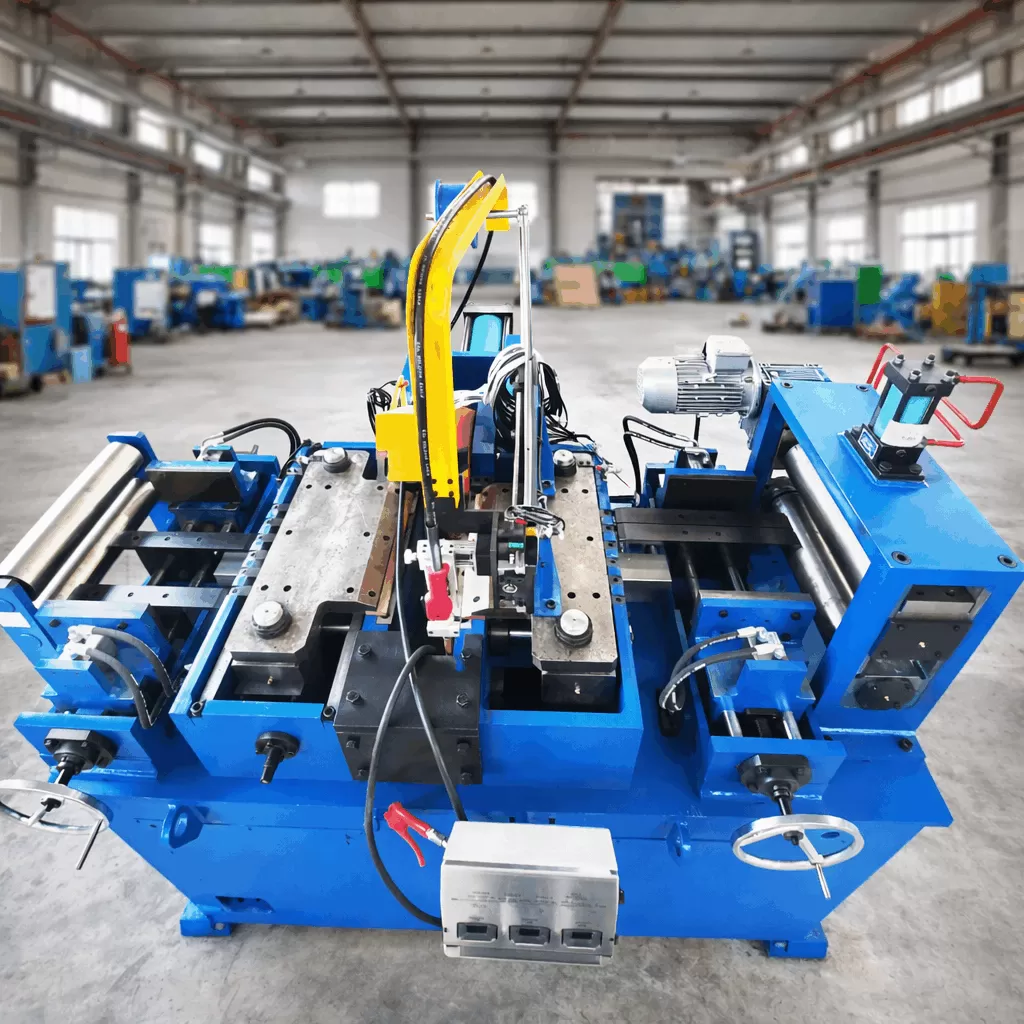
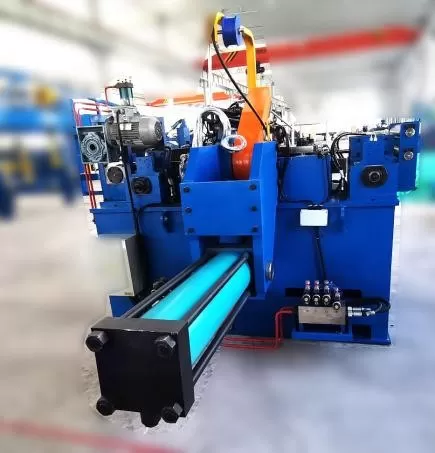
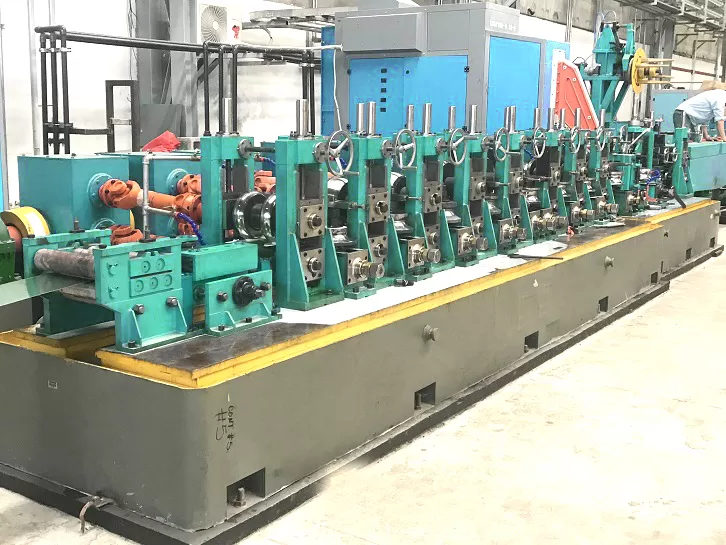
In any tube mill, roll forming line, or slitting operation, the reel uncoiler is
the first critical component. It must pay off steel strip from a master coil
under controlled tension, without edge damage or telescoping. Poor uncoiler
performance leads to strip breaks, mill downtime, and rejected tubing. Based on
data from over 300 line installations, this guide examines six engineering
criteria that separate reliable reel uncoilers from chronic problem sources. SANSO has engineered
heavy-duty reel uncoilers for coil weights from 2 tons to 30 tons, serving tube producers, roll formers,
and stamping operations globally.
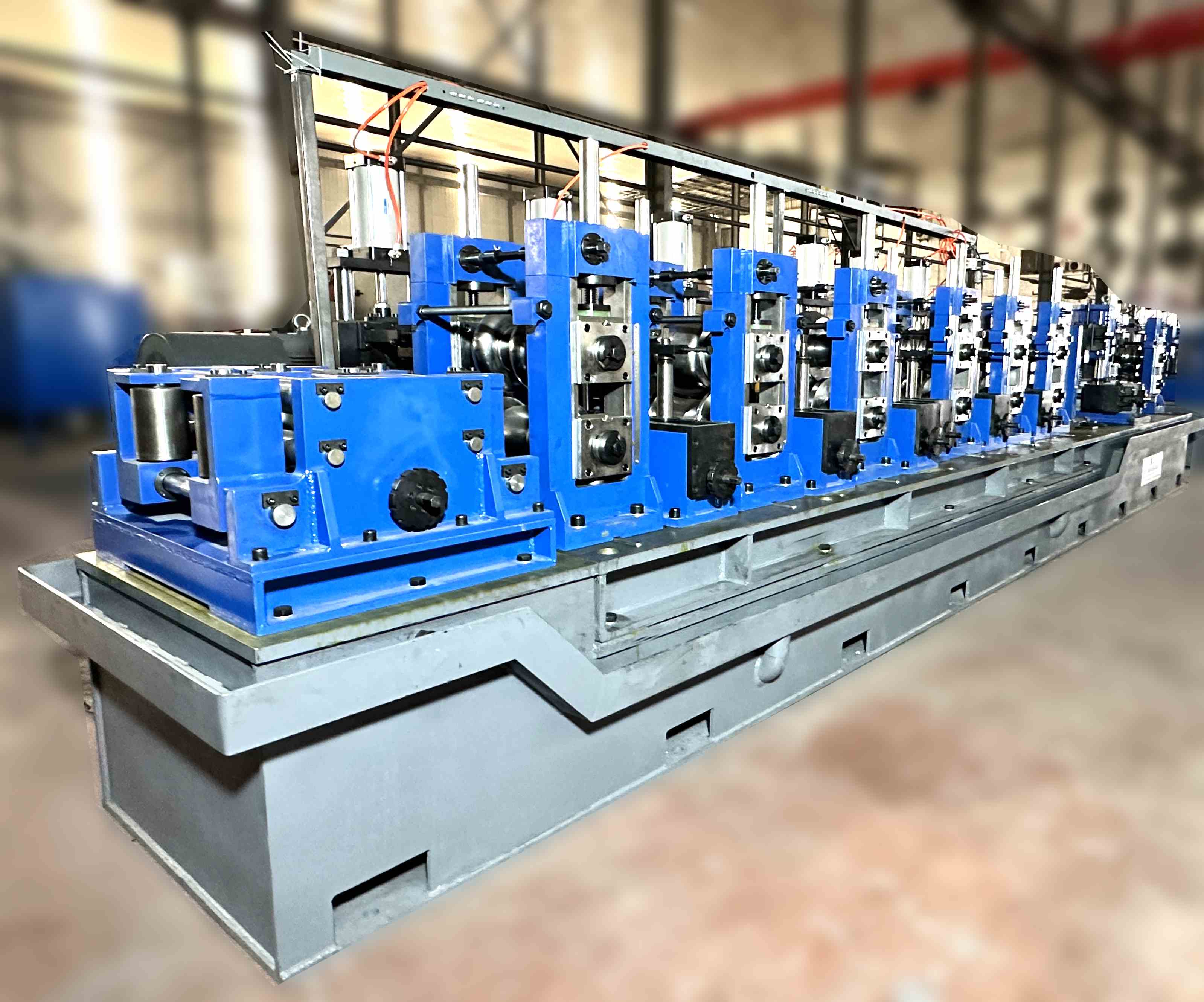
Function of a Reel Uncoiler in Coil Processing Lines
A reel uncoiler supports and rotates a steel coil, allowing strip to be fed into a straightener,
feeder, or directly into a mill. Key tasks include:
Expanding mandrel segments to grip the coil inner diameter (ID) without
slippage.
Providing adjustable braking (mechanical or electric) to maintain back
tension.
Accommodating coils of varying widths, ID, and OD through movable side
guides and adjustable expansion range.
Damping vibration to prevent coil chatter marks on the strip
surface.
Poor uncoiler performance manifests as edge burrs, strip wander, or sudden
uncoiling (runaway) that damages equipment. Modern coil handling
systems integrate the uncoiler with a hydraulic loading car,
peel-off table, and straightener. SANSO designs each reel uncoiler with a service factor of 1.5× rated coil weight to handle peak loads during
deceleration.
Criterion 1: Mandrel Expansion Range and Grip ForceThe mandrel must expand to fit standard coil IDs: typically 508 mm (20″), 610
mm (24″), or 760 mm (30″). Expansionmechanism options:
Hydraulic cylinder + linkage: Provides 10–15% expansion
range. High grip force (up to 80 kN) but slower cycle time.
Air bladder with segmented pads: Fast expansion (2–3
seconds), suitable for frequent coil changes. Lower grip force, used for
light-gauge strips.
Manual screw expansion: Low cost, but impractical for coils
over 5 tons.
A reel uncoiler must maintain grip even during emergency stops. Measure grip margin: (mandrel
radial force × coefficient of friction) / (coil weight × acceleration). A safety
factor of 1.8 is recommended. SANSO uses heat-treated alloy steel segments with
serrated faces to increase friction without damaging coil ID.
Criterion 2: Braking System and Tension Control
Incorrect back tension causes strip misalignment or overfeeding. Two braking
methods dominate industrial reel
uncoilers:
Mechanical disc brake: Low cost, but brake pad wear
requires weekly adjustment. Tension varies with coil diameter.
Electric regenerative braking (AC motor + VFD): Precise
tension control (±5% setpoint). Energy regeneration saves 15–25% power.
Preferred for high-speed lines (>60 m/min).
Hydraulic brake with pressure control: Smooth tension for
heavy coils (15–30 tons), but requires a hydraulic power unit.
Tension requirement: 5–15% of strip yield strength for most forming
operations. A closed-loop tension
control system uses a dancer arm or load cell to modulate braking
force. SANSO integrates encoder feedback from the pinch roll to maintain
constant specific tension (N/mm²) as coil diameter decreases.
Criterion 3: Coil Loading and Car Integration
Heavy coils (10–30 tons) require a hydraulic coil car to load onto the
uncoiler mandrel. Key specifications:
Car lift stroke: 200–600 mm to align coil ID with mandrel center.
Traverse speed: 5–10 m/min for safe positioning.
V-rollers with polyurethane coating to protect coil OD.
A poorly integrated loading sequence damages mandrel segments or strips coil
edges. Modern reel uncoilers include a photoelectric sensor to detect coil ID position and auto-center the
car. For manual lines, a swing-type uncoiler with a hydraulic tilting mechanism
allows floor loading without a car. SANSO offers both configurations, with cycle
times from 60 seconds (manual) to 25 seconds (fully automatic).
Criterion 4: Side Guide and Edge Alignment
Strip wandering causes edge marks on the strip and misalignment in subsequent
rollers. A reel uncoiler must include adjustable side guides that center the coil before expansion. Two
common designs:
Manual screw-adjusted guides: Low cost but require operator
intervention for each coil width change.
Hydraulic auto-centering guides: Use ultrasonic sensors to
detect coil edges and move guides simultaneously. Reduces setup time by
80%.
Guide plate material: hardened steel (HRC 50–55) with replaceable wear
strips. Clearance between guide and coil edge should be 1–2 mm for heavy gauge,
0.5 mm for thin strip (<1 mm). SANSO's active centering
system reduces strip edge damage by 70% compared to fixed
guides.
Criterion 5: Vibration Damping and Foundation Requirements
Rotating an unbalanced coil generates vibration that transmits to the strip
and mill. A rigid reel uncoiler base and proper foundation are required. Design points:
Baseplate mass: at least 3× coil weight to absorb inertia.
Concrete foundation depth: 600–1200 mm depending on soil conditions.
Vibration isolators (spring or rubber) under the uncoiler feet for lines
above 100 m/min.
Field data shows that uncoiler vibration exceeding 2 mm/s RMS causes strip
chatter marks. SANSO performs modal analysis on each reel uncoiler design to identify resonant frequencies and adds stiffening ribs as needed. For
high-speed tube mills, a dancer roll between uncoiler and straightener decouples
vibration.
Criterion 6: Maintenance Access and Component Lifespan
A reel uncoiler operates in a harsh environment with dust, scale, and shock loads. Design for
maintainability:
Hinged guards with safety interlocks for access to mandrel and brake.
Centralized grease points for bearings (mandrel support, car wheels).
Wear indicators on brake pads and mandrel segments.
Expected component lifespans: mandrel segments (5 years under normal use),
disc brake pads (6 months for heavy-duty lines), main bearings (10 years). SANSO
provides a detailed maintenance schedule with each reel uncoiler,
including torque values and lubrication intervals. Remote condition monitoring
(vibration, temperature) is available as an option.
Industry Pain Points and Engineering Solutions
Common problems encountered with reel uncoilers and how SANSO resolves them:
Pain point: Coil ID damage from mandrel slippage –
Solution: Serrated segments with 0.8 mm tooth height; hydraulic pressure
maintained by a check valve even during power loss.
Pain point: Strip edge curl caused by misaligned guides –
Solution: Dual linear guide rails for side guide movement; digital position
readout for repeatable settings.
Pain point: Sudden uncoiling (runaway) during brake failure – Solution: Fail-safe spring-applied, air-released brake. If air pressure drops,
brake engages automatically. Over-speed sensor triggers emergency stop.
Pain point: Long coil changeover time (15+ minutes) –
Solution: Quick-release mandrel segment covers and hydraulic side guides with
preset width memory. Changeover under 3 minutes for coils of same ID.
SANSO provides on-site audits
and retrofit kits for existing uncoilers, including brake upgrades and
auto-centering guides.
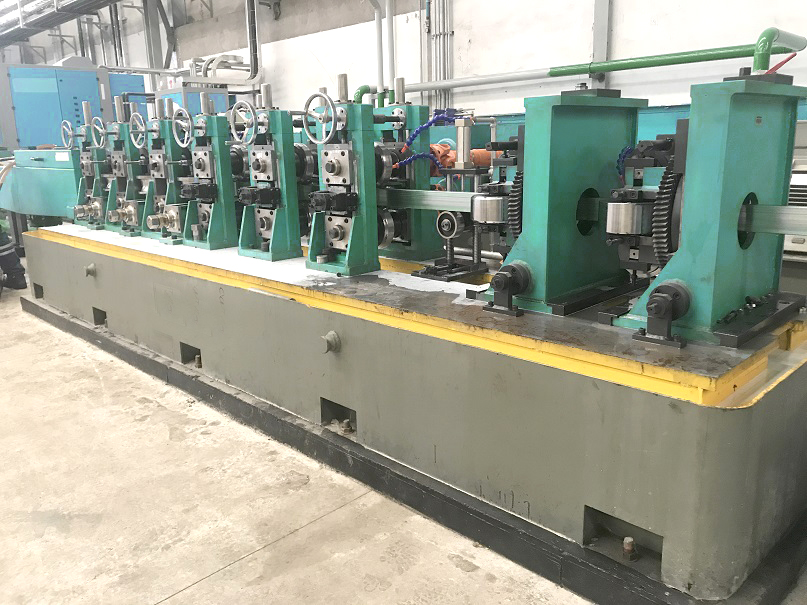
Application Scenarios Across Tube and Roll Forming
ERW tube mill: A reel uncoiler for 16″ OD steel pipe must handle coils up to 30 tons, 6–12 mm thickness. SANSO
supplied a double-mandrel turret uncoiler that allows loading a second coil
while the first runs, eliminating downtime for coil change.
Roll forming line for solar racking: Light-gauge galvanized
strip (1.5–3 mm) requires a precision uncoiler with edge guidance to ±0.5 mm.
SANSO's servo-driven electric brake maintains constant tension as coil diameter
reduces from 1500 mm to 500 mm.
Slitting line: A reel uncoiler with low inertia and rapid stop capability prevents coil overrun when slitting
narrow strips. SANSO integrates a disc brake with proportional valve for smooth
deceleration.
For each application, SANSO provides a customized reel uncoiler including base frame, mandrel, brake, side guides, and coil car.
Frequently Asked Questions (FAQ)
Q1: What is the maximum coil weight a reel uncoiler can
handle?
A1: Standard SANSO reel uncoilers range from 2 tons to 30 tons. For special applications (e.g., line pipe), custom
designs up to 50 tons are available. The limiting factor is the mandrel shaft
diameter (120–300 mm) and bearing capacity. Provide your coil dimensions for a
sizing calculation.
Q2: What is the difference between a single mandrel and a double
mandrel (turret) uncoiler?
A2: Single mandrel requires line stop
during coil change. Double mandrel (turret) has two rotating mandrels – one
unwinds while the other is loaded offline. Changeover time is 30–60 seconds
without stopping the mill. Turret uncoilers cost 70–100% more but pay back in
high-volume lines (2+ coil changes per hour). SANSO manufactures both types.
Q3: How do I choose between a mechanical brake and an electric
regenerative brake?
A3: Mechanical disc brakes are lower initial
cost ($2,000–5,000) but require monthly pad changes and provide constant torque
(not constant tension). Electric regenerative brakes ($8,000–15,000) offer
precise tension control (±5%) and recover energy – payback 12–18 months for
lines running >16 hours/day. For strip thickness <2 mm, always use
electric braking to avoid edge wave.
Q4: What safety features are required on a reel
uncoiler?
A4: Mandatory: guard interlocks (disconnect drive if
opened), emergency stop button within reach, anti-runaway brake
(spring-applied), and warning lights during rotation. For coils above 10 tons, a
coil tilter with safety cage is recommended. SANSO uncoilers comply with OSHA
1910.212 and CE standards. Request the safety data sheet.
Q5: How do I prevent coil edge damage during
uncoiling?
A5: Use side guides with nylon or polyurethane liners
(not steel). Set guide clearance to coil edge at 1 mm for thin strip. Install a
peel-off table with pinch rolls to separate the coil outer wrap without
scraping. For high-strength steel (tensile >600 MPa), a hydraulic peel-off
knife is required. SANSO's anti-damage kit reduces scrap by 40%.
Q6: What is the typical installation time for a new reel
uncoiler?
A6: For a 10-ton capacity unit with coil car, installation
takes 3–5 days including foundation drilling, alignment, electrical connection,
and commissioning. SANSO provides a turnkey team. Retrofit of an existing
uncoiler (brake or guide upgrade) takes 8–16 hours. Plan for a 1-day mill
shutdown.
Q7: Can I retrofit an existing manual uncoiler with automatic
centering?
A7: Yes. SANSO offers a retrofit kit including hydraulic
cylinders, linear position sensors, and a PLC controller. The system reads coil
width from an ultrasonic sensor and moves both side guides simultaneously.
Retrofit cost is $8,000–12,000, reducing setup time from 5 minutes to 30
seconds. Payback period <6 months for lines with >10 coil changes per
day.
Need a Custom-Engineered Reel Uncoiler? Contact SANSO Today
Selecting the right reel uncoiler requires coil specifications (weight, width, ID, material strength), line speed,
and changeover frequency. SANSO provides free
engineering consultations, foundation drawings, and 3D models for integration.
Send your coil parameters and mill layout to receive a detailed proposal
including braking torque calculation, mandrel expansion range, and cycle time
estimate. All inquiries receive a response within 48 hours.
Request your inquiry now → Visit https://www.sansotubemill.com/ or
email info@sansohftubemill.com. Include your coil ID, OD, weight, strip width,
and material grade (e.g., ASTM A36, SS400, DP600).