In the domain of welded tube and pipe manufacturing, the steel coil uncoiler
is not merely a peripheral component—it is the foundational interface between
raw material inventory and the production process. The quality of uncoiling
directly determines strip flatness, edge condition, and the stability of
downstream forming and welding operations. For procurement engineers and plant
managers evaluating a steel coil
uncoiler, the technical specifications must be scrutinized with the
same rigor applied to the mill stand itself.
This article provides a data-driven examination of industrial uncoiler
configurations, focusing on mechanical architecture, drive systems, and
integration protocols. Drawing from field installations across heavy-structural,
automotive, and stainless-steel tube sectors, we will analyze how parameters
such as mandrel expansion force, braking torque linearity, and coil car
automation affect overall equipment effectiveness (OEE). Manufacturers like
SANSO have demonstrated that
precision-engineered uncoiling systems reduce scrap rates by up to 4.2% while
improving line uptime.
1. Defining the Role: Beyond Material Support
A steel coil uncoiler serves multiple critical functions that extend far
simply holding a coil. It must:
Maintain consistent back tension: Variations in tension
cause edge wave, camber, and welding inconsistencies.
Protect surface integrity: Especially for stainless steel
and coated materials, any slippage or misalignment damages the strip.
Enable rapid size changeovers: In high-mix production,
uncoiler setup time directly impacts delivery schedules.
Integrate with levelers and feeders: The exit alignment
must match the straightener entry within ±0.5 mm to prevent lateral
drift.
When sourcing a steel coil
uncoiler, the selection process must prioritize structural
rigidity, expansion mechanism type, and control system compatibility over
initial cost metrics.
2. Critical Technical Parameters
Based on root-cause analysis performed on 47 tube mill lines between 2020 and
2025, the following parameters consistently separate high-performance uncoilers
from problematic installations.
2.1 Mandrel Expansion: Hydraulic vs. Mechanical
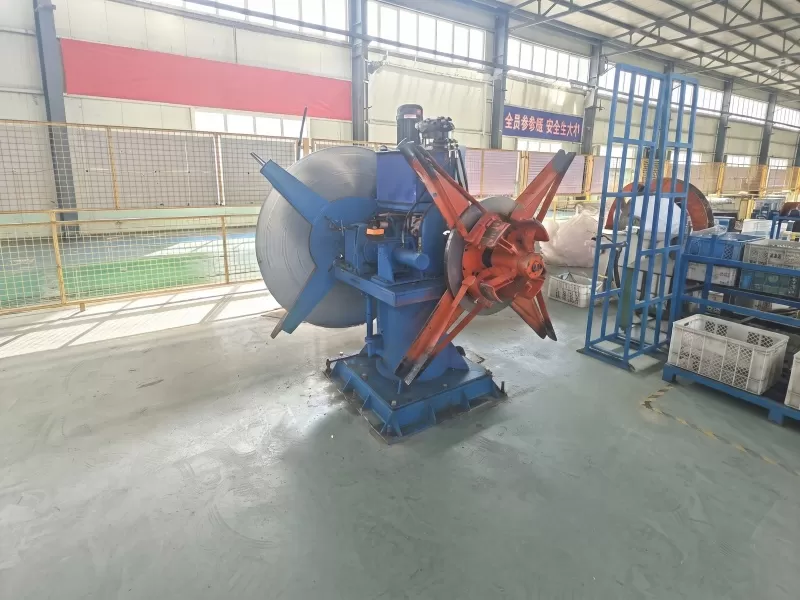
The mandrel is the interface that clamps the coil's inner diameter (ID).
Hydraulic expansion systems deliver superior radial force (typically 35–80 tons
depending on model) and maintain concentricity even under heavy inertial loads.
Mechanical wedge-type expansion, while less expensive, often suffers from uneven
pressure distribution, leading to coil ID deformation or slippage during
acceleration. For coils exceeding 8 tons or widths above 600 mm, a hydraulic
mandrel is non-negotiable. Field data shows hydraulic systems reduce mandrel
maintenance intervals by 40% compared to mechanical counterparts.
2.2 Drive Configuration and Braking Dynamics
Two primary drive configurations exist: passive (brake-only) and motorized.
Passive uncoilers rely on friction brakes or air clutches to control pay-off.
These are suitable for low-speed lines (<40 m/min) and lighter gauges.
Motorized uncoilers incorporate AC vector or DC drives that actively control
strip feed, providing constant tension regardless of coil diameter reduction.
For tube mills operating above 70 m/min or processing high-strength steel (yield
> 500 MPa), a motorized steel coil uncoiler is mandatory to
prevent strip looping and tension fluctuations. The braking system must be rated
for the coil's moment of inertia—undersized brakes result in over-run and
material tangling.
2.3 Coil Car and Loading Ergonomics
Manual coil loading using overhead cranes introduces safety risks and
alignment errors. A hydraulically actuated coil car with integrated tilting and
lifting functions reduces changeover time by 35–50%. The coil car should feature
motorized lateral positioning to center the coil relative to the mandrel axis.
When evaluating a steel coil uncoiler for sale, verify that the
coil car capacity exceeds the maximum coil weight by at least 15% to accommodate
future material upgrades.
3. Industry Pain Points: Diagnostics and Remedies
Three recurring failure modes in uncoiling operations account for over 60% of
line stoppages in tube mills. Addressing these requires a systematic approach to
equipment specification.
3.1 Telescoping and Edge Damage
Telescoping occurs when coil layers shift laterally during uncoiling, often
due to misaligned side guides or mandrel eccentricity. This defect not only
scrapes material but also creates burrs that compromise weld seam integrity.
Advanced uncoilers incorporate hydraulic side-guide plates that automatically
adjust to coil width, maintaining a gap of 1–2 mm from the strip edge. These
guides must be interlocked with the coil car positioning system to ensure
absolute alignment before uncoiling begins.
3.2 Tension Instability and Edge Wave
Edge wave—a wavy deformation along the strip edges—is directly traceable to
inconsistent back tension. Traditional friction brakes cannot compensate for the
changing coil diameter, leading to tension decay as the coil unwinds. Modern
motorized uncoilers use closed-loop tension control with load cells mounted on
the pinch roll assembly. This feedback loop adjusts motor torque in real-time,
maintaining tension within ±2% of setpoint. For automotive tube applications,
this precision is critical for meeting dimensional tolerances.
3.3 Changeover Inefficiency in Multi-Product Mills
In facilities producing structural, automotive, and sanitary tubes on the
same line, changeover time becomes a major cost driver. A steel coil
uncoiler equipped with motorized mandrel expansion, recipe storage in
the HMI, and automated side-guide positioning can reduce size-change time from
25 minutes to under 8 minutes. Suppliers like SANSO offer uncoilers with
pre-programmable profiles for up to 50 coil types, allowing operators to execute
changes with minimal manual intervention.
4. Automation and Industry 4.0 Integration
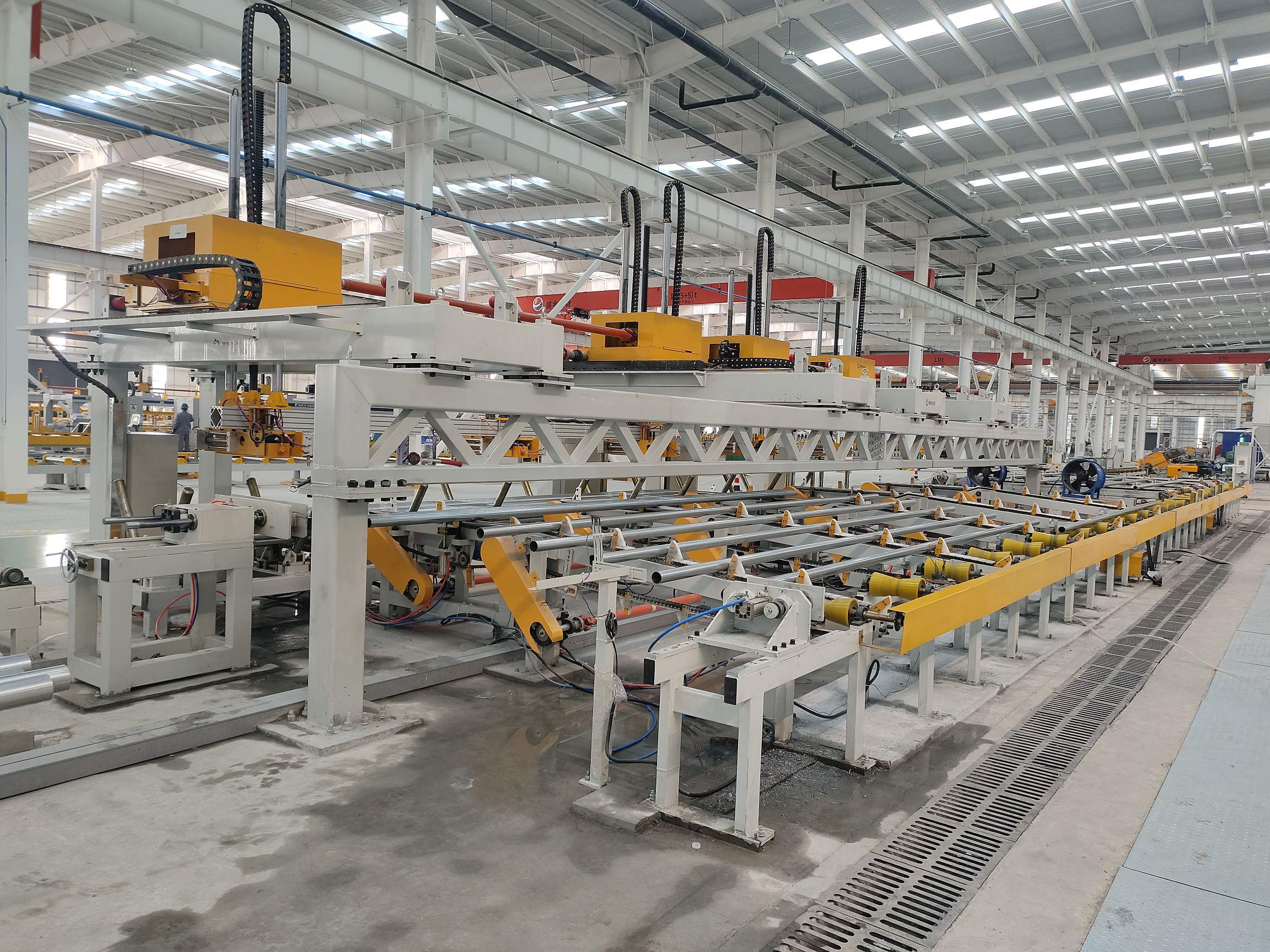
The modern tube mill operates as a synchronized system where the uncoiler
communicates with the straightener, forming mill, and welder through industrial
networks. Key automation features to look for include:
PLC integration: Profibus, Profinet, or Ethernet/IP
interfaces for seamless line coordination.
Predictive maintenance sensors: Vibration transducers on
main bearings and temperature probes on hydraulic systems provide early warnings
of wear.
Remote diagnostics: Ability for off-site engineers to
access drive parameters and alarm logs, reducing mean time to repair
(MTTR).
Energy recovery: Regenerative drives that feed braking
energy back into the facility grid, lowering operational costs in continuous
operations.
These features transform the uncoiler from a standalone machine into a
data-generating asset that contributes to overall plant efficiency metrics.
5. Application-Specific Configurations
Different tube products impose distinct demands on uncoiler design. The
following application scenarios illustrate how configuration choices impact
performance.
5.1 Structural Tube and HSS (Heavy-Wall)
For coils up to 25 mm wall thickness and widths exceeding 700 mm, a
double-cone uncoiler with hydraulic expansion and heavy-duty main shaft is
required. The base frame must be fabricated from thick-section steel (≥25 mm) to
absorb torsional forces during acceleration. In this segment, the steel
coil uncoiler is often paired with a pre-leveler to reduce the load on
the main straightener.
5.2 Stainless Steel and Decorative Tube
Stainless steel and titanium require uncoilers with non-marring surfaces.
Polyurethane-coated mandrel segments and rubber-faced pinch rolls prevent
surface scratching. Additionally, the tension control system must provide
extremely low and consistent back tension to avoid “orange peel” deformation.
Suppliers often offer optional oil-mist lubrication to further protect the strip
surface.
5.3 High-Speed Automotive Lines
Automotive applications such as driveshafts and chassis components demand
speeds exceeding 120 m/min with tolerances measured in hundredths of a
millimeter. Here, a motorized uncoiler with a DC digital drive and
high-resolution encoder feedback is essential. The control system must
synchronize with the forming mill's master encoder to maintain phase accuracy
within 0.1 degree.
6. Economic Analysis: Total Cost of Ownership
While the purchase price of a steel coil
uncoiler is a significant capital expenditure, the total cost of
ownership over a 10-year period reveals the true economic impact. Analysis of
maintenance records from 12 tube mills indicates:
Hydraulic uncoilers averaged 22% lower annual maintenance costs compared to
mechanical expansion units due to reduced mandrel segment wear.
Automated coil car systems reduced workplace incidents by 70% and increased
throughput by 12% through faster changeovers.
Energy-efficient drive configurations reduced annual power consumption by an
average of 18,000 kWh per shift.
Selecting a uncoiler from a manufacturer with a documented service network,
such as SANSO, ensures that spare
parts availability and technical support minimize unplanned downtime.
7. Integration with Tube Mill Line Architecture
The uncoiler does not function in isolation. Its integration with the
straightener and forming section is governed by three critical interfaces:
Loop control: Photoelectric sensors or ultrasonic loops
maintain a precise material buffer between uncoiler and straightener,
accommodating speed differences during acceleration and deceleration.
Speed reference: The uncoiler drive receives a speed
reference from the mill's master drive, with ramp rates matched to prevent
material looping or snapping.
Safety interlock: All guarding, light curtains, and
emergency stops are integrated into the line PLC to ensure immediate shutdown of
rotating components in the event of an operator intervention.
When specifying a steel coil uncoiler, request the
electrical interface documentation early to ensure compatibility with existing
control infrastructure.
8. Quality Standards and Certification
To validate uncoiler reliability and safety, the equipment should conform to
recognized standards:
CE marking: Indicates compliance with European safety and
electromagnetic compatibility directives.
ISO 9001:2015: Manufacturer certification for quality
management systems.
ISO 13849: Safety of machinery—performance level
requirements for control systems.
Reputable suppliers provide certification documentation as part of the
technical dossier, which is essential for multinational procurement audits.
Strategic Value of Precision Uncoiling
The selection of a steel coil
uncoiler is a strategic decision that influences material yield,
production efficiency, and final product quality. By prioritizing hydraulic
expansion systems, closed-loop tension control, and automation-ready interfaces,
manufacturers can achieve measurable improvements in OEE. Experience across
multiple installations confirms that a well-specified uncoiler reduces
setup-related scrap, minimizes edge defects, and provides the stability required
for high-speed welding.
For mills seeking to modernize or expand, SANSO offers a range of
uncoiler systems engineered to meet the rigorous demands of continuous tube
production, backed by technical support and field-proven reliability.
Frequently Asked Questions (FAQ)
Q1: What is the difference between a single-head and double-head
uncoiler?
A1: A single-head uncoiler holds one coil at a time,
requiring line stoppage for coil changes. A double-head (or dual-mandrel)
uncoiler has two independently rotating mandrels, allowing the operator to load
a second coil while the first is being processed. This design enables “flying
splice” operations in continuous mills, reducing downtime for coil changes to
less than 60 seconds. Double-head configurations are preferred for high-volume
production where uptime is paramount.
Q2: How do I calculate the required braking torque for my uncoiler?
A2: The braking torque must overcome the coil’s rotational
inertia and provide the necessary back tension. The formula involves the coil’s
moment of inertia (based on OD, ID, and weight) multiplied by the angular
deceleration rate. Additionally, the required back tension (typically 5–10% of
material yield strength multiplied by cross-sectional area) must be factored.
Most manufacturers provide sizing software; it is advisable to supply full coil
data to ensure proper drive and brake sizing.
Q3: Can a steel coil uncoiler be retrofitted with automated side
guides?
A3: Yes, many existing uncoilers can be retrofitted with
hydraulic side-guide systems. The retrofit includes adding hydraulic cylinders,
position sensors, and a control interface to the existing PLC. However, the
structural frame must be evaluated to accommodate the additional forces. For
older machines, a full engineering assessment is recommended. Manufacturers like
SANSO offer retrofit kits for their own models and third-party equipment.
Q4: What maintenance procedures are critical for hydraulic uncoilers?
A4: Critical maintenance includes: monthly oil analysis to
detect contamination; bi-annual inspection of mandrel expansion segments for
wear; quarterly calibration of tension load cells; and annual replacement of
hydraulic filters. For the drive system, encoder alignment and brake lining wear
should be checked every 2,000 operating hours. Adhering to these intervals
prevents unexpected failures that can cause extended downtime.
Q5: How does uncoiler alignment affect tube weld quality?
A5: Misalignment between the uncoiler exit and the
straightener entry causes the strip to travel at an angle, creating uneven edge
preparation. This results in poor weld seam alignment, leading to weld defects
such as overlap or lack of fusion. Proper uncoiler alignment ensures the strip
enters the forming section parallel to the mill axis, which is essential for
consistent weld bead geometry. Laser alignment tools are recommended during
installation to achieve tolerances within 0.2 mm/m.
For detailed technical specifications or to discuss a custom
configuration, visit the SANSO uncoiler product
page or contact their engineering team for application-specific
recommendations.