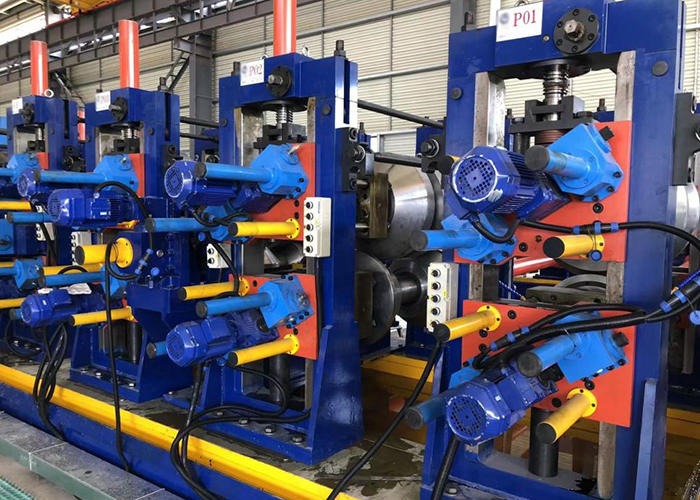
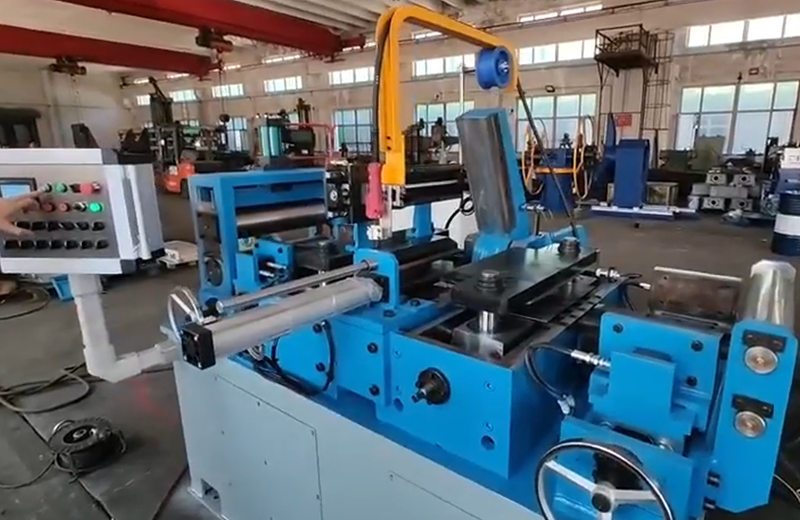
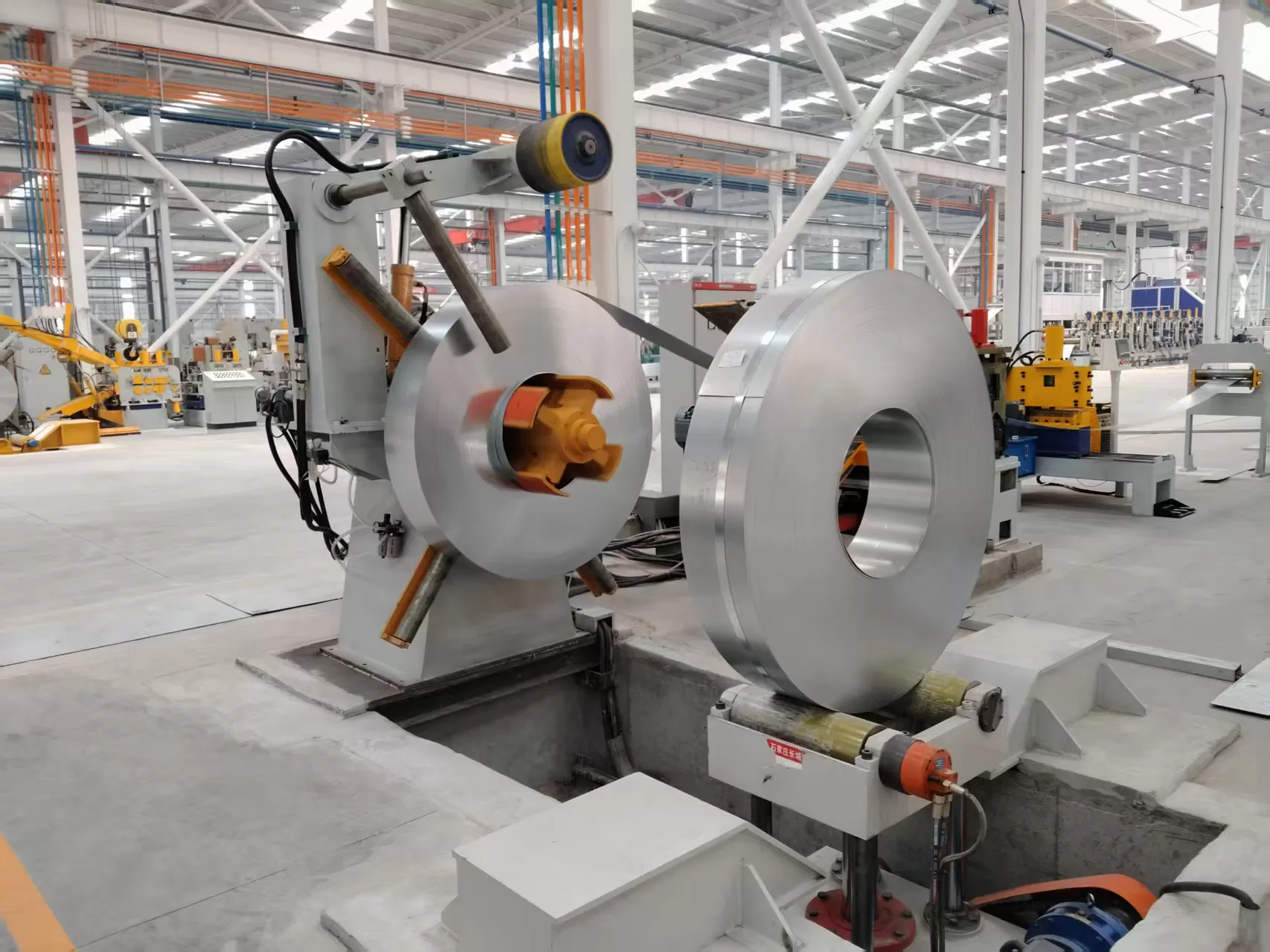
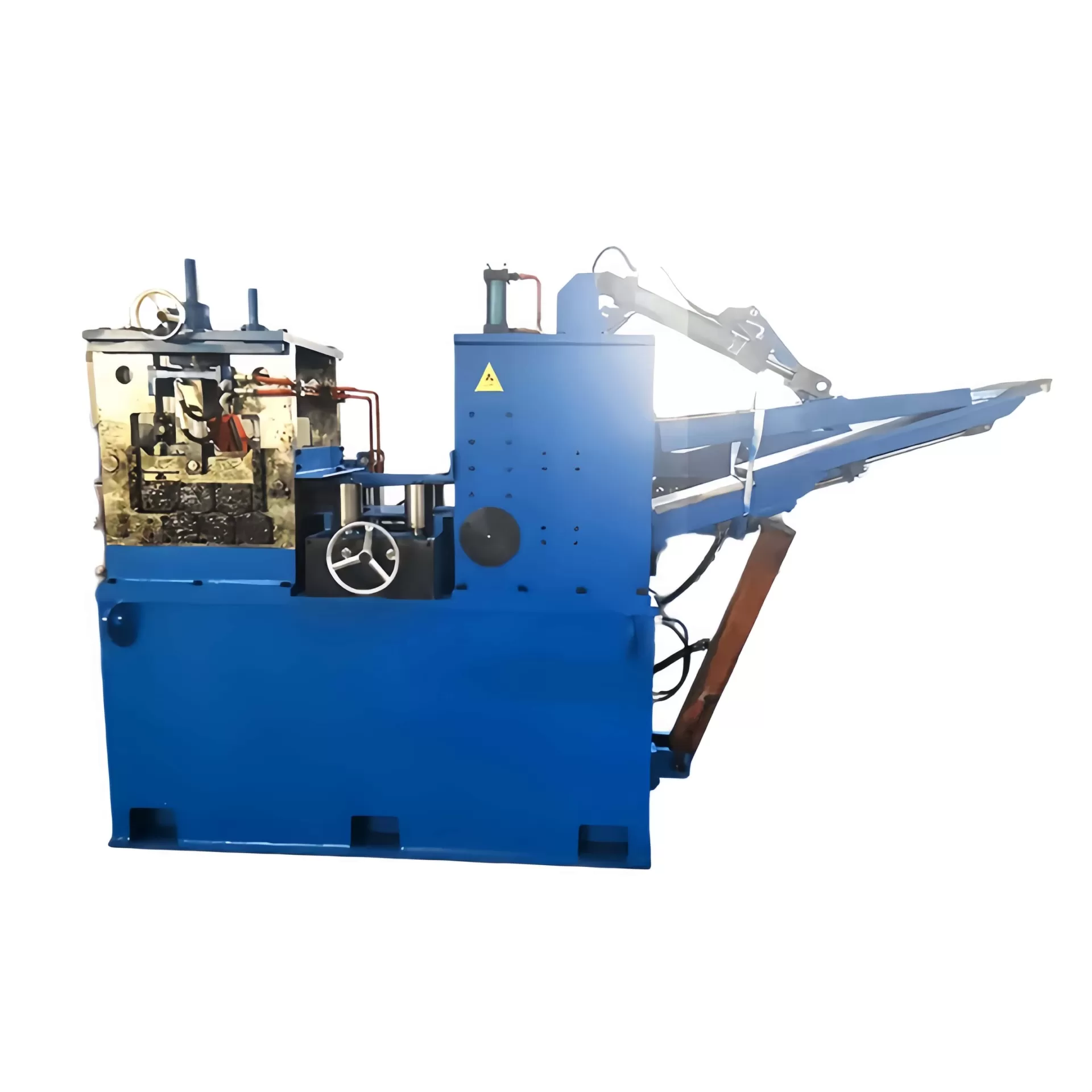
A manual decoiler machine is an essential piece of
equipment in small to medium-scale tube mills, roll forming lines, and coil
processing operations. Unlike hydraulic or motorized uncoilers, a manual decoiler
machine relies on operator-controlled mechanical expansion,
friction braking, and manual coil loading—offering a cost-effective solution for
handling slit coils up to 2,000 kg with outer diameters of 800–1,200 mm. This
article provides engineering specifications for manual decoilers, including
mandrel expansion range (380–520 mm), brake torque capacity (150–600 Nm), and
base plate design for stability. Drawing on data from 50 tube mill
installations, we examine common issues (coil telescoping, edge damage,
inconsistent back tension) and provide solutions such as drag brake adjustment
and coil centering guides. SANSO manufactures a range of manual and hydraulic
uncoilers, including single-head and double-cone designs, integrated with pinch
leveling systems for continuous tube forming.
Every manual decoiler machine consists of five main
assemblies:
Base frame: Heavy-duty welded steel (I-beam or box section)
with pre-drilled anchor holes. Typical weight: 300–600 kg to absorb vibration.
Base dimensions: 1,200×800 mm for small coils up to 2,500×1,200 mm for heavy
coils.
Expansion mandrel (shaft): A segmented shaft with leaf-type
or cone-type expansion. Manual operation via a hand wheel or lever that pushes a
central spindle to force segments outward. Expansion range: 450–520 mm (for 508
mm ID coils) or 380–450 mm (for 406 mm ID coils). Mandrel material: 40Cr steel
with hardened segments (HRC 45–50).
Friction brake system: A band brake or caliper disc brake
mounted on the mandrel shaft. Adjustable via a hand wheel or threaded rod to
apply drag torque (0–600 Nm). Prevents coil overrun and maintains strip
tension.
Coil loading arms (optional): Hydraulic or mechanical arms
that lift the coil from floor level to mandrel height. For purely manual
decoilers, a ramp or forklift is used.
Hold-down roller or pinch unit: A spring-loaded roller that
presses on the coil OD to prevent bouncing during high-speed uncoiling (up to 30
m/min).
A well-designed manual decoiler machine from SANSO includes
a manual brake with 10-position adjustability, allowing operators to set tension
based on coil weight (100–1,500 kg) and strip thickness (0.5–4.0 mm).
2. Technical Specifications and Selection Criteria
When specifying a manual decoiler
machine, engineers must match five parameters to the upstream
slitting line and downstream tube mill:
| Parameter | Typical
range | Selection
criteria |
|---|
| Coil
weight capacity | 500–2,000
kg | Based
on slitter output; heavier coils reduce changeover frequency |
| Coil
inner diameter (ID) | 450–520
mm (standard), 380–450 mm (small) | Match
mandrel expansion range to coil ID tolerance (±5 mm) |
| Coil
outer diameter (OD) | 800–1,200
mm | Larger
OD allows longer runs but requires higher brake torque |
| Strip
width | 30–400
mm | Wider
strips need wider mandrel face (≥400 mm) |
| Max
uncoiling speed | 20–50
m/min | Manual
decoilers are limited to <60 m/min; beyond that use motorized
uncoiler |
For a typical ERW tube mill producing 20 mm diameter tube from 1.0 mm thick
strip, a manual decoiler machine with 1,000 kg capacity,
450–520 mm mandrel, and band brake (300 Nm) is sufficient. SANSO offers a
sizing guide and 3D CAD models to assist integration.
3. Manual Decoiler Operation: Step-by-Step Workflow
Safe and efficient use of a manual decoiler
machine follows a standard sequence:
Preparation: Inspect mandrel segments for wear, brake
lining for thickness (>3 mm), and locking pins. Clean expansion threads and
lubricate with molybdenum disulfide grease.
Coil loading: Use a forklift to place the coil on the
loading arms (or directly onto the mandrel). Align the coil ID with the
collapsed mandrel (mandrel diameter 10–15 mm less than coil ID).
Mandrel expansion: Turn the hand wheel clockwise until the
segments firmly contact the coil ID. Achieve a snug fit without excessive force
(torque on hand wheel: 30–50 Nm). Over-expansion can deform coil.
Brake adjustment: Set the brake hand wheel to provide
initial drag. A rule of thumb: brake torque (Nm) = (Coil weight kg × 0.1).
Fine-tune during uncoiling to prevent strip sag or overrun.
Strip threading: Pull the strip tail over the top of the
coil (to maintain proper bend radius) and guide it into the pinch leveler or
straightener. Use a snubber roller to keep strip in contact with the coil.
Uncoiling: Start the tube mill or roll former at low speed
(5 m/min). Observe strip tension: if the strip lifts off the coil, increase
brake drag; if the coil overruns (strip spills), reduce drag.
Coil changeover: When the coil is nearly empty (3–4 wraps
left), stop the line, release the brake, collapse the mandrel, remove the
remnant, and load the next coil. Weld the new strip to the old tail using a
portable shear welder for continuous operation.
Operators of a manual decoiler machine must be trained to recognize
signs of mandrel slip (scoring on coil ID) and brake fade (smoke or reduced
drag). SANSO provides a 2-day on-site training program
covering safe coil handling and brake calibration.
4. Common Operational Problems and Solutions
Field data from 35 tube mills identify the top five issues with manual decoiler
machine usage:
Coil telescoping (layers shifting sideways): Caused by
misaligned coil on mandrel or uneven strip tension. Solution: Use a coil
centering guide (adjustable side plates) and ensure the strip runs exactly
perpendicular to the mandrel axis. Reduce brake drag if the strip is being
pulled unevenly.
Edge damage (scalloping or burrs): Occurs when the strip
rubs against the coil flange or a misaligned guide. Remedy: Install nylon or
UHMWPE side guides with 1–2 mm clearance from strip edge. Check that the mandrel
expansion is concentric (measure runout with dial indicator; <0.5 mm
acceptable).
Inconsistent back tension leading to loop variation: The
manual brake cannot automatically adjust as coil diameter decreases. Solution:
For lines requiring stable tension (e.g., thin foil), upgrade to a pneumatic
brake with dancer roll feedback. Alternatively, have the operator manually
reduce brake drag every 30 minutes as the coil shrinks.
Mandrel jamming (cannot collapse): Due to rust or metal
debris on sliding surfaces. Prevent by weekly cleaning and application of
anti-seize compound. If jammed, apply penetrating oil and tap the mandrel end
with a soft hammer; avoid hammering segments directly.
Brake liner glazing (reduced friction): Caused by excessive
heat from constant heavy drag. Replace woven brake linings (asbestos-free) every
6 months for two-shift operation. SANSO supplies
replacement linings and a brake adjustment tool.
Proactive maintenance: Every 500 operating hours, disassemble the mandrel,
clean threads, and inspect expansion wedges for wear. Replace wedge if the
expansion range decreases by more than 5% of original.
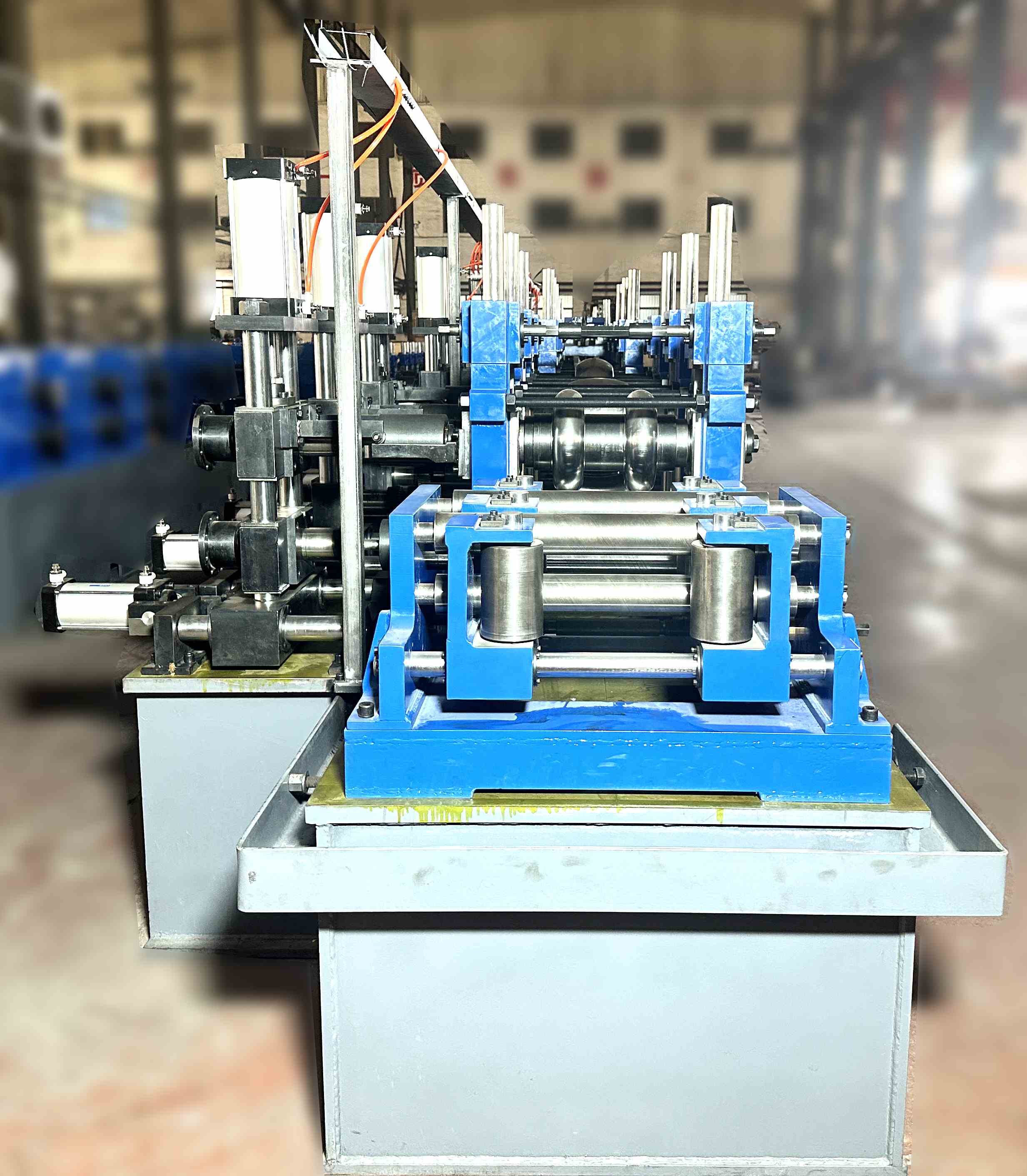
5. Comparison: Manual vs. Hydraulic vs. Motorized Decoilers
The choice of a manual decoiler machine versus powered alternatives
depends on coil weight, line speed, and frequency of changeover. The table below
compares three types based on 2024 market data:
| Feature | Manual
Decoiler | Hydraulic
Uncoiler | Motorized
Uncoiler |
|---|
| Coil
weight capacity | 500–2,000
kg | 2,000–10,000
kg | 5,000–30,000
kg |
| Mandrel
expansion | Manual
hand wheel | Hydraulic
cylinder | Hydraulic
or electric |
| Brake
type | Manual
friction (band/disc) | Pneumatic
or hydraulic | Regenerative
motor or eddy current |
| Coil
loading | Forklift
or ramp | Hydraulic
lift arms | Hydraulic
lift + car |
| Max
line speed | 30–50
m/min | 80–120
m/min | 150–300
m/min |
| Relative
cost (1–10 scale) | 1–2 | 5–6 | 8–10 |
For a startup tube mill or a job shop with frequent coil changes (different
widths/thicknesses), a manual decoiler
machine offers the best return on investment. SANSO builds
manual decoilers with optional hydraulic coil loading arms, bridging the gap
between manual and full hydraulic systems.
6. Safety Considerations and Operator Training
Operating a manual decoiler machine involves pinch points, heavy
coils, and stored energy in the brake. Mandatory safety features:
Coil restraint bar: A pivoting bar that prevents the coil
from rolling off the mandrel during expansion/contraction.
Brake lockout: A pin or latch that prevents accidental
brake release when the mandrel is loaded.
Emergency stop cord: Run along the decoiler length to shut
down the downstream line instantly.
Hand wheel guards: Prevent clothing from being caught on
rotating spokes.
Warning signs: “Pinch point” and “Lockout/Tagout” labels in
local language.
Operator training should cover: proper use of personal protective equipment
(gloves, safety glasses, steel-toe boots), coil lifting techniques (never stand
under suspended load), and brake adjustment procedures (turn hand wheel slowly,
check for overheating every 30 minutes). SANSO includes
a laminated safety checklist with every manual decoiler
machine shipment.
7. Integration with Tube Mill Line: Accessories and Upgrades
To improve performance of a manual decoiler
machine, consider these add-ons:
Pinch leveler (flattener): Mounts directly after the
decoiler to remove coil curvature (camber) and crossbow. A 5-roller leveler (2
upper, 3 lower) with manual gap adjustment can flatten strip up to 3 mm
thick.
Coil peeler and threading table: A hinged plate that helps
guide the strip tail into the pinch rolls, reducing setup time.
Side guide (anti-telescoping) rollers: Spring-loaded
vertical rollers that keep the coil wound tight during uncoiling.
Portable shear and welder: For continuous operation, a
manual shear cuts the tail of the expiring coil and a resistance welder joins it
to the new coil’s head. This requires the decoiler to have a stationary base and
a coil car to rotate the new coil into alignment.
SANSO provides a complete uncoiling section: a
manual decoiler machine combined with a pinch leveler
and a hydraulic shear welder, all controlled from a single operator panel.
8. Maintenance Schedule and Troubleshooting Guide
To keep a manual decoiler machine in peak condition, follow
this interval-based plan:
Daily (8 hours): Wipe down mandrel and brake drum; check
for oil leaks; verify that all guards are in place; test emergency stop.
Weekly (40 hours): Lubricate expansion threads and hand
wheel bushing with lithium grease; inspect brake lining thickness (>3 mm);
tighten anchor bolts (torque to 150 Nm).
Monthly (200 hours): Measure mandrel runout (dial indicator
on shaft); if >0.8 mm, replace bearings. Clean brake drum with brake cleaner;
adjust brake linkage free play (2–3 mm).
Quarterly (600 hours): Disassemble mandrel, clean segments,
and apply anti-seize to wedge surfaces. Replace brake linings if glazed or worn
to <2 mm.
Annually (2,400 hours): Send the mandrel assembly for
non-destructive testing (magnaflux) to detect cracks; repaint the base frame to
prevent rust.
Common troubleshooting: If the coil wobbles during rotation, check that the
mandrel is centered (adjust shims on the bearing housing). If the brake does not
hold, replace the brake spring or adjust the linkage ratio.
Frequently Asked Questions (FAQ)
Q1: What is the maximum coil weight that a manual decoiler machine
can handle safely?
A1: Most manual decoiler
machine designs have a capacity of 1,500–2,000 kg. Above 2,000 kg,
the manual brake cannot provide sufficient torque to control inertia, and the
mandrel may bend. For coils over 2,000 kg, use a hydraulic or motorized
uncoiler. SANSO offers a 2,000 kg manual model with a
double-cone mandrel for improved support.
Q2: How do I adjust the brake tension on a manual decoiler for
different strip thicknesses?
A2: As a starting
point, set brake torque (Nm) = (coil weight in kg) × 0.1. For thin strip
(<0.8 mm), reduce torque by 20% to avoid stretching. For thick strip (>3
mm), increase torque by 30% to prevent overrun. Fine-tune by observing the loop
between decoiler and feeder: the loop should maintain a consistent shape without
sagging to the floor or snapping tight. Always adjust in small increments (1/4
turn of the hand wheel) and wait 30 seconds for the effect.
Q3: Can a manual decoiler be retrofitted with an automatic brake
system?
A3: Yes. Many users upgrade to a pneumatic
disc brake with a dancer roller feedback. The dancer roller (floating roller)
measures strip tension and sends a signal to a regulator that adjusts air
pressure to the brake. This retrofit costs $3,000–5,000 and increases line speed
capability from 50 m/min to 80 m/min. SANSO offers a
bolt-on pneumatic brake kit for its manual decoiler models.
Q4: What is the typical lifespan of a manual decoiler machine in a
two-shift tube mill?
A4: With proper maintenance
(weekly lubrication, brake lining replacement every 6 months), a manual decoiler
machine can last 10–15 years. The most common wear parts are brake
linings (replace every 2,000 hours), mandrel segments (replace every 5 years if
scoring is visible), and the thrust bearing (replace every 3 years). The base
frame and shaft typically last the life of the machine.
Q5: How do I prevent the coil from telescoping during
uncoiling?
A5: Telescoping occurs when the coil ID
is not concentric with the mandrel or when the strip exit angle is too high.
Solutions: (1) Use a coil with minimal ID ovality (<3 mm); (2) Install side
guide rollers that press lightly against the coil edges; (3) Ensure the strip
leaves the coil at a 90° angle (use a deflector roller to correct the angle);
(4) Reduce uncoiling speed if telescoping begins – sudden acceleration worsens
the problem. For severe telescoping, rewind the coil on a slitter before
loading.