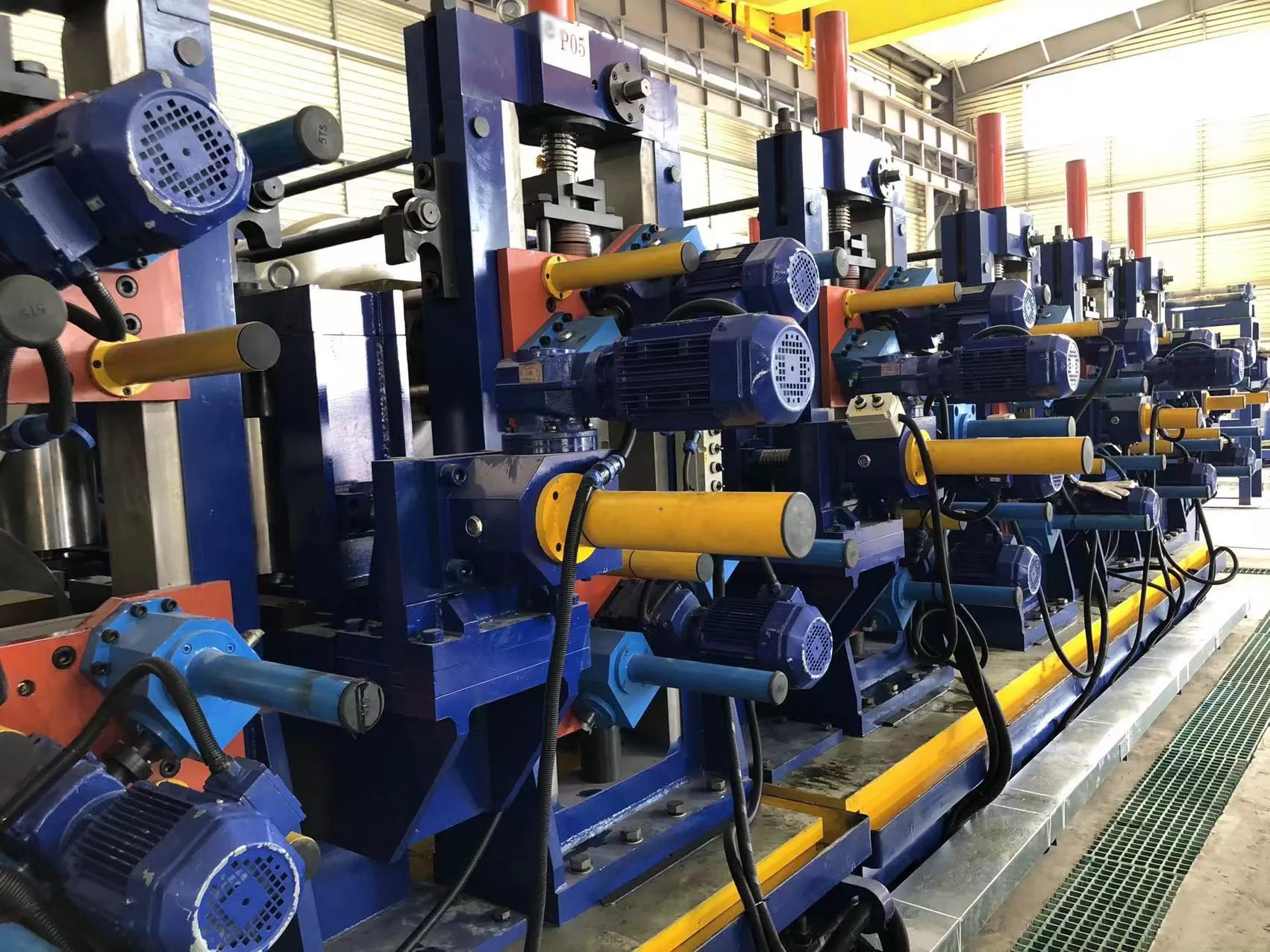
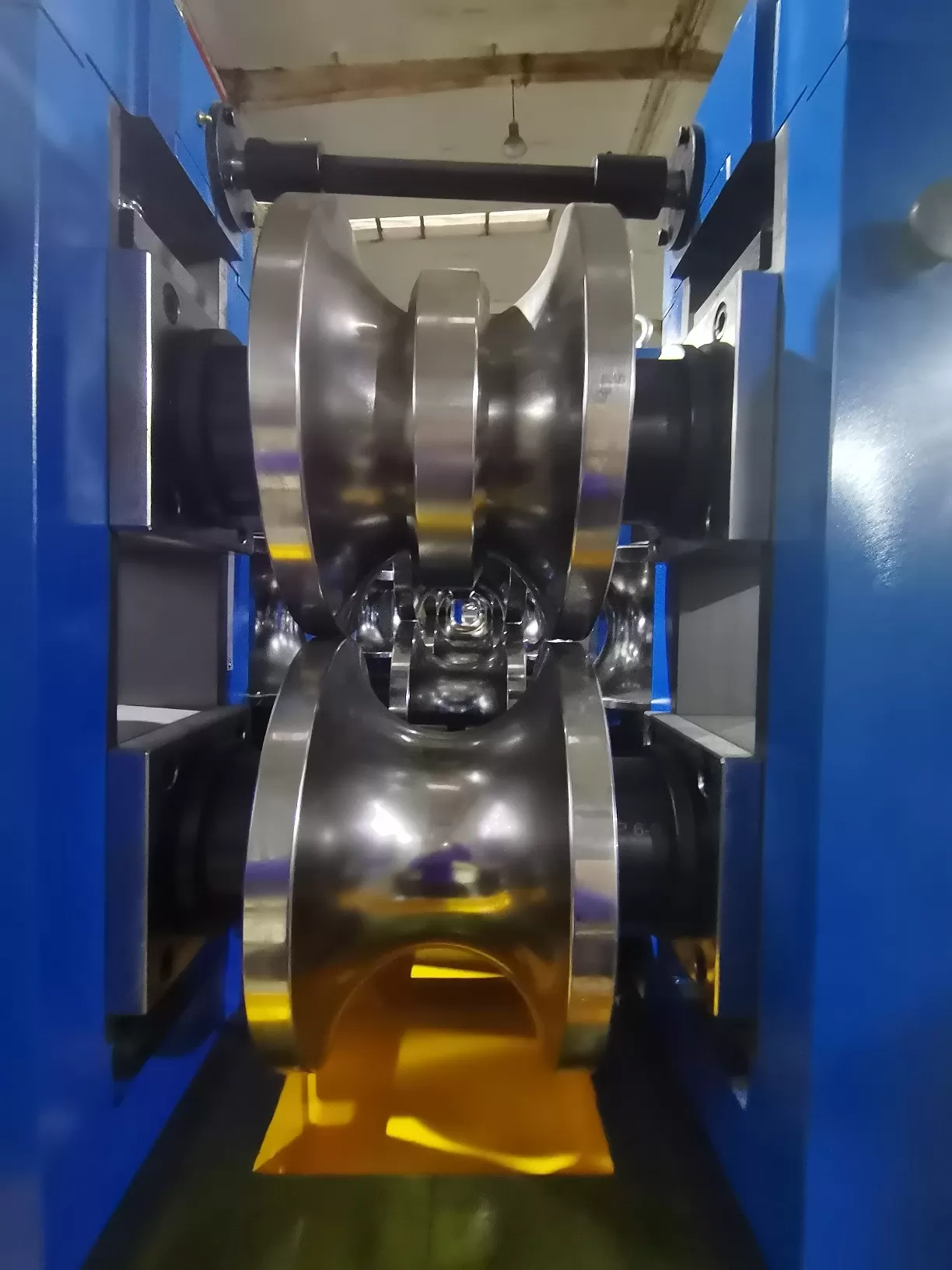
In modern electric resistance welding (ERW) tube mills, unplanned downtime
directly translates to rejected footage and lost productivity. The Shear Welder is the critical apparatus that eliminates coil change interruptions by
butt-welding the trailing end of an exhausted strip to the leading edge of a new
coil. This component, when engineered with high-accuracy shearing and
solid-state welding technology, ensures a homogeneous strip feed, protects
downstream forming rolls, and guarantees consistent weld integrity throughout
the tube. Without a properly tuned shear welder, a mill faces frequent breakage,
weld seam defects, and variable mechanical properties across the finished
tube.
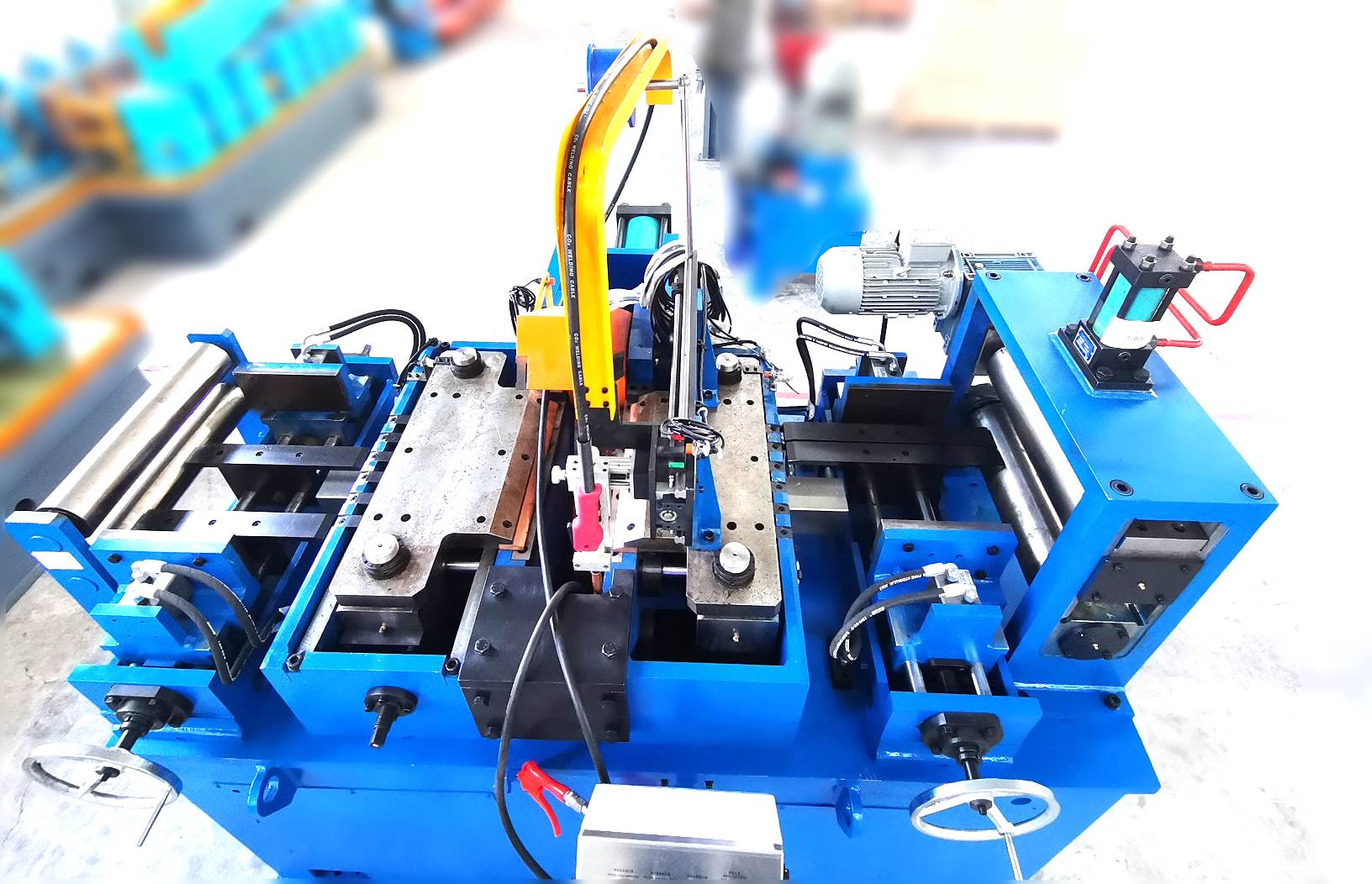
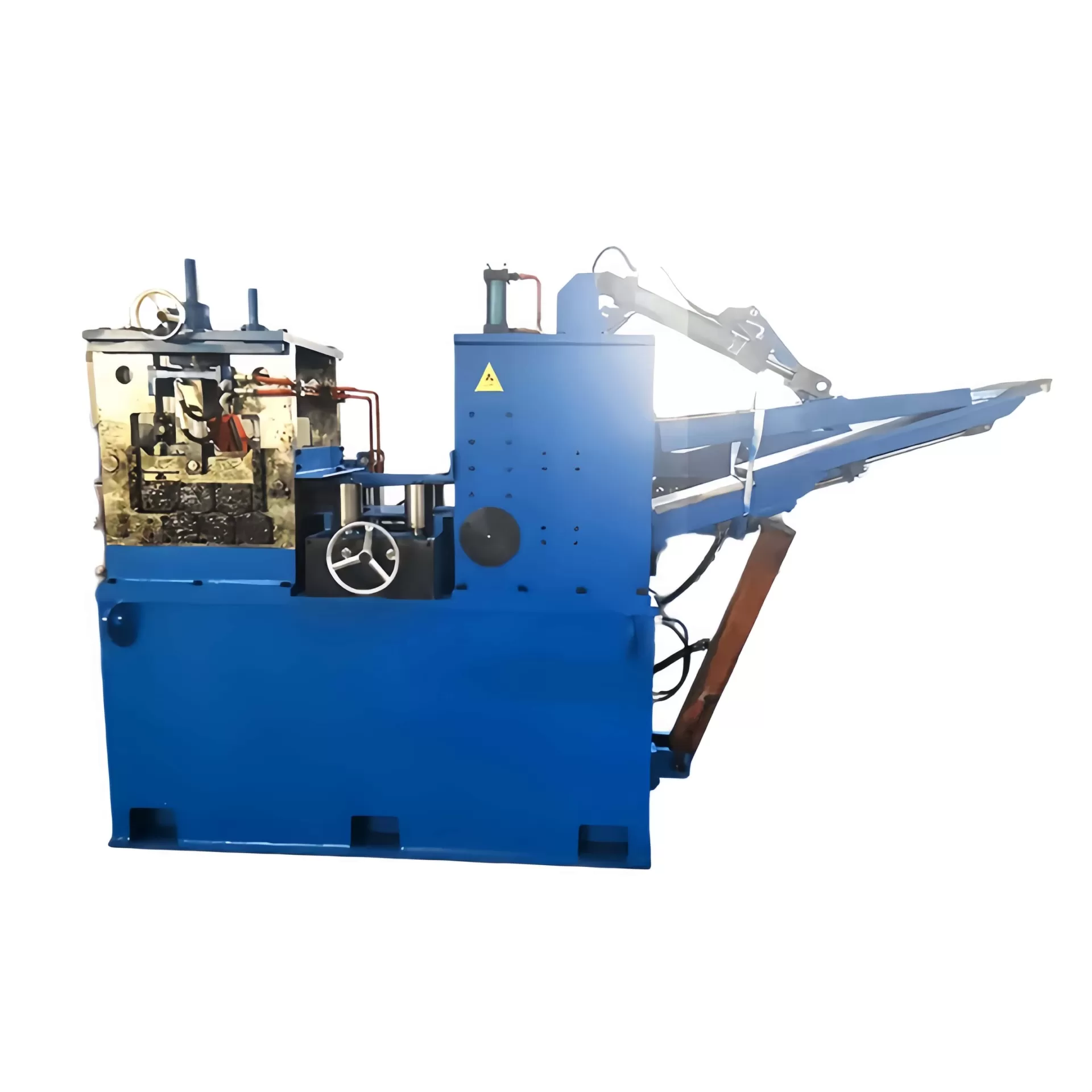
Anatomy of an Industrial Shear Welder: Core Subsystems
To appreciate the metallurgical and mechanical demands placed on a Shear
Welder, one must examine its four essential assemblies. Each directly
influences the quality of the strip-end joint that must later pass through
forming rolls and the high-frequency induction coil.
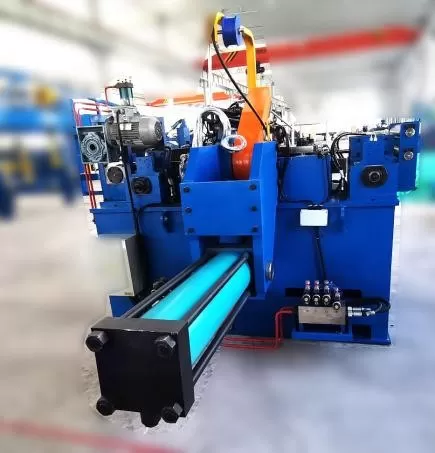
1. Double-Blade Shearing Mechanism
Unlike simple cutoff presses, a heavy-duty shear welder uses opposing blades
to create perfectly square, burr-free strip ends. The blade gap, shear angle,
and hydraulic pressure must be adjustable for strip thicknesses ranging from 1.5
mm to 12 mm. Typical industry specifications require blade clearances below 5%
of material thickness to avoid cold-worked deformation that later produces hard
spots in the weld zone.
2. Strip Alignment and Clamping System
Misalignment of the two strip ends is the primary cause of weak butt joints.
Advanced shear welders incorporate hydraulic side guides and top/bottom clamps
with independent pressure control. These clamps hold both strip ends rigidly
during shearing and subsequent welding. Edge misalignment greater than 0.3 mm in
thickness under 6 mm leads to incomplete root fusion and seam tearing under
forming stresses.
3. Solid-State HF Welding Interface
While traditional shear welders might employ flash butt welding, high-output
tube mills integrate a solid-state high-frequency (HF) welder specifically for
strip joining. This approach delivers concentrated heat with a minimal
heat-affected zone (HAZ), reducing oxidation and post-weld scarfing
requirements. The solid-state HF power supply permits precise timing sequences:
squeeze, heat, and forge cycles programmable in milliseconds.
4. Post-Weld Scarfing and Flattening Station
Immediately after the weld solidifies, an internal and external scarfing tool
removes the upset bead. Any remaining crown must be rolled flat to a thickness
tolerance of ±0.1 mm to avoid marking the forming rolls. Modern shear welders
include an automated scarfing blade with force feedback to adjust cutting depth
in real time.
How the Shear Welder Directly Impacts Final Tube Weld Quality
The performance of the Shear Welder has a cascading effect on every subsequent stage of tube production. Below are
the most critical failure modes that originate from poor strip-end
preparation.
Incomplete penetration: Occurs when the butt joint faces
are not perfectly square or when the forge pressure is insufficient. The
resulting cold shut propagates along the weld seam, causing hydrotest
failures.
Oxide entrapment: Results from excessive heat input or
prolonged weld time, creating aluminum-iron oxides on galvanized or aluminized
strips. These inclusions act as crack initiation sites under bending.
Edge wave defects: When shearing produces burrs or
micro-tears, the edges do not align smoothly during the HF welding process. This
leads to a periodic "beaded" appearance on the tube surface.
Variable wall thickness at weld: Clamping pressure that is
not uniformly distributed causes one strip edge to override the other. During
roll forming, this area becomes a localized thin section.
Solutions to these defects require a systems-level approach: integrating
real-time weld monitoring, adaptive clamping force control, and regular
validation of shear blade parallelism. Tube mills that implement monthly
laser-alignment checks on their shear welder report a 40% reduction in
weld-related rejects.
Advanced Process Controls for Automated Shear Welding
Modern tube mills demand closed-loop control over the shear welder’s
parameters. Programmable logic controllers (PLCs) with edge-sensing cameras now
automate the entire strip joining cycle. Key control variables include:
Shear blade gap and overlap (measured via linear encoders)
Upcut or downcut shearing speed to match strip gauge
Welding current ramp rate and dwell time (solid-state HF welders offer 0.1
ms resolution)
Upset force profile during forge phase, recorded as a force/displacement
curve
Scarfing blade penetration depth with ultrasonic thickness
feedback
Data from each weld cycle is stored for traceability. When a downstream
defect is detected, engineers can replay the shear welder’s parameter history to
isolate root causes. SANSO integrates these
adaptive controls into its tube mill automation packages, enabling full recipe
management for different material grades (e.g., API 5L X42, stainless steel 304,
or galvanized automotive grades).
Maintenance Strategies to Maximize Shear Welder Uptime
Even the most robust shear welder requires scheduled maintenance to avoid
unplanned stops. Field data from high-output mills (operating at 50–120 meters
per minute) show that 80% of emergency interventions involve three
components:
Shear blades: Replace or regrind after every 800–1200
strip-end shears, depending on material hardness (e.g., 304 stainless wears
blades twice as fast as mild steel).
Hydraulic system filters: Contaminated oil causes erratic
clamping force. Change filters every 2000 operating hours and analyze oil
particulate levels quarterly.
Welding electrode alignment: Copper or molybdenum
electrodes used in solid-state HF welding must be resurfaced to maintain even
current distribution. Excessive pitting creates arc tracking and inconsistent
heating.
Predictive maintenance approaches, such as vibration monitoring on the
hydraulic pump and thermal imaging of the weld transformer, further extend mean
time between failures (MTBF). Documenting each intervention in a CMMS
(computerized maintenance management system) allows operators to identify wear
patterns specific to their shear welder model.
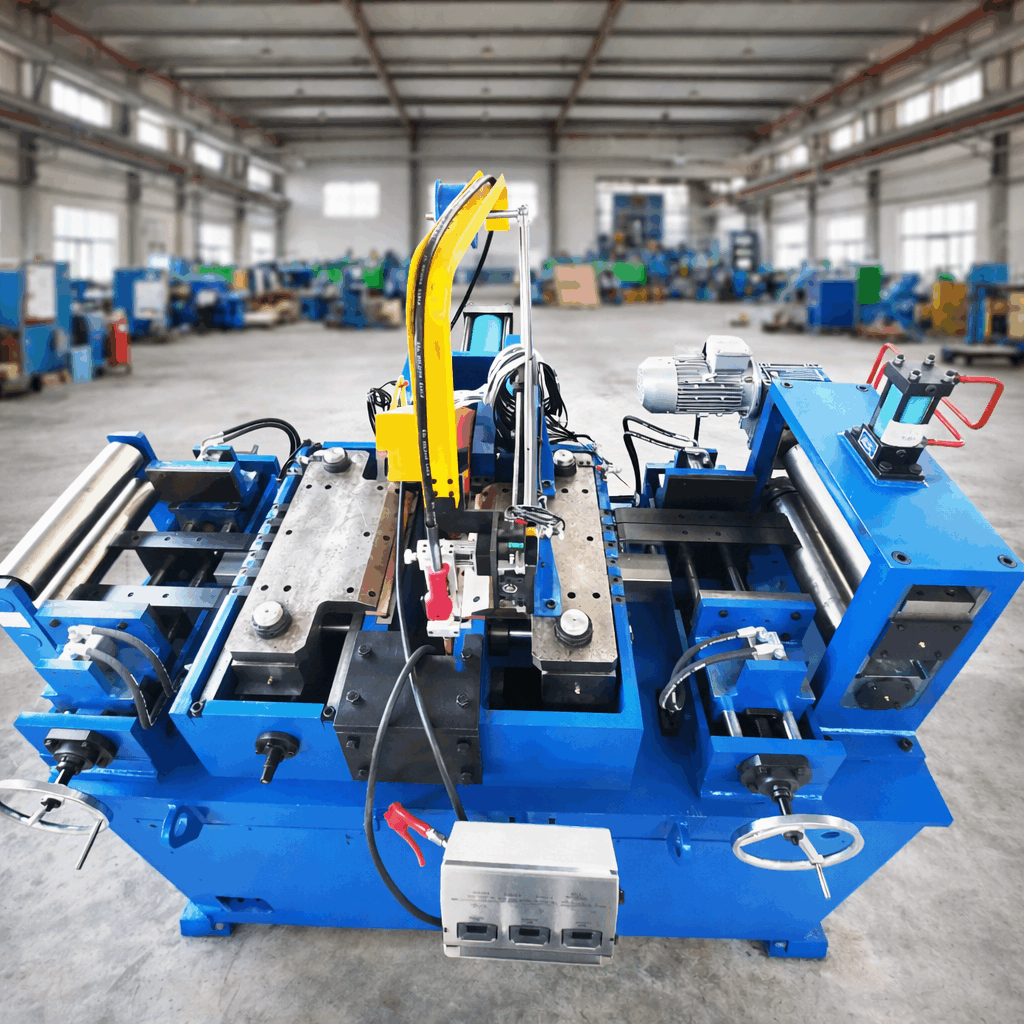
Integrating the Shear Welder with a High-Performance Tube Mill Line
Selecting a shear welder in isolation, without considering the upstream
uncoiler and downstream accumulator, limits overall line efficiency. The ideal
configuration synchronizes strip speed, tension control, and weld scheduling.
For example, when the strip accumulator reaches 80% capacity, the shear welder
initiates the joining sequence during a low-line-speed window (e.g., 15 m/min
instead of 80 m/min), minimizing speed fluctuations.
SANSO designs its tube mill
lines with a fully integrated shear welder and solid-state HF power source. This
approach eliminates compatibility issues between third-party welders and mill
controls. Operators benefit from a unified human-machine interface (HMI) that
displays strip tension, weld parameters, and scarfing force on a single screen.
For high-strength steel applications, SANSO offers an optional
post-weld annealing station to relieve residual stresses at the joint before
entering the forming section.
Frequently Asked Questions (FAQ) – Shear Welder in Tube Mills
Q1: What materials can a modern shear welder join for ERW tube
production?
A1: Industrial shear welders are designed to handle
hot-rolled carbon steel (S235JR to S700MC), cold-rolled strips, galvanized steel
(DX51D to DX54D), and austenitic stainless steels (304, 316). For galvanized
materials, the welding cycle must include a short pre-heat sequence to vaporize
the zinc coating from the weld zone, preventing porosity. Some advanced units
also join aluminum strips (e.g., 3003 or 6061) for specialty tube applications,
though with modified electrode materials and inert gas shielding.
Q2: How does the shear welder affect the high-frequency welding process
downstream?
A2: The shear welder directly influences HF weld consistency
because any thickness variation, edge wave, or oxide inclusion at the butt joint
disrupts the flow of eddy currents induced by the high-frequency coil. Even a
0.2 mm step change in strip thickness can alter the V-angle opening, causing the
weld point to shift laterally. Quality shear welders produce a joint with less
than 5% thickness deviation and a surface roughness Ra ≤ 3.2 µm to ensure smooth
current transfer.
Q3: Can a shear welder be retrofitted to an existing tube mill line?
A3: Yes, retrofitting is common. The critical requirements
are sufficient line space between the uncoiler and strip accumulator, a control
interface to synchronize with the existing PLC (Ethernet/IP or Profibus), and a
power supply suitable for the mill’s line speed. Retrofitting usually takes 5–7
days including installation, training, and trial runs. Manufacturers like SANSO
offer modular shear welder units with compact frames designed for tight
layouts.
Q4: What is the typical cycle time for a fully automated shear welding
sequence?
A4: For strip thicknesses between 2.0 mm and 6.0 mm, a
modern shear welder completes the full cycle (shear both ends, align, weld,
scarf, and flatten) in 35 to 55 seconds. Thicker material (up to 12 mm) extends
the weld time due to higher heat input requirements. High-speed mills rely on
strip accumulators that hold 150–200 meters of material to maintain downstream
production during the welding cycle.
Q5: How often should shear blades be replaced to maintain weld quality?
A5: Replacement frequency depends on material abrasive
properties and weekly throughput. As a benchmark, for carbon steel (HRC 40-50),
regrind blades every 1000 shears; for stainless steel, every 600 shears. Visual
signs include a raised burr exceeding 0.15 mm or a “feather” edge on the cut
surface. Many operations schedule blade replacement during weekly preventive
maintenance shifts to avoid mid-production failures.
Optimizing Your Continuous Tube Mill with the Right Shear Welder
The Shear Welder is not merely a secondary accessory—it is the gatekeeper for strip quality
entering the forming and welding zones. Mills that neglect shear welder
calibration, blade sharpness, or alignment protocols consistently struggle with
seam anomalies and lower first-pass yields. Conversely, tube producers that
implement data-driven control of their shear welder, paired with a solid-state
HF power source, achieve joint efficiencies exceeding 95% of the base metal
strength.
Engineers seeking to upgrade an existing line or commission a new tube mill
should evaluate the shear welder’s shearing accuracy, weld power flexibility,
and compatibility with their material mix. Automation features such as recipe
storage for 50+ material grades and remote diagnostics are now standard in
professional platforms.
For a technical consultation or to request detailed specifications
for integrating a shear welder into your tube production line, contact the
engineering team at SANSO today. Provide your strip
dimensions, material grades, and target output rate to receive a customized
proposal.
Send an inquiry → One of
our senior process engineers will respond within 24 hours.