The manufacturing of welded steel tubes and profiles is a cornerstone of
modern industrial infrastructure. Central to this process is the pipe mill
machine, a sophisticated assembly of high-precision components
designed to transform flat steel coils into structural tubes with exacting
tolerances. This conversion requires a seamless integration of mechanical force,
thermal control, and metallurgical science. As global demand for high-strength,
low-alloy (HSLA) steel increases, the engineering behind these production lines
has transitioned toward higher automation and tighter process control.
SANSO focuses on
the rigorous technical standards necessary to maintain mill stability and
product integrity across diversified material grades.
Mechanical Foundation of the Pipe Fabrication Process
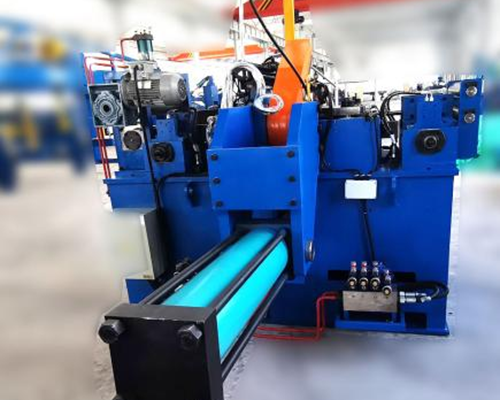
The operational lifecycle of a pipe mill
machine begins with the entry section, where the raw material is
prepared for continuous processing. The stability of the entire line is
dependent on the precision of the uncoiler and the subsequent flattening
equipment. If the strip enters the forming section with residual internal
stresses or edge waves, the final product will inevitably suffer from structural
inconsistencies.
To prevent these issues, modern mills utilize hydraulic double-cone uncoilers
coupled with high-efficiency levelers. These units ensure that the strip is
perfectly flat before it reaches the first breakdown stand. Furthermore, the
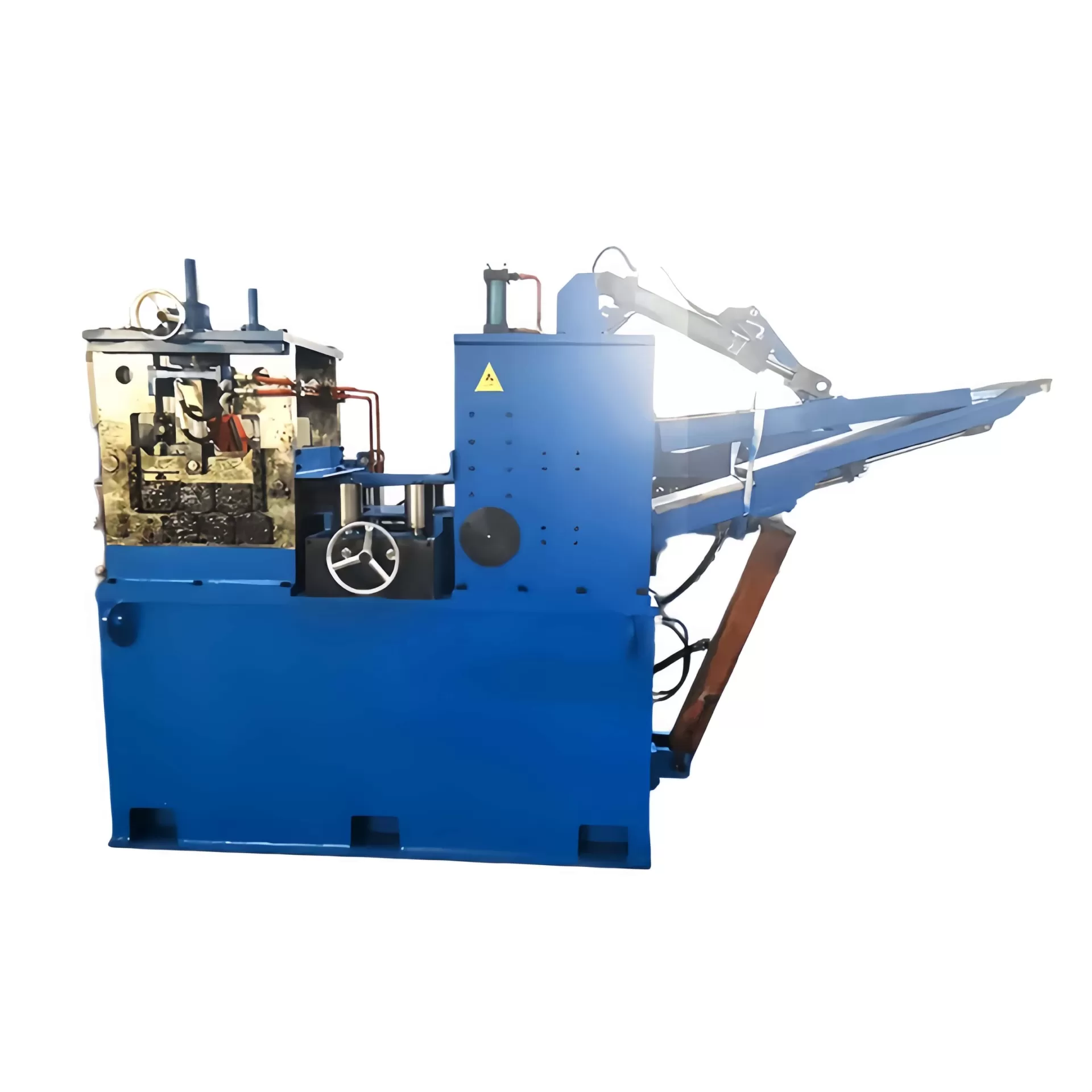
integration of an automated shear and butt welder is a requirement for
continuous operation, allowing the trailing end of one coil to be joined to the
leading end of the next without stopping the mill. This continuity is managed by
an accumulator system, which stores enough strip to feed the mill during the
welding pause.
Forming Dynamics and Roll Pass Design
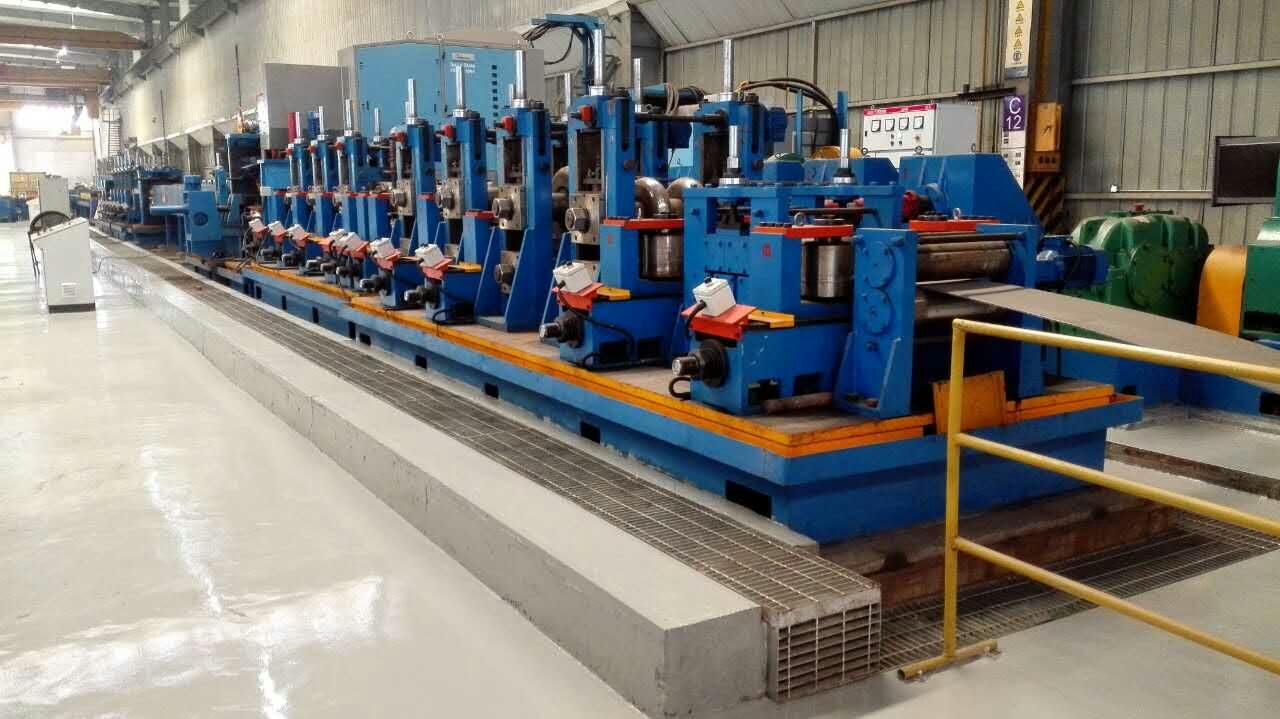
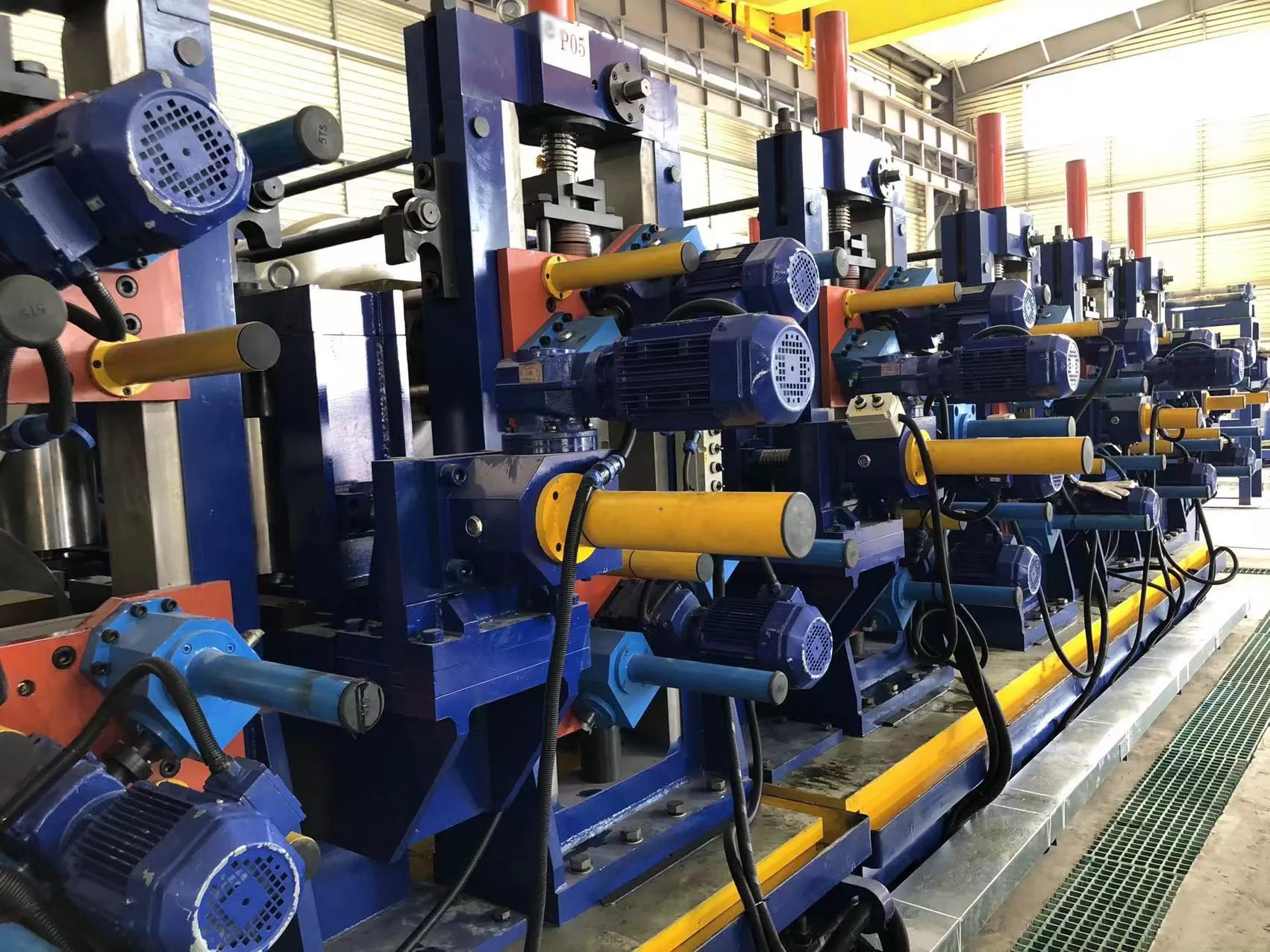
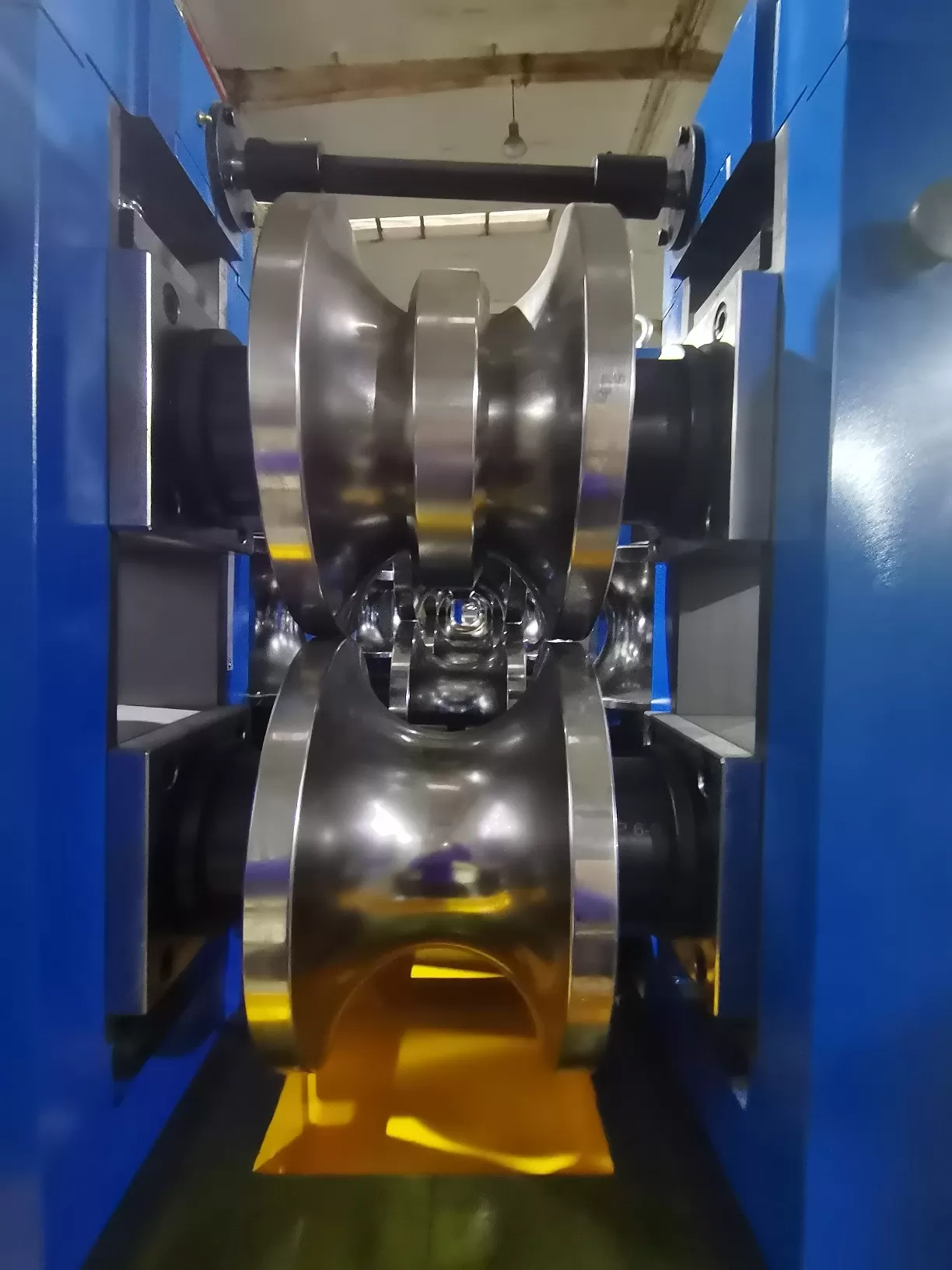
The forming section is where the flat strip is incrementally shaped into a
cylindrical form. This is achieved through a series of breakdown stands,
fin-pass stands, and seam guides. Each stand is equipped with precision-machined
roll tooling, often made from high-carbon, high-chromium tool steel (such as D2
or SKD11) and vacuum-heat-treated for maximum wear resistance.
Breakdown and Fin-Pass Stages
The breakdown stands initiate the bending process, focusing on the edges and
the center of the strip. In high-performance systems, W-forming or linear
forming techniques are used to reduce the mechanical strain on the material,
which is vital for preventing work hardening in sensitive alloys. The fin-pass
stands then refine the shape, ensuring that the edges of the strip are perfectly
aligned and parallel as they approach the welding unit. The "seam guide" roll
plays a vital role here, maintaining the precise gap required for the induction
welding process.
Addressing Springback and Internal Stress
One of the persistent challenges in tube manufacturing is material
springback, particularly when working with high-tensile steel. The roll pass
design must account for this by over-bending the material at specific stages.
Advanced pipe mill
machine configurations utilize computer-aided design (CAD) to
simulate the material flow, ensuring that the residual stresses are minimized,
which prevents the tube from twisting or bowing after the sizing process.
High-Frequency Induction Welding (HFIW) Technology
The welding unit is the technical heart of the production line.
High-frequency induction welding utilizes the "skin effect" and the "proximity
effect" of electricity. As a high-frequency current (typically between 200 kHz
and 500 kHz) passes through the induction coil, it generates an electromagnetic
field that induces a current along the edges of the tube. This current
concentrates on the surface of the edges, heating them to the forge-welding
temperature in a fraction of a second.
Solid-State Welders: Modern mills have replaced vacuum tube
welders with solid-state MOSFET or IGBT technology. These welders offer higher
energy efficiency and much more precise control over the heat-affected zone
(HAZ).
Impeder Systems: An impeder, constructed from ferrite
material, is placed inside the tube at the weld point. This directs the magnetic
flux to the edges of the strip, significantly improving the welding efficiency
and reducing the power required.
Squeeze Rolls: Once the edges reach the plastic state, the
squeeze rolls apply mechanical pressure to forge the bond. The displacement of
the molten material forms the internal and external weld beads, which are
subsequently removed by "scarfing" tools.
By maintaining a narrow HAZ and precise forge pressure, SANSO ensures that the weld
joint is as strong as, or stronger than, the base material, a prerequisite for
pressure-rated applications.
Sizing, Straightening, and Finishing Operations
After the welding and cooling stages, the tube must be brought to its final
dimensions. The sizing mill typically consists of several stands that gradually
reduce the outside diameter (OD) to the specified tolerance. This process also
improves the roundness of the tube and provides additional work hardening to
enhance the mechanical properties.
The Turk’s Head Mechanism
For straightening, the pipe mill
machine employs a "Turk’s Head" unit. This device consists of four
adjustable rolls that can apply pressure from multiple angles, allowing the
operator to correct for any lateral bow or vertical deviation. This is
particularly important for structural tubes that must meet strict straightness
standards for use in construction or automotive frames.
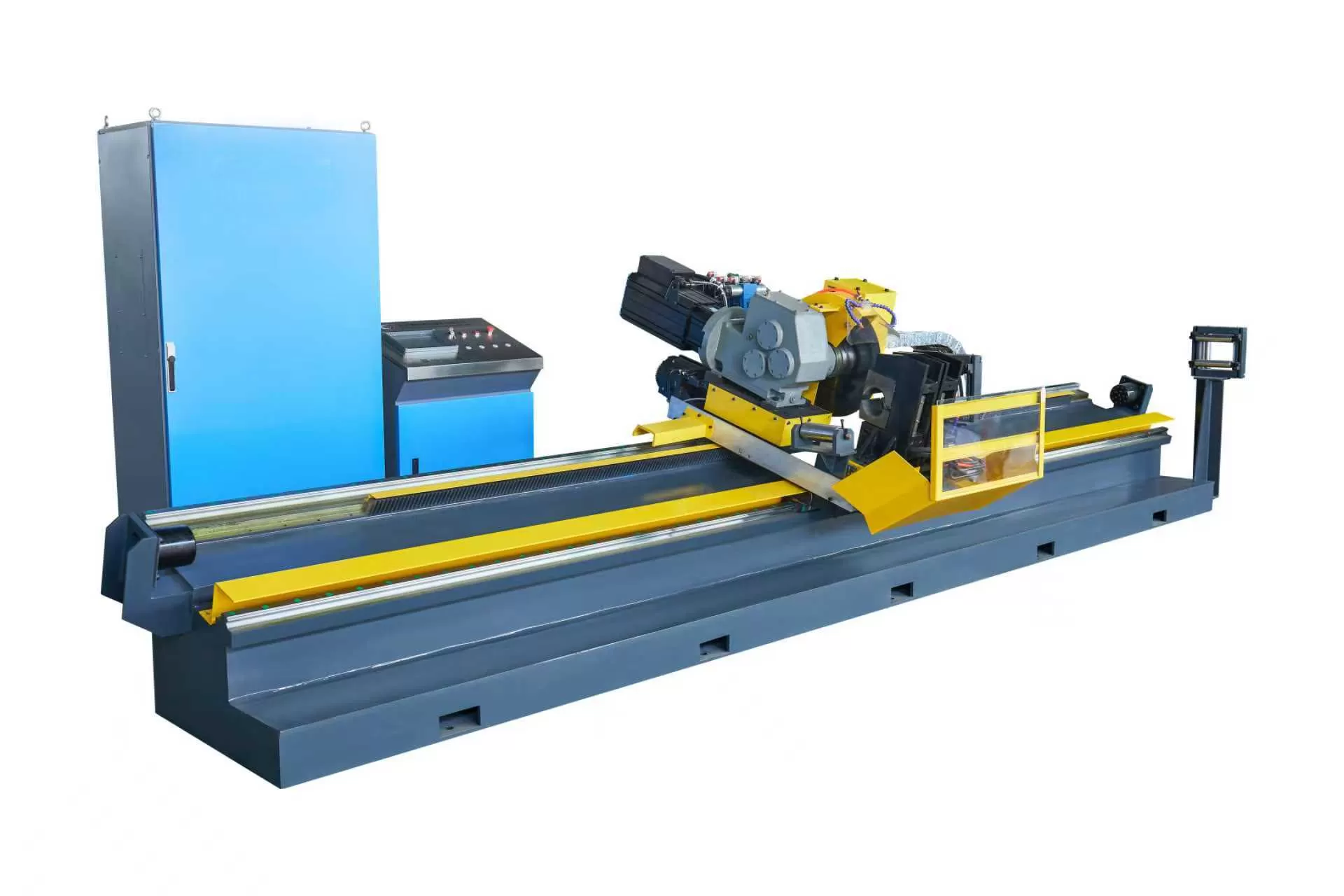
Cold Saw and Flying Saw Cutting
The final stage in the production line is the cutoff unit. While traditional
hot friction saws were common, most modern facilities have transitioned to cold
saw cutting. Cold saws utilize TCT (Tungsten Carbide Tipped) or HSS (High-Speed
Steel) blades that rotate at lower speeds with high torque. This results in a
clean, burr-free cut with a squared end, which eliminates the need for secondary
end-facing operations. The "flying" mechanism refers to the saw's ability to
synchronize its movement with the speed of the tube, allowing for continuous
cutting without stopping the production flow.
Addressing Industry Pain Points: Tooling Wear and Alignment
A frequent hurdle for tube manufacturers is the downtime associated with
tooling changes and alignment errors. Misalignment of the rolls can lead to
"marking" on the surface of the tube or an unstable weld seam. To solve this,
advanced mills now incorporate quick-change systems where entire stands can be
replaced in minutes using a "rafting" design.
Furthermore, digital alignment tools using laser-guided sensors have replaced
traditional manual string lines. These sensors provide real-time feedback to the
operator, ensuring that every stand from the uncoiler to the sizing mill is
perfectly centered on the mill's pass line. This precision is a fundamental part
of the engineering philosophy at SANSO, where the focus is on
maximizing mill uptime and reducing material waste.
Quality Assurance and Non-Destructive Testing (NDT)
To meet international standards such as API, ASTM, or DIN, the pipe mill
machine must be integrated with robust testing equipment. Quality
control is not an afterthought but a continuous part of the production
workflow.
Eddy Current Testing (ECT): This NDT method is used online
to detect surface defects and weld discontinuities. As the tube passes through a
test coil, any irregularities in the weld seam disrupt the electromagnetic
field, triggering an alarm and marking the defective area.
Hydrostatic Testing: For pipes intended for oil, gas, or
water transport, hydrostatic testing is performed to verify the pressure-holding
capacity. The tube is filled with water and pressurized to a specific level to
ensure there are no leaks or structural failures.
Ultrasonic Testing (UT): UT is used for thicker-walled
pipes to detect internal flaws that ECT might miss. It provides a deeper look
into the metallurgical integrity of the weld.
Application Scenarios Across Global Sectors
The versatility of welded tubes allows them to be used in a vast array of
sectors, each with its own set of technical requirements. In the automotive
industry, precision-sized tubes are used for seat frames, exhaust systems, and
drive shafts, where weight reduction and structural strength are paramount. In
the construction sector, hollow structural sections (HSS) produced by a
high-capacity pipe mill
machine are utilized for building columns, trusses, and
scaffolding.
The energy sector represents perhaps the most demanding application. Line
pipes for oil and gas transport must withstand extreme pressures and corrosive
environments. This requires the use of specialized alloy steels and rigorous
control over the HFIW process to ensure the weld's chemical and mechanical
consistency. By providing the machinery capable of processing these advanced
materials, equipment manufacturers enable the expansion of global energy
infrastructure.
Future Trends: Automation and Industry 4.0
The trajectory of tube mill technology is moving toward fully autonomous
operation. Industry 4.0 integration allows for the collection of data from
hundreds of sensors located throughout the line. This data is used for
predictive maintenance, where the system can identify a failing bearing or a
worn roll before it results in a breakdown. Automated roll adjustment systems
are also becoming more common, allowing the mill to reconfigure itself for
different pipe sizes with minimal human intervention.
These advancements do not just improve efficiency; they ensure a level of
repeatability that was previously impossible. When every variable—from the strip
tension to the welding frequency—is monitored and adjusted in real-time, the
resulting product achieves a level of quality that satisfies the most stringent
engineering requirements.
Engineering the Future of Tube Production
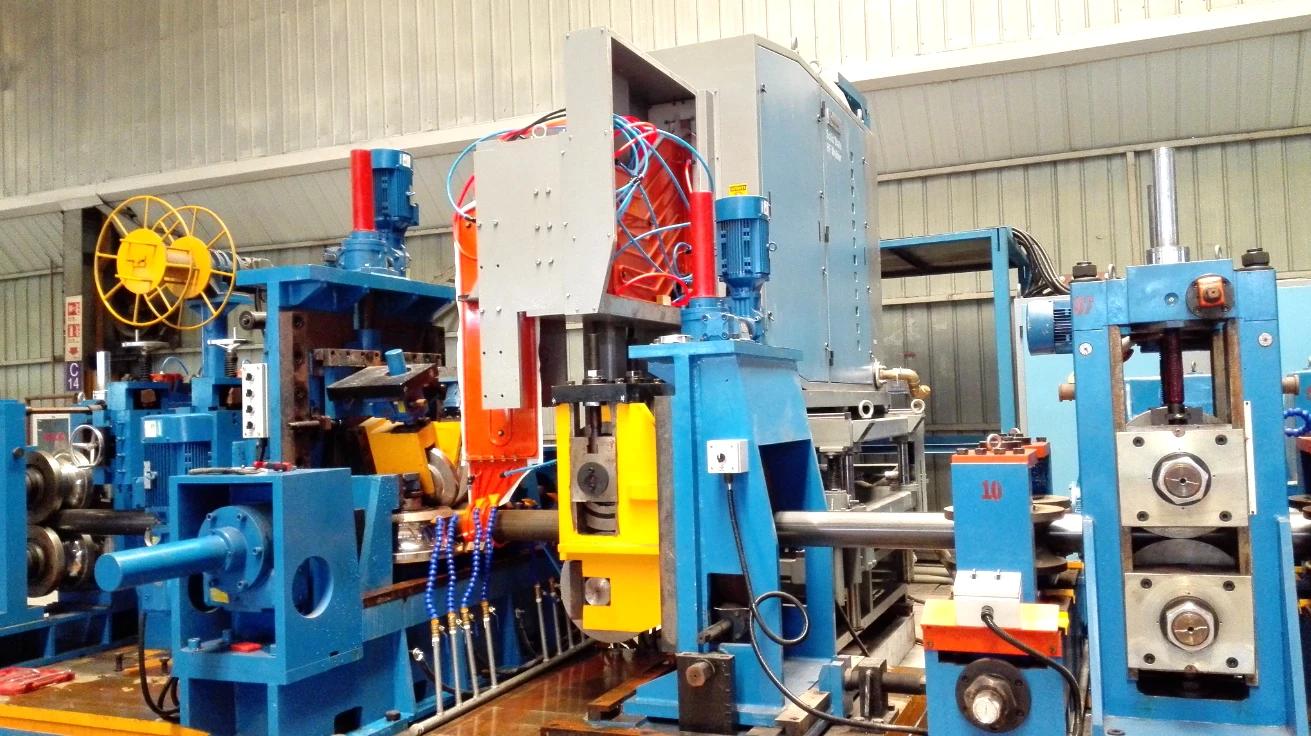
Selecting the right pipe mill
machine is a decision that impacts every aspect of a manufacturer’s
output. It is a complex balance of mechanical robustness, electronic precision,
and metallurgical expertise. By focusing on the technical nuances of roll pass
design, high-frequency welding, and automated finishing, producers can achieve
the high-speed, high-quality results required by today's industrial sectors.
As the industry continues to evolve, the integration of smarter controls and
more durable materials will remain the focus of engineering teams. Whether the
goal is to produce small-diameter decorative tubing or large-scale structural
pipes, the foundation remains the same: a stable, precise, and highly efficient
production line.
Frequently Asked Questions
Q1: What is the main difference between ERW and HFIW in pipe
production?
A1: Electric Resistance Welding (ERW) is a broad term that includes both
low-frequency and high-frequency welding. High-Frequency Induction Welding
(HFIW) specifically uses a high-frequency current (up to 500 kHz) to heat only
the edges of the strip. HFIW is more efficient and produces a much smaller
heat-affected zone than older low-frequency methods.
Q2: How does the mill handle different material grades, such as
stainless steel vs. carbon steel?
A2: Different materials require different roll materials and welding
parameters. Stainless steel requires specific roll tooling to prevent surface
contamination and usually employs TIG or Laser welding rather than HF induction,
as its electrical conductivity and thermal properties differ from carbon
steel.
Q3: Why is the "scarfing" process necessary in tube
manufacturing?
A3: During the forge welding process, excess molten metal is squeezed out
from the joint, creating a "bead" on both the inside and outside of the tube.
Scarfing uses specialized carbide tools to trim these beads while the material
is still hot, resulting in a smooth surface.
Q4: What role does the cooling section play after the welding
unit?
A4: The cooling section uses a recirculating water-coolant mixture to lower
the temperature of the weld seam and the entire tube. This stabilizes the
material's dimensions and hardness before it enters the sizing mill, preventing
thermal distortion during the final shaping.
Q5: Can one pipe mill machine produce both round and square
profiles?
A5: Yes. Square and rectangular profiles are typically produced by first
forming a round tube and then passing it through a series of "shaping" stands in
the sizing mill. By changing the roll tooling in the final stands, the round
tube is transformed into the desired polygonal shape.
Submit Your Technical Inquiry
If you are looking to optimize your production line or require a
custom-engineered solution for complex tube profiles, our technical team is
ready to assist. We provide in-depth consultations on mill configuration, roll
pass design, and high-frequency welding optimization. Contact us today to
discuss your project requirements and receive a comprehensive technical proposal
tailored to your manufacturing goals.