In high-frequency welded pipe manufacturing and high-speed roll forming
operations, steel coil preparation sets the baseline for overall processing
speed and continuous operation. The decoiler machine price varies across the
global equipment market, spanning from basic manual-friction uncoilers to fully
integrated hydraulic systems equipped with automatic loop monitoring, motorized
peeler plates, and dynamic loading cars. A clear evaluation of equipment
expenditure requires analyzing structural mass, expansion mechanisms, drive
systems, and strip feeding automation. Selecting the proper coil uncoiling
infrastructure directly impacts mill line uptime, strip edge integrity, and
long-term operating productivity.
System pricing correlates directly with physical capacity and structural
engineering standards. Machinery built to process heavy gauge structural steel
demands reinforced frame architecture, larger shaft diameters, and high-torque
driving mechanisms.
Coil Weight Capacity: Units engineered for 3-ton to 5-ton
coils require significantly less structural steel, smaller bearing housing
assemblies, and simpler hydraulic circuits than heavy-duty 20-ton or 30-ton
processing stations. As load limits increase, frame yield strength and spindle
forging dimensions rise exponentially.
Strip Thickness and Width Capabilities: Processing thick
hot-rolled strip (exceeding 6mm) requires motorized hold-down arms and
heavy-duty peeler tables to overcome strip springback. Equipment designed for
wider and thicker materials commands a higher decoiler machine price due to
additional hydraulic actuation force and heavy frame construction.
Mandrel Expansion Mechanisms: Manual wedge expansion
systems remain low-cost but require manual operator effort and cause extended
changeover delays. Hydraulic expansion systems utilize internal push-rod
cylinders, maintaining consistent inner diameter clamping tension across
variable coil inner diameters.
Drive and Braking Configuration: Passive decoilers utilize
adjustable pneumatic or hydraulic friction disc brakes to control back-tension.
Active driven units employ AC motor drives with frequency converters or
hydraulic motor systems to synchronize strip payout with downstream mill
acceleration.
Heavy machinery manufacturer SANSO builds uncoiling systems utilizing
high-grade forged alloy steel shafts (such as 42CrMo) that undergo precise
dynamic balancing and ultrasonic flaw testing. These structural measures
increase structural reliability during continuous high-tonnage operation,
shifting initial cost parameters while reducing total machine wear.
Structural Components and Machine Cost Correlations
Understanding equipment pricing involves evaluating individual mechanical
sub-assemblies and automated options integrated into the uncoiling platform.
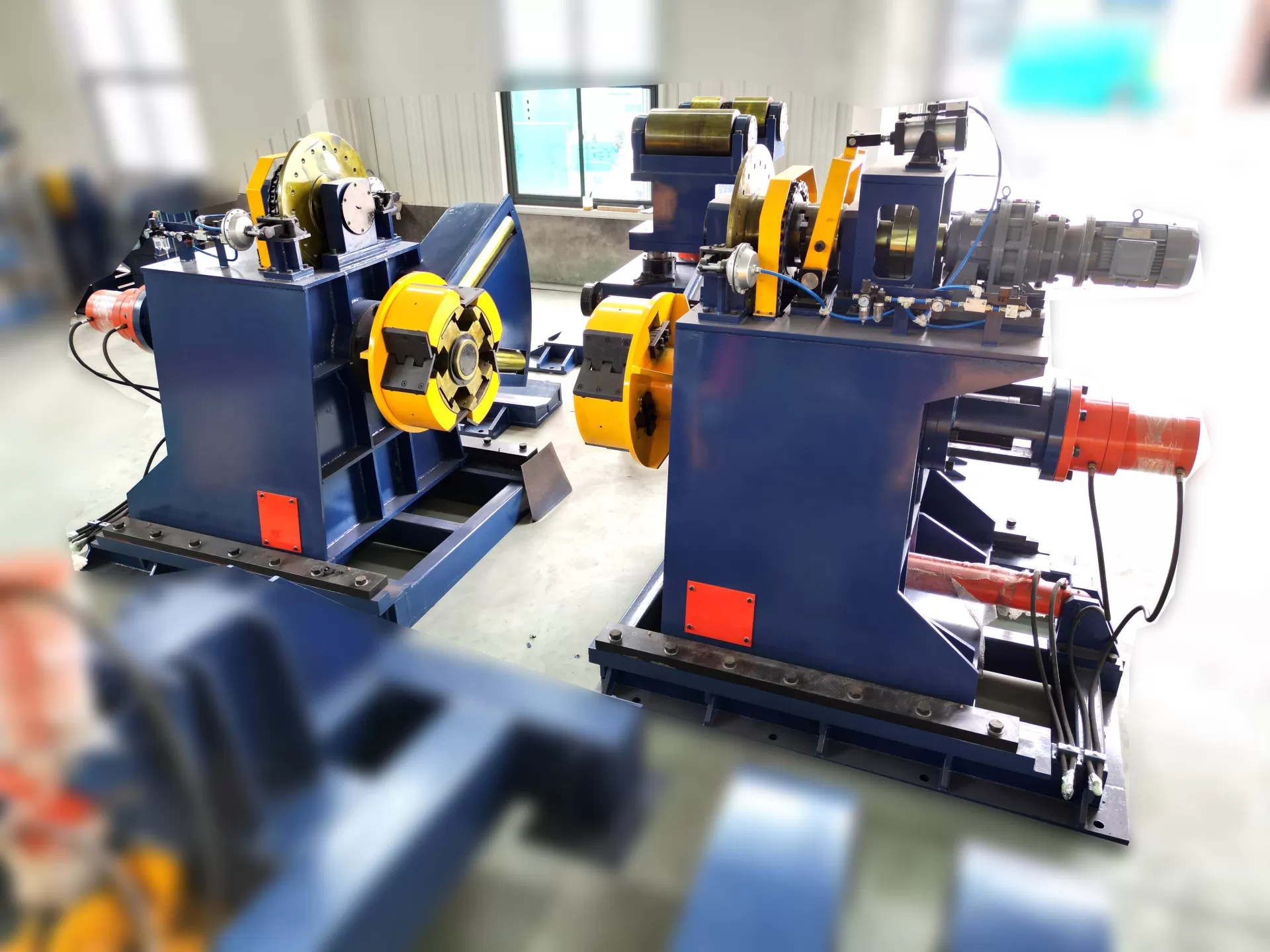
1. Single-Mandrel vs. Double-Cone or Double-Swivel Structures
Single-head cantilevered mandrels are standard for light to medium-duty pipe
production lines. Double-cone decoilers handle extreme coil weights exceeding 25
tons, supporting the material from both sides to eliminate spindle deflection.
Double-swivel decoilers feature two opposite arms mounted on a rotating base
plate, allowing operators to load a second coil while the active coil processes
into the accumulator or tube mill. The structural complexity and double
hydraulic drive system of double-swivel configurations naturally result in a
higher initial decoiler machine price compared to single-head designs.
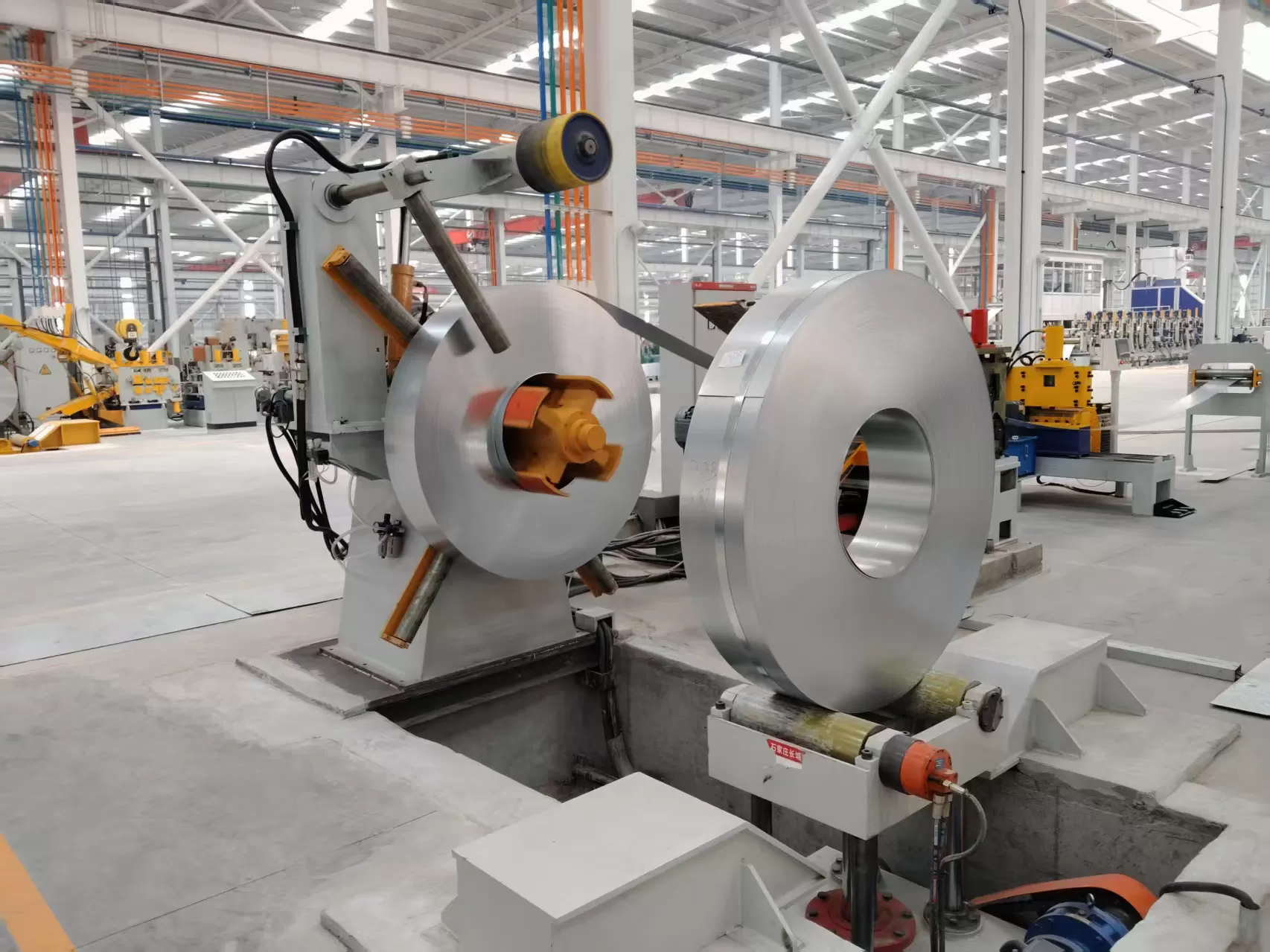
2. Integrated Loading Coil Cars
Manual loading via overhead crane presents operational delays and elevated
safety hazards during coil alignment. An automated hydraulic coil car travels
along floor tracks, elevating and positioning the steel coil onto the expanded
mandrel within minutes. Integrating a coil car adds hydraulic control valves,
travel drives, and precision position sensors, raising capital investment while
reducing line downtime by up to 70 percent during material changes.
3. Hydraulic Snubber Arms and Peeler Assemblies
High-yield strength steel coils contain heavy residual stress, causing outer
wraps to uncoil aggressively once bindings are severed. A top-mounted hydraulic
snubber arm fitted with a motorized rubber-coated roller holds the outer coil
lap securely. Coupled with a hydraulic peeler blade, this mechanism guides the
leading edge straight into the flattener or entry leveler. These automated entry
components represent a substantial portion of the overall assembly
valuation.
Matching Mechanical Capabilities to Tube Mill Line Speeds
Line speed synchronization plays a decisive role in defining control
architecture. Continuous tube mill lines running at speeds from 60 to 120 meters
per minute cannot rely on simple start-stop limit switches. Advanced
installations utilize ultrasonic loop sensors, optical laser encoders, or
dynamic dancer arms that transmit continuous position feedback to the main drive
controller.
When the downstream strip accumulator signals reduced storage volume, the
decoiler drive accelerates smoothly without over-running or snatching the strip.
The addition of proportional hydraulic valves, variable frequency drives, and
PLC integration influences the base decoiler machine price, but prevents
mechanical shock loads on the drive gearbox and eliminates surface scratching on
polished or galvanized materials.
Total Ownership Expenditure vs. Initial Equipment Price
Evaluating machinery procurement exclusively through baseline capital outlays
often masks real operational financial impacts. Long-term operating efficiency
depends on maintenance cycles, energy consumption, and structural durability
under continuous load conditions.
Frame Rigidness and Bearing Spacing: Low-cost machinery
often uses lightweight welded channels and insufficient bearing housing spacing.
Over time, heavy coil mass causes spindle bending, leading to uneven hydraulic
seal wear, oil leaks, and premature main bearing failure.
Hydraulic System Efficiency: High-grade hydraulic power
units utilize variable displacement pumps and air-cooled heat exchangers. These
components maintain stable oil viscosity during continuous shifts, preventing
pump cavitation and valve sticking common in basic power pack setups.
Changeover Efficiency and Labor Utilization: Automated
mandrel expansion, integrated coil positioning, and motorized peeler operation
reduce coil changeover time from 15-20 minutes down to 3-5 minutes. Across
multi-shift factory operations, this time savings adds substantial production
capacity over the service life of the machine.
Strategic Budget Allocation Across Production Tiers
Selecting the appropriate machine configuration requires aligning equipment
investment with output targets and sheet metal specifications.
For small-diameter pipe production running thin-wall carbon steel at moderate
speeds, a mechanical cantilever uncoiler with pneumatic brake back-tension
provides a cost-effective solution. These entry-level configurations maintain a
low decoiler machine price while meeting output demands.
For high-output industrial pipe mills processing heavy-wall structural
tubing, dynamic hydraulic expansion, powered hold-down arms, dual-swivel
capabilities, and dynamic loop speed control become mandatory. Equipment
constructed by SANSO incorporates modular frame designs, allowing tube
manufacturers to order base configurations initially and expand with automated
loading systems as production volumes grow.
Frequently Asked Questions
Q1: What is the main driver behind variations in decoiler machine
price?
A1: The primary drivers include coil weight capacity, steel
thickness, mandrel expansion mechanism (manual vs. hydraulic), drive system
sophistication (passive braking vs. dynamic motor drive), and integrated
automation features such as hydraulic coil loading cars and motorized peeler
tables.
Q2: Is a hydraulic coil loading car mandatory for all uncoiler
installations?
A2: A coil car is not mandatory for light coils under
3 tons. However, for coil weights exceeding 5 tons, an automated hydraulic coil
car reduces crane dependency, speeds up coil alignment, protects the main
mandrel shaft from impact damage, and improves operator safety during loading
cycles.
Q3: How does processing high-yield strength steel impact decoiler
requirements?
A3: High-yield material requires stronger mandrel
clamping pressure to prevent internal coil slippage, along with heavy-duty
hydraulic snubber arms and peeler blades to control springback during outer lap
unbinding. These reinforced structural requirements increase the overall
machinery specification requirements.
Q4: What advantage does a double-swivel decoiler offer over a
single-head unit?
A4: A double-swivel decoiler allows operators to
load and align a second coil on the reverse mandrel while the current coil feeds
into the production line. Once the active coil finishes, the unit rotates 180
degrees, bringing the new coil into position almost instantly to minimize mill
downtime.
Q5: How does automatic tension control prevent strip surface
damage?
A5: Automatic tension control utilizes proportional
hydraulic valves or VFD-driven dynamic braking to maintain consistent line pull
regardless of changes in outer coil diameter. This prevents sudden jerks,
material slackness, and surface rubbing against guide rollers or floor plates
during acceleration and deceleration phases.
Request a Customized Machine Quotation
Selecting the right uncoiling equipment requires analyzing your specific
strip dimensions, yield strengths, line velocity targets, and operational floor
layout. The engineering team at SANSO provides tailored baseline analysis and
customized structural proposals matching your exact manufacturing requirements.
Send an inquiry today with your complete steel coil specifications to receive an
itemized machine configuration and formal price quotation.