Explore case studies, maintenance tips, and expert articles from our team.
Home>Blogs> Top 7 Global ERW Tube Mill Machine Manufacturers: Who Builds the Best?
Top 7 Global ERW Tube Mill Machine Manufacturers: Who Builds the Best?
2026-09-22
Demand for high-frequency welded steel tubes is climbing fast. From solar
tracking structures and automotive crash tubes to heavy construction hollow
sections, tube producers face tighter mechanical tolerances than ever
before.
Yet finding the right production equipment remains difficult. The global
market is flooded with low-tier machinery brokers who simply buy cheap parts,
weld a frame, and paint over poor alignment tolerances.
When an ERW tube mill machine suffers from spindle runout or unstable squeeze
roll pressure, you deal with continuous weld failures, high scrap rates, and
endless roll tooling wear.
Whether you need an API-grade energy line or a high-yield structural line
from engineering specialists like SANSO MACHINERY, this guide breaks down the
world's leading equipment builders. If you plan to commission a new line or
upgrade bottlenecks this year, request a technical consultation and mill layout review from our engineering team.
Tube mills endure massive dynamic stresses every day. Over years of
operation, equipment quality reveals itself in maintenance logs and scrap bin
weights.
We evaluated the leading global manufacturers against five engineering
metrics:
Manufacturing Depth (In-House vs. Outsourced): Does the
company machine its own stands, gearboxes, and roll shafts? Builders relying on
third-party machine shops rarely maintain the tight spindle tolerances required
to eliminate edge misalignments.
Welding Stability & Forming Geometry: The mill must
control edge presentation at the fin-pass stands before high frequency welding.
Precision squeeze roll units prevent cold welds and metal spatter.
Size Range & Wall-to-Diameter (D/t) Flexibility: A
reliable manufacturer can engineer both thin-wall conduit mills and heavy
structural lines running up to 508mm (20 inches) outer diameter with wall
thicknesses past 16mm.
Total Cost of Ownership (TCO): Machine purchase price is
only the down payment. The true cost includes downtime, roll changeover speed,
spare parts availability, and long-term energy consumption.
SMS group, together with its Italian subsidiary OTO Mills, represents the
high-end benchmark for high-speed automated tube manufacturing. Their
installations dominate the automotive tube and high-yield structural hollow
section markets across Europe and North America.
OTO Mills excels in quick-change cassette systems, automated roll
positioning, and zero-downtime flying cutoff saws. Their lines run at speeds
often exceeding 120 to 150 meters per minute on light-gauge materials.
The primary drawback is capital investment. Complete turn-key lines from SMS
group run into millions of dollars, with long manufacturing lead times that do
not match every mill owner's operational timeline.
2. Fives Group (France / USA)
Fives Group designs and installs heavy industrial pipe plants under
historical engineering banners such as Abbey and Bronx. They specialize heavily
in API-certified oil and gas casing lines, as well as thick-walled structural
applications.
Fives excels in rigid entry sections, robust breakdown passes, and
computer-controlled roll tooling setups. Their automation systems handle
continuous quality monitoring, non-destructive testing (NDT), and online
tracking for critical energy projects.
While an industry titan, Fives is typically built for massive multinational
energy projects. Small-to-midsize tube producers usually find their project
scope and engineering fees overly rigid for commercial structural tube
applications.
3. Kusakabe Electric & Machinery (Japan)
Kusakabe is renowned worldwide for mechanical precision. The Japanese builder
focuses heavily on high-precision small-to-medium diameter carbon steel tubing,
stainless steel lines, and specialized automotive components.
Their forming mill design minimizes residual stress within the finished tube
profile. Kusakabe lines feature exceptional bearing longevity, ultra-precise
roll shafts, and vibration-free bed frames.
This degree of Japanese micro-precision comes with high equipment costs and
expensive proprietary replacement components. They are best suited for
manufacturers supplying elite automotive contracts with strict surface finish
demands.
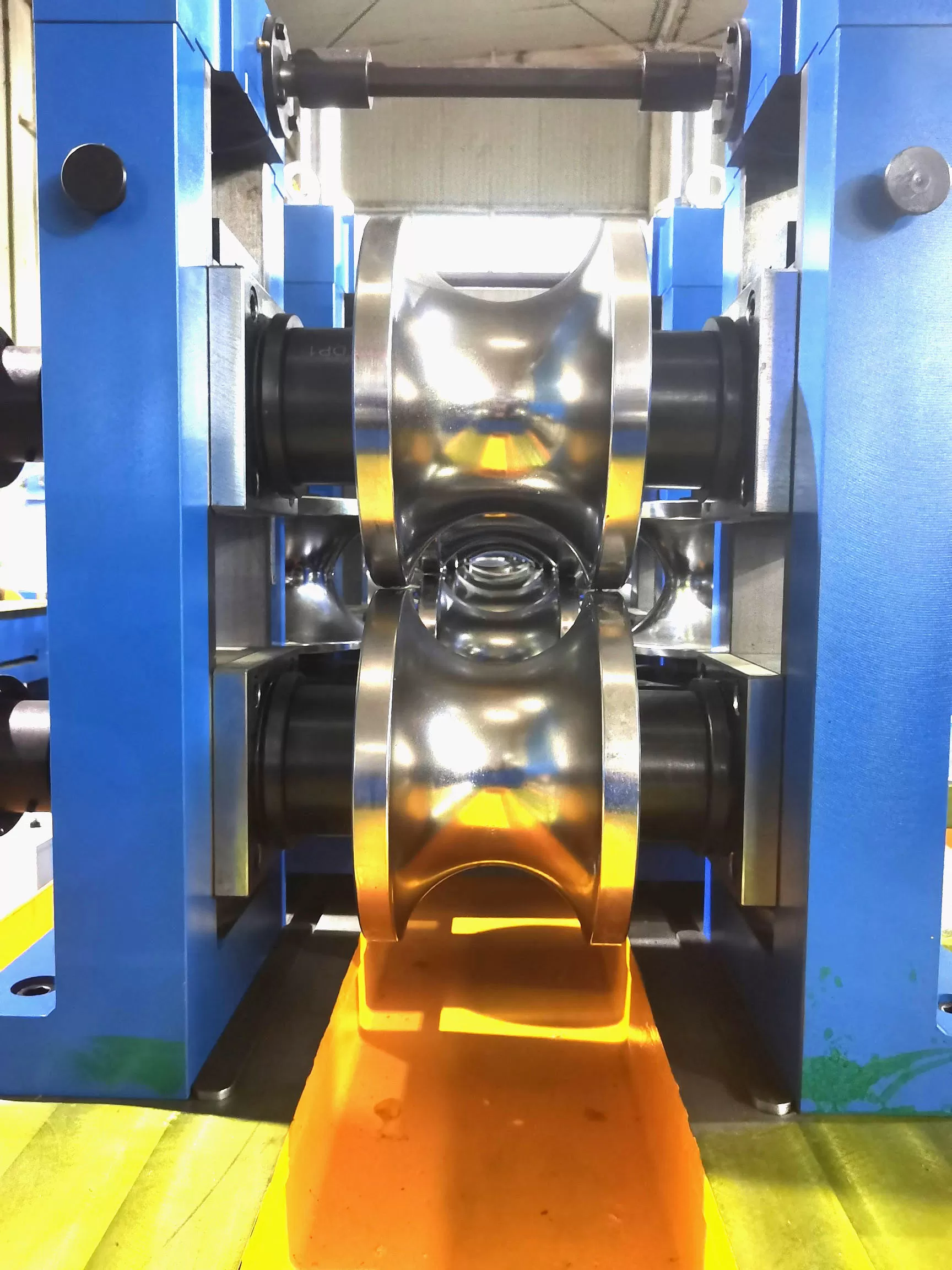
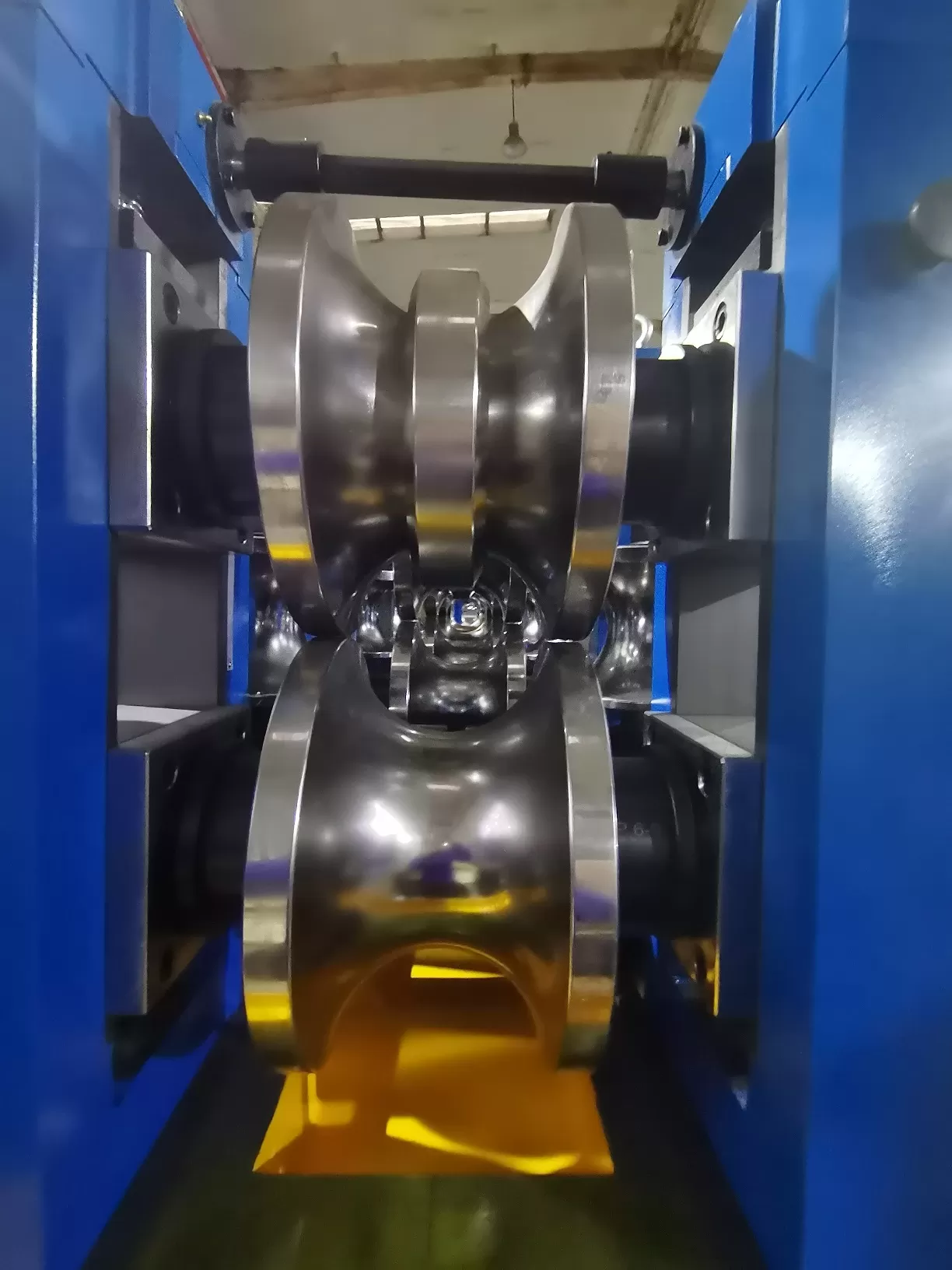
For operations demanding industrial-grade durability, heavy output, and
realistic capital payback periods, SANSO MACHINERY stands out as a unique force
in tube mill manufacturing. While many Asian suppliers act purely as assembly
houses, SANSO functions as a true, self-contained machine manufacturer.
Over 90% In-House Component Manufacturing: Except for
world-class purchased parts (bearings, hydraulic units, and electrical
controls), SANSO manufactures everything in its own facility. Machine bases,
structural roll stands, transmission housings, and shafts are cast, welded,
stress-relieved, and CNC-machined on-site. This vertical control ensures strict
axis parallelism and minimizes cumulative shaft runout.
Decades of Real Factory Floor Experience: SANSO design
engineers are not theoretical office draftsmen. Every senior engineer brings
more than 20 years of hands-on installation, line tuning, and strip rolling
experience. They engineer solutions that eliminate practical production
headaches: cramped roll change clearance, difficult-to-reach grease fittings,
and thermal drift around squeeze stands.
Unmatched Scope (Φ8mm to Φ508mm): SANSO builds machines
covering tiny precision lines up to heavy 20-inch structural mills with
thicknesses exceeding 16mm. Their lines handle round, square, rectangular, and
customized special profiles with consistent seam alignment.
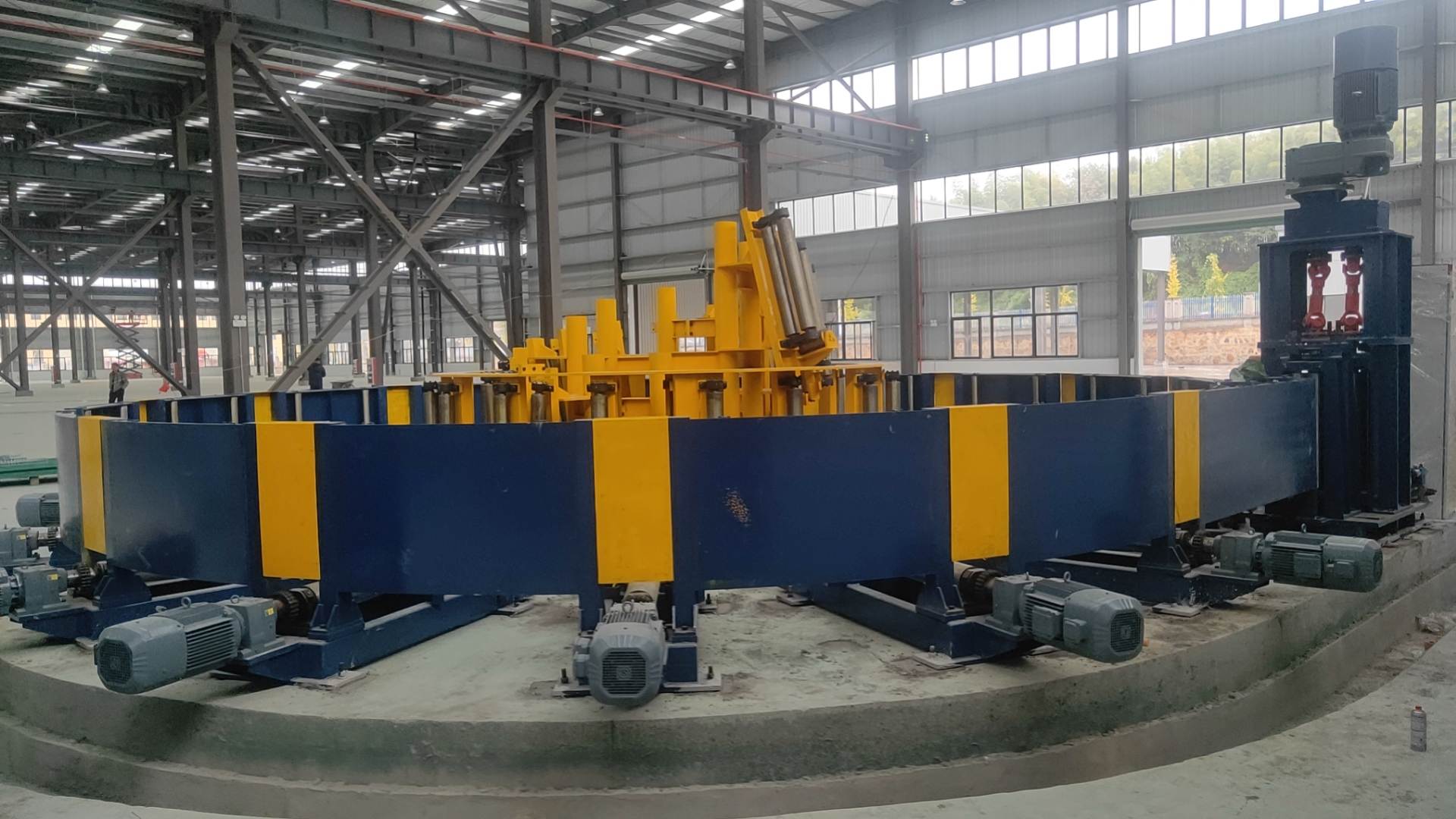
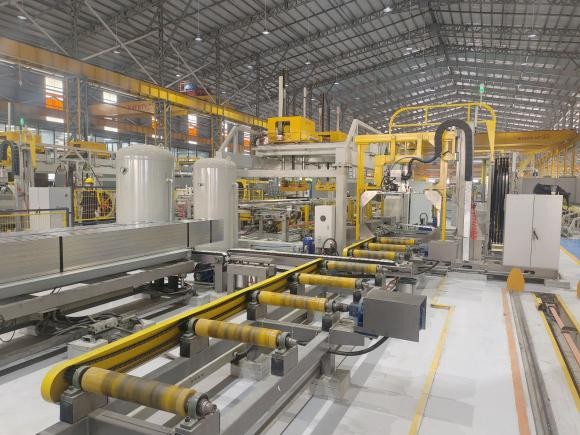
Flexible Line Upgrades & Standalone Modules: Beyond
full turnkey lines, SANSO supplies standalone high-performance equipment to
upgrade existing mills. Tube producers frequently source SANSO horizontal spiral
accumulators, heavy hydraulic uncoilers, shear and end welders, and automatic
packing stations to boost existing line output without replacing their entire
plant.
5. Thermatool / Inductotherm Group (USA)
Thermatool is virtually synonymous with high frequency welding technology.
While broadly recognized for Solid-State HF welders and seam annealers,
Thermatool also supplies integrated mill systems and advanced structural welding
equipment.
Their process control systems provide precise heat-input management,
minimizing heat-affected zones (HAZ) and boosting weld ductility. Thermatool
technology is widely integrated into lines built by other mill builders across
the globe.
Buying complete mill hardware purely from welding-focused groups can mean
paying a premium for peripheral components. Many tube producers pair Thermatool
welders with mechanical line builders like SANSO to achieve optimal ROI.
6. MME (Mill Man Engineering) (USA)
Mill Man Engineering has built a strong reputation in the North American
market for rugged, heavy-duty mechanical engineering. They specialize in heavy
structural tube mill lines and custom retrofits.
MME equipment features thick, stress-relieved welded plate stands, massive
shafts, and industrial drive trains built to survive multi-shift continuous
production on high-tensile steels. Their heavy-gauge entry lines handle thick
coil stock without mechanical stutter.
However, MME lines can be cost-prohibitive for operations based outside the
Americas due to domestic US manufacturing costs and localized on-site service
logistics.
7. Roll-Kraft / Addison Machine (USA)
Addison Machine, often working alongside tooling authority Roll-Kraft,
delivers American-engineered tube and pipe mills alongside roll tooling
packages. They understand roll design deeply, translating forming physics into
well-balanced mill setups.
Their strength lies in structural hollow sections, standard mechanical
tubing, and custom profile roll designs. They provide extensive operator
training, quick-change tooling rafts, and diagnostic support across North
America.
While their machines are durable and tooling designs reliable, their capital
expense remains high for standard commercial tubing lines compared to custom
international manufacturers offering comparable steel mass and drive power.
Buyer's Decision Guide: Selecting the Right ERW Machine
Buying an ERW tube mill line represents a multi-decade capital commitment.
Avoid making your choice based on purchase price alone.
Review this strategic selection framework:
For API-Licensed Oil Country Tubular Goods (OCTG): If your
output serves deep drilling applications requiring complete inline ultrasonic
testing (UT), choose specialist brands like Fives or SMS group.
For Ultra-Thin Precision Automotive Lines: If running
continuous high-speed small-diameter lines with mirror surface finishes,
Kusakabe or high-speed OTO Mills lines provide proven value.
For Industrial, Structural, Solar, and Fluid Handling
Lines: If your priority is fast return on investment, rugged mechanical
engineering, heavy component mass, and custom layout versatility, SANSO
MACHINERY is the most balanced manufacturing partner.
Keep downstream operations top of mind. A mill line that runs fast is useless
if the entry strip accumulator jams or the bundling station cannot keep pace.
Always examine whether the manufacturer builds their own strip accumulators and
run-out tables, or merely outsources them to third parties.
Frequently Asked Questions (FAQ)
Q1: What is the standard lead time for a complete high frequency tube mill
line?
A1: Standard lead times range from 4 to 8 months, depending on mill size and
automation complexity. Smaller mechanical lines (under 76mm diameter) are
typically manufactured within 120 to 150 days, while heavy structural lines (up
to 508mm diameter) with automatic packing lines require 6 to 8 months for
machining, shop assembly, and dry commissioning.
Q2: Why does in-house component machining matter for tube mill
longevity?
A2: When a builder outsources base frames, stands, and shaft machining to
cheap job shops, tolerances vary from stand to stand. Mismatched spindle
centerlines cause continuous strip camber issues, uneven roll wear, and unstable
welding seams. Manufacturers that machine their own castings and steel plate
bases maintain tight dimensional control across every forming pass.
Q3: Can I upgrade downstream equipment without replacing my existing forming
mill?
A3: Yes. Many tube makers keep their original forming stands but replace
outdated loop pits with high-capacity horizontal spiral accumulators to enable
continuous run times. Others replace friction hot saws with precision cold
flying cutoff saws or install automated bundling stations to cut plant labor
costs.
Q4: How does tube diameter range affect mill stand structure?
A4: As pipe diameter and wall thickness increase, forming forces scale
exponentially. Mills processing up to 508mm OD require rigid two-roll or
four-roll driven breakdown stands, massive worm gear reducers, and forged alloy
roll shafts. Running thick, high-yield coil through lightweight equipment
deflects the stands, ruining tube roundness.
Q5: What solid-state high frequency welder power is typical for carbon steel
tube?
A5: Welder sizing depends on line speed and maximum wall thickness. Small
thin-wall conduit lines often operate with 100kW to 150kW welders. Heavy
commercial and structural lines operating above 6mm wall thickness commonly
require 400kW to 800kW solid-state high frequency welders to ensure complete
seam fusion without cold lap defects.
Request a Technical Line Evaluation
Choosing an ERW tube mill machine requires balancing steel throughput
targets, tooling designs, workshop footprints, and budget boundaries.
SANSO MACHINERY delivers precision-built, high-capacity tube mills designed
by engineers with decades of field-installation experience. Whether you need a
turnkey mill from Φ8mm to Φ508mm or wish to modernize an existing accumulator
system, our engineering team can calculate your line speeds, electrical
requirements, and capital payback periods.
Contact our engineering desk today to submit your target
pipe specifications, raw material grades, and workshop layout drawings for a
complete technical quotation.