Explore case studies, maintenance tips, and expert articles from our team.
Home>Blogs> Flying Cold Saw vs. Friction Saw: Which is Right for Your Tube Mill?
Flying Cold Saw vs. Friction Saw: Which is Right for Your Tube Mill?
2026-09-30
High-speed tube manufacturing leaves zero room for bottlenecks at the cutoff
station. Downstream clients in the automotive, precision furniture, and
structural sectors demand strict cut tolerances, clean faces, and minimal edge
damage.
If your exit table delivers bent pipe ends or excessive flash, your
profitability drops fast. Mill managers inevitably face a crucial engineering
decision: stick with traditional friction cutting, or invest in an automated
flying cold saw system.
At SANSO, we engineer custom tube mill cutting machine lines designed to
solve this exact dilemma. While hot friction saws offer cheap entry prices,
high-performance cold saws alter long-term mill economics. Here is an
engineering breakdown to help you make the right investment for your factory
floor.
Core Mechanical Principles: How Physics Dictates Cut Quality
The operational difference between these two systems comes down to plastic
thermal displacement versus chip-forming mechanical milling. This fundamental
physics gap changes everything about your finished pipe.
The Friction Saw: High-Speed Thermal Melting
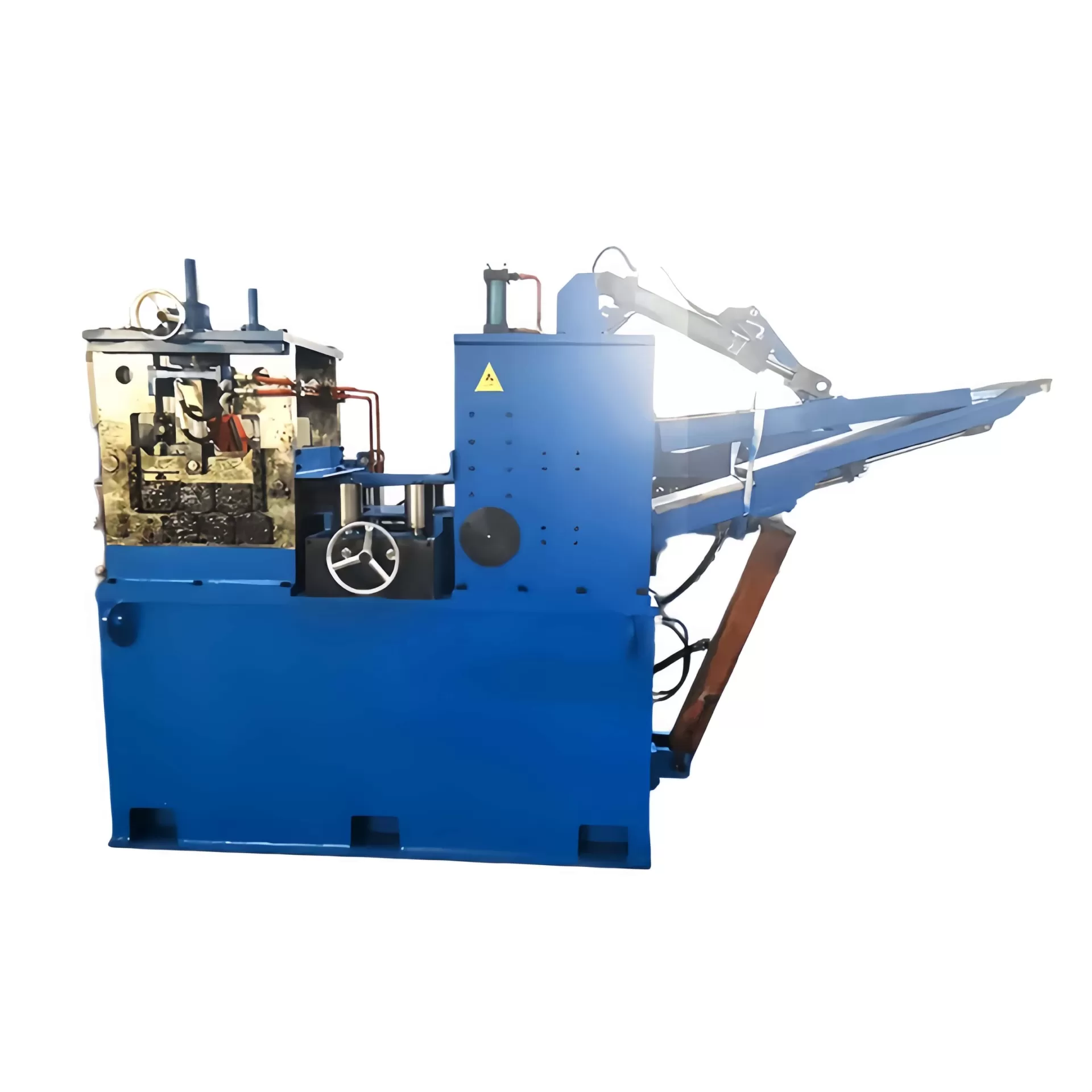
A friction saw does not slice metal like a standard blade. Instead, it turns
a high-carbon alloy disc at massive speeds, typically between 2,000 and 3,000
RPM. Peripheral blade speeds often exceed 80 to 100 meters per second.
The blade contacts the traveling tube and relies on extreme friction to heat
the steel to a molten state (above 1,200°C). The disc literally blasts the
softened metal out of the kerf. This creates intense thermal stress, a wide
Heat-Affected Zone (HAZ), distinctive blue discoloration along the cut edge, and
large hanging burrs.
The Flying Cold Saw: Low-Speed, High-Torque Precision Milling
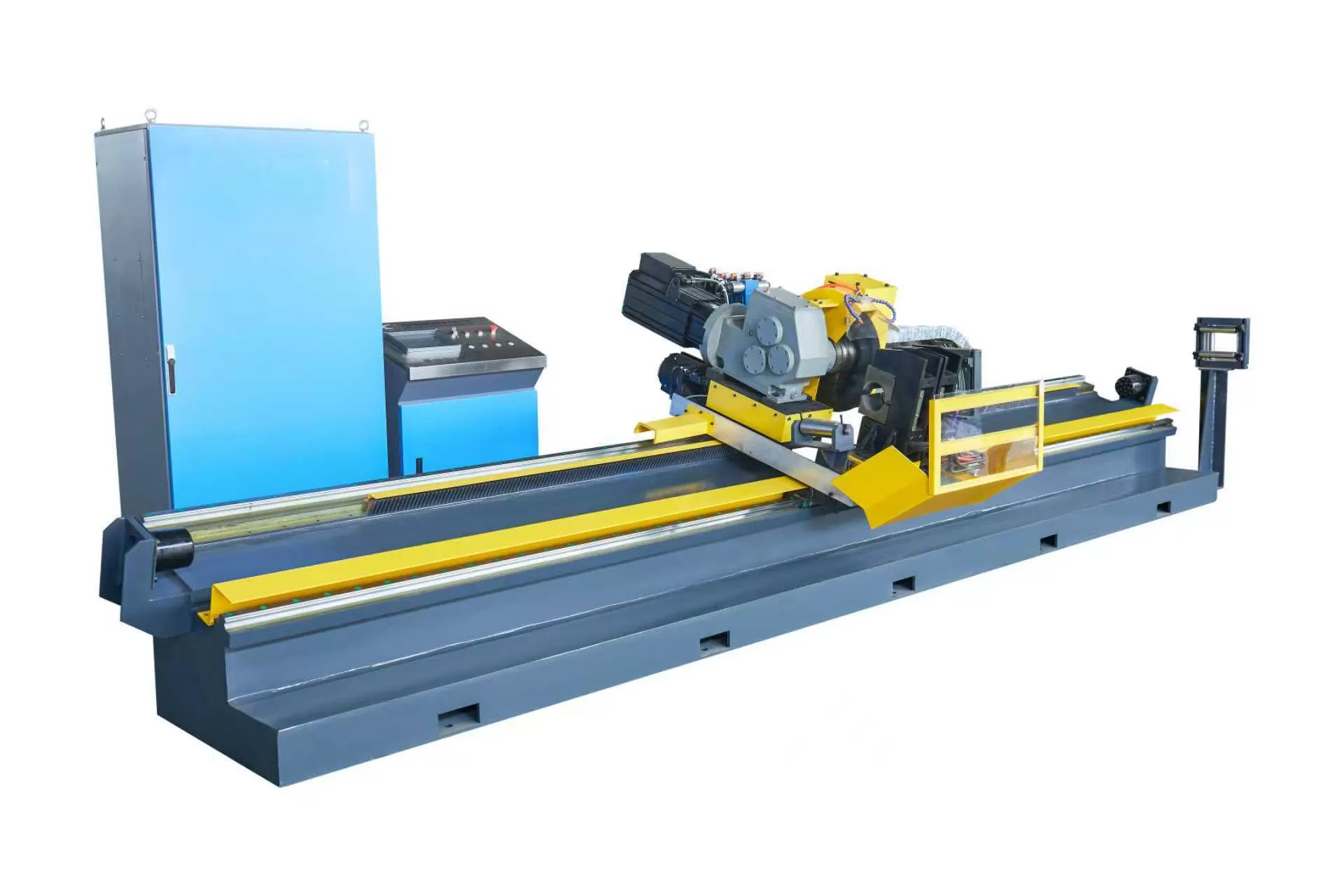
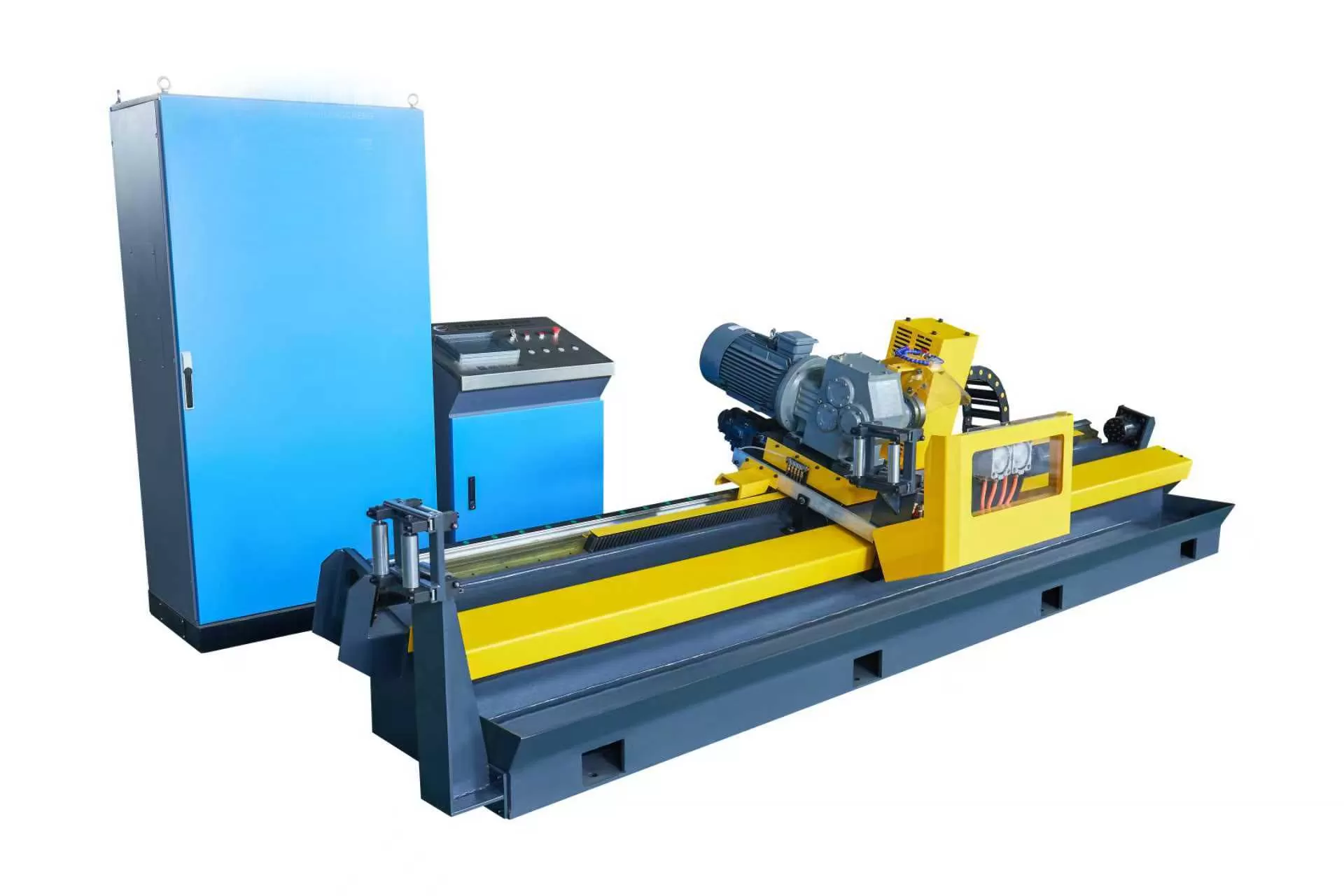
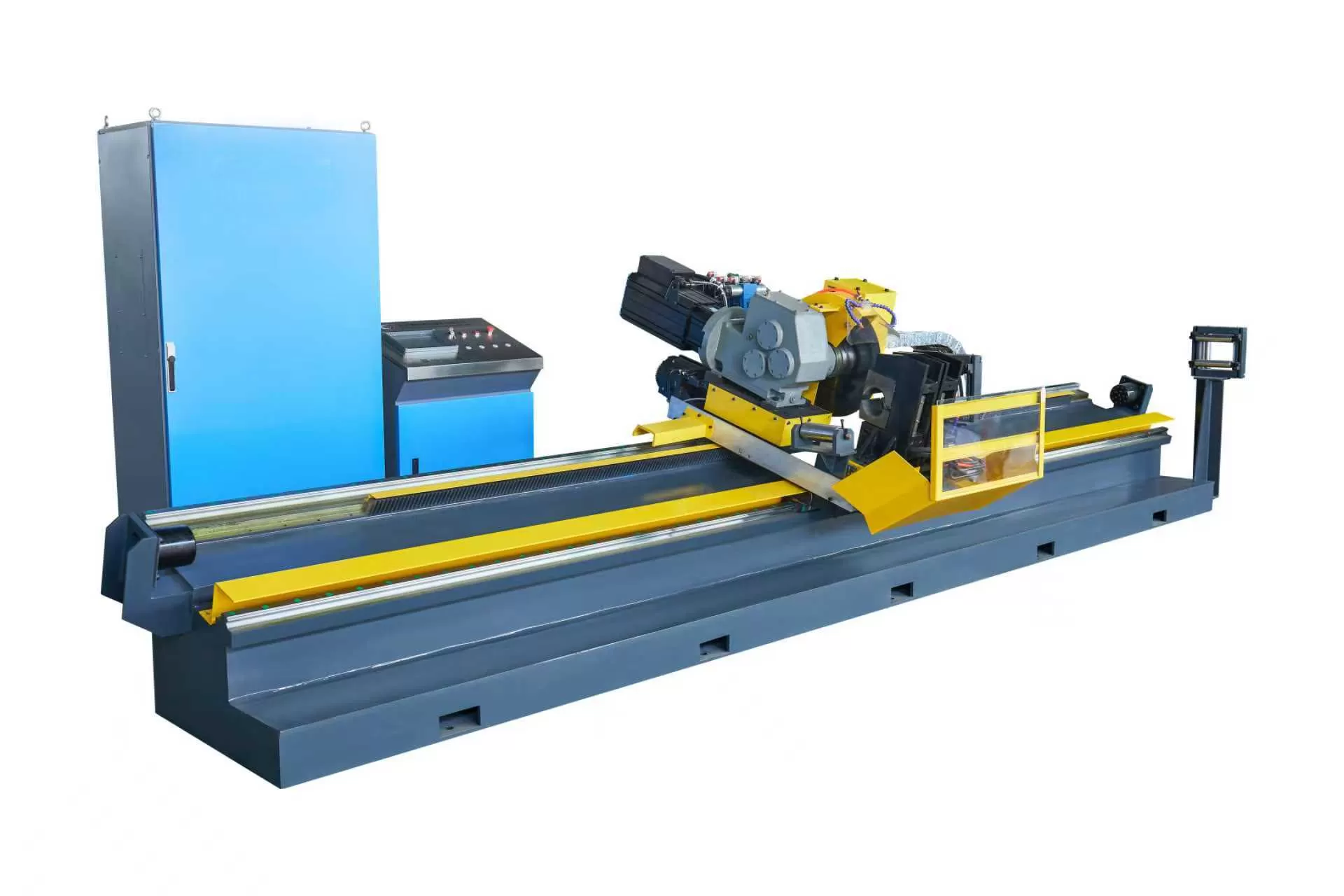
A flying cold saw cuts pipe through true mechanical machining. The blade
spins at a controlled, low rotational speed (usually 50 to 250 RPM) matched with
high drive torque. It uses either High-Speed Steel (HSS) or Tungsten Carbide
Tipped (T.C.T) circular saw blades.
The saw carriage synchronizes electronically with the continuous tube through
advanced servo motors and rack-and-pinion drives. Individual teeth mill through
the wall thickness like a milling cutter, channeling frictional heat directly
into the evacuated chips.
The tube and the blade stay cool to the touch. The result is a clean,
burr-free tube cutting process that preserves the microcrystalline structure of
your steel, keeps edges square, and protects nominal tube geometry.
Direct Head-to-Head Comparison: The Core Metrics
1. Cut Edge Quality and Secondary Processing Costs
End quality directly dictates how many workers you need downstream.
Friction Saw: Produces heavy outer and inner flash. If you
sell basic conduit or low-end scaffolding, this might pass. For premium tubing,
you must route bundles to dedicated off-line deburring machines and end-facing
tables. That adds floor space, handling steps, and labor overhead.
Cold Saw: Cuts perpendicular within tight tolerances
(±1.0mm or better). Inner and outer burrs are virtually non-existent. You bypass
chamfering lines and deliver directly to the packing table or straight to
stamping, hydroforming, and robotic welding lines.
2. Initial Capital Expenditure (CapEx) vs. Operating Costs (OpEx)
Look beyond the machine invoice to see the true cost of ownership.
CapEx: Friction saws are mechanically simple. They use bare
steel discs, basic pneumatic or hydraulic tracking, and standard AC induction
motors. Initial purchase costs remain low. A T.C.T cold saw demands higher
up-front capital due to dynamic servo-tracking controls, rigid cast carriages,
and automated backlash compensation systems.
OpEx: Friction blades wear quickly, often needing
replacement or re-toothing every few shifts. High electrical consumption from
75kW–130kW motors pushes utility bills high. In contrast, T.C.T blades cost more
per unit, but you can resharpen each blade 15 to 30 times. Cold saws use
smaller, high-torque servo drives that reduce net kilowatt-hours per ton
produced.
3. Plant Environment, Safety, and Noise Regulations (EHS)
Environmental standards force plants to update outdated equipment.
Friction Saws: Blast incandescent sparks across the mill,
throw fine airborne metallic dust, and scream at sound pressure levels above 105
to 115 dBA. This causes hearing hazards, fire risks, and air-filtration
headaches.
Cold Saws: Run smoothly under 80 dBA, allowing
conversations next to the runout table. Minimal Quantity Lubrication (MQL)
applies microscopic vegetable-oil mists directly to blade tips. The station
produces dry, clean chips that fall into recycling bins with zero open flames or
hazardous smoke.
4. Line Speeds and Wall Thickness Compatibility
Tube wall geometry dictates your operational sweet spot.
Ultra-Thin Tubes: Friction saws handle thin-walled pipes at
speeds past 120-150 m/min without blade deflection. Cold saw blades struggle
with very thin walls (under 0.8mm) because the blade teeth can catch the metal
skin unless clamping holds tightly.
Medium to Heavy Walls: Cold saws excel on heavy structural
pipes and thick-walled automotive tubes. Pushing a friction saw through 4mm-8mm
wall profiles takes excessive motor force, burns through discs, and leaves huge
jagged slag runs inside the tube bore.
Friction Saw vs. Cold Saw Comparison Matrix
Use this technical comparison to weigh your mill's production needs:
Choosing the right cutoff system is not about buying the flashiest machine.
It comes down to matching your equipment to your contract portfolio and wall
thicknesses.
Choose a Friction Saw When:
Your mill runs basic low-margin goods like greenhouse pipes, electrical
conduits, or agricultural fence poles where clients do not penalize rough
ends.
You run ultra-thin tubes at continuous mill speeds exceeding 140 m/min where
cold cut cycle timing hits mechanical limits.
Your business operates on tight initial startup capital and lacks local
access to precision CNC blade sharpening services.
You Must Upgrade to a Flying Cold Saw When:
You make critical products: hydroformed automotive chassis rails, shock
absorber cylinders, boiler tubing, or API line pipe.
You need to cut secondary labor costs by eliminating standalone end-facing
and manual deburring stations.
Your factory faces strict noise codes and environmental inspections that ban
open-spark cutting.
You want to boost overall equipment effectiveness (OEE) with automated
recipe changeovers that eliminate blade adjustments between batch
runs.
Financial Payback: A Practical Mill ROI Example
Let us look at a standard carbon-steel tube mill producing 30,000 metric tons
of ERW round pipe per year (outer diameter: 48mm to 76mm, wall thickness: 2.5mm
to 3.5mm).
The baseline friction saw line required three full-time workers across shifts
to run off-line chamfering machines. It created roughly 1.2% scrap from crushed
pipe ends and irregular lengths, and burned through 12 friction blades
weekly.
After upgrading the mill with an automated SANSO flying cutoff saw running
T.C.T blades, the factory saw clear financial gains:
Direct Labor Savings: Repositioned three operators from
secondary deburring directly into downstream packaging and logistics
($105,000/year).
Scrap Reduction: Cut length errors and flattened ends
dropped from 1.2% down to 0.15%. Recovering that prime steel generated roughly
$135,000 in saved material costs.
Energy Reduction: Dropped from a 90kW continuous friction
motor to high-efficiency servo drives, saving over $18,000 annually in power
bills.
Factoring in resharpening costs for the carbide saw blades, the total capital
difference between the systems paid for itself in just under 14 months. The
plant also gained access to higher-margin automotive structural tube
contracts.
Frequently Asked Questions (FAQ)
Q1: Can a flying cold saw keep up with our line speeds?
A1: Yes, modern servo-driven cold saws easily maintain pace with standard
structural mill lines. While mechanical blade feed sets a physical cut time,
multi-blade setups and twin-axis flying carriages smoothly handle speeds from 80
m/min up to 130 m/min, depending on tube size and wall thickness.
Q2: What blade type works best: HSS or T.C.T?
A2: High-Speed Steel (HSS) suits thin-to-medium wall pipes, small profiles,
and structural sections because the blades tolerate vibration well. Tungsten
Carbide Tipped (T.C.T) blades cut faster and power through heavy wall
thicknesses and high-tensile alloys. However, they need an ultra-rigid cutoff
carriage to prevent tooth chipping.
Q3: Can we retrofit a flying cold saw onto an existing mill line?
A3: Yes. You can replace an old friction cut station with a modern cold saw
carriage without tearing down the whole line. Engineers only need to match your
mill bed centerline height, integrate an encoder tracking wheel for speed
feedback, and tie into the upstream emergency stop and interlock circuits.
Q4: How does blade life compare between friction discs and cold saw
blades?
A4: Friction saw discs cut between 200 and 800 times before needing
replacement or mechanical re-notching. A quality T.C.T cold saw blade reliably
delivers 2,500 to 5,000 clean cuts between sharpenings, and you can re-grind the
carbide teeth up to 20 or 30 times with automated grinding equipment.
Q5: How does coolant affect clean tube cutting on cold saws?
A5: Cold saws use Minimum Quantity Lubrication (MQL) instead of high-pressure
liquid coolant. MQL shoots micro-droplets of biodegradable vegetable oil right
into the blade kerf. This cools the teeth without soaking the tube, leaving your
steel dry, oil-free, and ready for powder coating or shipment.
Upgrade Your Mill Efficiency Today
Your cutoff station should not hold back your tube mill's earning potential.
Lowering production costs starts by cutting scrap, reducing secondary handling,
and shipping clean products right off the runout table.
SANSO designs robust, high-precision flying cold saw systems configured to
your line speeds, pipe diameters, and steel grades. Let our engineers run an ROI
calculation on your current setup.
Ready to improve cut quality and eliminate secondary
facing?