Production managers and mill engineers operating tube and pipe lines
understand that cut-off operations directly impact overall equipment
effectiveness (OEE). A flying cold
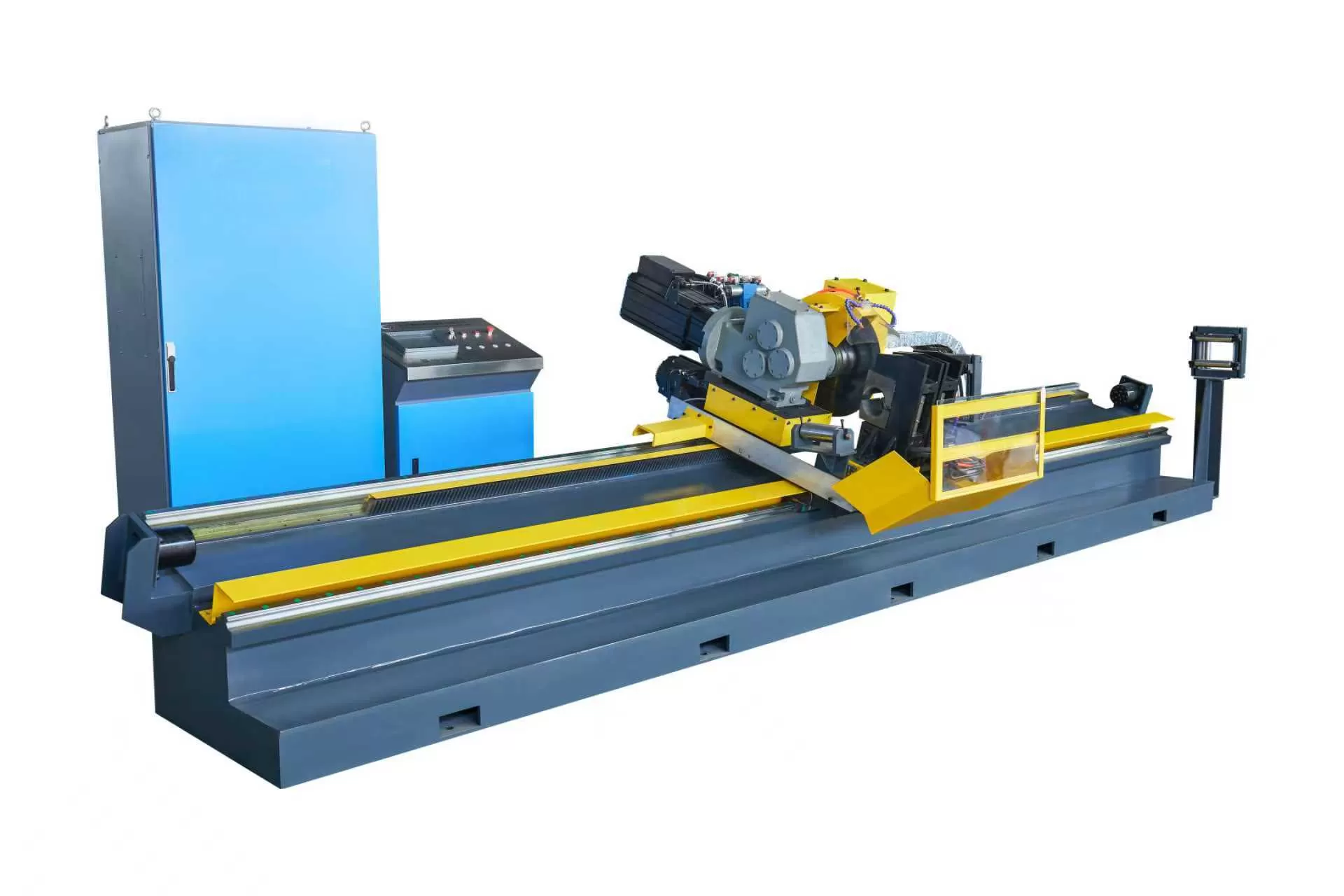
saw is a synchronized cut-off machine that moves with the product
during cutting, eliminating the need to stop the forming line. This article
provides a quantitative examination of flying cold saw systems, including
mechanical synchronization methods, blade metallurgy, cut quality parameters,
and integration with upstream forming and welding sections. Drawing from
SANSO installation data across 120+ tube mills worldwide, we address common
operational challenges and provide engineering solutions for optimizing cut-off
accuracy and blade life.
1. Working Principle of a Flying Cold Saw
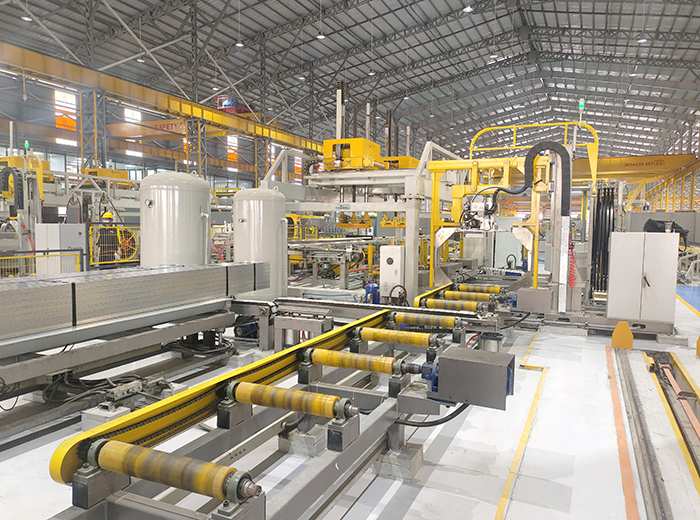
A flying cold
saw operates on a carriage that accelerates to match the linear
speed of the continuously moving tube or pipe. Once synchronized, the saw blade
descends, cuts through the material, retracts, and the carriage returns to its
starting position for the next cut. This process occurs in milliseconds without
stopping the mill line. Key subsystems include:
Servo-driven carriage – linear guides with rack-and-pinion
or ball screw drive; acceleration up to 4 m/s², positioning accuracy ±0.5
mm.
High-torque saw motor – typically 15–45 kW, driving a
carbide-tipped or HSS circular blade at 80–150 m/min peripheral speed.
Clamping mechanism – pneumatic or hydraulic vices that
secure the tube during cutting to prevent vibration and burr formation.
Programmable logic controller (PLC) – synchronizes carriage
motion, blade feed rate, and length measurement encoder signals.
For high-speed mills (up to 120 m/min line speed), the flying cold saw must
complete the entire cut-retract-return cycle within 1.5–2 seconds. Modern
systems use dual-carriage configurations: while one saw cuts, the second
positions for the next cut, reducing dead time. SANSO's dual-head flying cold
saws achieve cycle times as low as 0.8 seconds for tube diameters
20–60 mm, enabling production rates exceeding 200 cuts per minute.
2. Comparison: Flying Cold Saw vs. Other Cut-Off Methods
Tube and pipe mills employ several cut-off technologies. Below is a technical
comparison with the flying cold
saw as the benchmark:
Flying hot saw – uses friction or plasma to cut; generates
heat-affected zones (HAZ), scale, and requires post-cut deburring. Suitable for
heavy-wall pipes (>10 mm). Not recommended for thin-wall or coated tubes due
to burn-through risk.
Flying shear (guillotine) – for non-ferrous or light-wall
tubes; creates deformation at cut ends (flattening) and requires secondary
end-facing. Limited to diameters under 80 mm.
Flying cold saw – produces clean, square cuts with minimal
burr (≤0.15 mm). No HAZ, no scale, and compatible with ferrous and non-ferrous
materials. Blade life of 3,000–10,000 cuts depending on material hardness.
Laser flying cut-off – excellent cut quality but high
capital cost, slower on thick walls, and requires shielding gas. Not economical
for standard structural tubes.
For most carbon steel, stainless steel, and aluminum tube mills producing
diameters 15–200 mm with wall thickness 0.8–6 mm, the flying cold
saw offers the best balance of cut quality, speed, and operating
cost. A North American tube producer replaced flying hot saws with SANSO flying
cold saws and reduced secondary deburring labor by 85%, while blade cost per cut
decreased by 40% due to longer life.
3. Blade Selection and Cutting Parameters for Flying Cold Saws
Choosing the correct blade geometry and cutting parameters is critical for
maximizing productivity and cut quality. Factors to consider:
Blade material – HSS (M2, M35) for carbon steel up to 500
N/mm² tensile; carbide-tipped (TCT) for stainless steel, high-strength alloys,
or long production runs (5x longer life than HSS).
Tooth geometry – triple-chip grind for thin walls (0.8–2
mm) to reduce burr; alternate-top bevel (ATB) for thicker walls (2–6 mm).
Negative rake angles (-5° to -10°) for stainless to reduce work hardening.
Number of teeth – typically 80–160 teeth for tube diameters
30–150 mm. Too many teeth cause rubbing and heat; too few create rough
cuts.
Cutting speed (peripheral) – HSS: 80–120 m/min for carbon
steel; 40–60 m/min for stainless. Carbide: 150–200 m/min for carbon; 80–120
m/min for stainless.
Feed rate per tooth – 0.03–0.08 mm/tooth for HSS; 0.05–0.12
mm/tooth for carbide. Excessive feed increases burr and blade wear.
SANSO flying cold saw
systems include an integrated blade wear monitoring algorithm that
automatically adjusts feed rate based on spindle load. This extends blade life
by up to 30% and maintains cut squareness within 0.1 mm per 100 mm diameter. A
case study from a stainless steel tube mill (304L, 50 mm OD, 1.5 mm wall) showed
that using a carbide-tipped blade at 160 m/min speed and 0.08 mm/tooth feed
produced 8,200 cuts before resharpening, compared to 2,500 cuts with HSS.
4. Cut Quality Metrics and Troubleshooting Common Defects
Acceptable cut quality from a flying cold
saw is defined by four parameters:
Squareness (perpendicularity) – deviation from 90° should
be ≤0.5 mm per 100 mm diameter (ISO 13920).
Burr height – internal and external burr ≤0.2 mm for most
applications; ≤0.1 mm for automotive or hydraulic lines.
Surface finish (Ra) – ≤6.3 µm for general use; ≤3.2 µm for
precision applications.
Length tolerance – ±1.0 mm for standard; ±0.5 mm for
premium.
When defects appear, systematic diagnosis is required:
Excessive burr on exit side – cause: dull blade or
incorrect tooth geometry. Solution: increase number of teeth or switch to
triple-chip grind. Also check clamp pressure – insufficient clamping allows
vibration.
Out-of-square cut (tilted end) – cause: uneven carriage
guide wear or blade runout. Solution: measure guide rail parallelism (≤0.02
mm/m) and check blade arbor runout with dial indicator (≤0.03 mm).
Burn marks or blueing – cause: excessive cutting speed or
insufficient coolant. Solution: reduce peripheral speed by 10–15% and increase
flood coolant flow (minimum 10 L/min). Use neat oil or semi-synthetic fluid for
stainless.
Chatter marks on cut face – cause: loose carriage bearings
or incorrect feed rate. Solution: inspect linear guides for play and reduce feed
rate per tooth by 20%.
SANSO provides on-site cut quality audits using portable surface roughness testers and
squareness gauges. In a recent automotive tube plant, a SANSO service engineer
identified that an out-of-square condition (1.2 mm deviation) was caused by a
worn ball screw on the carriage – replacement restored squareness to 0.2 mm.
5. Integration with Tube Mill Automation and Length Control
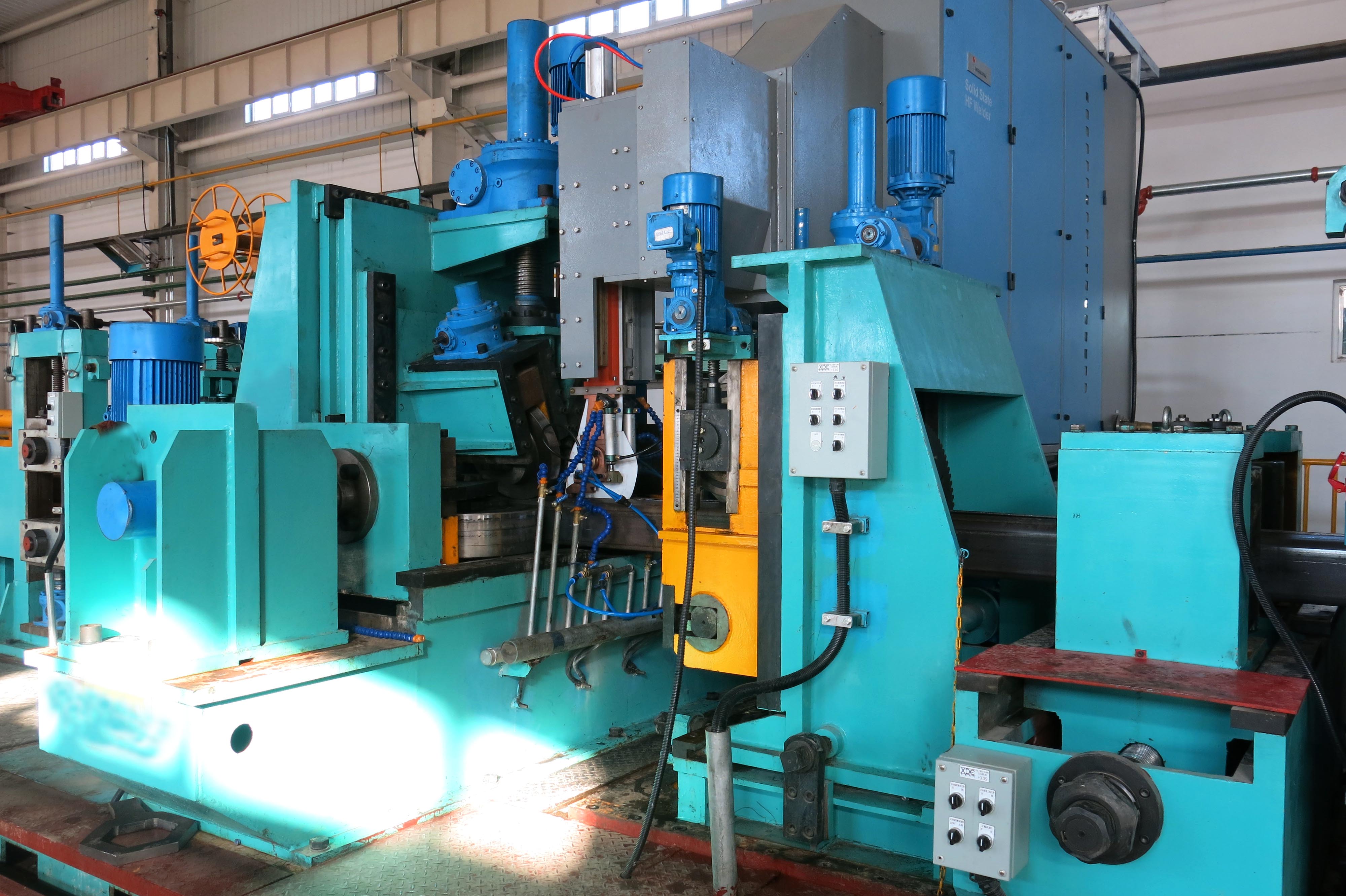
Modern flying cold
saw systems are integrated into the mill’s automation network
(Profinet, EtherCAT, or EtherNet/IP). Length measurement is achieved via:
Encoder-based measuring roll – pinch roll with incremental
encoder (5000 pulses/rev) contacting the tube. Accuracy ±1 mm over 6 m
lengths.
Laser distance sensor – non-contact, accurate to ±0.2 mm,
but requires clean tube surface (no scale or oil).
Dual encoder with compensation – compensates for slip by
comparing upstream and downstream encoders.
For cut-to-length optimization, the PLC calculates the exact carriage start
position and acceleration profile to minimize scrap. Advanced systems
incorporate a “flying cut optimizer” that adjusts cut length based on the
previous cut’s measured length, compensating for tube elongation from welding
heat. SANSO flying cold
saws include a patented algorithm that reduces remnant end scrap by
40–60% compared to fixed-length cut-off systems.
A stainless steel tube mill producing 6 m lengths for food processing
reported that after upgrading to a SANSO flying cold saw with laser length
measurement, length tolerance improved from ±3 mm to ±0.5 mm, and scrap dropped
from 2.8% to 1.1% of total production. The payback period was 11 months.
6. Maintenance and Blade Life Optimization
To achieve maximum uptime and lowest cost per cut, a preventive maintenance
schedule for the flying cold saw should include:
Daily – check coolant level and concentration; clean chips
from carriage guides; inspect blade for missing teeth.
Weekly – lubricate linear guides and ball screw (grease
with EP2); check clamp pad wear; measure blade runout (replace arbor if >0.05
mm).
Monthly – inspect carriage drive belt or coupling for
backlash; verify encoder alignment; test emergency stop functions.
Quarterly – perform a full geometric check: guide rail
parallelism, saw blade perpendicularity to travel direction, and clamp force
calibration.
Blade resharpening intervals: for HSS blades, resharpening every 500–1500
cuts (depending on material). Carbide-tipped blades: resharpening every
3,000–8,000 cuts. Use a professional sharpening service that maintains original
tooth geometry and clearance angles. A sharpened blade typically provides 70–80%
of the life of a new blade, and blades can be resharpened 5–10 times.
SANSO offers
a remote monitoring package that tracks flying cold saw spindle load, carriage
acceleration, and cut count. Predictive algorithms alert the maintenance team
when blade wear or guide wear exceeds thresholds. One customer reduced unplanned
downtime from 12 hours per month to 2 hours after implementing this system.
7. Frequently Asked Questions About Flying Cold Saws
Q1: What is the maximum tube diameter and wall thickness that a flying cold
saw can handle?
A1: Standard flying cold saw systems accommodate tube diameters from 15 mm up
to 325 mm. Wall thickness range: 0.5 mm to 12 mm for carbon steel, up to 8 mm
for stainless steel. For diameters above 200 mm, a dual-motor or dual-blade
configuration may be required. SANSO offers heavy-duty flying cold saws with 60
kW spindle motors capable of cutting 325x12.5 mm pipes at line speeds up to 30
m/min.
Q2: How do you prevent blade breakage during high-speed cutting?
A2: Blade breakage is usually caused by excessive feed rate, insufficient
clamping, or blade runout. Implement these safeguards: use a torque limiter on
the spindle drive; install a vibration sensor that triggers emergency stop;
ensure the clamp pressure is at least 5 kN for 50 mm tube; and never exceed the
blade manufacturer's recommended peripheral speed. SANSO flying cold saws
include a software “feed rate override” that automatically reduces feed if
spindle load spikes above 120% of nominal.
Q3: Can a flying cold saw cut shapes other than round tubes (square,
rectangular, oval)?
A3: Yes, with appropriate blade selection and clamping tooling. For square or
rectangular tubes, the saw must cut through two walls simultaneously, requiring
higher spindle torque and a thicker blade (2.5–3.5 mm) to avoid deflection. The
clamping system must use form-fitted jaws to prevent rotation. SANSO supplies
custom blade guide assemblies and shaped anvils for RHS (rectangular hollow
sections) up to 200x100 mm.
Q4: What coolant type is recommended for a flying cold saw cutting stainless
steel?
A4: For stainless steel (304, 316, 430), use a high-lubricity semi-synthetic
fluid with 8–12% concentration. Avoid straight chlorinated oils (health hazard)
and straight water (causes work hardening). For carbon steel, a water-soluble
emulsion (5–6%) is sufficient. Always direct the coolant flood nozzle at the
blade’s entry point into the cut to flush chips and reduce heat. SANSO’s
integrated coolant system includes adjustable nozzles and a magnetic chip
separator.
Q5: What is the typical power consumption of a flying cold saw in a tube
mill?
A5: For a 50 mm carbon steel tube (2 mm wall) at 60 cuts per minute, a 22 kW
saw motor draws an average of 12–15 kW. The carriage servo adds 2–3 kW. Total
energy consumption per cut is approximately 0.02–0.03 kWh. Compared to a flying
hot saw (which requires 50–80 kW for plasma or induction heating), the cold saw
reduces energy cost by 60–70% and eliminates gas consumption.
Q6: How do I calculate the required flying saw carriage acceleration for my
line speed?
A6: The carriage must accelerate from zero to line speed within the
“synchronization distance” – typically 200–400 mm before the cut point. Required
acceleration a = V_line² / (2 × S_sync), where V_line is line speed (m/s) and
S_sync is synchronization distance (m). For a line speed of 1.5 m/s (90 m/min)
and S_sync = 0.3 m, a = (1.5²)/(2×0.3) = 3.75 m/s². Most servo-driven carriages
achieve 4–6 m/s². For lines above 120 m/min, dual-carriage systems are
recommended.
8. Conclusion and Engineering Recommendation
The flying cold
saw remains the preferred cut-off solution for continuous tube and
pipe mills requiring high cut quality, minimal burr, and no thermal distortion.
Proper blade selection, synchronization tuning, and preventive maintenance are
essential to achieve blade life targets and cut tolerances. For mills producing
carbon steel, stainless steel, or aluminum tubes, investing in a modern
servo-driven flying cold saw with integrated length control yields rapid payback
through reduced scrap and secondary operations.
SANSO designs and manufactures flying cold saw systems for line speeds from 10 to 180
m/min, tube diameters 15–325 mm. Our engineering team provides process audits,
blade recommendations, and on-site commissioning. For new tube mill lines or
retrofit projects, SANSO offers a complete solution including electrical
integration and training.
Request
a feasibility study or quotation for your tube mill cut-off application. Send an
inquiry with your tube dimensions, material grade, line speed, and required cut
length accuracy. Our engineers will respond within 48 hours with a technical
proposal and ROI analysis.
Submit your flying cold saw
inquiry →
Or contact directly: info@sansohftubemill.com – reference
“Flying Cold Saw Technical Analysis” for priority support.