In the demanding world of welded tube and pipe production, the initial stage
of coil handling is often the most underestimated variable in the quality
equation. A seemingly simple piece of equipment—the manual
decoiler—serves as the critical interface between raw material
inventory and the forming process. For manufacturers utilizing high-strength
steel, stainless alloys, or precision carbon steel, the choice of decoiling
equipment directly impacts strip edge condition, feed stability, and downstream
weld integrity.
As a specialist in high-frequency welded tube mill lines, I’ve observed that
production bottlenecks and material waste frequently trace back to inadequate
coil unwinding. While automated systems have their place, the modern
manual decoiler, engineered with precision components and
heavy-duty construction, remains indispensable for job shops, custom tube mills,
and facilities requiring rapid changeovers. This article dissects the technical
architecture, operational economics, and application-specific advantages of
advanced manual decoilers, grounded in data and mechanical realities.
The Technical Anatomy of a Professional-Grade Manual Decoiler
To appreciate the role of this equipment, one must look beyond the simple
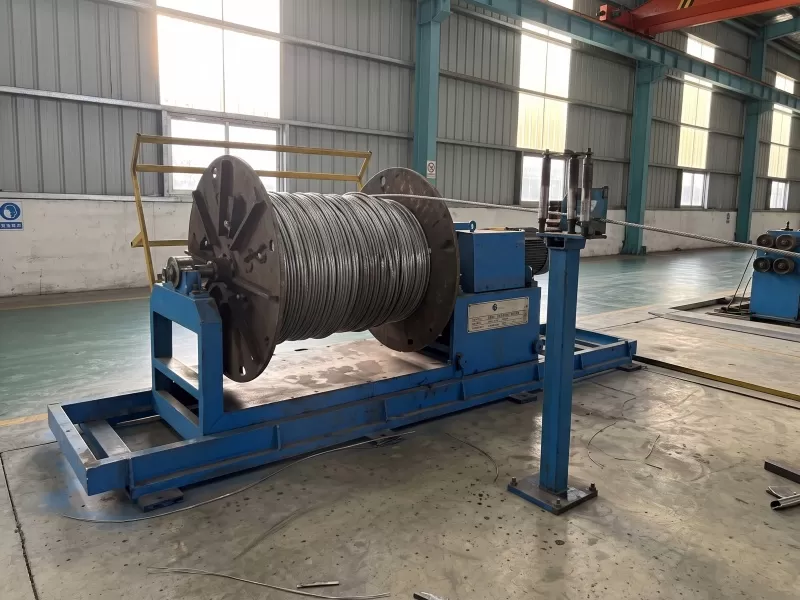
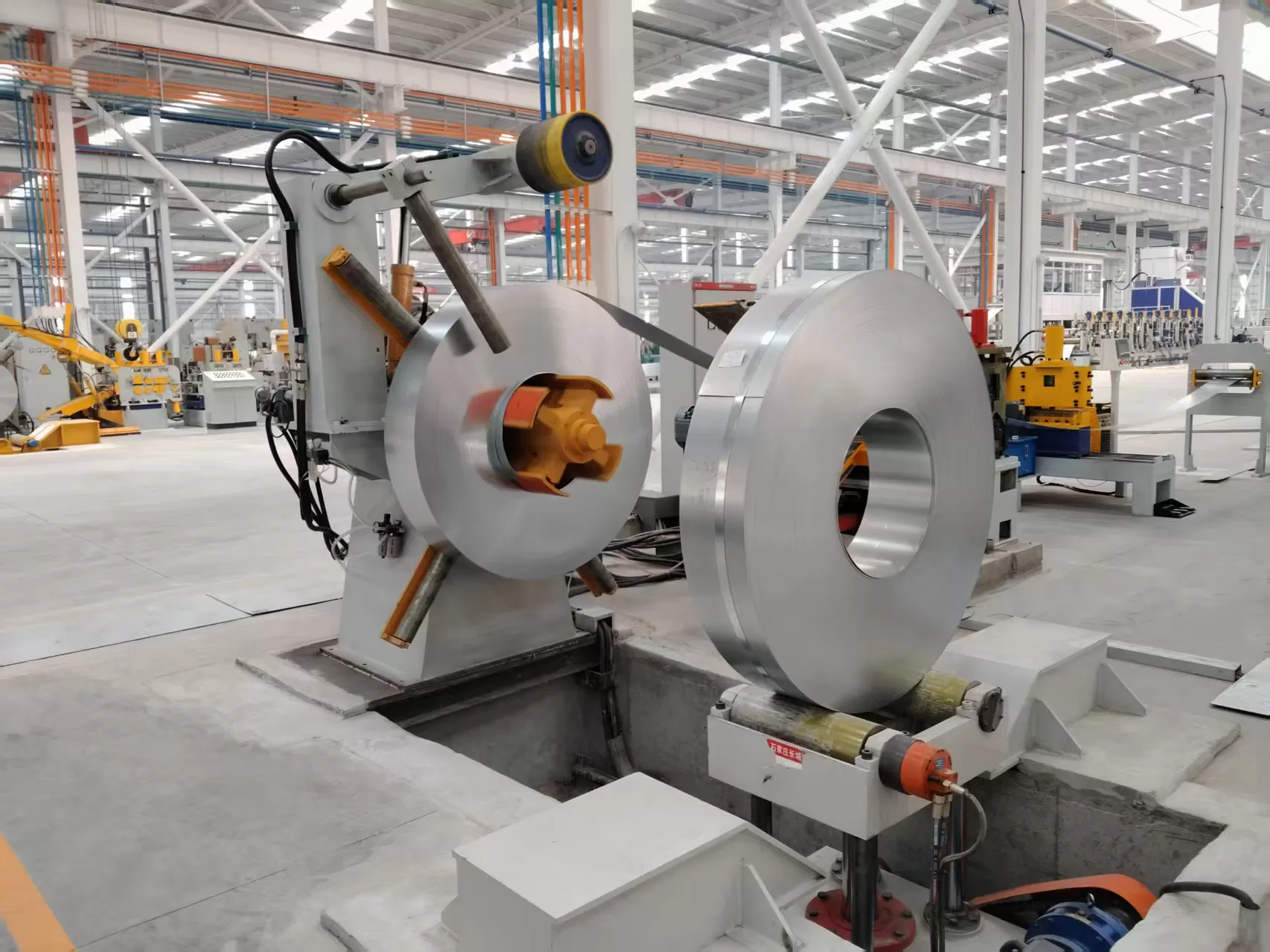
concept of a rotating stand. A robust manual decoiler designed
for welded tube applications incorporates specific engineering elements that
mitigate the three primary risks of coil processing: telescoping, edge wave
formation, and inconsistent back tension.
Load Capacity and Structural Integrity
Professional tube mill operations handle coils ranging from 500 kg to 3,500
kg. A commercial-grade manual decoiler must exhibit structural rigidity that
prevents deflection under maximum load. Key specifications to evaluate
include:
Mandrel Expansion Range: Precision-machined expansion
segments with a mechanical screw or lever mechanism ensure concentric gripping
of the coil inner diameter (ID). Typical ID ranges from 450mm to 610mm.
Base Plate and Bearing Assembly: Heavy-duty welded steel
bases with thrust bearings are non-negotiable. The rotational friction
coefficient must be calibrated to prevent free-spinning inertia, which causes
loop control issues.
Vertical Adjustment: Height-adjustable spindle designs
allow alignment with the straightener or feed guide, a critical factor for
preventing lateral stress on the strip.
For instance, the integration of self-aligning roller bearings in the spindle
assembly reduces rotational resistance by up to 40% compared to plain bushing
designs, enabling smoother payout with minimal operator exertion.
Addressing Industry Pain Points: Beyond Basic Uncoiling
Many fabricators inherit legacy coil handling setups that create persistent
operational friction. Below, we analyze specific pain points and how
purpose-built equipment provides resolution.
Pain Point 1: Edge Damage and Scrap Generation
During unwinding, sharp edges of high-tensile steel can dig into inadequately
shielded support arms. High-end manual decoiler units
incorporate nylon or polyurethane-lined support rollers that cradle the coil’s
outer circumference. This design eliminates metal-on-metal contact, preserving
edge integrity. In a recent plant audit, switching from a basic A-frame decoiler
to a roller-assisted manual decoiler reduced edge scrap by 22% across a
production run of 50 tons of 304 stainless.
Pain Point 2: Coil Telescoping During Unwinding
Telescoping—where layers of the coil shift laterally—can halt production and
damage mill tooling. Mitigation lies in the decoiler’s lateral adjustment and
braking system. Advanced units feature:
When these features are properly calibrated, even loosely wound coils can be
processed without manual intervention, increasing overall equipment
effectiveness (OEE) by reducing downtime.
Application Scenarios: Matching the Manual Decoiler to Production
Profiles
The versatility of a well-engineered manual decoiler allows
it to serve diverse manufacturing environments. Below are three high-impact
scenarios where precision decoiling is mission-critical.
1. High-Frequency Welded Tube (HFW) Lines for Automotive Components
Automotive structural components require impeccable strip flatness. In such
lines, the manual decoiler works in tandem with a pinch roll straightener. The
operator uses the mechanical brake to maintain consistent loop formation before
the strip enters the forming section. Any variation in uncoiling tension
translates into weld seam inconsistency. By employing a decoiler with a
graduated brake adjustment, mills achieve tolerance levels within ±0.1mm in
diameter consistency.
2. Custom Profile and Roll Forming Shops
Job shops that process short runs of galvanized or pre-painted steel benefit
from the rapid changeover capabilities of a manual decoiler. Unlike hydraulic
systems that require complex setups, a well-designed unit allows a single
operator to load a new coil in under 5 minutes. This agility reduces
non-productive time by as much as 35% compared to semi-automatic
alternatives.
3. Stainless Steel Tube Production for Sanitary and Architectural
Applications
Stainless steel demands pristine surface protection. Manual decoilers
equipped with phenolic or rubber-coated support arms prevent scratching of
polished surfaces. Additionally, the ability to manually “jog” the coil during
threading allows for meticulous control, preventing the sudden release of
tension that can cause surface marring.
Economic Analysis: Manual Decoiler vs. Hydraulic Alternatives
A frequent point of deliberation for plant managers is whether to invest in a
hydraulic expansion decoiler versus a manual model. The decision hinges on
production volume, material types, and operator skill level.
Hydraulic Decoilers offer faster expansion and centralized
control, ideal for high-volume, low-mix operations running coils over 3,000 kg.
However, they come with higher capital expenditure (typically 2.5x to 3x the
cost), increased maintenance complexity (hydraulic fluid, seals, pumps), and
longer changeover times for small lots.
Manual Decoilers, by contrast, offer a compelling total cost
of ownership (TCO) for medium-volume applications. With fewer components prone
to failure, uptime reliability exceeds 99% in well-maintained environments.
Furthermore, modern manual units now incorporate features like:
Quick-lock expansion systems that eliminate the need for tools.
Modular support stands that accommodate varying coil widths without
adjustment shims.
Integrated drag brakes that provide proportional tension control previously
only available in motorized systems.
For a tube mill running 500 to
2,000 tons per annum, a premium manual decoiler delivers ROI within 12 to 18
months through scrap reduction and labor efficiency alone.
Precision Integration: The Role of SANSO in Coil Handling Systems
When evaluating coil handling solutions, the system’s integration capability
with downstream equipment is paramount. Manufacturers like SANSO have developed a
reputation for engineering manual decoilers that serve as the foundational
component of complete tube mill lines. Their approach focuses on harmonizing the
decoiler’s mechanical tolerances with the straightening and feeding sections,
ensuring that cumulative mechanical error remains below 0.05mm across the entire
line.
In a recent installation at a Southeast Asian tube manufacturing facility,
the implementation of a SANSO-designed manual decoiler, paired with a
servo-driven feeding system, yielded a documented 18% increase in production
yield by eliminating strip buckling defects previously attributed to misaligned
coil payout. This underscores the principle that in precision manufacturing,
every component in the material handling chain must be engineered to the same
exacting standards.
Operational Best Practices for Maximizing Decoiler Longevity
To ensure consistent performance and extend the service life of your
equipment, adhere to a structured maintenance protocol. Even the most robust
manual decoiler requires regular attention to maintain its mechanical
integrity.
Weekly Lubrication: Apply high-temperature grease to the
thrust bearing and spindle pivot points. Contamination from scale or dust is the
leading cause of bearing failure.
Mandrel Expansion Mechanism Inspection: Check the expansion
screw or lever mechanism for wear. Any backlash in the expansion can lead to
coil slippage during unwinding.
Brake Pad Monitoring: Mechanical brakes use friction pads
that should be inspected monthly. Worn pads cause inconsistent tension, leading
to loop fluctuations.
Alignment Verification: Use a laser alignment tool to
verify the decoiler centerline with the straightener every six months.
Misalignment as small as 1mm over a 2-meter span can cause edge wave
formation.
Future-Proofing: Innovations in Manual Decoiler Design
The market for coil handling equipment is evolving, with new designs
enhancing the capabilities of manual decoilers without sacrificing simplicity.
Current trends include:
Modular Counterbalance Systems: Integrated spring or
pneumatic counterbalances that reduce the physical effort required to rotate
heavy coils, allowing a single operator to manage coils up to 2,500 kg
safely.
Integrated Safety Cages: OSHA-compliant safety enclosures
that prevent operator access during coil expansion, addressing pinch point
hazards while maintaining visibility.
Digital Tension Indicators: Simple analog or digital
displays that show the applied brake torque, allowing operators to replicate
settings for repeat orders, reducing setup variability.
These innovations are transforming the manual decoiler from a simple
mechanical stand into a precision instrument that contributes directly to
manufacturing consistency.
The Strategic Value of Precision Uncoiling
In the competitive landscape of tube and pipe manufacturing, operational
excellence is achieved through meticulous control of every process variable. The
manual decoiler is often viewed as a commodity, but this
perspective overlooks its profound impact on downstream quality. Selecting a
unit with superior bearing design, robust expansion mechanics, and precise
braking control is an investment in product consistency and operational
uptime.
When integrated correctly with the mill line, a high-performance manual
decoiler minimizes material waste, protects surface finish, and enables rapid
changeovers that support lean manufacturing initiatives. For tube producers
seeking to optimize their coil-to-tube conversion process, the decoiler should
be treated not as a passive stand, but as an active contributor to the
manufacturing cell.
For those specifying new equipment or upgrading existing lines, partnering
with experienced manufacturers ensures that the decoiler’s specifications align
perfectly with your material profile and production targets. SANSO provides a range of
solutions designed to meet these exacting demands, supported by engineering
expertise that bridges the gap between raw coil and finished tube.
Frequently Asked Questions (FAQ)
Q1: What is the maximum coil weight a standard manual decoiler can
handle for tube mill applications?
A1: A heavy-duty industrial
manual decoiler typically accommodates coil weights ranging
from 500 kg to 3,500 kg (approximately 1,100 to 7,700 lbs). The specific
capacity depends on the structural design of the base frame, mandrel shaft
diameter, and bearing configuration. For tube mills processing structural steel
or automotive tubes, a capacity of 2,000 kg to 3,000 kg is common. Exceeding the
rated capacity can lead to spindle deflection and accelerated bearing wear.
Q2: How does a manual decoiler maintain proper tension without a
motorized system?
A2: Tension control in a manual decoiler is
achieved through a mechanical braking system, usually a drum or disk brake with
adjustable friction. By applying calibrated resistance to the rotating spindle,
the operator can create back-tension that prevents the coil from free-spinning.
This tension is critical for maintaining a consistent loop before the strip
enters the straightener or forming section. Advanced models feature graduated
brake levers that allow precise, repeatable tension settings.
Q3: Can a manual decoiler be used with stainless steel or aluminum
coils without damaging the material surface?
A3: Yes, provided the
decoiler is equipped with surface protection features. For stainless steel and
aluminum, it is essential to use support arms and rollers lined with
polyurethane, nylon, or rubber. The expanding mandrel segments should also be
faced with non-marring materials. Additionally, the operator should ensure that
the coil edges do not contact any uncoated steel components during rotation to
prevent scratching or galling of the material surface.
Q4: What are the most common signs that a manual decoiler requires
maintenance?
A4: Key indicators include: (1) audible grinding or
squeaking during rotation, suggesting bearing contamination or failure; (2)
inconsistent tension requiring constant brake adjustment; (3) difficulty in
expanding or contracting the mandrel, indicating worn threads or contamination
in the expansion mechanism; and (4) visible lateral movement of the coil during
unwinding, which points to worn mandrel grippers or misalignment.
Q5: Is it possible to retrofit an existing manual decoiler with a
straightener or feeding system?
A5: Absolutely. Most manual
decoilers are designed with modular mounting points that allow integration with
separate straightening and feeding units. The critical factor is maintaining
axial alignment between the decoiler’s spindle and the straightener’s entry
guide. Retrofit kits, including adjustable stands and coupling shafts, are
available from manufacturers like SANSO to ensure seamless
integration without compromising material flow or requiring extensive floor
modifications.