In high-speed metal stamping and continuous roll forming, coil set and
residual material tension are primary drivers of unscheduled downtime, tooling
wear, and component rejections. When raw sheet metal is uncoiled, the material
retains an elastic memory of its wound state. Without precise mechanical
intervention to alter this yield strain, downstream equipment—whether servo
presses, progressive dies, or laser cutting systems—will experience
misalignment, jam-ups, and dimensional variance.
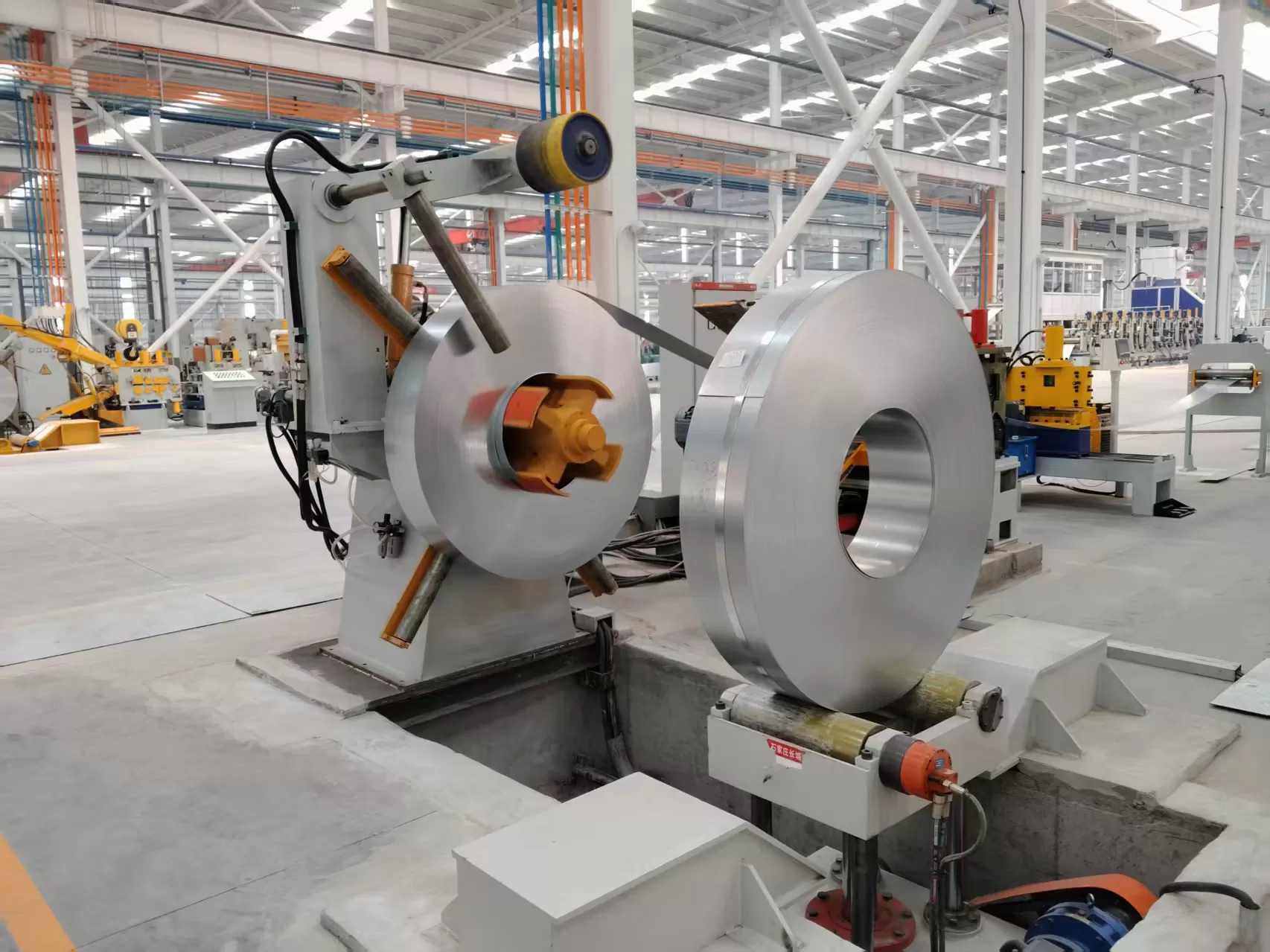
To establish a controlled, continuous feed, metal fabricators rely on an
integrated decoiler straightener system. By unifying the
uncoiling and stress-relieving phases into a single synchronized framework,
manufacturers eliminate manual coil handling bottlenecks, reclaim valuable floor
space, and ensure continuous feed accuracy across diverse metallurgy.
The Metallurgy of Coil Leveling: Eliminating Residual Stress
Metal coils exhibit two primary structural defects upon unbending:
coil set (longitudinal curvature) and cross
bow (transverse curvature). Neutralizing these defects requires forcing
the metal strip through a sequence of alternating upper and lower work rollers.
This process subjects the material to repeated plastic deformation beyond its
elastic limit.
1. Elastic-Plastic Deformation Mechanics
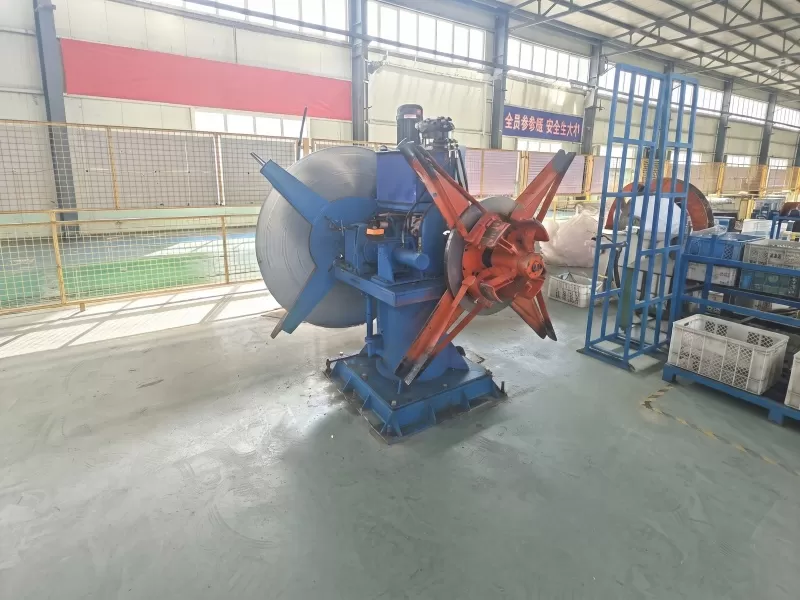
To eliminate coil set, the decoiler straightener must
stretch the outer fibers of the metal strip past their material-specific yield
point. As the material passes through the entry rollers, maximum penetration
(depth setting) is applied to force the initial bend. As the strip progresses
toward the exit rollers, the roller gap gradually widens, relieving the tension
and allowing the material to reset into a mathematically flat state.
2. Work Roller Diameter, Pitch, and Structural Backing
The effectiveness of a straightening unit is governed by roller geometry and
spacing:
Roller Pitch and Count: Standard stamping applications
typically utilize 7 to 11 work rollers. However, processing thin gauge stock or
high-precision electronic parts often requires 17 to 21 micro-rollers with tight
pitch distances to prevent surface distortion.
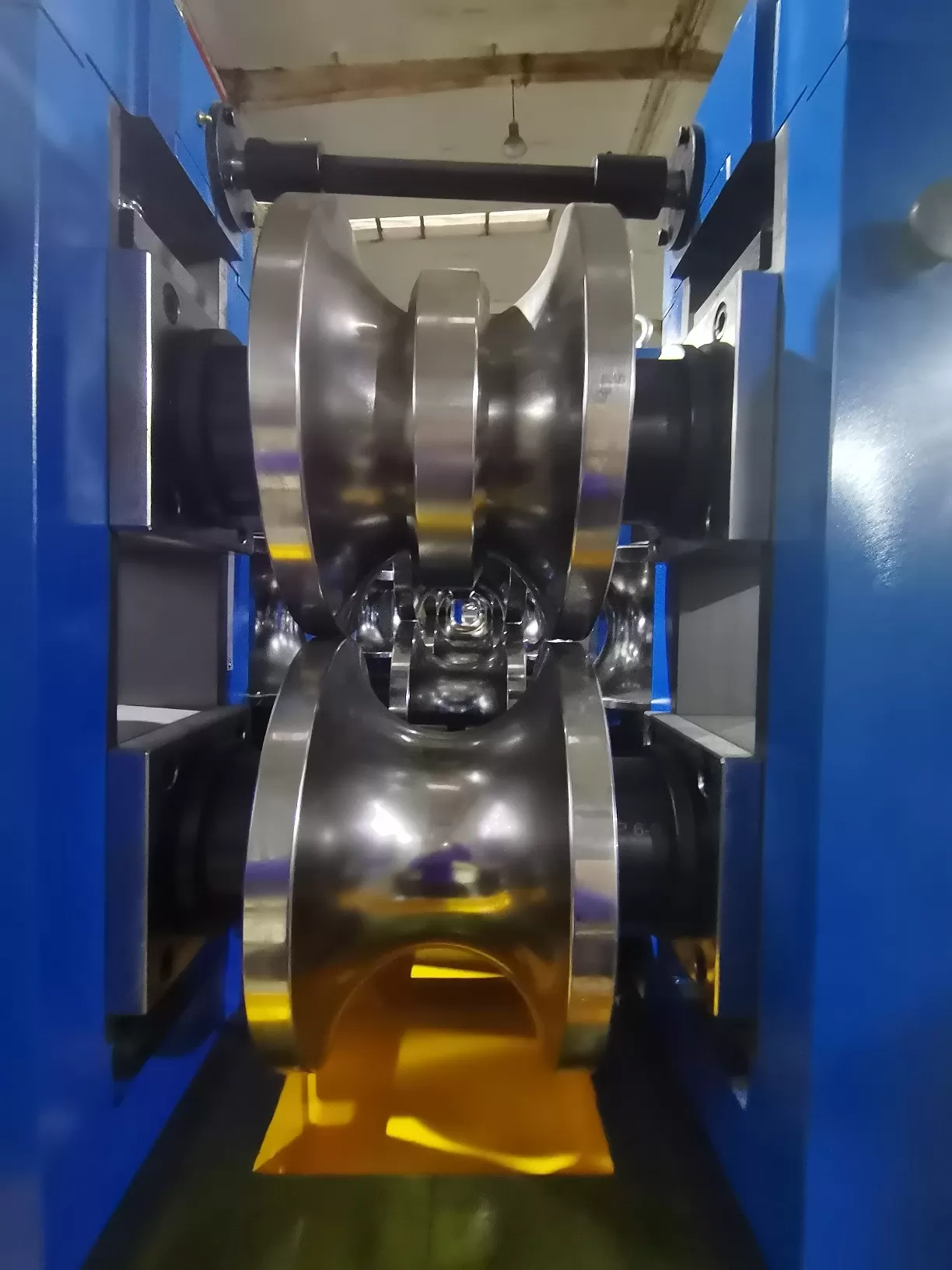
Roller Diameter and Deflection: Thin materials require
small-diameter rollers to achieve tight bending radii. Conversely, processing
thick or high-yield materials demands larger diameter rollers backed by
heavy-duty needle bearing assemblies to prevent center-line roller deflection
under load.
Surface Treatment: High-grade alloy steel (such as GCr15 or
D2) rollers undergo high-frequency induction hardening (HRC 58–62), precision
grinding, and hard chrome plating to maintain dimensional stability and resist
abrasive wear.
Footprint Optimization: Comparing 2-in-1 and 3-in-1 Systems
Traditional coil processing lines required separate floor space for a
uncoiler mandrel, a dedicated straightener machine, and an extensive material
slack loop spanning 8 to 12 meters. Modern production facilities utilize compact
integrated layouts to maximize floor space utilization.
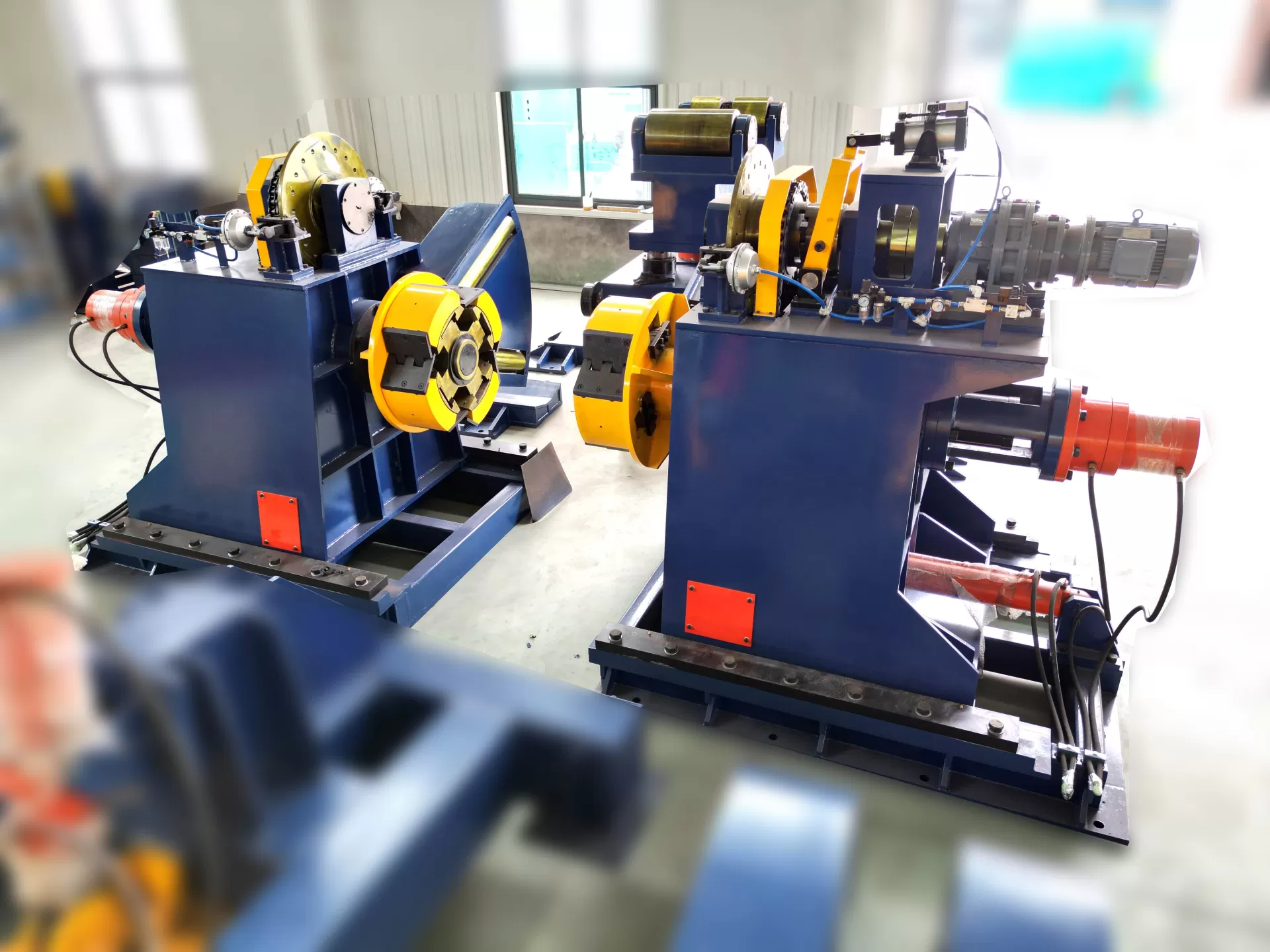
A 2-in-1 system mounts the decoiling mandrel and the straightening head onto
a single structural steel frame. This architecture eliminates the
synchronization lag between separate machines and reduces total line footprint
by 30% to 50%. It is the ideal configuration when feeding into an existing
high-speed roll feeder or secondary processing system.
Automated 3-in-1 Servo Feeder Systems
For high-tonnage stamping operations handling heavy-gauge coil stock or
Advanced High-Strength Steels (AHSS), a 3-in-1 system integrates the uncoiler,
straightener, and NC servo feeder into one fully automated workstation. Key
advantages include:
Loop Elimination: Utilizing space-saving upper/lower loop
configurations or loopless feeding mechanics, 3-in-1 systems drastically reduce
floor space requirements.
Automated Threading: Hydraulic hold-down arms, peeler
blades, and work-table guides allow a single operator to thread heavy-gauge
material safely in minutes.
Synchronized Drive Control: A unified control architecture
regulates mandrel braking, roller speed, and feeder pitch via CANbus or EtherCAT
communications.
Overcoming Processing Challenges in AHSS and Delicate Alloys
Modern stamping operations frequently alternate between high-strength
structural materials and soft, surface-critical alloys. A high-performance
decoiler straightener must accommodate these distinct material
behaviors without requiring extensive machine reconfigurations.
Handling Advanced High-Strength Steel (AHSS)
Steels with yield strengths ranging from 500 MPa to over 1200 MPa (such as
DP980 or DP1180 used in automotive structural components) present severe
springback challenges. Standard straighteners lack the torque and structural
rigidity required to deform these alloys. Heavy-duty units engineered by
SANSO feature reinforced gearboxes, high-torque AC servo
drives, and hydraulic roller gap adjustment systems designed to handle high
mechanical loads without frame flexing.
Zero-Defect Surface Preservation for Aluminum and Stainless Steel
Cosmetic auto panels, appliance enclosures, and electronic chassis require
zero surface marking during processing. Standard knurled or hardened steel
rollers can imprint defects onto softer aluminum (5000/6000 series) or polished
stainless steel. To prevent this, specialized systems utilize:
Precision-ground rollers coated with high-durability polyurethane or
non-marking chrome finishes.
Variable Frequency Drives (VFD) paired with ultrasonic loop sensors to
enforce smooth acceleration and deceleration, preventing roller slip against the
metal strip.
Automated debris wiping systems to clear particulate buildup from work
rollers during continuous operations.
Industry 4.0 Integration and Safety Architecture
Precision coil leveling depends heavily on consistent operational setup.
Modern machinery replaces manual handwheel adjustments with digital PLC control
interfaces.
Recipe Management & Digital Positioning: Operators
enter material parameters (width, thickness, yield strength) into the HMI
interface. Electric actuators automatically set work roller depths and guide
position coordinates based on stored material profiles, cutting changeover times
from hours to minutes.
Dynamic Loop Control: Non-contact ultrasonic or
photoelectric sensors monitor loop depth in real time, communicating directly
with the VFD to adjust feed speed smoothly without jerking or snapping the strip
material.
Comprehensive Safety Mechanisms: Industrial safety requires
hydraulic mandrel expansion, pneumatic hold-down arms with motorized end-wheels
to contain outer-wrap clock-springing during coil band cutting, and integrated
emergency stop safety circuits.
Total Cost of Ownership (TCO) and Structural ROI
The operational return on investment for high-end coil processing equipment
is realized through material yield optimization, reduced tooling wear, and
increased equipment uptime.
At SANSO, our engineering teams build heavy-duty
decoiler straightener systems designed to sustain continuous
multi-shift production under severe operational conditions. By preventing
out-of-spec material from reaching the die, a precision SANSO coil handling line reduces press jam incidents, extends progressive tool life,
and delivers uniform part geometry across every production batch.
Frequently Asked Questions
Q1: How do I select the correct work roller count for my decoiler
straightener?
Work roller selection depends on material thickness and tolerance
requirements. Thicker materials (>3.0mm) typically require 7 to 9
large-diameter rollers to deliver the force necessary for plastic deformation.
Thinner stock (<1.0mm) or precision electronics stamping requires 11 to 19
smaller-diameter rollers to eliminate minute waves and stress points without
over-stretching the material.
Q2: What safety factor should be used when sizing decoiler load
capacity?
It is recommended to apply a minimum 20% to 25% safety margin above your
maximum anticipated coil weight. Operating a decoiler near its maximum
structural limit accelerates spindle bearing wear, increases the risk of
hydraulic expansion fatigue, and reduces long-term machine reliability.
Q3: Why is hydraulic mandrel expansion preferred over manual mechanical
expansion?
Manual expansion via wedge mechanisms is labor-intensive and suited only for
light coils (<2 tons) with infrequent changeovers. Hydraulic expansion
delivers consistent, high-tonnage clamping force inside the coil core,
preventing internal slippage during high-acceleration feeding cycles and
accommodating heavy coils (up to 20 tons) safely.
Q4: Can a single decoiler straightener process both aluminum and
high-strength steel?
Yes, provided the machine is engineered with sufficient drive torque and
structural rigidity for the steel's yield strength, alongside speed control
features and chrome-plated rollers to prevent surface marking on the aluminum.
Dual-purpose lines often incorporate custom roller profile settings saved in the
PLC recipe database.
Q5: What is the primary operational difference between a 2-in-1 and a 3-in-1
system?
A 2-in-1 system combines uncoiling and straightening into one frame but
requires a separate slack loop and secondary feeder to push material into the
press. A 3-in-1 system integrates the uncoiler, straightener, and NC servo
feeder into a single compact unit, driving material directly into the press die
without requiring a long floor loop.
Upgrade Your Stamping Line with SANSO Precision Engineering
Unplanned downtime, tool damage, and high scrap rates directly reduce
operational profitability. SANSO manufactures heavy-duty,
highly automated decoiler straightener units and complete
3-in-1 coil feeding systems tailored to your specific material thickness, coil
weight, and factory floor footprint requirements.
Ready to optimize your coil processing capabilities? Contact
our engineering application team today to request a technical consultation,
evaluate your material specifications, or receive a detailed quotation for your
next equipment upgrade.