In electric resistance welded (ERW) tube manufacturing, efficiency depends
heavily on line continuity. Machine operators constantly push to increase mill
speed and reduce unscheduled downtime. However, one common bottleneck sits right
at the entry section of the production line: coil changeover.
Every time a steel coil runs out, the entire mill must stop, reload, and
re-thread strip metal unless your entry equipment is optimized. Choose the wrong
pay-off system, and you lose hours of billable tube production every shift.
This article compares the traditional single head uncoiler vs double head
decoiler designs. SANSO brings over 20 years of tube machinery engineering
experience to help plant managers select the ideal uncoiling system for ERW tube
mills handling diameters from 8mm to 508mm.

Understanding Entry Section Pay-Off Systems
The entry section sets the maximum tempo for your entire ERW pipe production
line. Before strip material enters the forming rolls, high-frequency welder, and
sizing mill, it must uncoil cleanly without tension spikes or material
damage.
Selecting an automatic tube mill uncoiler involves matching coil weights,
strip thickness, line speed, and changeover windows to your target daily
output.
While basic single-mandrel units remain popular for standard utility
applications, modern high-speed tube lines require advanced double head decoiler
configurations to keep forming sections fed continuously.
Deep Technical Comparison: Single Head vs. Double Head Decoiler
Understanding the mechanical differences between these two designs helps
clarify how each unit impacts strip feeding, labor safety, and daily mill
throughput.
1. Single Head Decoiler (Single Head Uncoiler)
A single head uncoiler features a single cantilevered mandrel mounted on a
fixed heavy-duty base frame. Steel coils load directly onto this single shaft
using an overhead crane, forklift, or hydraulic coil car.
Operating Principle: The strip pays off from the single
spindle into the leveling machine. When the coil empties, the mill stops
completely. Operators clear the tail end, load a new coil, expand the mandrel,
and manually thread strip into the feed rolls.
Pros: Low initial capital investment, simple mechanical
design, compact footprint that fits tight factory layouts.
Cons: Severe downtime during changeovers (10 to 20 minutes
per coil), high worker intervention, line stoppage during loading.
2. Double Head Decoiler
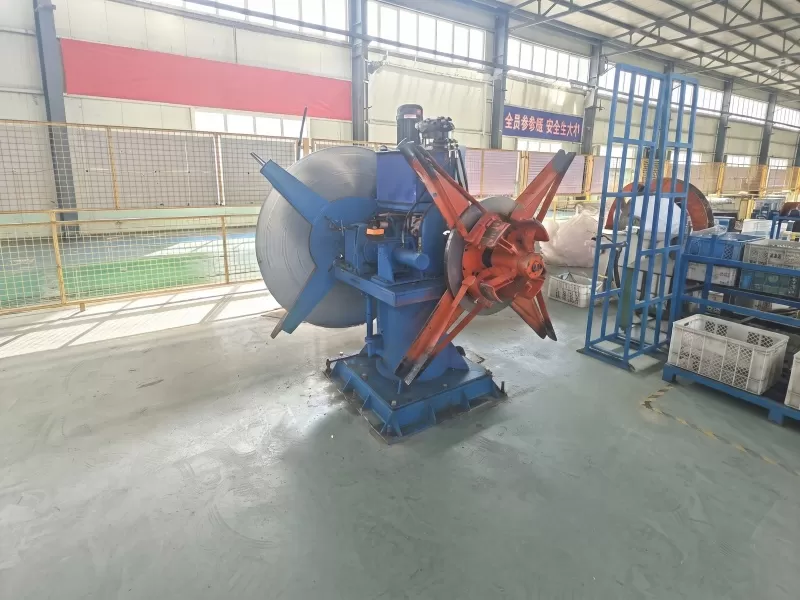
A double head decoiler utilizes two independent expanding mandrels mounted on
a heavy-duty central swivel mechanism. The main frame rotates 180 degrees on a
heavy-duty slew bearing, driven by an electric motor or hydraulic actuator.
Operating Principle: Mandrel A feeds steel strip into the
active ERW tube line. Meanwhile, operators safely load and prepare a fresh coil
on Mandrel B on the opposite side. When Mandrel A empties, the operator unlocks
the indexing mechanism, swivels the unit 180 degrees, and aligns the new coil in
seconds.
Pros: Rapid changeover times (1 to 2 minutes), safer coil
loading away from moving strip, continuous production when combined with strip
accumulators.
Cons: Higher initial equipment purchase price, larger swing
radius requiring slightly wider plant floor space.
Financial and Operational Impact: The Math Behind OEE and ROI
Equipment cost is only one part of total cost of ownership. The real value of
an ERW tube mill decoiler lies in its effect on Overall Equipment Effectiveness
(OEE) and daily tonnage.
Consider a practical operational example comparing both systems on an ERW
mill producing medium-diameter steel structural tubing.
Changeover Time Loss Calculation
Assume a factory operates two 8-hour shifts daily, consuming 12 steel coils
per shift (24 coils total per day):
Single Head Uncoiler Setup: 24 coil changes per day x 12
minutes average downtime = 288 minutes lost per day. That equals nearly
4.8 hours of dead production time every single day.
SANSO Double Head Decoiler Setup: 24 coil changes per day x
1.5 minutes rotation time = 36 minutes lost per day. When combined with an entry
loop, line downtime drops to zero minutes.
By recovering over 4 hours of active running time per day, high-capacity tube
mills pay off the price difference of a double head decoiler within months of
installation.
Synergy with Complete Entry Line Equipment
A double head decoiler achieves maximum productivity when integrated with
modern downstream strip preparation machinery. SANSO designs balanced entry
systems where every single machine works in total sync.
Key Entry Line Components:
Pinch & Leveling Machine: Receives the leading strip
end from the decoiler, flattens strip curvature, and feeds it into the cutting
station.
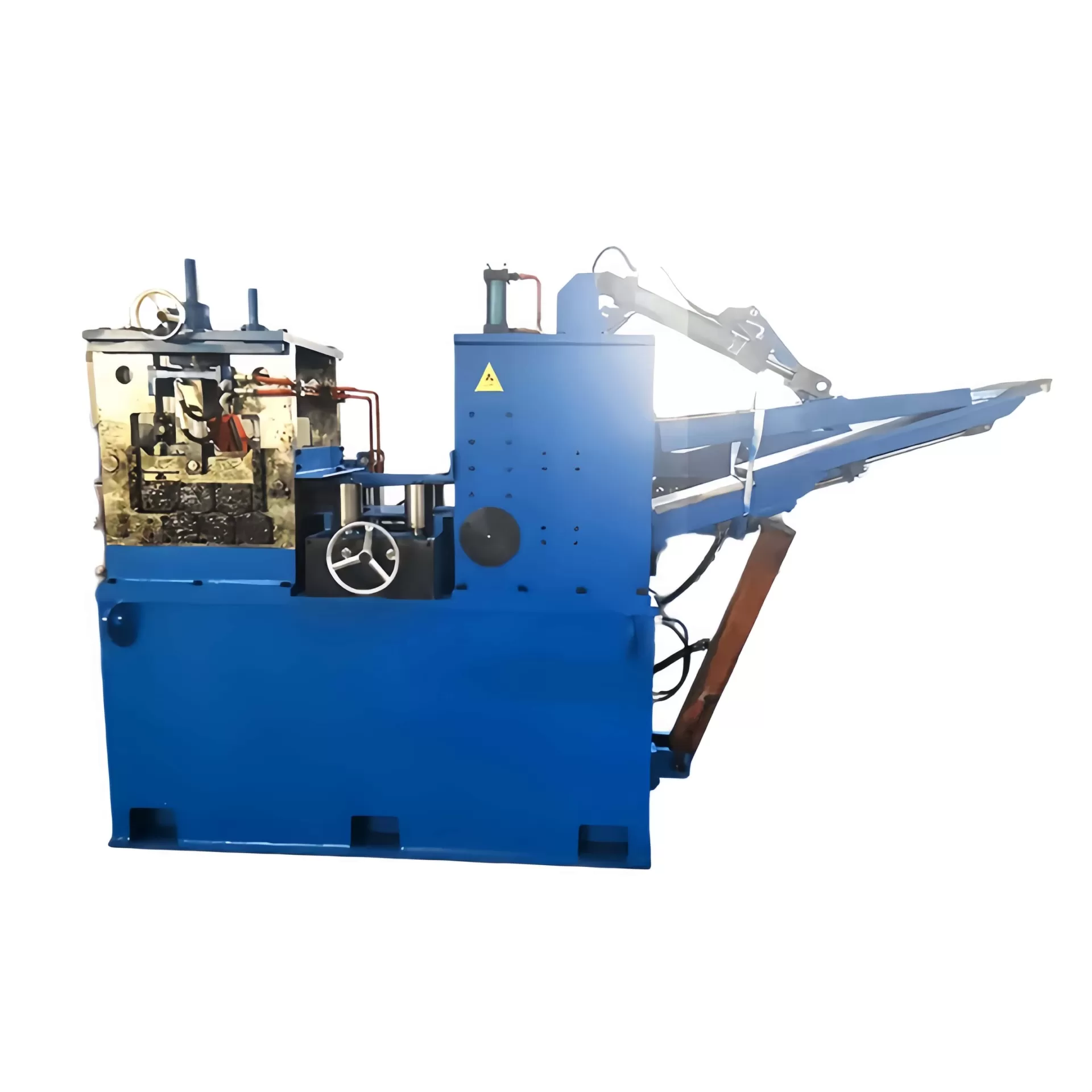
Automatic Shearing & End Welding Machine: Square-cuts
the tail end of the outgoing coil and the lead end of the incoming coil, welding
them together seamlessly.
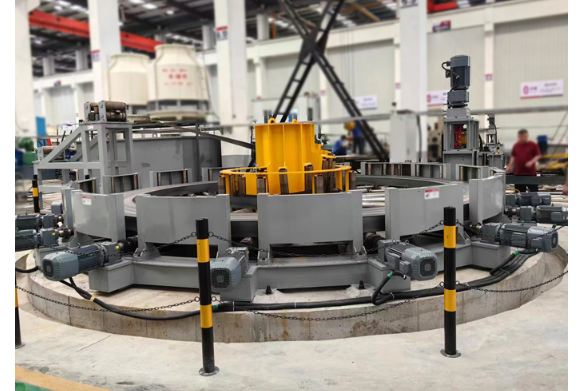
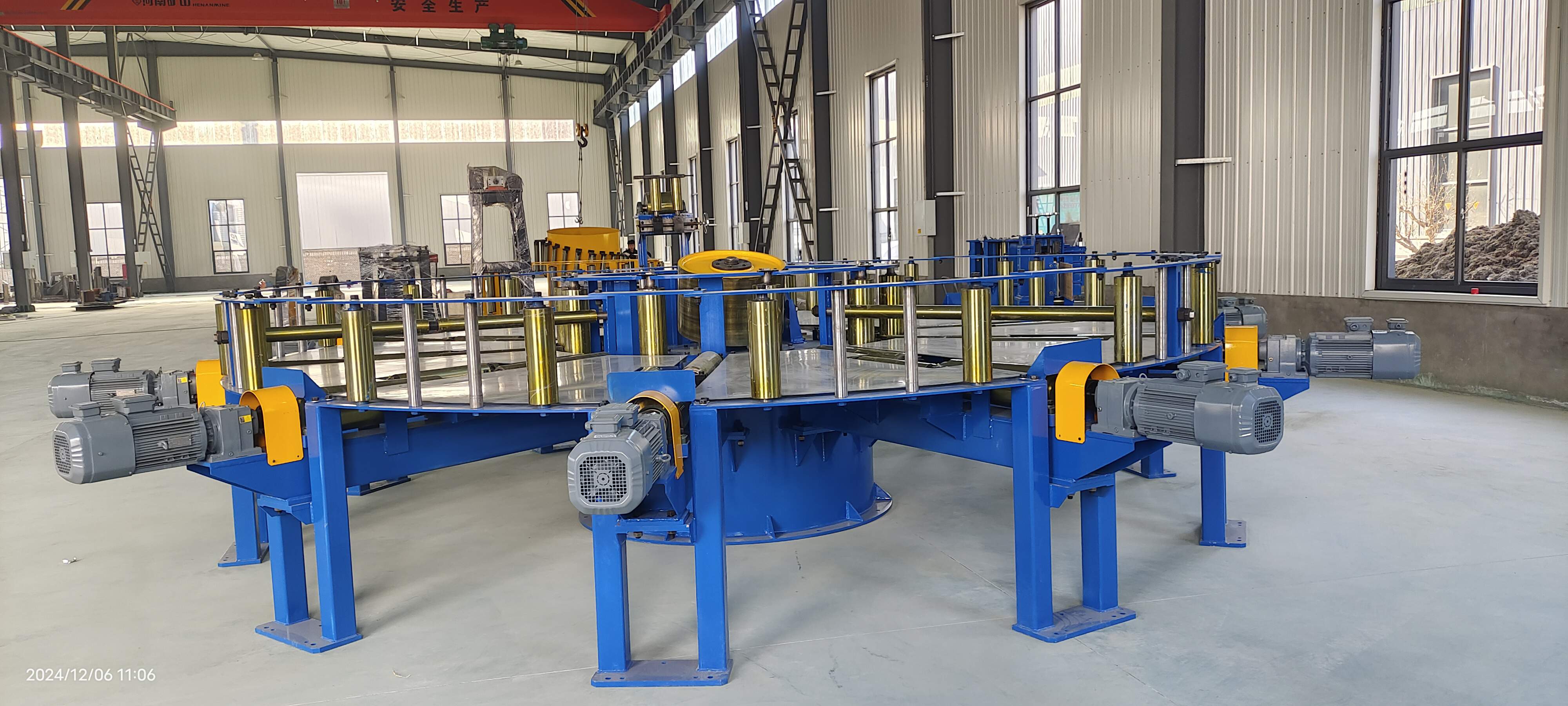
Horizontal Spiral Accumulator: Stores several hundred
meters of steel strip inside a rotating basket. The accumulator continues
feeding strip into the tube forming mill while the entry line pauses briefly for
coil indexing and tail welding.
This automated sequence guarantees non-stop continuous operation for 24/7
tube manufacturing facilities.
Decision Matrix: Selecting the Right Unit for Your Tube Mill
Not every mill requires a double head uncoiler. Choosing the optimal payoff
machinery depends on your product range, tube diameters, line speeds, and budget
allocations.
| Production Parameters | Single Head Decoiler | Double Head Decoiler |
|---|
| Tube Outer Diameter (OD) | Large pipes (219mm - 508mm) with thick walls where coils last long
periods. | Small to medium tubes (8mm - 114mm) where coils finish quickly. |
| Coil Consumption Frequency | Low (1 to 4 coils per shift). | High (8 to 30 coils per shift). |
| Line Speed | Slow to medium speeds (under 30 m/min). | High-speed production (30 m/min to 120+ m/min). |
| Floor Space Availability | Limited shop floor width. | Standard shop floor layout with swing clearance. |
| Initial Capital Budget | Strict entry-level budget. | Focused on long-term ROI and high output. |
SANSO Engineering Advantages: Upgrades and Standalone Equipment
Integration
SANSO (Hebei Sansu Machinery Co., Ltd.) brings over 20 years of practical
engineering expertise to the global tube manufacturing industry. We design
complete ERW tube production lines for pipe diameters from 8mm to 508mm. Beyond
full plant installations, SANSO specializes in standalone machinery
upgrades.
If your tube mill relies on an outdated single head unit that slows down
production, SANSO can retrofit a modern high-performance double head decoiler
directly into your existing layout.
SANSO Double Head Decoiler Technical Features:
Hydraulic & Pneumatic Mandrel Expansion: Ensures firm
four-segment wedge expansion, preventing coil slippage during acceleration and
sudden braking.
Pneumatic Disc Braking: Controls back-tension accurately to
eliminate strip sagging and material overlap.
Motorized 180-Degree Swivel Base: Equipped with heavy
mechanical shot-pin locking mechanisms to guarantee exact shaft positioning
every rotation.
Photo-Electric Loop Tracking: Automatically matches payoff
speed to downstream levelers and accumulators.
Heavy-Duty Construction: Built with stress-relieved welded
steel bodies to support coil weights ranging from 1.5 metric tons up to 25
metric tons per side.
Our engineers ensure standalone component integration matches your mill's
centerlines, pass-line heights, and electrical control protocols.
Frequently Asked Questions (FAQ)
Q1: Can I install a SANSO double head decoiler on my existing tube
mill without replacing the whole line?
A1: Yes. SANSO double head decoiler machinery is engineered for seamless
retrofitting. We modify pass-line heights, mounting baseplates, and electrical
interfaces to integrate directly with your existing pinch levelers, shear
welders, and controls.
Q2: How much coil changeover time reduction can my factory expect
with a double head unit?
A2: A standard single head unit requires 10 to 15 minutes per coil change. A
SANSO double head decoiler reduces physical position rotation to under 2
minutes. Combined with a horizontal accumulator, your tube mill welding section
runs continuously without stopping.
Q3: What safety mechanisms prevent the double head decoiler from
rotating during operation?
A3: SANSO integrates dual safety locks. Mechanical shot-pins physically lock
the turntable frame in position, while safety interlocks disable the rotation
motor electronically whenever the downstream line actively draws strip.
Q4: What mandrel expansion types are available on SANSO
uncoilers?
A4: We offer manual wedge expansion for light duty lines, pneumatic expansion
for medium gauge coils, and heavy-duty hydraulic expansion for thick-wall
structural pipe coils.
Q5: Is a horizontal spiral accumulator mandatory when purchasing a
double head decoiler?
A5: No, but it is highly recommended. While the double head unit slashes
offline coil loading time, an accumulator supplies stored steel strip to
downstream forming rolls during the short rotation and end-welding process,
achieving non-stop production.
Maximize Your Tube Production Line Efficiency with SANSO
Choosing between a single head uncoiler vs double head decoiler comes down to
your plant's production targets. For low-speed lines or heavy structural pipe
with long coil run times, single head units offer simple, budget-conscious
operation.
However, for high-capacity ERW tube mills, investing in a SANSO double head
decoiler eliminates changeover bottlenecks, boosts OEE, and recovers valuable
hours of production every day.
Ready to upgrade your tube mill entry equipment or plan a custom pipe
manufacturing line? Contact SANSO engineering team today to request technical
specs, floor layout assistance, and a competitive quotation!