In modern manufacturing, efficient material handling is the cornerstone of
high productivity and seamless operations. Among the essential equipment that
drives this efficiency, steel decoilers stand out as critical
assets for any facility working with metal coils. At SANSO, we
understand that selecting, installing, and operating the right decoiler can
transform your production floor—reducing downtime, minimizing waste, and
ensuring worker safety.
This comprehensive guide covers every aspect of steel decoilers, from their
basic working principles and various types to professional installation
procedures, operational safety, and key factors to consider before making a
purchase.
What Is a Steel Decoiler?
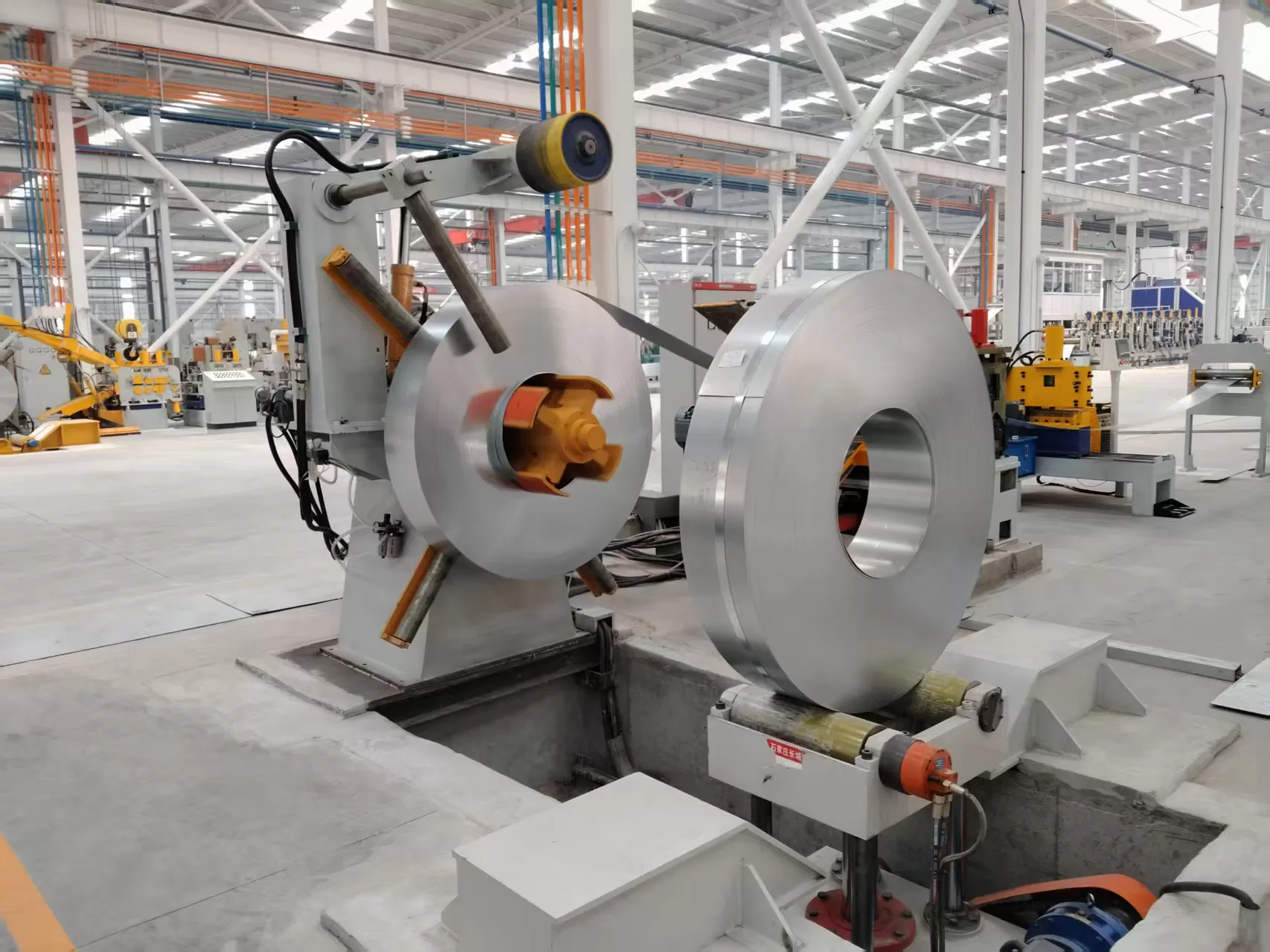
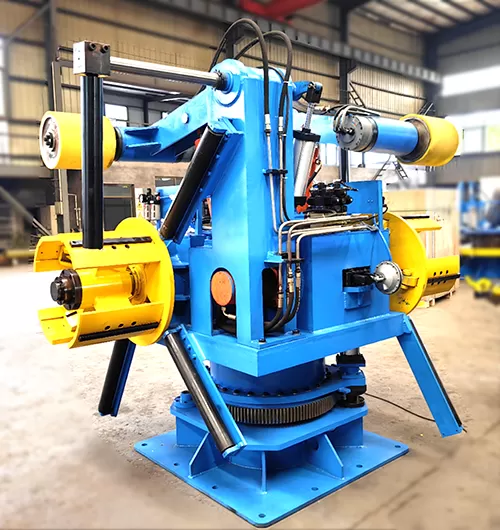
A steel decoiler is an industrial machine designed to hold, support, and
unwind coiled metal strips, feeding them consistently into downstream processing
equipment such as stamping presses, roll formers, shears, laser cutters, and
tube mills.
Metal coils are typically tightly wound for efficient transport and storage.
The decoiler reverses this process by gradually releasing the coil and
delivering the material at a controlled, steady speed to ensure uninterrupted
production. Steel decoilers handle a broad spectrum of
materials, including:
Hot-rolled and cold-rolled mild steel
Stainless steel grades
Aluminum and its alloys
Copper and brass
Galvanized and Galvalume steel
Pre-painted and coated metal coils
By automating the unwinding process, these machines eliminate the
inconsistencies and safety hazards associated with manual handling, ensuring
each downstream operation receives material at the optimal tension and
speed.
Working Principle of a Steel Decoiler
The basic operating sequence of a steel decoiler is
straightforward yet highly effective, integrating precise mechanical and
electronic controls.
Coil Loading: The metal coil is loaded onto the machine's
expandable mandrel using overhead cranes, forklifts, or coil cars.
Mandrel Expansion: The mandrel expands outward to securely
grip the coil's inner diameter, preventing any slippage during the unwinding
process.
Controlled Unwinding: The drive motor engages, rotating the
spindle to unwind the coil at a regulated speed.
Material Guiding: Roller guides and support arms ensure the
strip moves in perfect alignment as it exits the machine.
Feeding: The material advances into the downstream
equipment through feed rollers or servo-driven mechanisms.
Tension Regulation: Advanced systems continuously monitor
and adjust speed and braking to maintain consistent tension, preventing buckling
or stretching of the material.
Modern SANSO steel decoilers feature automatic speed
synchronization, loop control systems, and servo feeding mechanisms that
integrate seamlessly with high-speed production lines for precision
delivery.
Main Components of a Steel Decoiler
Understanding the major components helps users evaluate machine quality and
long-term performance reliability.
| Component | Function |
|---|
| Mandrel | Expands to securely grip the coil's inner diameter. |
| Coil Support Arms | Prevent coil shifting and maintain stability during unwinding. |
| Drive Motor | Powers the spindle rotation, available in electric or hydraulic
variants. |
| Control Panel | Allows operators to manage speed, direction, and feeding
parameters. |
| Roller Guides | Ensure straight, aligned material flow into downstream machinery. |
| Braking System | Controls inertia and prevents over-spin during high-speed
operation. |
| Safety Mechanisms | Include emergency stops, overload protection, and safety
guarding. |
Types of Steel Decoilers
Different production environments require distinct decoiling solutions. Below
are the most common types available in the industry.
These units rely on manual operator effort for coil rotation, making them
suitable for lightweight coils and low-volume applications. They are
cost-effective and ideal for small workshops or prototype development.
Motorized Electric Decoilers
Electric motors drive the unwinding process, providing consistent speed and
reducing labor requirements. They are perfect for medium-scale manufacturing,
roll forming lines, and general sheet metal fabrication.
Hydraulic Decoilers
Hydraulic systems deliver exceptional torque and high load capacity, making
them ideal for heavy-gauge, large-diameter coils. These are commonly used in
steel service centers and heavy automotive stamping plants.
Double-Head Decoilers
Featuring two mandrels, these systems allow rapid coil changes with minimal
downtime, supporting continuous production in high-volume, high-speed
manufacturing facilities.
Wire Decoilers
Specialized for flexible wire materials, these units maintain precise tension
control and prevent tangling, essential for cable manufacturing, wire mesh
production, and spring fabrication.
Applications Across Industries
Steel decoilers serve as critical components across numerous
industrial sectors:
Automotive Manufacturing: Feeding metal sheets into
stamping presses for body panels, chassis parts, and structural components.
Construction & Building Materials: Supporting the
production of roofing panels, wall cladding, structural steel sections, and
metal framing.
Appliance Production: Supplying coils for washing machine
drums, refrigerator cabinets, and HVAC housings.
Aerospace: Handling precision strips for aircraft
structural elements, requiring exceptional feeding accuracy.
General Metal Fabrication: Supporting cutting, bending,
punching, and forming operations across diverse applications.
Key Benefits of Using Quality Steel Decoilers
Investing in high-quality steel decoilers from trusted
manufacturers like SANSO delivers significant operational
advantages:
Dramatically Improved Productivity: Automated coil feeding
eliminates manual handling delays, enabling continuous production runs. Many
SANSO clients report output increases of over 30% after system
upgrades.
Consistent Material Flow: Precise tension control and
steady speeds ensure uniform feeding, resulting in consistent product quality
and reduced defect rates.
Reduced Labor Costs: Automation minimizes manual
intervention, allowing workers to focus on higher-value tasks while reducing
fatigue-related errors.
Enhanced Workplace Safety: Proper coil handling eliminates
manual risks such as heavy lifting, pinch points, and uncontrolled material
movement.
Better Material Utilization: Accurate feeding reduces waste
from misfeeds and misalignment, improving overall yield and
cost-efficiency.
Extended Equipment Life: Controlled feeding reduces stress
and shock loading on downstream machinery, extending maintenance intervals and
equipment longevity.
Professional Installation and Operation Guide
Proper setup and operation are essential for maximizing the performance and
lifespan of your steel decoiler. Here are the key steps:
Installation Best Practices
Placement & Leveling: Position the machine on a level,
reinforced floor. Use precision levels to ensure the base is perfectly
horizontal to prevent vibration and misalignment.
Power Connection: Verify the facility's electrical supply
matches the machine's requirements. Standard industrial decoilers often use
3-phase power, with internal transformers supplying lower voltages for control
systems.
Anchoring: Secure the machine to the floor using
appropriate anchor bolts to prevent any movement during operation.
Commissioning the Machine
Manual Testing: Before running full production, switch to
manual mode and use the jog buttons to test forward and backward rotation,
ensuring there are no obstructions.
Direction Check: If the decoiler rotates in the wrong
direction, simply swap any two phases of the input power lines to correct
it.
Sensor Adjustment: For automatic models, adjust the
induction sensor interval (factory setting often around 3 seconds) based on your
production speed to optimize start-stop cycles and protect the motor.
Essential Safety Tips
Centerline Alignment: Always align the center of the steel
decoiler with the feeding centerline of your press or downstream equipment.
No Overloading: Never exceed the weight capacity of your
specific decoiler model to avoid structural damage and safety hazards.
Loading Safety: Prioritize safety during coil loading.
Always have a supervisor present and stop the machine immediately if any
abnormality occurs.
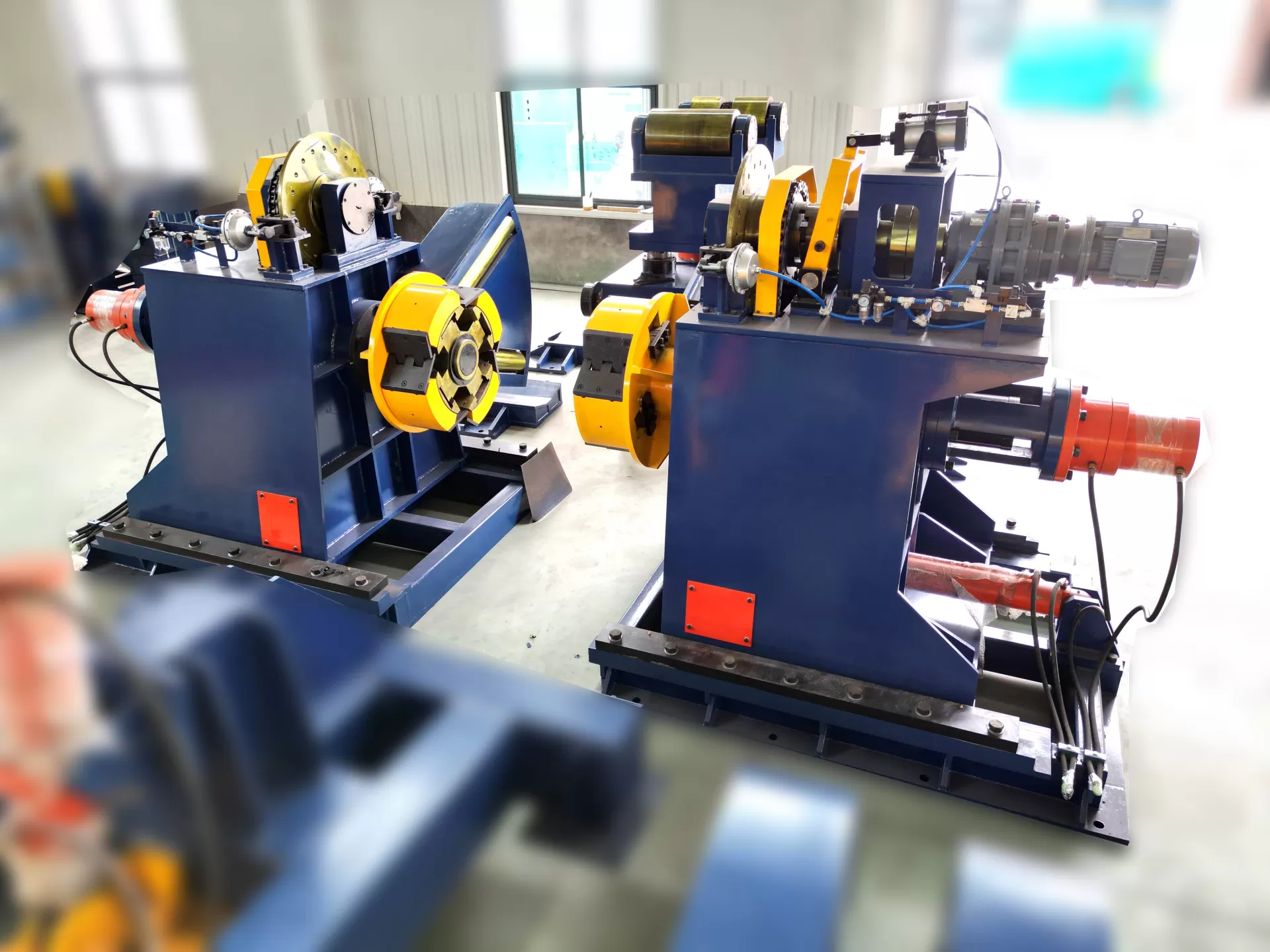
How to Choose the Right Steel Decoiler for Your Business
Selecting the optimal steel decoiler requires careful
evaluation of your specific production needs. Consider the following critical
factors:
| Factor | Considerations |
|---|
| Coil Weight & Dimensions | Maximum weight, width, and outer diameter determine mandrel strength and
frame size. |
| Material Thickness | Thicker materials require higher torque and robust construction. |
| Production Speed | High-speed lines demand advanced automation and faster response
times. |
| Material Type | Different metals may require specialized contact surfaces or
coatings. |
| Automation Level | Choose between manual, semi-automatic, or fully automatic based on labor
availability and volume. |
| Floor Space | Consider the machine's footprint and material flow path in your
layout. |
Working with experienced manufacturers like SANSO helps
businesses identify the most suitable solution for their unique applications.
Our team provides free assessments and customized engineering support.
Frequently Asked Questions
Q1: What is the difference between a decoiler and an uncoiler?
A1: The terms are often used interchangeably in the
industry. Both refer to equipment that unwinds coiled metal. However, some
manufacturers differentiate them by application—decoilers typically feed
directly into processing machinery, while uncoilers may simply unwind material
for manual handling. At SANSO, our steel
decoilers are engineered for seamless integration with automated
production lines.
Q2: How do I determine the correct decoiler capacity for my operation?
A2: Calculate your maximum coil weight, width, and outer
diameter, along with your production speed requirements. Always add a safety
margin of 20–30% to handle peak loads without strain. SANSO offers professional capacity assessments to help you select the ideal model for
your specific needs.
Q3: Can one decoiler handle different coil sizes?
A3: Yes. Quality steel decoilers feature
expandable mandrels that accommodate various inner diameters, and support arms
are typically adjustable for different widths. However, each machine has a
specified capacity range. Always consult the equipment specifications to ensure
compatibility with your material portfolio.
Q4: What maintenance does a steel decoiler require?
A4: Regular maintenance includes: weekly lubrication of
bearings and moving parts; monthly inspection of electrical connections and
safety systems; quarterly checks of hydraulic fluid and filtration (for
hydraulic models); and annual professional servicing of gearboxes, motors, and
structural components. SANSO provides detailed maintenance
schedules and genuine replacement parts for all our equipment.
Q5: How can I prevent coil edge damage during decoiling?
A5: Edge damage typically results from misalignment or
improper tension. Ensure the decoiler is perfectly aligned with your downstream
equipment's centerline. Use appropriate guide rollers and edge control systems.
SANSO steel decoilers are built with precision alignment
systems and adjustable guides that maintain material integrity throughout the
unwinding process.
Q6: What safety features should I look for in a steel decoiler?
A6: Essential safety features include: emergency stop
buttons within easy reach, overload protection systems, safety guarding around
rotating components, anti-pinch protection, automatic braking systems, and clear
warning labels. SANSO machines exceed industry safety standards
and include comprehensive safety interlock systems.
Q7: Can I integrate a decoiler with my existing production line?
A7: Absolutely. SANSO offers customization
services to ensure our steel decoilers integrate seamlessly
with your current equipment. We provide interface adapters, control system
integration, and speed synchronization solutions tailored to your specific
production line configuration.
Ready to Transform Your Production Efficiency?
Don't let outdated coil handling methods limit your manufacturing potential.
Upgrade to SANSO steel decoilers and experience the difference
that precision engineering, intelligent automation, and robust construction can
make.
Our product range includes manual, motorized, and hydraulic decoilers,
double-head systems for continuous operation, wire decoilers, and complete coil
processing lines with straighteners and feeders. Every SANSO machine is backed by comprehensive warranty coverage, professional installation
support, operator training programs, and responsive after-sales service.
Contact our team today for a free consultation and
customized solution recommendation tailored to your specific operational
requirements.
Phone:+86-13303118751 / +86-311 8668 5003
Email: info@sansohftubemill.com
Website: www.sansotubemill.com
SANSO – Your Trusted Partner in Coil Handling Automation